
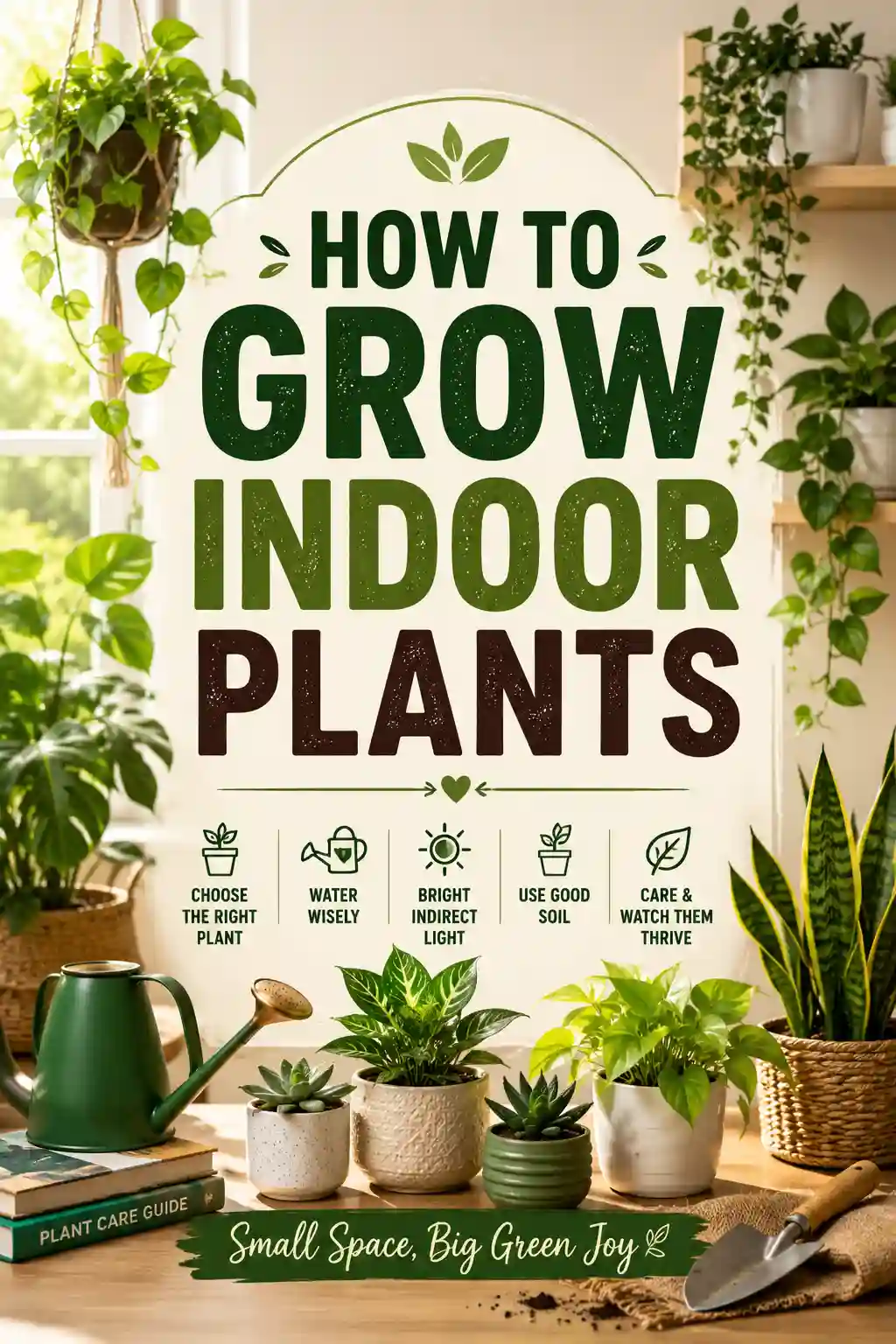
I remember the first time I killed a succulent. A succulent. The plant that everyone swears is basically impossible to kill. I overwatered it, left it in a dark corner, and wondered why it slowly turned to mush over two weeks. That was my harsh but honest introduction to the world of houseplants. Since then, I have spent years learning how to grow indoor plants the right way, through trial, error, research, and a lot of dead leaves.
Now my apartment looks like a small jungle, in the best possible way. Every surface has something green on it. My air smells cleaner, my mood is noticeably better on bad days, and I genuinely look forward to my weekend plant care routine. Learning how to grow indoor plants changed my home life more than I expected it to.
This guide is everything I wish someone had handed me at the beginning. Whether you are starting with one pothos cutting or planning a full wall of shelves, this is your honest, detailed, experience-backed walkthrough on how to grow indoor plants successfully, keep them alive, and actually enjoy the process.
Also Read : The Best Flowers Good for Indoor Plants That Will Transform Every Corner of Your Home
Why Growing Indoor Plants Is Worth Every Bit of Effort

Before we dive into the how, let us talk about the why. A lot of people pick up a plant on impulse, bring it home, and then have no idea what to do next. Understanding why you want to grow indoor plants helps you stay motivated when things get hard, and things will get hard at least once.
Indoor plants genuinely improve your quality of life. Studies have shown that having greenery indoors reduces cortisol levels, which is your stress hormone. They purify the air by absorbing carbon dioxide and releasing oxygen. Certain plants even filter out common household toxins like formaldehyde and benzene. Beyond the science, there is something deeply grounding about caring for a living thing every day.
People who grow indoor plants often say it gives them a sense of purpose and routine. There is real satisfaction in watching something you planted grow, put out a new leaf, or bloom for the first time. It connects you to nature even when you live in a city apartment twenty floors off the ground.
Choosing the Right Plants: The Foundation of How to Grow Indoor Plants
One of the biggest mistakes beginners make when figuring out how to grow indoor plants is choosing plants that do not match their environment or lifestyle. You fall in love with a fiddle leaf fig at the garden center, bring it home, and it promptly drops half its leaves within a week. This is not your fault entirely. Nobody told you it needs bright indirect light, consistent humidity, and almost neurotic consistency in watering.
The first step in learning how to grow indoor plants is being honest with yourself about your space and your schedule. Do you have bright windows or mostly shade? Are you home every day or do you travel frequently? Do you want something that needs daily attention or something you can largely ignore?
Best Indoor Plants for Beginners
If you are just starting to learn how to grow indoor plants, these species are forgiving, beautiful, and widely available. Pothos is the undisputed champion for beginners. It thrives in low light, tolerates irregular watering, and grows fast enough that you see progress within weeks. Snake plants are nearly indestructible and can go weeks without water. ZZ plants handle neglect with grace. Peace lilies bloom indoors with minimal fuss and actually tell you when they need water by drooping slightly.
Spider plants are wonderful if you want something that reproduces readily and can hang beautifully in a basket. Rubber plants make a bold statement and tolerate low light conditions surprisingly well. Heartleaf philodendrons trail gracefully and share the same easy care routine as pothos. If you start your indoor plant journey with any of these, you are setting yourself up for success.
Matching Plants to Your Light Conditions

Light is the single most important factor when you are learning how to grow indoor plants. Every plant has a light preference, and understanding yours will save you so much frustration. South and west facing windows get the most light. East facing windows get gentle morning sun. North facing windows get the least light but some plants love that.
For low light rooms, stick with pothos, snake plants, ZZ plants, and cast iron plants. For medium light, philodendrons, peace lilies, and dracaenas do beautifully. For bright indirect light, monsteras, fiddle leaf figs, and bird of paradise thrive. For direct sun, succulents, cacti, and some herbs want that bright exposure. Knowing your light is step one in truly understanding how to grow indoor plants.
Soil, Pots, and Drainage: Getting the Basics Right When You Grow Indoor Plants
The container and soil you choose matter far more than most beginners realize. I used to think soil was just, well, dirt. Any dirt. It took me a few root rot disasters to understand that when you grow indoor plants, the growing medium is doing critical work to support root health, moisture management, and nutrient delivery.
Standard all-purpose potting mix works fine for most foliage houseplants, but it is not a one-size-fits-all solution. Succulents and cacti need a gritty, fast-draining cactus mix. Orchids need a very open, chunky bark-based medium that allows air to circulate around roots. Monstera and tropical plants often benefit from adding perlite to a standard mix to improve drainage.
Choosing the Right Pot

Drainage holes are non-negotiable when you are serious about learning how to grow indoor plants. Without drainage, water collects at the bottom of the pot, creating the perfect environment for root rot. Even if you find a gorgeous ceramic pot without a hole, either drill one in or use it as a decorative cache pot with a nursery pot inside.
Terracotta pots are breathable and dry out faster, making them great for succulents and plants prone to overwatering. Plastic and glazed ceramic pots retain moisture longer, which suits tropical plants that like consistently moist soil. The size of the pot matters too. Going too large too fast is a common mistake. A pot much bigger than the root ball holds excess moisture the roots cannot use, which leads to rot. When repotting, go up only one or two sizes at a time.
Must Read : The Ultimate Guide to Low Lights Plant Indoor That Instantly Transform Your Home in 2026
Mastering Watering: The Skill That Defines Whether You Can Grow Indoor Plants
More indoor plants die from overwatering than from any other cause. I know this because I killed several of mine that way before I truly understood what my plants were telling me. When someone asks me how to grow indoor plants successfully, my first piece of advice is always: learn how to water properly before anything else.
The biggest myth in plant care is that you need to water on a schedule. You do not. You need to water based on need. A plant in a bright sunny spot will dry out faster than the same plant in a shaded corner. A plant in terracotta dries faster than one in plastic. Seasons matter too. In winter, most houseplants slow down and need far less water.
How to Know When to Water
The most reliable method is the finger test. Stick your finger one to two inches into the soil. If it feels dry at that depth, it is time to water. If it still feels moist, wait another day or two and check again. For succulents and cacti, let the soil dry out completely before watering. For tropical plants like monsteras or pothos, water when the top inch or two is dry.
You can also lift the pot. A dry pot feels noticeably lighter than a wet one. Over time you develop a sense for this. Moisture meters are also a helpful tool, especially when you are just starting out with how to grow indoor plants and have not yet built that intuitive feel. When you do water, water thoroughly until it drains from the bottom, then let the plant drain completely before putting it back on its saucer.
Common Watering Mistakes to Avoid

Letting plants sit in water is one of the fastest ways to cause root rot. After watering, always empty the saucer after about thirty minutes. Using cold tap water on tropical plants can shock the roots. Room temperature water is always better. If your tap water is heavily chlorinated, letting it sit out overnight before using it allows the chlorine to dissipate, which many sensitive plants appreciate.
Misting leaves is often recommended but rarely necessary for most houseplants. It also does not significantly raise humidity levels for long enough to make a real difference. If your plants need humidity, which tropical species often do, a pebble tray with water, a humidifier nearby, or grouping plants together are much more effective strategies.
Light and Placement: Setting Up Your Home to Successfully Grow Indoor Plants
Understanding light transformed my ability to grow indoor plants. Once I stopped guessing and started paying attention to how light moved through my apartment throughout the day, my plants began thriving in ways they never had before. Light is plant food, essentially. Without adequate light, a plant cannot photosynthesize, cannot grow, and eventually declines no matter how perfectly you water it.
When you grow indoor plants, the goal is to match each species to the light level it naturally prefers in the wild. A monstera deliciosa grows in tropical rainforests where it gets dappled, filtered light through a canopy. It does not want harsh direct sun, but it does need a good amount of light to produce those iconic split leaves. A cactus from the desert wants as much direct sun as you can give it.
Using Grow Lights to Expand Your Options

If your home does not have great natural light, grow lights are a genuine game changer. Modern LED grow lights are energy efficient, do not produce excessive heat, and can be left on timers to mimic a natural day cycle. I added two small clip-on grow lights to a darker corner shelf and suddenly that space could support plants that previously refused to grow there.
Full spectrum LED grow lights are best. Aim for about twelve to sixteen hours of light per day if using them as the primary light source, and supplement natural light if using them to boost a partially lit area. Place lights about six to twelve inches above the plant canopy for best results. Grow lights have opened up so many possibilities for anyone who wants to grow indoor plants in spaces with poor natural light.
Also Read : 60+ Gorgeous Hanging Indoor Plants That Will Completely Transform Your Home
Fertilizing Your Plants: Feeding Them Right So They Truly Flourish
Fertilizer is one of the most misunderstood aspects of how to grow indoor plants. Some people never fertilize at all and wonder why their plants look pale and leggy after a year. Others over-fertilize and end up with burned roots and yellow leaves. Getting this right is simpler than it sounds once you understand what fertilizer actually does.
Potting soil comes with nutrients when it is fresh, but those nutrients get depleted over time as the plant uses them and as water flushes them out. After about two to three months in a new pot, most houseplants benefit from regular feeding. Fertilizer replaces those lost nutrients and supports healthy growth, vibrant foliage, and strong roots.
Choosing and Using Fertilizer
A balanced liquid fertilizer with an NPK ratio around 10-10-10 or 20-20-20 works well for most foliage houseplants during the growing season, which runs from spring through early fall. Dilute it to half the recommended strength to avoid burning roots, especially when you are new to how to grow indoor plants and building your confidence.
Flowering plants benefit from a fertilizer higher in phosphorus. Cacti and succulents need very little fertilizer and prefer a formula made specifically for them. Stop fertilizing in late fall and winter when most plants enter a rest period and growth slows. Feeding during dormancy can cause salt buildup in the soil without benefiting the plant at all. Resume in early spring when you see new growth beginning.
Humidity and Temperature: The Environmental Factors That Affect How You Grow Indoor Plants
Most tropical houseplants originally come from environments that are warm and humid year-round. Our homes, especially in winter when heating systems dry out the air, can be quite challenging for these plants. Understanding how to manage humidity and temperature is an important part of truly mastering how to grow indoor plants.
The ideal temperature range for most common houseplants is between 60 and 80 degrees Fahrenheit, which is roughly 15 to 27 degrees Celsius. Most of us keep our homes within this range, so temperature is rarely a major issue. However, cold drafts from windows in winter, or hot dry air from heating vents, can stress plants considerably. Avoid placing plants directly in front of heating or air conditioning vents.
Boosting Humidity for Tropical Plants

If you are growing humidity-loving plants like calatheas, ferns, orchids, or prayer plants, you will need to actively manage moisture in the air. Grouping plants together naturally raises humidity around them as they transpire moisture through their leaves. A pebble tray filled with water placed under the plant pot allows water to evaporate upward around the plant without the pot sitting directly in water.
A small ultrasonic humidifier placed near your humidity-loving plants is the most effective solution. It makes a real, noticeable difference in how well these plants grow. I added one to my plant corner last winter and the transformation in my calathea and bird’s nest fern was remarkable. If you want to grow indoor plants from the more demanding tropical families, investing in a humidifier is well worth it.
When and How to Repot: Giving Your Plants Room to Grow
Repotting is one of those tasks that newer plant parents often find intimidating, but once you do it a few times it becomes satisfying rather than stressful. Knowing when your plants need a new home and doing it correctly is an essential skill in how to grow indoor plants long term.
Signs that a plant needs repotting include roots growing out of the drainage holes, roots visibly circling inside the pot, water running straight through the soil without being absorbed, or the plant becoming too top-heavy and tipping its pot over. Some plants, like peace lilies and certain ferns, actually bloom better when slightly root-bound, so do not rush to repot everything on a schedule.
How to Repot Without Stressing Your Plant

Spring is the best time to repot most houseplants because they are entering their growth phase and will recover quickly. Water the plant a day before repotting so the root ball holds together more easily. Choose a new pot that is one to two sizes larger than the current one. Add fresh potting mix to the bottom of the new pot, then carefully remove the plant, loosen any tightly bound roots gently, and place it in the new container.
Fill in around the roots with fresh soil, press gently to remove air pockets, and water thoroughly. Place the freshly repotted plant in its spot and avoid fertilizing for about four to six weeks while it adjusts. A little wilting immediately after repotting is normal. Your plant will recover. Being able to repot confidently is a real milestone in the journey of learning how to grow indoor plants.
Read Also : Transform Your Home Instantly: The Ultimate Guide to Interior Decor Plants That Actually Work
Propagating Indoor Plants: Multiply What You Love for Free
One of the most joyful parts of learning how to grow indoor plants is discovering you can multiply them for free. Propagation is the process of creating new plants from cuttings or offshoots of an existing plant. It sounds technical but is genuinely one of the most rewarding and simple things you can do once you have a few healthy plants.
Pothos, philodendrons, and tradescantias are among the easiest plants to propagate in water. Simply take a healthy stem cutting just below a node, remove the leaves that would sit underwater, and place the cutting in a jar of clean water. Roots appear within one to three weeks. Once the roots are an inch or two long, pot the cutting in soil and treat it as a new plant.
Other Propagation Methods

Succulents propagate easily from individual leaves. Lay a healthy leaf on dry soil in a bright spot and tiny rosettes will sprout from the base in a few weeks. Spider plants and strawberry begonias produce runners with baby plants attached, called plantlets, which can be cut off and potted when they are large enough. Snake plants can be divided at the roots when repotting.
Air layering works well for larger plants like rubber trees and fiddle leaf figs when you want to propagate without taking a full cutting. The ability to propagate is a wonderful benefit of learning how to grow indoor plants. My current collection is largely made up of cuttings I got from friends or took from my own plants over the years. There is also something deeply satisfying about giving a cutting to someone and watching them start their own plant journey.
Dealing With Pests and Problems: Protecting Your Indoor Plants
Even with the best care, pests and problems happen. Accepting this early will save you a lot of frustration as you learn how to grow indoor plants. The key is to spot problems early and act quickly before they spread.
The most common indoor plant pests are fungus gnats, spider mites, mealybugs, scale, and aphids. Fungus gnats are tiny flies whose larvae live in soil and damage roots. They thrive when soil stays consistently moist. Letting the top layer of soil dry out between waterings is the best preventative measure. Sticky yellow traps catch adults. For larvae, neem oil soil drench or beneficial nematodes work well.
Identifying and Treating Common Issues

Spider mites show up as fine webbing on leaves, usually when conditions are hot and dry. Increasing humidity and regularly wiping down leaves helps prevent them. Treat with insecticidal soap or neem oil spray. Mealybugs look like tiny white cotton clusters in leaf joints and undersides. Dab them with rubbing alcohol on a cotton swab for small infestations, and use neem oil for larger ones.
Yellow leaves are the most common complaint from people learning how to grow indoor plants. Yellow leaves can mean overwatering, underwatering, too little light, nutrient deficiency, or simply natural aging of lower leaves. Look at the whole picture before diagnosing. Drooping despite moist soil often means root rot. Brown crispy leaf tips usually mean low humidity or fluoride sensitivity in the water. Learning to read your plants is the most valuable skill in this entire hobby.
Seasonal Plant Care: How to Grow Indoor Plants Year Round
Many people do not realize that learning how to grow indoor plants successfully means adjusting your care routine with the seasons. Plants are not static. They respond to changes in daylight hours, temperature, and humidity, even when they are indoors. Treating your plants the same way in January as you do in July is one of the most common reasons for struggles during certain times of the year.
In spring, as days get longer and warmer, most houseplants wake up from their winter rest. You will see new growth appear. This is the time to resume fertilizing, check if any plants need repotting, and propagate cuttings. Water needs will increase as growth picks up. Summer brings the most active growing period for most plants. Keep up with watering, fertilizing, and watch for pests, which thrive in warm conditions.
Winter Plant Care Tips

Winter is the season most people accidentally harm their plants with too much care. As light levels drop and most plants slow their growth, they need less water and no fertilizer. Overwatering in winter is the leading cause of root rot for indoor plant enthusiasts. Cut back watering frequency significantly and check soil more carefully before each watering.
Move plants closer to windows in winter to compensate for reduced light hours. Be mindful of cold drafts from window glass, which can damage tropical plants even if the room feels warm. Heating systems run more frequently in winter, which dries out indoor air considerably. This is when a humidifier earns its keep for those who grow indoor plants that originate from humid tropical environments.
Displaying Your Plants: Making Your Indoor Plant Collection Look Beautiful

Once you know how to grow indoor plants and keep them healthy, thinking about how to display them becomes genuinely fun. The visual arrangement of your plants is part of the joy. A thriving collection displayed thoughtfully can completely transform the feel of a room.
Mixing plant heights and textures creates visual interest. A tall floor plant like a fiddle leaf fig or bird of paradise paired with mid-height plants on a console table and trailing plants in hanging pots creates a layered, lush look. Matching or coordinating pot colors and materials ties a collection together aesthetically. I personally love mixing natural terracotta with white ceramic for a clean, organic feel.
Plant shelves have become incredibly popular, and for good reason. A dedicated shelf unit can house dozens of plants in a relatively small footprint. Add a grow light above a darker shelf and you unlock even more possibilities. Plant stands of varying heights are another great way to display your collection and ensure each plant gets the light and visibility it deserves. Your home becomes a living, breathing gallery when you truly commit to learning how to grow indoor plants.
My Personal Tips After Years of Learning How to Grow Indoor Plants
I have been growing indoor plants long enough now to have made almost every mistake possible. Here are the lessons that took me the longest to learn and that I wish someone had told me from the start.
Start with fewer plants than you think you need. It is far better to have three thriving plants than fifteen struggling ones. Master the basics with a small collection, build your confidence, and then expand. Buy plants from local nurseries when possible rather than big box stores. Nursery staff actually know their plants, the stock tends to be healthier, and you can ask questions and get real answers.
Keep a simple plant journal. I started mine as a basic notes app entry for each plant recording when I watered it, when I fertilized, and any changes I noticed. It sounds tedious but it has saved me so many times when I could not remember if I had watered something or when I last fed a particular plant. It also helps you track seasonal patterns in how your plants behave.
Do not compare your collection to what you see on social media. Those accounts often have professional lighting, decades of experience, and carefully curated selections. Focus on your own plants in your own space. Every healthy leaf is a win worth celebrating. The community of people who grow indoor plants is genuinely welcoming and supportive. Join local plant swap groups or online forums to swap cuttings, ask questions, and share your progress.
Frequently Asked Questions
1. What is the easiest indoor plant to grow for a complete beginner?
Pothos is widely considered the easiest indoor plant to grow. It tolerates low light, infrequent watering, varying humidity levels, and still manages to grow quickly and look beautiful. Snake plants and ZZ plants are equally forgiving and are excellent first choices for anyone just beginning to learn how to grow indoor plants.
2. How often should I water my indoor plants?
There is no single answer because it depends on the plant, pot type, light level, season, and humidity. The most reliable method is to check the soil with your finger before watering. Most tropical foliage plants want to be watered when the top one to two inches of soil are dry. Succulents and cacti want completely dry soil before the next watering.
3. Why are my indoor plant leaves turning yellow?
Yellow leaves are most commonly caused by overwatering, which leads to root stress and inability to absorb nutrients. Other causes include underwatering, too little light, nutrient deficiency, natural leaf aging, or pest damage. Check the soil moisture first and adjust your watering habits before investigating other causes.
4. Do indoor plants need fertilizer?
Yes, indoor plants benefit from fertilizer because potting soil nutrients deplete over time. Fertilize with a balanced liquid fertilizer diluted to half strength during the growing season of spring through early fall. Skip fertilizing in winter when most plants are resting and not actively growing.
5. What indoor plants grow in low light?
The best indoor plants for low light conditions include pothos, snake plants, ZZ plants, peace lilies, cast iron plants, Chinese evergreens, and heartleaf philodendrons. These species are adapted to growing under forest canopies and handle reduced indoor light conditions far better than most other houseplants.
6. How do I get rid of fungus gnats in my indoor plants?
Fungus gnats thrive in moist soil. The best prevention is letting the top layer of soil dry out between waterings. For existing infestations, use yellow sticky traps to catch adults and treat the soil with neem oil drench or beneficial nematodes to kill larvae. Consistency is key because you need to break the life cycle over several weeks.
7. Can I grow indoor plants without drainage holes?
It is strongly recommended to use pots with drainage holes when you grow indoor plants. Without drainage, water pools at the bottom and creates conditions perfect for root rot. If you love a decorative pot without a hole, use it as a cache pot around a nursery pot with drainage. This gives you the look you want without compromising plant health.
8. How much light do indoor plants need?
Light needs vary by plant species. Most common foliage houseplants prefer bright indirect light, meaning bright light that does not hit the leaves directly. Succulents and cacti want as much direct sun as possible. Low light plants manage in spots away from windows but grow more slowly. Using a light meter app on your smartphone can help you understand the light levels in different parts of your home.
9. When should I repot my indoor plant?
Repot your indoor plant when you see roots growing out of the drainage holes, when water runs straight through without being absorbed, or when the plant becomes noticeably top heavy. Spring is the ideal time to repot because plants are entering their growth phase and will recover quickly. Always go up only one or two pot sizes to avoid excess moisture retention.
10. What is the best soil for indoor plants?
A good quality all-purpose potting mix works well for most foliage houseplants. Add perlite to improve drainage for tropical plants prone to overwatering. Use a gritty cactus and succulent mix for desert plants. Orchids need a special bark-based medium. Avoid using garden soil indoors because it compacts, drains poorly, and can introduce pests.
11. How do I propagate indoor plants?
The most common propagation method for houseplants is stem cuttings in water. Cut a healthy stem just below a node, remove lower leaves, and place in water in a bright spot. Roots emerge in one to three weeks. Once roots are one to two inches long, pot in soil. Succulents can be propagated from individual leaves, and some plants like spider plants produce ready-to-pot offsets naturally.
12. Do indoor plants improve air quality?
Indoor plants do absorb carbon dioxide and release oxygen, and some studies suggest certain species can filter common household toxins. However, you would need a very large number of plants to make a significant measurable impact on air quality in a typical room. The real benefits of choosing to grow indoor plants are more about mental wellness, reduced stress, and the joy of caring for living things.
13. How do I raise humidity for my indoor plants?
The most effective way to raise humidity for indoor plants is to use a small ultrasonic humidifier placed near your plants. Other strategies include grouping plants together so they share transpired moisture, placing pots on a pebble tray filled with water, and locating humidity-loving plants in naturally moist areas of the home like bathrooms or kitchens with adequate light.
Final Thoughts
Learning how to grow indoor plants is genuinely one of the most rewarding hobbies you can pick up. It teaches patience, observation, and care. It adds life, color, and texture to your home. It connects you to natural cycles even within four walls. And it keeps surprising you, because plants keep growing, keep changing, and keep offering you new things to learn.
Start small. Get one plant that suits your light and your lifestyle. Learn its needs. Build from there. The journey of how to grow indoor plants is not about having a perfect collection. It is about paying attention, enjoying the process, and finding real satisfaction in watching something thrive because of the care you gave it.
Every experienced plant parent you admire started exactly where you are right now. Some of us killed many plants before we figured it out. That is part of the process. Keep going. Your indoor garden is waiting to happen, and it will be more beautiful than you