
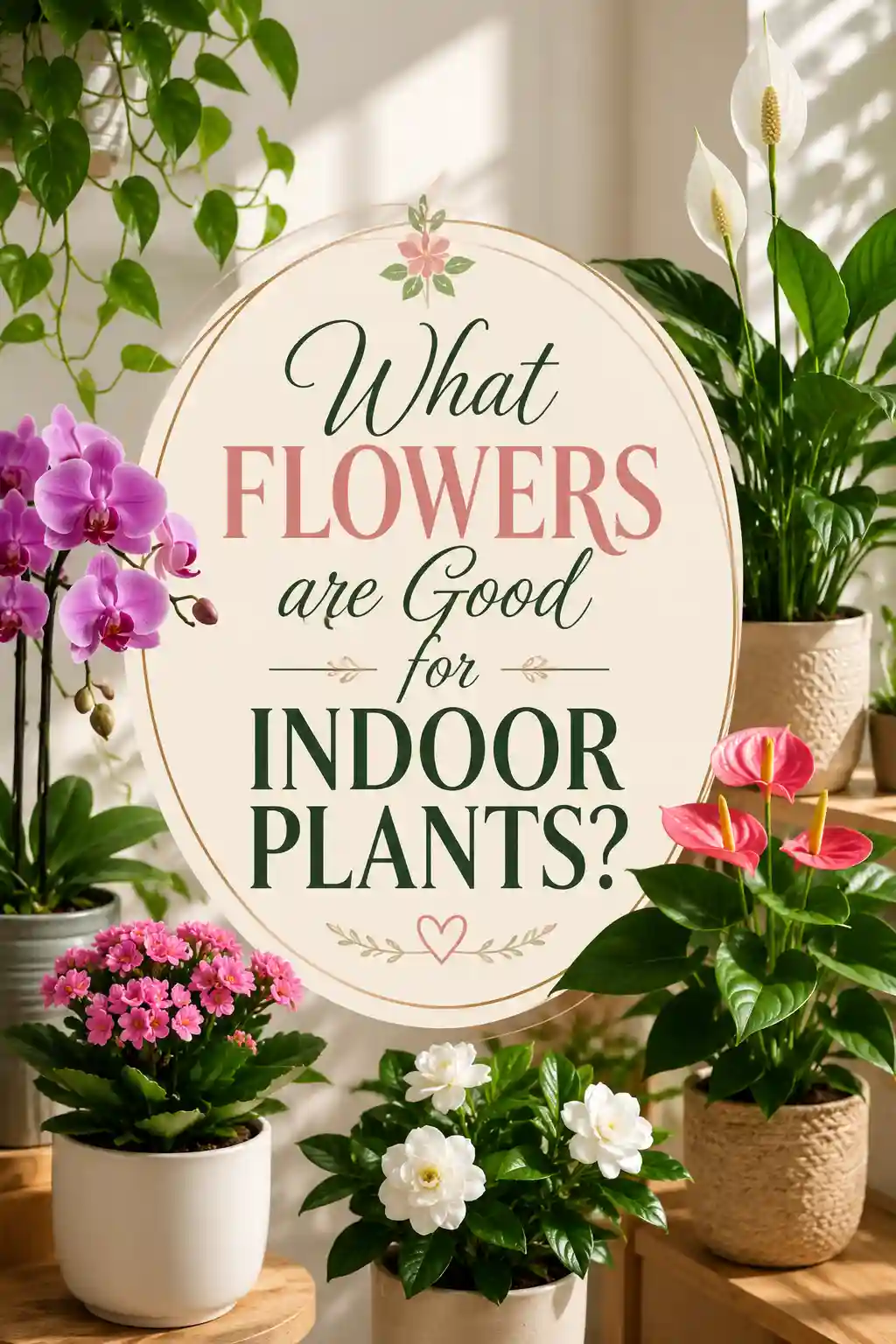
I still remember the day I walked into my apartment with my very first potted peace lily. It was a small thing, nothing too fancy, but when it bloomed for the first time a few weeks later, I felt something shift inside me. There is genuinely something magical about watching a flower open up inside your own home. Since that day, I have spent years figuring out what flowers are good for indoor plants, making plenty of mistakes along the way, and learning exactly what works and what does not.
If you have ever stood in a garden center feeling completely overwhelmed, wondering what flowers are good for indoor plants for your particular space, trust me, you are not alone. The good news is that it does not have to be complicated. Once you understand a few basics about light, humidity, and care routines, choosing flowering indoor plants becomes genuinely enjoyable. This guide is everything I wish someone had handed me back when I was starting out.
Whether you live in a tiny studio apartment with one north-facing window or a house filled with natural light, there are flowering indoor plants out there that will thrive in your environment. Let me walk you through all of it, from the easiest bloomers to the slightly more rewarding ones that take a little extra patience.
Why It Matters to Know What Flowers Are Good for Indoor Plants

Not every flower is built for life indoors. Some plants need a deep winter dormancy period that only happens naturally outside. Others are so sensitive to dry indoor air that they drop their buds before they ever get to bloom. When you understand what flowers are good for indoor plants specifically, you stop wasting money on plants that are destined to struggle, and you start building a collection that actually rewards your care.
Indoor flowering plants do more than just look beautiful. Research has consistently shown that having plants and flowers in your living space can reduce stress, improve air quality, and even boost your mood on a gray, overcast morning. When I am working from home and glance over at my anthurium in full bloom, there is a genuine lift to my spirit that I cannot fully explain. Science or not, it just works.
The other reason it matters to know what flowers are good for indoor plants is purely practical. Different plants have entirely different needs. Orchids want bright indirect light and high humidity. African violets prefer indirect light and hate getting their leaves wet. Knowing these nuances ahead of time means fewer dead plants and more confidence as you build your indoor garden.
Related Post : Transform Your Home Instantly: The Ultimate Guide to Interior Decor Plants That Actually Work
Peace Lily: A Classic Answer to What Flowers Are Good for Indoor Plants
If there is one plant that almost every indoor plant lover eventually falls in love with, it is the peace lily. It is one of the most forgiving and rewarding answers to the question of what flowers are good for indoor plants. The peace lily, known botanically as Spathiphyllum, produces elegant white blooms that look almost architectural in their simplicity. The flowers are not technically petals in the traditional sense but rather a modified leaf called a spathe surrounding a central spadix, and they are stunning regardless.
What makes the peace lily such a reliable choice for indoors is its tolerance for low light. Most flowering plants demand bright light to bloom, but the peace lily will happily produce flowers even in rooms that get relatively little natural sunlight. It does prefer a spot near a window, but it will not throw a tantrum if you put it in a darker corner. I have had mine bloom reliably in a bathroom with only a frosted glass window, which tells you something about its adaptability.
Watering a peace lily is also remarkably intuitive. It will actually droop slightly when it is thirsty, which gives you a built-in signal. Just water it when the soil feels dry an inch or two below the surface and you will be fine. Keep it away from cold drafts and direct harsh sunlight, and it will reward you with blooms that last for weeks at a time. For anyone just beginning to explore what flowers are good for indoor plants, the peace lily is the perfect starting point.
African Violets: Small Plants, Big Personality

African violets have been popular houseplants for well over a century, and once you grow one successfully, it is very easy to understand why. These compact little plants produce clusters of velvety flowers in shades ranging from deep purple and violet to pink, white, and even bicolor varieties. They are a genuinely satisfying choice when you are thinking about what flowers are good for indoor plants, especially if your space is limited.
The key to getting African violets to bloom consistently is understanding their light preference. They want bright but indirect light, which makes an east or north-facing windowsill a perfect spot. Direct afternoon sun will scorch their leaves, so if your windows face south or west, you may want to use a sheer curtain to diffuse the light. I learned this the hard way after roasting my first African violet on a sunny summer afternoon.
One quirk of African violets that catches people off guard is that they strongly dislike getting water on their leaves. Cold water splashing on the leaves causes white spots that look quite alarming. The best approach is to water from the bottom by setting the pot in a shallow dish of water and letting the soil absorb moisture from below. Do this regularly, fertilize with an African violet specific fertilizer every few weeks, and you will have a plant that blooms almost year-round. They are a genuinely rewarding example of what flowers are good for indoor plants when you give them exactly what they want.
Also Read : 60+ Gorgeous Hanging Indoor Plants That Will Completely Transform Your Home
Orchids: The Crown Jewels of What Flowers Are Good for Indoor Plants
Phalaenopsis Orchids for Beginners
Orchids have a reputation for being difficult, and I will admit that reputation put me off for years. But here is the truth: the Phalaenopsis orchid, also called the moth orchid, is actually one of the more manageable flowering plants you can grow indoors. It has become the most widely sold orchid in the world for a reason. It blooms for months at a time, it tolerates the conditions found in most modern homes, and when it is in full bloom, it is honestly breathtaking.
When thinking about what flowers are good for indoor plants in terms of sheer visual impact, the Phalaenopsis orchid is hard to beat. The flowers come in white, pink, purple, yellow, and endless spotted or striped patterns. A single spike can hold a dozen or more blooms, and those blooms can last anywhere from two to four months before they fade. That is extraordinary value for a single plant.
The care routine for a Phalaenopsis orchid is simple once you know the basics. Water it thoroughly about once a week, let the roots dry out between watering, give it bright indirect light, and keep it somewhere with moderate humidity. After the blooms fade, cut the spike just above a lower node and wait. Many Phalaenopsis orchids will rebloom from that same spike, sending up a new branch of flowers and rewarding your patience beautifully.
Other Orchid Varieties Worth Trying Indoors

Once you have mastered the Phalaenopsis, there are a whole range of other orchid varieties that work beautifully as indoor plants. Dendrobium orchids produce clusters of flowers along long canes and are incredibly fragrant. Oncidium orchids, sometimes called dancing ladies, produce cascades of small cheerful flowers. Cattleyas are more demanding but produce some of the most spectacular blooms in the entire plant kingdom.
If you are serious about exploring what flowers are good for indoor plants over the long term, building a small orchid collection can become a genuinely absorbing hobby. Different orchids bloom at different times of year, so with a bit of planning you can have something in flower in your home at virtually any point in the calendar.
Anthurium: Bold Blooms That Last for Months
Anthuriums are one of those plants that look almost too exotic to be real. The glossy heart-shaped spathes in vivid red, pink, salmon, or white look almost like they have been lacquered. They are an outstanding answer to the question of what flowers are good for indoor plants if you want something with serious color impact that does not demand constant attention.
What I love most about anthuriums is how long each individual bloom lasts. Unlike cut flowers that wilt in a week, an anthurium flower can remain vibrant and fresh-looking for two to three months. Once one bloom fades, if you are caring for the plant correctly, another will not be far behind. With good light and regular feeding, an anthurium can be in almost continuous bloom for much of the year.
Anthuriums prefer bright indirect light and high humidity. They actually do beautifully in kitchens and bathrooms where steam from cooking and showering provides the moisture they love. Water them when the top inch of soil dries out, feed them with a high-phosphorus fertilizer every few weeks during the growing season, and they will reward you with those dramatic, eye-catching blooms repeatedly. For anyone wanting to know what flowers are good for indoor plants with a tropical feel, anthurium belongs near the top of the list.
Begonias: Underrated Champions of Indoor Blooms

Begonias are one of the most underrated answers to what flowers are good for indoor plants. There are hundreds of begonia varieties, but for indoor growing the wax begonias and tuberous begonias are particularly rewarding. They produce cheerful clusters of flowers in pink, red, orange, white, and yellow, and they bloom with impressive consistency when given the right conditions.
Wax begonias are especially forgiving and adaptable. They can handle a range of light conditions and are relatively drought tolerant compared to many other flowering plants. I have grown them successfully in spots that other plants would find challenging, and they have consistently delivered color throughout the warmer months. Their glossy, waxy leaves look attractive even when the plant is not actively blooming, which gives them an added advantage over plants that look quite plain without their flowers.
For indoors, I particularly love the Rex begonias for their extraordinary foliage, though their flowers are less spectacular. If blooms are your primary goal, stick with wax or tuberous types. Give them moderate to bright indirect light, keep the soil evenly moist but never waterlogged, and fertilize regularly through spring and summer. Begonias are a wonderful choice for anyone curious about what flowers are good for indoor plants that provide consistent, long-lasting color.
Kalanchoe: The Easiest Flowering Succulent for Indoors
If you want cheerful, long-lasting flowers with the most minimal care requirements imaginable, kalanchoe is your answer to what flowers are good for indoor plants. This is a succulent plant, which means it stores water in its thick leaves and can tolerate a degree of neglect that would finish off most other flowering plants. It produces tight clusters of small flowers in brilliant red, orange, yellow, pink, and white, and those clusters can last for several weeks.
Kalanchoe thrives in bright light, preferably a sunny south or west-facing windowsill. Unlike most flowering indoor plants that struggle with direct sun, kalanchoe actually appreciates a few hours of morning sunlight. Water it sparingly, letting the soil dry out thoroughly between waterings, and it will be completely happy. Overwatering is really the only serious mistake you can make with a kalanchoe, and given that it is a succulent, the plant practically tells you not to bother it too much.
After the initial bloom period ends, kalanchoe needs a rest period with reduced watering and cooler temperatures with some darkness to trigger the next round of blooming. With a little patience and the right conditions, you can reflower your kalanchoe year after year. It is one of the most genuinely practical and beautiful examples of what flowers are good for indoor plants, particularly for people with busy lives who cannot devote much time to plant care.
Read Also : The Ultimate Guide to Low Lights Plant Indoor That Instantly Transform Your Home in 2026
Bromeliads: Tropical Drama for Your Indoor Space

Bromeliads are plants that look like they belong in a tropical rainforest, and in many ways they do. But they have adapted remarkably well to indoor conditions, making them a fantastic choice when considering what flowers are good for indoor plants with a bold, architectural quality. The most commonly grown bromeliad as a houseplant is the Guzmania, with its starburst of bright red, orange, or yellow bracts rising from a rosette of glossy green leaves.
The unique thing about bromeliads is that most of them only bloom once in their lifetime. That might sound like a drawback, but the bloom period can last for several months, and the plant produces offshoots called pups before it dies. These pups can be removed and potted individually to grow into mature plants that will eventually bloom themselves. So while each individual plant blooms once, a collection of bromeliads can give you continuous interest.
Caring for bromeliads indoors is surprisingly straightforward. Most species prefer bright indirect light and appreciate moderate humidity. Many bromeliads are epiphytes in nature, meaning they grow on other plants rather than in soil, so they should be planted in a very well-draining mix. Watering is done partly through the central cup formed by the leaves, which should be kept filled with water. They are a genuinely dramatic and rewarding contribution to any exploration of what flowers are good for indoor plants.
Hibiscus: Bringing Garden Drama Inside
Growing hibiscus indoors feels a little indulgent, and I mean that in the best possible way. These plants produce enormous, tropical flowers in shades of red, pink, orange, yellow, and white, often with contrasting centers that make them look almost theatrical. If you have wondered what flowers are good for indoor plants for maximum visual drama, tropical hibiscus delivers in a way that few plants can match.
The key to success with indoor hibiscus is giving it enough light. This plant needs as much bright light as you can provide, ideally a south-facing window or a spot under a full-spectrum grow light during the shorter days of winter. It also appreciates warmth and humidity, so avoid placing it near cold windows or air conditioning vents. During the growing season, it benefits from regular fertilizing with a balanced or high-potassium fertilizer to support its prolific blooming habit.
Hibiscus does require a bit more attention than some other plants on this list, but the payoff is remarkable. A well-grown indoor hibiscus can produce flowers almost continuously through the warmer months, each individual flower lasting just a day or two but quickly replaced by new buds. It is a plant that rewards consistent care with a level of floral generosity that is genuinely impressive. Anyone serious about understanding what flowers are good for indoor plants will eventually want to try hibiscus.
Christmas Cactus: A Seasonal Star Among Flowers Good for Indoor Plants

The Christmas cactus is one of the most beloved flowering houseplants in existence, and it fully deserves its popularity. Despite the name, it is not technically a cactus in the traditional desert-dwelling sense but rather an epiphytic plant from the cloud forests of Brazil. It produces delicate, tube-shaped flowers in shades of pink, red, white, orange, and even purple, and with the right care it can live and bloom for decades.
What makes the Christmas cactus such a reliable choice for indoor growing is its longevity and its ability to adapt to indoor conditions. It prefers indirect bright light and cooler temperatures as the days shorten in autumn, which naturally triggers its blooming cycle. The plant responds well to slight neglect during this pre-bloom period, needing less water and cooler nighttime temperatures to set buds. Then, as December approaches, it erupts into bloom in a way that feels genuinely seasonal and special.
After blooming, continue watering and feeding through spring and summer, keeping the plant somewhere bright but out of direct sun. I have a Christmas cactus that belonged to my grandmother, and it has been in continuous family care for over thirty years. That kind of longevity and the emotional connection it represents makes it one of the most meaningful examples of what flowers are good for indoor plants. It becomes part of the household in a very real way.
Geraniums: Old-Fashioned Charm That Never Gets Old
Geraniums have been grown indoors for hundreds of years, and there is a very good reason they have stayed popular for so long. They are hardy, they bloom prolifically, and they come in such a wide variety of flower colors and leaf patterns that there is genuinely a geranium for every taste. When thinking about what flowers are good for indoor plants that have a classic, cottage-garden quality, geraniums are an obvious choice.
The key to keeping geraniums blooming indoors is giving them as much sunlight as possible. A south or west-facing windowsill is ideal. They prefer to dry out between waterings and actually perform better with a little underwatering than overwatering. Too much moisture around the roots leads to rot and fungal problems that are difficult to reverse. Keep them in terracotta pots that allow the soil to breathe, and you will dramatically reduce the risk of root problems.
Scented geraniums are a particularly delightful variant worth mentioning. These varieties produce smaller flowers than the showy zonal geraniums, but their leaves are richly fragrant, releasing scents of rose, lemon, mint, or even chocolate when brushed. They add a sensory dimension to indoor growing that goes beyond the visual, making them a charming and multidimensional answer to what flowers are good for indoor plants.
Cyclamen: Winter Flowers That Defy the Season

There is something almost miraculous about cyclamen. While most of the outdoor world is bare and gray in winter, cyclamen produces swept-back, butterfly-like flowers in rich magenta, pink, red, white, and bicolor combinations, sitting above marbled, heart-shaped leaves. It is one of the most welcome answers to what flowers are good for indoor plants during the coldest and darkest months of the year.
Cyclamen prefer cool temperatures, which is actually what makes them so well-suited to the season when they naturally bloom. They are happiest in rooms that stay between 50 and 65 degrees Fahrenheit, which can be a challenge in centrally heated modern homes. Keeping them near a cool window, away from radiators and heating vents, helps extend their bloom period considerably. I keep mine in my coolest bedroom, and it typically blooms from November through March.
Watering cyclamen correctly is perhaps the most important skill to develop. Water from the bottom, avoid getting water on the crown of the plant where rot can develop easily, and let the compost almost dry out between waterings. After blooming ends in spring, reduce watering and allow the plant to go dormant. With careful management through summer, many cyclamen can be encouraged to bloom again the following winter. It is a plant that teaches patience and rewards attention, making it a wonderful inclusion in any collection of indoor flowering plants.
Jasmine: Fragrant Flowers for Indoor Growing
If fragrance matters to you as much as visual beauty, then jasmine deserves a prominent place in your exploration of what flowers are good for indoor plants. The scent of jasmine in bloom is one of the most intoxicating and universally loved fragrances in the world, and having it drifting through your home from a plant you grew yourself is a particular kind of joy. Several jasmine species can be grown indoors successfully, with Jasminum polyanthum being one of the most commonly available and easiest to manage.
Indoor jasmine needs bright light, preferably a few hours of direct sun each day, and it blooms most reliably after a period of cool temperatures in autumn that trigger bud formation. Once the buds are set, move the plant to a warmer room and watch it burst into clusters of star-shaped white flowers with that signature sweet fragrance. The blooming period typically runs through late winter and early spring, making it a wonderful antidote to the bleakness of the season.
Jasmine can be grown as a climbing vine, trained around a small trellis or hoop, which adds an architectural element to your indoor plant display. After blooming ends, cut the plant back by about half to keep it compact and encourage vigorous new growth for the following year. It is a plant that takes a bit of management but delivers something genuinely extraordinary in return, making it one of the most rewarding examples of what flowers are good for indoor plants for fragrance lovers.
Tips for Helping Your Flowers Good for Indoor Plants Thrive
Getting the Light Right
Light is the single most important factor in getting flowering indoor plants to perform well. Most flowering plants need significantly more light than foliage-only plants to produce their blooms. Understanding the light conditions in your home is the essential first step. South and west-facing windows typically provide the most light, while north and east-facing windows offer gentler, more diffused illumination. Knowing your windows is knowing your possibilities.
If your home is genuinely low on natural light, do not despair. Full-spectrum LED grow lights have become remarkably affordable and effective in recent years. Many indoor plant enthusiasts now use them to supplement natural light, extending the blooming season and enabling plants to thrive in spaces that would otherwise be too dim. Running a grow light for twelve to fourteen hours a day can genuinely transform what you are able to grow indoors.
Watering and Humidity for Flowering Plants
Overwatering kills more indoor plants than any other cause. The general rule is to water thoroughly and then allow the top portion of the soil to dry before watering again. Most flowering plants prefer evenly moist but never waterlogged soil. The easiest way to check is simply to push your finger an inch or two into the soil. If it feels moist, wait. If it feels dry, water thoroughly until it drains from the bottom.
Humidity is another factor that many indoor plant growers overlook. Most flowering houseplants prefer humidity levels of at least forty to fifty percent, which is often higher than what modern centrally heated or air-conditioned homes provide. Grouping plants together raises the local humidity around them. A pebble tray filled with water placed under the pot can help, as can a small room humidifier positioned nearby. These small adjustments can make a meaningful difference in bloom quality and plant health.
Feeding Your Flowering Plants

Flowering plants have higher nutritional demands than plants grown purely for foliage. During the active growing and blooming season, they benefit from regular feeding with a fertilizer that has a higher proportion of phosphorus, which supports root development and flowering, relative to nitrogen, which promotes leafy green growth. A balanced liquid fertilizer applied every two to three weeks through spring and summer is a good general approach for most of the plants discussed in this guide.
During autumn and winter, most flowering houseplants should receive little or no fertilizer as they naturally slow down. Feeding plants through their dormant period forces growth that they cannot properly support in lower light conditions, leading to weak, stretched stems and poor flowering the following season. Understanding the seasonal rhythm of your plants and adjusting your care accordingly is one of the most important skills in indoor gardening.
Frequently Asked Questions
Q1. What flowers are good for indoor plants in low light conditions?
Peace lilies are the top choice for low light environments. They can bloom even in rooms with relatively limited natural light, making them ideal for apartments with north-facing windows. Pothos and certain begonias also tolerate low light well, though most flowering plants will produce more blooms in brighter conditions.
Q2. What flowers are good for indoor plants for beginners?
Peace lilies, kalanchoe, African violets, and the Phalaenopsis orchid are all excellent starting points for beginners. They are forgiving, adaptable, and relatively straightforward to care for once you understand their basic needs. Kalanchoe in particular is almost foolproof given its succulent nature and tolerance for some neglect.
Q3. Which indoor flowering plants are easiest to keep alive?
Kalanchoe, bromeliads, and peace lilies are among the most resilient. They tolerate inconsistent watering and imperfect light better than most other flowering plants. Anthuriums are also surprisingly tough once established in the right spot.
Q4. What flowers are good for indoor plants without much sunlight?
Peace lily is the standout performer in dim conditions. Cyclamen can also manage with less light, particularly during cooler months. For very dark spaces, supplementing with a full-spectrum LED grow light opens up many more possibilities, including African violets and orchids.
Q5. How often do indoor flowering plants bloom?
This varies considerably by species. Anthuriums and peace lilies can bloom for most of the year with regular care. Orchids typically bloom once a year with a flowering period lasting two to four months. Cyclamen bloom through winter and then go dormant. Understanding your specific plant’s natural blooming cycle helps you set realistic expectations.
Q6. Are orchids hard to keep indoors?
Phalaenopsis orchids, the most widely available type, are genuinely manageable for most people. They need bright indirect light, weekly watering, and moderate humidity. The main mistake people make is overwatering. More specialized orchid varieties do require more attention and experience.
Q7. What flowering houseplant lives the longest?
Christmas cactus is famously long-lived, with specimens surviving for decades and even being passed down through generations. Orchids are also remarkably long-lived when properly cared for. Peace lilies, African violets, and anthuriums are similarly long-term companions when given consistent care.
Q8. What indoor flowers are pet safe?
Many popular flowering houseplants are toxic to cats and dogs, including peace lilies and anthuriums. African violets are generally considered non-toxic to pets and are one of the safer choices for pet-owning households. Always verify the toxicity of any plant before bringing it into a home with animals.
Q9. Can I grow hibiscus indoors?
Yes, tropical hibiscus can be grown very successfully indoors given enough bright light. It thrives near a south-facing window and benefits from high humidity and regular feeding. The flowers are spectacular and appear almost continuously through the warmer months when the plant is happy.
Q10. What is the best flowering plant for a bedroom?
Peace lilies are excellent for bedrooms because they help purify the air and tolerate lower light. Phalaenopsis orchids add elegance without demanding too much care. Lavender is lovely for its calming fragrance though it needs significant light. Avoid very intensely fragrant plants in bedrooms if you are sensitive to scent at night.
Q11. How do I get my peace lily to flower again?
Give it a slightly brighter spot, ensure it is getting adequate indirect light, and feed it with a balanced liquid fertilizer during the growing season. Peace lilies often stop flowering when they are too dark or when they have become rootbound. Repotting into a slightly larger container and moving it closer to a window often triggers new blooms.
Q12. What flowers are good for indoor plants in winter?
Cyclamen, amaryllis, Christmas cactus, kalanchoe, and forced bulbs such as paperwhites and hyacinths are all wonderful winter bloomers. They provide much-needed color and life during the darkest months of the year. Many of these plants actually prefer the cooler temperatures of winter, making them naturally suited to the season.
Final Thoughts on What Flowers Are Good for Indoor Plants
Building a collection of flowering indoor plants is one of the most rewarding things I have done for my living space. There is something deeply satisfying about understanding what flowers are good for indoor plants and then watching those plants respond to your care by producing beautiful blooms season after season. It connects you to the rhythms of the natural world in a way that is genuinely grounding, even when you are living in the middle of a city.
The plants I have written about in this guide represent a wide range of care requirements, sizes, bloom styles, and visual personalities. There is something here for a complete beginner with a single apartment window and something here for an experienced grower with a dedicated plant room. The most important thing is to start, to observe your plants closely, to learn from what they tell you, and to enjoy the process.
Understanding what flowers are good for indoor plants is ultimately about understanding your own space, your own lifestyle, and your own aesthetic. Not every plant on this list will suit every home or every gardener, and that is completely fine. Start with one or two that appeal to you, give them proper care, and pay attention to how they respond. Each plant will teach you something, and that accumulated knowledge makes you a better and more confident gardener with every season that passes.