
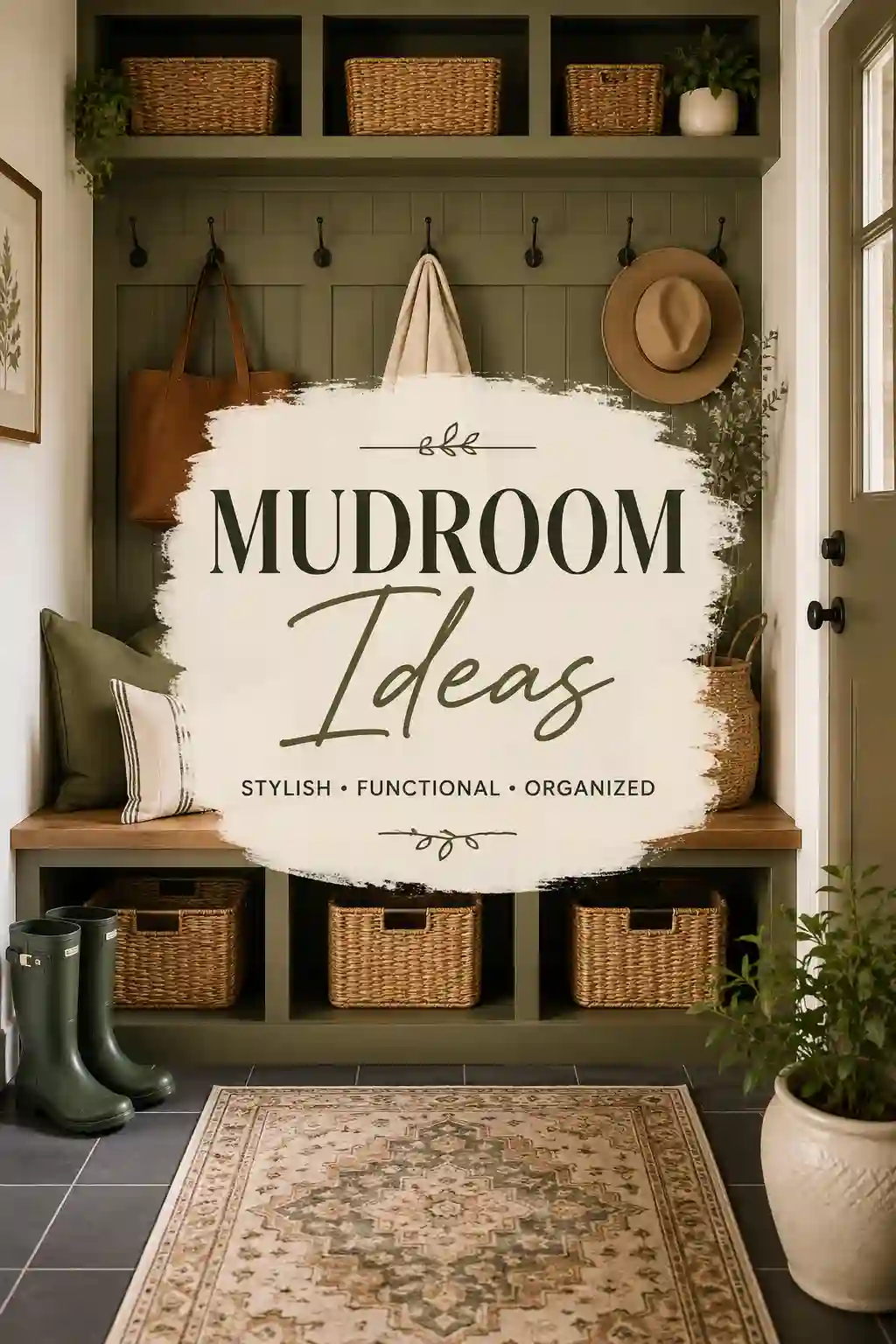
I still remember the day I decided enough was enough. Every single morning, our entryway looked like a garage sale had exploded right inside the front door. Shoes everywhere, backpacks dumped on the floor, coats hanging off a single overloaded hook that was slowly pulling out of the drywall. That was the moment I started seriously researching mudroom ideas, and honestly, it changed our home life completely.
A mudroom does not have to be a dedicated room. It does not have to cost a fortune. It just has to work for your family. After spending months testing different setups, talking to designers, and visiting friends who had cracked the code on their own entryways, I put together everything I learned into this guide. Whether you have a large laundry room you want to convert or just a tiny hallway corner to work with, there are mudroom ideas here that will genuinely transform how your home functions.
Let me walk you through the best mudroom ideas I have found, room by room and budget by budget, so you can build something that works for real life not just something that looks good in a magazine.
Also Read : Nautical Home Decor: The Ultimate Guide to Bringing Coastal Charm Into Every Room of Your Home
Why Mudroom Ideas Matter More Than People Think

Most homeowners underestimate how much a well-designed mudroom affects daily life. Think about it: the entryway is the first and last space you touch every single day. When it is chaotic, that chaos bleeds into your whole morning routine. When it is organized, everything else flows a little better.
Mudroom ideas are not just about storage. They are about creating a transition zone between the outside world and the calm interior of your home. Good mudroom design means wet umbrellas have a place to drip, muddy boots get pulled off before they track dirt onto your hardwood floors, and kids know exactly where their backpacks go when they walk through the door.
Studies on home organization consistently show that clutter in entryways contributes to morning stress and creates decision fatigue before the day even starts. Investing in smart mudroom ideas is not just an aesthetic choice. It is a practical one that pays dividends every single day.
Starting Simple: Budget-Friendly Mudroom Ideas for Any Home
Not everyone has the budget or the space for a full mudroom renovation. And that is completely fine. Some of the most effective mudroom ideas I have come across cost almost nothing to implement. The key is thinking about function first and worrying about aesthetics second.
Start with what you actually need. For most families, that means three things: somewhere to hang coats, somewhere to store shoes, and somewhere to drop bags. Once you nail those three basics, you can layer in extras like mail organization, key hooks, and charging stations later.
Even a few well-placed hooks, a small bench from a thrift store, and a couple of baskets from the dollar section can create a functioning mudroom system in a space that previously had none. I have seen people spend less than fifty dollars and completely transform a chaotic hallway corner.
The Coat Hook Wall: The Foundation of Most Mudroom Ideas
If I had to pick just one thing to add to any entryway, it would be a row of sturdy, well-spaced coat hooks. This is the backbone of virtually every mudroom idea that actually works. The key word there is well-spaced. Cramming ten hooks into four feet of wall creates a tangled mess that nobody uses. Give each hook eighteen to twenty-four inches of breathing room so coats hang properly and can be grabbed without a wrestling match.
Mount hooks at two heights if you have kids in the house. Lower hooks at about four feet high work perfectly for children, and standard hooks at six feet work for adults. This simple adjustment means everyone in the family can actually use the system independently, which dramatically reduces the pile of stuff that ends up on the floor.
For the hooks themselves, look for ones rated for at least ten pounds each. Decorative hooks often look great in photos but fail under the weight of a real winter coat plus scarves and bags hanging off them. Function has to come first in mudroom design.
Bench Seating: The Detail That Makes Mudroom Ideas Work.

A bench might seem like a luxury, but it is actually one of the most practical elements in any mudroom design. Trying to put on or take off shoes while standing on one foot is uncomfortable and unnecessary. A simple bench transforms that daily ritual from a minor annoyance into an easy, pleasant moment.
The best mudroom bench ideas combine seating with storage. Look for benches with open cubbies below where shoes can be stored, or benches with lift-up lids that reveal storage space inside. Even a basic wooden bench with baskets slid underneath accomplishes the same thing and costs a fraction of the price of built-in millwork.
If you are building your own mudroom bench, aim for a seat height of seventeen to nineteen inches the same as a standard chair. This height works comfortably for most adults and older kids without making the space feel like a toddler zone.
Also Read : 50 Stunning Laundry Room Ideas That Will Make You Actually Enjoy Doing Laundry
Small Space Mudroom Ideas That Punch Above Their Weight
Here is a truth that took me a while to fully accept: you do not need a dedicated mudroom room to have mudroom-level organization. Some of the most impressive mudroom ideas I have seen were squeezed into genuinely tiny spaces — a two-foot-wide hallway strip, a recessed niche between two doorways, even the inside of a closet door.
Small space mudroom ideas require a different mindset than large-space designs. Instead of spreading things out, you stack them up. Vertical space becomes your best friend. A narrow cabinet that goes all the way to the ceiling stores far more than a wide open shelf that stops at shoulder height.
The other key principle for small mudroom ideas is ruthless editing. Every element has to earn its place. If something does not get used daily, it does not belong in a small mudroom. Seasonal items, rarely-used equipment, and overflow storage can live elsewhere.
Mudroom Ideas for Apartments and Rental Spaces
If you rent, you might think mudroom ideas are not accessible to you. That is not true at all. There is a whole world of renter-friendly mudroom solutions that require zero wall damage and leave no trace when you move out.
Freestanding coat racks, tension rod shoe organizers, and over-the-door storage panels create a complete mudroom system without a single screw going into the wall. Some renters get incredibly creative with furniture arrangement, using the back of a sofa or a bookshelf positioned near the door as a makeshift mudroom station.
Adhesive hooks have also gotten dramatically better over the last few years. Brands like Command make hooks rated for several pounds that come off cleanly — perfect for a rental mudroom situation where you need function without permanent changes.
The Half-Wall Mudroom: Borrowing Space Without Building a Room

One of my favorite small-space mudroom ideas is the half-wall setup. Instead of dedicating a full room or alcove to mudroom functions, you define a zone using furniture arrangement and visual boundaries. A console table against one wall, hooks above it, and a basket below creates a distinct mudroom area without any construction.
This works especially well in open floor plans where the entry flows directly into the living area. A narrow bench or console with hooks above it signals to everyone in the family that this is where the transition happens — shoes come off here, bags go here, coats go here — before you step into the main living space.
Add a small rug to further define the zone and protect your floors from wet shoes and boots. Choose a rug that is easy to clean since this spot will take a beating. Flatweave rugs or rubber-backed mats work much better than plush pile in a high-traffic mudroom area.
Built-In Mudroom Ideas for a Custom, High-End Look
If you have the budget and the space, built-in mudroom cabinetry is the gold standard of mudroom ideas. Nothing else gives you the same level of organization, the same polished look, or the same ability to customize every inch to your family’s specific needs.
Built-in mudroom systems typically include a combination of open cubbies for individual family members, closed cabinets for storing items you want hidden, drawers for smaller accessories, and sometimes full lockers with doors for a really clean look. They usually run floor to ceiling, which maximizes storage in a way that freestanding furniture cannot match.
The cost of built-in mudroom ideas varies enormously depending on materials and whether you hire a carpenter or do it yourself. IKEA hacks using their PAX or KALLAX systems are a popular middle ground — you get the look of built-ins at a fraction of the custom price by combining modular components and adding finishing touches like trim and paint.
Mudroom Locker Ideas: One Cubby Per Person

The locker concept is one of the most effective mudroom ideas for families with multiple kids. Assign each family member their own dedicated locker or cubby section. Put their name or a photo on it. Make it theirs. Suddenly, organization becomes personal responsibility rather than a general household chore.
A proper mudroom locker typically includes a hook or two at the top for coats and bags, a middle shelf for hats and gloves, and a lower section for shoes or boots. Some families add a small cubby box or drawer inside each locker for smaller items like keys or earbuds.
The beauty of this mudroom idea is that when things get chaotic, you know exactly where to look. Everything messy gets corralled back into each person’s own locker, which restores order in minutes rather than requiring a full organization session.
Mudroom Cabinetry with Laundry Room Integration
For homes where the mudroom flows into or connects with the laundry room, combining these two spaces into one functional zone is one of the smartest mudroom ideas around. A single multi-purpose room handles both the coming-in transition and the laundry workflow, making the whole back-of-house area dramatically more efficient.
In a mudroom laundry room combo, you might have built-in cabinets on one wall handling coats and shoes, a washer and dryer tucked into a counter alcove on another wall, and a folding station or utility sink filling in the remaining space. Everything practical lives in one room, out of sight from the main living areas.
If you are planning this kind of combination, think carefully about traffic flow. The path from the door to the laundry machines should not require weaving around the bench and boot storage. Ideally, the mudroom landing zone is right near the door, and the laundry section extends deeper into the room.
Mudroom Ideas by Style: Finding Your Aesthetic
The best mudroom ideas are not just functional they also feel like a natural extension of your home’s design. Here is how mudroom design translates across some of the most popular home aesthetics.
Farmhouse Mudroom Ideas

Farmhouse mudroom ideas lean heavily on natural textures, warm woods, and classic details. Shiplap walls painted in creamy white or warm greige are the quintessential farmhouse mudroom backdrop. Add wrought iron or antique brass hooks, a wooden bench with visible grain, and woven baskets for storage, and you have the look nailed.
Galvanized metal buckets make charming boot storage in a farmhouse mudroom. Open shelves with a lip at the front to keep items from sliding off store hats and folded blankets beautifully. And a vintage-style rug with ticking stripes or a simple plaid pattern ties the whole room together without competing with the functional elements.
Color palettes for farmhouse mudroom ideas typically stay in the warm neutrals — creams, whites, warm grays, and natural wood tones. Occasional pops of navy or hunter green add depth without disrupting the cozy, classic feel.
Also Read : Breathtaking Penthouse Bedroom Ideas
Modern Mudroom Ideas
Modern mudroom ideas strip away the ornamentation and focus on clean geometry, strong lines, and a restrained color palette. Think floor-to-ceiling white cabinetry with flat-front doors, matte black hardware, and integrated LED strip lighting under cabinets. Everything has a place and nothing is visible unless it is meant to be.
In a modern mudroom, open cubbies are typically used sparingly, with closed storage doing the heavy lifting. The bench seat might be upholstered in a durable performance fabric in charcoal or navy. The floor is usually a large-format porcelain tile or polished concrete, both of which are easy to clean and look intentional.
If you love the modern aesthetic but still want some warmth, balance cool elements with natural wood accents. A wood-topped bench against white cabinetry strikes exactly the right balance — clean and organized without feeling cold or institutional.
Coastal Mudroom Ideas

Coastal mudroom ideas bring in the beach without being kitschy. Think weathered wood, rope accents, natural linen fabrics, and a palette of sandy beiges, soft blues, and crisp whites. Hooks might be made of driftwood or have a sea glass detail. Baskets are sea grass or water hyacinth rather than traditional wicker.
In a coastal mudroom, the floor often features large neutral tiles or wide-plank light wood flooring. A mirror with a whitewashed frame helps reflect light and keep the space feeling airy. The overall vibe is relaxed and livable — which honestly works really well for a mudroom since this space needs to absorb daily chaos without looking like it.
Surf gear, beach bags, and sandy flip-flops all have specific storage solutions in a coastal mudroom. Tall cubbies for surfboards, a rinse station in the garage adjacent, and a specific hook system for wetsuits all make the coastal lifestyle work without tracking sand through the house.
Mudroom Flooring Ideas: What Actually Holds Up
Mudroom flooring takes more abuse than almost any floor in the house. Wet boots, muddy shoes, dripping umbrellas, pet paws — whatever comes in from outside lands here first. Choosing the right flooring is one of the most important mudroom ideas because a bad choice means constant cleaning and early replacement.
The top performers for mudroom flooring are ceramic or porcelain tile, luxury vinyl plank (LVP), and sealed concrete. All three handle moisture without warping, clean up with a simple mop or wipe-down, and can handle the impact of heavy footwear without showing damage.
Tile is the classic choice for mudrooms, and for good reason. It is completely waterproof, enormously durable, and available in every size, shape, and color you can imagine. For a mudroom, choose tile with a matte or textured finish rather than a polished one — wet boots on a polished tile floor create a slip hazard that nobody wants.
Mudroom Tile Ideas

Hex tile in a crisp black-and-white pattern is a timeless choice for mudroom floors that never goes out of style. Large-format tiles in a warm greige or slate tone give a more contemporary look and have fewer grout lines to clean a practical advantage in a high-traffic mudroom.
Patterned cement tiles are having a big moment in mudroom design right now. They add serious visual interest to what is often a utilitarian space, and because the pattern is throughout the material rather than just on the surface, they wear beautifully over time. The trade-off is that cement tile requires sealing and is more porous than porcelain.
For the grout, always go darker than you think you need to. Light grout in a mudroom is a nightmare to keep clean. A medium gray or charcoal grout hides dirt between cleanings and keeps the floor looking presentable even when it is not freshly mopped.
Mudroom Storage Ideas: Solving the Real Problems
At its core, every mudroom idea is really a storage idea. The question is always: what needs to be stored, how much of it is there, and how often is it accessed? Getting clear on those three things first makes every other decision much easier.
I divide mudroom storage into three categories: daily use items (coats, shoes, bags, keys), weekly use items (sports equipment, umbrellas, seasonal accessories), and infrequent items (bulk storage, holiday décor, rarely-used gear). The first category lives in the most accessible spots — hooks at eye level, cubbies at reach. The second lives slightly higher or slightly less convenient. The third goes in cabinets or the deepest cubbies.
Shoe Storage Mudroom Ideas

Shoes are the item that causes the most chaos in most mudrooms. They multiply, they end up everywhere, and they bring in all the dirt and moisture. Dedicating real thought to shoe storage is one of the highest-return mudroom ideas you can pursue.
For families, cubbies with a low bench height work great for boot storage. Each person gets one or two cubbies, and shoes live there rather than on the floor. For households with a serious shoe collection, a built-in shoe cabinet with pull-down or tilt-out doors keeps the display clean while storing a surprising number of pairs behind closed doors.
A boot tray is a simple but effective mudroom idea for managing wet footwear. A tray with a lip holds water and mud so it does not spread across the floor. Look for rubber or galvanized metal trays both handle moisture well and clean easily. Putting a small rug or mat on top of the boot tray gives wet boots somewhere grippy to land before they go into storage.
Mudroom Organization Ideas for the Small Stuff
It is always the small stuff that creates the most visual noise in a mudroom. Keys, sunglasses, dog leashes, mail, receipts, earbuds, hair ties these tiny items have a way of colonizing every flat surface until the whole room looks chaotic even when the coats and shoes are put away.
The solution is dedicated small-item storage, and there are excellent mudroom ideas for this category. A key hook right next to the door eliminates the “where are my keys” morning panic. A small basket or tray on the bench corrals sunglasses, dog treats, and other pocket items. A narrow slot or tray for mail stops paper piles from accumulating on the bench.
For families with kids, adding a small charging station to the mudroom is a surprisingly useful idea. Kids can plug in devices as soon as they walk in the door, and devices charge in a known location rather than being left all over the house. A power strip built into a cabinet drawer or tucked on a shelf behind a cabinet door keeps the cables hidden.
Mudroom Ideas for Pets: Making It Work for the Whole Family

If you have dogs, a mudroom becomes even more essential. Dogs track in mud, water, leaves, and general outdoor chaos every time they come inside. Building pet-specific elements into your mudroom ideas makes a real difference in keeping the rest of your home clean.
A pet station in the mudroom typically includes a low hook for leashes, a drawer or basket for treats and waste bags, and most importantly, some kind of washing or drying station for muddy paws. Even a simple utility tub or a deep tray with a mat for paw-wiping makes an enormous difference.
Some homeowners with dogs install a small dog wash station in their mudroom — essentially a low tub with a sprayer and a drain that allows dogs to be rinsed off before coming fully inside. This is a significant upgrade but a genuinely transformative one for anyone with active dogs.
DIY Mudroom Ideas You Can Actually Build
Some of the most satisfying mudroom ideas are the ones you build yourself. DIY mudroom projects range from genuinely simple (a painted plank with hooks) to more involved (building your own bench with storage). Most fall somewhere in the middle — achievable with a weekend, some basic tools, and a trip to the hardware store.
The mudroom board and hook wall is one of the most popular DIY mudroom ideas, and for good reason. You cut a piece of pine or MDF to width, sand and paint it, then attach hooks evenly spaced across the board. Mount the whole thing to the wall as a unit. The result looks intentional and custom even though it takes a few hours and costs very little.
A DIY mudroom bench is a step up in complexity but still very manageable. The simplest version is a hollow base of plywood or pocket-screwed 2x4s with a plywood lid, painted or wrapped in a durable fabric. Add a lift-up lid mechanism and you have hidden storage inside the bench for under fifty dollars in materials.
IKEA Mudroom Hacks That Look Custom

IKEA has become the secret weapon of mudroom design enthusiasts everywhere. The KALLAX shelving unit, the PAX wardrobe system, and the BESTA storage series all lend themselves beautifully to mudroom applications with some simple modifications.
A popular IKEA mudroom idea uses KALLAX units on their sides as shoe cubbies, topped with a plywood bench seat padded with foam and fabric. Add a row of hooks above and trim the KALLAX with baseboard molding to make it look built-in. The total cost is usually under three hundred dollars — a fraction of custom cabinetry.
The PAX wardrobe system is another mudroom favorite. Remove the standard doors and replace them with more interesting shaker-style fronts. Add interior organization accessories from IKEA’s PAX range. Run a piece of trim across the top to bring the unit up to ceiling height. Suddenly you have a full-height mudroom storage wall that looks completely custom.
Mudroom Lighting Ideas That Make a Real Difference
Lighting is one of the most overlooked elements in mudroom ideas, and that is a shame because good lighting transforms how a space feels and functions. A dark mudroom is harder to keep organized — you cannot see what is in those back cubbies, and the whole space feels smaller and more cave-like.
The ideal mudroom has layered lighting: an overhead source for general illumination, some task lighting inside or under cabinets, and ideally some natural light. If your mudroom has an exterior door with glass panels, maximize that natural light by keeping windows unobstructed and using lighter colors on the walls and cabinets.
For artificial lighting, a flush-mount ceiling fixture works well in most mudrooms. Go for a bulb that produces a warm-to-neutral white light in the 3000K to 4000K range — bright enough to see clearly, warm enough to feel welcoming. If you have the option to add under-cabinet lighting, do it. It makes a surprising difference in the usability of lower cubbies and the overall feel of the space.
Mudroom Ideas for Garage Entries

The garage entry is often the most-used door in the house, which makes it one of the highest-priority spots for mudroom ideas. This is where most families actually come and go every day — not through the front door, but through the garage — and yet it is frequently the most neglected organizational spot in the home.
A garage entry mudroom does not need to be fancy, but it does need to be functional. The same principles apply: hooks for coats and bags, a bench for shoe removal, and storage for the items that come in and out most often. The garage entry version often needs to handle additional items that a front-entry mudroom does not — sports equipment, car-related items, gardening gear.
Because garage entries tend to be utilitarian spaces, you can often get away with industrial-style storage that would feel too cold in a main entryway. Wire shelving, pegboards, metal cubbies, and utility hooks all work beautifully in a garage entry mudroom and are significantly less expensive than finished wood cabinetry.
Seasonal Mudroom Ideas: Keeping Up with the Calendar
One challenge that does not get discussed enough in mudroom ideas is seasonality. A mudroom that works perfectly in summer falls apart in winter when suddenly you need space for heavy coats, snow boots, gloves, hats, ski goggles, and a whole different category of gear. The reverse is true in summer — all that winter gear needs to go somewhere so beach bags and sandals can take over.
The best mudroom ideas build in flexibility for seasonal transitions. This means having accessible storage (like a high cabinet or an attic shelf above the mudroom) where off-season items can be stored in labeled bins. It means hooks that can hold both lightweight summer jackets and bulky winter coats without becoming overloaded.
Some homeowners create a seasonal bin system in their mudroom: one large labeled bin per family member for off-season accessories. In October, summer hats and beach gear go in the bins and up to storage. Wool hats, gloves, and ski goggles come down. In April, the reverse. Simple, effective, and keeps the active mudroom space from being overwhelmed by items that are not currently relevant.
Color and Paint Ideas for a Mudroom Refresh

Sometimes the most impactful of all mudroom ideas is the simplest: a fresh coat of paint. Color sets the tone for the whole space and can make a utilitarian mudroom feel intentional and designed even if nothing else changes.
Classic choices for mudroom walls include soft whites and creams (bright and clean), navy or hunter green (rich and traditional), warm grays (timeless and versatile), and black (surprisingly dramatic and practical since it hides scuffs). If your mudroom is small, lighter colors make it feel larger. If it is large, a deeper color makes it feel cozier and more purposeful.
Painting the interior of cubbies a contrasting color to the cabinet exterior is a detail that always looks great and costs almost nothing extra. Imagine white cabinet exteriors with a warm sage or navy inside each cubby — it is a sophisticated design touch that makes the whole mudroom look more finished and intentional.
Finishing Touches That Make Mudroom Ideas Come Together

The difference between a mudroom that looks designed and one that just looks organized often comes down to the finishing touches. These are the small details that tell visitors this space was thought through rather than thrown together.
A good mirror is one of the best finishing touches for a mudroom. It serves the practical purpose of letting you check your appearance before leaving, and it also makes the space feel larger and more finished. A leaning mirror against the wall, a round mirror above the bench, or a full-length mirror on the inside of a cabinet door all work beautifully.
Adding a small plant or two brings life into what is otherwise a utilitarian space. Choose plants that tolerate variable conditions — mudrooms can be cold in winter and get little consistent light. Pothos, snake plants, and hardy succulents all survive the mudroom environment well. Even a single plant makes the space feel more intentional and less purely functional.
Real Talk: The Mudroom Ideas That Did Not Work for Us
I want to be honest here, because not every mudroom idea I tried was a success. There were things that looked great in the planning stage and completely failed in practice with a real family using them every day.
Open cubbies for shoes sounds great and looks great in photos. In real life, my family just… did not put their shoes in the cubbies. They went right next to the cubbies, or under the bench, or by the door. The cubbies became a staging area for random stuff. What worked better for us was a simple floor-level basket system — one basket per person, put your shoes in your basket. Less elegant, but actually used.
I also tried a sophisticated key organization system with individual hooks for each family member’s keys. In practice, everyone used the same hook because it was nearest to the door. Now we have one hook right by the light switch and everyone uses it consistently. Sometimes the simplest mudroom ideas are the ones that work.
People Also Ask
Q1. What should every mudroom have?
Every mudroom should have at minimum: coat hooks at two heights (for adults and children), some form of bench seating for putting on and taking off shoes, shoe storage of some kind (cubbies, baskets, or a rack), and a durable easy-clean floor. Everything else — cabinets, mirrors, charging stations, pet areas — builds on this foundation.
Q2. How do I create a mudroom in a small space?
Even a tiny hallway can function as a mudroom. Start with a narrow bench against the wall, hooks mounted above it, and a basket or two underneath. Use the vertical space fully — hooks higher on the wall for seasonal or less-used items. Freestanding coat racks work well in rental spaces or very small entryways where wall-mounting is not possible.
Q3. What is the best flooring for a mudroom?
Porcelain tile is the top choice for most mudrooms due to its complete waterproof nature and durability. Luxury vinyl plank (LVP) is an excellent and more affordable alternative. Sealed concrete works well in more industrial or modern spaces. Avoid untreated hardwood, carpeting, or any porous material in a mudroom — moisture and mud will damage them quickly.
Q4. How do I organize a mudroom with multiple kids?
The locker system is the most effective mudroom idea for multi-child families. Assign each child their own dedicated section with personalized hooks, a cubby, and a basket or bin for their shoes. Make it theirs — with their name or photo — so that organization becomes personal responsibility. Color-coding by child (one child gets blue hooks, another gets red) can also help younger kids keep things sorted.
Q5. What are good mudroom ideas for a garage entry?
Garage entry mudrooms can handle more industrial storage than front-entry spaces. Pegboards for gear, metal cubbies, wire shelving, and utility hooks all work well here. Include space for sports equipment, car-related items, and gardening gear in addition to the standard coats-and-shoes setup. A utility mat or rubber floor is more appropriate here than tile or hardwood.
Q6. How much does it cost to build a mudroom?
Mudroom costs range enormously. A basic DIY setup with hooks, a thrifted bench, and some baskets can cost under one hundred dollars. An IKEA hack mudroom typically runs two hundred to six hundred dollars. Full custom built-in cabinetry from a carpenter can run anywhere from three thousand to fifteen thousand dollars or more depending on the size and materials. The good news is that very effective mudroom ideas exist at every price point.
Q7. What is the difference between a mudroom and a foyer?
A foyer is typically a more formal entry space focused on making a good first impression — think decorative table, artwork, and a statement light fixture. A mudroom is a functional transition space specifically designed to contain the mess that comes in from outside. Many homes have both, with the mudroom near the most-used entry (often the garage or back door) and the foyer at the front of the house.
Q8. Can I add a mudroom to my home without a renovation?
Absolutely. Freestanding furniture — a console table, a coat rack, a small bench, and some baskets — can create a fully functional mudroom system without any construction at all. The result will not look as polished as built-in cabinetry, but it will function just as well. This approach is especially practical for renters or anyone not ready to commit to permanent changes.
Q9. What are good mudroom ideas for a laundry room combo?
When combining a mudroom and laundry room, think about workflow and traffic flow separately. Position the mudroom drop zone near the door, and the laundry area further into the room. A shared utility sink can serve both purposes — hand washing, pet rinsing, and laundry pre-treating. Built-in cabinetry that wraps both zones creates a cohesive look and maximizes storage across both functions.
Q10. How do I keep my mudroom organized long-term?
The biggest factor in long-term mudroom organization is making the system genuinely easier than the alternative. If putting something away is harder than dropping it on the floor, it will end up on the floor. Keep it simple: one hook per person, one basket per person for shoes, one spot for keys, and nothing in the mudroom that does not belong there. Seasonal clear-outs twice a year also help prevent gradual accumulation of items that have crept in.
Q11. What color should I paint my mudroom?
There is no single right answer, but some colors perform better than others in mudroom conditions. Darker colors (navy, charcoal, hunter green, black) hide scuffs and fingerprints better than light colors. Warm neutrals (greige, cream, warm white) make small mudrooms feel larger and brighter. Whatever you choose, use a paint with a satin or semi-gloss finish — both are far easier to wipe clean than flat or eggshell finishes.
Q12. Do I need a bench in my mudroom?
A bench is not strictly required, but it is one of the highest-value elements you can add to a mudroom. Even a very simple bench dramatically improves the usability of the space. The alternative — a step stool or nothing at all — makes putting on shoes awkward and is one of the main reasons people end up sitting on the floor or carrying shoes to another room to put them on.
Q13. What are some mudroom ideas for dog owners?
Dog owners benefit most from a low-mounted leash hook right by the door, a boot tray or paw-wiping mat for post-walk paw cleaning, and a drawer or basket dedicated to dog supplies (treats, waste bags, grooming items). For very active dogs or muddy climates, a utility tub or outdoor dog wash station near the mudroom entry is a life-changing addition.
Q14. How big should a mudroom be?
A functional mudroom can be as small as three feet wide by four feet deep — big enough for a bench and hooks. A comfortable mudroom for a family of four is typically six to eight feet wide. A large mudroom with full cabinetry, lockers, and laundry integration might be ten to fourteen feet wide. That said, size matters less than thoughtful design — a well-planned small mudroom outperforms a poorly organized large one every time.
Q15. What storage accessories work best in a mudroom?
The most useful mudroom storage accessories include: boot trays (waterproof and easy to clean), woven baskets or bins (for shoes, accessories, and catch-all storage), labeled bins or bins that hook onto cubby shelves (for smaller items), key hooks with a small tray below, a mail slot or letter holder, and under-bench storage baskets. For families with kids, a small chalkboard or whiteboard in the mudroom is surprisingly useful for notes and reminders.