

There is something deeply satisfying about walking into a white living room. The air feels lighter. The space feels bigger. And somehow, no matter what time of day it is, the room always looks put together. I have spent years obsessing over interiors, visiting friends’ homes, flipping through design books, and experimenting in my own space, and I keep coming back to the same conclusion: white living room ideas never go out of style. They adapt, they breathe, and they make every other design choice you make look intentional.
But here is the thing nobody tells you. Creating a white living room that actually feels warm and livable is harder than it looks. There are a hundred shades of white. There are textures to consider, lighting to think about, and the very real fear that the whole thing will look cold and sterile. This article is going to walk you through everything you need to know, from the foundational decisions to the tiny finishing touches that make the difference between a showroom and a home.
Whether you are starting from scratch or simply refreshing an existing space, these white living room ideas will give you the confidence to commit to this timeless palette. Let’s dig in.
Also Read : 60+ Elegant Living Room Valance Ideas That Instantly Transform Your Space
Why White Living Room Ideas Have Stood the Test of Time
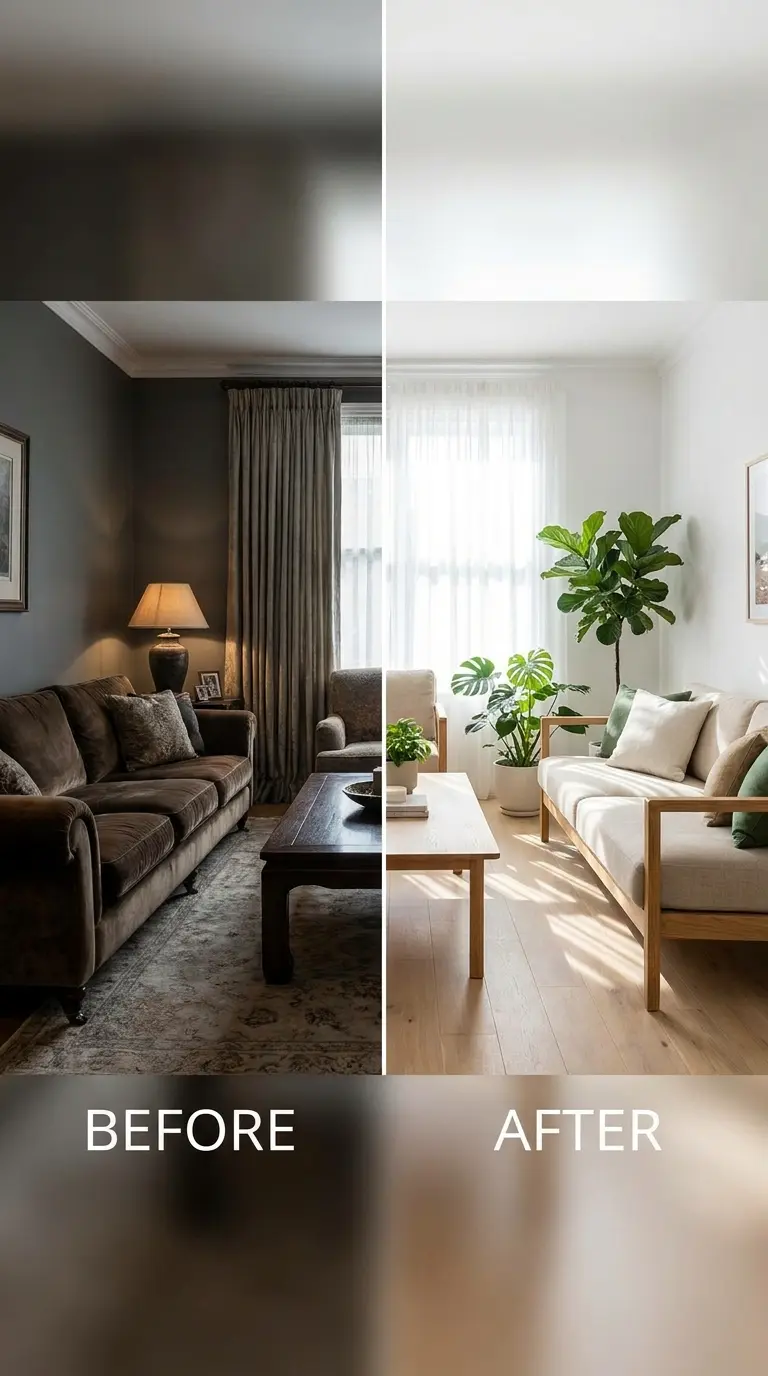
White has been a dominant interior design choice for decades, and it shows no signs of slowing down. The reason is actually quite simple when you think about it. White is a neutral that works with every other color, every furniture style, and every architectural detail. A white living room can feel Scandinavian and minimalist one decade, then layered and maximalist the next, simply by swapping out accessories and textiles.
Beyond trends, white living room ideas work on a practical level too. White reflects natural light, making rooms feel larger and more open than they actually are. For anyone living in a smaller apartment or a home with limited windows, this is genuinely transformative. I have seen a tiny city apartment completely change its personality just by painting the walls a warm white and replacing dark curtains with sheer linen panels.
There is also a psychological benefit that designers and homeowners alike talk about. White spaces feel calm. They give the mind room to breathe. In a world full of visual noise and overstimulation, coming home to a white living room feels like exhaling. That is why so many wellness-focused interior designers default to white-led palettes when creating spaces meant for relaxation and family life.
Choosing the Right Shade of White for Your Living Room
This is where most people get tripped up. Walk into any paint store and you will quickly discover that white is not just white. There are warm whites, cool whites, off-whites, creamy whites, and everything in between. The shade you choose will set the entire emotional tone of your white living room, so it is worth spending real time on this decision.
Warm Whites for a Cozy Atmosphere
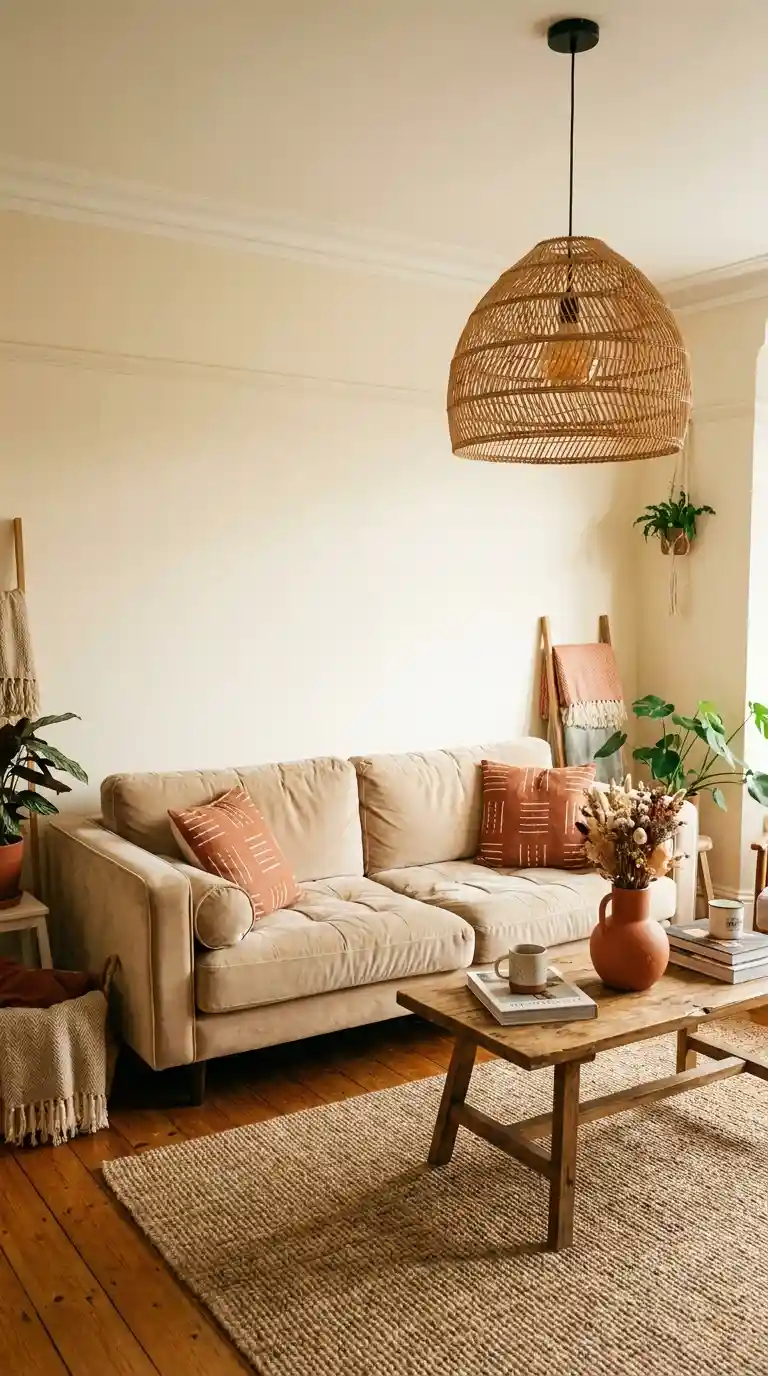
Warm whites have yellow, beige, or pink undertones. Think of shades like Benjamin Moore’s Chantilly Lace or Sherwin-Williams’ Alabaster. These whites feel welcoming and soft, especially in rooms that get afternoon western light. If your living room feels even slightly cold or north-facing, a warm white will counteract that. It adds that lived-in, honey-toned quality that makes a space feel like a real home rather than a staged display.
Warm white living room ideas work especially well with natural wood floors, rattan furniture, linen upholstery, and earthy accessories. The whole palette stays in the same tonal family, creating a cohesive and genuinely beautiful result. Many interior designers specifically recommend warm whites for older homes with original character features, since the softness complements the patina of aged materials beautifully.
Also Read : Sofa Ideas for Living Room: The Ultimate 2026 Guide to Style, Comfort & Space
Cool Whites for a Crisp, Modern Feel
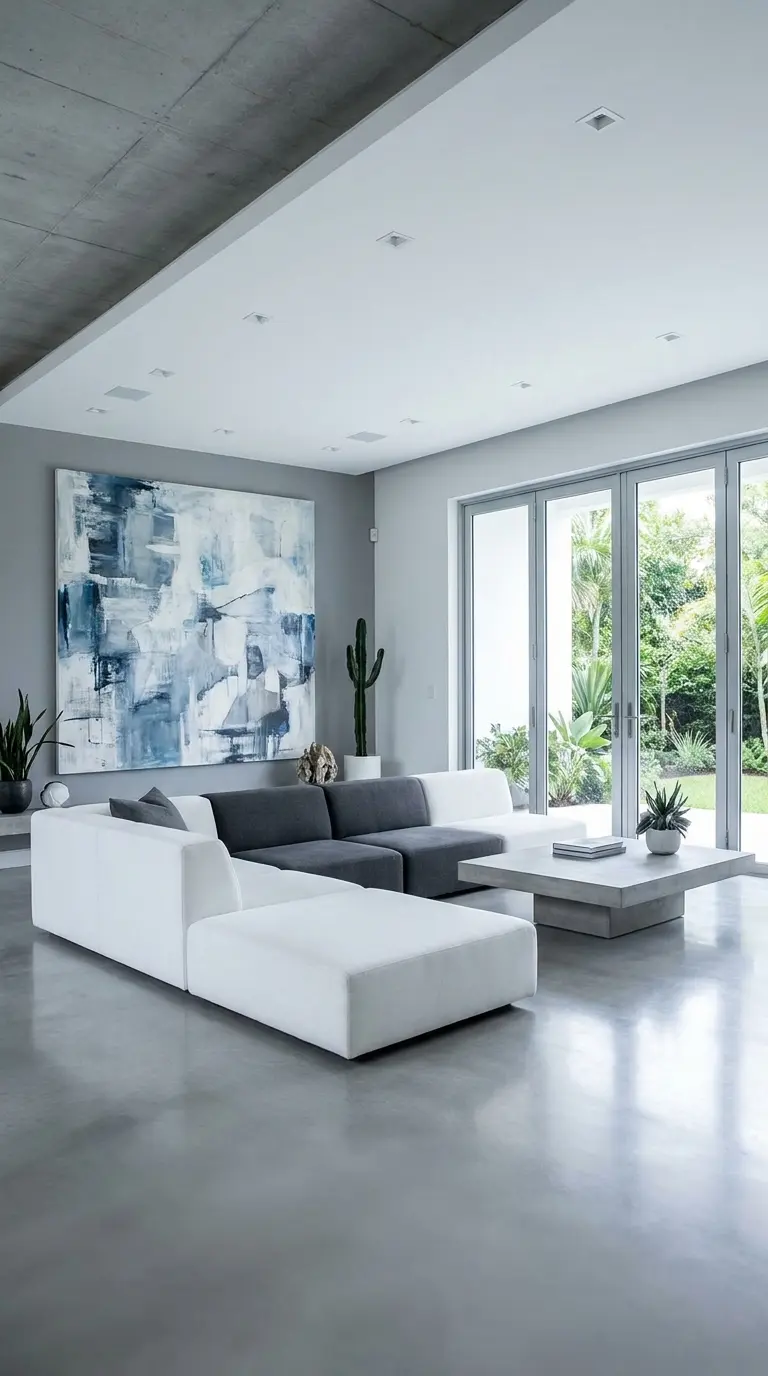
Cool whites lean into blue or grey undertones. Farrow and Ball’s Strong White or Dulux’s Timeless Pure are good examples. These shades feel sharp, clean, and modern. If you are going for a contemporary white living room with sleek furniture and minimal ornamentation, a cool white will sharpen the whole look and stop it from feeling too soft or dated.
Cool whites are also excellent in rooms that receive a lot of natural light from south-facing windows, since the bright sun can make warm whites look almost yellow by midday. The cool undertone cuts through the brightness and keeps the space looking balanced all day long. Pair cool whites with steel, glass, marble, and pale grey textiles for a sophisticated, gallery-like result.
White Living Room Ideas for Different Design Styles
One of the greatest strengths of the white living room is its versatility. The same base palette can be dressed up or down to suit almost any interior design style. Here is how to approach white living room ideas through different aesthetic lenses.
Scandinavian White Living Rooms
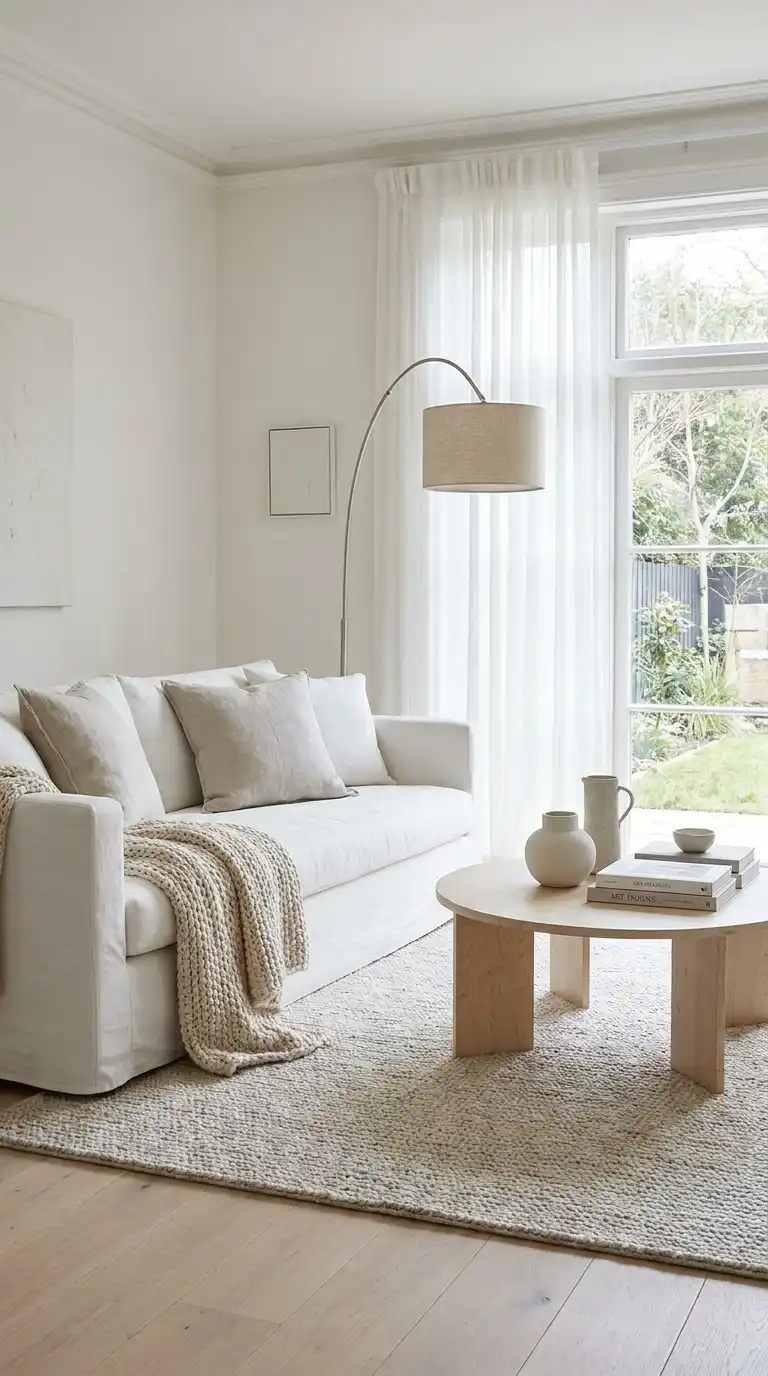
Scandinavian interior design and white living rooms were made for each other. The Nordic design tradition is built on simplicity, functionality, and the celebration of natural light, all of which point directly toward a white palette. In a Scandi white living room, you would typically see walls painted in a soft cool or neutral white, furniture kept to essential pieces in natural oak or light beech, and textiles layered in grey, oatmeal, and natural linen.
What makes Scandinavian white living room ideas so enduring is the emphasis on quality over quantity. Every piece earns its place. A single beautifully shaped floor lamp, a stack of hardback books, one oversized ceramic pot holding a fiddle leaf fig. Nothing is there by accident, and that intentionality is what gives the space its calm authority.
Farmhouse White Living Rooms
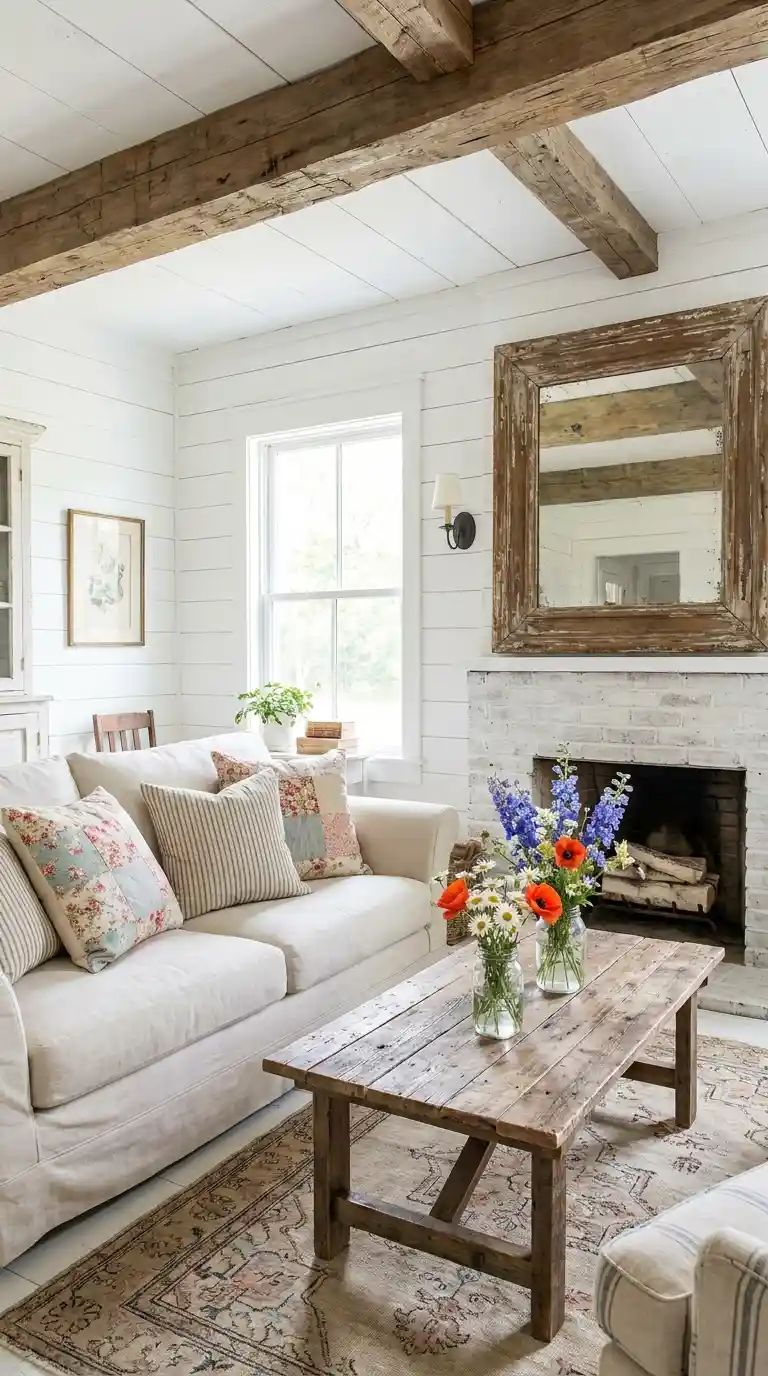
The farmhouse aesthetic takes white living room ideas in a warmer, more textural direction. Here, shiplap walls, exposed wooden beams, distressed furniture, and handmade ceramics come together to create a space that feels deeply comfortable and effortlessly charming. White is the foundation, but it is white with character: chipped paint, linen slipcovers, a chunky knit throw draped over the arm of the sofa.
Farmhouse white living rooms often mix periods and styles in a relaxed way. A vintage mirror, a modern pendant light, an antique chest used as a coffee table. The white walls act as the great equalizer, bringing all those different elements together into something cohesive. If you love collected, personal spaces that tell a story, this version of the white living room will feel genuinely like home.
Also Read : Best Small Living Room Decor Tips to Make Your Space Feel Bigger & Stylish
Luxury White Living Rooms
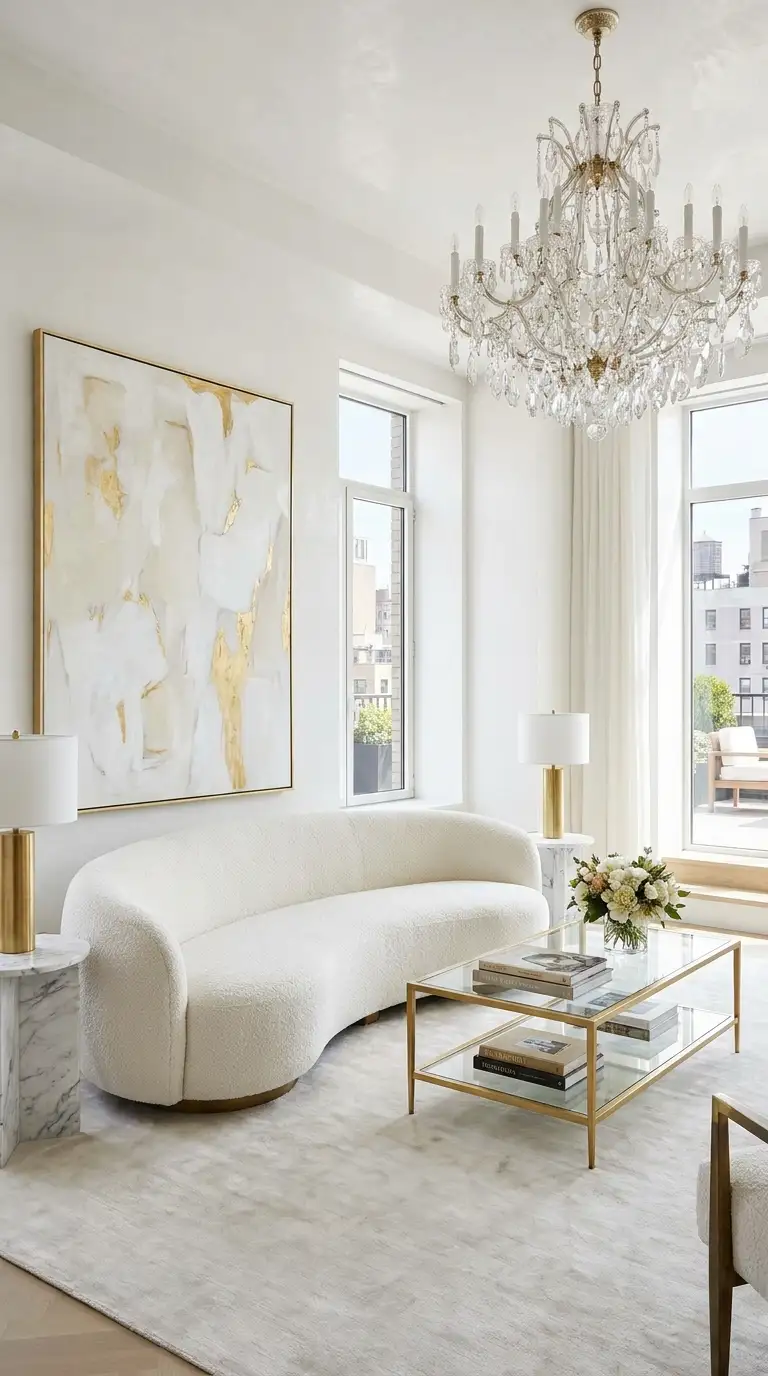
White can be the ultimate expression of luxury when handled with the right materials. Think marble, velvet, gold accents, and architectural moldings. A luxury white living room idea often centers on a statement sofa, perhaps in snow-white bouclé or pearl-toned velvet, set against walls finished in a matte, high-quality white plaster or Venetian lime wash finish.
The secret to making a luxury white living room look genuinely expensive rather than just pale is the contrast and texture you introduce. A glossy lacquered side table, a sculptural brass floor lamp, an oversized plush rug in ivory and cream. Layering different whites and near-whites creates depth and sophistication that a single flat white never achieves.
White Living Room Ideas with TV Wall Design
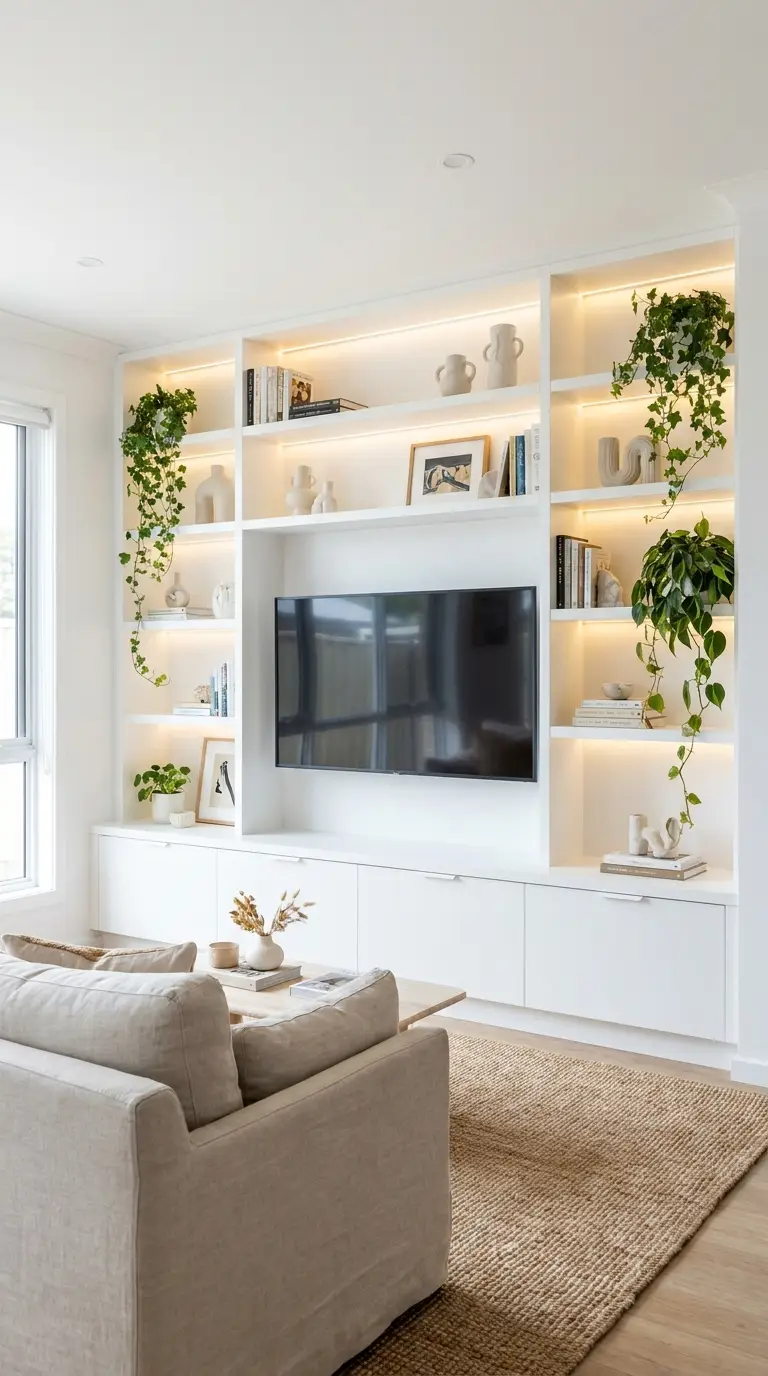
One of the most common challenges in any white living room is figuring out what to do with the television wall. A black screen mounted on a white wall can look jarring and cold, like a dark hole punched into an otherwise serene space. But with some thoughtful planning, your TV wall can become one of the most beautiful features in the room.
Built-In Shelving Around the TV
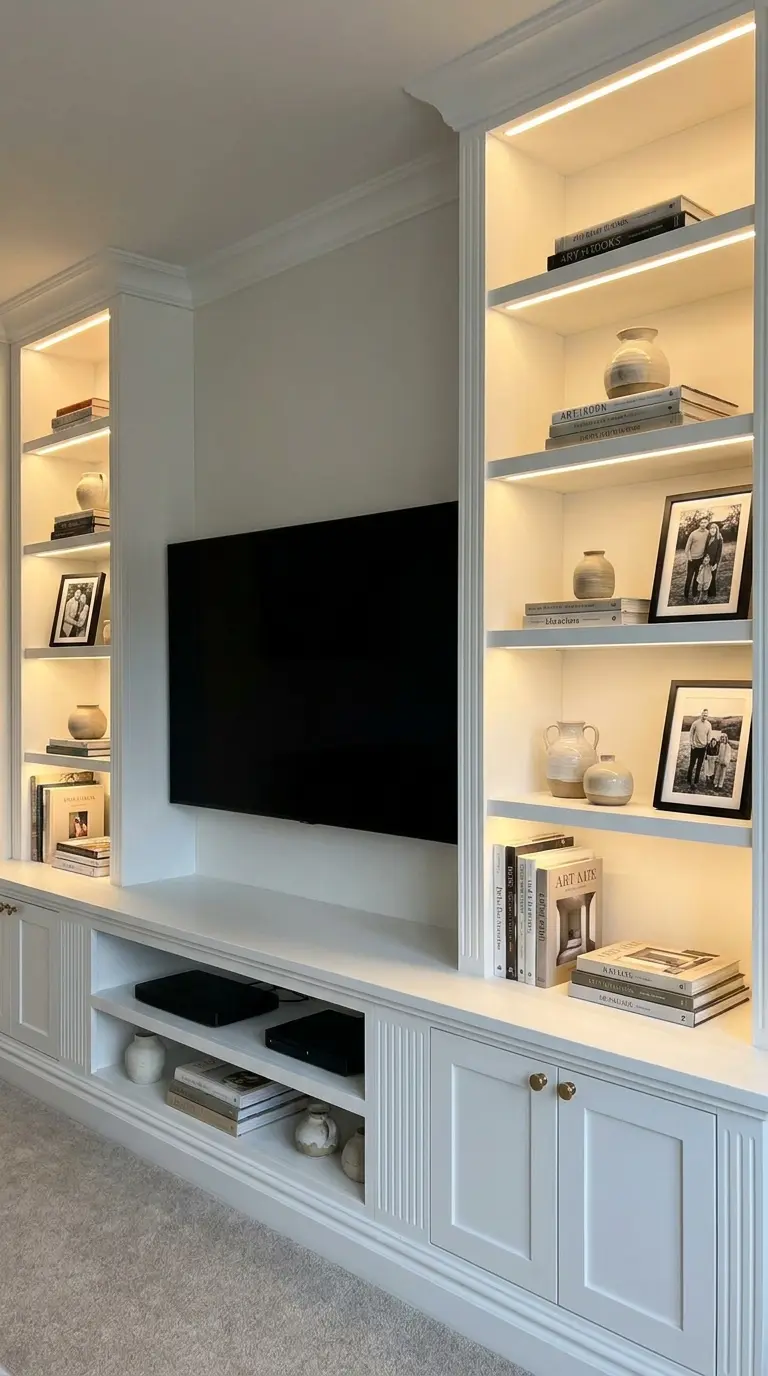
One of the most popular TV wall design ideas for living rooms is to surround the screen with custom built-in shelving. Painted in the same white as the walls, the shelving essentially becomes part of the architecture, making the TV feel like one element among many rather than the dominant focal point. You can style the shelves with books, plants, art objects, and meaningful personal pieces, creating a living gallery that draws the eye as much as the screen itself.
The key to making built-in shelves work in a white living room is the lighting. Adding LED strip lights inside the shelves creates a warm glow that makes the whole wall feel designed and intentional. When the TV is off, the shelves are the star. When the TV is on, the surrounding objects frame it beautifully and soften the technological feel.
Gallery Wall Around the TV
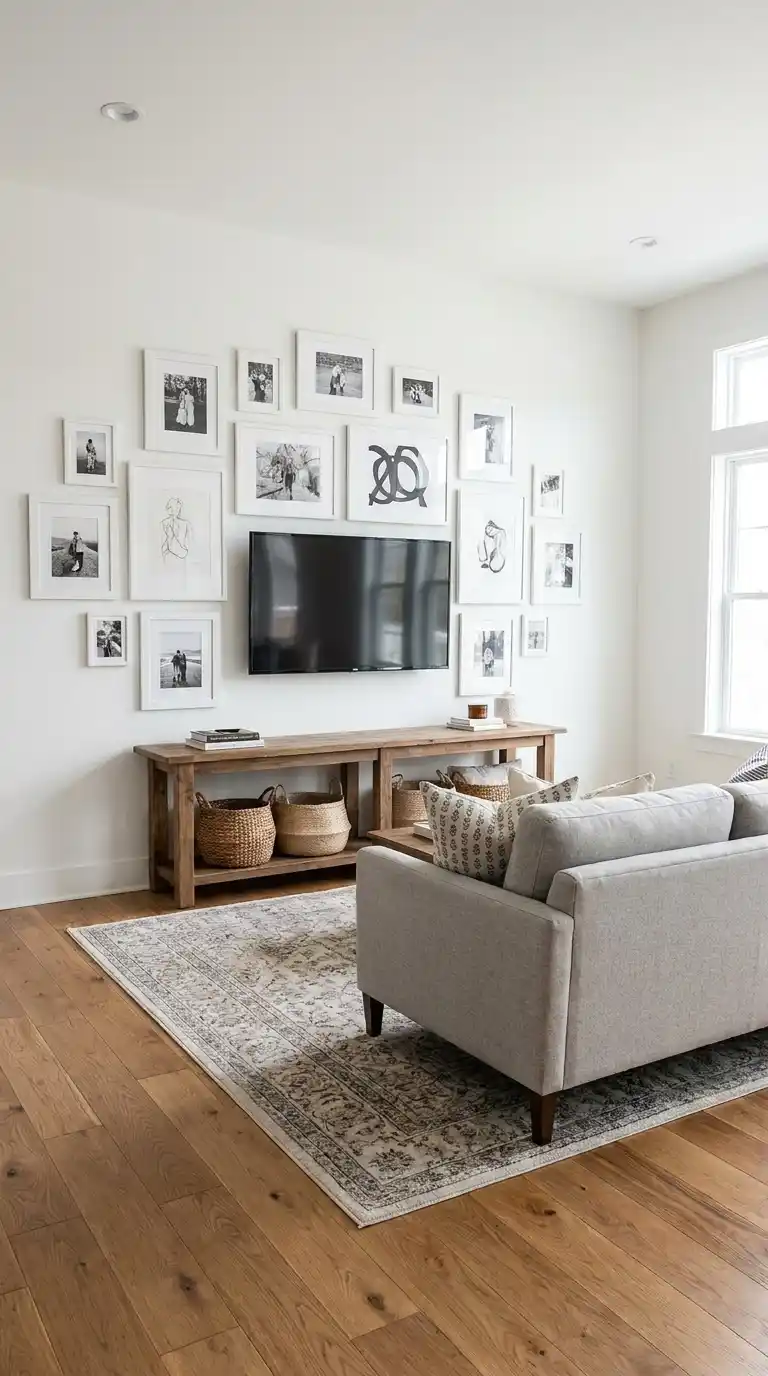
Another beautiful approach to TV wall design ideas for living rooms is the gallery wall. Instead of built-in furniture, you hang a curated collection of framed prints and photographs around the television, treating the screen as just another rectangle in a composition of rectangles. When everything is framed in matching white or light wood frames, the TV blends into the arrangement rather than standing apart from it.
For a white living room, an all white gallery wall with black and white photography or simple botanical prints looks incredibly elegant. The uniform palette keeps the wall feeling airy and cohesive while still providing visual interest. Some homeowners even go a step further and choose a TV with a gallery mode that displays art when not in use, making the transition between screen and wall art completely seamless.
Also Read : 10 Best Neutral Living Room Ideas for a Calm and Stylish Space
Fluted Panel TV Walls
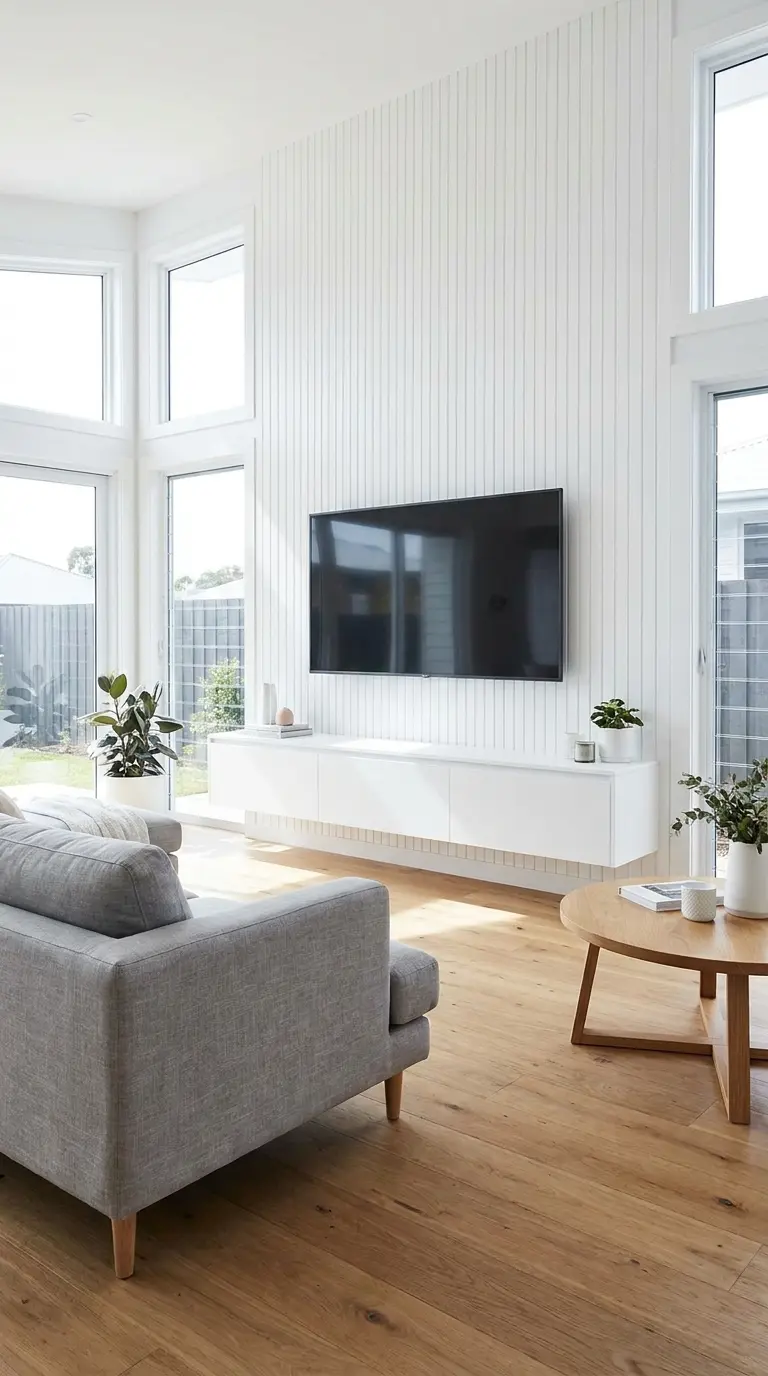
Fluted panels have emerged as one of the most stylish TV wall design ideas for living rooms in recent years, and they work magnificently in white living rooms. These ribbed, channeled panels add extraordinary texture to what would otherwise be a flat wall, creating a sense of depth and architectural interest without any additional color. Painted white, fluted panels transform the TV wall into a sophisticated backdrop that feels both contemporary and timeless.
The beauty of fluted panels in a white living room is that they catch light differently throughout the day, creating subtle shadow play that keeps the space looking dynamic even in its simplicity. You can run the panels floor to ceiling for maximum impact, or just behind the television for a more focused feature.
Furniture Choices That Make White Living Rooms Sing
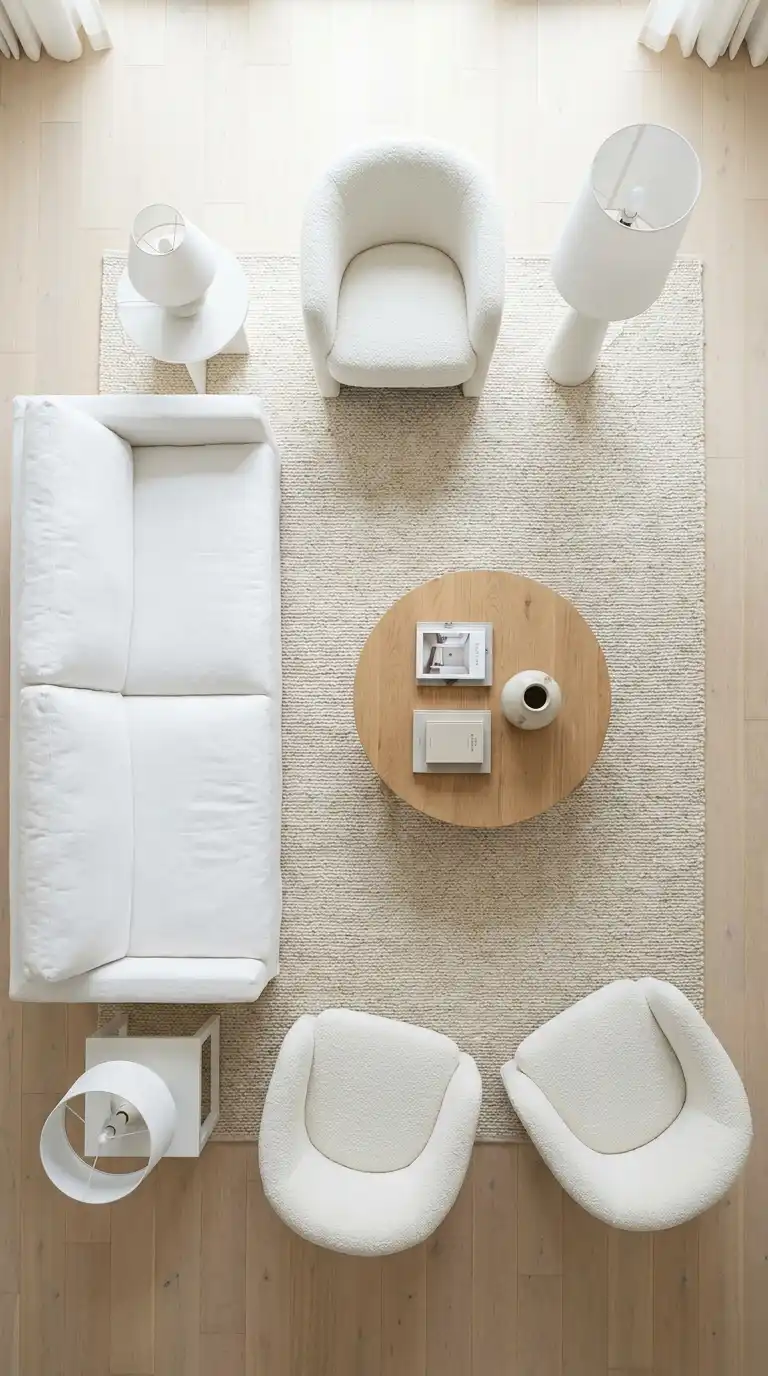
Choosing furniture for a white living room requires a slightly different thought process than choosing furniture for a colored room. In a white space, every piece is more visible, more exposed. There is nowhere for an awkward sofa silhouette or a cheap-looking side table to hide. The good news is that this actually makes shopping easier in some ways, because it forces you to be intentional about everything you bring into the space.
The Sofa: Your Biggest Decision
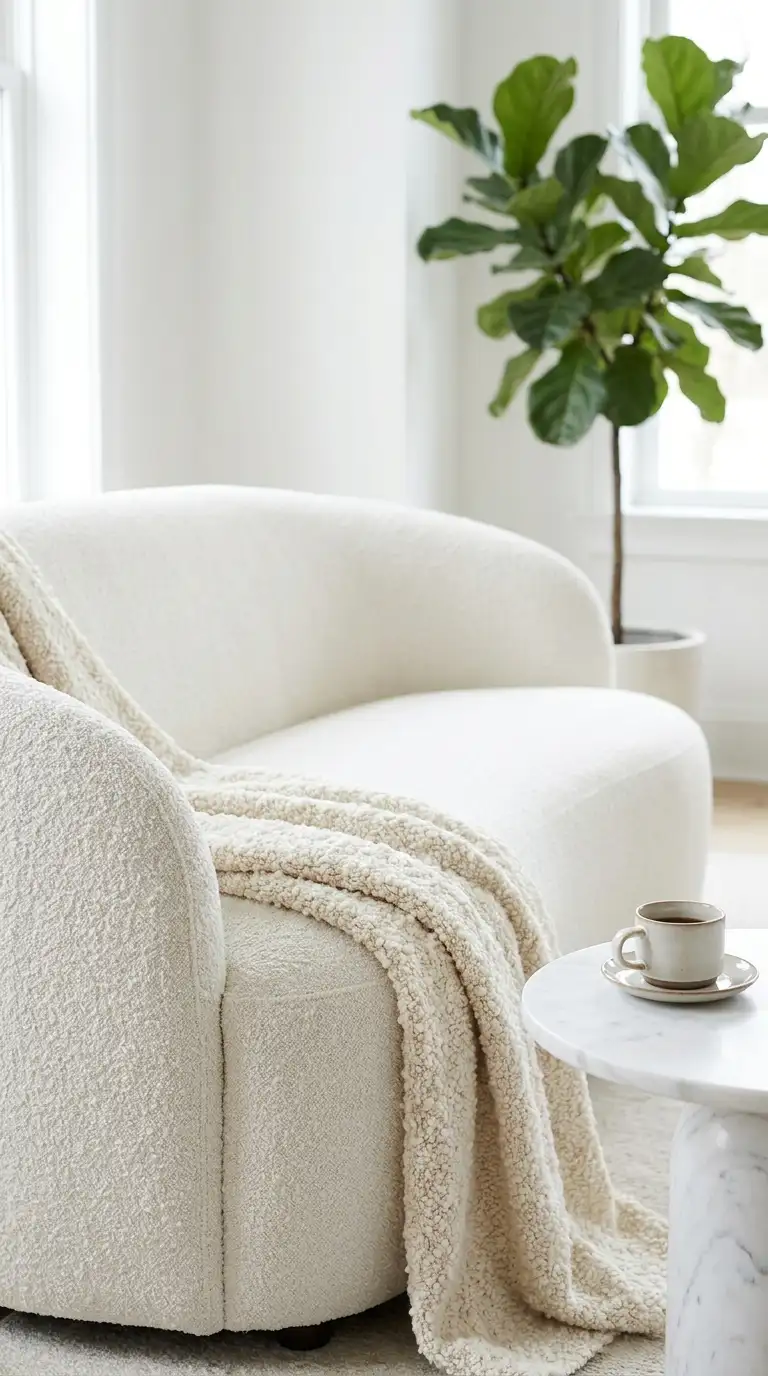
In most white living room ideas, the sofa is the star of the show. You have a few different directions you can go. You can choose a sofa in white or cream, leaning into the pale palette and creating a tone-on-tone effect that feels luxurious and spacious. Alternatively, you can use the sofa as a contrast element, bringing in a deep navy, forest green, or charcoal to create a focal point against the white background.
If you choose a white sofa, consider the fabric very carefully. Performance fabrics like bouclé, tight-weave linen, and washable covers have become enormously popular precisely because they allow people to live comfortably in their white living rooms without constant anxiety. A white sofa with removable, machine-washable slipcovers is not a compromise. It is a brilliant practical solution that lets you commit to the look with confidence.
Coffee Tables and Side Tables
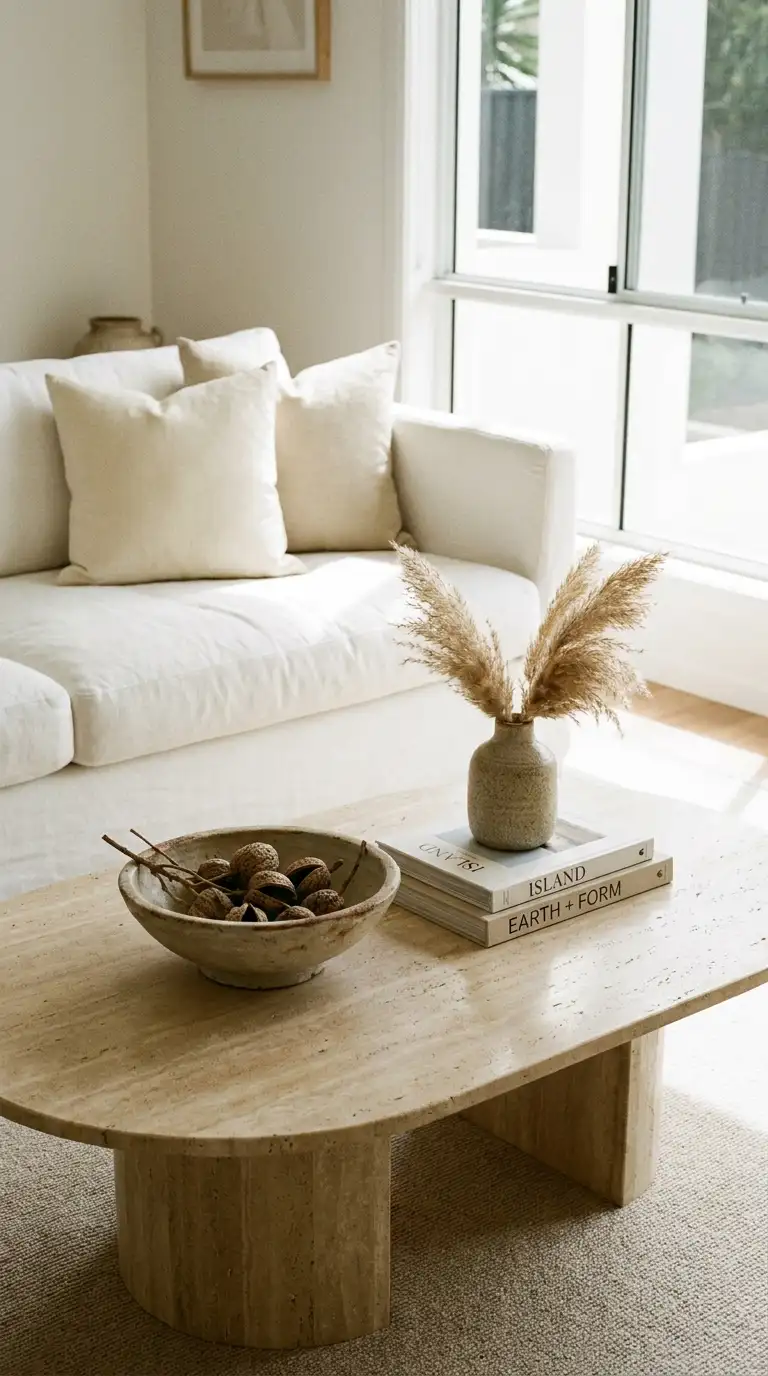
The coffee table in a white living room takes on heightened importance because it is so visible against the pale backdrop. Natural materials like marble, travertine, light oak, rattan, and glass all work beautifully. Each brings a different textural note while keeping the palette cohesive. A travertine coffee table in a white living room feels genuinely elevated, the natural veining and earthy tones creating warmth without introducing any jarring color.
Side tables offer a wonderful opportunity to mix materials. A white living room that combines a marble top side table on one end of the sofa and a rattan basket table on the other is more interesting than two identical pieces. Mixing materials within a restrained color palette is one of the most effective white living room ideas for adding depth without adding visual clutter.
Rugs and Textiles: The Key to a Warm White Living Room
If there is one thing that separates a cold, clinical white living room from a warm and inviting one, it is the quality and layering of rugs and textiles. Soft furnishings are the single greatest tool you have for introducing warmth, texture, and personality into a white space, and they are also among the easiest things to change if you want to refresh the room.
Choosing the Right Rug for a White Living Room
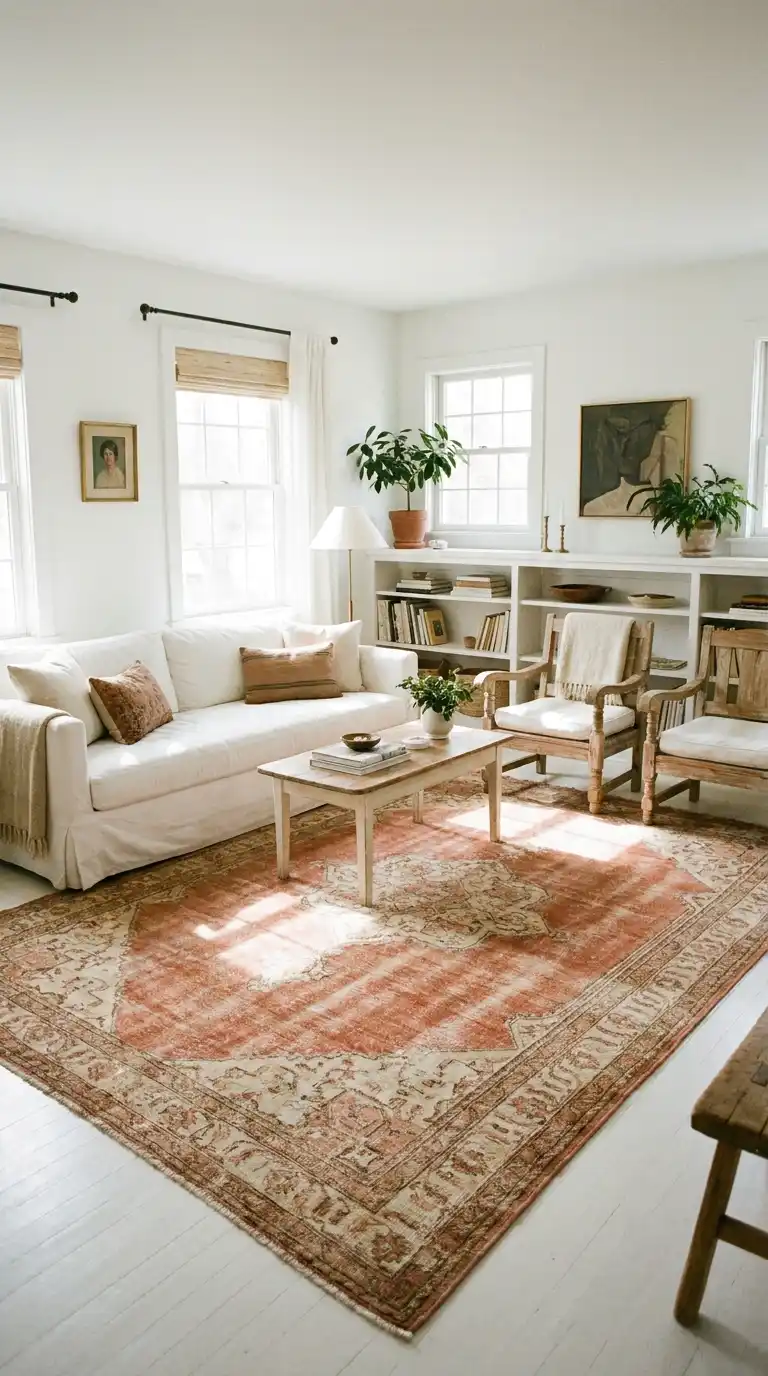
The rug in a white living room acts as a foundation, defining the seating area and grounding the furniture. A natural fiber rug in jute, sisal, or sea grass adds organic texture and warmth that works beautifully against white walls. These materials have a slight variation in tone that keeps the floor from looking flat, and their rough, natural texture contrasts satisfyingly with smooth upholstery and painted walls.
For a softer underfoot feel, consider a wool or cotton rug in cream, ivory, or a pale natural stripe. A vintage or antique rug in faded rose, dusty blue, or warm terracotta introduces color in a gentle, time-worn way that feels earned rather than deliberate. Some of the most beautiful white living room ideas I have ever seen center on a single magnificent antique rug that does all the personality work while everything else stays serene.
Cushions, Throws, and Curtains
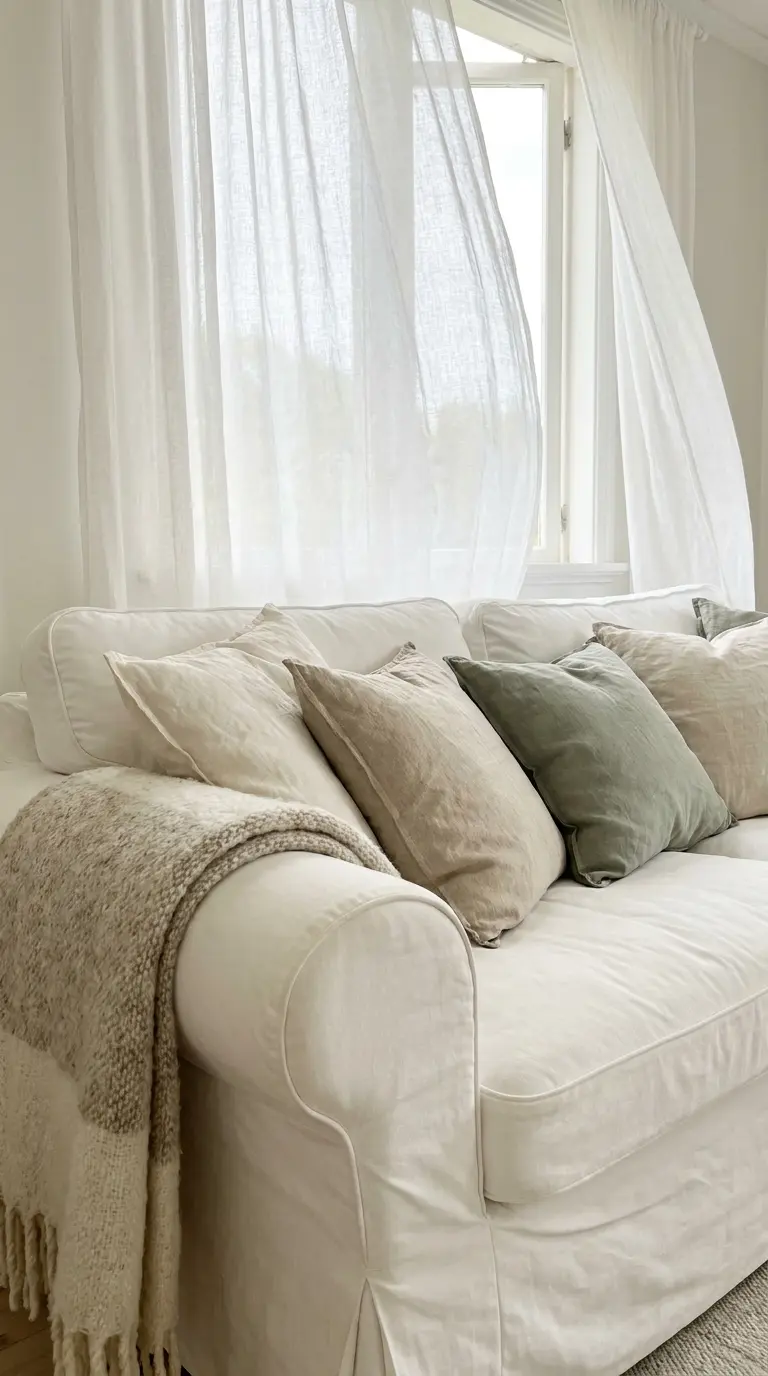
Layering textiles is the most accessible way to make any white living room feel finished and personal. Cushions in natural linen, velvet, cotton, and even leather introduce different textures that make the sofa look styled and considered. Do not be afraid to mix textures within a neutral color palette. A linen cushion beside a velvet one in the same cream tone is more interesting than two identical pieces.
Throws are perhaps the single most transformative addition to any white living room. A chunky knit throw in oatmeal, a cashmere blanket in soft grey, or a hand-woven cotton blanket in natural undyed tones all add warmth both visually and literally. Drape them casually rather than folding them perfectly and the whole room will instantly feel more lived in and relaxed.
Curtains deserve as much consideration as any piece of furniture. Floor-to-ceiling curtains in white or natural linen, hung high above the window and wide beyond the frame, will make the windows look more generous and the ceilings look taller. This is one of those white living room ideas that costs relatively little but makes an enormous visual difference.
Lighting Ideas for White Living Rooms
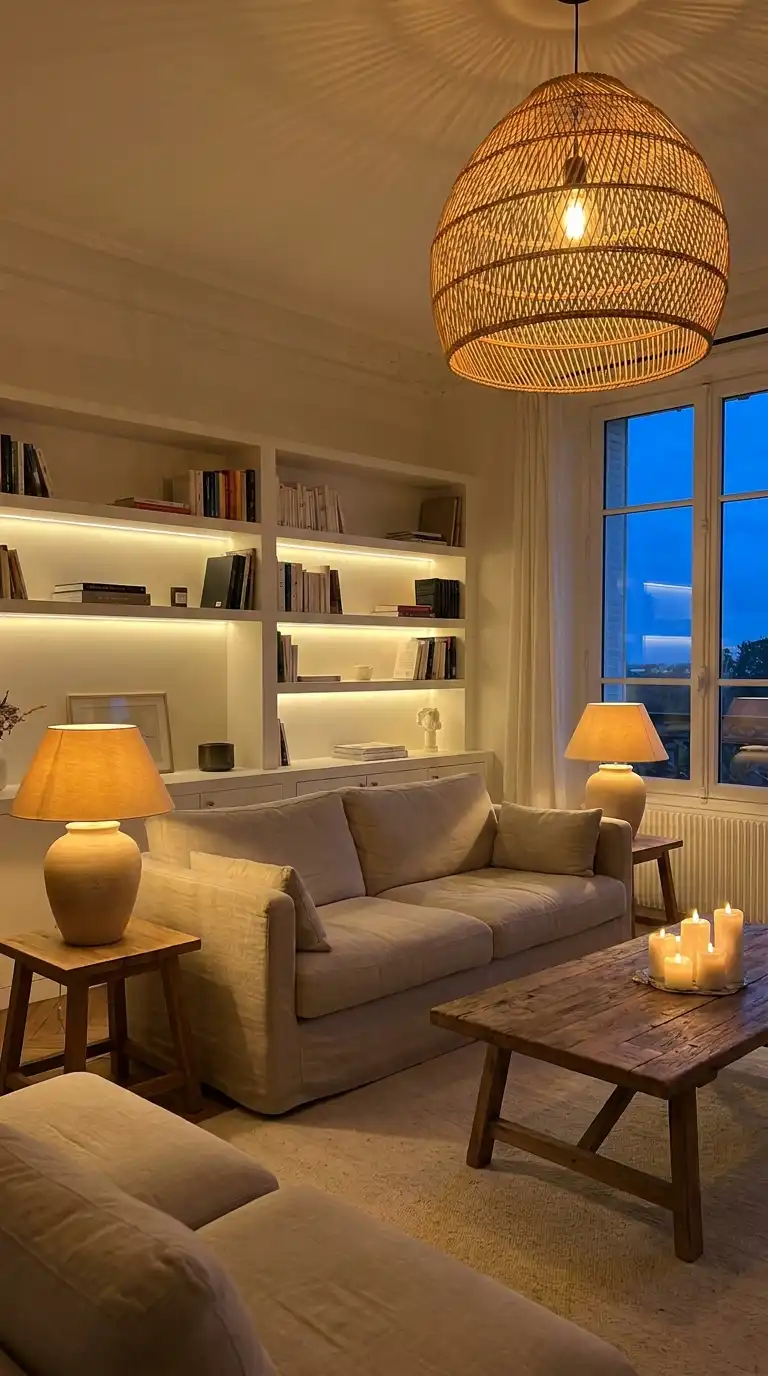
Lighting is where many white living rooms either succeed magnificently or fall completely flat. Because white reflects and amplifies light, the quality of your lighting directly determines how the room feels at every hour of the day. Getting this right is non-negotiable if you want your white living room to feel genuinely beautiful rather than just clean.
Natural Light: Maximize Every Ray
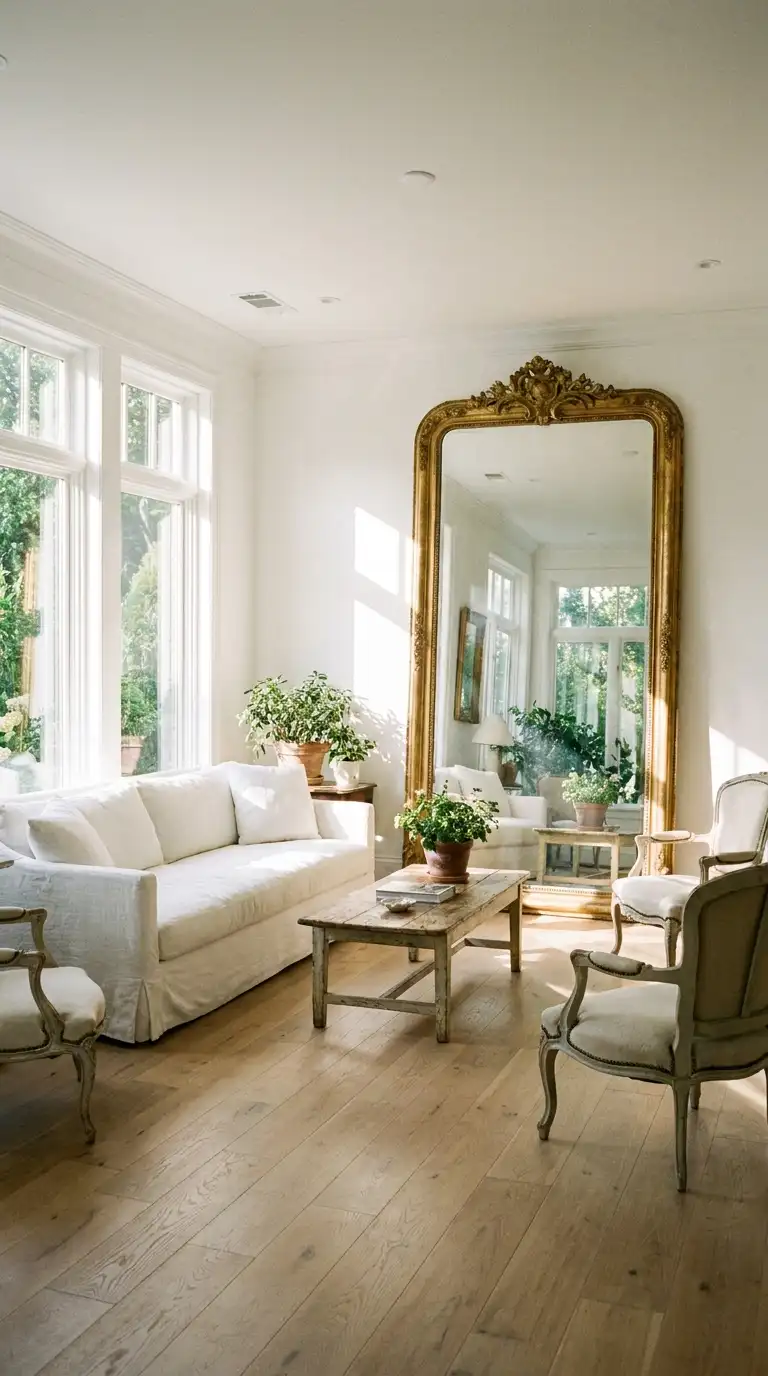
In any white living room, natural light is your greatest asset and your primary design partner. Keep window treatments as light and unobstructed as possible. Sheer linen or cotton voile panels that pool slightly on the floor allow maximum light penetration while still providing some privacy and softness. If you have plantation shutters or blinds, keep them open during the day and use them purely for nighttime privacy.
Mirror placement is the other natural light multiplier that every white living room should use. A large mirror placed opposite a window will reflect the outside light back into the room, effectively doubling its brightness. An oversized leaning mirror, a vintage ornate mirror above the fireplace, or a full-length mirror in an alcove can all serve this purpose while also functioning as beautiful design objects.
Artificial Lighting Layers
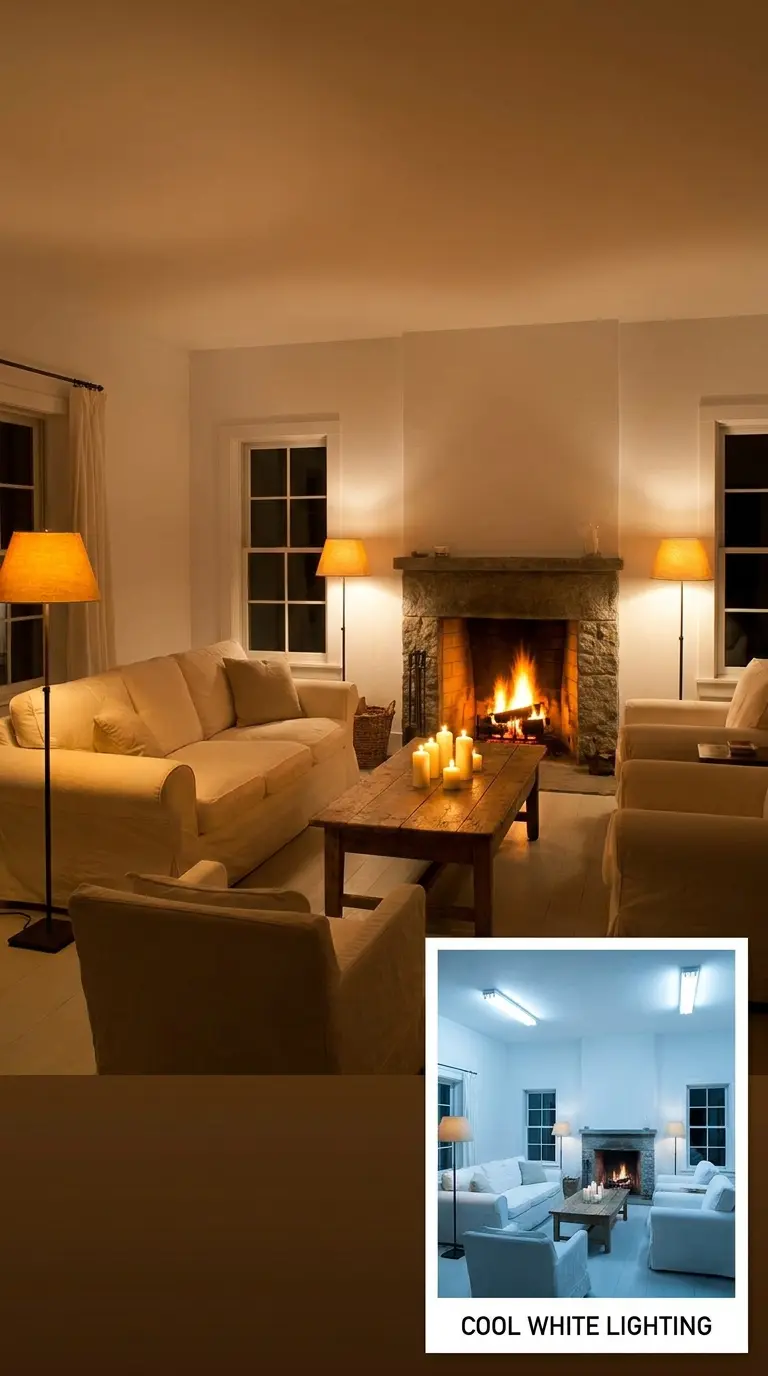
Once the sun goes down, a white living room needs thoughtful artificial lighting to maintain its warmth and appeal. Overhead lighting alone will flatten the space and make it feel like a hospital corridor. Instead, think in layers: ambient lighting from a central pendant or recessed fixtures, task lighting from floor lamps beside seating, and accent lighting from table lamps, shelf lighting, and candles.
The colour temperature of your bulbs matters enormously in a white living room. Warm white bulbs in the 2700K to 3000K range will bathe the room in a golden tone that reads as welcoming and cozy. Cool white bulbs above 4000K will make the space feel sharp and clinical. Always choose warm bulbs for living areas, and consider dimmers for every circuit so you can adjust the mood throughout the evening.
Adding Color Accents to a White Living Room
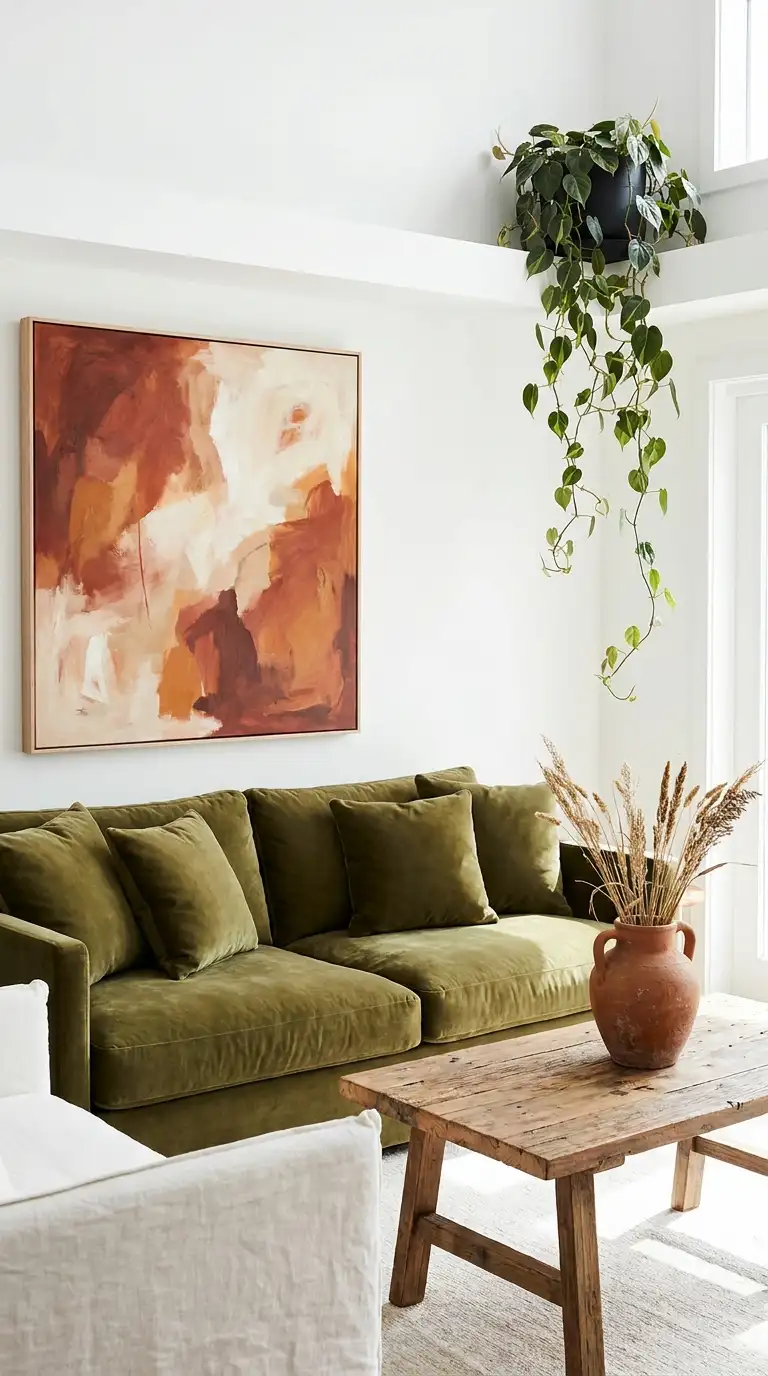
One of the most common questions people ask about white living room ideas is how to add color without overwhelming the palette. The good news is that white is so versatile it can support almost any accent color, from the softest blush to the deepest jewel tones. The key is knowing how much color to introduce and where to place it.
Earthy Tones and Naturals
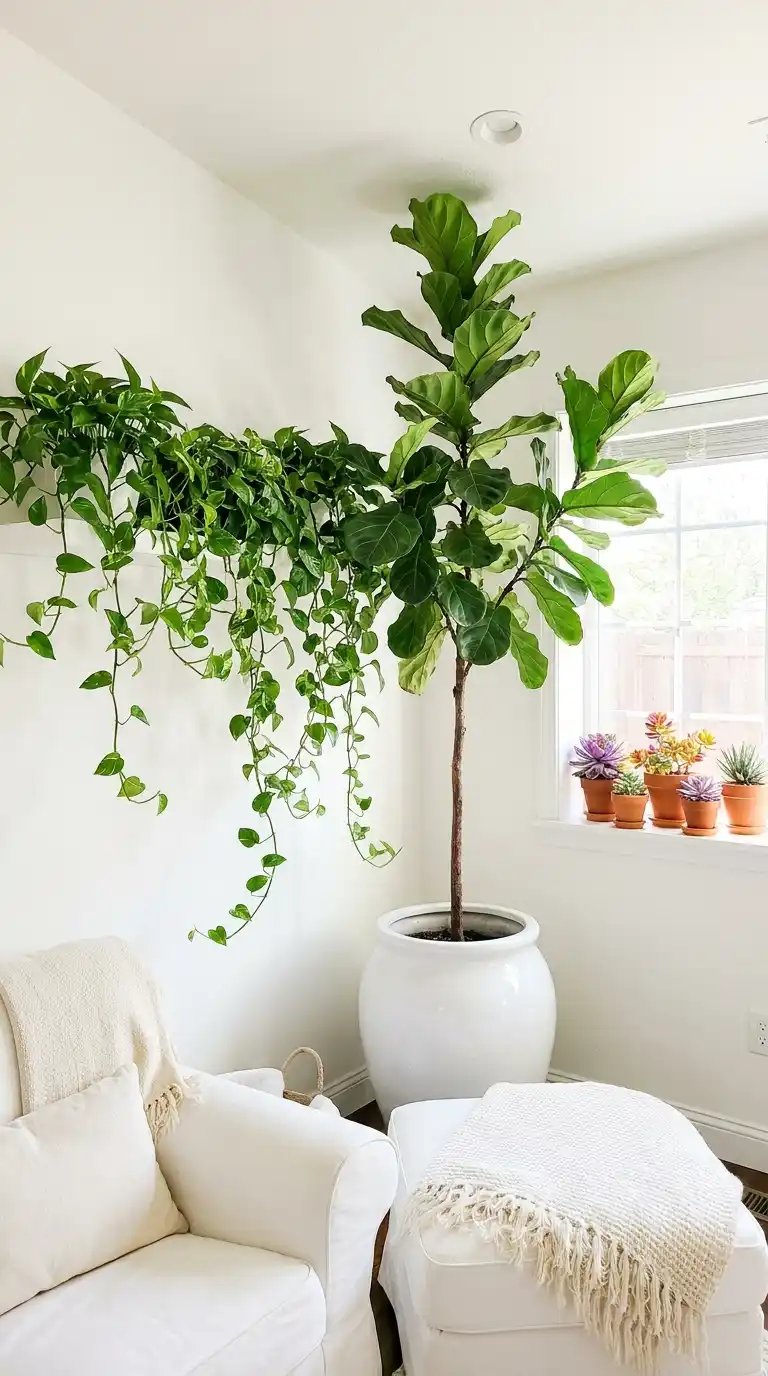
Earthy accents are the safest and most universally flattering additions to a white living room. Terracotta, ochre, rust, sage green, and warm beige all sit beautifully against white walls without creating jarring contrast. These colors feel grounded and natural, which is precisely why they work so well in a space that is trying to feel both elegant and livable. A terracotta ceramic pot, a sage green velvet cushion, a warm amber-toned glass vase: these are easy, low-commitment ways to try adding color to your white living room.
Plants are perhaps the most perfect natural accent for a white living room. The varied greens of different plant varieties against white walls is one of nature’s most successful color combinations. From the graphic form of a monstera to the trailing elegance of a pothos, plants add color, life, texture, and even air quality to your white living room, and they never clash with anything.
Bold Accents for Drama
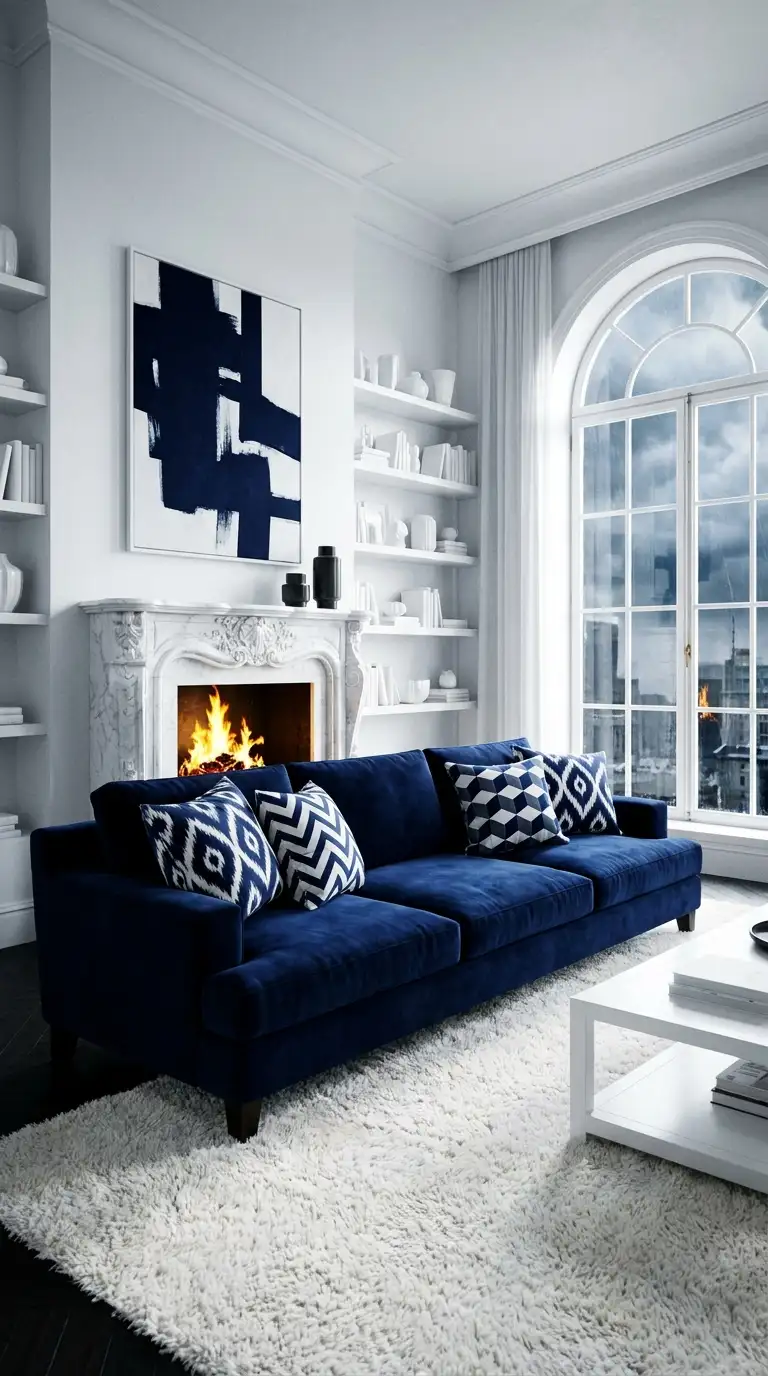
If you want your white living room to have real visual impact, do not shy away from a bold accent color. A single deep navy sofa, a jewel-green armchair, or a rich burgundy velvet ottoman can transform a white living room from serene to stunning. The trick is to keep the bold color concentrated in one or two elements rather than scattering it everywhere. Let the white room do the breathing, and let the accent piece take the credit.
Black is perhaps the most powerful accent color for a white living room because it creates such clean, graphic contrast. Black picture frames, a black side table, a black floor lamp, or even black grout in a tiled fireplace surround all create definition and crispness that keeps the white from feeling too soft. Many designers use the ratio of 80% white to 20% black as a guiding principle for achieving that classic high-contrast editorial look.
Small White Living Room Ideas That Make the Most of Every Inch
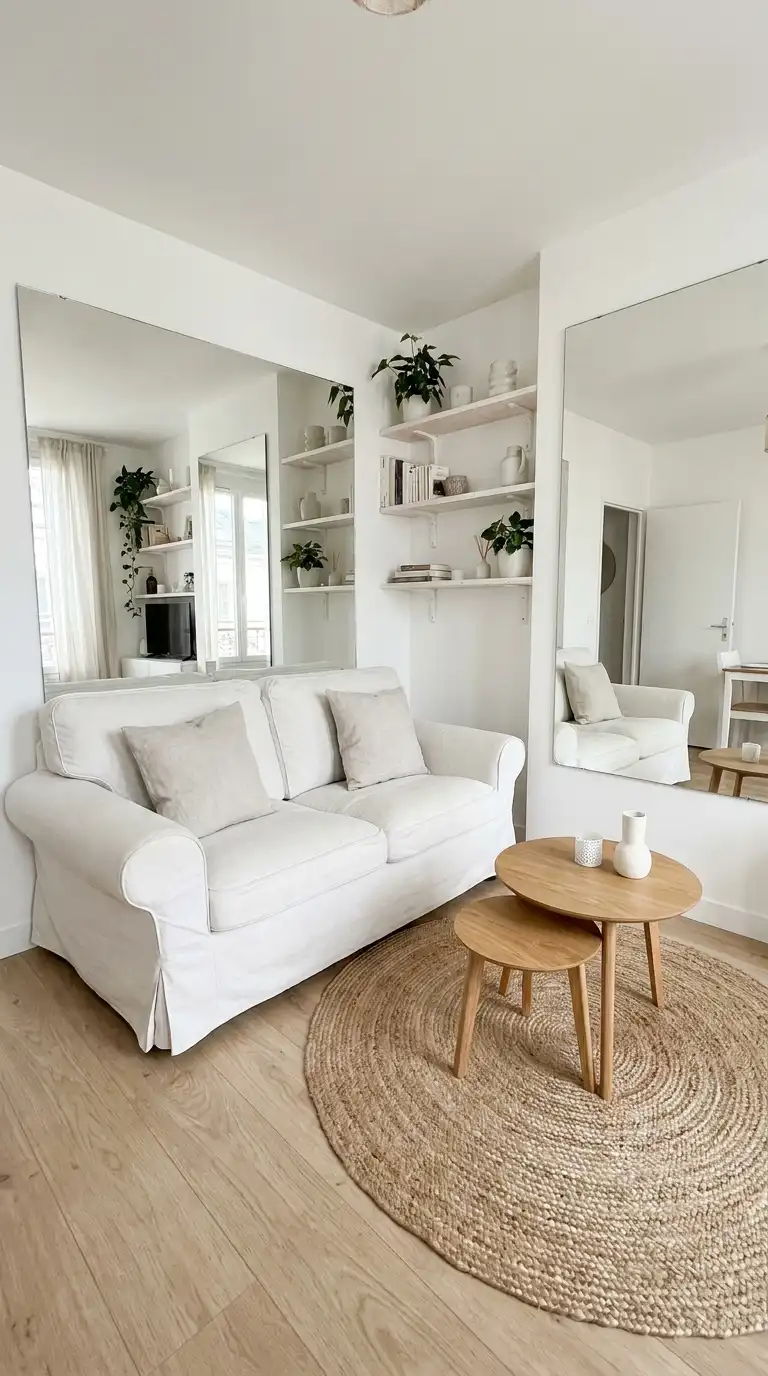
White living room ideas are particularly powerful in smaller spaces, where the light-reflecting qualities of the palette can make a genuine, measurable difference to how the room feels. But small white living rooms need some additional strategic thinking to ensure they look designed rather than sparse.
Furniture Scale and Placement
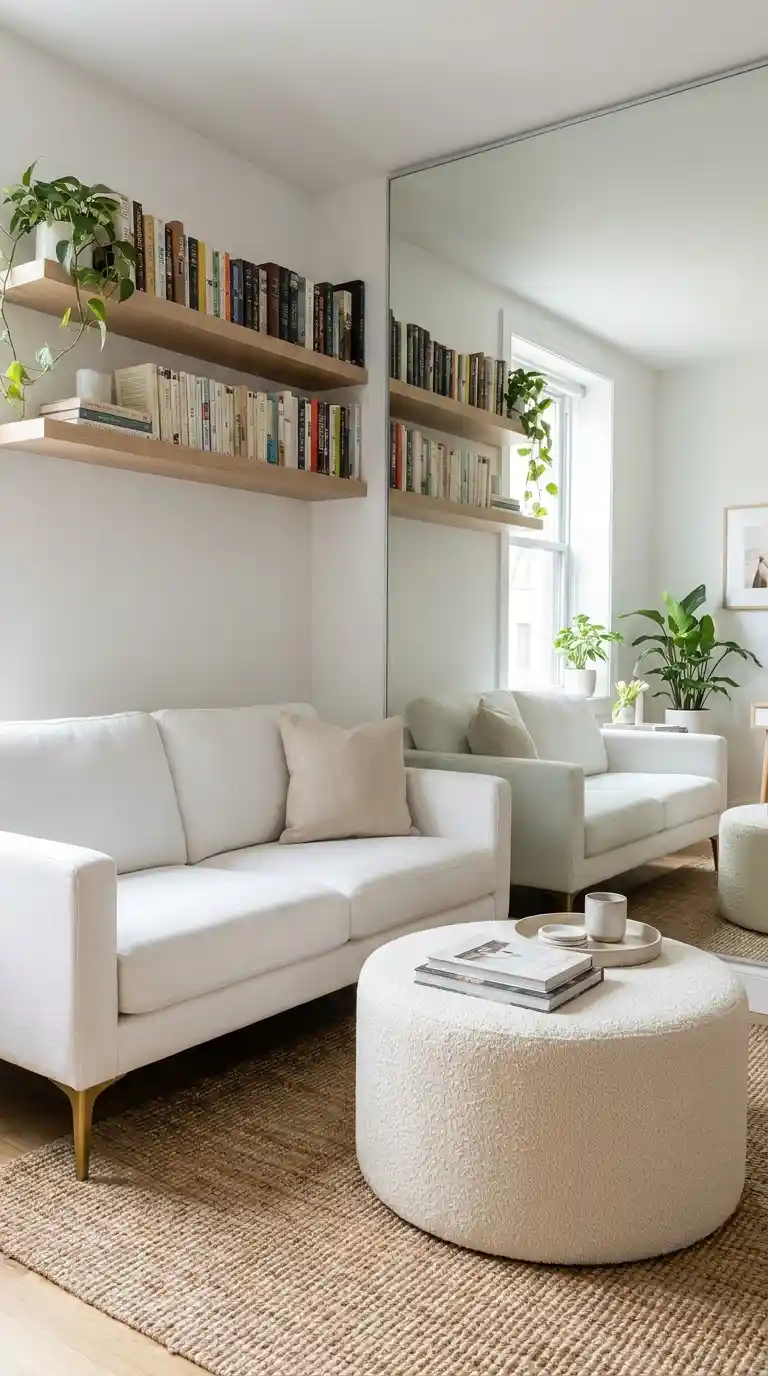
In a small white living room, furniture scale is everything. An oversized sofa will make even a generous room feel cramped, so choose pieces that are proportionate to the space. A streamlined two-seater or a slimmed-down three-seater with a low back will keep the room feeling open and airy. Opt for legs on furniture wherever possible. A sofa or armchair with visible legs shows the floor beneath, which makes the room read as larger than it is.
Multi-functional furniture is another small white living room secret. An ottoman that doubles as a coffee table and storage. A sofa with a pull-out bed for guests. Nesting tables that can be separated for entertaining and nested together to save space. These pieces allow a small white living room to function at its full potential without sacrificing the clean aesthetic that makes white interiors so appealing.
Vertical Space and Storage
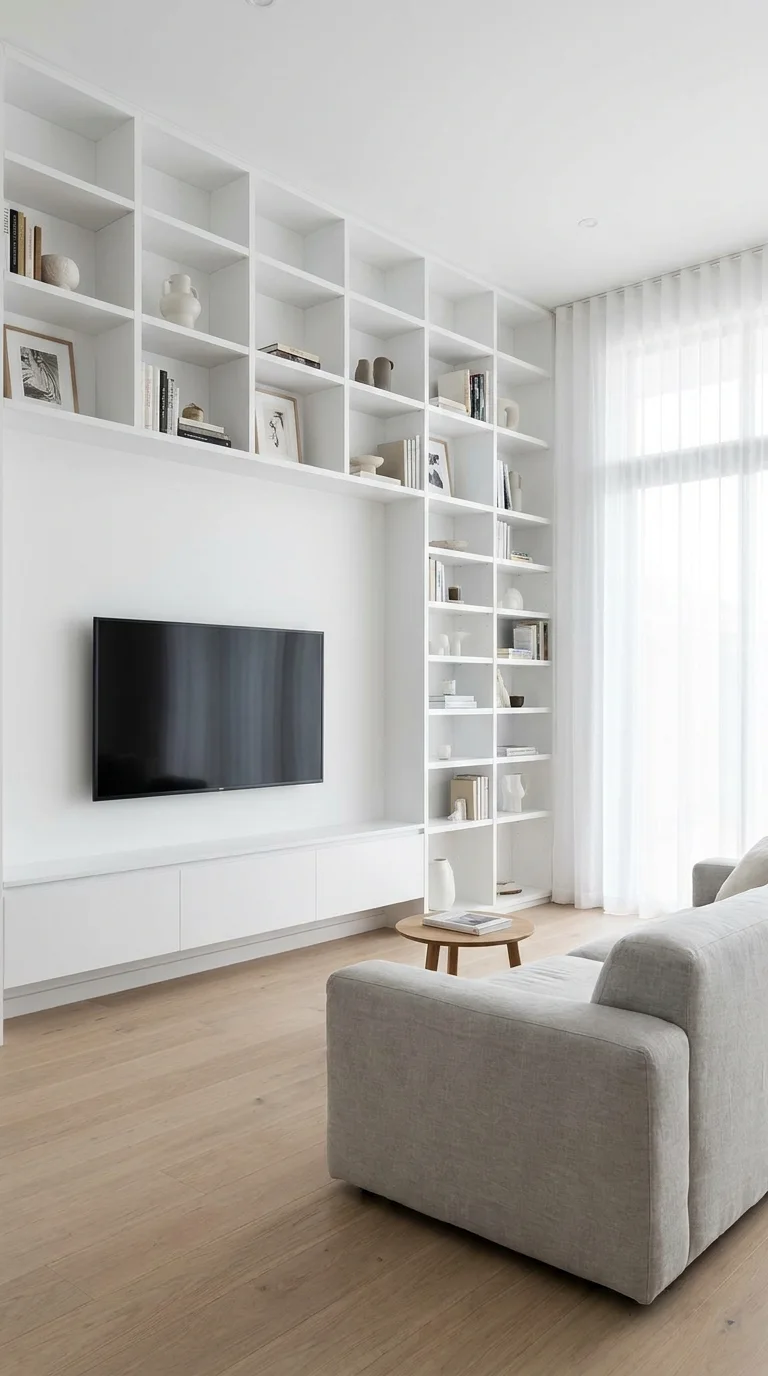
In small white living rooms, the walls are your best friend. Floor-to-ceiling shelving painted in the same white as the walls adds enormous storage without making the room feel visually smaller. Because the shelving disappears into the wall color, the eye reads the vertical height rather than the intrusion of furniture, making the ceiling feel taller and the room feel larger.
Keeping the floor as clear as possible is equally important. Wall-mounted shelves, floating TV units, and built-in storage all free up the floor space that makes a small white living room feel open and breathable. The goal is to keep as much of the floor visible as possible, because the more floor you can see, the more spacious the room feels.
White Living Room Ideas with a Fireplace
A fireplace is one of the most transformative architectural features a white living room can have, and the combination of white and fire creates one of the most beautiful domestic scenes there is. Whether you have an original Victorian fireplace, a modern linear gas fire, or a decorative non-working chimneybreast, there are brilliant white living room ideas built around making the fireplace the heart of the room.
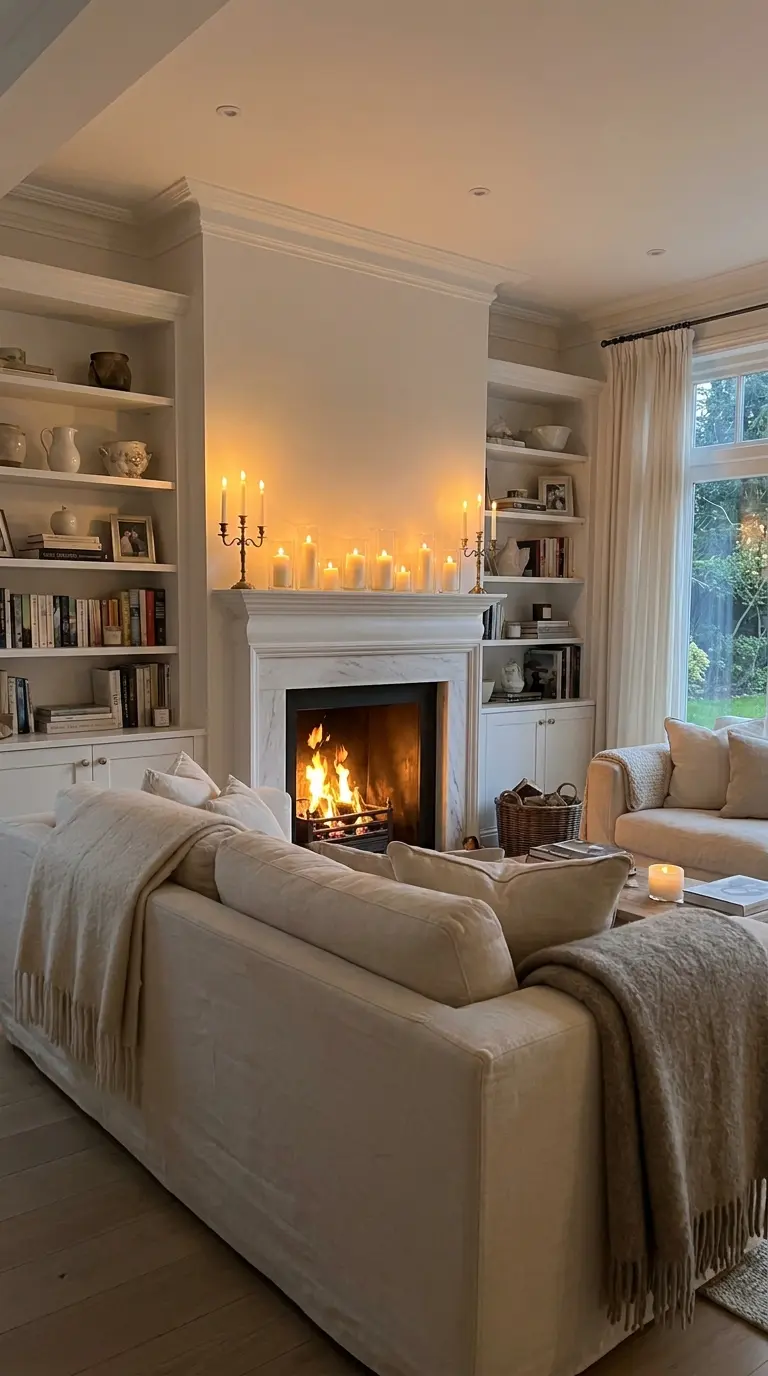
Paint the entire fireplace surround, mantel, and any flanking alcoves in the same white as the walls for a seamless, architectural look. This approach makes the fireplace feel like a designed element of the room rather than a separate piece of furniture, which is particularly powerful in older homes with original period features. Against that white canvas, the fire itself becomes the only color and light source that matters.
Style the mantel with considered restraint. A single large mirror, one beautiful piece of art, or a small collection of objects in natural materials are enough. The white living room works best when the mantel is not overloaded. Three things maximum: a large vertical element, a medium horizontal element, and a small organic element, such as a taper candle, a piece of sculptural ceramics, or a cutting from a plant.
Art and Accessories in a White Living Room
Accessories and art are where you get to express your personality in a white living room. Because the backdrop is neutral, anything you place against it will stand out. This means your art choices, your ceramics, your books, and your plants all speak louder than they would in a colored room. Choose things you genuinely love and let them carry the room’s character.
Art Selection for White Walls
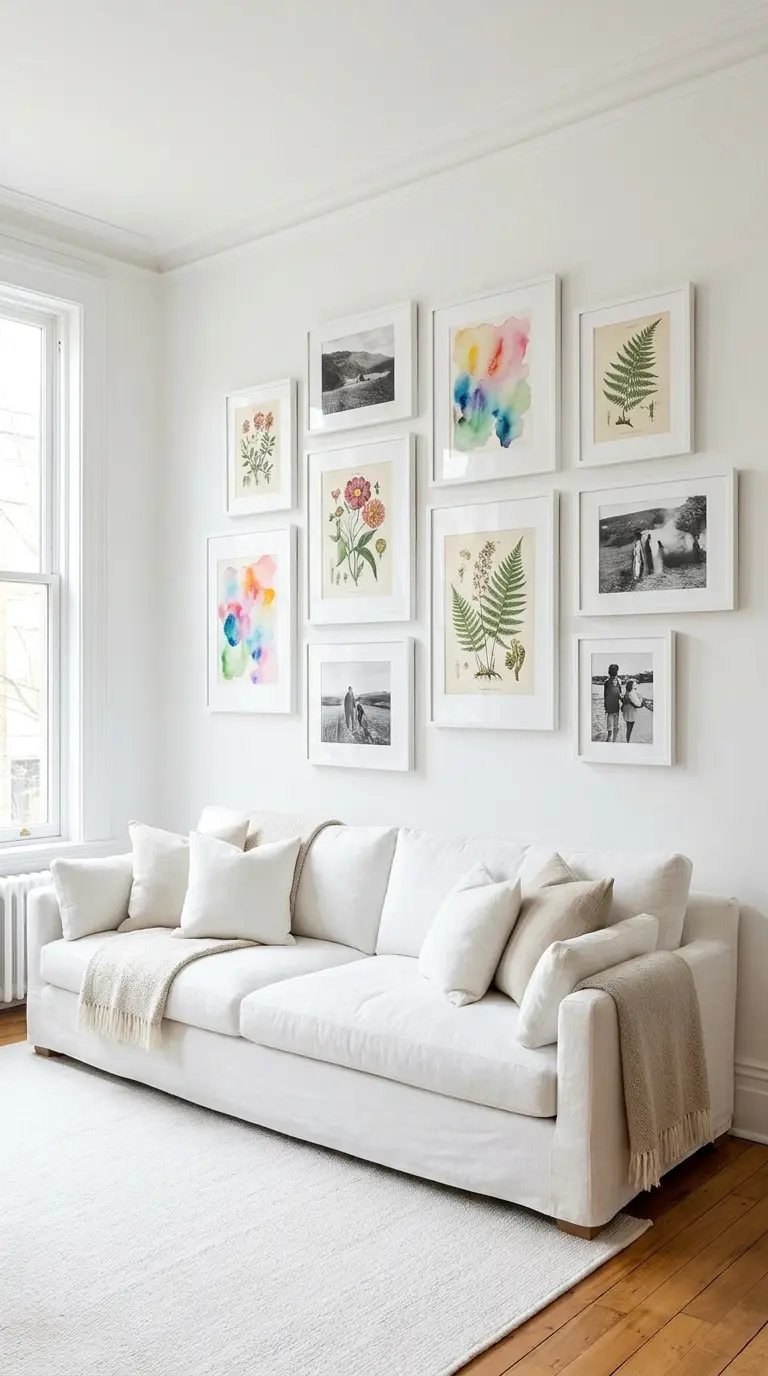
Large-scale art is always a strong choice in a white living room. A single oversized piece makes more impact than a cluster of smaller ones, and it prevents the walls from looking busy. Black and white photography, abstract paintings in muted tones, graphic line drawings, and organic botanical prints all work exceptionally well against white walls. The key is size. Go bigger than you think you need to. A piece that looks large in the gallery will often feel small on a big white wall.
If you prefer multiple pieces, the gallery wall format is beautiful in a white living room when executed with consistency. Use frames of the same color and similar styles to unify the collection. All-white frames create an airy, cohesive look. All-black frames create a sharp, graphic effect. Mixing gold and natural wood frames creates a collected, personal feel. Choose one approach and commit to it.
Plants and Organic Objects
No white living room feels truly complete without some organic matter to remind you that the world outside is alive and growing. Plants are the most obvious choice, and they genuinely cannot be overstated in their power to transform a white interior. A single large plant, like a rubber tree, a monstera, or a bird of paradise, can anchor a corner of the room and become as much a design element as any piece of furniture.
Beyond plants, organic objects like driftwood, shells, geodes, woven baskets, and handmade pottery all bring a handmade, earthly quality to white living rooms that feels wonderfully grounding. These are the objects that make a white living room feel like it belongs to a real person rather than a magazine spread. They do not need to be expensive. They need to be real.
White Living Room Ideas for Open Plan Spaces
Open plan living areas present a unique set of opportunities and challenges for white living room ideas. When the living room flows directly into the kitchen and dining area, coherence becomes the primary goal. You want the space to feel unified and intentional, not like three separate rooms that happen to share a floor.
In an open plan white living room, using the same wall color throughout the entire space is the single most effective way to create cohesion. The white flows from the living area into the kitchen and dining room, making the whole space feel like one considered environment. You can then differentiate the zones through furniture placement, rug definition, and different lighting types without breaking the visual unity of the white palette.
Zoning rugs are particularly important in open plan white living rooms. A generous rug beneath the sofa and coffee table immediately defines the living zone and gives it a sense of enclosure and intimacy even within a large, open space. Choose a rug that is large enough that the front legs of all seating pieces sit on it. This grounding effect is what separates a properly designed white living room from a collection of furniture floating on a bare floor.
Budget-Friendly White Living Room Ideas That Look Expensive
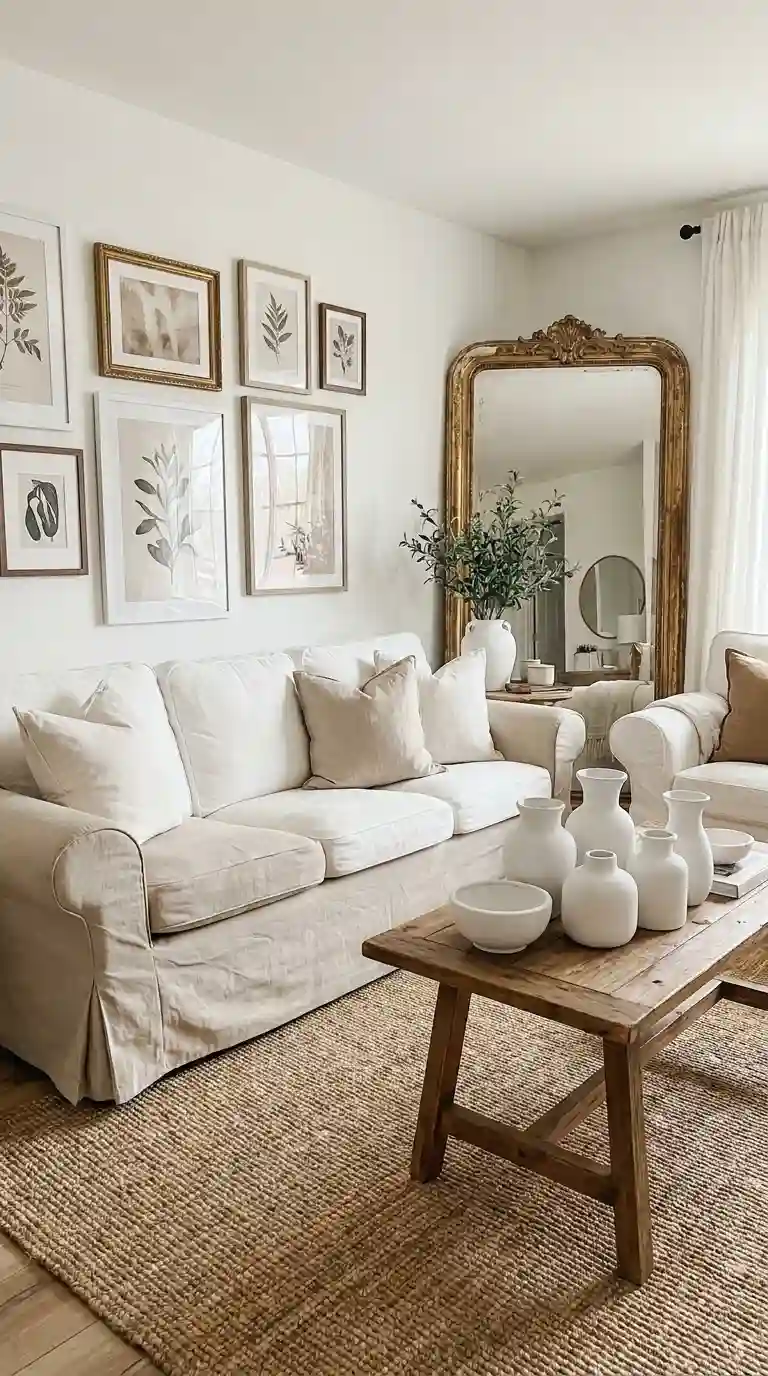
You do not need an enormous budget to create a beautiful white living room. Some of the most effective white living room ideas are also the most affordable, because white is inherently simple and restraint is free.
Painting is the highest-impact, lowest-cost intervention available. A fresh coat of white paint will transform a dark, tired room into something that feels completely new. Do not underestimate this. Many people live with their original wall colors for years when a single weekend of painting would entirely change their relationship to their home. Choose a high-quality paint with a good finish and apply it properly, with clean roller lines and attention to the trim, and the result will look far more expensive than the paint cost.
Slipcovers are another budget secret for white living rooms. If you have an existing sofa in a color you do not love, a well-made linen slipcover can transform it into the white sofa of your dreams for a fraction of the cost of replacement. Some slipcovers are even machine washable, solving the practical white sofa anxiety at the same time. Similarly, repainting wooden furniture in white or cream can completely update dated pieces and make them look like considered, intentional choices.
Thrift shops, vintage markets, and online marketplaces are gold mines for white living room accessories. Ceramic vases, picture frames, candlesticks, mirrors, and woven baskets can all be found secondhand for very little money. Clean them up, arrange them with intention, and they will look as good as anything bought new from a design store.
Maintaining a White Living Room: Practical Tips That Actually Work
The number one reason people resist white living room ideas is the practical concern: how do you keep it clean with children, pets, and the general chaos of real life? The answer is not to live carefully or restrict yourself. The answer is to choose materials and products that make maintenance easy.
For sofas, performance fabrics have completely changed the game. Fabrics treated with stain-resistant finishes, bouclé weaves that naturally disguise surface marks, and tightly woven linen blends can all handle daily life with a level of practicality that pure cotton cannot match. Machine-washable slipcovers are the ultimate practical solution for white living rooms with young children or pets.
For walls, choose a washable matt or eggshell finish rather than flat paint. These finishes can be wiped down with a damp cloth without the paint coming off, which makes them infinitely more practical for high-traffic living areas. Touch-up paint is also your friend. Keep a small quantity of your wall color in a sealed container so you can address scuffs and marks as they appear rather than letting them accumulate.
White rugs are less scary than they seem if you choose natural fiber materials like wool, which has natural stain resistance, or cotton, which can often be machine washed. Address spills immediately and blot rather than rub. A professional clean once or twice a year will keep any natural fiber rug looking fresh regardless of what life throws at it.
Seasonal Updates for Your White Living Room
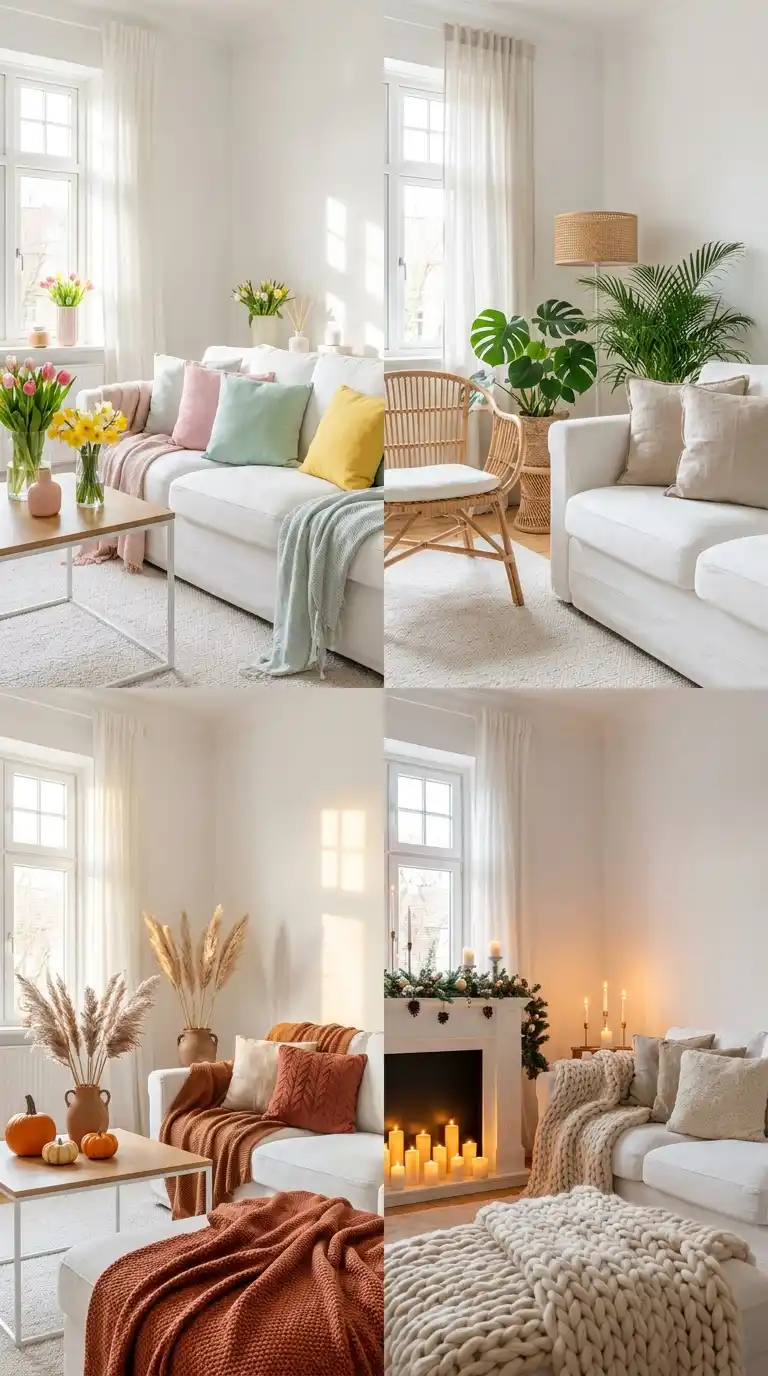
One of the most enjoyable things about having a white living room is how easily it adapts to seasonal changes. Because the backdrop never changes, you can completely transform the feel of the room simply by switching out cushions, throws, and accessories to match the season.
In spring and summer, white living rooms naturally lean into lighter, breezier textiles. Linen cushions in soft blues and pale greens, fresh flowers in simple glass vases, sheer curtains moving in the breeze. The room feels effortless and airy. In autumn and winter, layer in heavier textiles: chunky knit throws in warm caramel and cream, velvet cushions in forest green or deep rust, candles everywhere, and perhaps a few branches of dried flowers or seed heads in a wide-mouthed vase. The white walls become a backdrop for warmth rather than lightness.
This seasonal flexibility is one of the strongest arguments for committing to white living room ideas. You invest in the structure of the room once, and then you refresh its personality twice a year with relatively inexpensive textile updates. It never gets boring, and it always feels relevant to wherever you are in the year.
Final Thoughts
A white living room is not a trend. It is a commitment to simplicity, quality, and the kind of calm beauty that you can live inside every day without it ever wearing you out. The best white living rooms are not perfect. They are personal, textured, and layered with things that matter to the people who live there. They tell stories through the objects on the shelves, the art on the walls, and the worn softness of a favourite blanket draped over the sofa.
If you have been sitting on the fence about white living room ideas, I hope this article has given you the confidence to jump in. Start with paint if you are nervous. One wall, one weekend. See how it makes you feel. I suspect you will want to keep going.
The white living room is waiting for you. And trust me, once you are in it, you will never want to leave.
Frequently Asked Questions
Q1: What is the best shade of white for a living room?
The best shade of white for your living room depends on the direction your room faces and the atmosphere you want to create. For north-facing rooms that get cool light, choose a warm white with yellow or beige undertones such as Benjamin Moore Chantilly Lace or Sherwin-Williams Alabaster. For south-facing rooms with bright sunlight, a cooler, crisper white like Farrow and Ball Strong White will prevent the room from looking too yellow at midday. Always test paint samples on large swatches in your actual room and observe them at different times of day before committing.
Q2: How do I make a white living room feel warm and cozy?
The key to a warm and cozy white living room is layering textures. Introduce warm natural materials like linen, wool, cotton, wood, rattan, and ceramics. Use warm-toned light bulbs in the 2700K to 3000K range. Layer rugs, cushions, and throws in natural, earthy tones. Add plants for organic color. Choose a warm-toned white paint rather than a cool blue-grey white. Introduce soft lamplight at different heights rather than relying solely on overhead lighting.
Q3: How can I keep a white living room clean with kids?
Choose performance fabrics with stain-resistant finishes for upholstery. Opt for machine-washable slipcovers on sofas. Use washable eggshell or matt paint finishes on walls that can be wiped down. Choose wool or synthetic rugs which have natural stain resistance. Address spills immediately by blotting rather than rubbing. Keep a small quantity of touch-up paint for wall scuffs. Natural fiber rugs can be professionally cleaned annually.
Q4: What colors go well with a white living room?
White living rooms work beautifully with almost every accent color. Earthy tones like terracotta, ochre, sage green, and warm rust are universally flattering and safe choices. For a classic look, navy blue and white is timeless. For drama, deep forest green or burgundy creates stunning contrast. For a modern, graphic effect, black and white is incredibly powerful. For soft femininity, blush pink and white is eternally beautiful. The rule is to keep the accent colors in one or two focused elements rather than scattering them throughout.
Q5: Should a white living room have white furniture?
White furniture in a white living room creates a sophisticated tone-on-tone effect, but it is by no means required. Many of the most beautiful white living rooms feature furniture in natural materials like wood, rattan, and wicker against white walls. Others use a single bold-colored sofa as the focal point. The decision depends entirely on the atmosphere you want to create. If you choose white furniture, differentiate it from the walls through texture and varying shades of white.
Q6: How do I add personality to a white living room?
Your personality enters a white living room through art, books, plants, ceramics, textiles, and personal objects. Because the white backdrop is neutral, anything you place against it stands out more than it would in a colored room. Choose things you genuinely love: a piece of art that moves you, books you have actually read, plants you tend with care, ceramics from a place you have visited. These personal objects are what transform a white room from a showroom into a home.
Q7: What type of flooring works best with a white living room?
Light to medium wood tones work exceptionally well with white living rooms, adding warmth and natural character without competing with the walls. Pale oak, blonde maple, and whitewashed pine are particularly popular choices. Light stone or large-format white or grey tiles can create a seamless, sophisticated result in contemporary homes. Darker wood floors create beautiful contrast and drama against white walls and are a classic combination used in traditional interiors.
Q8: How do I handle a TV in a white living room?
The most elegant approach to TV wall design ideas for living rooms within a white scheme is to surround the screen with built-in shelving painted in the same white as the walls. This allows the TV to blend into the architecture. A gallery wall of framed art around the television is another popular option. Fluted panels painted white behind the TV create beautiful texture and depth. Some homeowners choose televisions with gallery mode that displays art when not in use, making the screen disappear into the room.
Q9: Are white living rooms still in style?
Yes, white living rooms remain consistently on trend because they are fundamentally timeless rather than fashion-driven. Unlike color trends that come and go, white works with every furniture style, every era of home, and every personal aesthetic. The approach to white living rooms evolves over time, from the crisp minimalism of the early 2000s to the layered, textural warmth of contemporary white interiors, but the palette itself never falls out of favor.
Q10: What curtains should I use in a white living room?
Floor-to-ceiling curtains in white or natural linen are the most universally successful choice for white living rooms. Hang them high above the window frame and wide beyond the frame on either side to make the windows appear larger and the ceilings feel taller. Sheer panels allow maximum natural light while maintaining privacy. For a warmer, more layered look, use a double track with sheer panels for daytime and a heavier linen or velvet for evening.
Q11: How do I choose a rug for a white living room?
Choose a rug that is generous enough in size that the front legs of all main seating pieces can rest on it. Natural fiber rugs in jute, sisal, wool, or cotton are excellent choices as they add organic texture and warmth. A vintage or antique rug with faded tones introduces character and personality. Avoid rugs with very bold, saturated patterns as they can overwhelm the serenity of a white living room. Neutrals, natural tones, and subtle geometric or striped patterns all work beautifully.
Q12: How much does it cost to decorate a white living room?
The cost of decorating a white living room varies enormously depending on the size of the room, the quality of materials chosen, and how much existing furniture you are working with. A budget refresh focused on paint, new cushions, a new rug, and some accessories can cost as little as a few hundred dollars. A full renovation with new furniture, custom built-in shelving, and professional lighting installation will cost significantly more. White living rooms are actually cost-effective because the palette is simple and you do not need to buy many things to make the room feel complete.
Q13: What plants work best in a white living room?
Almost any plant works beautifully in a white living room, but some are particularly effective for their visual impact. The fiddle leaf fig offers dramatic architectural form. The rubber tree brings glossy, deep green leaves that contrast beautifully with white walls. The monstera deliciosa adds tropical character and graphic leaf shapes. Trailing plants like pothos and string of pearls look beautiful on shelves and in hanging planters. Snake plants are virtually indestructible and look wonderfully structural. Pampas grass and dried flowers add texture and warmth without requiring any watering.
Q14: How do I light a white living room?
Light a white living room in layers. Start with ambient lighting from a central pendant or recessed ceiling fixtures. Add task lighting from floor lamps beside reading chairs and table lamps on side tables. Use accent lighting from shelf illumination and picture lights to highlight art and objects. Choose warm white bulbs at 2700K to 3000K for a cozy, golden tone. Install dimmers on every circuit. White rooms amplify light, so lower wattages are often sufficient and dimmers allow you to adjust the atmosphere from bright and energising to soft and romantic.
Q15: Can a white living room work with dark furniture?
Absolutely. Dark furniture against white walls creates one of the most elegant and timeless combinations in interior design. A deep charcoal sofa, a dark walnut coffee table, or a black bookshelf all look spectacular against white walls. The high contrast is graphic, dramatic, and sophisticated. The key is to balance the dark pieces with natural light and some lighter elements so the room does not feel too heavy. A pale rug, white curtains, and abundant natural light will keep a white living room with dark furniture feeling open and beautiful.