
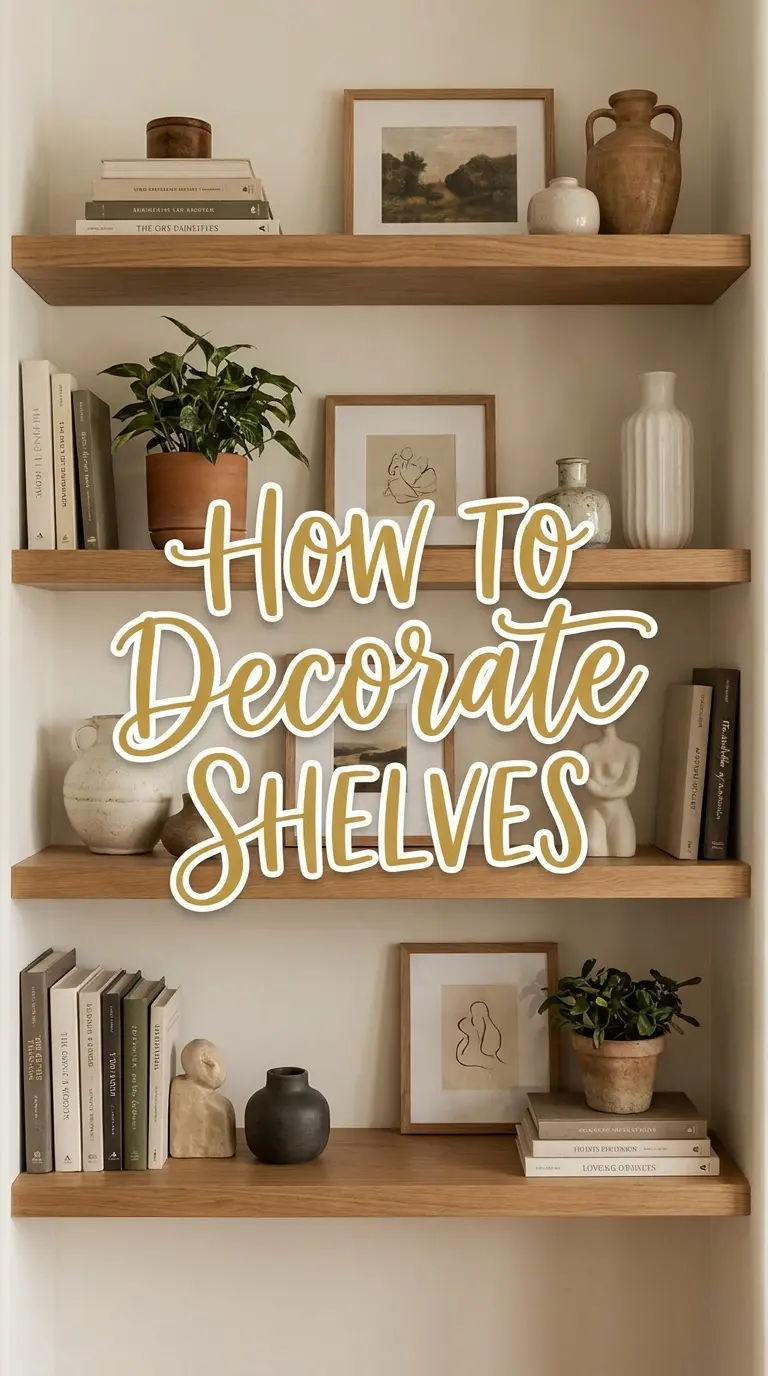
I spent three years staring at bare, awkward shelves in my living room before I finally cracked the code. Learning how to decorate shelves well is one of those skills that looks effortless once you know the rules and even more beautiful once you know when to break them. This guide is everything I wish someone had handed me on day one.
Why Knowing How to Decorate Shelves Actually Matters More Than You Think
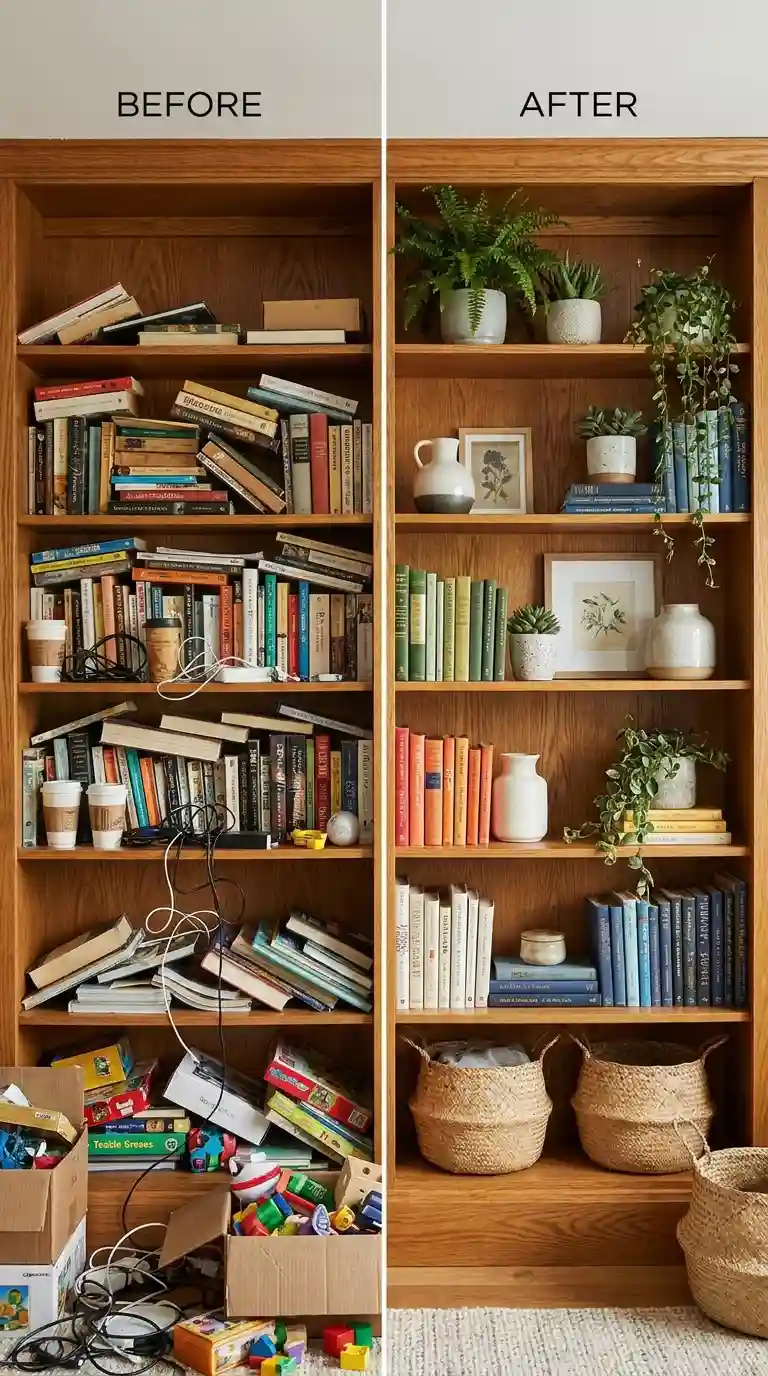
Shelves are one of the most powerful and most underestimated surfaces in any room. They sit at eye level. They stay visible all day. They hold the things you care about your books, your travels, your little weekend-market finds. When you know how to decorate shelves the right way, those surfaces stop being storage and start being storytelling.
I have walked into dozens of homes where every piece of furniture was expensive and carefully chosen, but the shelves looked like someone had just stacked things there and walked away. Flat rows of books, a random photo frame, maybe a dusty fake plant in the corner. It dragged the whole room down. Knowing how to decorate shelves changes the energy of a room more than almost anything else you can do with a low budget.
The good news is that shelf styling is a learnable skill. It is not about having a natural eye or an interior design degree. It is about understanding a handful of principles and then playing. This guide will walk you through every single one of them, from the very first step to the final finishing touch.
Step One: Start With a Clean Slate Before You Decorate Shelves
The single biggest mistake people make when they decide to decorate shelves is trying to work around what is already there. They add a candle here, move a book there, and wonder why it still looks like a mess. The answer is simple: you need to take everything off first.
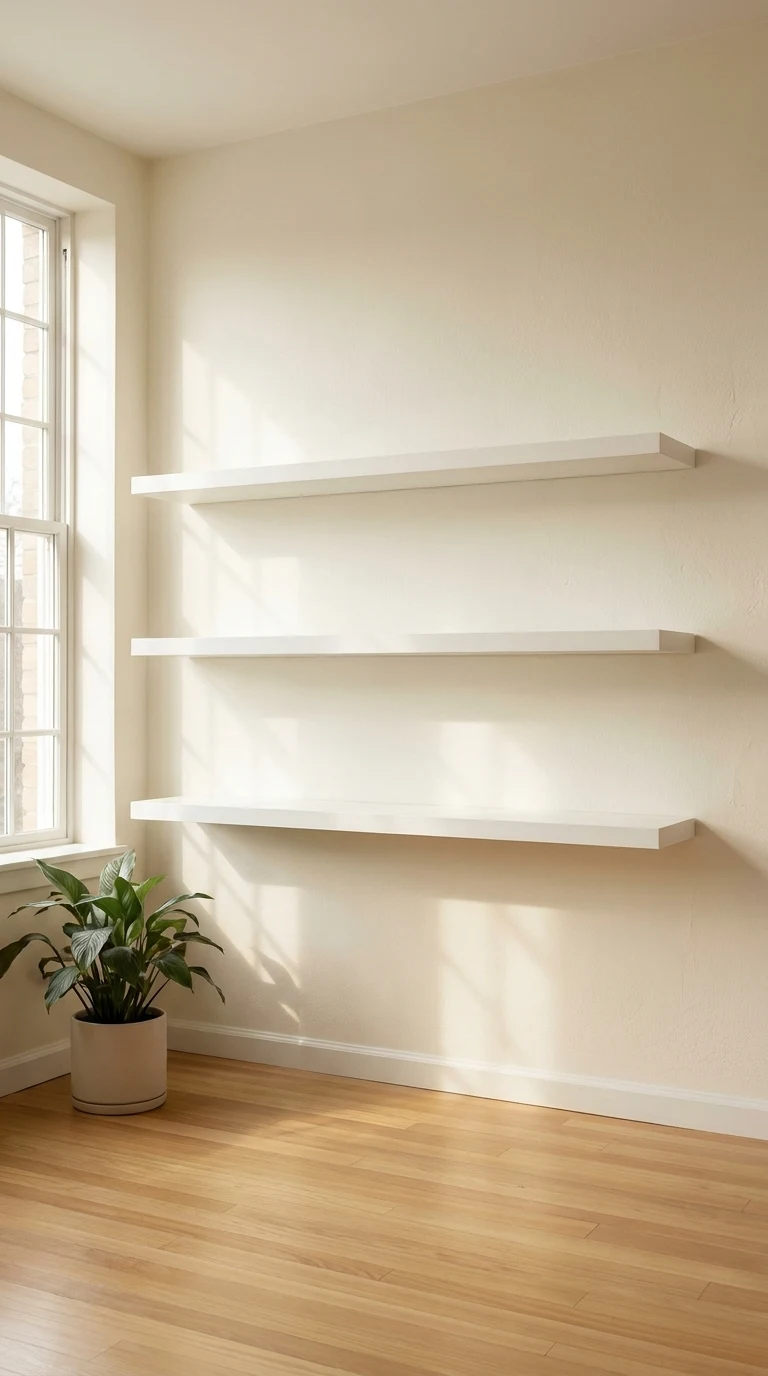
Pull every single item off your shelves. Give them a wipe down. Stand back and look at the empty structure. Notice the proportions of each shelf. Notice how much depth you are working with, how wide each section is, where the light hits. This blank canvas moment is not optional. It is the foundation of everything that comes after.
Once you have a clean shelf, start sorting the items you pulled off into categories. Keep what you love, set aside what you merely tolerate, and be honest about what is just visual noise. The goal when you decorate shelves is not to display everything you own. It is to display the things that mean something, and to give them enough room to breathe.
Also Read : Transform Your Space: The Most Beautiful White Living Room Ideas That Actually Work in Real Homes
The Edit Is the Real Secret
Professional stylists know something most people do not: the best-looking shelves are the ones where half the stuff ended up on the floor. Editing down is not about being ruthless for the sake of it. It is about giving the pieces you keep the space to actually be noticed. When everything competes for attention, nothing wins.
Try this test: once you have removed everything, allow yourself to put back only what you would proudly point out to a guest. If an item does not pass that test, it belongs in a drawer, a box, or a donation bag. Harsh? Maybe. But your shelves will thank you.
The Golden Rules of How to Decorate Shelves With Balance and Height
There are a few principles that every professional shelf styler uses, whether consciously or not. Once you see them, you cannot unsee them. The first is height variation. When you decorate shelves, you never want everything sitting at the same level. A row of uniform objects — even beautiful ones — reads as flat and dull. Mix tall items with short ones, lean things against the back, stack books to create platforms.
Think about it in thirds. On most shelves, you want roughly a third of the visual weight to sit high, a third in the middle, and a third low. This creates natural rhythm and movement for the eye to follow. It is the same principle that makes flower arrangements look so good — nothing stays at one height, and that variation is what makes it feel alive.
Pro Tip
When you decorate shelves, use the rule of odds. Group items in sets of three or five rather than two or four. Odd numbers feel dynamic and organic. Even numbers feel rigid and staged.
Creating Visual Triangles as You Decorate Shelves
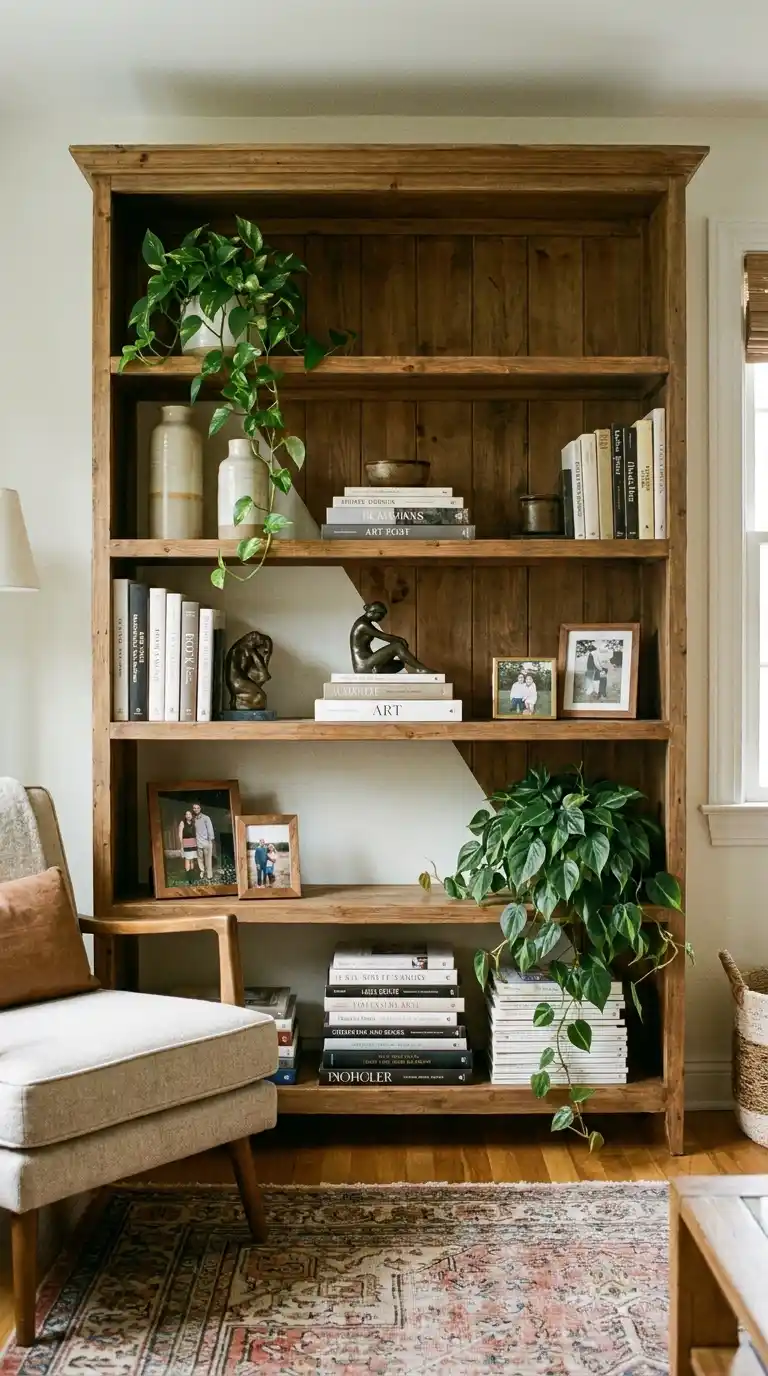
One of the most useful techniques when you decorate shelves is creating invisible triangles across your arrangement. Place a tall item in one spot, a medium item on the other side of the shelf, and a low item somewhere in between. Your eye will naturally trace a triangle between those three points, and that movement is what makes a shelf feel designed rather than decorated.
You can repeat this triangle principle across multiple shelves too. If you have a bookcase with four or five shelves, treat it as one large composition. A tall vase on the top right, a trailing plant in the middle left, a stack of books on the bottom right. The eye travels across the whole bookcase, not just one shelf at a time, and the result feels considered and cohesive.
How to Decorate Shelves Using Color Strategically
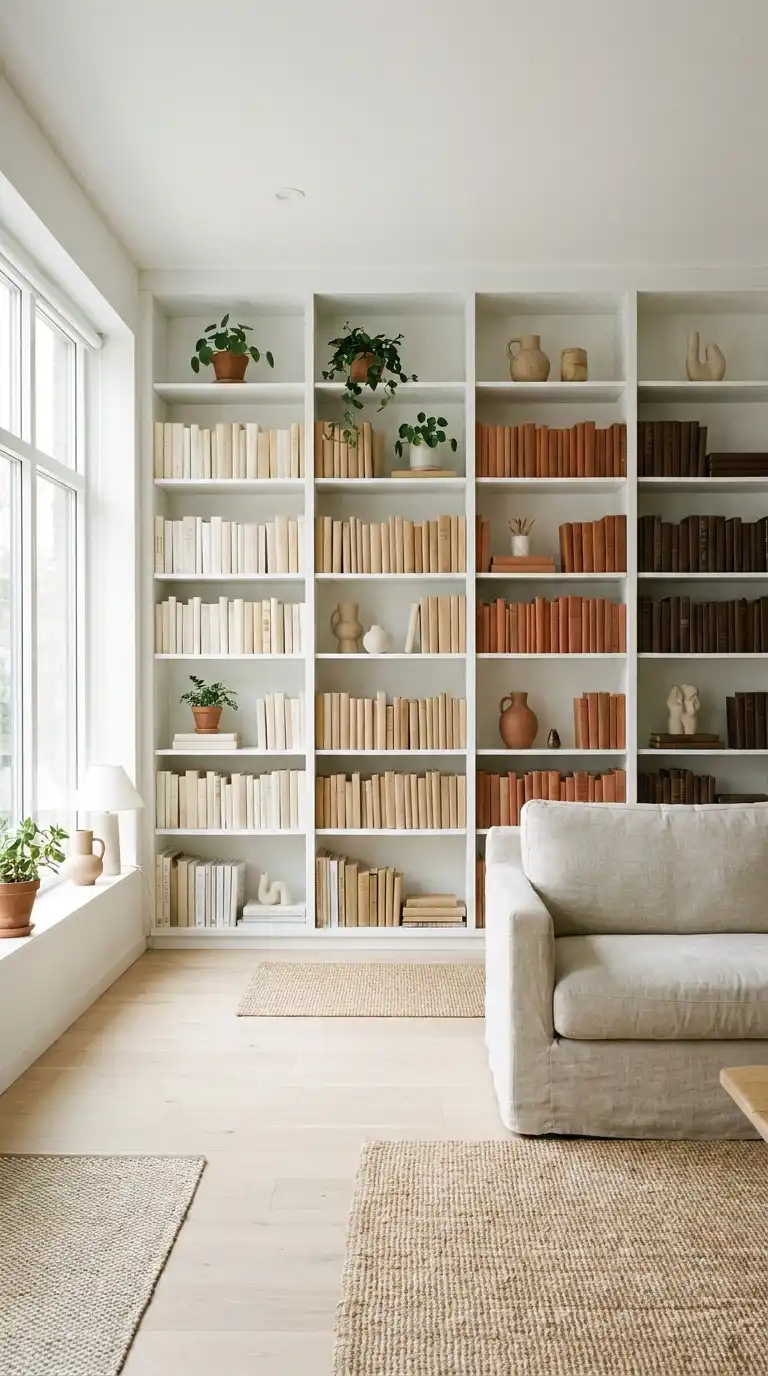
Color is one of the most powerful tools you have when you decorate shelves, and it is also one of the easiest to get wrong. Too many colors and the shelf looks chaotic. Too few and it looks sterile. The sweet spot is a limited palette that includes a neutral base, one or two anchor colors, and occasional pops of something brighter or warmer.
A really effective approach is to group books by color rather than by subject or author. Pull out all the white and cream spines and cluster them together. Do the same with the blues, the greens, the warm terracottas. This instantly creates organized color blocks that make even a heavily loaded bookcase look intentional and stylish. It is one of the simplest hacks in the shelf decorating world, and it makes a startling difference.
When you decorate shelves in a living room or bedroom, try to echo the dominant colors already in the room. If your sofa has warm amber tones, bring in amber candles, amber glass, or books with warm-toned spines. If your room has a lot of sage green, a trailing pothos or eucalyptus branch will feel like it belongs. Color connection between the shelf and the rest of the room is what makes the space feel truly designed.
Neutral Foundations Make Everything Look Expensive
The most beautiful shelves tend to use neutrals as their backbone. Whites, creams, taupes, warm grays, and natural wood tones give the eye a place to rest between the more interesting objects. When you decorate shelves with a neutral foundation, even inexpensive items start to look curated and intentional.
Concrete, raw ceramic, linen-bound books, dried grasses in natural tones, aged wood — these are your friends. They are humble but beautiful, and they make the colorful or glossy pieces around them pop without effort. Think of neutrals as the silence between notes in music. They are what make everything else sound good.
Also Read : Stunning & Smart TV Wall Design Ideas for Living Room That Instantly Elevate Your Space
The Best Items to Use When You Decorate Shelves
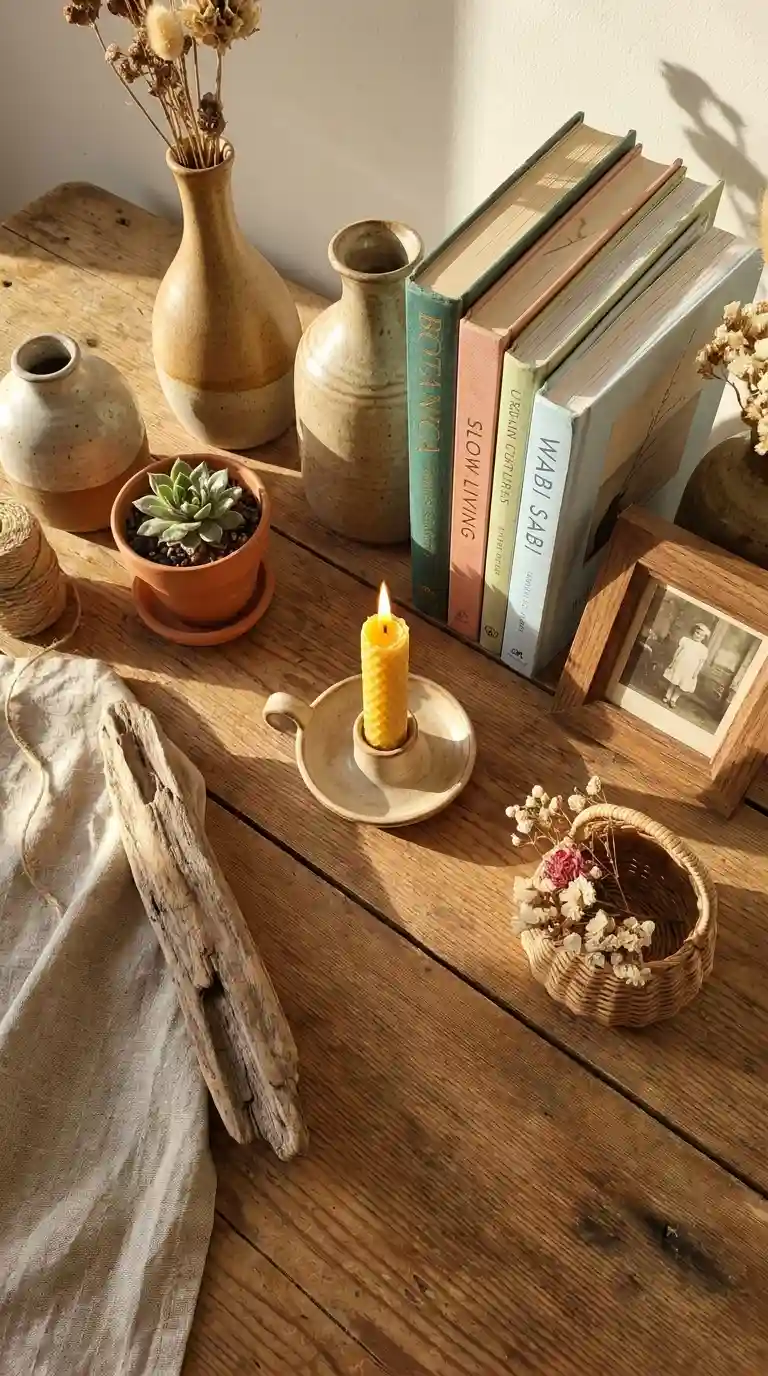
Knowing what to put on shelves is just as important as knowing how to arrange things. The best shelf decorators mix textures and object types to create interest and variety. You never want every item to be the same material or the same kind of thing. A mix of organic and geometric, matte and glossy, man-made and natural is what gives a shelf visual complexity without chaos.
- Books (grouped by color or subject, spines outward or turned inward for a minimalist look)
- Potted plants or trailing vines (adds organic softness and life)
- Candles in interesting holders (height and warmth)
- Framed photos or small artwork pieces (personal and visually anchor the shelf)
- Ceramic vases or pots (texture, form, and color)
- Sculptural objects like driftwood, geodes, or carved pieces (adds an unexpected element)
- Woven or textile elements like a small basket or folded linen (warmth and texture)
- Travel souvenirs that hold meaning (story and personality)
- Small mirrors (bounce light and add depth)
- Stacked vintage books or magazines used as risers
Plants Are Non-Negotiable When You Decorate Shelves
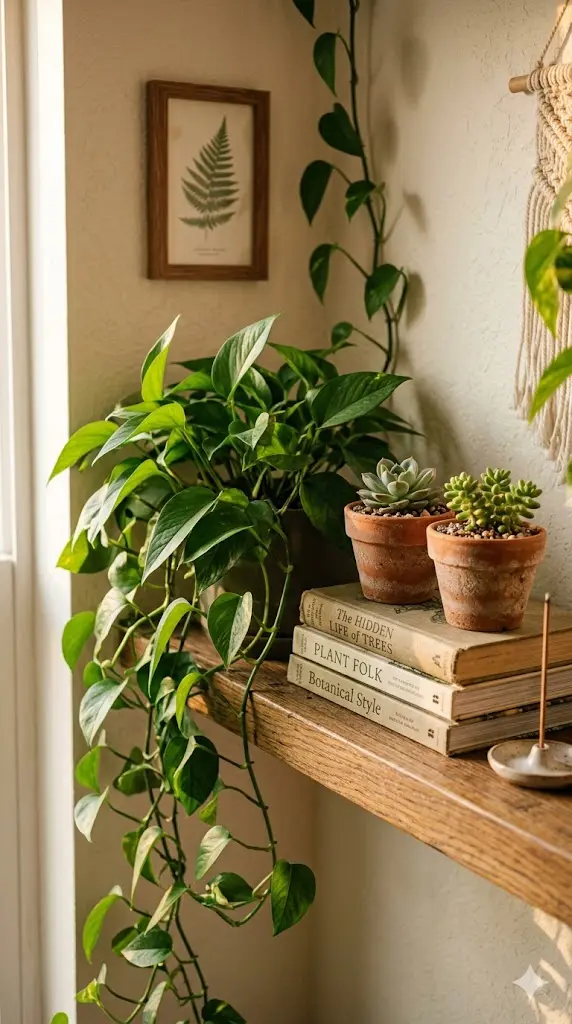
If there is one item that single-handedly transforms how a shelf looks, it is a plant. Not a fake one. A real one, or if light conditions do not allow it, a very high-quality faux one from a brand that takes the craft seriously. Plants bring life into the composition in a way no other object can. They introduce organic lines, they move gently, and they remind you that the space is lived in.
For shelves, trailing plants are especially good because they break the horizontal line of the shelf itself. A pothos or string of pearls can drape softly over the shelf edge and create a beautiful cascading effect. Pair that with an upright plant like a small fiddle leaf cutting or a succulent in a terra cotta pot and you have organic height variation that feels completely natural.
Even if you have low light and struggle to keep plants alive, small air plants or a single preserved moss bowl can work beautifully. The goal when you decorate shelves is to have at least one living or natural organic element per shelf section. It is a principle that almost never fails.
How to Decorate Shelves in the Living Room for Maximum Impact
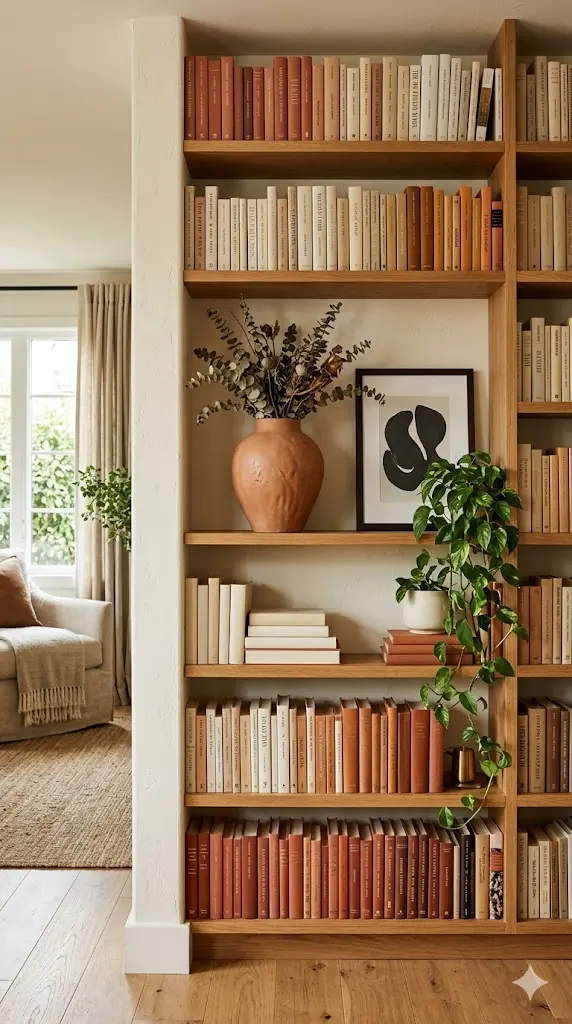
The living room is usually the first place people want to decorate shelves, and for good reason. It is where guests spend time, where the household gathers, and where you have the most decorating freedom. Living room shelves are also usually bigger and more prominent than shelves in other rooms, which means they have both more potential and more ability to go wrong.
For a living room bookcase or built-in shelf unit, start by anchoring each section with a large statement piece. This could be a big art book stood upright, a substantial ceramic jug, or a framed print leaned against the back wall. These anchor pieces give each zone a focal point and prevent the shelf from feeling scattered. Once your anchors are in place, build around them with smaller supporting items.
Leave breathing room. In living rooms especially, there is a temptation to fill every inch because there is so much shelf space available. Resist it. Empty space is not wasted space when you decorate shelves — it is a design element. It lets the things you do display actually get seen and appreciated.
Working With Symmetry and Asymmetry in Living Room Shelf Decor
Symmetry feels calm and ordered. Asymmetry feels creative and dynamic. Neither is wrong — it depends entirely on the personality of your home. If your living room is formal, clean-lined, or influenced by traditional or Japandi aesthetics, lean into symmetry when you decorate shelves. Matching objects on either side of a central point create a sense of intentional elegance.
If your living room is more eclectic, bohemian, or layered with personality, embrace asymmetry. Vary shelf heights, mix scales wildly, lean things at odd angles, and let trailing plants go wherever they want. The rule with asymmetry is that there should always be a visual anchor somewhere in the composition — a strong piece that holds the arrangement together even when everything else is free-spirited.
How to Decorate Shelves in the Bedroom for a Calm, Curated Feel
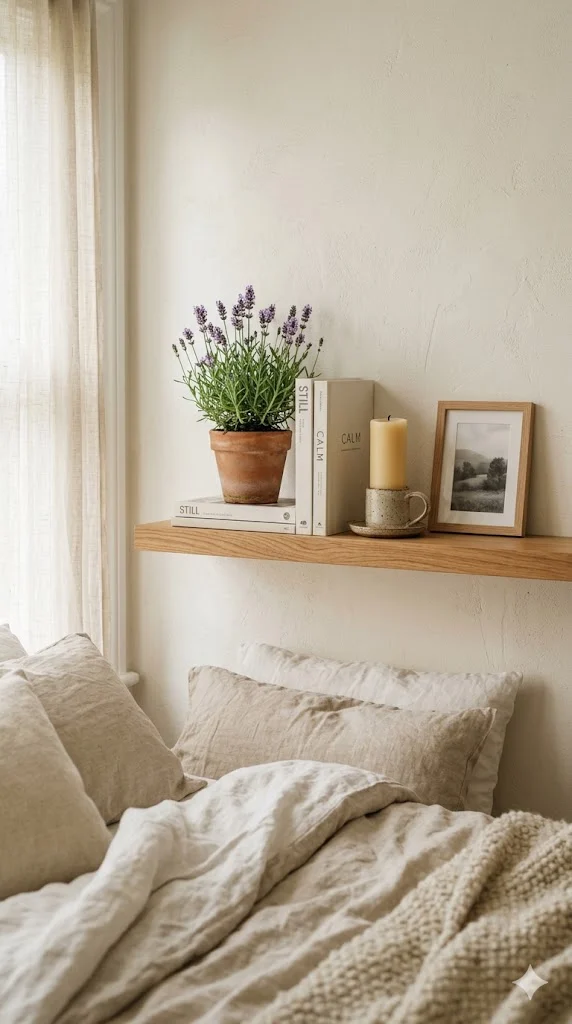
Bedroom shelves have a different job than living room shelves. They need to feel serene. Clutter in a bedroom shelf does not just look bad it genuinely affects how restful the room feels. When I finally decluttered my bedroom shelves and styled them with intention, I slept better. I am only half joking about that.
For bedroom shelf decorating, keep the palette soft and the quantity low. Focus on items that are calming and meaningful: a few favorite books, a small plant, a candle you actually burn, a photograph that makes you happy, and maybe a small dish that catches your jewelry or keys. Every item on a bedroom shelf should earn its place with either function or genuine joy.
Avoid bringing work-related items onto bedroom shelves. No notebooks that stress you out, no project files disguised as decor. This space is for rest and restoration, and that should be reflected in how you choose to decorate shelves in this room specifically. Keep the vibe soft, quiet, and personal.
Kitchen Shelf Decorating: How to Decorate Shelves That Are Both Practical and Beautiful
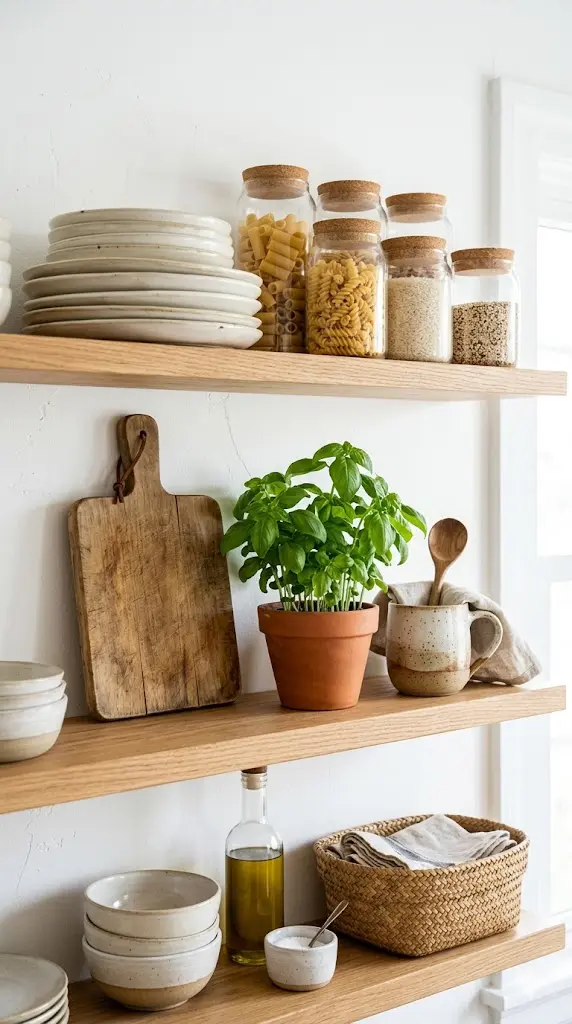
Open kitchen shelves are having a major moment, and for good reason. They make kitchens feel more open, more personal, and more interesting than a row of closed cabinet doors. But they are also the hardest shelves to decorate well, because they need to be functional at the same time. You cannot sacrifice your daily cereal bowl for the sake of aesthetics.
The key when you decorate shelves in a kitchen is to make the functional items beautiful rather than hiding them. Stack your prettiest plates rather than hiding them behind doors. Display your nicest glasses. Arrange your most photogenic spice jars in a cluster together. Use beautiful storage baskets for the things that are not photogenic. Let the everyday objects be the decoration.
Add personality with a small potted herb on one end, a hand-thrown ceramic jug in the corner, or a vintage wooden board leaned against the wall at the back. The goal with kitchen shelf decorating is a curated, lived-in look that says someone who loves food and beauty uses this kitchen every day. That combination of practicality and personality is what makes it feel real rather than staged.
Mixing Storage and Style in Kitchen Shelves
One of the smartest things you can do when you decorate shelves in a kitchen is invest in beautiful storage vessels. Matching glass canisters for dry goods, ceramic crocks for utensils, linen-lined baskets for produce — these things serve a real purpose and look intentional at the same time. You are not sacrificing function for style. You are just choosing containers that look good while they do their job.
Group like with like. Put all your oils and vinegars together on one end. Stack your bowls in a graduated tower. Hang a few copper pots if you have them. When things are grouped logically, the eye reads it as organized rather than random, even if the individual items are quite different from each other.
Also Read : French Kitchen Ideas: The Ultimate Guide to Creating a Timeless, Elegant Kitchen in 2026
How to Decorate Shelves on a Tight Budget Without Sacrificing Style
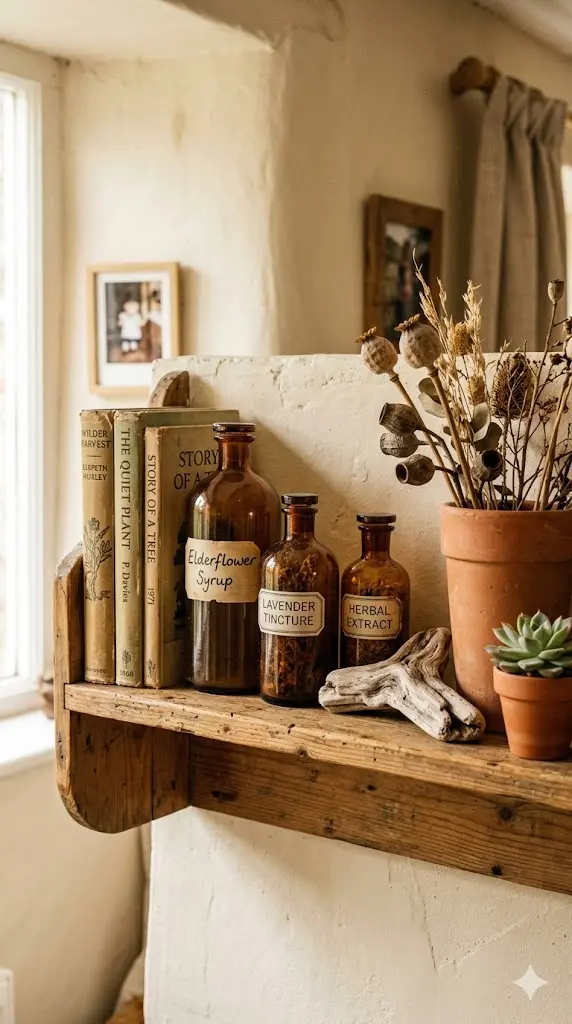
Beautiful shelves do not require a designer budget. Some of the most striking shelf arrangements I have ever seen were built entirely from charity shop finds, natural materials gathered outside, and items already in the home. The skill is in the arrangement, not the cost of the objects. When you understand how to decorate shelves with good bones — balance, color, height variation — you can make almost anything look intentional.
Thrift stores and charity shops are gold mines for shelf objects. Interesting glass bottles and vases, vintage hardback books, ceramic bowls and plates, old picture frames, wooden boxes — all of these show up regularly at tiny prices and photograph beautifully. You do not need a designer vase when a secondhand amber glass bottle catches the light in exactly the same way.
Nature is also free. Driftwood, pinecones, smooth stones, dried seed pods, branches spray-painted in a single matte color — these things cost nothing and add texture and authenticity that you genuinely cannot buy. A glass jar filled with river stones looks like it belongs in a boutique hotel. A sprig of eucalyptus from the garden placed in a narrow bottle is quietly beautiful and smells amazing too.
DIY Items That Elevate Shelf Decor Without Spending Much
A few simple DIY touches can take a budget shelf from looking cheap to looking considered. Paint a few old books with chalk paint in a consistent neutral — cream, terracotta, or forest green — and suddenly you have a color-coordinated cluster. Print your own art at home on card stock and frame it in a secondhand frame. Glue fabric around a plain cardboard box to make a soft storage basket.
You can also repurpose things from around your home. A pasta jar becomes a vase. A stack of vintage magazines becomes a riser. A candle burned down to the end gets a new purpose as a holder for small objects. When you decorate shelves with creativity and intention, the budget becomes almost irrelevant. What matters is how thoughtfully everything is placed.
Seasonal Shelf Decorating: How to Refresh Your Shelves All Year Long
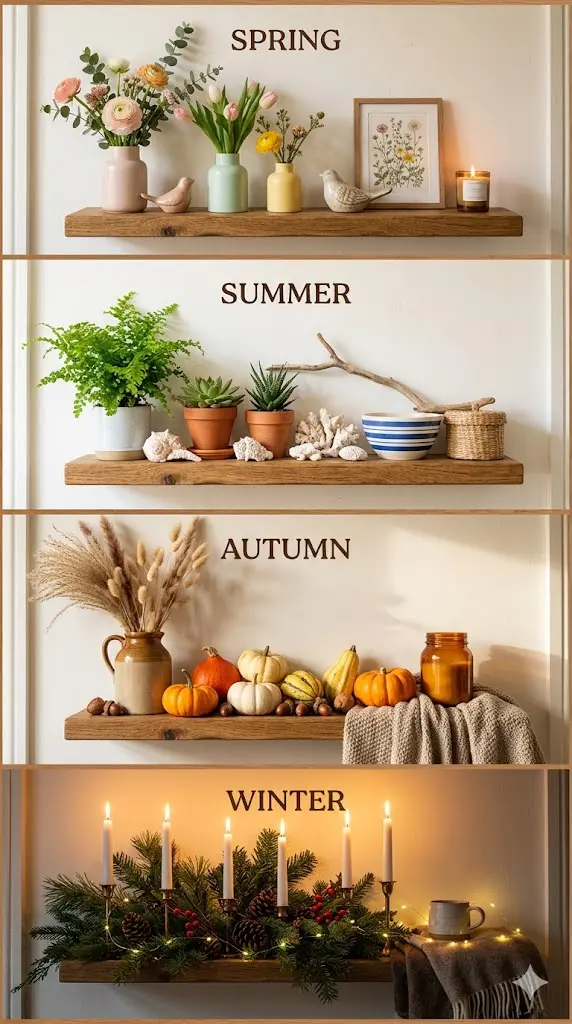
One of the things I love most about knowing how to decorate shelves is that the arrangement is never permanent. Shelves are one of the most flexible surfaces in a home. You can completely transform the look and feel of a room just by swapping out a few shelf items and bringing in seasonal elements. It costs almost nothing and keeps your home feeling fresh and alive throughout the year.
In spring, bring in fresh green stems, small bud vases with single flower heads, light linen textures, and pastel-toned ceramics. In summer, swap to bright tropicals, shells collected on a beach trip, lighter books, and a glass or two in a warm clear color. Autumn is the best season for shelf decorating — dried grasses, pinecones, amber glass, pumpkins in interesting textures, and warm knitted elements all look stunning.
Winter shelves can lean into cozy candlelight, evergreen branches, soft metals in silver or gold, and meaningful objects that feel reflective and warm. The point is that when you know how to decorate shelves well as a skill, the changing of the seasons becomes one of your favorite home rituals rather than a chore.
Common Mistakes People Make When They Decorate Shelves (And How to Fix Them)
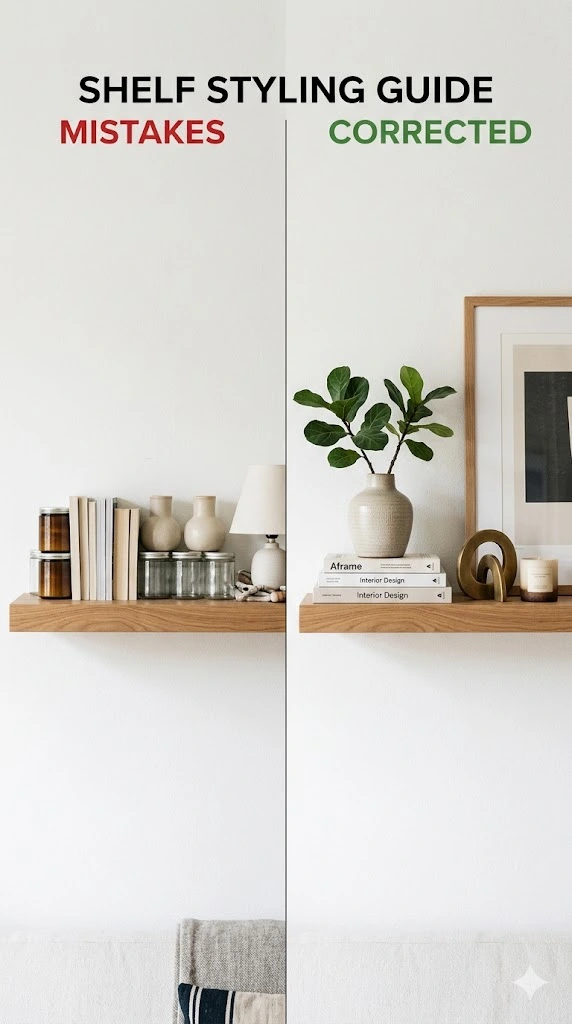
Over the years, I have made every mistake in the book, and I have watched plenty of other people make them too. The most common one is overcrowding. People put too much on their shelves because they feel like every inch needs to be filled. But crowded shelves look messy no matter how beautiful each individual object is. When you decorate shelves, space is your friend. Empty shelf is not a failure. It is breathing room.
The second most common mistake is ignoring scale. Tiny objects on a large shelf look lost and forgotten. Oversized objects on a small shelf look awkward and cramped. When you choose items for a shelf, always hold them up to the actual shelf space and see whether the scale feels right. A general guideline: your largest item should fill no more than two-thirds of the shelf height, and your smallest items should appear in grouped clusters so they read as a unit rather than isolated dots.
- Overcrowding every available inch instead of leaving generous breathing room between objects
- Ignoring scale — tiny objects on large shelves look lost; oversized items on small shelves look crammed
- Keeping everything at the same height, creating a flat, dull horizontal line
- Using all matching items in the same material, texture, or finish — variety is what creates interest
- Forgetting to anchor each shelf section with at least one strong focal point piece
- Neglecting the back of the shelf — wallpaper, paint, or a piece of fabric on the back wall adds depth
- Never changing anything — shelves should evolve with the seasons and your own taste
The Mistake of Ignoring the Back of the Shelf
Here is something most people never think about when they decorate shelves: the back wall of the shelf is part of the design. Most shelves have a blank painted back that gets completely ignored. But that space can do a lot of work for you. Paint the back of each shelf in a contrasting or complementary color. Stick up a piece of removable patterned wallpaper. Lean a large print or piece of art against it.
This simple trick adds depth and visual interest to your shelf in a way that no amount of objects placed in front of a plain wall can quite match. It is especially useful if you are working with a very minimal number of objects and need the shelf itself to provide some of the visual interest. When you decorate shelves with a beautiful back wall, even three or four objects suddenly look like a deliberate, gallery-quality arrangement.
How to Decorate Floating Shelves to Make Small Spaces Feel Bigger
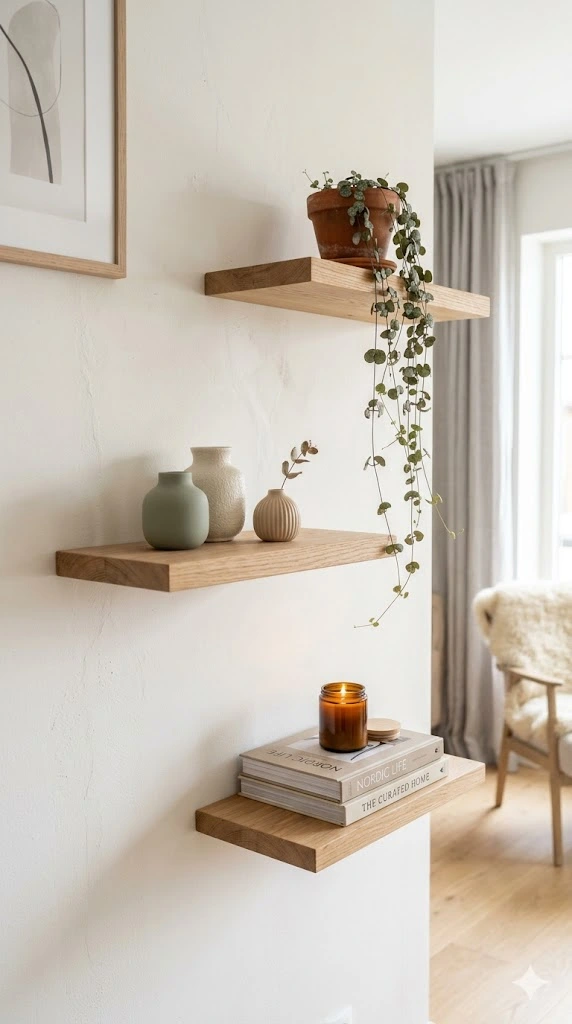
Floating shelves are a brilliant solution for small spaces. Unlike a full bookcase, they do not eat into floor space, they draw the eye upward making ceilings feel higher, and they can be arranged at any height and spacing to suit the specific wall. But they also come with their own set of decorating challenges, because each shelf is an island, and making them feel connected takes thought.
When you decorate floating shelves, the key is to treat the whole wall as a single composition rather than each shelf as its own separate thing. Use a repeating color or material across all the shelves to tie them together. If you have three floating shelves on a wall, put something green on each of them — a plant, a book with a green spine, a green glass — and suddenly they read as a family.
Keep floating shelves lighter and more curated than a full bookcase. Because they sit against an open wall with empty space around them, each item is more exposed and more noticed. That means every object counts more. When you decorate floating shelves, three beautiful things always beat eight mediocre ones.
How to Decorate Shelves in a Home Office for Focus and Inspiration
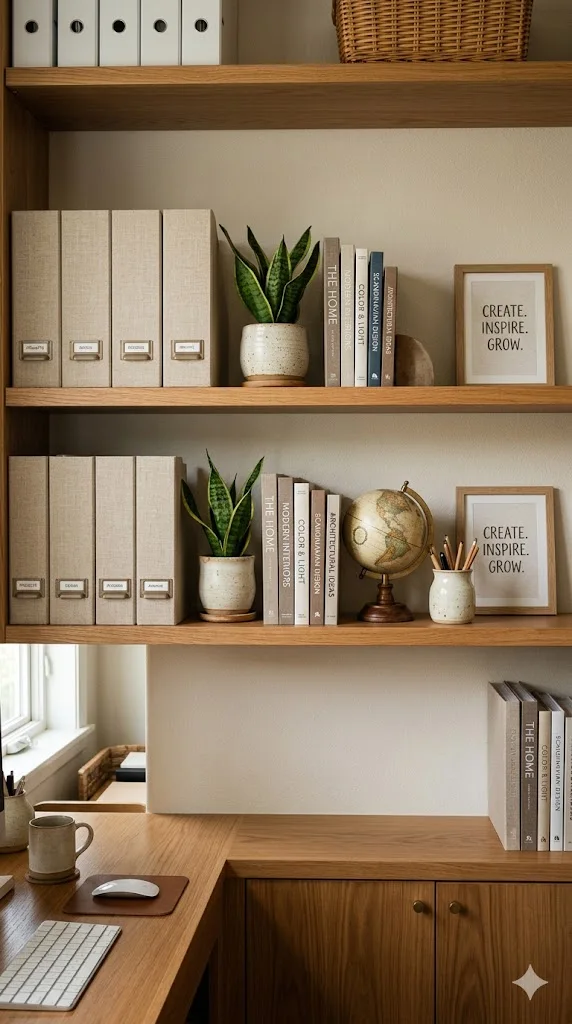
Home office shelves walk a fine line. They need to be functional enough to hold the things you actually use for work, but styled enough that they inspire you rather than stress you out. When you decorate shelves in a workspace, function comes first, but that does not mean beauty gets left out entirely.
Start by sorting your work essentials into good-looking storage. Matching document boxes or magazine files in a neutral color will hold papers and folders neatly. Ceramic or concrete pen holders are better looking than the plastic version and do the same job. A small corkboard or clipboard leaned against the back of a shelf gives you a functional surface that also adds texture to the arrangement.
Then add the things that genuinely inspire you. A book that changed how you think about your work. A small print that makes you feel something. A plant for life and oxygen. One meaningful object from a trip or a person you admire. When you decorate shelves in a workspace this way, the shelf becomes a visual expression of who you are professionally and what you are building — and that is quietly motivating every single day.
The Final Touches: Lighting and Layering When You Decorate Shelves
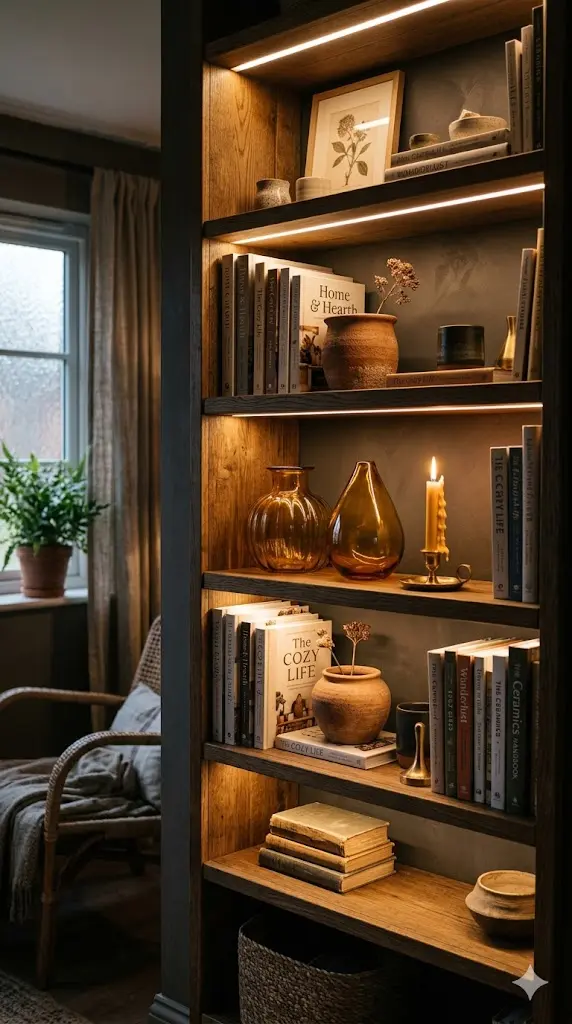
Lighting is the secret ingredient that most shelf decorating guides skip over, and it makes an enormous difference. Even the most beautifully arranged shelf looks flat under bad lighting. Conversely, a modest arrangement can look extraordinary with the right light falling on it.
The simplest lighting upgrade when you decorate shelves is to add a small battery-powered LED strip along the inside top edge of each shelf. It creates a warm, soft glow that makes everything look like it is lit for a photoshoot. You can also place a small spotlight or picture light above a particularly important shelf section, or use candles (real or LED) within the arrangement itself to add pools of warm light at different heights.
Natural light matters too. If your shelves are near a window, arrange translucent or glass objects where the light will catch them in the afternoon. Amber glass, clear crystal objects, and thin ceramic pieces all come alive when light passes through them or reflects off them. This is something you genuinely have to discover for your own space by spending time noticing where the light moves throughout the day.
Layering Objects to Add Depth and Dimension
The very best shelf arrangements are not just one row of objects sitting in a neat line. They are layered. Things overlap slightly. A framed print sits behind a vase and both are visible. A small object sits on top of a stack of books, which sits in front of a larger object leaned against the back. This layering creates depth — the visual sense that the shelf has more inside it than you can see all at once.
Layering takes a little courage because it feels messy at first. We are conditioned to think that organized means neat rows. But when you decorate shelves the way the professionals do, you quickly realize that it is the layering, the overlapping, the gentle chaos of different depths and levels, that makes it look rich and beautiful rather than showroom-flat.
The best shelves always look like they evolved over time — a collection built slowly, rearranged on quiet Sunday mornings, added to and taken from as life changed. That is exactly the feeling you are trying to create when you decorate shelves: not a set piece, but a living portrait of a home that is truly lived in.
Putting It All Together
Learning how to decorate shelves is genuinely one of the most rewarding home skills you can develop. It costs very little, it can be done in an afternoon, and the results are visible every single day in every room of your home. Start small. Clear one shelf completely. Choose five to seven objects you love. Play with height, color, and texture until something feels right. Then step back and look at it with fresh eyes.
The principles in this guide height variation, color grouping, the rule of odds, layering, breathing room, seasonal refreshing are not rules so much as they are tools. Use the ones that resonate, bend the ones that do not, and trust your own instincts. You know your home, your life, and what makes you happy better than any guide can. The best styled shelf is always the one that feels like you.
Now go empty a shelf. The rest will follow.
Frequently Asked Questions
1. How do you make shelves look nice?
The key to making shelves look nice is combining three elements: height variation, color cohesion, and breathing room. Start by removing everything and editing down to only what you love.
2. How do I make my shelves look less cluttered?
Use the “less is more” approach. Leave some empty space (negative space) and avoid overcrowding. Group items in odd numbers (like 3 or 5)
3. What is the best way to arrange items on shelves?
Use the rule of thirds divide your shelf visually into sections and balance items across them. Vary heights and shapes to keep it dynamic
4. Should I stack books vertically or horizontally?
Both! Combine vertical rows with horizontal stacks to create contrast and break monotony.-
5. How can I decorate shelves on a budget?
Use items you already have—books, souvenirs, jars, or DIY decor. Rearranging existing pieces can make a big difference.-
6. How do I choose a color scheme for my shelves?
Stick to 2–3 main colors that match your room. Neutrals with a few accent colors usually look cohesive
7. What kind of plants work best for shelves?
shelves?Small, low-maintenance plants like succulents, pothos, or snake plants are ideal for shelves
8. How do I style deep shelves?
Layer items: place larger objects at the back and smaller ones in front to create depth
9. Can I mix different decor styles?
Yes, but keep a common element (color, material, or theme) to tie everything together.
10. How often should I update shelf decor?
Seasonally or whenever you feel like refreshing your space there’s no strict rule