
Some people walk into a room filled with dark velvet, carved wood, and the quiet glow of candlelight and feel immediately, completely at home. If you are one of those people, then Victorian gothic home decor is not just a design style for you. It is a language, a way of expressing something deep and specific about your relationship to beauty, history, and the kind of spaces that feel genuinely alive with atmosphere and story.
I have been drawn to Victorian gothic home decor since the first time I stepped into a genuinely old Victorian house as a teenager. The weight of the curtains. The way the light came through the colored glass. The sense that every object in the room had a history and a purpose and a presence. Most modern interiors do not feel that way. They feel clean and competent and entirely forgettable. Victorian gothic home decor is the opposite of forgettable.
What makes Victorian gothic home decor so compelling right now, beyond its obvious visual drama, is the way it pushes back against the minimalism and disposability that have dominated interior design for the past two decades. This is a style that celebrates accumulation, craftsmanship, darkness, and the kind of richness that takes years to build. It rewards patience and obsession in equal measure. And when it comes together properly, it creates spaces that feel genuinely extraordinary.
This guide covers everything you need to know to bring Victorian gothic home decor into your own space. We are talking about the historical roots of the style, its key design elements, how to approach each room in your home, where to source authentic and convincing pieces, how to mix the aesthetic with modern living requirements, and all the specific details that separate Victorian gothic home decor done with intention from Victorian gothic home decor that just looks like Halloween never ended.
Whether you want to commit fully to the aesthetic or simply bring elements of Victorian gothic home decor into an otherwise more neutral space, this article gives you the knowledge and inspiration to do it with confidence and genuine style.
Also Read : 50 Gorgeous Handmade Wall Decor Ideas That Will Transform Your Walls Into Works of Art
The Historical Roots of Victorian Gothic Home Decor
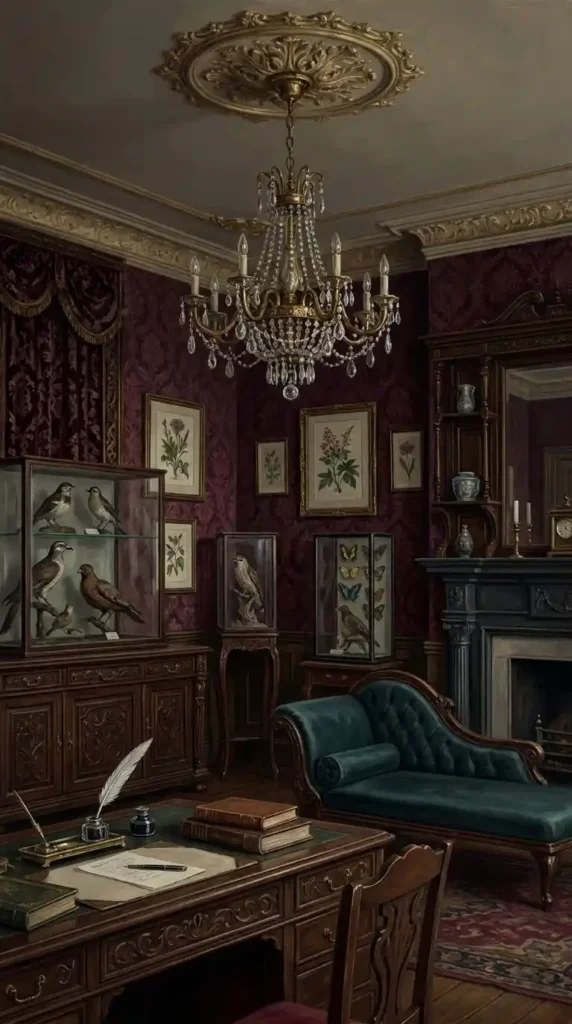
To truly understand and execute Victorian gothic home decor well, it helps enormously to understand where the aesthetic actually comes from historically. The Victorian era, spanning roughly 1837 to 1901 during the reign of Queen Victoria, was a period of profound cultural contradiction. Industrialization was transforming society at an unprecedented pace, creating new wealth while simultaneously making many people deeply nostalgic for a slower, more romantic, more spiritually rich pre-modern world.
The Gothic Revival movement emerged as a direct response to this anxiety. Architects like Augustus Pugin and later the prolific George Gilbert Scott looked back to the medieval period, to Gothic cathedrals with their pointed arches, ribbed vaults, and elaborate stone tracery, and argued that this architectural tradition was morally and aesthetically superior to the cold rationalism of the classical style that had dominated Western architecture since the Renaissance. Their ideas filtered from architecture directly into domestic interior design.
Victorian gothic home decor as a domestic style owes as much to literature as it does to architecture. The Gothic novel, from Horace Walpole’s The Castle of Otranto through the works of Ann Radcliffe, Matthew Lewis, and eventually Bram Stoker and Mary Shelley, created a visual and emotional vocabulary of dark grandeur, mysterious spaces, ancient objects, and a particular quality of romantic melancholy that Victorian gothic home decor embodies. When people today create Victorian gothic home decor spaces, they are tapping into this two-hundred-year-old cultural tradition whether they know it consciously or not.
The Victorian fascination with death, mourning culture, and the supernatural also shaped Victorian gothic home decor in ways that are still visible today. The elaborate mourning rituals of the Victorian period, including the display of hair art, memorial photographs, and black-draped interiors, created a domestic visual language around death and memory that feels simultaneously morbid and deeply human. This memento mori quality is one of the most distinctive and most misunderstood aspects of Victorian gothic home decor.
Also Read : 27 Stunning Wall Mirror Decorating Ideas to Instantly Transform Your Home
The Essential Elements of Victorian Gothic Home Decor
Before you start buying things or making decisions, understanding the core elements that define Victorian gothic home decor gives you a framework for making choices that feel coherent and intentional rather than random. Victorian gothic home decor is a complex aesthetic with multiple interconnected elements, and knowing which ones are most essential to the style helps you prioritize where to focus your effort and investment.
The most fundamental principle of Victorian gothic home decor is that the space should feel inhabited by history. Nothing in a Victorian gothic room should look like it was just purchased and assembled last weekend. The goal is a space that reads as accumulated over time, where every object has earned its place through beauty, strangeness, or personal significance. This does not mean everything needs to actually be old, but everything needs to feel as though it could be.
Color Palette in Victorian Gothic Home Decor
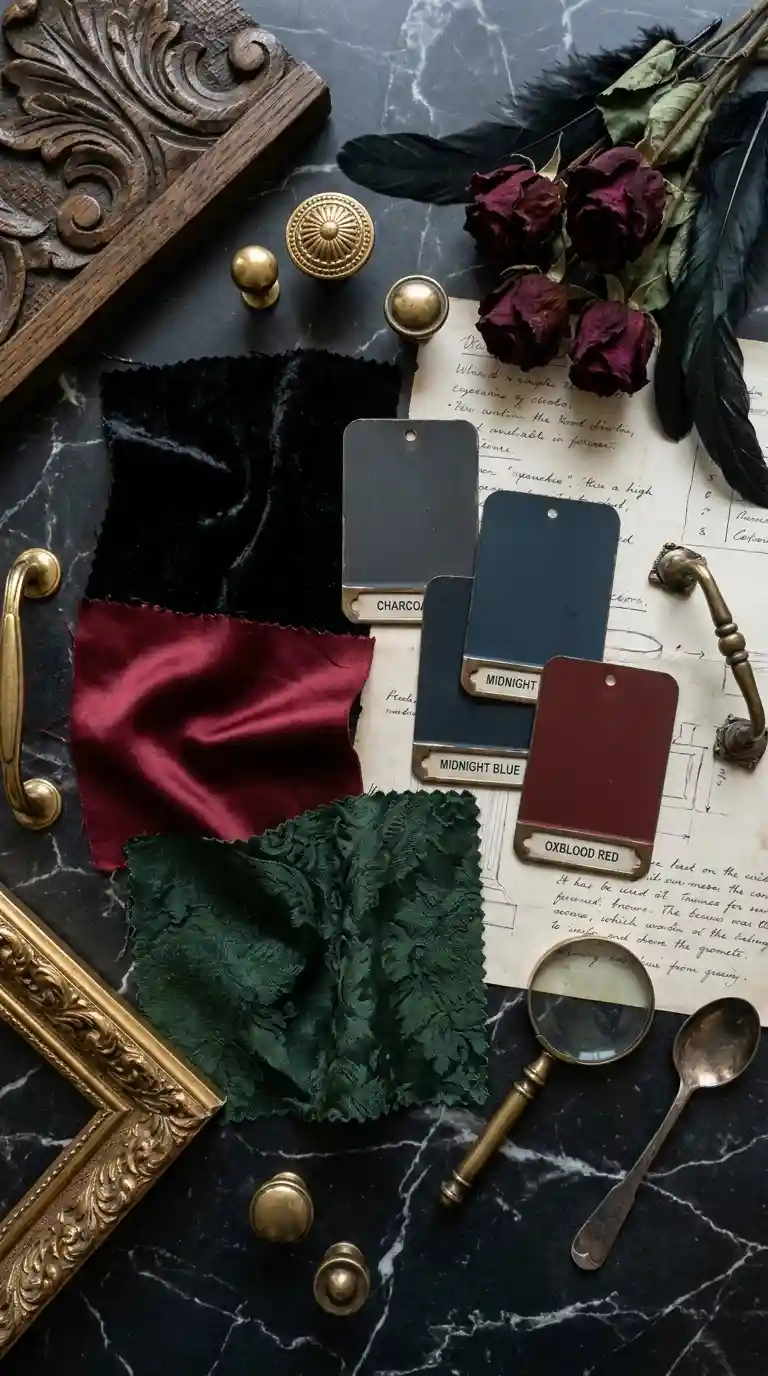
Color is the first thing most people notice about Victorian gothic home decor and the first thing to get right. The Victorian gothic palette draws from a specific range of deep, saturated, and complex colors that bear no resemblance to the soft neutrals and greige tones that dominate contemporary interiors. We are talking about the colors of old velvet, dried blood, medieval stained glass, and forest shadows.
The most characteristic colors in Victorian gothic home decor include oxblood red and deep burgundy, which carry both warmth and a slightly sinister quality that is central to the aesthetic. Midnight blue and navy, the color of the sky just after a storm. Forest green and hunter green, dark enough to read almost black in low light. Charcoal gray and near-black, which serve as neutral anchors in Victorian gothic home decor palettes. Deep plum and aubergine, luxurious and slightly mysterious. And the warm dark tones of chocolate brown, mahogany, and ebony that come from wood and leather.
Gold and brass are the metallic accents that lift Victorian gothic home decor out of pure darkness and give it the sense of warmth and luxury that distinguishes it from simply a gloomy room. Candlelight gold, warm aged brass, and burnished antique gold appear in hardware, frames, light fixtures, and decorative objects throughout a Victorian gothic home decor scheme. These metallic notes catch light and create the sense of hidden glimmer that makes a dark room feel sumptuous rather than oppressive.
In contemporary Victorian gothic home decor applications, many designers use one or two of these deep colors as the primary palette and allow the others to appear as accents. An oxblood red living room with midnight blue accent pillows and gold accessories is immediately recognizable as Victorian gothic home decor without becoming overwhelming. A charcoal gray bedroom with deep green velvet curtains and brass fixtures achieves the aesthetic with more restraint. The flexibility of the palette is one of Victorian gothic home decor’s great strengths.
Also Read : Show-Stopping Birthday Wall Decoration Ideas That Will Make the Celebration Unforgettable
Textures and Materials in Victorian Gothic Home Decor
If Victorian gothic home decor had a tactile signature, it would be the weight of velvet against your hand and the solidity of carved dark wood underfoot. Texture is as important as color in this aesthetic, and the right combination of materials creates the sensory richness that makes a Victorian gothic home decor space feel genuinely immersive rather than merely decorated.
Velvet is the fabric most synonymous with Victorian gothic home decor. Upholstered in jewel tones on sofas, chairs, headboards, and ottomans, velvet does something that no other fabric achieves in the same way. It absorbs light, creating depth and richness that changes character throughout the day as natural light shifts and candlelight or lamp light adds warm pools of illumination. It feels luxurious to touch. It drapes beautifully. And it comes in the exact colors, deep crimson, forest green, midnight blue, that Victorian gothic home decor demands.
Heavy silk, brocade, damask, and jacquard fabrics with woven patterns are also characteristic of Victorian gothic home decor, appearing primarily in curtains, upholstery, and decorative pillows. These woven fabrics with their intricate patterns of florals, botanicals, geometric repeats, and occasionally Gothic architectural motifs add the visual complexity that Victorian gothic home decor requires. A room with all solid-color surfaces, however rich the colors, lacks the layered quality that these patterned textiles provide.
Wood in Victorian gothic home decor should be dark, preferably very dark. Ebonized wood, dark mahogany, walnut, and dark-stained oak are all appropriate. The grain and carving of the wood should be evident and celebrated rather than hidden behind paint. Gothic architectural motifs in carved wood furniture, pointed arch details, tracery patterns, stylized foliage, add authentic period character that mass-produced furniture rarely carries. Marble, typically in dark veined varieties, provides another material with appropriate weight and permanence.
Gothic Architectural Details in Victorian Home Decor
The architectural details of a space can do more to establish Victorian gothic home decor than any amount of furniture or accessories. Original Victorian architectural features, arched doorways, plaster ceiling medallions, ornate cornices, deep window reveals, wide baseboards, and panel molding, create the bones that Victorian gothic home decor dresses so well. If you are lucky enough to have these in your home, preserve and celebrate them.
For homes without original Victorian architectural details, reproducing or approximating them is one of the most effective Victorian gothic home decor strategies available. Plaster or polyurethane ceiling medallions are inexpensive and dramatically change the visual character of a ceiling. Applied panel molding on walls, either as wainscoting or full-height paneling, creates the architectural weight that Victorian gothic home decor spaces need. Gothic arch pediments over doorways or mirrors introduce the signature pointed arch form of the Gothic Revival.
Stained glass is perhaps the single most dramatic architectural element in Victorian gothic home decor. Original Victorian stained glass panels in deep jewel tones, ruby red, sapphire blue, emerald green, and amber, cast colored light into a room that no other design element replicates. For homes without original stained glass, reproduction panels for existing windows, self-adhesive stained glass films, or freestanding stained glass decorative panels bring this element into the space at various price points.
Victorian Gothic Home Decor Room by Room
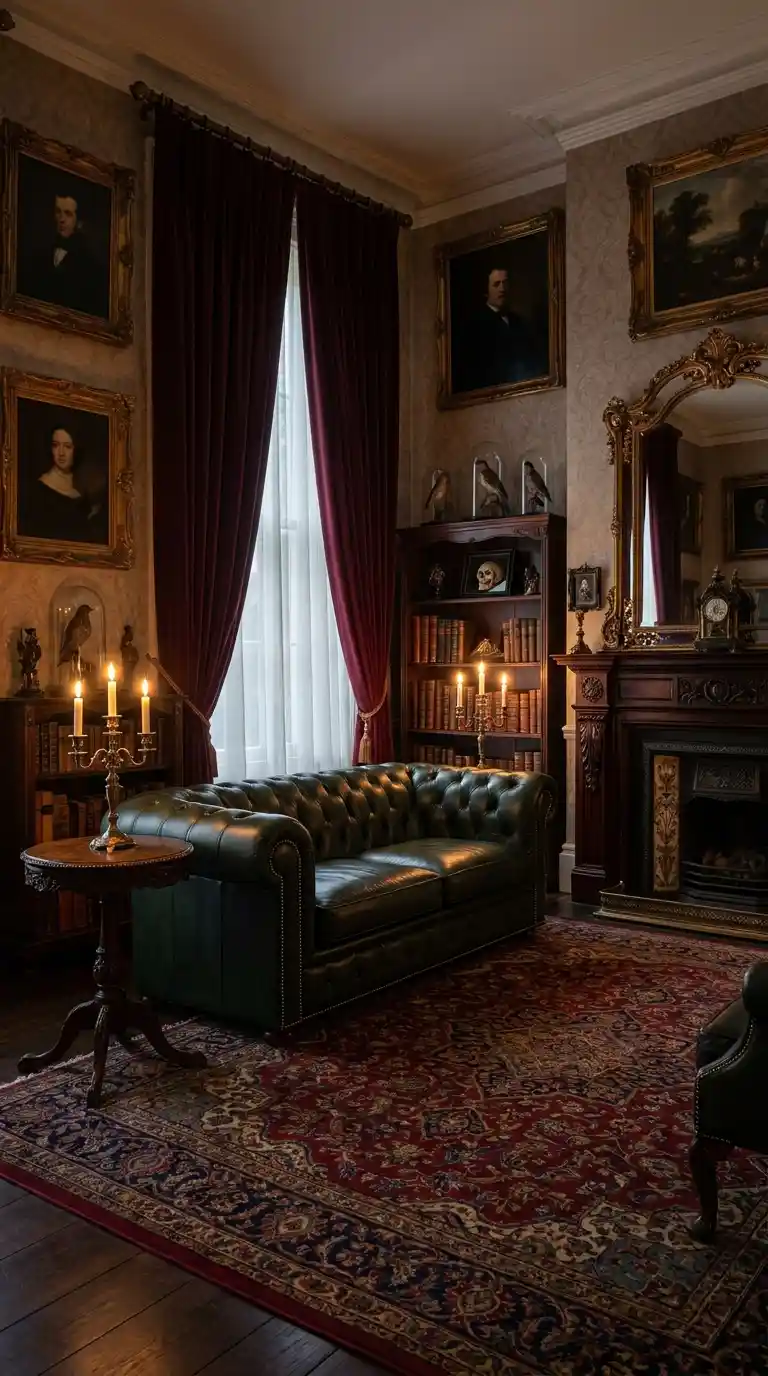
Living Room Victorian Gothic Home Decor
The living room or drawing room is the space where Victorian gothic home decor can be expressed most fully and most dramatically. This is the room where you receive guests, where the full theatrical quality of the aesthetic can be deployed without the practical constraints that apply in other rooms. Think of it as the stage for everything that Victorian gothic home decor promises: grandeur, mystery, richness, and atmosphere that hits you the moment you walk through the door.
The fireplace is the natural focal point in any Victorian gothic home decor living room and deserves to be treated as such. An ornate carved marble or wooden mantel, ideally with a large dramatic overmantel mirror in an elaborate frame, creates an anchor for the entire room. The mantel surface is one of the most important styling opportunities in Victorian gothic home decor, a place to arrange candelabra, gothic clocks, framed photographs, small sculptures, and carefully chosen curiosities in a composition that rewards close examination.
Furniture arrangement in Victorian gothic home decor living rooms should feel deliberate and slightly formal, reflecting the Victorian sensibility about the drawing room as a public social space. Chesterfield sofas in leather or velvet, tufted Victorian settees, wingback chairs in rich upholstery, and occasional tables with carved legs create the furniture vocabulary. The space between pieces should be comfortable for circulation but the overall feeling should be one of abundance rather than airiness. Victorian gothic home decor lives in rooms that feel full, not sparse.
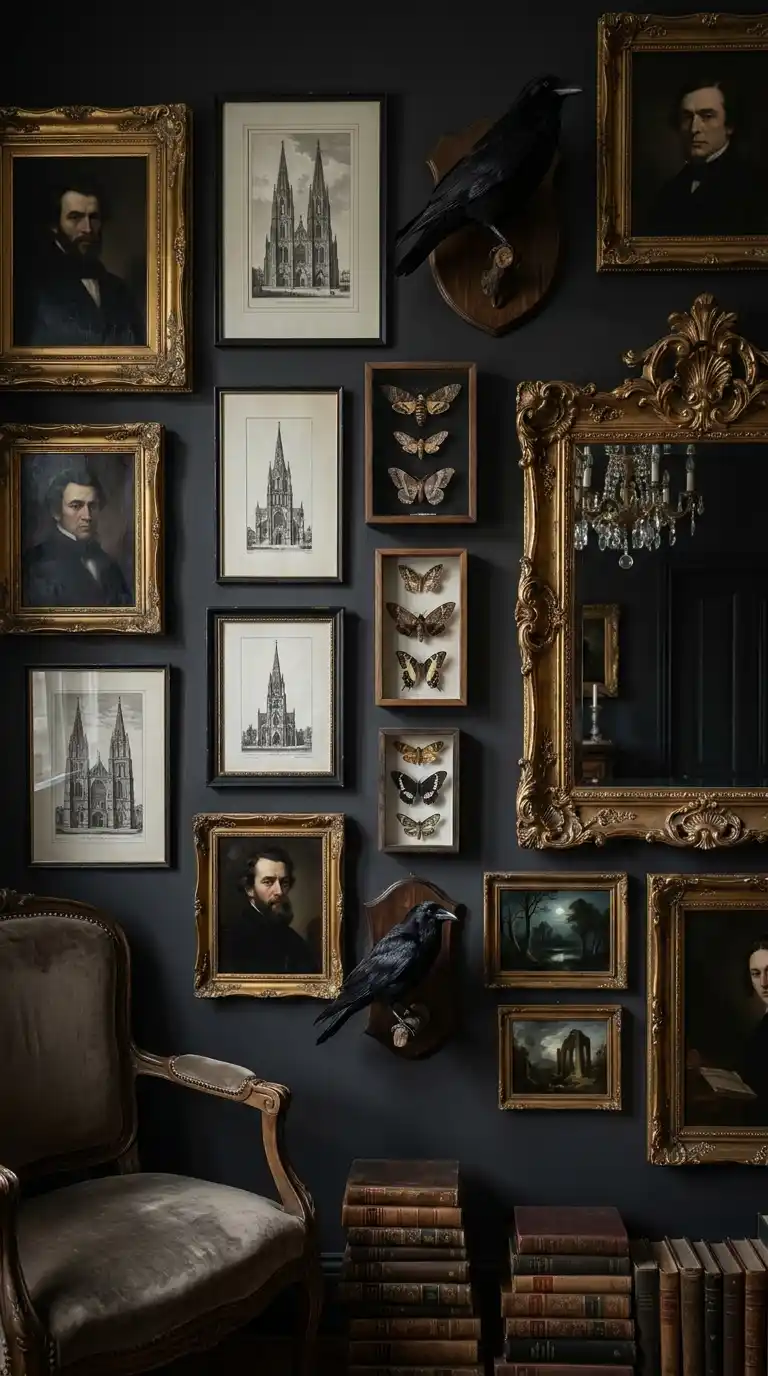
The walls of a Victorian gothic home decor living room deserve as much attention as the floor. A large gallery wall of framed prints, paintings, mirrors, and taxidermy creates the layered, accumulated quality that is central to the aesthetic. Victorian botanical prints, anatomical illustrations, gothic architectural drawings, romantic landscape paintings, and portraits with a certain period quality all belong in a Victorian gothic home decor gallery wall. Mix frame styles and sizes but keep the frame finishes within a consistent palette of dark wood, gold, and black.
Bedroom Victorian Gothic Home Decor
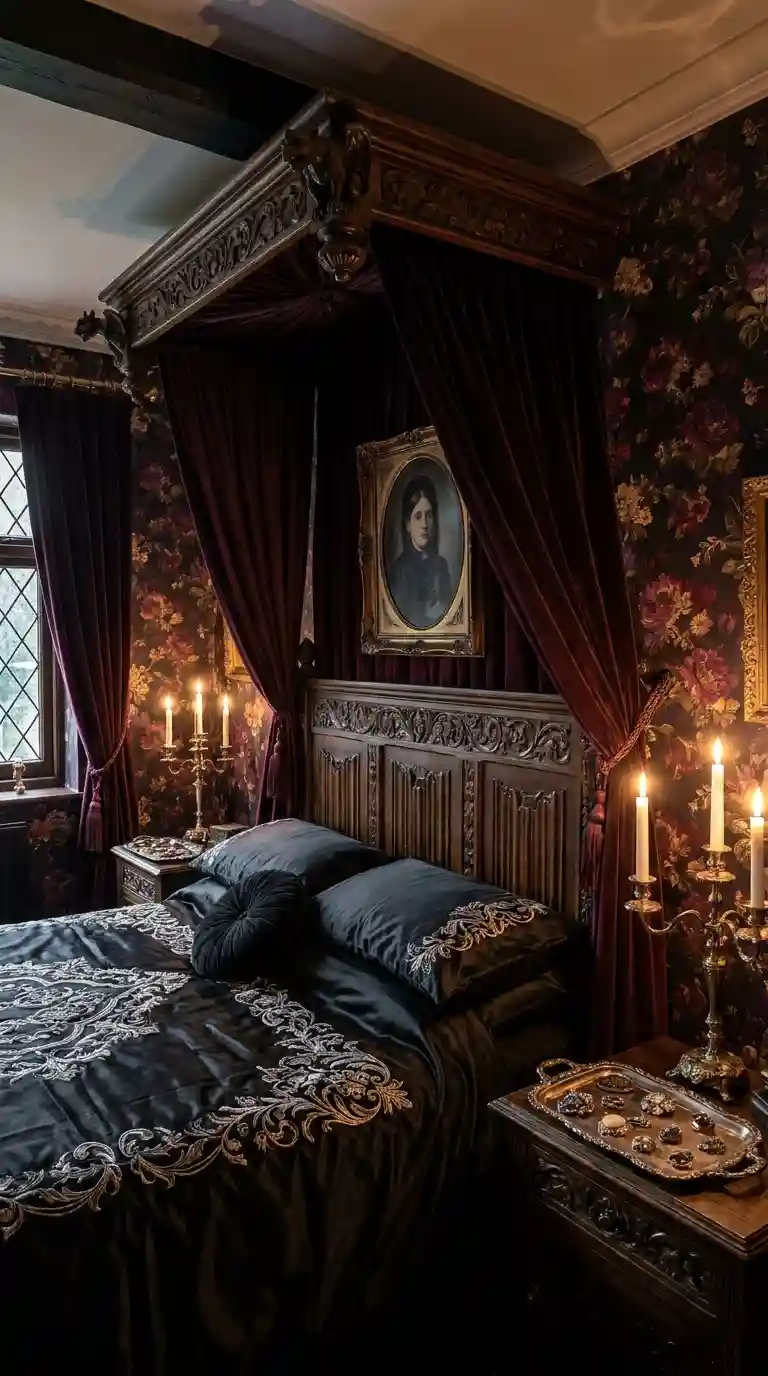
The Victorian gothic bedroom is a space that should feel like sleeping inside a particularly beautiful dark dream. This is the room where the more intimate and sensory aspects of Victorian gothic home decor come to the fore. Canopied or four-poster beds, layers of velvet and silk bedding, candlelight or low warm lamp light, and the soft weight of heavy curtains creating a cocoon from the outside world are the defining qualities of Victorian gothic home decor in the bedroom.
The bed is the centerpiece of any bedroom and in Victorian gothic home decor it needs to make a statement commensurate with that centrality. A four-poster bed with dark carved posts and a canopy draped with velvet or lace is the most authentic Victorian gothic choice. A dramatic upholstered headboard in deep velvet with button-tufting or arched detail creates a similar sense of theatrical presence at lower cost. Gothic arch headboards in dark wood or wrought iron have become increasingly available and bring the signature pointed arch form of the style directly into the sleeping space.
Bedding in Victorian gothic home decor layers textures and richness in the same way that Victorian rooms layered textiles throughout. A base of dark cotton or linen in charcoal or deep burgundy. A velvet duvet or quilt in a jewel tone. Silk pillowcases in complementary colors. Decorative pillows in brocade or embroidered fabrics. A cashmere or wool throw in a deep plaid or solid dark tone draped at the foot of the bed. This layered approach creates the visual richness that a single color of bedding never achieves.
Lighting in the Victorian gothic home decor bedroom should never be harsh or overhead in the traditional single-fixture sense. Wall sconces in ornate wrought iron or brass with warm amber bulbs, bedside lamps with small dark shades and candlestick bases, and actual candles in secure holders on dressers or windowsills create the warm, low, directional light that Victorian gothic home decor bedrooms require. Blackout curtains in heavy velvet or lined damask complete the bedroom by ensuring that when you want darkness, you get absolute darkness.
Dining Room Victorian Gothic Home Decor
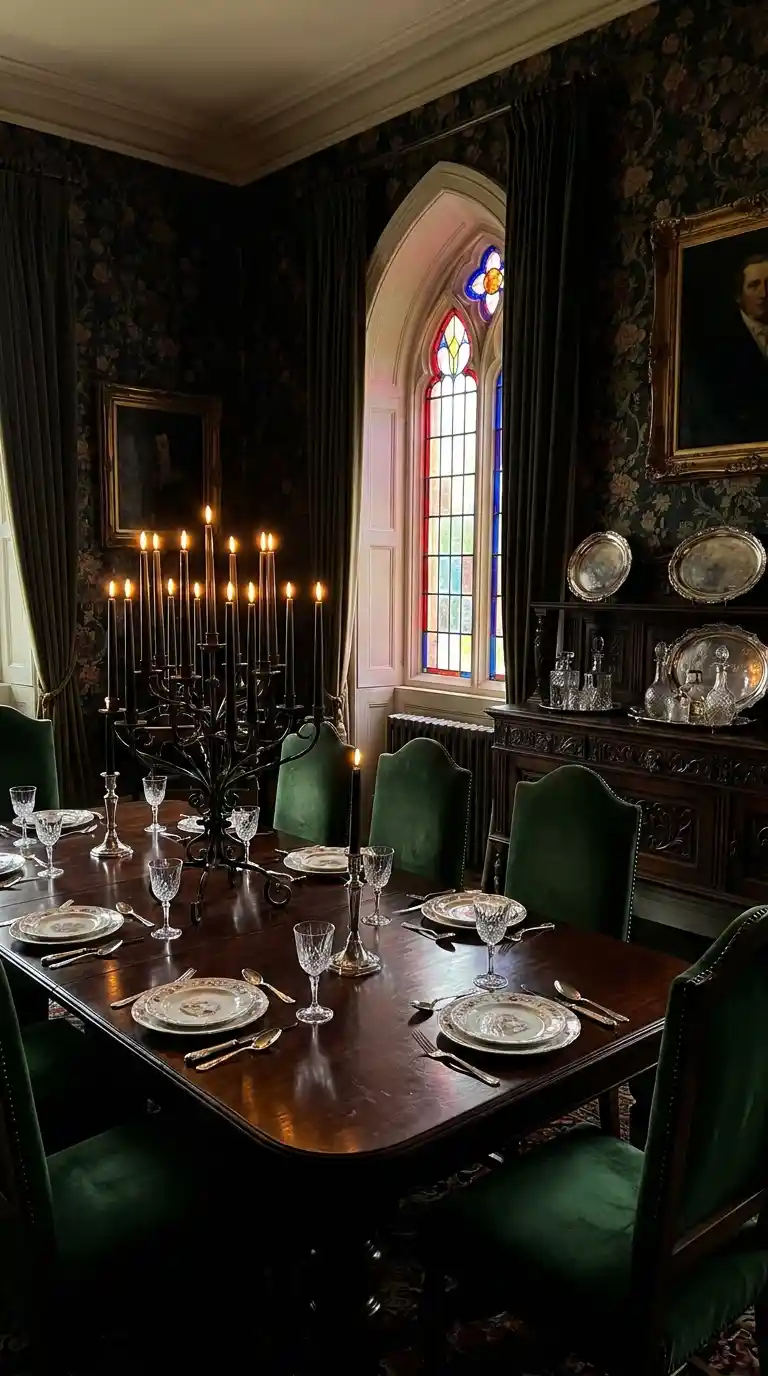
Of all the rooms in a home, the dining room may be the one most naturally suited to Victorian gothic home decor. The combination of candlelight, dark dramatic surroundings, the ritual of a formal meal, and the gathering of people around a single table all align perfectly with the theatrical and ceremonial qualities that Victorian gothic home decor brings at its best.
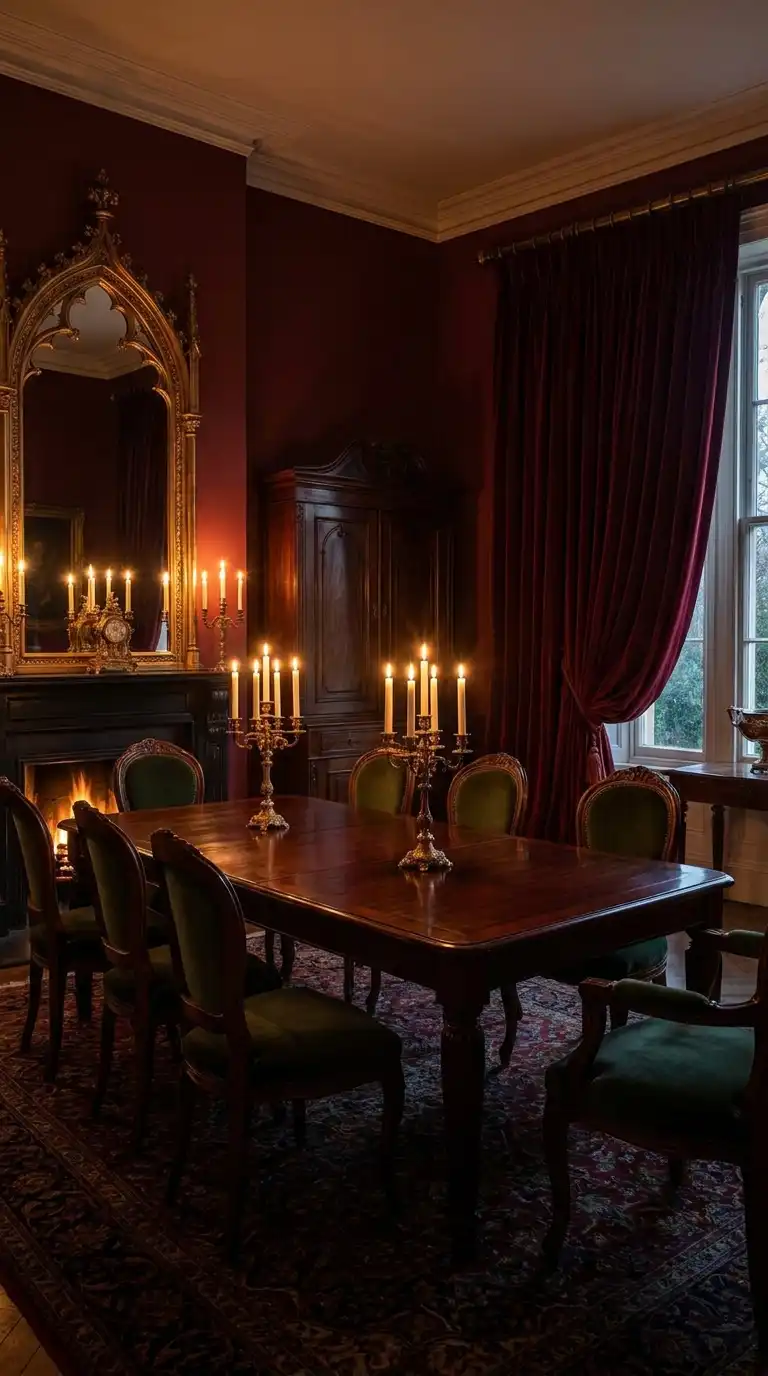
The dining table in a Victorian gothic home decor room should be substantial and dark. A large oval or rectangular table in dark mahogany, ebonized wood, or a modern equivalent sets the stage for the entire room. The chairs that surround it might be upholstered in deep velvet with carved dark wood frames, or could be gothic-style chairs with high backs and carved tracery detail. The formality and visual weight of the furniture should communicate that meals in this room are occasions rather than just fuel stops.
The centerpiece of a Victorian gothic home decor dining table is a creative opportunity that the style handles exceptionally well. A dramatic candelabra with real or LED candles is the most classic choice and nothing quite matches the quality of candlelight on dark velvet and polished wood. Gothic architectural candleholders in wrought iron, antique brass candelabras with multiple arms, and collections of mixed candlesticks at different heights all create the right atmosphere. Adding dried flowers, dark botanical elements, or seasonal natural materials like pine cones, dried seed heads, and dark fruits creates a Victorian naturalist quality that fits perfectly.
Wall treatments in Victorian gothic home decor dining rooms can be the most dramatic in the house because the room is used for relatively brief periods and does not need to accommodate the sustained daily exposure that might make a very intense scheme feel oppressive over time. Dark wallpaper with a Gothic floral or botanical pattern, deep painted walls in oxblood or midnight blue, or paneled walls in dark wood create the enclosing, atmospheric quality that Victorian gothic home decor dining rooms demand.
Also Read : Gorgeous Farmhouse Wall Decor Ideas That Make Every Room Feel Warm, Cozy, and Completely at Home
Bathroom Victorian Gothic Home Decor
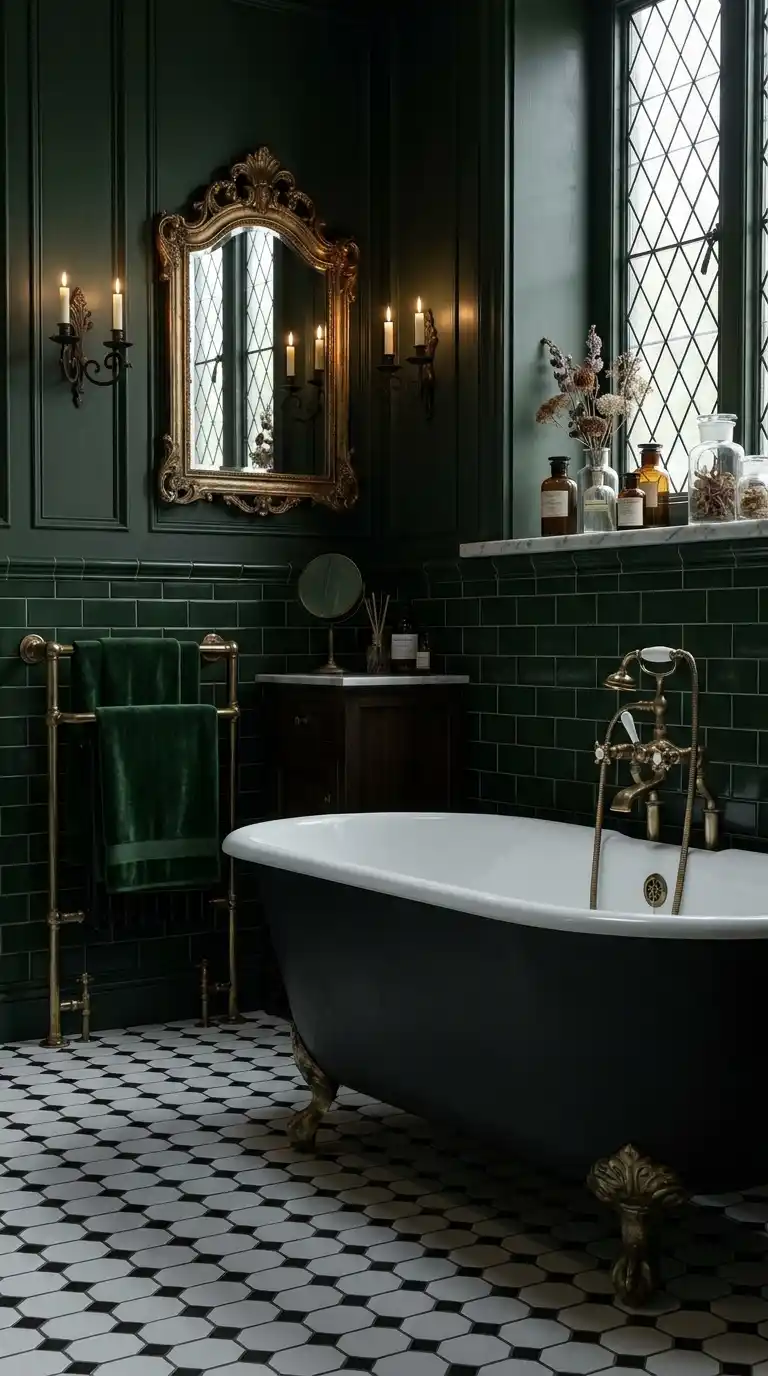
The bathroom is perhaps the most surprising space in which Victorian gothic home decor can be applied brilliantly, and yet it is one of the most rewarding rooms to approach through this aesthetic lens. Victorian bathrooms had their own particular grandeur, clawfoot bathtubs, pedestal sinks with ornate fixtures, elaborate tiling, and a sense that bathing was a ritual worthy of beautiful surroundings rather than a purely functional necessity. Victorian gothic home decor in the bathroom revives this sensibility.
A clawfoot bathtub is the single most transformative element in Victorian gothic home decor bathrooms. Finished in matte black or deep charcoal, with brass or oil-rubbed bronze claw feet and fixtures, a clawfoot tub immediately establishes the period quality and dramatic presence that the style requires. If you cannot replace your existing tub, painting a standard tub in matte black with appropriate primer and paint is a dramatically lower-cost alternative that achieves a similar visual effect.
Tilework in Victorian gothic home decor bathrooms uses the black and white geometric patterns of Victorian encaustic tile or hex tile on the floor, with dark subway tile or metro tile in unusual formats on the walls. Adding a border in a deep color, burgundy, forest green, or navy, introduces the Victorian gothic palette into a surface that is more typically considered in purely practical terms. Dark grout between white or light tiles creates a graphic boldness that reads as intentional and period-appropriate.
Accessories in Victorian gothic home decor bathrooms are where the personal and atmospheric details live. Dark botanical prints in ornate frames, gothic candleholders, apothecary-style bottles and jars for toiletries, a dark mirror with an elaborate carved frame, dried flowers and herbs, and dark luxurious towels in velvet or waffle weave in deep jewel tones all contribute to a bathroom that feels like an extension of the Victorian gothic aesthetic rather than a stylistic interruption of it.
Lighting in Victorian Gothic Home Decor
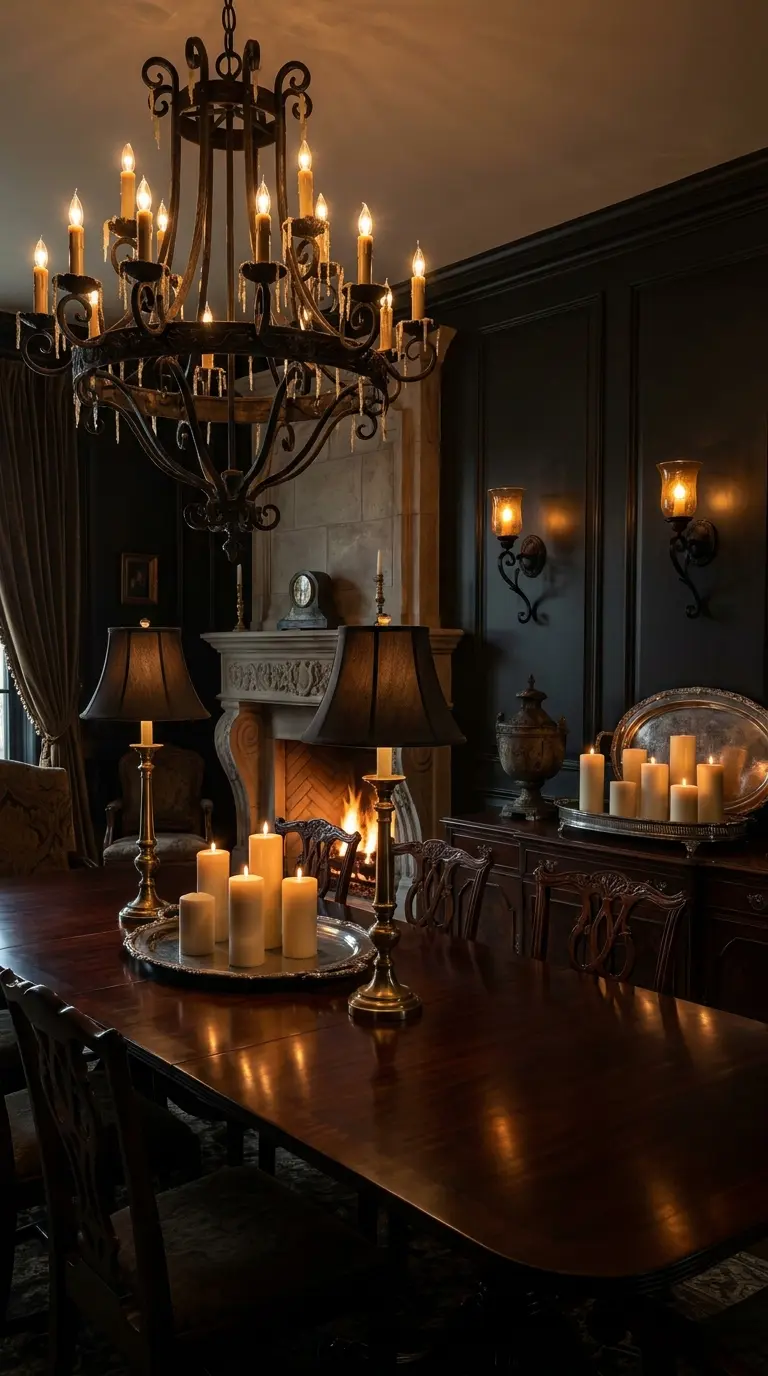
Lighting is the single element that most determines whether a Victorian gothic home decor space achieves genuine atmosphere or simply looks like a dark room with expensive furniture. The Victorians understood light in a way that contemporary lighting design has largely forgotten: that the quality and character of light, its warmth, its direction, its flickering movement, is as important as its quantity.
The guiding principle of lighting in Victorian gothic home decor is that light should feel like it is being revealed rather than installed. Multiple small warm sources distributed throughout the space, candles and their electric equivalents, small lamp pools, sconce light falling across a wall, the glow from a fire, create an atmosphere of discovered illumination that overhead fixtures delivering uniform bright light completely destroy. If you take one lesson from this entire guide about Victorian gothic home decor, let it be this: turn off the overhead lights and replace them with multiple smaller warm sources.
Chandeliers and Statement Fixtures
A chandelier in Victorian gothic home decor is not merely a light fixture but a statement about the seriousness with which you approach the aesthetic. Gothic wrought iron chandeliers with candle-style sockets, ornate brass chandeliers with crystal drops in the Victorian style, and dramatic dark metal chandeliers with pointed Gothic details all create the right sense of architectural weight and period character. The chandelier should feel slightly too large for the space, in the way that Victorian domestic objects often did, deliberately oversized to communicate wealth and taste.
Reproduction Victorian gas lamp pendants, converted to electric, are among the most period-accurate and most beautiful statement fixtures for Victorian gothic home decor. These fixtures with their frosted or amber glass shades and ornate brass fittings cast a warm, slightly amber light that has genuine kinship with the gaslight quality that Victorians actually lived by. They are available from specialist lighting companies and antique dealers and make an extraordinary difference to the authenticity and atmosphere of a Victorian gothic home decor scheme.
Candles and Fire in Victorian Gothic Home Decor
No discussion of Victorian gothic home decor lighting would be complete without acknowledging the central role of candlelight. The Victorians lived by candlelight and firelight to an extent that profoundly shaped the aesthetic sensibility that Victorian gothic home decor channels. The flickering, warm, directional quality of a real candle flame does something that no electric light source fully replicates, and incorporating actual candles into your Victorian gothic home decor scheme, used responsibly and safely, adds a sensory dimension that transforms the experience of being in the space.
Candelabras, candlesticks, pillar candles on decorative plates and trays, candles in gothic lanterns and holders, and hurricane lamps with pillar candles inside all have their place in Victorian gothic home decor. High-quality pillar candles in black, deep red, ivory, or forest green are the most authentic color choices. Unscented or subtly scented candles with notes of beeswax, wood smoke, dark florals, or incense all contribute to the olfactory dimension of Victorian gothic home decor that few decorating guides address but that the Victorians themselves understood as fundamental.
Collecting and Displaying Objects in Victorian Gothic Home Decor
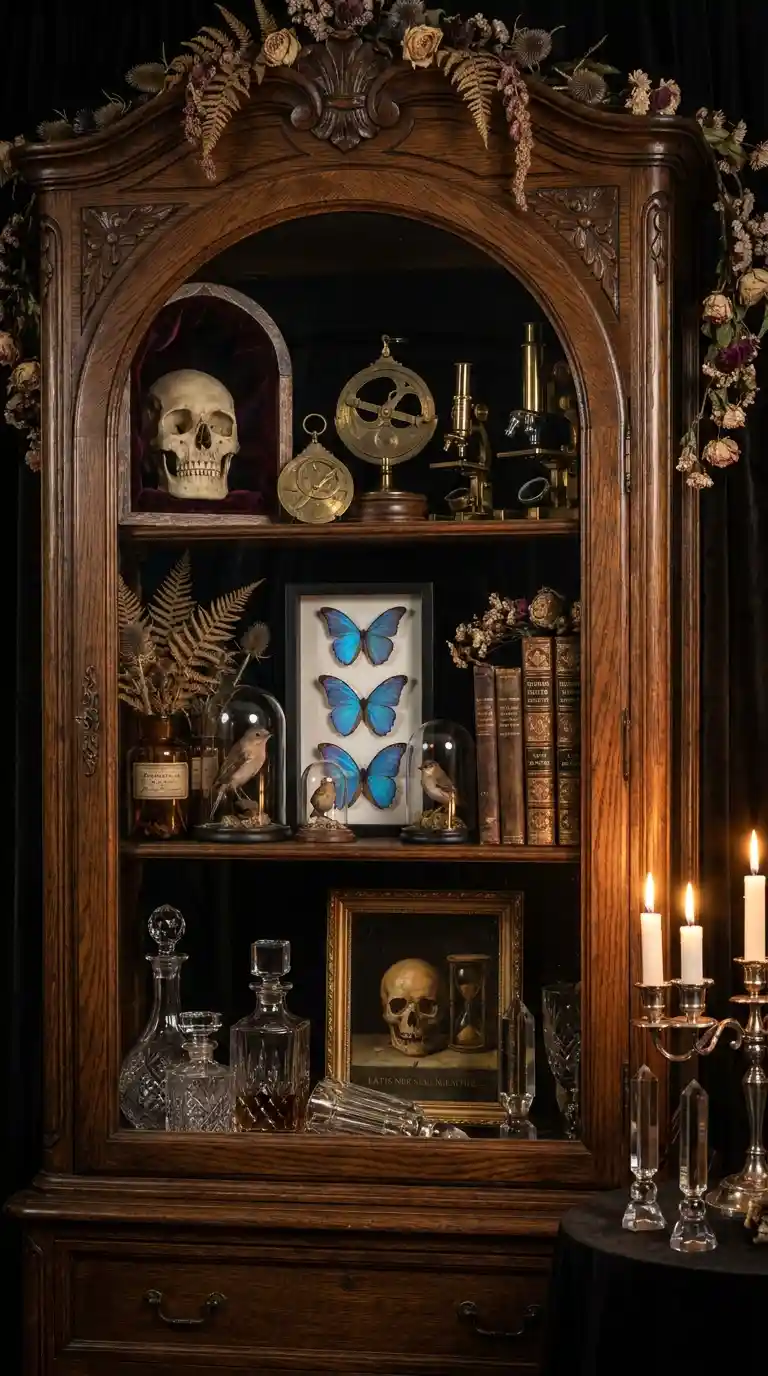
The Victorian era was the great age of collecting, driven by the expansion of natural history, archaeology, ethnography, and the broader project of cataloguing and understanding the world. Victorian homes were often full of objects, specimens, and curiosities arranged in ways that reflected both the collector’s intellectual interests and their desire to surround themselves with evidence of a rich and curious world. This collecting culture is one of the most distinctive and most personally expressive aspects of Victorian gothic home decor.
In Victorian gothic home decor, the objects you choose to display tell a story about who you are and what you find beautiful, strange, and significant. This is not about buying a set of coordinating decorative objects from a home goods store. It is about finding and displaying things that genuinely fascinate you, arranging them with care and intention, and allowing the collection to grow and evolve over time. The accumulated quality of a great Victorian gothic home decor collection is precisely what gives it its power.
Taxidermy and Natural History in Victorian Gothic Home Decor
Taxidermy is perhaps the most distinctive and most divisive element of Victorian gothic home decor. The Victorians were passionate natural historians and collected specimens of birds, mammals, fish, and insects with an enthusiasm that modern sensibilities find both remarkable and troubling. In contemporary Victorian gothic home decor, taxidermy occupies a complex space between authentic period detail, ethical concern, and genuine visual power.
For those who embrace taxidermy in their Victorian gothic home decor, there is a meaningful distinction between antique taxidermy, pieces that were made during the Victorian era and represent genuine historical artifacts, and contemporary taxidermy using ethically sourced or farmed animals. Antique taxidermy can be found at auction houses, antique dealers, and specialized dealers and represents a genuinely period-appropriate element in Victorian gothic home decor. A Victorian-era glass dome display of birds or butterflies, bought from a reputable dealer, connects your space directly to the aesthetic tradition you are drawing on.
For those who prefer not to use actual taxidermy in their Victorian gothic home decor, high-quality resin reproductions have become available that capture much of the visual impact of genuine specimens without the ethical concerns. Antique-style framed botanical prints and natural history illustrations, shadow boxes with insect specimens, pressed flower and plant collections in ornate frames, and high-quality decorative skulls in resin or ceramic all provide the natural history quality of Victorian gothic home decor without actual animal specimens.
Books and Libraries in Victorian Gothic Home Decor
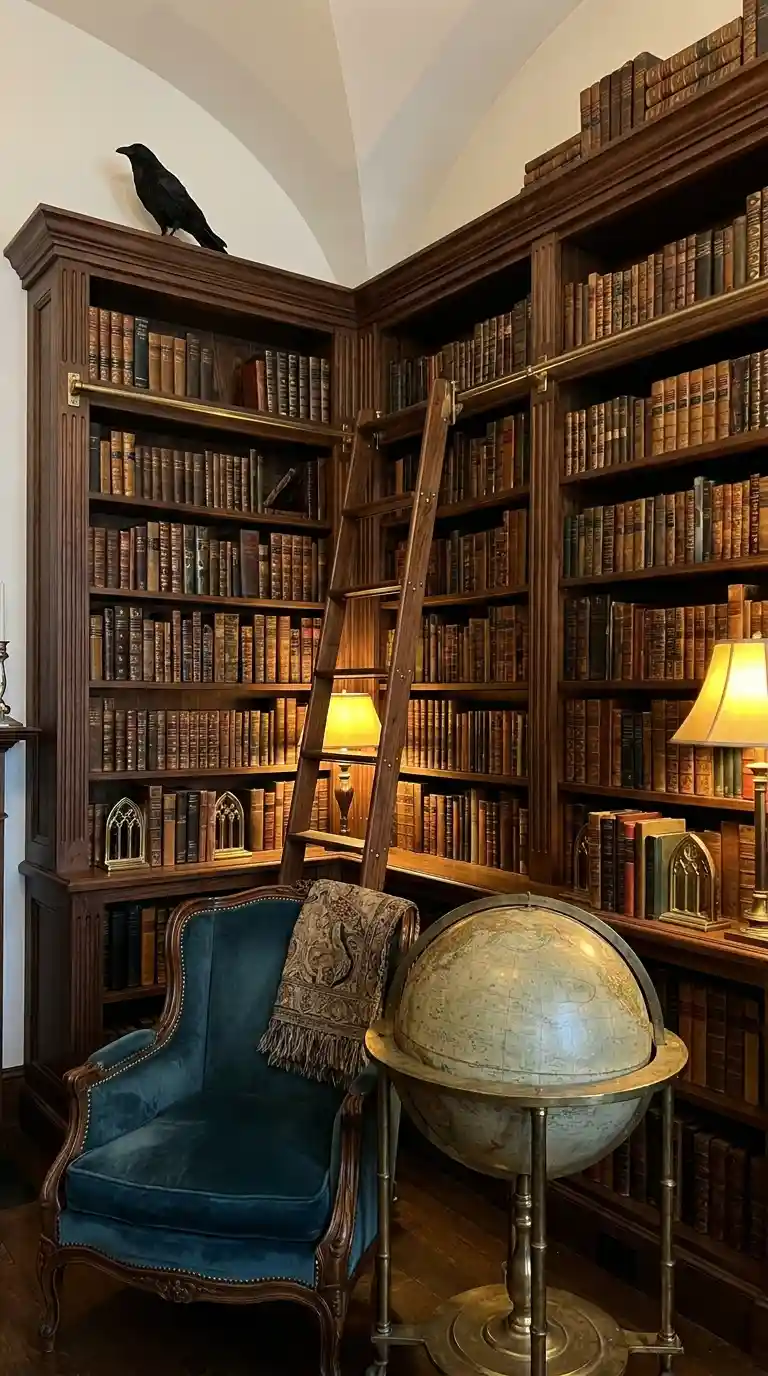
Books are perhaps the most naturally at-home objects in any Victorian gothic home decor scheme. The Victorian era was defined by reading culture, literary production, and the conviction that the possession of books was both a practical necessity and a moral virtue. Dark shelves lined with leather-bound volumes, arranged by color or by subject or simply accumulated over a reading lifetime, carry exactly the visual weight and intellectual atmosphere that Victorian gothic home decor requires.
Building a book collection that contributes to Victorian gothic home decor involves both curation and intention. Genuine old books acquired from second-hand bookshops, estate sales, and online dealers for their appearance as well as their content create the authentic period quality that fake decorative books cannot replicate. Books with dark leather bindings, gold lettering, Victorian-era publication dates, and subject matter appropriate to the aesthetic, natural history, gothic literature, Victorian poetry, occult history, anatomy, archaeology, create a library that is genuinely interesting to spend time in as well as beautiful to look at.
Floor-to-ceiling bookshelves in dark wood or painted in deep colors are one of the most transformative additions to any Victorian gothic home decor room. Libraries lined with books on every wall create the enclosing, intimate, intensely atmospheric quality that Victorian gothic home decor seeks in its most successful expressions. Even a single wall of well-curated books in dark shelving makes a room feel significantly more Victorian gothic in character.
Gothic Art and Imagery in Victorian Home Decor
The art that appears in a Victorian gothic home decor space sends some of the clearest signals about the aesthetic identity of the room. Victorian gothic home decor art sits at the intersection of several traditions, the Pre-Raphaelite Brotherhood’s rich colors and medieval subjects, the dark romantic landscapes of Caspar David Friedrich and his contemporaries, Victorian portrait painting, memento mori imagery, occult symbolism, and gothic architectural illustration.
Reproduction prints of Pre-Raphaelite paintings by artists like Dante Gabriel Rossetti, Edward Burne-Jones, and John William Waterhouse are particularly well suited to Victorian gothic home decor because they combine the rich jewel-tone color palette, the sense of romantic narrative, and the beautiful melancholy that the style demands. These are available as high-quality giclée prints from art reproduction dealers and look extraordinary in appropriately ornate frames in dark wood or gold.
Original Victorian-era art of any kind, prints, etchings, engravings, oil paintings, and watercolors, carries an authenticity and presence in Victorian gothic home decor that reproductions cannot fully replicate. Victorian portraits of unknown subjects bought at antique fairs, Victorian botanical engravings from dismembered natural history books, Victorian architectural drawings of Gothic structures, these materials connect your Victorian gothic home decor directly to the historical period in a way that is both visually powerful and genuinely interesting.
Wallpaper and Wall Treatments in Victorian Gothic Home Decor
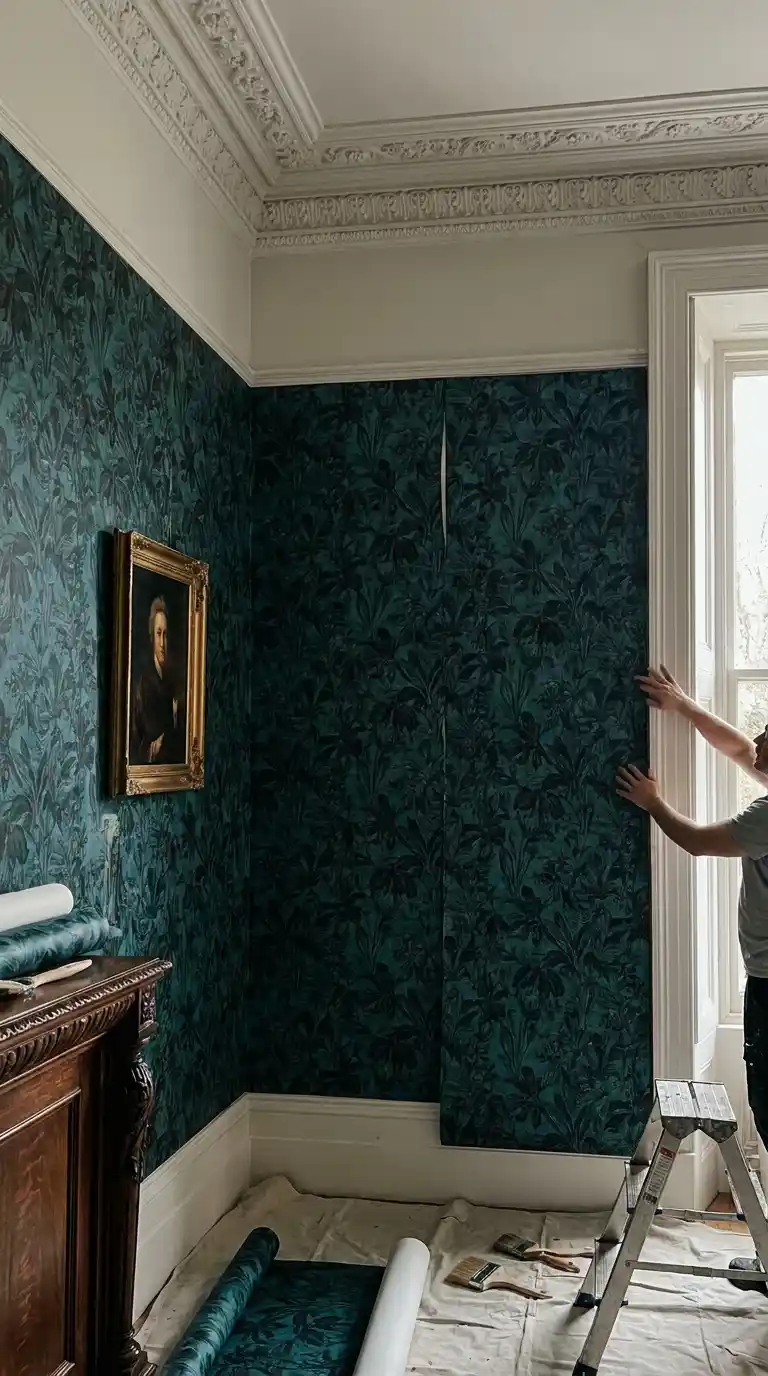
Wallpaper is one of the most powerful tools in Victorian gothic home decor and one of the most historically authentic ways to establish the aesthetic in a contemporary home. The Victorians were passionate wallpaper enthusiasts and the designs produced during the Victorian era, by designers including William Morris and his Arts and Crafts contemporaries, remain among the most beautiful and most recognizable wallpaper patterns ever created.
In Victorian gothic home decor, wallpaper serves multiple functions simultaneously. It provides color and pattern to walls that might otherwise feel bare and unsupported. It creates the sense of enclosure and richness that is fundamental to the Victorian domestic aesthetic. And it operates as a kind of texture that changes the acoustic and visual character of a room in ways that paint alone cannot achieve. A room with the right wallpaper in Victorian gothic home decor feels complete in a way that the same room with painted walls often does not.
Patterns for Victorian Gothic Home Decor Wallpaper
The most appropriate wallpaper patterns for Victorian gothic home decor fall into several categories that often overlap. Large-scale floral patterns with a slightly sinister or highly stylized quality, think overblown dark roses, ravens among thorns, or nightshade and belladonna illustrated with botanical accuracy, create the most obviously gothic character. William Morris patterns in dark colorways, his famous Acanthus, Strawberry Thief, and Willow designs in deep greens, burgundies, and navy, are the most historically accurate choices for Victorian gothic home decor.
Damask patterns in deep colors are another excellent choice for Victorian gothic home decor walls, creating the richness and formality of silk damask fabric at wallpaper cost. Geometric patterns with Gothic tracery references, ogee patterns, trefoil and quatrefoil motifs, and patterns inspired by medieval stonework all introduce the Gothic architectural vocabulary into the wall treatment. Toile de Jouy patterns in dark and unusual colorways, particularly those depicting romantic or pastoral scenes in a single dark color on a cream ground, have a Victorian quality that works beautifully in Victorian gothic home decor schemes.
Dark Paint Treatments as an Alternative
Not everyone is ready to commit to wallpaper, and dark paint in the right colors can absolutely anchor a Victorian gothic home decor scheme. The key to making dark paint work in Victorian gothic home decor is choosing the right shade and finishing it correctly. The best dark colors for Victorian gothic home decor walls have warmth and complexity, they are not simply dark but contain undertones of red, purple, green, or blue that give them the rich character of Victorian pigments.
Historically inspired paint ranges from companies like Farrow and Ball, Little Greene, and Paint and Paper Library offer colors that capture the Victorian chromatic sensibility with extraordinary accuracy. Shades like Farrow and Ball’s Railings, Pitch Black, and Down Pipe in more neutral directions, or Incarnadine, Preference Red, and Hague Blue for more dramatic Victorian gothic home decor effects, are specifically formulated to behave the way Victorian-era pigments behaved in different lighting conditions.
The finish matters as well in Victorian gothic home decor paint applications. An eggshell or estate eggshell finish on dark walls creates the slight sheen that catches light subtly without the plasticky quality of a full gloss. Dead flat finishes on dark colors absorb all light and create a velvety, enveloping quality that is extremely atmospheric in Victorian gothic home decor bedrooms and sitting rooms.
Sourcing Victorian Gothic Home Decor: Where to Find the Right Pieces
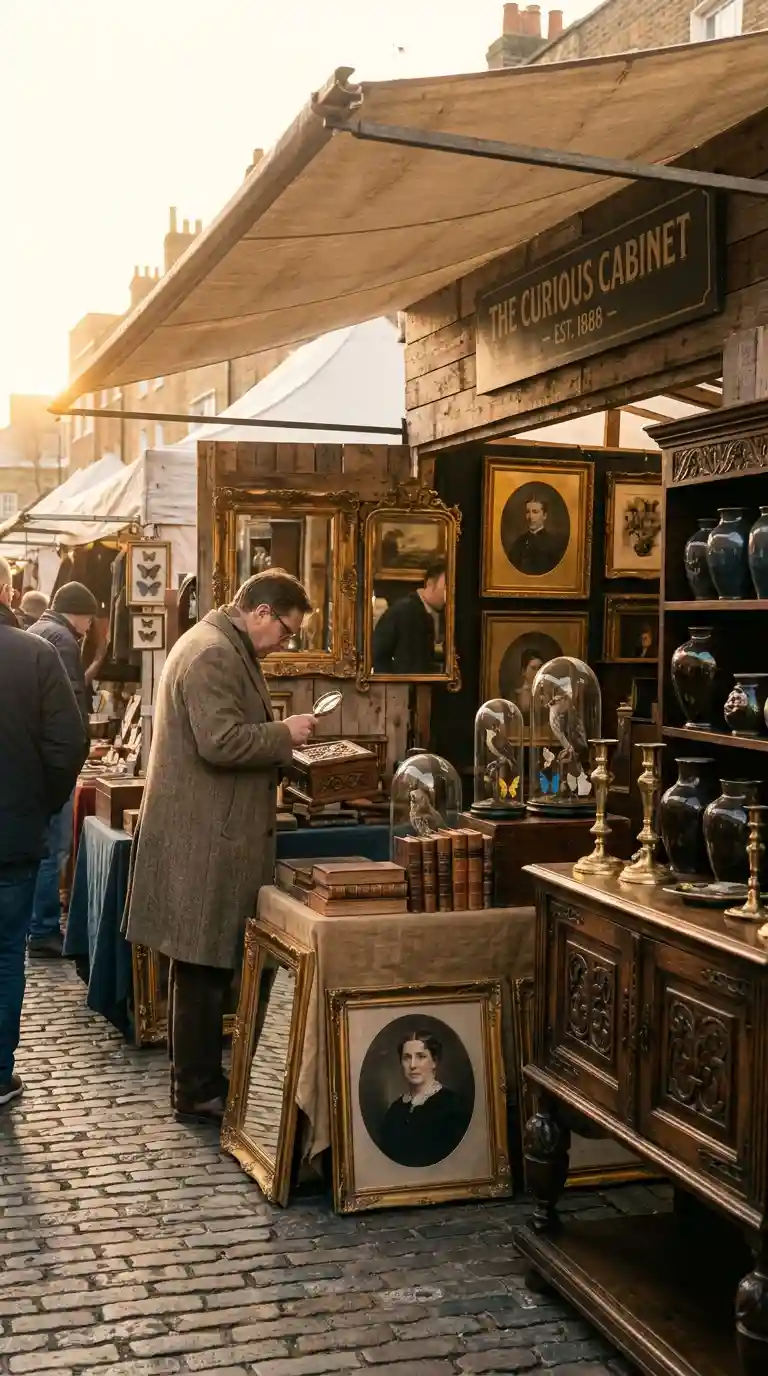
Knowing what you want in terms of Victorian gothic home decor is one thing. Knowing where to find it is another matter entirely. Victorian gothic home decor sourcing is a skill that develops with practice and patience, and the most satisfying Victorian gothic home decor spaces are almost always built over years rather than assembled in a single shopping expedition.
Antique dealers and antique markets are the most obvious and most rewarding source for Victorian gothic home decor pieces that carry genuine period character and authenticity. Regular visits to established antique centers, weekend antique fairs, and estate sales create the opportunities for finding the pieces that define great Victorian gothic home decor collections, the portrait that speaks to you, the taxidermy dome that is exactly right, the candlestick that is the specific design you have been looking for.
Online auction platforms including eBay and specialist fine art and antiques auction sites have dramatically expanded access to Victorian gothic home decor pieces that would previously have required extensive travel to find. Learning to search effectively using period-appropriate terminology, Victorian taxidermy, Gothic Revival furniture, Victorian mourning jewelry, Pre-Raphaelite print, and Victorian natural history specimen, opens up a world of authentic pieces available from dealers across the country and internationally.
Contemporary Makers for Victorian Gothic Home Decor
Beyond antiques, there is a thriving community of contemporary artisans and makers producing pieces that fit beautifully into Victorian gothic home decor schemes. Independent furniture makers who specialize in Gothic Revival styles, textile artists producing velvet and brocade cushions and curtains in Victorian patterns, candle makers using Victorian-era scent profiles, and ceramicists creating gothic and botanical pieces in appropriate colorways all contribute to a contemporary Victorian gothic home decor market that is richer than it has ever been.
Etsy has become one of the best platforms for sourcing contemporary Victorian gothic home decor pieces from independent makers. From hand-painted gothic signage to custom velvet curtains in any color, from hand-bound blank books to antique-style taxidermy sculptures, the platform connects buyers with makers who specialize in exactly the aesthetic vocabulary that Victorian gothic home decor requires. The quality and authenticity varies, but the best makers on the platform produce pieces that fit seamlessly into historically serious Victorian gothic home decor schemes.
Victorian Gothic Home Decor on a Budget
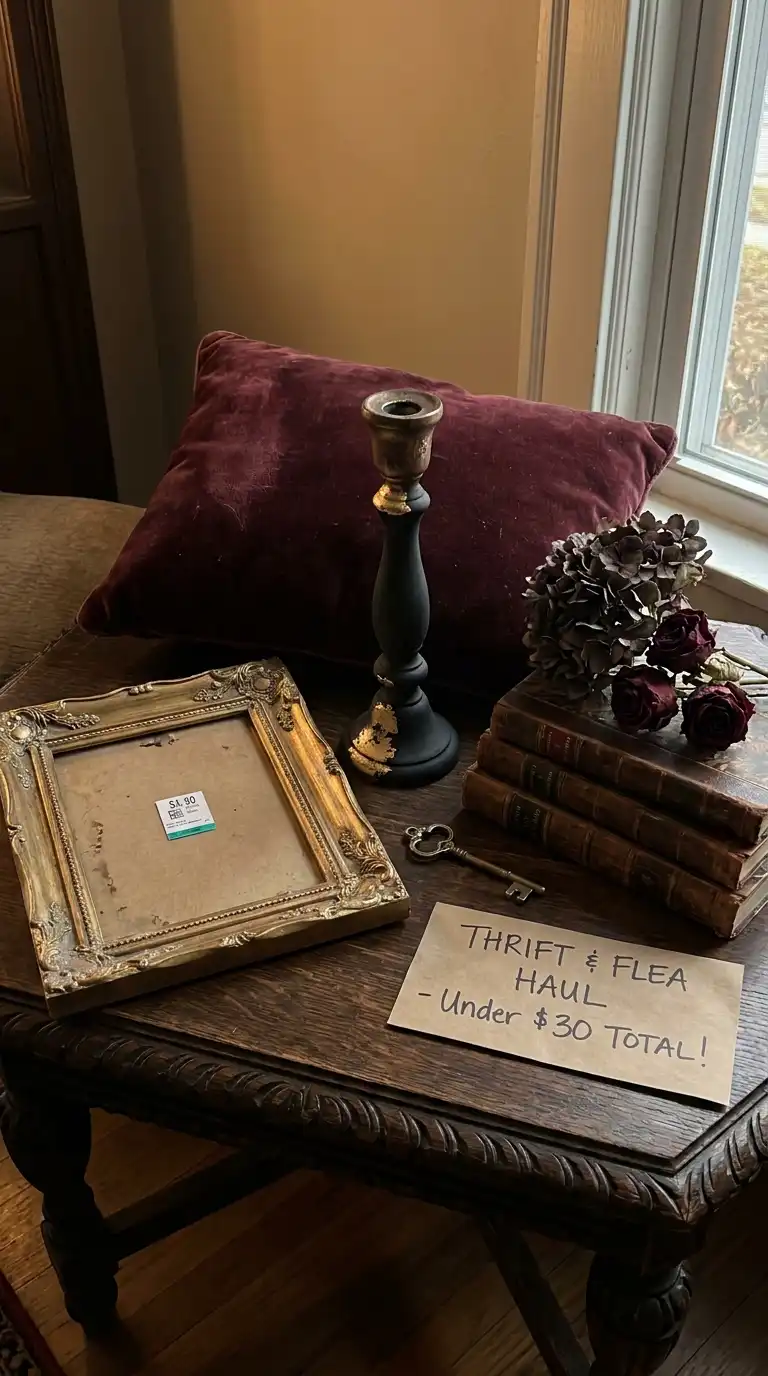
One of the most common assumptions people make about Victorian gothic home decor is that it requires significant financial investment to execute well. This is only partly true. While genuinely high-quality Victorian antique furniture and rare period pieces do carry significant price tags, the atmospheric quality of Victorian gothic home decor is surprisingly achievable on a modest budget through strategic buying, DIY techniques, and creative repurposing.
The most budget-effective approach to Victorian gothic home decor is starting with paint, which costs relatively little and has the most dramatic impact on a room’s atmosphere. Painting walls in deep, appropriate colors before acquiring any furniture or accessories establishes the foundational character of the Victorian gothic home decor scheme and immediately makes whatever you already own look more suited to the aesthetic than it did against white or beige walls.
Charity shops, thrift stores, and car boot sales are genuinely excellent sources for Victorian gothic home decor pieces at minimal cost. Old picture frames that can be painted dark or gold and used with prints acquired online. Dark wooden furniture pieces that need only refinishing in a deeper stain. Velvet cushion covers that are the right color even if they are not quite the right design. Candlesticks and candle holders in appropriate materials. Books with ornate spines. Victorian gothic home decor rewards the patient budget hunter more than almost any other decorating style.
DIY Victorian Gothic Home Decor Projects
Several of the most impactful elements in Victorian gothic home decor are achievable through relatively simple DIY projects that require more time and creativity than money. Creating gallery walls with thrifted frames painted to match and prints downloaded from public domain archives of Victorian natural history and Gothic architecture, painted in consistent colors and framed to a consistent depth, creates a gallery wall that looks expensive and intentional at minimal cost.
Making your own velvet curtains from fabric lengths purchased at discount fabric retailers is one of the most rewarding Victorian gothic home decor DIY projects because curtains make such a dramatic difference to a room and commercial versions in appropriate fabrics and colors can be very expensive. Basic unlined curtains are within the sewing capability of relative beginners, and the combination of velvet fabric in a deep jewel tone with simple curtain tape and rings creates exactly the right visual effect.
Furniture makeovers using chalk paint, dark wood stain, and new hardware are another excellent Victorian gothic home decor DIY approach. A simple wooden dresser painted in deep charcoal with new antique brass pulls becomes a piece that fits perfectly into a Victorian gothic scheme. A basic wooden bookcase painted black with gold interior backing paper becomes a bookcase that looks considered and period-appropriate. These transformations cost a fraction of buying appropriate new furniture and produce results that are often more satisfying.
Balancing Victorian Gothic Home Decor with Modern Living
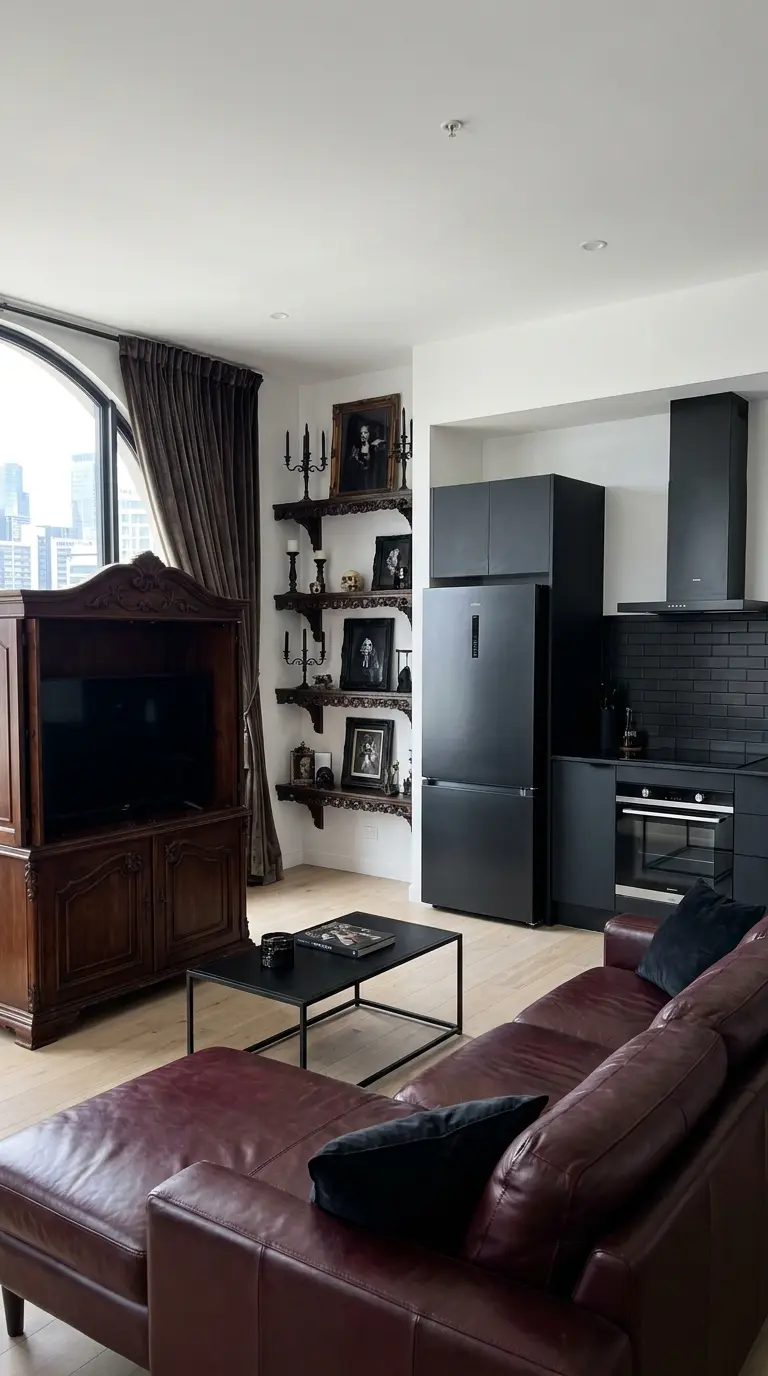
One of the most practical questions about Victorian gothic home decor concerns how to live comfortably and functionally within an aesthetic that was designed for a domestic life that looked quite different from contemporary urban living. Victorian gothic home decor spaces need to accommodate laptops, televisions, modern kitchen appliances, and all the practical requirements of twenty-first century daily life without compromising the atmospheric integrity that makes the style so compelling.
Technology is the most obvious practical challenge in Victorian gothic home decor. Flat-screen televisions, in particular, present a visual problem in a room full of ornate Victorian objects because nothing communicates modern technology quite as loudly as a large black rectangle on a wall. Concealing televisions within Victorian-style cabinets with doors that close, using television covers that look like framed paintings when not in use, or simply accepting the television as a modern intrusion and placing it as unobtrusively as possible are all valid approaches to this challenge in Victorian gothic home decor.
The kitchen is perhaps the most challenging room to approach through a Victorian gothic home decor lens because modern kitchen functionality, efficient workflow, hygienic surfaces, and modern appliances, is genuinely incompatible with a period-accurate Victorian aesthetic in most cases. The most effective approach is to concentrate Victorian gothic home decor elements in adjacent spaces, a gothic-styled dining room that connects to a functional modern kitchen, for example, while using dark colors, period-inspired hardware, and appropriate materials in the kitchen itself to create visual continuity without compromising functionality.
Final Thoughts
Victorian gothic home decor is not for everyone, and it knows it. It makes no attempt to be universally appealing or to suit every taste. It is a committed aesthetic, one that requires patience, accumulation, specific sensibility, and a genuine love for darkness, drama, history, and the kind of beauty that most people find slightly unsettling. These are not weaknesses of the style. They are its defining qualities and the source of its extraordinary power. What Victorian gothic home decor offers, at its best, is not just beautiful rooms but genuinely transformative spaces. Spaces that feel inhabited by history and story. Spaces that engage multiple senses simultaneously through texture, color, light, scent, and the accumulated presence of
Frequently Asked Questions
1. What is Victorian gothic home decor?
Victorian gothic home decor is an interior design style that draws from the Gothic Revival aesthetic of the Victorian era, roughly 1837 to 1901, combining dark and rich color palettes, ornate carved furniture, heavy textiles like velvet and damask, gothic architectural details, natural history collections, and an atmosphere of romantic drama. It references both the Victorian domestic interior tradition and the Gothic novel aesthetic, creating spaces that feel simultaneously historical, theatrical, and deeply atmospheric.
2. What colors are used in Victorian gothic home decor?
Victorian gothic home decor uses a palette of deep, saturated colors including oxblood red, burgundy, midnight blue, forest green, charcoal gray, deep plum, and near-black. These are warmed by gold and brass metallic accents and grounded in the dark tones of mahogany, ebony, and walnut wood. The palette deliberately avoids light neutral tones, embracing darkness and richness as positive decorative qualities rather than problems to be overcome.
3. How do I start decorating in the Victorian gothic style?
The most effective starting point for Victorian gothic home decor is addressing the walls, either with dark paint in appropriate colors or with period-inspired wallpaper in Gothic floral or damask patterns. This establishes the foundational atmosphere before any furniture or accessory purchases. The next priority is lighting, replacing harsh overhead fixtures with multiple warm sources including lamps, sconces, and candles. After that, prioritize the most visible furniture pieces, typically the sofa or bed, and upholster or replace them in appropriate velvet or leather.
4. Is Victorian gothic home decor the same as goth home decor?
Victorian gothic home decor and contemporary goth home decor overlap significantly but are not identical. Victorian gothic home decor draws specifically from the historical Victorian Gothic Revival period and maintains a connection to period-accurate aesthetics, materials, and objects. Contemporary goth home decor is a broader category that can include Victorian gothic elements alongside more modern interpretations of the dark aesthetic. Victorian gothic home decor is generally more historically grounded and more concerned with period authenticity than goth home decor.
5. What furniture is used in Victorian gothic home decor?
Victorian gothic home decor furniture is characterized by dark wood, particularly mahogany, walnut, and ebonized wood, carved decorative detail including Gothic architectural motifs, and upholstery in velvet, leather, or brocade in deep jewel tones. Key furniture pieces include Chesterfield sofas, tufted Victorian settees, wingback chairs, four-poster beds with canopies, carved wooden wardrobes, Gothic Revival dining chairs with high backs, and storage pieces with Gothic tracery detail.
6. How do I incorporate natural light into a Victorian gothic home decor scheme?
Natural light in Victorian gothic home decor is managed and filtered rather than maximized in the way that contemporary light-filled spaces prioritize it. Heavy curtains in velvet or lined damask that can be drawn to control light levels, stained glass panels or films that color and diffuse incoming light, and the use of deep reveals and window seats that frame light dramatically are all period-appropriate approaches. The goal is not to eliminate natural light but to give it drama and intentionality within the Victorian gothic home decor scheme.
7. What plants work in a Victorian gothic home decor space?
Plants in Victorian gothic home decor tend toward the dramatic, the unusual, and the slightly ominous in character. Dark-leaved plants like black velvet alocasia, purple oxalis, dark burgundy begonias, and black mondo grass fit the color palette. Gothic architectural plant forms like ornamental cabbages, tall architectural agaves, and cascading ferns reference the Victorian love of natural history. Carnivorous plants like pitcher plants and sundews have a distinctly Victorian natural history quality. All should be displayed in appropriately dark or ornate pots, in brass planters, terracotta with a dark patina, or dark glazed ceramic.
8. Can Victorian gothic home decor work in a small space?
Victorian gothic home decor can absolutely work in small spaces, and in some ways the intimate, enclosed quality that the style creates is better suited to smaller rooms than large open spaces. The key in small spaces is editing ruthlessly so that the Victorian gothic home decor elements you choose are the very best and most impactful ones rather than overwhelming the space with accumulation. Dark walls in small rooms create cosiness and atmosphere rather than feeling oppressive when the lighting is managed correctly with multiple warm sources.
9. How do I mix Victorian gothic home decor with other styles?
Victorian gothic home decor mixes most successfully with other historical styles, particularly Arts and Crafts, Baroque, and Edwardian aesthetics, which share its commitment to craftsmanship, rich materials, and decorative abundance. It can also be mixed with contemporary industrial and dark minimalist styles because these share the dark palette while providing visual contrast in terms of form and material. The most important principle when mixing Victorian gothic home decor with other styles is maintaining a consistent color palette so that the different stylistic elements feel connected rather than random.
10. What lighting fixtures work best in Victorian gothic home decor?
The most appropriate lighting fixtures for Victorian gothic home decor include Gothic wrought iron chandeliers, reproduction Victorian gas lamp pendants converted to electricity, ornate brass multi-arm chandeliers with candle-style bulbs, iron and brass wall sconces with amber or frosted glass shades, candlestick-base table lamps with dark shades, and floor lamps in ornate gothic designs. All should use warm-toned bulbs, in the 2200K to 2700K range, and be placed on dimmer switches wherever possible to allow precise atmospheric control.