

There is a before and after moment that happens to almost every homeowner when they finally invest in the best outdoor wall lights for their property. Before, you fumble with your keys in the dark on the front porch, your garage wall looks flat and uninviting at night, and your back patio has that one sad bulb dangling from a utility fixture that you have been meaning to replace for three years. After, the whole exterior of your home looks intentional, welcoming, and genuinely beautiful from the street.
I know this because I have been through exactly that transformation. Our house had the original builder-grade light fixtures when we moved in. Brass-toned, plastic-diffused, entirely graceless. They worked in the technical sense that they produced light, but they added nothing to the home and actively undermined the exterior curb appeal we were trying to build with new plantings and a fresh coat of paint on the front door. The day we replaced them with properly chosen outdoor wall lights was one of the most cost-effective home improvements we have ever made.
Choosing the best outdoor wall lights is genuinely more complex than it looks. There are dozens of variables: fixture style, light source technology, color temperature, mounting height, weatherproofing ratings, smart home compatibility, energy efficiency, and the aesthetic relationship between the fixture and the architecture of your home. Get these decisions right and your outdoor lighting works hard for you every single night. Get them wrong and you end up with lights that either fail quickly, look out of place, or deliver the wrong kind of light for the job.
This guide covers everything you need to know to find the best outdoor wall lights for your specific home, situation, and budget. We are going to talk about what makes a great outdoor wall light, which styles work for which architectural contexts, how to think about lumens and color temperature, what weatherproofing ratings actually mean, the best specific products available in 2025, installation considerations, and everything else that matters when you are making this decision. By the time you finish reading, you will know exactly what to look for and feel genuinely confident in your choice.
Also Read: Gorgeous Farmhouse Wall Decor Ideas That Make Every Room Feel Warm, Cozy, and Completely at Home
Why the Best Outdoor Wall Lights Make Such a Dramatic Difference
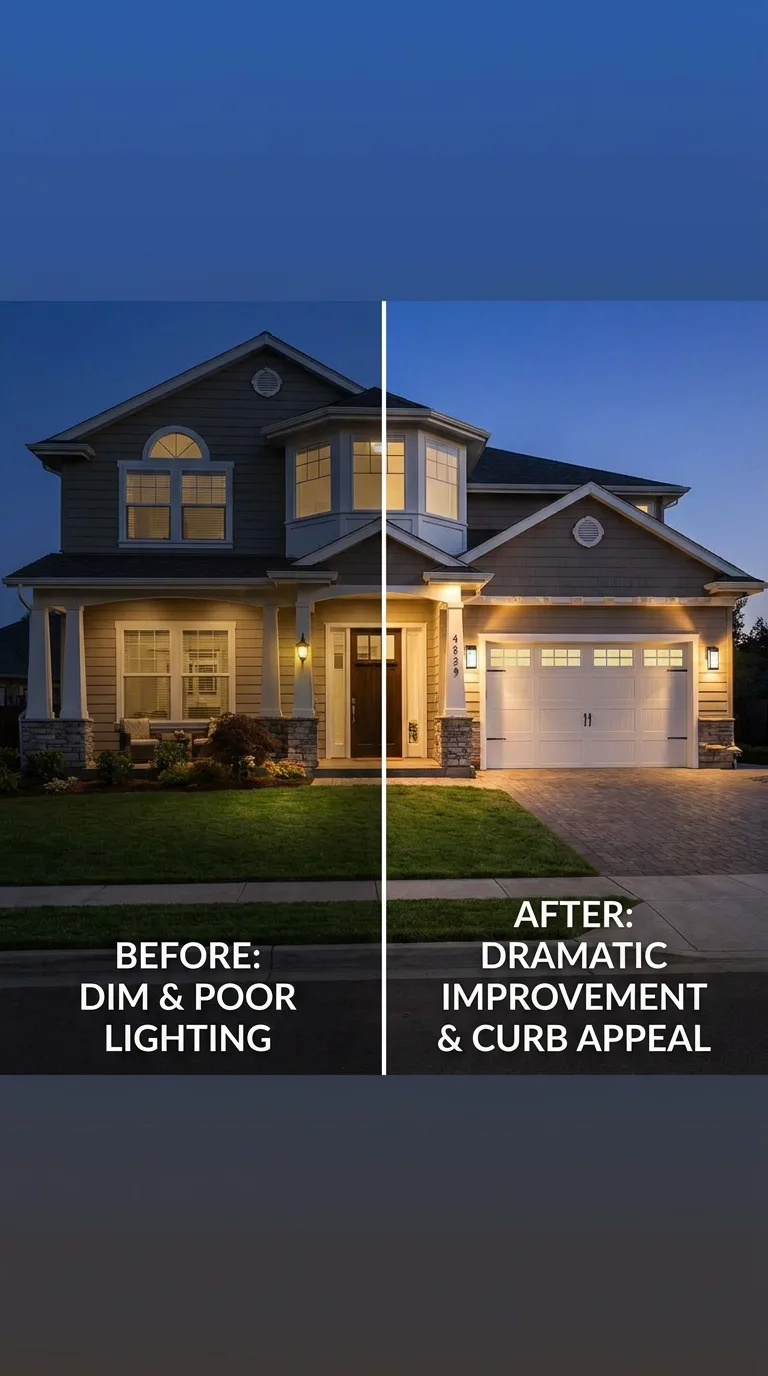
Outdoor wall lights sit at the intersection of security, safety, aesthetics, and practicality in a way that few other home improvement products do. They serve multiple purposes simultaneously, and the best outdoor wall lights do all of them well. Understanding these different functions helps you evaluate whether a specific fixture is genuinely excellent or just good-looking in a catalog photo.
Security is the most obvious function of the best outdoor wall lights. A well-lit exterior is a significant deterrent to opportunistic criminal activity. Dark entryways, unlit side gates, and shadowy garage walls are invitations that good outdoor lighting eliminates. Motion-activated outdoor wall lights in particular have strong crime deterrence properties because they announce activity to anyone watching and draw attention to a property that might otherwise be an easy target.
Safety is a related but distinct benefit of the best outdoor wall lights. Steps, changes in grade, door thresholds, and pathway edges all become hazards at night without adequate illumination. Every year people are injured on their own properties because of inadequate exterior lighting. The best outdoor wall lights eliminate these hazards by providing consistent, reliable illumination at the points where it matters most for safe movement around the home.
Curb appeal and property value are the aesthetic dimensions of outdoor wall lighting that motivate most homeowners to upgrade beyond basic functionality. The best outdoor wall lights do not just illuminate the exterior of a home. They sculpt it. They create light and shadow that brings out architectural details, they frame entry points in ways that feel welcoming and considered, and they contribute to the visual impression that a home makes at night in ways that no amount of daytime landscaping can replicate.
Also Read: 55 Stunning Outdoor Deck Ideas That Will Make You Fall in Love With Your Backyard All Over Again
What Makes the Best Outdoor Wall Lights Truly Excellent
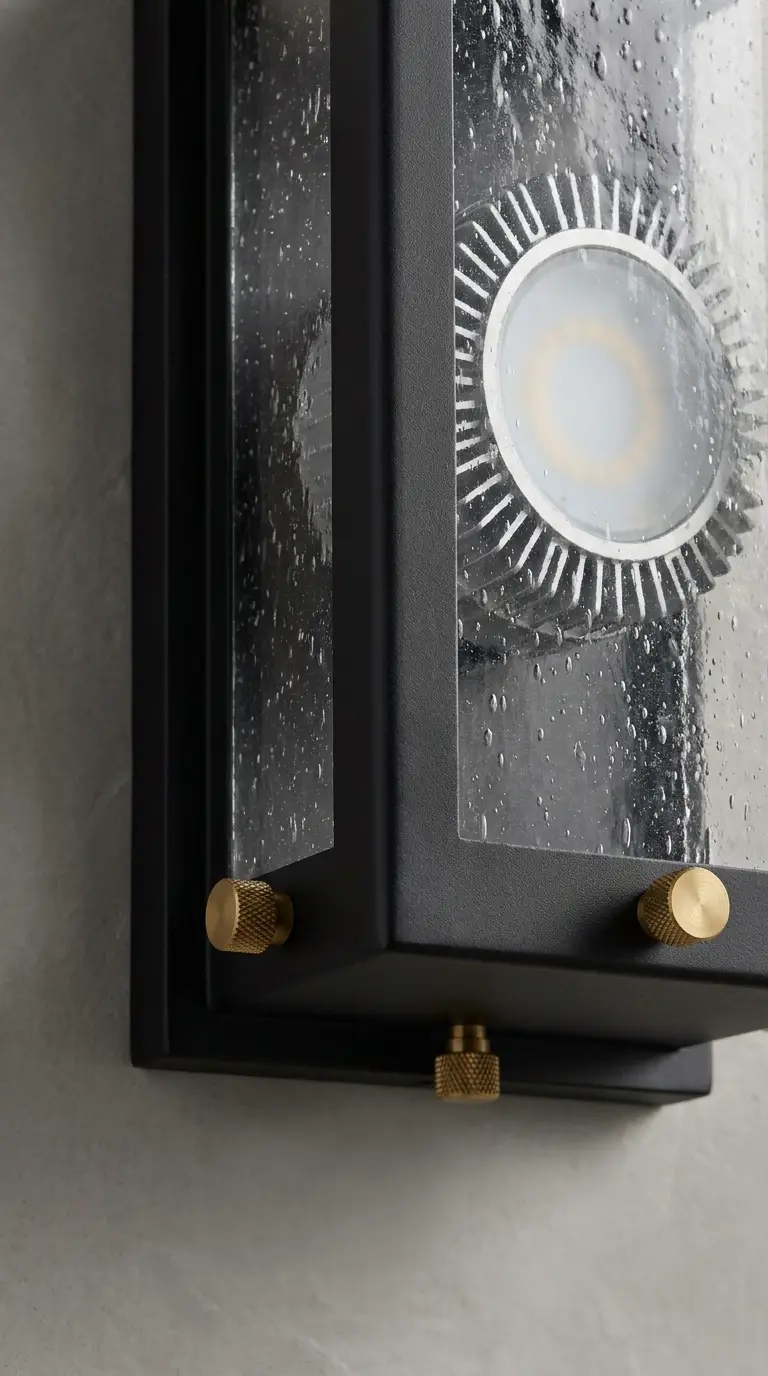
Before we get into specific styles and products, it is worth understanding the objective criteria that separate the best outdoor wall lights from the mediocre ones. These are the factors that experienced lighting designers, professional contractors, and informed homeowners evaluate when selecting outdoor fixtures, and they are more nuanced than most buyers realize.
Weather Resistance and IP Ratings
The weatherproofing of an outdoor light fixture is not a trivial consideration. Outdoor wall lights are exposed to rain, humidity, temperature swings, UV radiation, insects, and in coastal areas, salt air corrosion. A fixture that cannot handle these conditions reliably will fail prematurely, create electrical hazards, and cost you more in replacement and labor than a better-built fixture would have in the first place.
The IP rating system is the standardized way to evaluate weatherproofing in the best outdoor wall lights. IP stands for Ingress Protection and the rating consists of two digits: the first indicates protection against solid particles and the second indicates protection against water. For outdoor wall lights in most residential applications, you want a minimum of IP44, which means protected against solid objects larger than one millimeter and against water splashing from any direction. In exposed or coastal locations, IP65 or higher is advisable.
Beyond the IP rating, material quality in the best outdoor wall lights matters enormously for long-term durability. Die-cast aluminum is the gold standard for outdoor light housings because it is strong, lightweight, corrosion-resistant, and holds detail well for attractive designs. Stainless steel hardware prevents the rust staining that plated steel develops over time. UV-stable finishes resist fading and chalking from sun exposure. These material details are what separate outdoor wall lights that still look great after five years from those that look tired within two.
Light Source Technology in Modern Outdoor Wall Lights
LED has become the dominant light source technology in the best outdoor wall lights over the past decade, and for very good reasons. LED outdoor wall lights consume seventy to eighty percent less energy than equivalent incandescent fixtures, produce minimal heat, and have rated lifespans of twenty-five thousand hours or more compared to one thousand hours for a standard incandescent bulb. For a fixture that runs for several hours every night, this longevity means years of operation without bulb replacement.
The quality of LED in outdoor wall lights varies significantly, and understanding the difference between good and poor LED implementation is important when evaluating the best outdoor wall lights. The LED module or chip quality determines light output consistency and color accuracy. The driver circuit quality determines how the LED performs over time and whether it will flicker, hum, or degrade prematurely. Reputable manufacturers from established brands invest in quality components throughout. Discount fixtures often cut corners on these internal components even when the housing looks attractive.
Integrated LED fixtures versus socket-based LED fixtures is a meaningful distinction in outdoor wall lights. Integrated LED means the LED module is built into the fixture itself, typically delivering the best efficiency and design integration but meaning the fixture must be replaced if the LED ever fails. Socket-based fixtures use standard bulb bases like E26 medium base, allowing you to choose and replace bulbs separately. For the best outdoor wall lights in most residential applications, high-quality integrated LED from a reputable brand is the superior long-term choice.
Also Read : The Best Outdoor Privacy Screening Ideas That Actually Work and Look Beautiful Doing It
Color Temperature and Its Importance
Color temperature is one of the most consequential and most overlooked specifications when selecting the best outdoor wall lights. Measured in Kelvin, color temperature describes the warmth or coolness of the light produced. Lower numbers like 2700K to 3000K produce warm, amber-toned light similar to traditional incandescent. Higher numbers like 4000K to 5000K produce progressively cooler, bluer light similar to daylight.
For residential outdoor wall lights in most applications, 2700K to 3000K is the sweet spot that delivers the best outdoor wall lights result. This color temperature range is flattering to most architectural materials including brick, stone, wood, and painted surfaces. It creates a welcoming, warm atmosphere around entry points. It is comfortable for the human eye at night when pupils are dilated and sensitive to harsh cool light.
Color temperatures of 4000K and above in outdoor wall lights tend to produce a harsher, more commercial appearance that reads as cold and institutional rather than welcoming. There are applications where cooler light makes sense, specifically security-focused applications where maximum visibility matters more than atmosphere, but for the best outdoor wall lights in typical residential settings, staying in the warm white range consistently produces the most satisfying results.
Lumen Output: How Bright Is Right
Lumens measure the actual light output of a fixture, and getting the right lumen level is important for the best outdoor wall lights to function correctly. Too few lumens and the fixture is decorative without being genuinely useful. Too many lumens and the light is harsh, glary, and creates pools of brightness surrounded by deeper darkness that makes the overall exterior look worse rather than better.
For front door and entry outdoor wall lights, four hundred to eight hundred lumens per fixture is typically ideal for a welcoming, functional result. For garage wall lights where task visibility matters more, eight hundred to one thousand two hundred lumens may be appropriate. For large security applications, motion-activated outdoor wall lights with one thousand to two thousand lumens provide the high output needed for effective deterrence without being permanently blinding to the neighborhood.
The distribution pattern of lumens matters as much as the total output in the best outdoor wall lights. A fixture that produces eight hundred lumens in a focused downward beam creates a very different result from one that distributes those same lumens in a wide, even spread. Fixtures with diffused glass panels or translucent shades spread light more evenly and reduce glare. Fixtures with clear glass panels concentrate light for more dramatic contrast and shadow effects.
Best Outdoor Wall Lights by Style: Finding the Perfect Match for Your Home
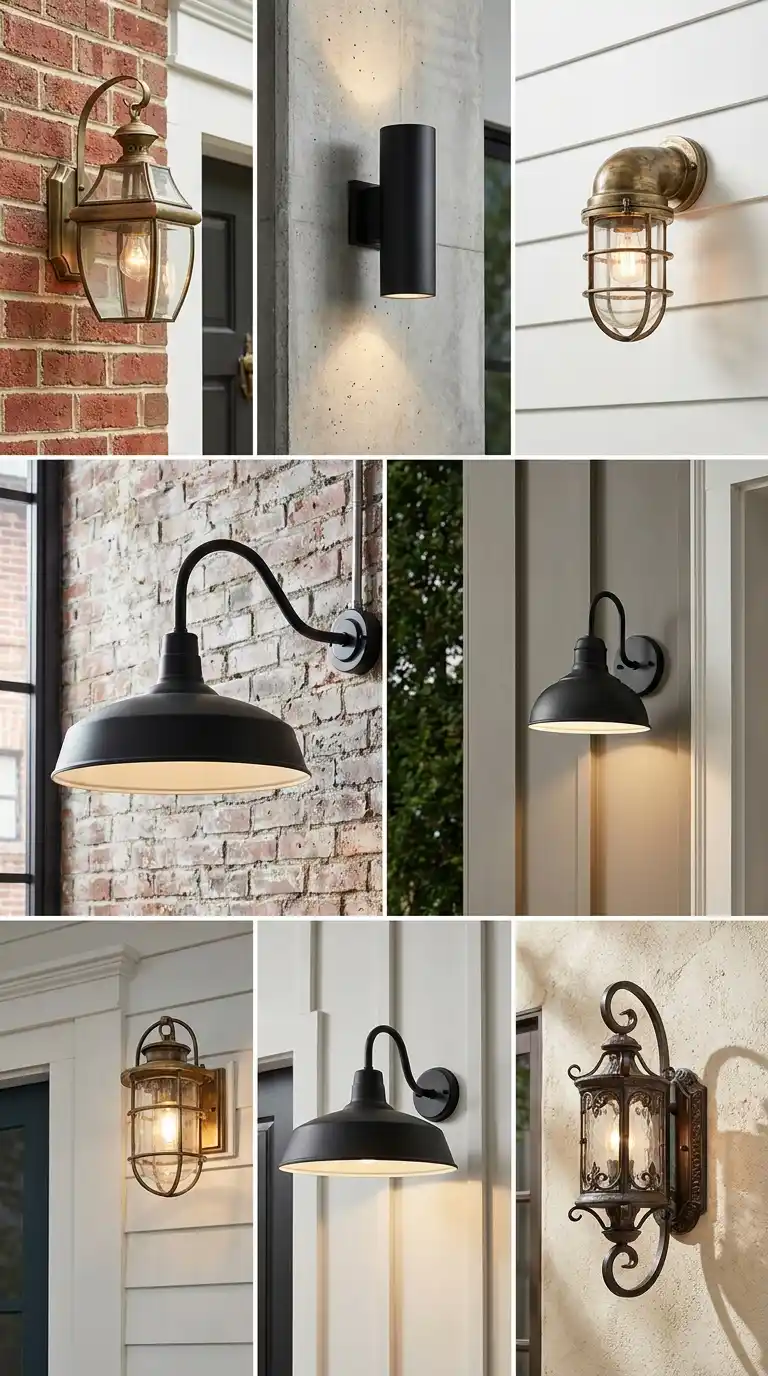
The relationship between a fixture’s style and the architecture of your home is one of the most important factors in choosing the best outdoor wall lights. A beautifully made fixture that is stylistically incompatible with your home’s architecture will always look wrong regardless of its quality. Understanding which styles pair naturally with which architectural contexts eliminates this risk and makes the selection process significantly clearer.
Traditional and Classic Outdoor Wall Lights
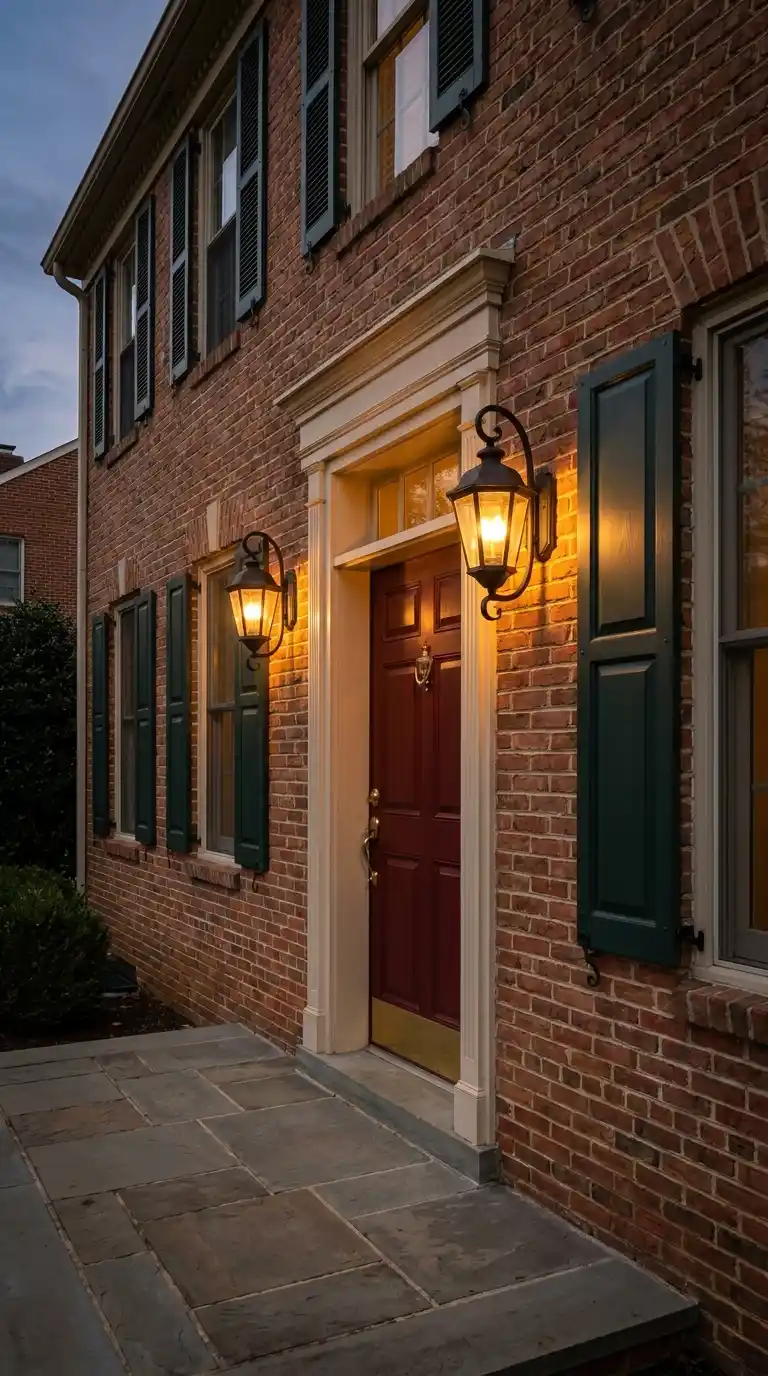
Traditional outdoor wall lights typically take the form of lanterns with rectangular or tapered bodies, decorative hardware, and glass panels. These fixtures have deep historical roots in gas and oil lamp design and carry a timeless quality that works beautifully with colonial, federal, craftsman, Tudor, Georgian, and other classically-inspired home styles. The best outdoor wall lights in the traditional category use solid brass, bronze, or forged iron construction with authentic design details that hold up to close inspection.
Seeded glass, hammered glass, and clear beveled glass are the most common panel treatments in traditional outdoor wall lights. Seeded glass has small bubbles in the glass that diffuse light softly and give the fixture a handcrafted, artisan quality. Hammered glass has a textured surface that catches light beautifully. Clear beveled glass has angled edges that refract light and create prismatic effects. Each creates a slightly different aesthetic that suits different design sensibilities within the traditional category.
For traditional homes, pairing outdoor wall lights with matching or complementary door hardware in the same metal finish creates a cohesive, considered appearance that elevates the entire entry. Antique bronze, oil-rubbed bronze, and polished brass are classic choices. Satin nickel and matte black are more contemporary takes on traditional design that work well on homes with updated interiors expressed through their front door and entry details.
Also Read : 50 Gorgeous Floral Wall Decor Ideas That Will Instantly Breathe Life Into Any Room
Modern and Contemporary Outdoor Wall Lights
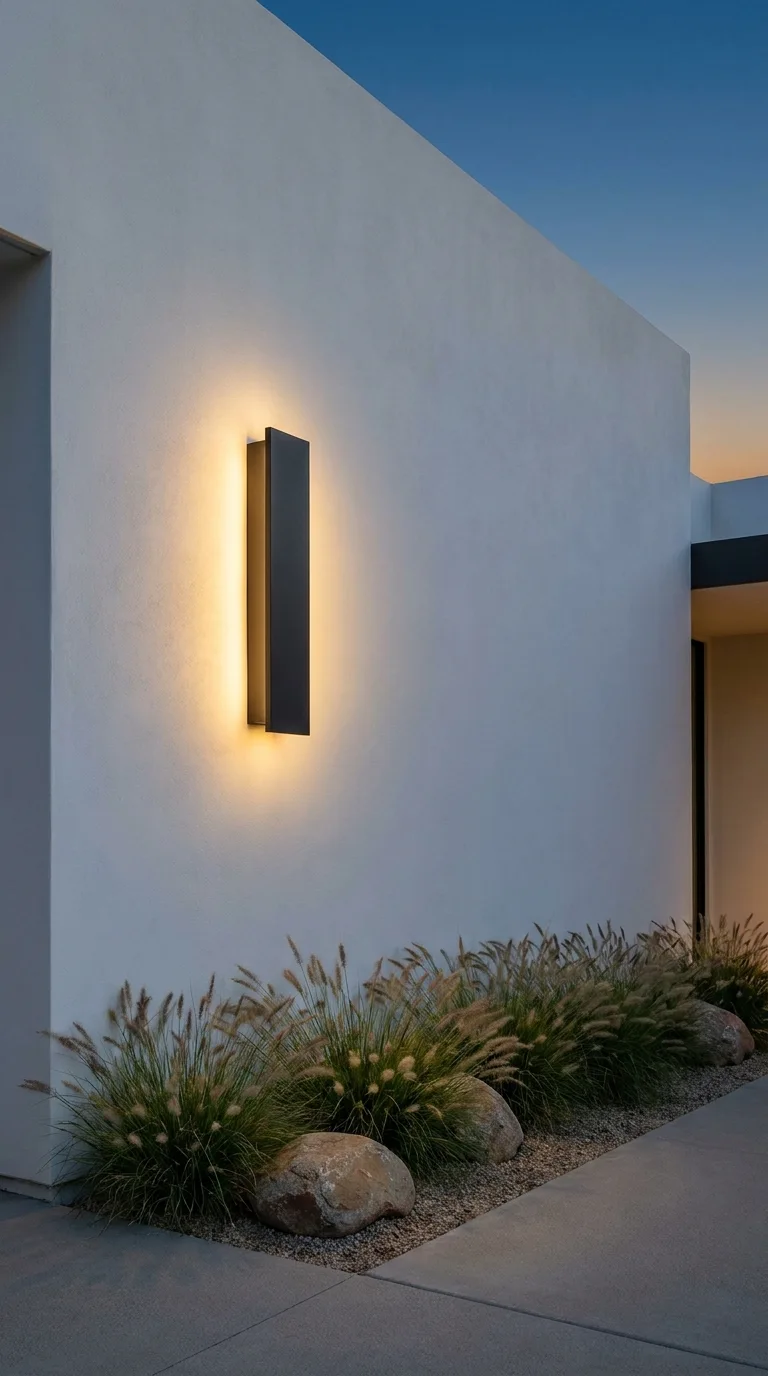
Modern outdoor wall lights are defined by their geometric precision, minimal ornamentation, and honest use of materials. The best outdoor wall lights in the modern category feature clean rectangular or cylindrical forms, architectural detailing that is structural rather than decorative, matte or brushed finishes in black, dark bronze, silver, or warm metalite tones, and glass treatments that are either completely clear for maximum transparency or fully frosted for a soft, diffused glow.
The most popular modern outdoor wall light form factor in 2025 is the slim vertical cylinder or rectangular bar, often with an integrated LED strip or module that produces a linear wash of light. These fixtures work exceptionally well on contemporary homes with flat or low-slope roofs, large glass facades, concrete or smooth stucco exteriors, and architectural designs where restraint and precision are central values.
Matte black has established itself as the dominant finish in the best modern outdoor wall lights over the past several years, and its popularity shows no sign of slowing. Matte black works because it reads as sophisticated and intentional without the high-maintenance quality of polished finishes. It pairs beautifully with virtually every exterior material from white stucco to natural wood cladding to industrial concrete. It also serves as an excellent accent that ties together door hardware, window frames, and other exterior metal elements.
Farmhouse and Rustic Outdoor Wall Lights
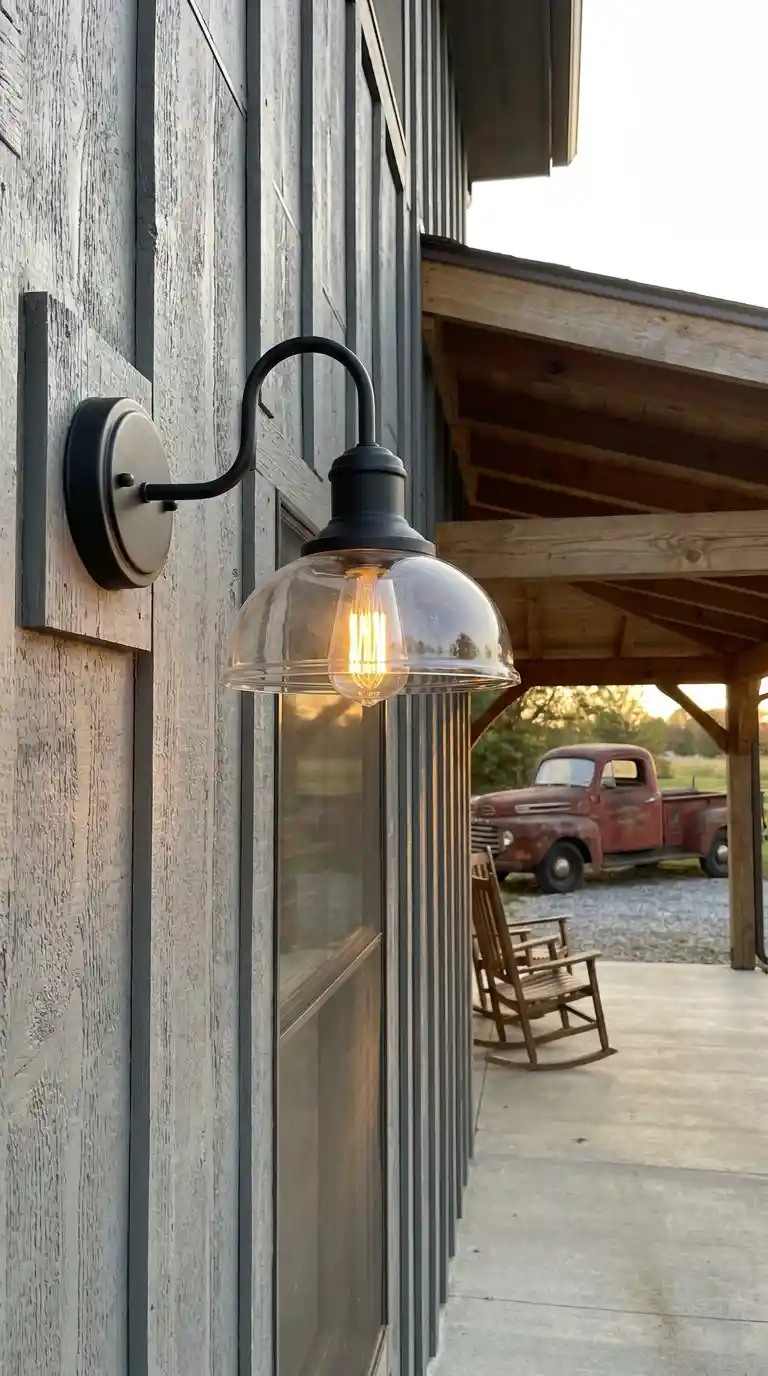
The farmhouse aesthetic in outdoor wall lights blends practical, sturdy construction with a warmth and approachability that feels genuinely lived-in rather than formally designed. The best outdoor wall lights in the farmhouse category typically feature cage-style construction with open metal frames, Edison-style visible filament bulbs or LED equivalents that mimic them, matte black or dark oil-rubbed bronze finishes, and a proportional generosity that suits larger architectural elements like barn doors, board and batten siding, and wide covered porches.
Barn lights are a particularly beloved subset of farmhouse outdoor wall lights. These fixtures take their design from the gooseneck barn lights that have lit working farms and rural structures for a century. A curved metal arm extends from the wall mounting, and a dome-shaped shade at the end directs light downward. The best outdoor wall lights in the barn light category use heavy-gauge steel construction, quality porcelain socket components, and finishes that hold up to serious outdoor exposure.
Farmhouse outdoor wall lights pair naturally with natural wood, brick, painted wood siding, and metal roofing materials. They work for suburban and rural homes alike where the architecture has warmth, practicality, and a connection to vernacular building traditions. They also work surprisingly well in urban contexts on industrial-style loft conversions or commercial spaces that draw on warehouse and factory aesthetics.
Coastal and Nautical Outdoor Wall Lights
Coastal outdoor wall lights take their design cues from maritime architecture and the clean, salt-air-friendly materials of seaside building traditions. The best outdoor wall lights for coastal homes feature materials that genuinely resist the corrosive effects of salt air, specifically solid brass, stainless steel, and marine-grade finishes that maintain their appearance over time in environments that destroy lesser fixtures.
Lantern forms with a distinctly nautical character, including porthole-style round fixtures, lighthouse-inspired tower forms, and clean white or chrome finishes with rope or anchor details, are the signature elements of coastal outdoor wall lights. For beachfront properties where salt air is particularly aggressive, choosing outdoor wall lights specifically rated for marine environments rather than just standard outdoor use is an important investment in fixture longevity.
The color palette of coastal outdoor wall lights tends toward white, brushed nickel, polished chrome, and natural brass rather than the dark finishes popular in other styles. This reflects the light, airy aesthetic of coastal architecture where bright colors, natural materials, and a connection to water and sky are central design values. Seaglass-tinted or clear glass panels complement the nautical aesthetic beautifully.
Also Read : 50 Brilliant Wall Kitchen Decor Ideas That Will Make You Fall in Love With Your Kitchen All Over Again
Industrial Outdoor Wall Lights
Industrial outdoor wall lights draw on the aesthetics of factory buildings, warehouses, and urban working architecture to create fixtures that are bold, unpretentious, and genuinely striking on the right property. The best outdoor wall lights in the industrial category feature raw or semi-finished metal constructions, cage guards over bulbs, pipe-style mounting arms, and the kind of purposeful design that makes no concessions to conventional decorative expectations.
Industrial outdoor wall lights work exceptionally well on urban properties, converted warehouse residences, contemporary homes with raw material finishes, and any exterior where the design philosophy leans into honesty of materials and structural expression. They pair beautifully with exposed brick, concrete block, weathered steel cladding, and other materials that carry an industrial quality.
For suburban homes that want the industrial look without overwhelming a more conventional architectural context, scaled-down industrial outdoor wall lights with refined proportions can work beautifully as accent pieces. A pair of cage-style sconces in matte black flanking a front door creates an industrial-inspired entry detail that reads as cool and considered without dominating the facade.
Best Outdoor Wall Lights with Motion Sensors and Smart Technology
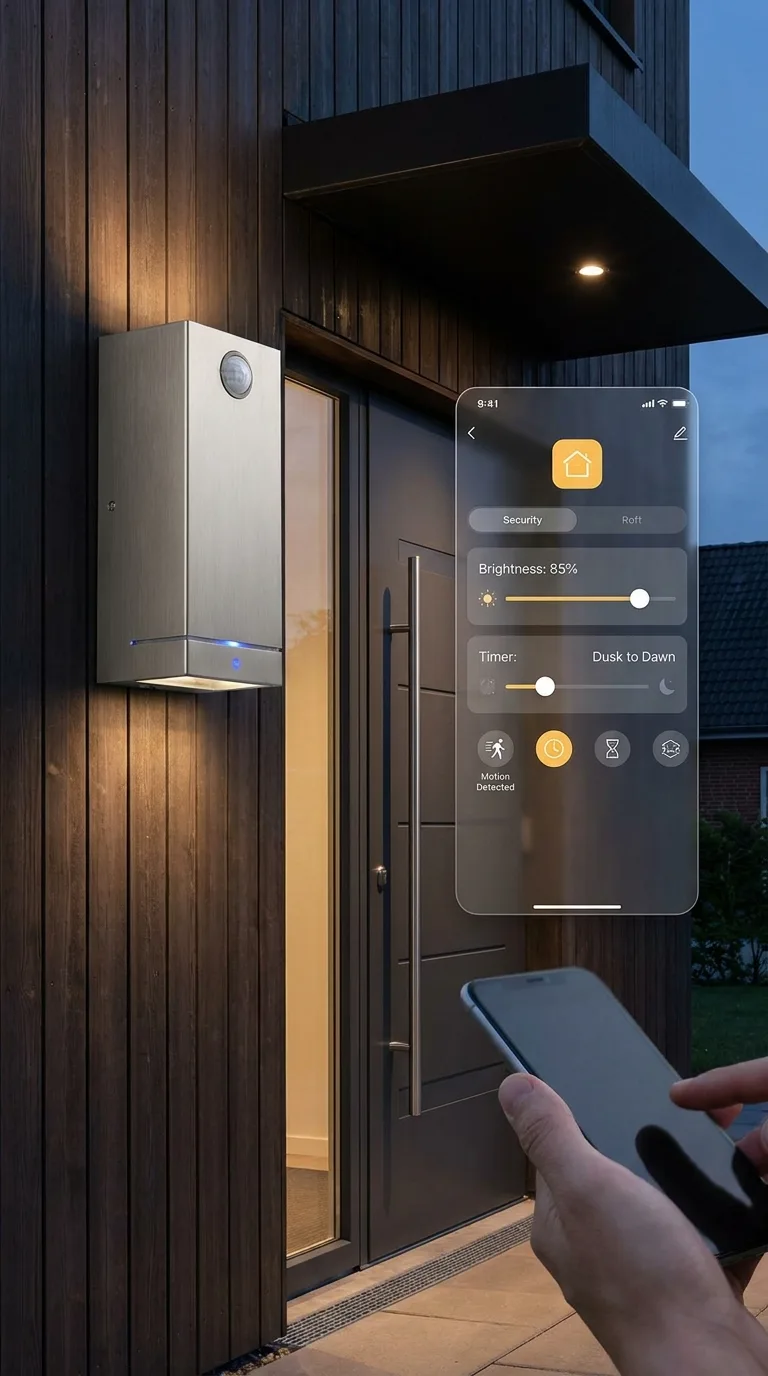
Technology has transformed what is possible in the best outdoor wall lights over the past decade, and the options available now go far beyond what even sophisticated homeowners could access a few years ago. Motion sensing, smart home integration, color temperature tuning, and app-controlled scheduling have all become accessible features that significantly enhance the utility and intelligence of outdoor wall lighting.
Motion-Activated Outdoor Wall Lights
Motion-activated outdoor wall lights represent one of the most practical and widely popular categories of exterior lighting because they solve multiple problems simultaneously. They provide light exactly when and where it is needed without the energy waste of lights that stay on all night. They deter criminal activity by activating suddenly when someone approaches the property. And they eliminate the need to remember to turn lights on and off, which is a genuine daily convenience that is easy to underestimate until you have it.
The best outdoor wall lights with motion sensing use passive infrared sensors that detect changes in heat signature rather than simple motion, which means they activate reliably in response to people and animals while ignoring wind-moved vegetation and other false triggers. Detection range, sensitivity adjustment, and time-on duration are all adjustable in quality motion-sensor outdoor wall lights, allowing you to tune the behavior to your specific property and preferences.
Dual-mode outdoor wall lights that combine ambient always-on light at reduced output with motion-activated bright light are among the most sophisticated and useful options in the best outdoor wall lights category. In ambient mode, the fixture produces enough soft light to maintain the aesthetic and basic visibility function of a permanent light. When motion is detected, it activates to full brightness for the set duration. This approach gives you the continuous warmth and curb appeal of a lit fixture with the security and energy benefits of motion activation.
Smart Outdoor Wall Lights and Home Automation Integration
Smart outdoor wall lights that integrate with home automation platforms like Google Home, Amazon Alexa, Apple HomeKit, and SmartThings represent the current leading edge of outdoor wall lighting technology. The best outdoor wall lights in the smart category allow you to control brightness, color temperature, scheduling, and motion response from a smartphone app or voice command, and to integrate your outdoor lighting into broader home automation routines.
Geofencing capabilities in smart outdoor wall lights are one of the most practically useful features available. When configured, geofencing uses your smartphone’s location to automatically turn lights on as you approach home and off after you have been inside for a set time. This means your home exterior is always lit when you arrive, never left lit all night unnecessarily, and requires zero manual interaction to operate correctly.
For homeowners already invested in a smart home ecosystem, choosing the best outdoor wall lights that are native to that platform is important for the smoothest integration experience. Philips Hue, Lutron Caséta, Ring, and various other major manufacturers produce outdoor wall lights specifically designed to work seamlessly within their respective ecosystems. Third-party options that claim multi-platform compatibility sometimes work well and sometimes require frustrating workarounds, so checking specific platform compatibility before purchase is advisable.
Best Outdoor Wall Lights for Specific Locations Around Your Home
Front Door and Entry Outdoor Wall Lights
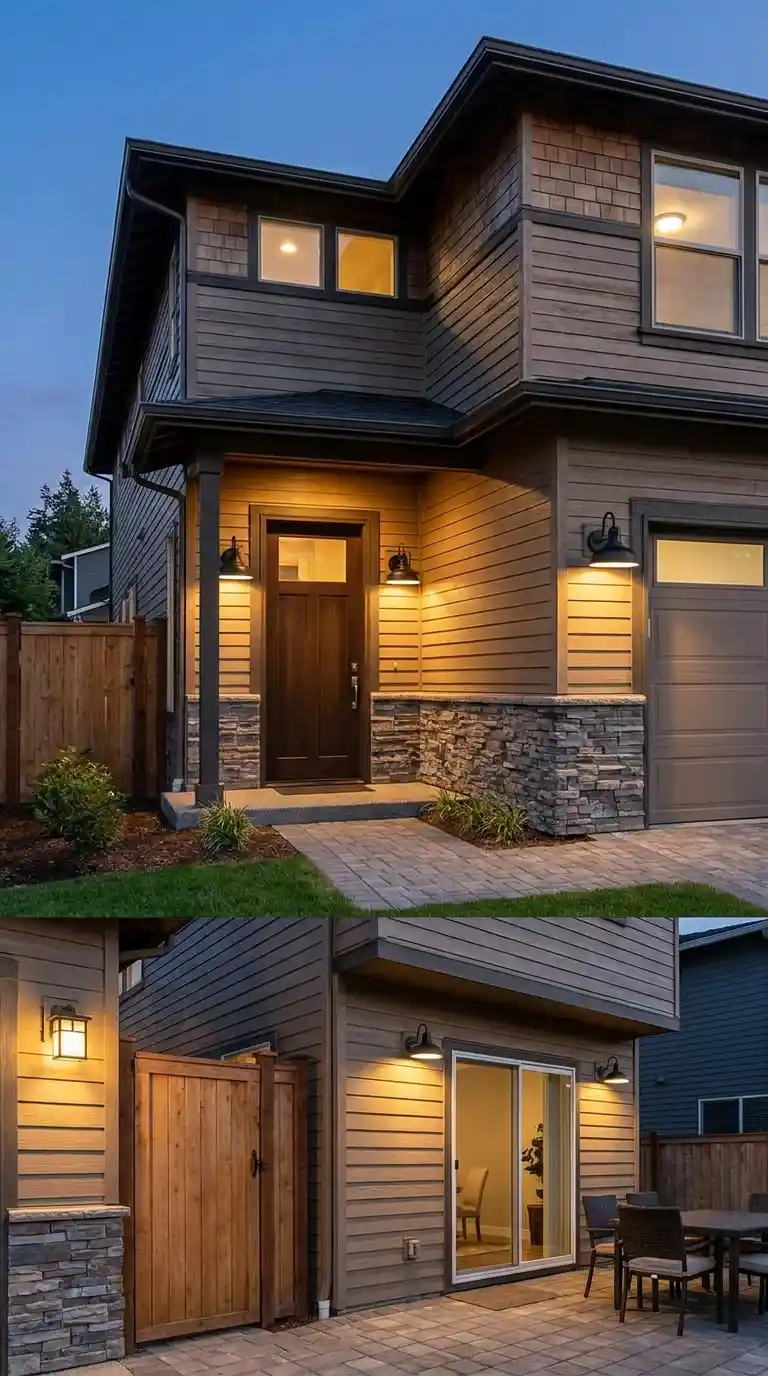
The front door is the most important location for the best outdoor wall lights on any home because it receives the most attention from visitors, guests, and passersby. The fixtures flanking the front door are the outdoor equivalent of a firm handshake: they set the tone for the entire property and communicate something about the taste, investment, and attention to detail of the homeowners inside.
For front door outdoor wall lights, scale is the critical consideration that most people get wrong. The most common mistake is choosing fixtures that are too small for the door and surrounding architecture. A fixture that looks appropriately sized at a home improvement store becomes dwarfed by the scale of a real front elevation and ends up looking tentative and undersized. As a general rule, front door outdoor wall lights should be approximately one-third to one-quarter the height of the door they flank. For a standard eight-foot door, that means fixtures fifteen to twenty-four inches tall.
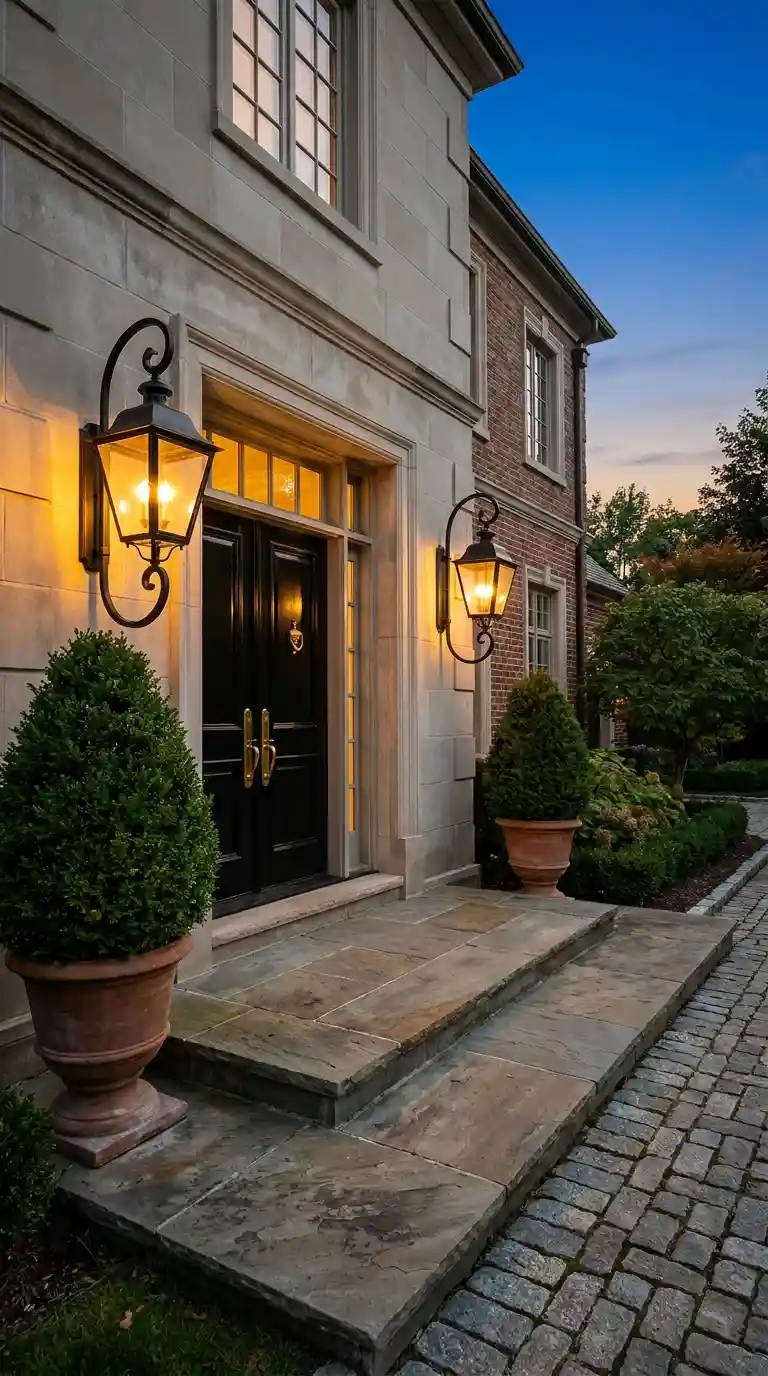
Symmetrical placement of outdoor wall lights on both sides of the front door is the standard approach that works reliably in most architectural contexts. However, single asymmetrical placement can work beautifully on doors with significant sidelights on one side, on entries where architectural features on one side prevent symmetric placement, or as a deliberate contemporary design choice on modern homes where asymmetry is used intentionally.
Garage Outdoor Wall Lights
The garage wall is one of the most impactful and most neglected locations for the best outdoor wall lights. In many homes the garage facade represents the largest single element of the front elevation, and how it is lit has an enormous effect on the overall nighttime appearance of the property. Adequate, well-chosen outdoor wall lights on the garage wall transform the front of a home from a facade dominated by a large dark mass to a beautifully illuminated architectural element.
For two-car garages, placing one outdoor wall light on each side of the garage door bay rather than a single central fixture provides the most balanced and effective illumination. For three-car or larger garages, two fixtures per bay or larger individual fixtures may be appropriate. The key is maintaining proportional balance between the fixture size and the architectural scale of the garage wall rather than defaulting to the smallest fixture that technically qualifies as a light.
Style consistency between garage outdoor wall lights and the front door fixtures is important for a cohesive exterior lighting plan. Using the exact same fixture at both locations is the simplest way to achieve this. Using different fixtures in the same finish and family is another approach that allows appropriate scaling differences while maintaining visual coherence. Mismatching completely different styles and finishes at the entry and garage creates a disjointed appearance that undermines the overall exterior design.
Patio and Backyard Outdoor Wall Lights
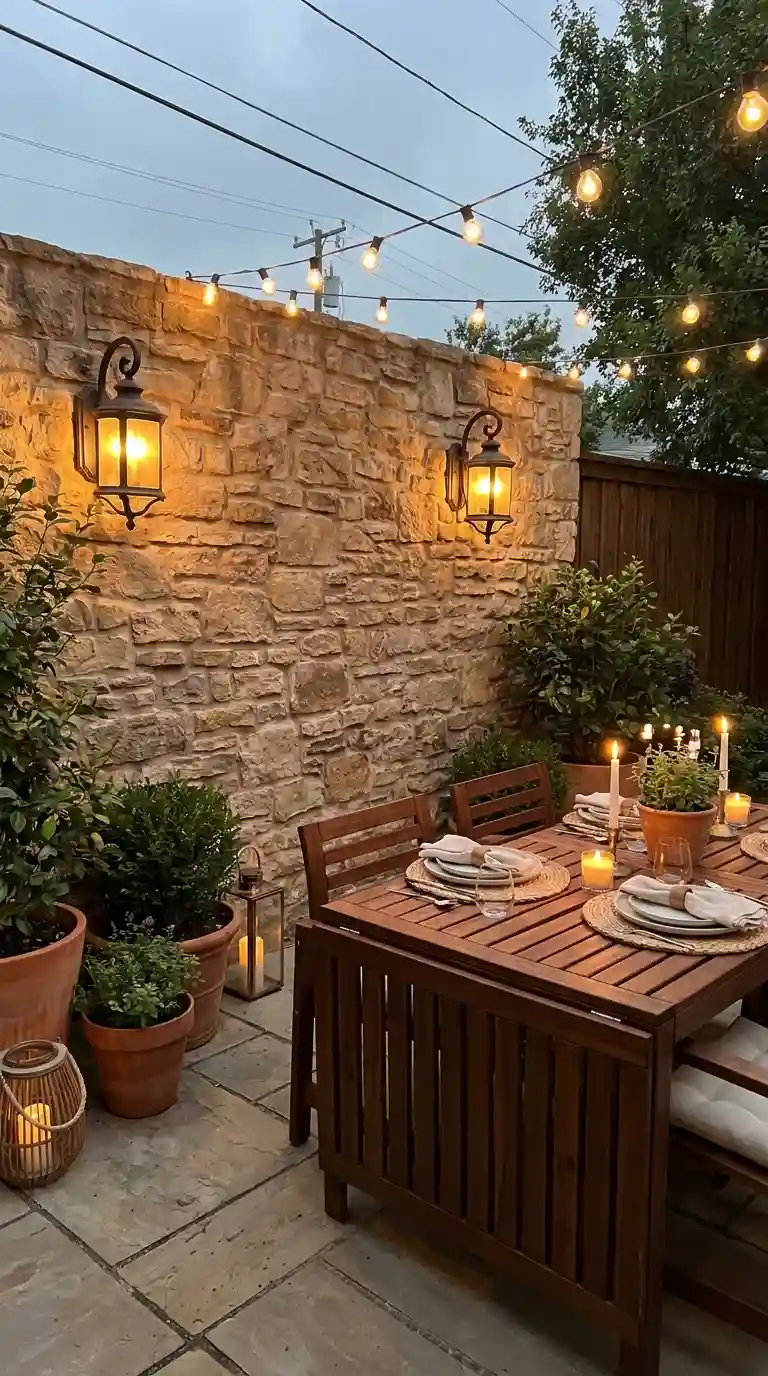
Patio and backyard outdoor wall lights serve different purposes than entry fixtures and therefore call for different selection criteria. Where entry lights prioritize security, curb appeal, and visitor impression, patio and backyard outdoor wall lights prioritize atmosphere, functionality for outdoor living activities, and the creation of a comfortable, inviting space for spending time outside after dark.
For covered patios and pergola settings, outdoor wall lights that produce a warm, relatively low output light work best because the covered space concentrates light and a fixture that seems appropriate in an open setting can become overwhelmingly bright in an enclosed one. Fixtures in the four hundred to six hundred lumen range with warm 2700K color temperature create the most appealing atmosphere for outdoor dining and entertaining.
For open backyard walls and fences, solar-powered outdoor wall lights have become a genuinely viable option in the best outdoor wall lights category where running wiring is impractical or expensive. Modern high-quality solar outdoor wall lights use efficient panels, quality LED modules, and lithium battery storage to provide consistent nightly operation from a single day of adequate sunlight. While they cannot match the output of hardwired fixtures, the best solar outdoor wall lights deliver enough light for atmospheric backyard use at zero operating cost.
Side Gate and Pathway Outdoor Wall Lights
Side gates and narrow pathway walls are locations where outdoor wall lights play an important safety role in guiding movement and illuminating potentially hazardous transitions like steps, grade changes, and narrow passages. The best outdoor wall lights for these locations tend to be smaller-scale fixtures that provide focused downward illumination without projecting light into neighboring properties or creating glare that compromises vision in the illuminated zone.
Low-level outdoor wall lights mounted at or near stair height are particularly effective at pathway and step locations because they illuminate the walking surface directly rather than from overhead where shadows can obscure edge definition. Dark sky compliant outdoor wall lights that direct all light downward rather than allowing upward light scatter are excellent choices for these locations and also contribute to reducing light pollution in neighborhoods where this is a community concern.
Top Picks for the Best Outdoor Wall Lights
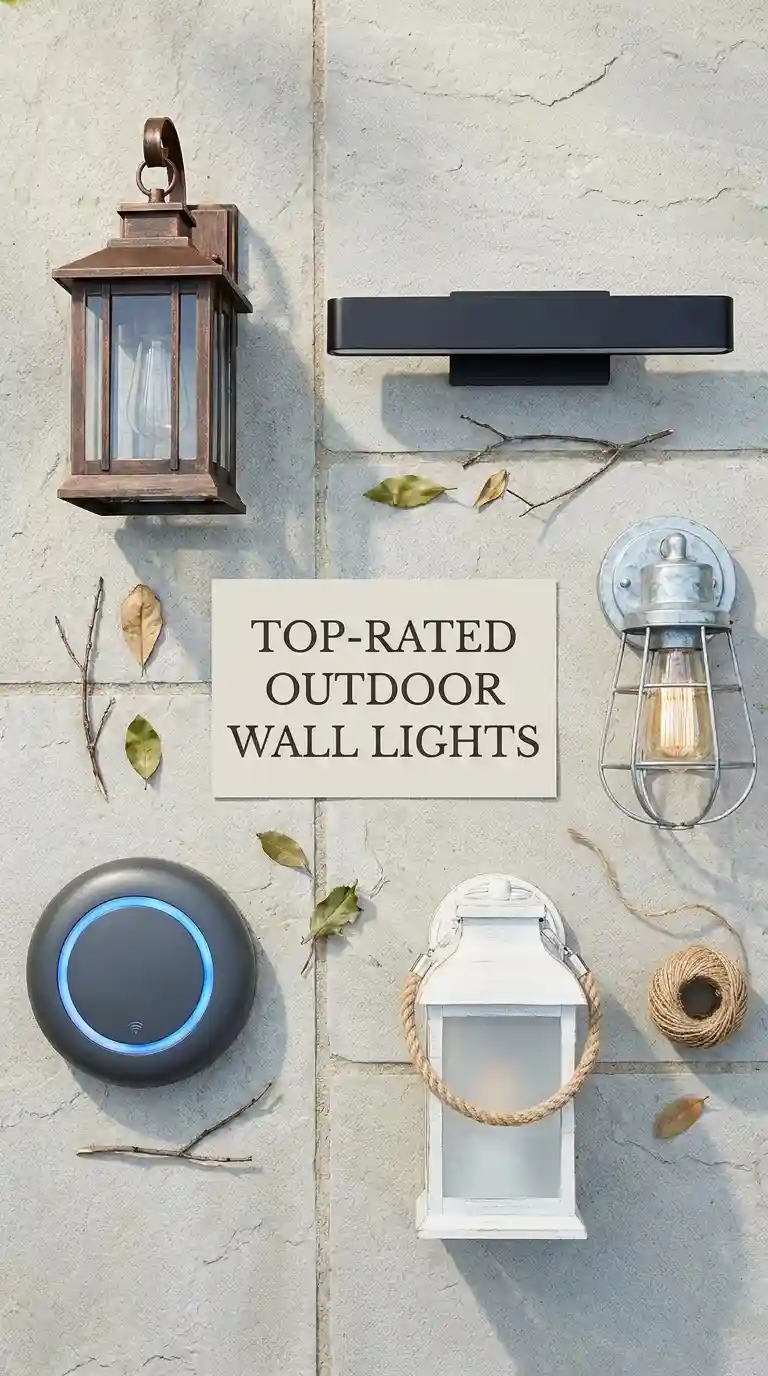
With the criteria and context established, here are the specific product categories and what to look for in each when shopping for the best outdoor wall lights in 2025. Rather than naming specific products that may change availability or pricing, we will focus on the specifications and features that define excellence in each category, empowering you to evaluate any specific product against objective standards.
Best Traditional Outdoor Wall Lights
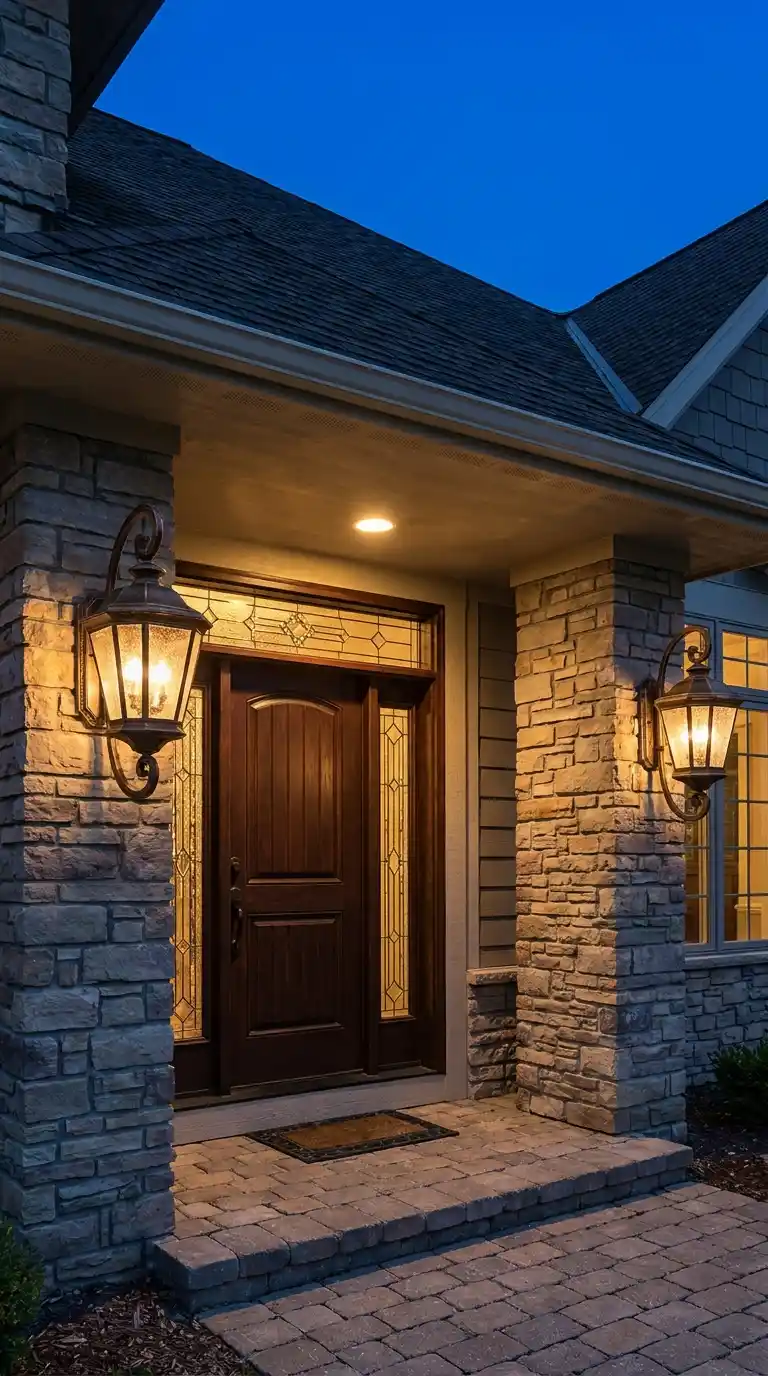
The best traditional outdoor wall lights in 2025 share a set of quality indicators that distinguish genuinely excellent fixtures from attractive-looking budget options. Solid brass or solid bronze construction rather than pot metal or die-cast zinc is the material quality benchmark. Seeded or handblown glass panels rather than injection-molded plastic diffusers indicate authentic craftsmanship. Powder-coated or baked enamel finishes with a minimum ten-year finish warranty indicate proper surface treatment.
Brands that consistently produce the best traditional outdoor wall lights include Progress Lighting, Kichler, Feiss, Hinkley, and Visual Comfort, all of which have established track records for fixture quality, finish durability, and customer service. These brands source quality components, test their fixtures against meaningful weathering standards, and back their products with genuine warranties. The additional cost compared to discount alternatives is justified by demonstrably better long-term performance.
Price range for the best traditional outdoor wall lights in quality materials falls between one hundred fifty and five hundred dollars per fixture for most residential applications. Below this range you are generally looking at compromised materials and finishes. Above this range you enter custom and artisan territory that offers unique designs and premium materials but diminishing practical returns for most homeowners.
Best Modern Outdoor Wall Lights
Modern outdoor wall lights at the quality end of the market are defined by their precision engineering and material consistency as much as their aesthetic. The best modern outdoor wall lights use extruded aluminum or precision die-cast housings that are genuinely straight and square rather than slightly warped or uneven as budget modern fixtures often are. Anodized or powder-coated finishes are applied evenly without drips, runs, or inconsistent coverage.
The integrated LED performance in modern outdoor wall lights varies more than in traditional fixtures because modern designs often use the LED as a visible design element rather than concealing it behind a shade. Fixtures that show the LED source directly need high-quality, consistent LED chips that do not produce visible hot spots, color variation across the strip, or brightness degradation within the first few years of operation.
Lutron compatibility and dimmer compatibility in general are worth checking when selecting modern outdoor wall lights if you want to control brightness from a switch. Not all LED outdoor wall lights are dimmable and not all dimmable fixtures are compatible with every dimmer type. Quality modern outdoor wall light manufacturers specify dimmer compatibility clearly and often publish approved dimmer lists for their products.
Best Budget Outdoor Wall Lights That Still Deliver Quality
Budget outdoor wall lights have improved substantially in quality over the past several years as LED technology has become more accessible and Chinese manufacturing quality for the North American and European markets has increased. The best outdoor wall lights at budget price points, generally fifty to one hundred twenty dollars per fixture, are now genuinely good products that deliver reliable performance and attractive appearance even if they cannot match the material quality and longevity of premium fixtures.
When evaluating budget outdoor wall lights, focus on the specifications that matter most for long-term performance. IP44 or better weatherproofing rating is essential. LED color temperature and CRI specifications should be clearly stated. Warranty of at least one year from a company with accessible customer service is the minimum acceptable. Avoid fixtures with no IP rating, no stated LED specifications, and no meaningful warranty regardless of how attractive the price or design might be.
Amazon, Home Depot, Wayfair, and Lowe’s all carry a range of budget outdoor wall lights where genuine quality is available at accessible price points. Reading verified reviews specifically for long-term durability, finish quality, and ease of installation gives you much better selection guidance than catalog photos or specifications alone. Fixtures with hundreds or thousands of verified reviews over multiple years give you real-world performance data that specification sheets cannot.
Installation Tips for the Best Outdoor Wall Light
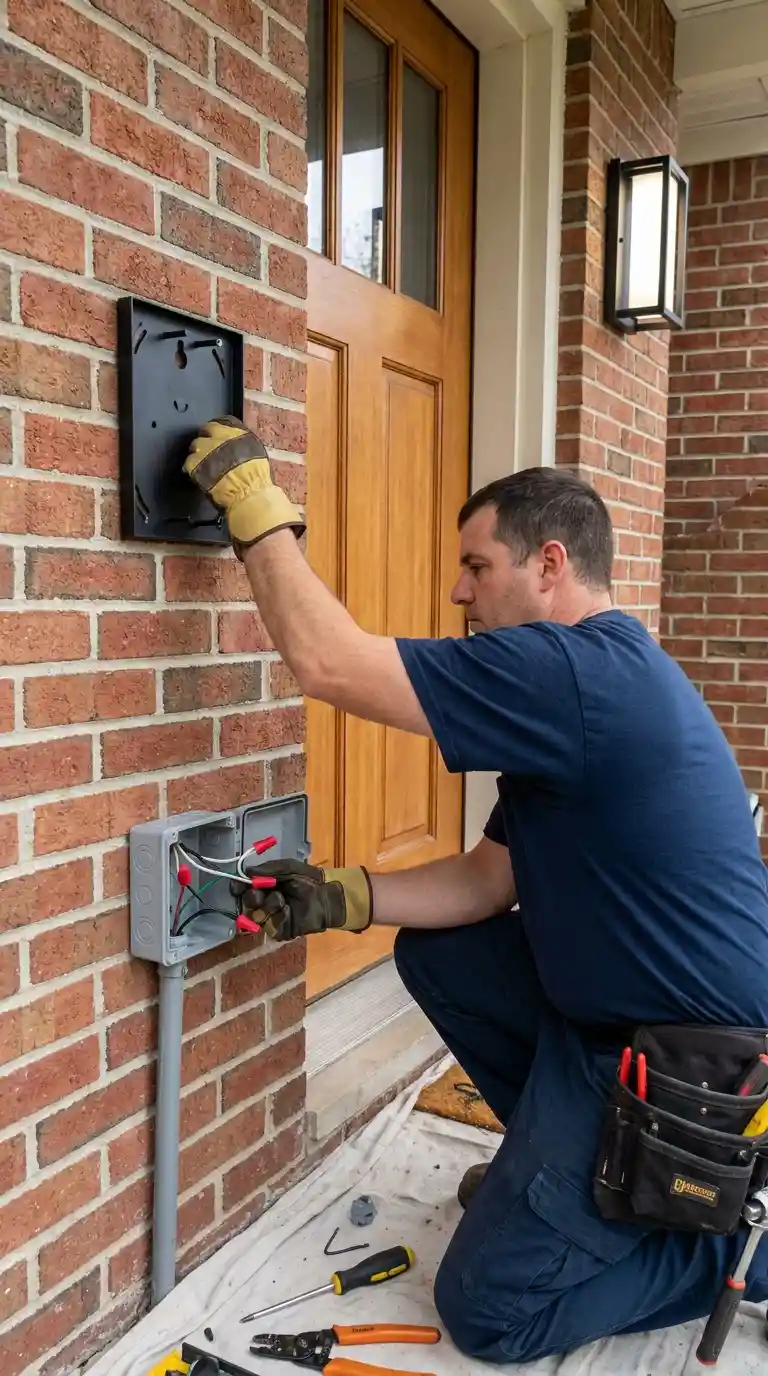
Even the best outdoor wall lights deliver poor results if they are incorrectly installed. Installation quality affects both the safety and the performance of the fixture, and understanding the basics of proper outdoor wall light installation helps you either do the job correctly yourself or verify that a professional has done it properly when you hire out the work.
Electrical safety is the foundational requirement for any outdoor wall light installation. In most jurisdictions, replacing a like-for-like outdoor fixture on an existing outdoor electrical box is legal DIY work for homeowners. Adding new electrical circuits, relocating existing boxes, or any work inside the main electrical panel should be done by a licensed electrician. When in doubt about the scope of your electrical work, erring on the side of professional involvement is the right call.
The outdoor electrical box to which your outdoor wall light attaches must be rated for outdoor use. Standard indoor electrical boxes are not sealed against moisture and using them for outdoor installations creates both a code violation and a genuine electrical hazard. Outdoor electrical boxes are rated for wet or damp locations and include sealed entries for the conduit or cable connections. If your existing box is not outdoor-rated, replacing it is a necessary part of the installation rather than an optional upgrade.
Mounting Height and Placement for Outdoor Wall Lights
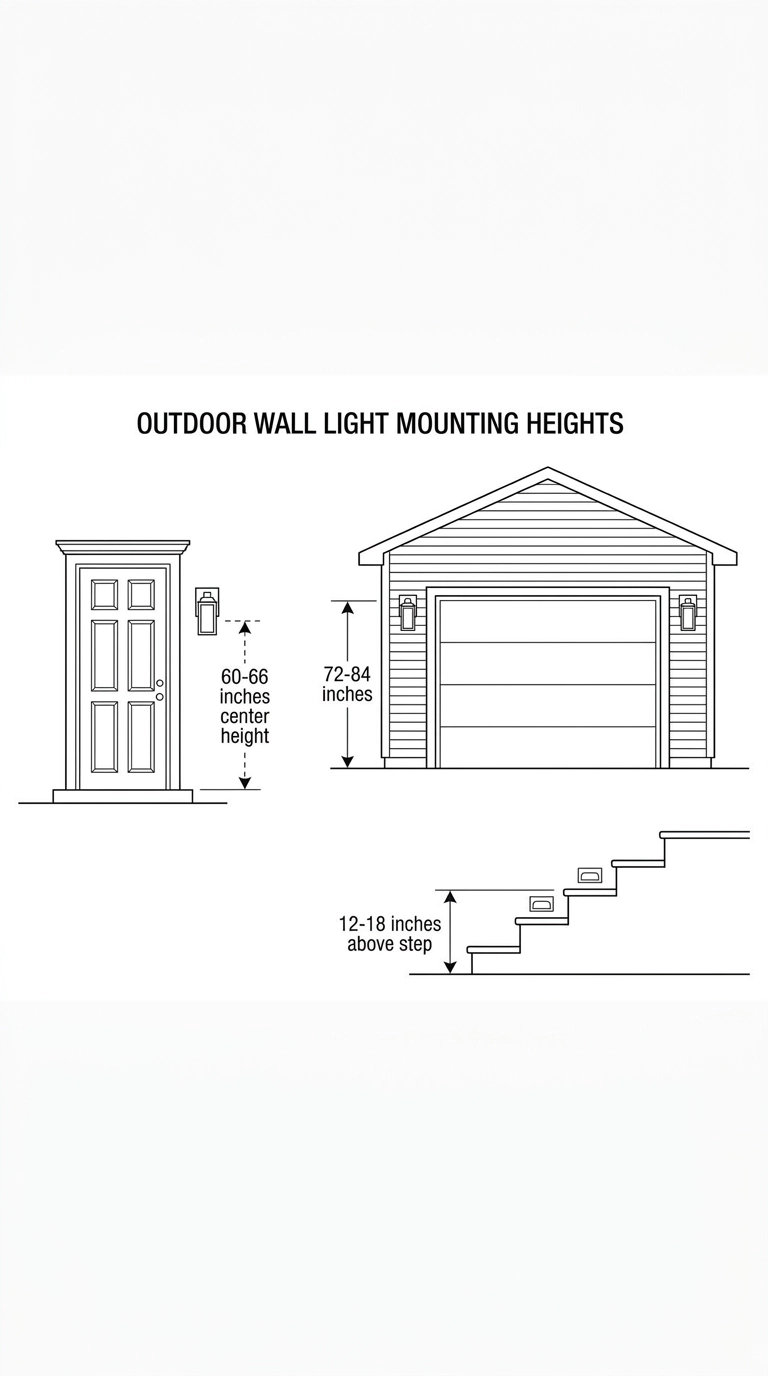
Mounting height is a detail that significantly affects the practical and aesthetic performance of any outdoor wall light. For entry fixtures mounted beside doors, the ideal height places the center of the fixture at approximately sixty to sixty-six inches from the ground, which is roughly eye level for most adults and creates a comfortable, proportional relationship between the fixture and the door.
For garage wall lights, mounting at approximately seventy-two to eighty-four inches from the ground provides the broad downward illumination needed for driveway visibility while keeping the fixture at a proportionally appropriate height relative to the garage door opening. Mounting garage lights too low reduces their practical illumination range and makes them more vulnerable to physical contact from vehicles or equipment.
For wall wash lighting where the outdoor wall light is used to create a grazing effect that highlights brick, stone, or other textured wall surfaces, mounting position relative to the wall surface matters as much as height. Fixtures mounted very close to the surface create dramatic raking light that emphasizes texture through strong light and shadow contrast. Fixtures mounted further from the surface produce a broader, more even wash that reduces texture emphasis and creates general illumination.
Sealing and Weatherproofing During Installation
Proper sealing during installation is as important as choosing a well-rated fixture in ensuring that your outdoor wall lights perform reliably over time. Even a high IP-rated fixture can allow moisture ingress at the wall penetration point if that penetration is not properly sealed. Using quality weatherproof sealant around the fixture base where it meets the wall surface prevents water from entering behind the fixture and reaching the electrical box.
Gaskets between the fixture back plate and the wall surface are included with most quality outdoor wall lights and should always be used rather than omitted for convenience. These gaskets compress against the wall surface when the fixture is tightened and create a water-resistant seal that prevents moisture entry from the front. If your fixture does not include a gasket, purchasing and cutting one from weatherproof foam tape is a worthwhile few-dollar investment in the long-term performance of your installation.
Maintaining Your Outdoor Wall Lights for Long-Term Performance
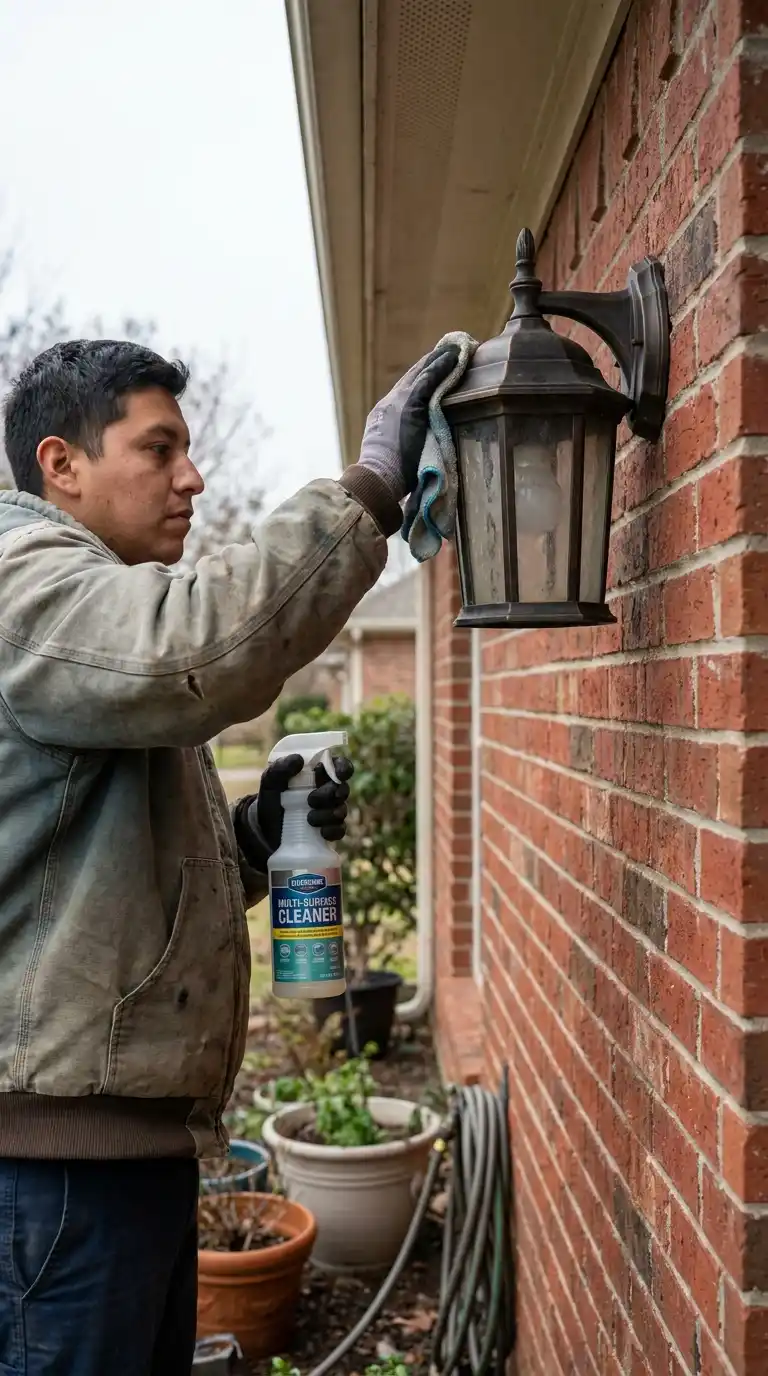
Even the best outdoor wall lights benefit from regular maintenance that most homeowners overlook. Outdoor fixtures accumulate dirt, spider webs, insect debris, and water mineral deposits over time that reduce light output, obscure the fixture’s appearance, and in some cases contribute to moisture retention that accelerates corrosion.
Cleaning outdoor wall lights twice a year, typically in spring and fall, is sufficient for most installations in mild climates. In coastal environments where salt accumulation is a factor, quarterly cleaning with fresh water is advisable to prevent corrosive salt deposits from damaging metal surfaces and finishes. Use a soft cloth and mild soap solution rather than abrasive cleaners or pressure washers that can damage finishes and force water into sealed enclosures.
Inspecting outdoor wall lights annually for signs of water ingress, finish degradation, gasket deterioration, and hardware loosening catches problems early when they are inexpensive to address. A fixture that is allowed to develop significant corrosion or that has a deteriorated gasket admitting water to the electrical compartment represents both an aesthetic problem and a safety concern that grows more serious the longer it is ignored.
LED replacement in socket-based outdoor wall lights should use bulbs specifically rated for enclosed outdoor fixtures if the fixture has a sealed globe. Not all LED bulbs are designed to handle the heat buildup that occurs in enclosed fixtures, and using a standard indoor LED bulb in a sealed outdoor fixture can shorten bulb life significantly and in rare cases create overheating issues. Looking for bulbs specifically marked suitable for enclosed fixtures eliminates this concern.
Energy Efficiency and Cost Savings with the Best Outdoor Wall Lights
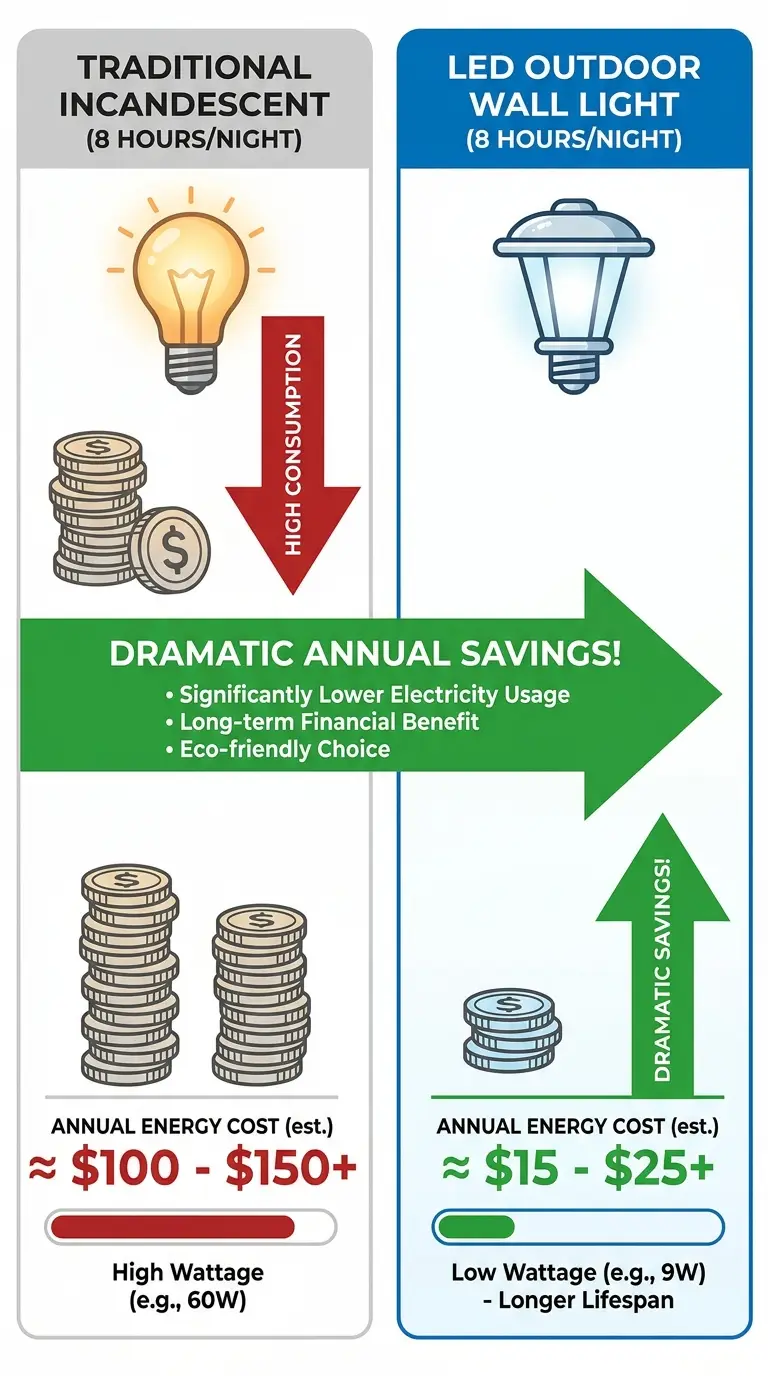
Energy efficiency is one of the most compelling practical arguments for investing in the best outdoor wall lights with modern LED technology. The numbers are striking and worth understanding concretely because they make the case for quality LED outdoor wall lights far more powerfully than abstract claims about efficiency.
A traditional sixty-watt incandescent outdoor wall light running for eight hours every night uses approximately one hundred seventy-five kilowatt-hours of electricity per year. At the US average electricity cost of approximately thirteen cents per kilowatt-hour, that single fixture costs about twenty-three dollars per year to operate. Replace it with an equivalent nine-watt LED outdoor wall light and the annual operating cost drops to about three dollars and forty cents. The saving from a single fixture is almost twenty dollars per year.
For a home with eight outdoor wall lights in various locations, the annual saving from replacing incandescent with quality LED outdoor wall lights approaches one hundred sixty dollars per year. Over the ten-year rated life of quality LED outdoor wall lights, that represents sixteen hundred dollars in energy savings from that single change alone. This calculation makes the additional upfront cost of premium LED outdoor wall lights financially straightforward rather than indulgent.
Photocell controls and timers add another layer of efficiency to any outdoor wall lighting system by ensuring that lights are only on when genuinely needed. Photocell sensors turn lights on automatically at dusk and off at dawn, eliminating the situation where lights are left on through the day because someone forgot to switch them off. Timer controls allow you to set specific schedules that match your actual nighttime activity patterns rather than running lights all night when the property is unoccupied.
Final Thoughts
Choosing the best outdoor wall lights for your home is one of those decisions that rewards careful thought disproportionately relative to the cost involved. The fixtures you put on your exterior walls will be there for years, operating every single night, contributing to your security, your safety, and your home’s appearance in ways that affect daily life more than most interior design decisions.
The criteria we have covered in this guide, weatherproofing ratings, LED quality, color temperature, lumen output, style compatibility, and installation quality, give you a complete framework for evaluating any outdoor wall light against objective standards rather than making decisions based on catalog aesthetics alone. Use this framework consistently and you will make choices you are genuinely satisfied with for years rather than months.
The best outdoor wall lights are not necessarily the most expensive ones, though quality has a real cost floor below which you are generally accepting meaningful compromises. They are the ones that are right for your specific home, your specific climate, your specific security needs, and your specific aesthetic vision. With the knowledge from this guide, you are equipped to find exactly that combination and transform your home’s exterior in the way that genuinely excellent outdoor wall lights do every single night.
Frequently Asked Questions
1. What type of outdoor wall light is best for security?
For security purposes, the best outdoor wall lights combine bright output with motion activation. A motion-sensor outdoor wall light in the eight hundred to one thousand five hundred lumen range that activates in response to approaching people and vehicles provides the most effective security deterrence. Dual-mode fixtures that maintain a low ambient light level and switch to full brightness on motion detection offer security benefits without the energy waste of permanently bright lights. Placement at all entry points, dark corners, and side access routes maximizes security coverage.
2. What is the best color temperature for outdoor wall lights?
The best color temperature for most residential outdoor wall lights is between 2700K and 3000K, which produces warm white light similar to traditional incandescent. This color temperature is flattering to most architectural materials, creates a welcoming atmosphere, and is comfortable for the human eye at night. Color temperatures above 4000K produce cooler, bluer light that can appear harsh and commercial in residential settings. For security-focused applications where maximum visibility is the priority, 3500K to 4000K is acceptable.
3. How many lumens do I need for outdoor wall lights?
Lumen requirements for outdoor wall lights vary by application. For entry and decorative outdoor wall lights, four hundred to eight hundred lumens per fixture provides a welcoming, functional level of illumination. For garage and driveway outdoor wall lights where task visibility is important, eight hundred to twelve hundred lumens is appropriate. For security applications requiring maximum visibility, motion-sensor outdoor wall lights in the one thousand to two thousand lumen range are effective. In all cases, balance lumen output with distribution quality to avoid harsh glare.
4. What is the IP rating I need for outdoor wall lights?
IP44 is the minimum weatherproofing rating acceptable for outdoor wall lights in most residential applications, providing protection against solid objects larger than one millimeter and against water splashing from any direction. For exposed coastal or very rainy locations, IP65 or higher provides complete dust protection and protection against water jets, offering significantly better durability in harsh weather conditions. Always check the IP rating of any outdoor wall light before purchase and reject any fixture marketed for outdoor use without a stated IP rating.
5. Can I install outdoor wall lights myself?
Replacing existing outdoor wall lights on an existing outdoor-rated electrical box is a DIY-friendly task that most homeowners can complete safely with basic electrical knowledge and standard tools. The work involves turning off the circuit at the breaker, removing the old fixture, connecting the new fixture wires using wire nuts, attaching the fixture to the box, and restoring power to test. Adding new outdoor electrical circuits, installing additional outdoor boxes, or any work at the main panel requires a licensed electrician in most jurisdictions.
6. How high should outdoor wall lights be mounted?
Entry outdoor wall lights mounted beside doors should have their centers at approximately sixty to sixty-six inches from the ground for a comfortable, proportional relationship with the door. Garage outdoor wall lights work best at seventy-two to eighty-four inches for broad downward illumination coverage. Step and pathway outdoor wall lights should be mounted low, at twelve to twenty-four inches, to illuminate walking surfaces directly. These heights are guidelines rather than rigid rules and should be adjusted based on your specific architectural context and fixture size.
7. What is the best finish for outdoor wall lights?
The best finish for outdoor wall lights depends on your climate and architectural style. Powder-coated matte black is the most universally durable and style-versatile finish currently available, resisting UV fading, corrosion, and chipping better than many alternatives while working with virtually every architectural style. Solid brass and bronze develop a natural patina over time that many homeowners find beautiful. For coastal environments, marine-grade finishes, anodized aluminum, and solid brass are most resistant to salt air corrosion. Avoid chrome and polished nickel for exposed coastal applications.
8. Are solar outdoor wall lights as good as wired lights?
High-quality solar outdoor wall lights have improved substantially and now represent a genuinely viable option for atmospheric backyard and secondary location lighting where running wiring is impractical. However, the best solar outdoor wall lights still cannot match hardwired LED fixtures in terms of consistent brightness, reliability across all weather conditions and seasons, or maximum light output. For primary security and entry lighting, hardwired outdoor wall lights remain significantly more reliable. For supplementary atmosphere lighting in accessible sunlight locations, premium solar options are now a reasonable choice.
9. What is the difference between damp-rated and wet-rated outdoor wall lights?
Damp-rated outdoor wall lights are approved for use in covered locations where they will be exposed to humidity and condensation but not direct rain or water spray, such as covered porches, soffits, and protected entryways. Wet-rated outdoor wall lights are approved for fully exposed installations where they will be subject to direct rain, sprinklers, or water spray. Always use wet-rated outdoor wall lights in any exposed outdoor location and damp-rated fixtures only in genuinely protected covered areas.
10. How do I match outdoor wall lights across my home exterior?
Creating a cohesive exterior lighting plan means matching finish and style family across all visible outdoor wall lights rather than necessarily using the identical fixture everywhere. Choose one consistent finish for all exterior hardware and fixtures, matte black, antique bronze, brushed nickel, or another finish appropriate to your home’s style. Select fixtures from the same style family, traditional, modern, farmhouse, and so on, in scale-appropriate sizes for each location. Using the same manufacturer’s collection across entry, garage, and patio locations is the simplest way to guarantee visual coherence.