
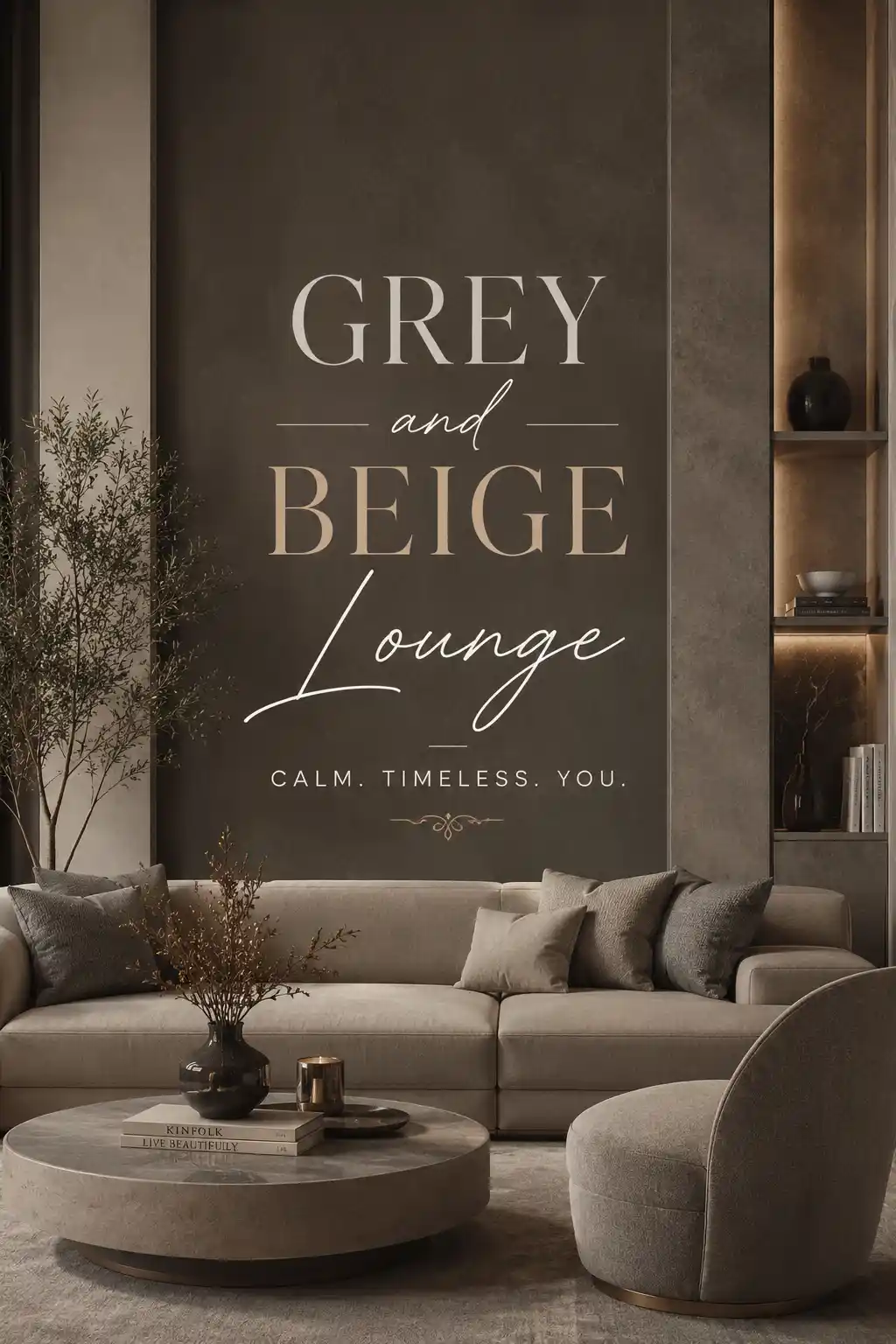
There is something about a grey and beige lounge that just stops you in your tracks. You walk into a room done up in these two colors and immediately feel a kind of quiet warmth you did not expect. It does not feel cold the way an all-grey room can, and it does not feel too safe the way a purely beige room might. Together they hit this balance that is genuinely hard to describe but very easy to feel.
I have been decorating and writing about interiors for years, and every time someone asks me for a starting point when redesigning their living space, I come back to the same answer: a grey and beige lounge. It works in small apartments, it works in large family homes, it works with modern furniture and it works just as well with antique pieces. That kind of versatility is rare and worth talking about in depth.
In this guide I want to take you through everything you need to know to pull off a grey and beige lounge that looks intentional, layered, and genuinely stylish. We are going to cover color combinations, furniture choices, lighting, textiles, accessories, and a lot more. By the end, you will have a clear picture of exactly how to make this color story work in your home.
Also Read: 70+ Stunning ivory living room ideas
Why the Grey and Beige Lounge Color Combination Works So Well
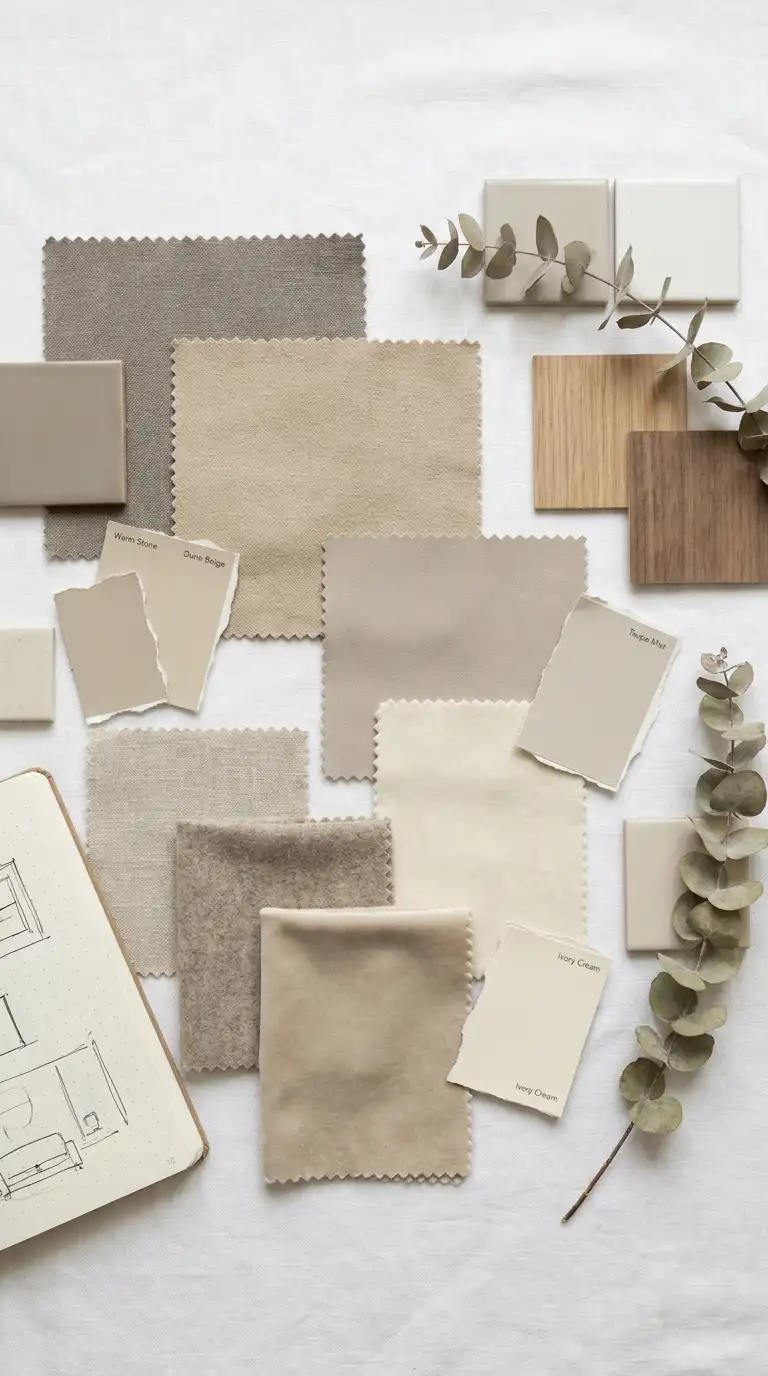
Let us start with the basics because there is a real reason designers keep coming back to these two colors. Grey and beige share a quiet neutrality that makes them easy to build on. Neither color demands attention, which sounds like a weakness until you realize it is actually the whole point. A grey and beige lounge gives your eye somewhere to rest while still offering enough visual interest to keep the room feeling designed rather than bare.
Grey brings a certain sophistication and coolness to a room. It reads as modern without being clinical, and it anchors furniture and art without competing with them. Beige, on the other hand, brings warmth. It softens the edges of grey and prevents the room from tipping into coldness. When you layer the two together thoughtfully, the result is a lounge that feels polished and livable at the same time.
Interior designers often call this a tonal palette, meaning the colors share a similar undertone family even though they sit in different places on the spectrum. The best grey and beige lounges pick shades that genuinely complement each other on that deeper level, which is why it is worth spending time testing paint samples and fabric swatches before committing.
Also Read: Transform Your Space: The Most Beautiful White Living Room Ideas That Actually Work in Real Homes
The Psychology Behind These Two Neutral Tones
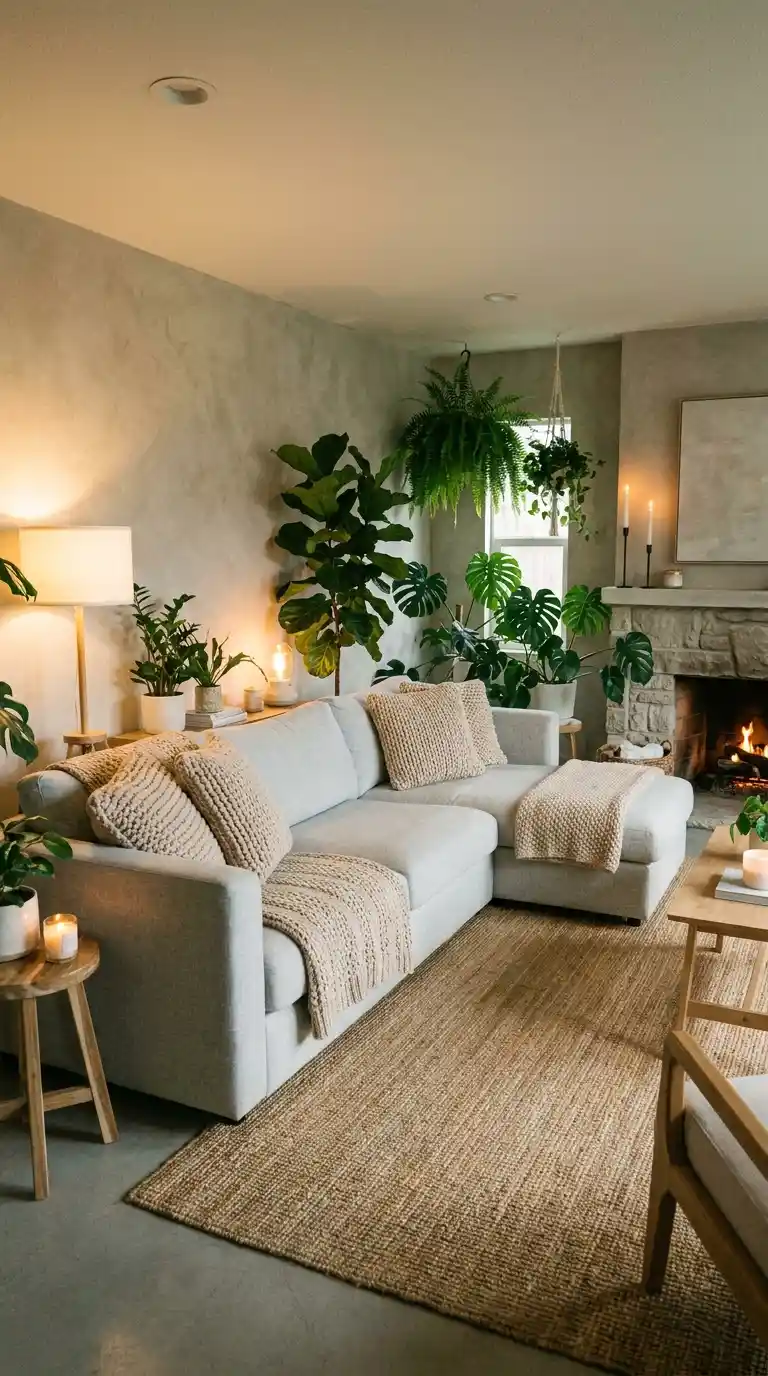
Color psychology plays a real role in how we experience a room, and both grey and beige score well on the relaxation front. Grey has long been associated with calmness, neutrality, and professionalism. It does not excite the nervous system the way reds or oranges do, which makes it a natural choice for spaces meant for unwinding. Beige carries similar associations but with an added layer of warmth that triggers feelings of safety and comfort.
When you combine them in a grey and beige lounge, you are essentially creating a space that tells the brain it is safe to relax. This is not a coincidence. Many luxury hotels, spas, and high-end residential designs lean on exactly this palette precisely because it works on a subconscious level. People feel at ease in these spaces without always being able to explain why.
Understanding this helps you make better choices when designing your lounge. You are not just picking colors that look nice together. You are setting an emotional tone for the entire room, and a grey and beige lounge sets a tone of calm sophistication that very few other combinations can match.
Choosing the Right Shades for Your Grey and Beige Lounge
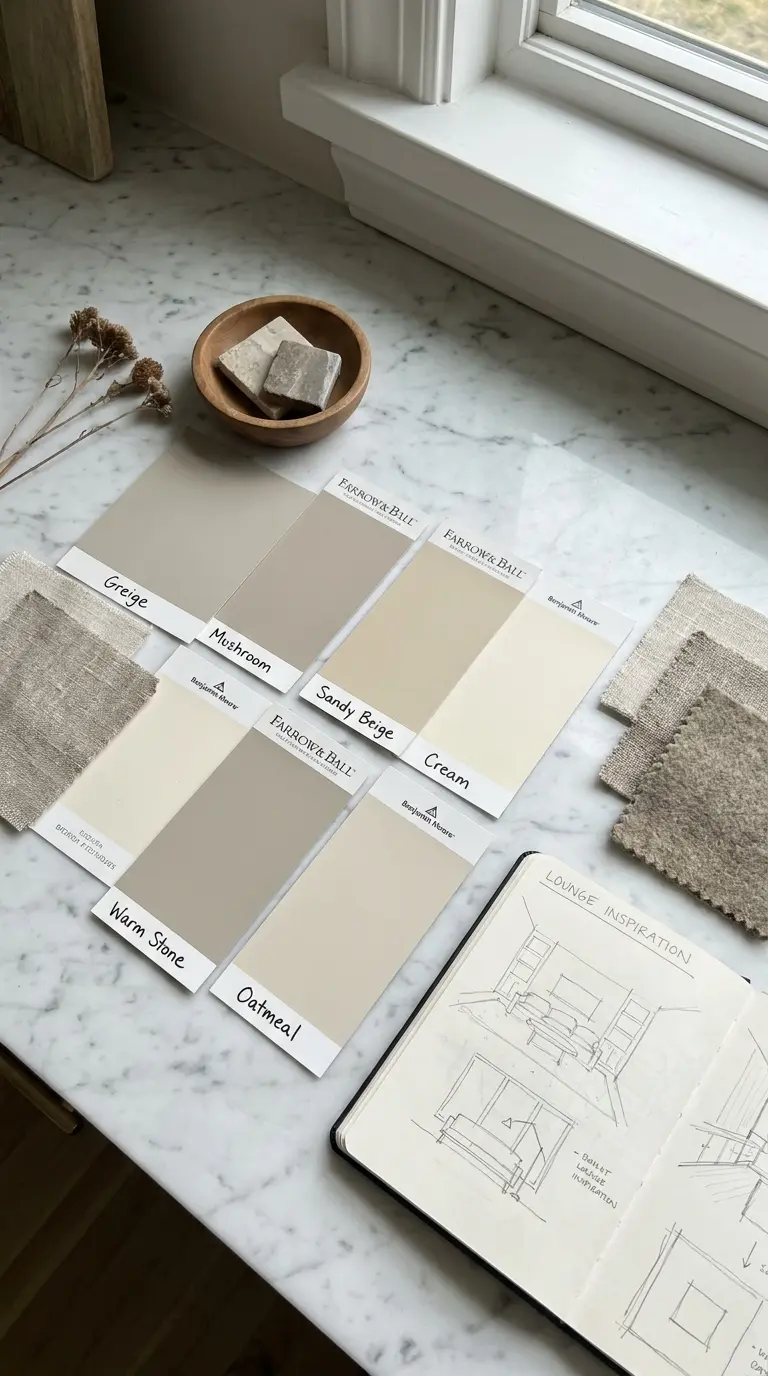
Not all greys are created equal, and neither are all beiges. The biggest mistake people make when designing a grey and beige lounge is treating these as flat, single-note colors when they are actually entire families of shades each with their own personality. Getting this step right makes everything else fall into place.
With grey, you are generally choosing between warm greys and cool greys. Warm greys have a slight brown, taupe, or purple undertone. Cool greys lean toward blue or green. For a grey and beige lounge, warm greys almost always work better because they bridge the gap between the cooler grey tones and the warmer beige tones without creating a visual disconnect. Shades like Agreeable Gray by Sherwin Williams or Revere Pewter by Benjamin Moore are classics for exactly this reason.
Beige is similarly complex. You have sandy beiges, pinkish beiges, golden beiges, and greige which is the hybrid of grey and beige. For your grey and beige lounge, look for beiges that have a slight warmth without going all the way to yellow or orange. Think of the color of warm sand or natural linen rather than the color of butter or honey..
Also Read : 60+ Elegant Living Room Valance Ideas That Instantly Transform Your Space
Testing Colors Before You Commit
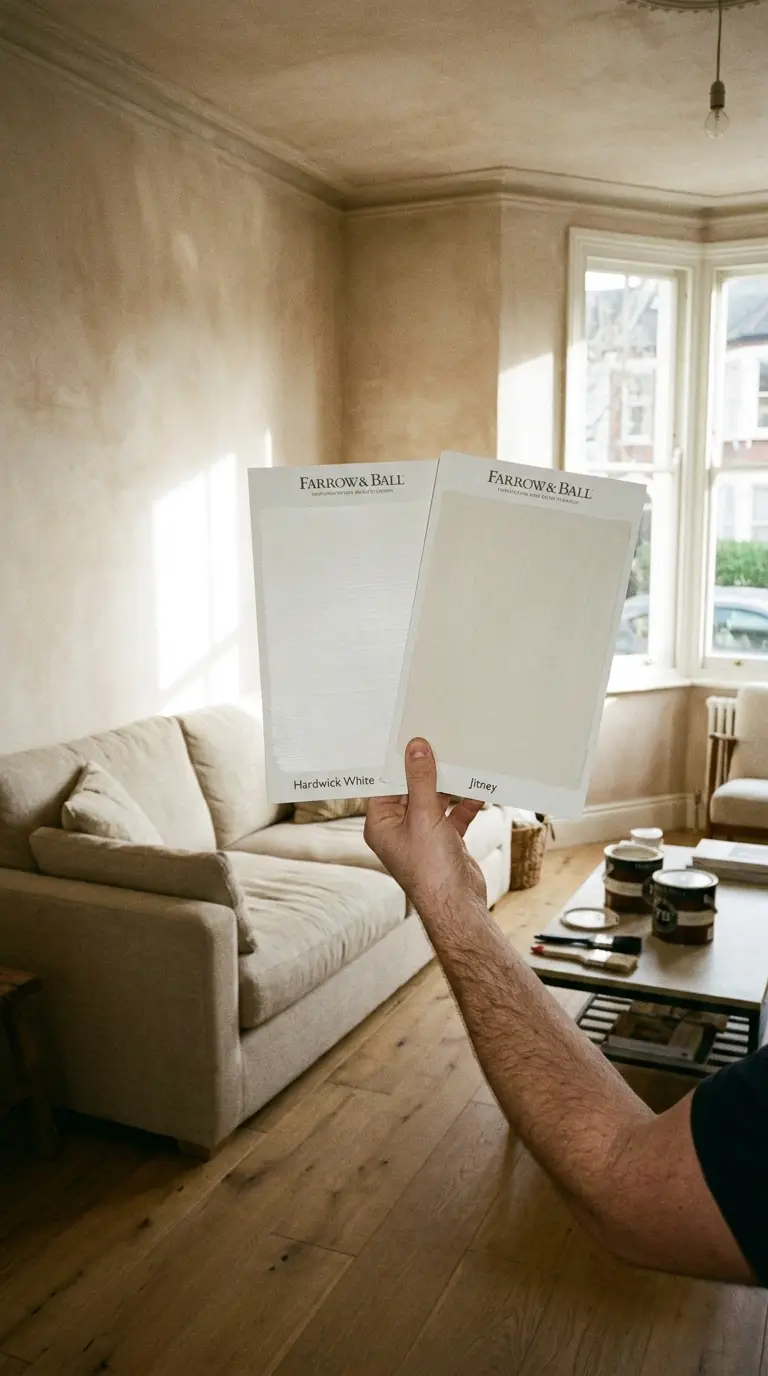
I cannot stress this enough: always test your chosen colors in the actual room before painting the walls or buying large pieces of furniture. Colors look completely different depending on the light in your specific space. A grey that looks perfectly warm and inviting in a south-facing showroom can turn icy and flat in a north-facing lounge with limited natural light.
The best way to test colors for a grey and beige lounge is to buy sample pots and paint large swatches directly on the wall. Paint them next to each other and observe how they look at different times of day, in natural morning light, in the afternoon, and under your evening artificial lighting. What you see will often surprise you and will absolutely save you from expensive mistakes.
Many people also find it helpful to use online room visualization tools, but nothing truly replaces the physical sample in your space. The interaction between your specific room dimensions, window placement, and the direction of light sources is something a screen simply cannot replicate. Do the work upfront and you will be far happier with your finished grey and beige lounge.
Furniture Selection for a Stunning Grey and Beige Lounge
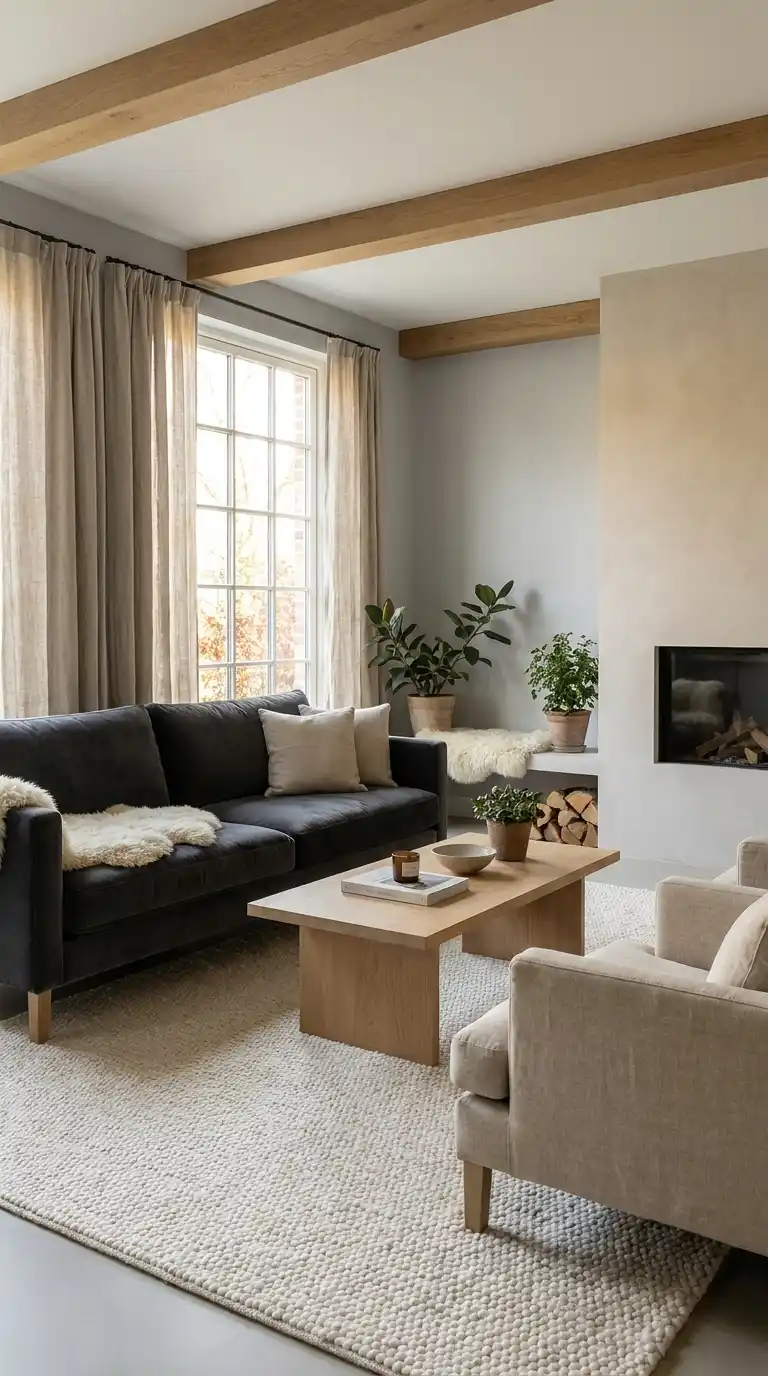
Once your color palette is sorted, furniture is where your grey and beige lounge really starts to take shape. The good news is that both of these colors work beautifully with a wide range of furniture styles and materials, which gives you genuine flexibility in how you approach this part of the design.
The sofa is the anchor piece in most lounges, and in a grey and beige lounge you have several strong options. A deep grey sofa with beige cushions is a classic approach that gives the room a clear focal point and keeps the palette cohesive. Alternatively, a beige or oatmeal-toned sofa with grey accessories creates a softer, more relaxed version of the same look. Both approaches work well depending on the mood you are trying to create.
For additional seating, consider mixing materials. Armchairs in a complementary shade of grey or beige add depth without creating visual clutter. Woven natural materials like rattan or light oak frames add texture and warmth that prevent the grey and beige lounge from feeling too flat or sterile. This layering of materials is what separates a thoughtfully designed room from one that just looks like a furniture catalogue page.
Also Read: The Complete Guide to Green and Gold Living Room Ideas (20 Practical ideas)
Sofas and Sectionals in Grey and Beige Tones
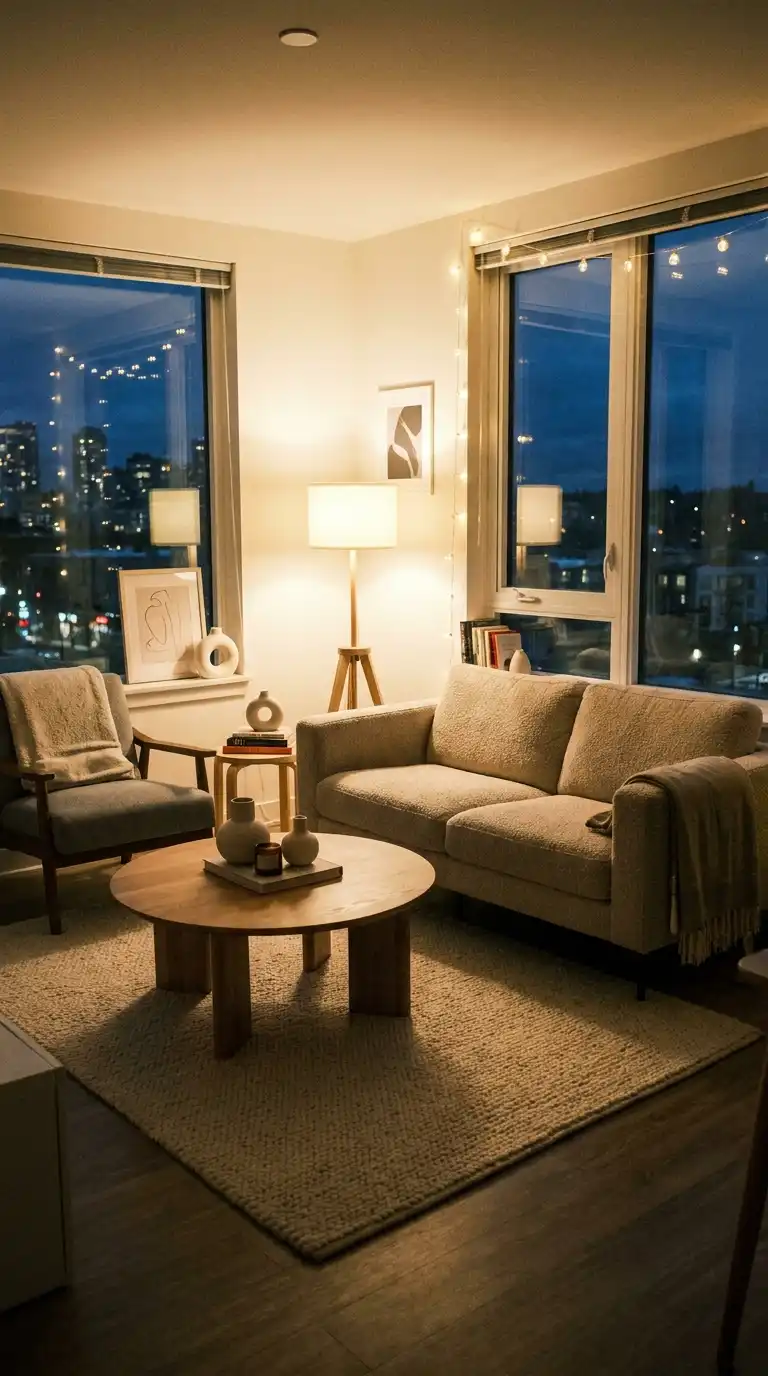
When it comes to the main sofa in your grey and beige lounge, fabric choice matters as much as color. Velvet in a soft grey creates a luxurious and slightly moody feel that pairs beautifully with warm beige walls or accessories. Linen in a natural oatmeal tone gives the room a relaxed, organic quality that works especially well in homes with natural wood floors or stone accents.
Sectionals work particularly well in a grey and beige lounge when the room is large enough to accommodate them. An L-shaped sectional in a mid-tone grey can anchor a large space and create a natural conversation area. Beige accent cushions and throws break up the solid expanse of grey and prevent the sofa from dominating the room in a heavy-handed way.
If you are working with a smaller space, a loveseat in a pale grey or warm beige keeps things proportional while still contributing to the overall color story. Add a single accent chair in the opposite tone to create balance, and make sure the coffee table is scaled appropriately. A grey and beige lounge works in any size room as long as the furniture is chosen with the dimensions in mind.
Coffee Tables, Side Tables, and Storage
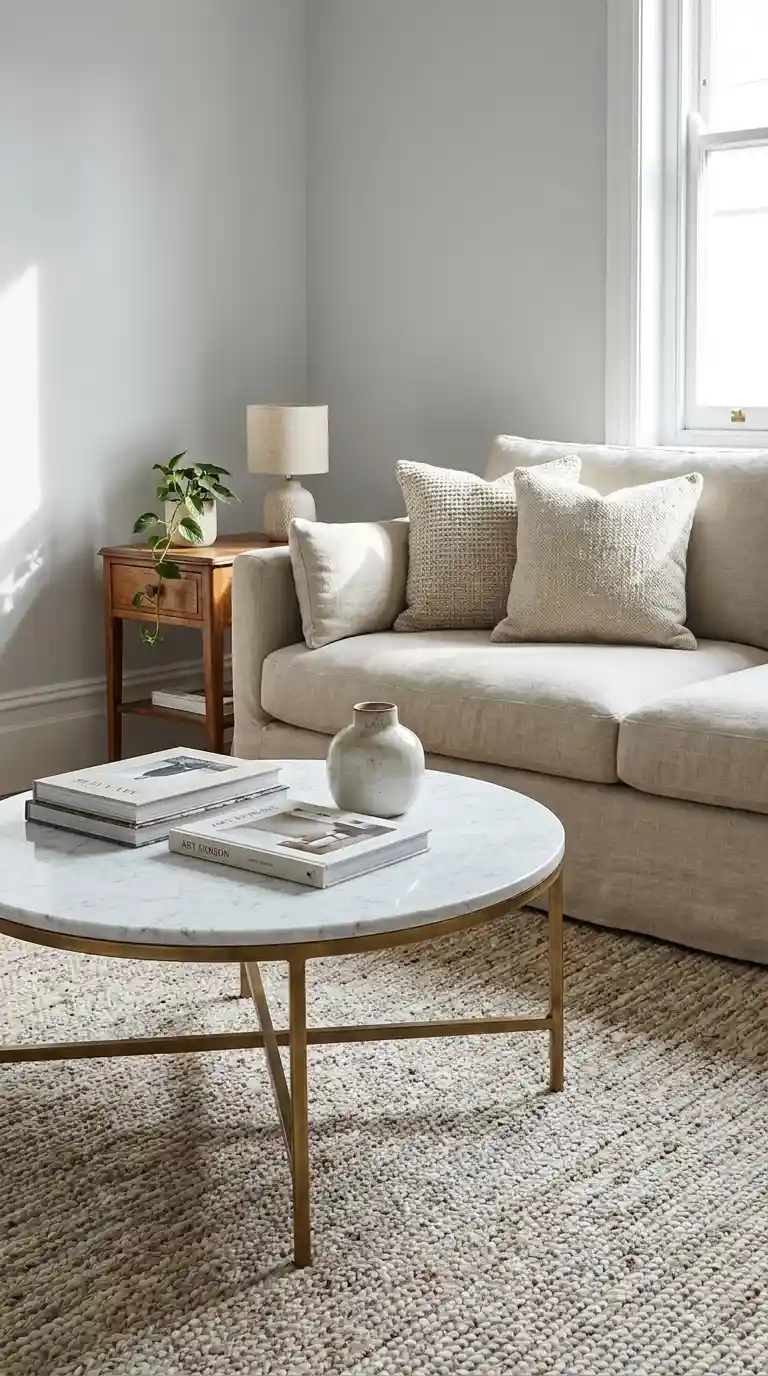
The secondary furniture pieces in your grey and beige lounge are what add visual character and warmth to the room. A natural wood coffee table is one of the best investments you can make in this palette. The warm grain of light oak, walnut, or even bleached timber creates a contrast against grey and beige that feels organic and inviting rather than contrived.
Marble-topped coffee tables in white or light grey are another excellent option for a more polished grey and beige lounge. The veining in marble adds pattern without introducing a new color, which keeps the palette clean while preventing the room from looking monotonous. Pair a marble coffee table with softer textures elsewhere in the room to prevent it from feeling overly formal.
Side tables and shelving in similar tones keep the room feeling cohesive. Avoid going too dark on storage pieces unless you specifically want to create contrast. In a grey and beige lounge, the goal is typically to create a soft, layered look rather than one with heavy focal points. Lighter storage pieces in white, natural wood, or soft grey blend into the room and let your other design choices shine.
also Read : 10 Best Neutral Living Room Ideas for a Calm and Stylish Space
Flooring Options That Complement a Grey and Beige Lounge
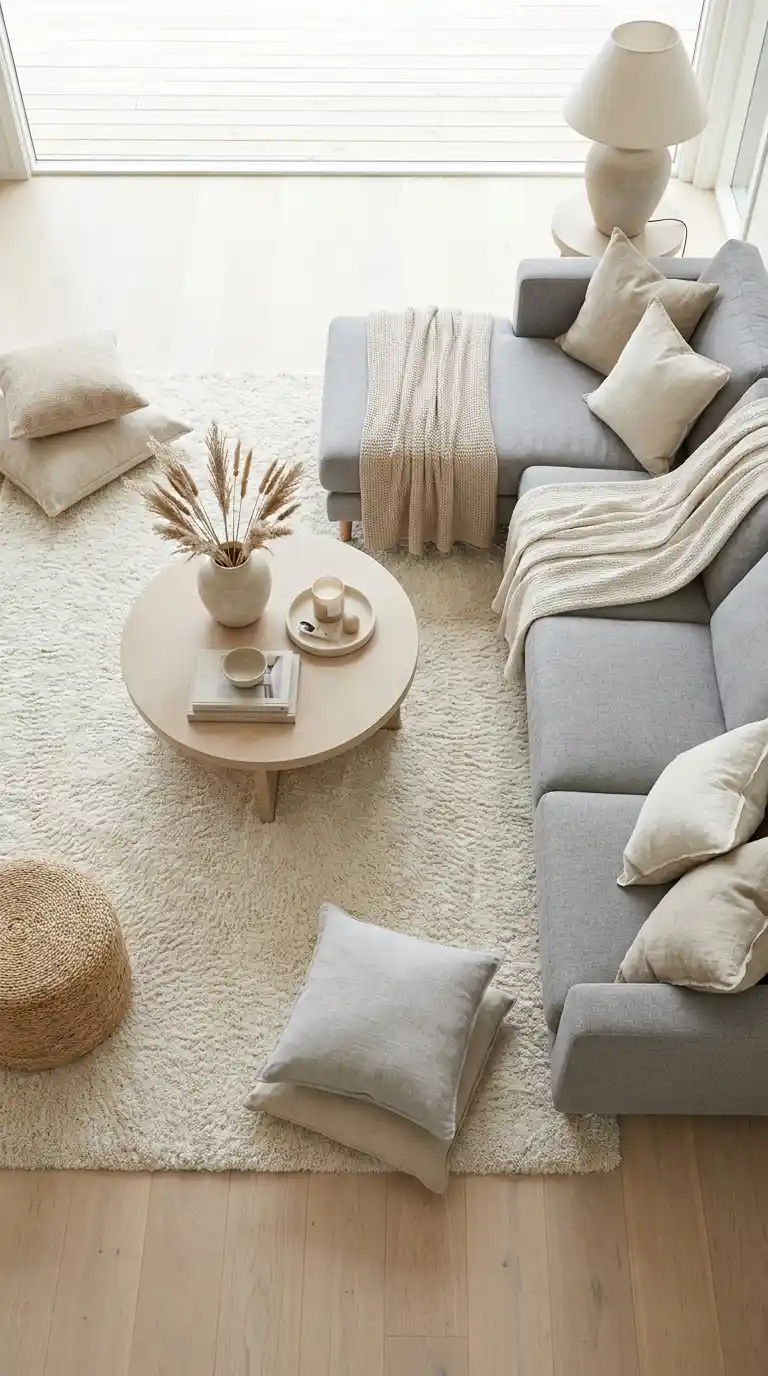
The floor is essentially the largest surface in your lounge, and it has an enormous impact on how the rest of the room reads. In a grey and beige lounge, you have a lot of good options, but the choice depends partly on what you are starting with and partly on the mood you want to create.
Light hardwood floors in a warm blonde or honey tone are an ideal companion for a grey and beige lounge. They add warmth underfoot, they photograph beautifully, and they connect the earthy quality of beige with the cooler sophistication of grey. Wide planks in a pale oak finish are especially popular right now and look fantastic in both modern and traditionally styled grey and beige lounges.
If you have grey stone, slate, or tiled floors, lean into the grey element of your palette and balance with warmer beige tones in your furniture, curtains, and accessories. Dark hardwood floors can also work well in a grey and beige lounge as long as you keep the upper half of the room relatively light and airy to prevent the space from feeling closed in.
Area Rugs and Their Role in Tying the Room Together
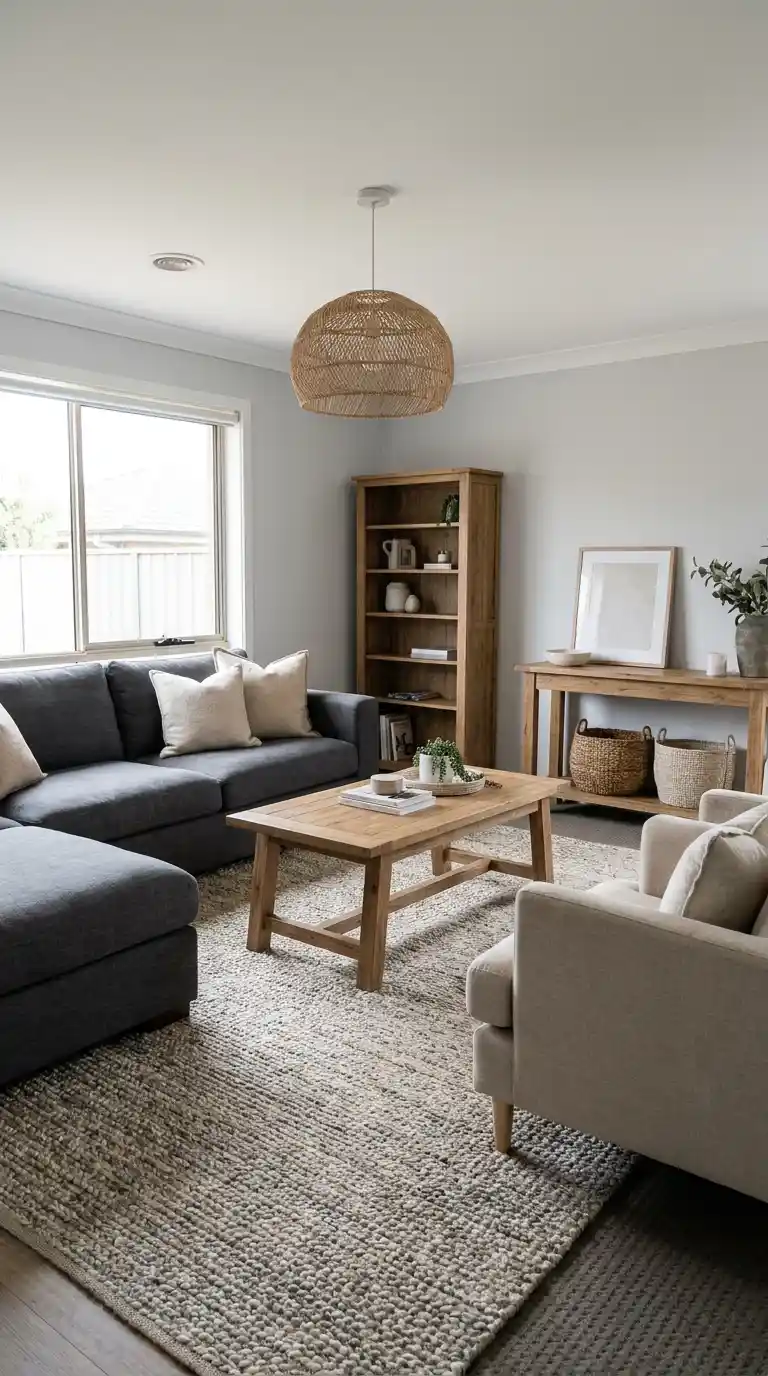
An area rug is one of the most powerful tools in designing a grey and beige lounge. It defines the seating area, adds texture underfoot, and gives you an opportunity to introduce pattern or depth without overwhelming the palette. A well-chosen rug can make a grey and beige lounge feel complete and considered in a way that furniture alone cannot achieve.
For a grey and beige lounge, look for rugs in tones that sit within your established palette. A cream, ivory, or warm white rug adds lightness and keeps the room feeling fresh. A rug with a subtle geometric pattern in grey and beige tones adds visual interest without introducing jarring contrast. Natural fiber rugs in jute or sisal bring an earthy, organic quality that connects beautifully with both grey and beige.
Size is critical. The most common mistake is choosing a rug that is too small for the space. In a grey and beige lounge, all the main seating furniture should ideally sit on the rug, or at least have the front legs of each piece resting on it. A rug that is too small makes the room feel disjointed and the seating area feel unanchored. When in doubt, go bigger.
Lighting Strategies to Enhance Your Grey and Beige Lounge
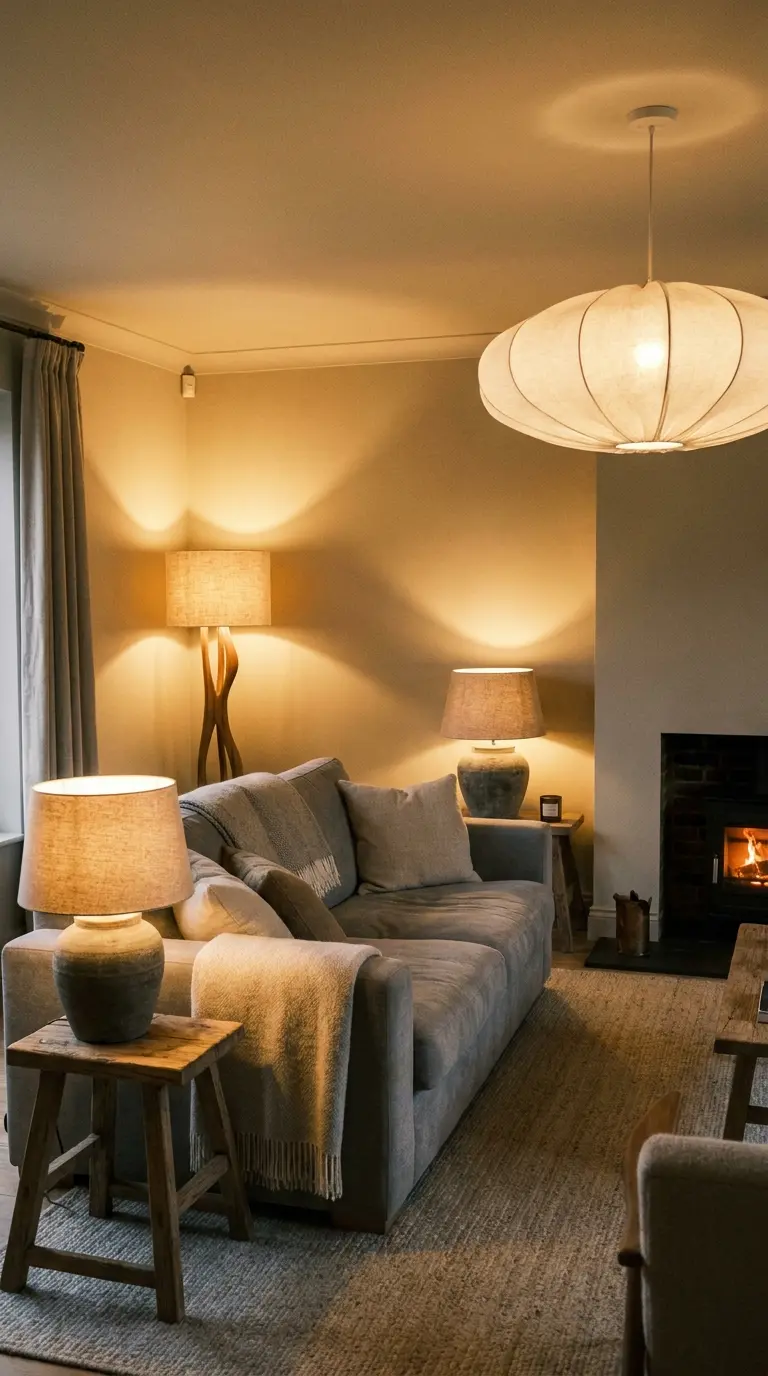
Lighting is where many otherwise beautiful grey and beige lounges go wrong. Because both grey and beige are sensitive to light temperature, the wrong bulb or fixture can shift the entire mood of the room in a direction you did not intend. Getting your lighting right is not about spending a lot of money on fancy fixtures. It is about understanding how light behaves in your specific space and making deliberate choices.
For a grey and beige lounge, warm white bulbs in the 2700K to 3000K range almost always perform better than cool white or daylight bulbs. Warm white enhances the cozy quality of beige and softens grey without washing it out. Cool white bulbs, by contrast, can make beige look greenish and grey look harsh, which undermines the whole effect you have worked hard to create.
Layered lighting is the professional approach to any lounge, and it works especially well in a grey and beige lounge. This means combining ambient lighting, task lighting, and accent lighting rather than relying on a single overhead fixture to do all the work. Overhead lighting fills the room with general light, table lamps and floor lamps create warmth and intimacy, and accent lighting draws attention to artwork or architectural features you want to highlight.
Natural Light and Window Treatments
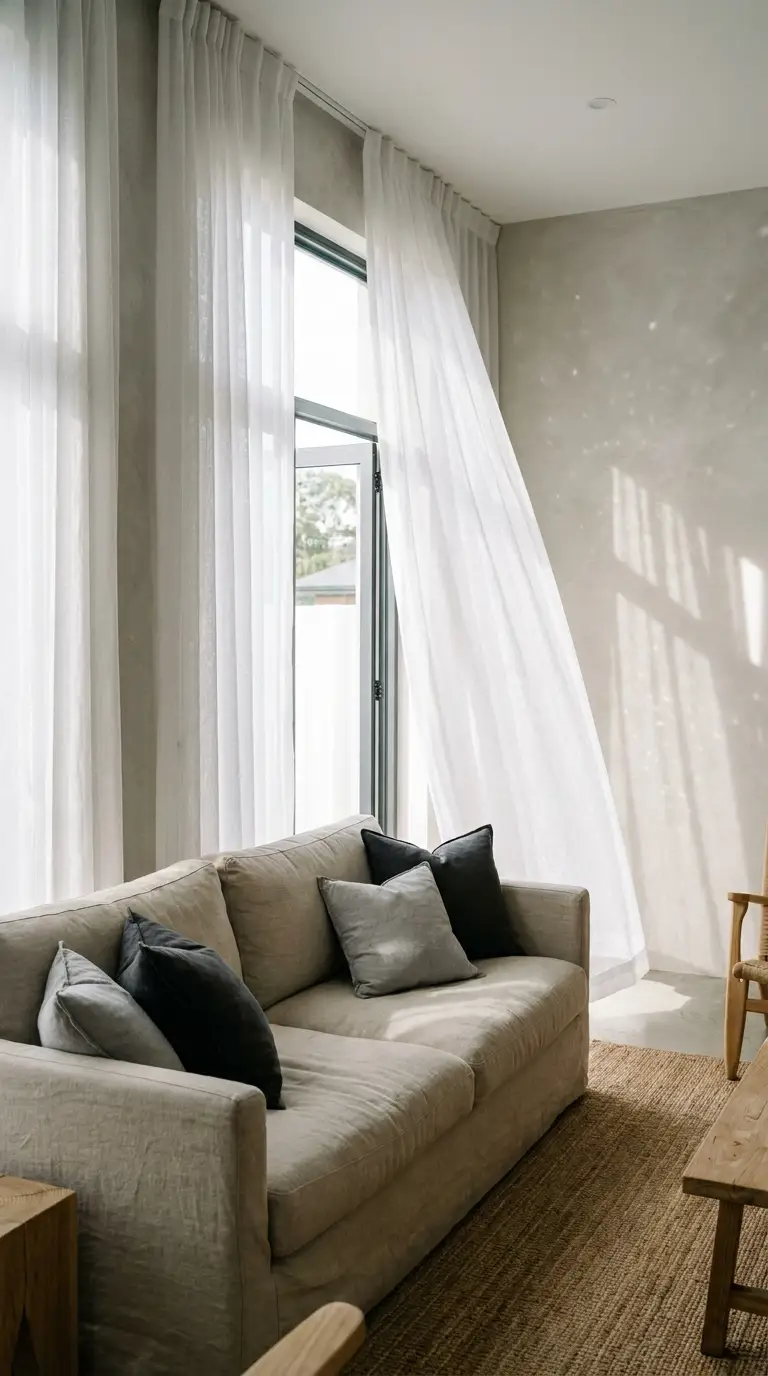
Natural light is your most valuable asset in a grey and beige lounge and you want to make the most of it. Sheer curtains in ivory or pale grey allow light to flood in while softening the intensity of direct sunlight. This creates a gentle, diffused quality of light that flatters both grey and beige tones beautifully and makes the room feel genuinely luminous.
Heavier curtains in a warm linen or cotton blend can be layered over sheers for when you want more privacy or to control the light in the evening. Stick to tones that sit within your palette for curtains, cream, soft grey, warm taupe, or natural linen all work wonderfully. Avoid anything too stark like bright white or too dark unless you are intentionally creating contrast.
Mirrors are your best friend in a grey and beige lounge that needs more light. A large mirror on a wall opposite a window doubles the perceived light in the room and makes the space feel larger. Choose a mirror frame in a material that complements your palette, brushed brass, natural wood, or matte black all work in a grey and beige lounge depending on the style direction you have chosen.
Textiles and Soft Furnishings That Elevate a Grey and Beige Lounge
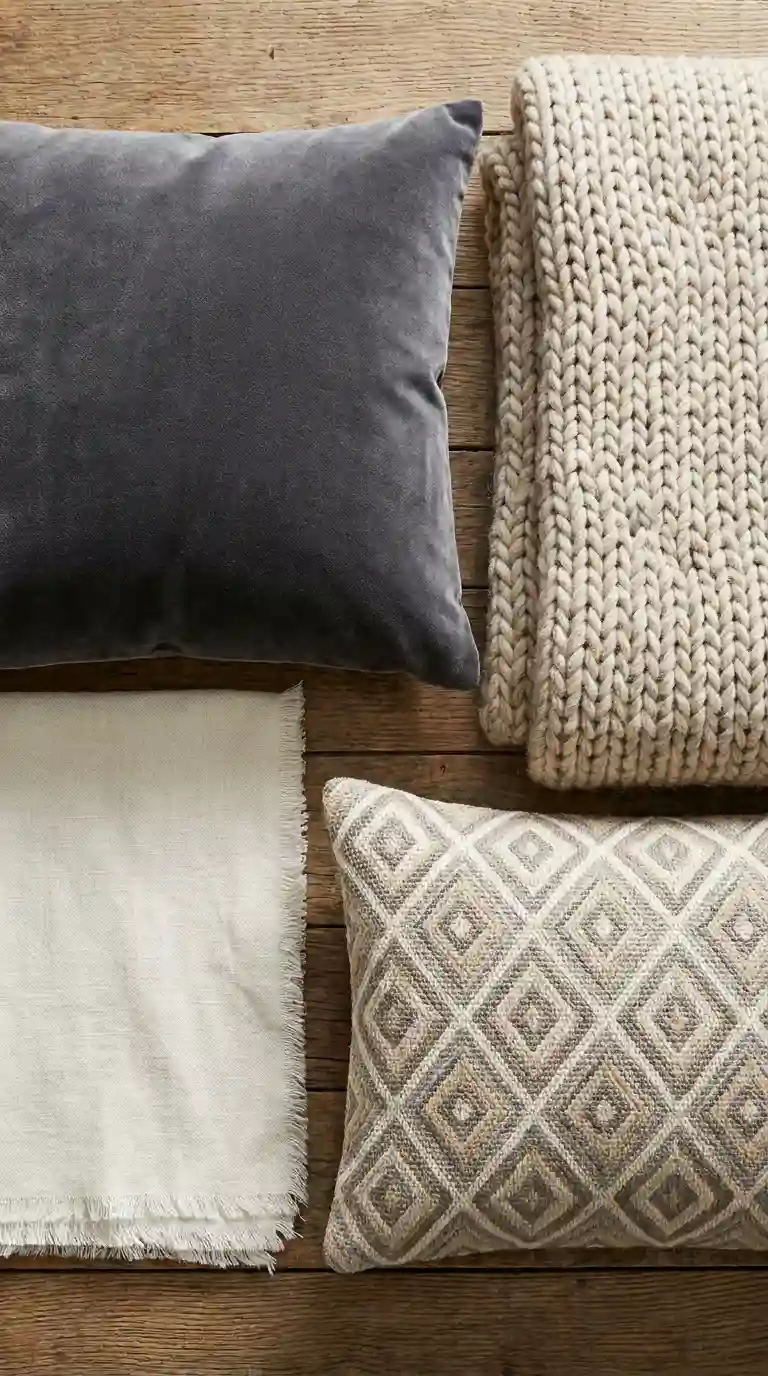
Textiles are where a grey and beige lounge goes from looking nice to looking truly special. Cushions, throws, curtains, and rugs create the layered, lived-in quality that separates a real home from a showroom display. The key is to vary the texture within your palette rather than introducing lots of different colors.
Think about combining smooth with rough, matte with slightly shiny, and flat with dimensionally textured. A velvet cushion next to a chunky knit throw creates a visual tension that is pleasing without being chaotic. A linen sofa cover alongside a leather cushion brings together natural and processed materials in a way that reads as sophisticated and deliberate.
In a grey and beige lounge, the textiles should feel like they belong together even when they are different in texture and material. This is achieved by sticking to your tonal palette. A grey velvet cushion, a beige waffle-knit throw, an ivory linen cushion cover, and a taupe faux fur accent all work together because they share that same neutral, earthy language. Introduce a small amount of pattern, perhaps a subtle stripe or a gentle geometric, to prevent the room from feeling monotonous.
Cushions and Throws for a Layered Look
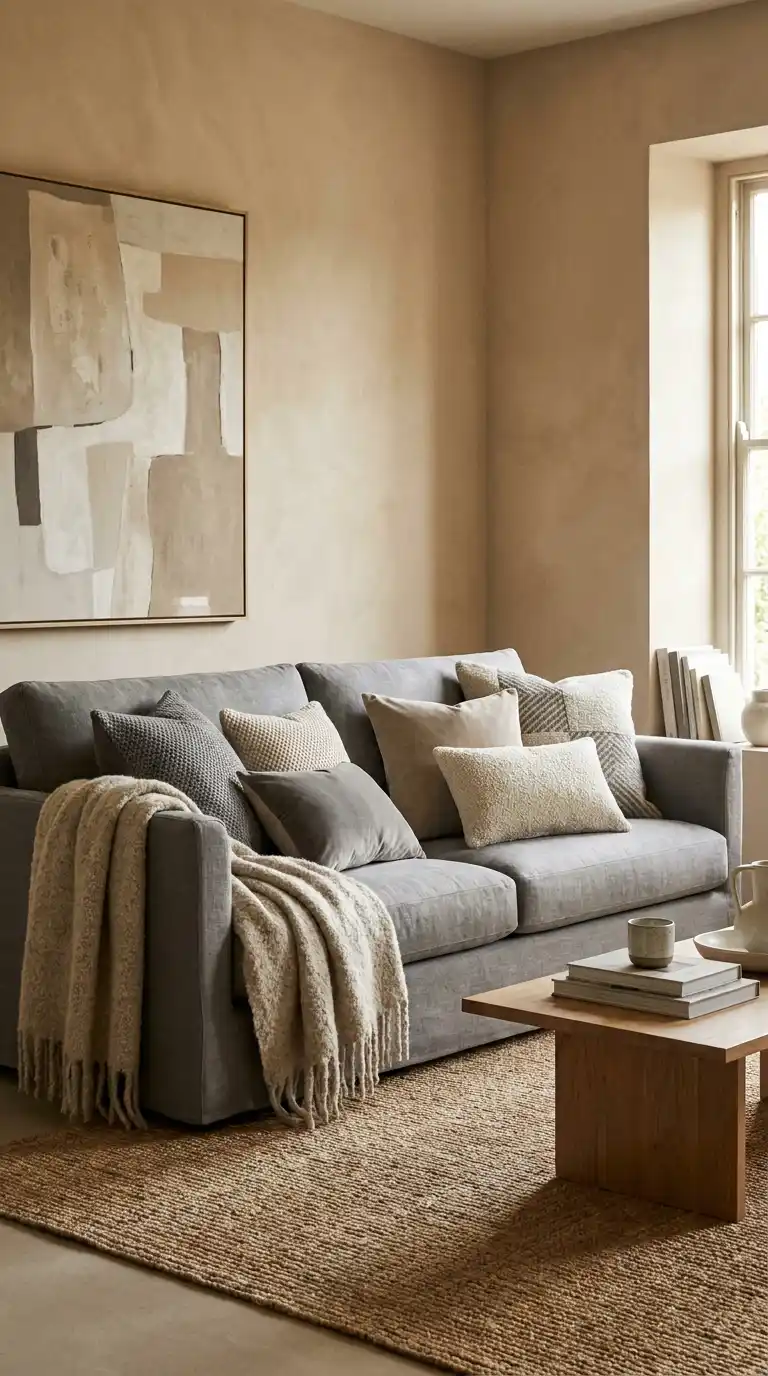
The arrangement of cushions on a sofa contributes enormously to the overall feel of a grey and beige lounge. A common approach is to use an odd number of cushions, typically three or five on a standard sofa, in varying sizes. Larger cushions at the back and smaller ones in front create a layered effect that looks full and inviting without looking cluttered.
Mix solid colored cushions with one or two featuring subtle texture or pattern. In a grey and beige lounge, solid grey cushions alongside a beige textured cushion and perhaps one with a soft tone-on-tone stripe works beautifully. The stripe introduces the idea of pattern without breaking away from the palette.
Throws should be draped casually rather than folded too neatly. A throw that looks lived-in, slightly draped over the arm of the sofa or gathered at one end, adds that effortlessly styled quality that makes a grey and beige lounge feel genuinely welcoming rather than stiff and untouched. Change throws seasonally to keep the room feeling fresh and current.
Also Read : 12 Best Open Kitchen Living Rooms for 2026
Decorative Accents and Accessories for a Grey and Beige Lounge
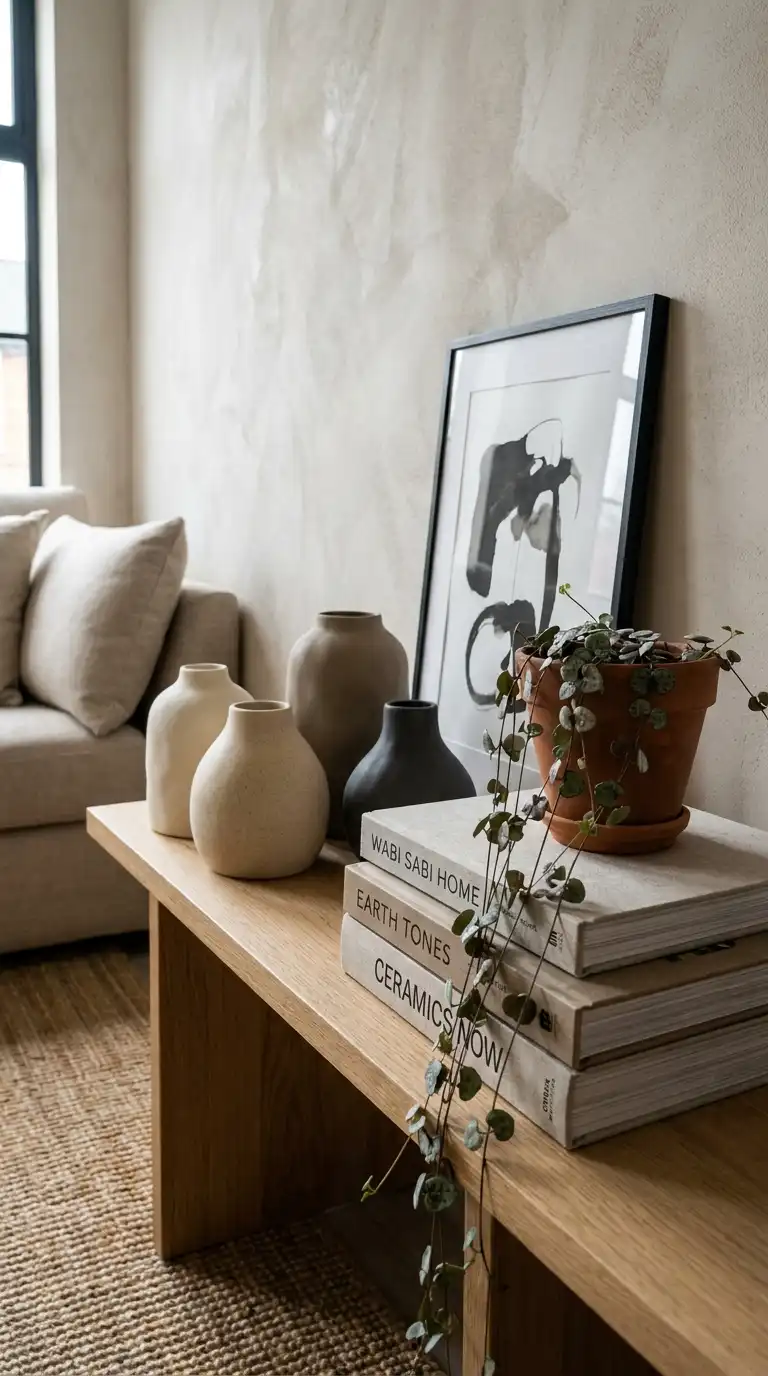
Accessories are where you get to express personality within the grey and beige lounge framework. Plants, artwork, ceramics, books, candles, and decorative objects all contribute to the story the room tells. The key is curation. Less is genuinely more in a neutral palette like this because every accessory becomes more visible against the quiet backdrop.
Indoor plants are one of the most effective accessories in a grey and beige lounge. The natural green of foliage creates a beautiful contrast against warm grey and beige without introducing a color that feels out of place. Larger plants like a fiddle leaf fig or a monstera in a ceramic pot add vertical interest and life to a corner. Smaller plants on shelves or coffee tables add quiet freshness.
Artwork is another area where you have genuine freedom in a grey and beige lounge. Abstract prints in earthy tones, black and white photography, line drawings, and nature-inspired paintings all work well. Choose pieces that you genuinely love rather than pieces chosen purely to match. The authenticity of a grey and beige lounge depends partly on it looking like a real person lives there.
Metallics as Accent Tones
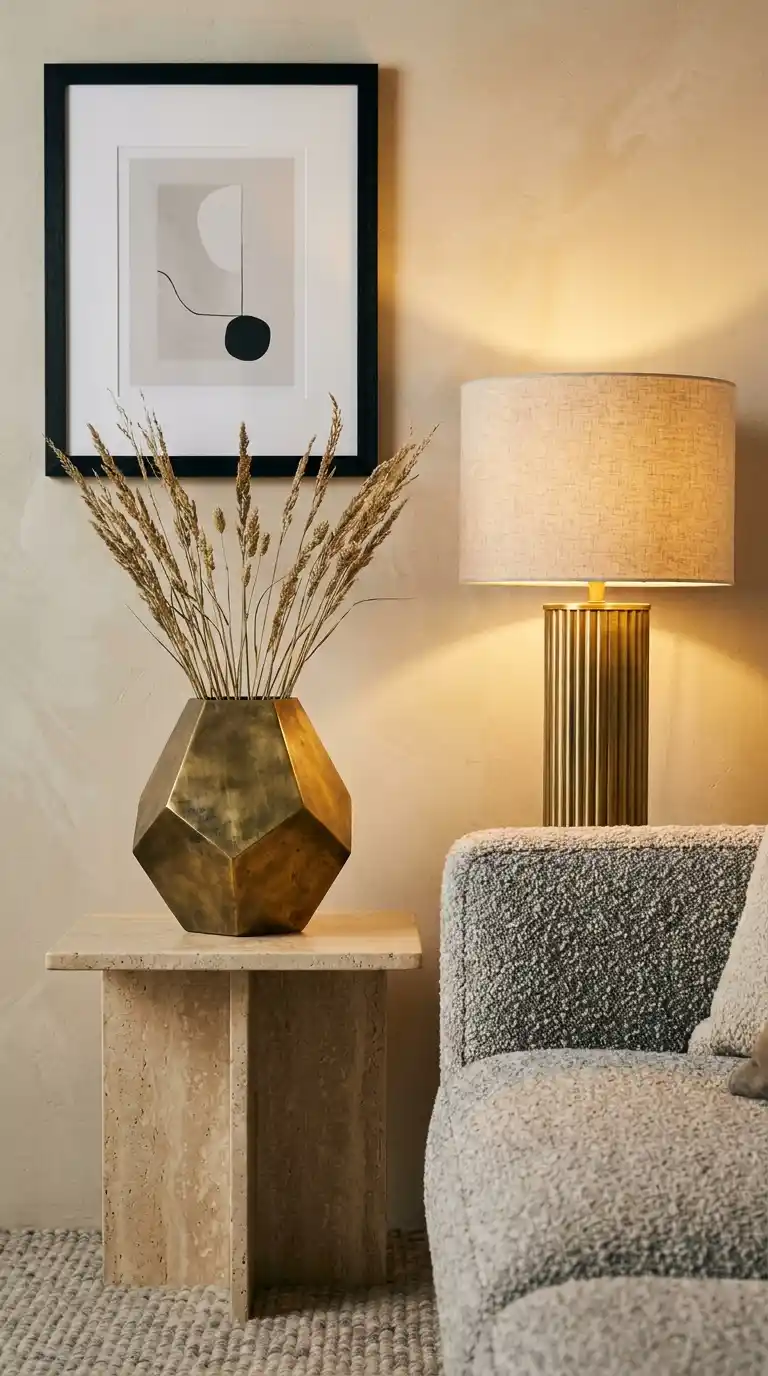
Introducing a metallic accent into your grey and beige lounge is one of the most effective ways to add a sense of luxury and polish without disrupting the palette. The most popular choices are brass, gold, and matte black, each of which brings a different mood to the room.
Brass and warm gold accents are particularly successful in a grey and beige lounge because they connect naturally with the warmth of beige while adding a richness that grey on its own lacks. Look for brass in lamp bases, coffee table legs, picture frames, vase openings, and hardware on cabinets or media units. Even small doses of brass make a significant visual impact.
Matte black is the cooler, more contemporary choice for accents in a grey and beige lounge. It adds definition and edge, which prevents the room from feeling too soft or insubstantial. Matte black in light fixtures, frames, and furniture legs creates a grounding contrast that is stylish and modern. Some designers combine both brass and black in a grey and beige lounge for a layered, curated feel.
Ceramics, Books, and Personal Touches
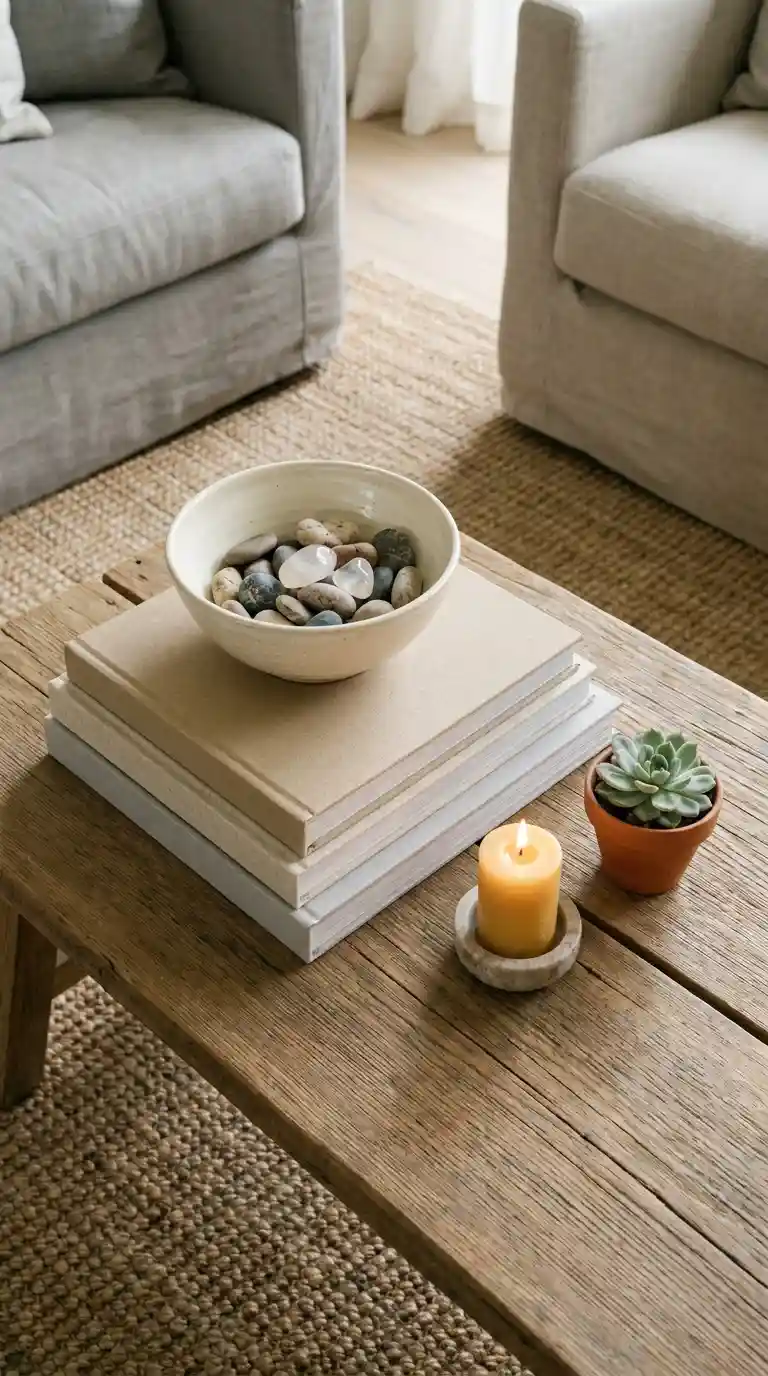
A grey and beige lounge that lacks personal touches tends to feel like a hotel lobby rather than a home. This is where ceramics, books, candles, and small collected objects do their most important work. These pieces tell the story of the person who lives in the room and elevate the space from beautiful to genuinely meaningful.
Ceramics in hand-thrown earthy tones, creamy whites, and warm beiges are a natural fit for this palette. A cluster of three ceramics in varying heights on a coffee table or shelf creates a display that looks intentional without feeling formal. Mix matte and slightly glazed finishes for depth, and do not be afraid to leave some pieces looking slightly imperfect. That quality of craftsmanship is what makes a grey and beige lounge feel curated rather than mass-produced.
Books with beautiful spines in neutral tones are a classic styling tool in any interior, and in a grey and beige lounge they are particularly effective. Stacked horizontally or standing vertically, they add color, texture, and personality. Candles in neutral-toned vessels add warmth and fragrance, contributing to the sensory experience of the room beyond just the visual.
Grey and Beige Lounge Ideas for Different Interior Styles
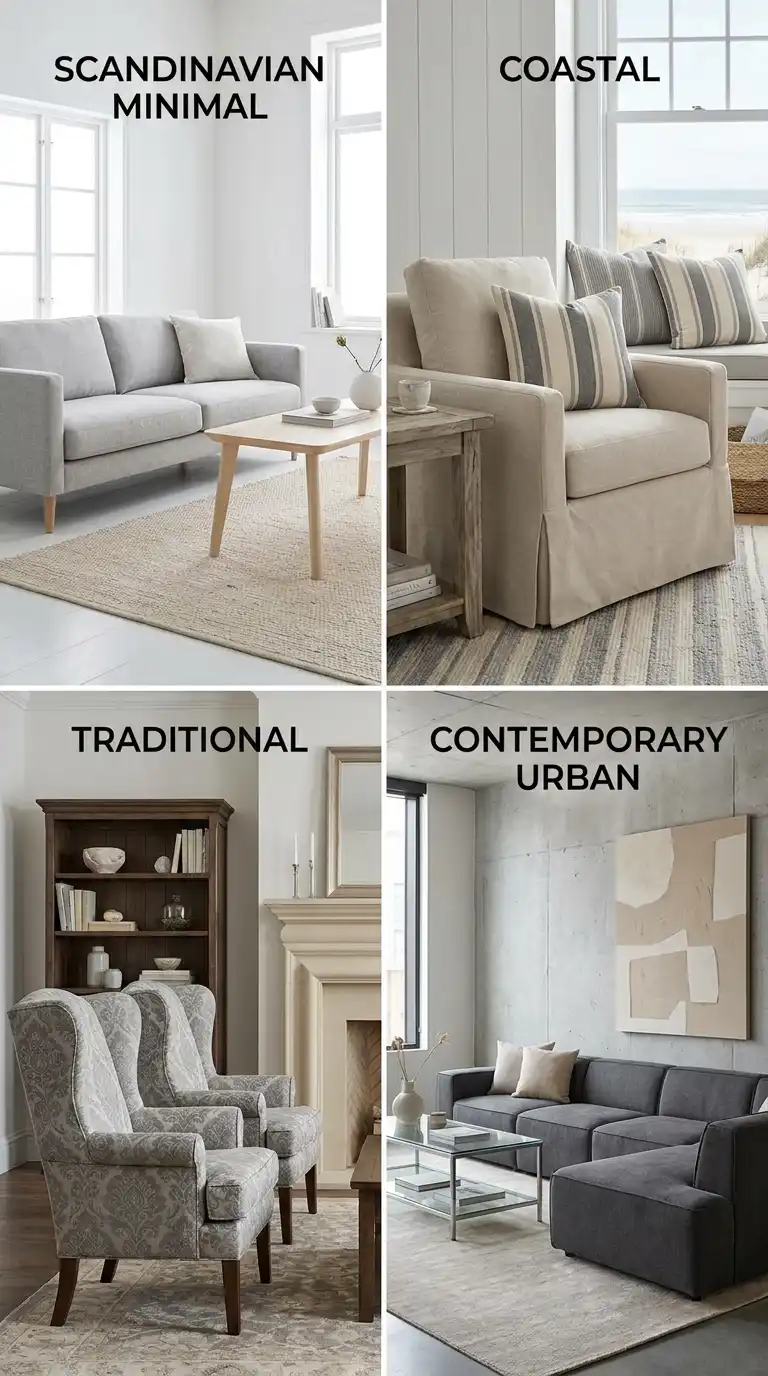
One of the most remarkable things about the grey and beige lounge is how adaptable it is across different interior design styles. The same fundamental palette can deliver completely different results depending on the shapes, materials, and additional elements you bring into the room. This makes it genuinely useful regardless of the broader design direction of your home.
Whether you are drawn to Scandinavian minimalism, coastal living, traditional English interiors, or contemporary urban design, a grey and beige lounge can be the foundation of each of these approaches. It is all in how you build on it, and understanding the style direction you are working toward helps you make much more confident and coherent choices throughout the design process.
Scandinavian Minimalist Grey and Beige Lounge
For a Scandinavian-inspired grey and beige lounge, the focus is on clean lines, natural materials, and functional simplicity. Pale grey walls paired with white woodwork and natural pine or birch furniture creates that signature Nordic look. Beige appears in natural linen cushions, jute rugs, and sheepskin throws draped casually over sofas and chairs.
In this version of the grey and beige lounge, less is always more. Furniture is kept to what is genuinely needed, and every decorative object earns its place. Plants are important in Scandinavian interiors, bringing life and the outside world into a clean, restrained space. Functional pieces like woven baskets for storage double as decorative elements, keeping the aesthetic cohesive.
The lighting in a Scandinavian grey and beige lounge tends to be warm and intimate, with pendant lights in sculptural shapes, warm bulbs, and plenty of candles for the darker months. This creates a cosy, hygge quality that makes the room feel deeply inviting despite its sparse approach to decoration.
Coastal Inspired Grey and Beige Lounge
A coastal grey and beige lounge takes its cues from the palette of the beach and sea. Soft grey-blues, sandy beiges, and whitewashed textures create a room that feels permanently summery and relaxed. Natural materials are key here: rattan furniture, driftwood accents, linen upholstery, and woven seagrass rugs all contribute to the coastal atmosphere.
In this version of the grey and beige lounge, you might introduce the subtlest hints of seafoam green or faded blue as accent colors. These are used very sparingly, perhaps in one or two cushions or a decorative ceramic, and they serve to reinforce the coastal reference without overwhelming the neutral palette. The result is a grey and beige lounge that feels effortlessly sun-bleached and relaxed.
Artwork in a coastal grey and beige lounge tends toward nature prints, simple line drawings of seabirds or botanicals, and abstract pieces in watery blues and sandy tones. Shell collections, coral-inspired ceramics, and sea glass in a bowl all add to the feeling of a room connected to the natural world without tipping into nautical cliche.
Contemporary Urban Grey and Beige Lounge
The contemporary urban version of the grey and beige lounge is sleeker and more architectural in its approach. Darker greys are brought in alongside pale beige and white, creating a more defined contrast. Furniture features clean, architectural silhouettes, and metallic accents in brushed steel or matte black add an urban edge.
Concrete-effect walls or a feature wall in a deep charcoal bring a raw, industrial quality to the grey and beige lounge that works particularly well in loft apartments or open-plan city homes. Against these darker elements, warm beige upholstery and pale warm-toned accessories create a layered contrast that is striking and sophisticated.
Art plays a more prominent role in a contemporary urban grey and beige lounge, with larger, bolder pieces taking centre stage on feature walls. Abstract paintings, large-scale photography in monochrome, and sculptural pieces all work well. The room still feels grounded in the grey and beige palette but it has a more assertive, directional quality that suits a more urban lifestyle.
Small Space Solutions for a Grey and Beige Lounge
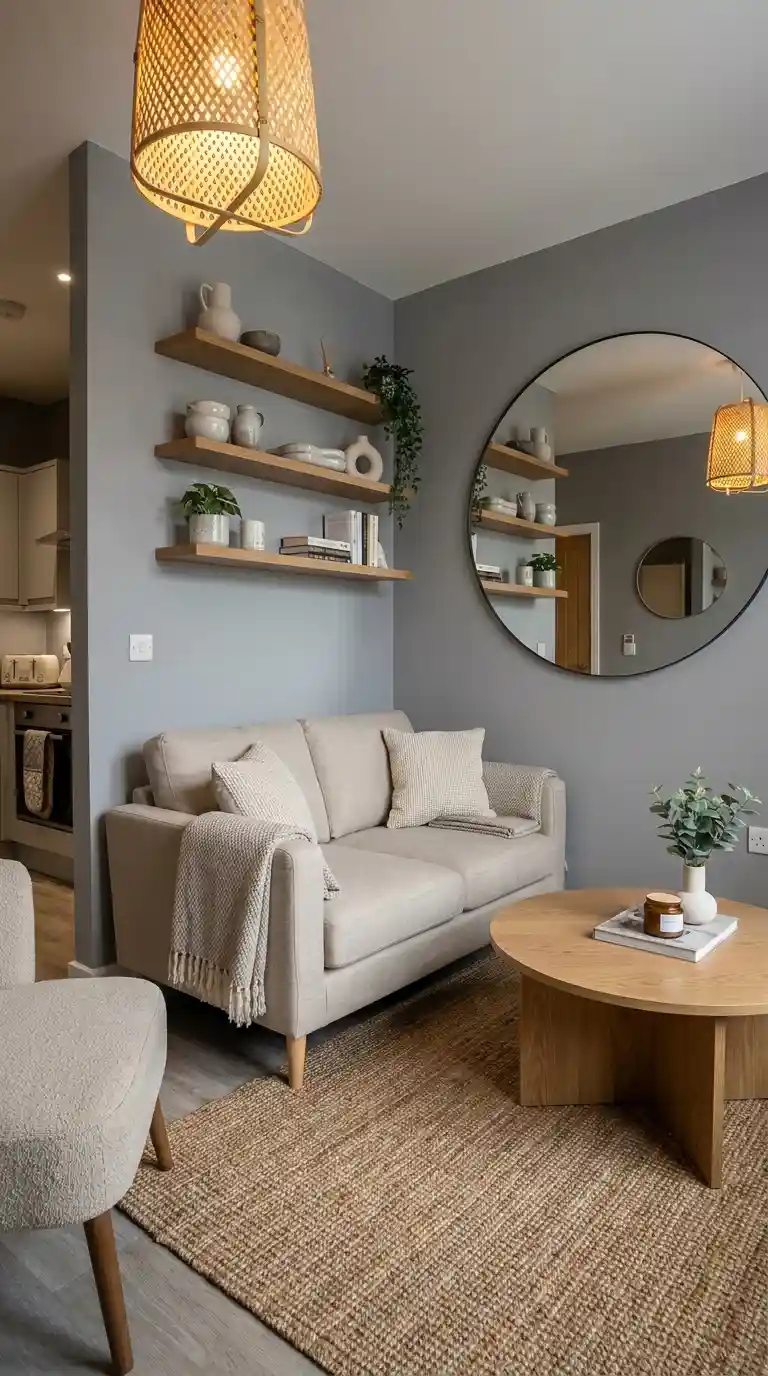
Designing a grey and beige lounge in a smaller space is entirely achievable and in fact the neutral palette of grey and beige is one of the best foundations for a small room. The key is to keep things light, choose furniture that is scaled appropriately, and be deliberate about every choice you make so that nothing clutters or shrinks the space visually.
Paint the walls in a light warm grey or pale beige rather than going for the deeper, more saturated versions of these colors. Lighter shades reflect more light and make walls appear to recede, which creates the impression of a larger room. Keeping the ceiling in a very pale ivory or white further reinforces this effect by drawing the eye upward.
In a small grey and beige lounge, multi-functional furniture is your best friend. A storage ottoman that doubles as a coffee table, a sofa with built-in storage underneath, or a slim bookcase that uses vertical space all help you keep the room organized and uncluttered without sacrificing comfort. Wall-mounted shelving rather than floor-standing units keeps the floor area open and unobstructed.
Seasonal Updates to Keep Your Grey and Beige Lounge Fresh
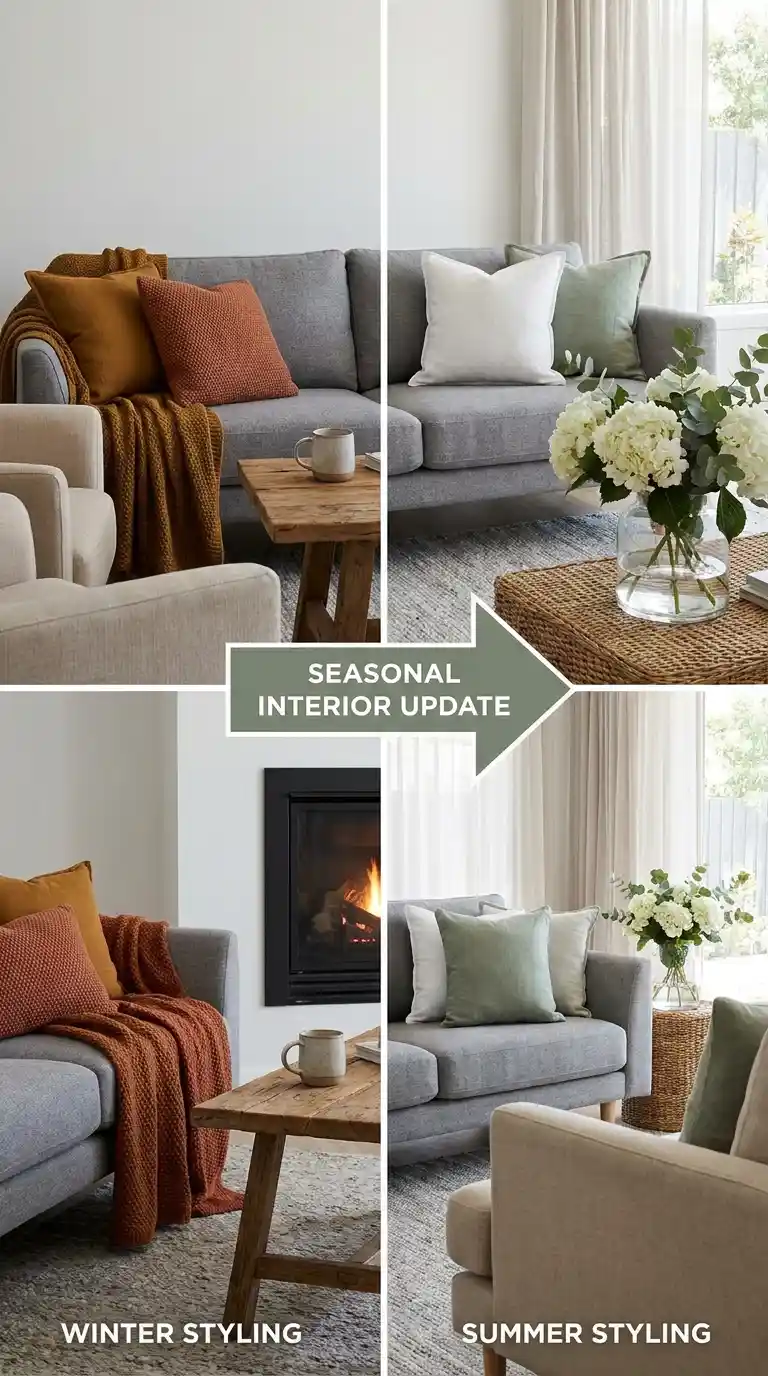
One of the underrated advantages of a grey and beige lounge is how easy it is to update seasonally without any major expenditure. Because the palette is neutral and non-specific to any season, you can shift the mood of the room through cushions, throws, and small accessories to reflect the time of year.
In autumn and winter, bring in deeper, warmer tones through your textiles. Rust and terracotta cushions, dark honey-toned throws, and ochre accents all sit naturally within a grey and beige lounge while adding a coziness appropriate for colder months. Add more candles, bring in a cashmere or mohair throw, and switch lighter curtains for heavier linen or velvet panels to change the mood completely.
For spring and summer, lighten up the textiles in your grey and beige lounge. Fresh white and ivory cushions, lighter throws in pale sage or dusty blue, and fresh flowers in simple ceramic vases instantly lift the room. These small changes cost relatively little but have a significant impact on how the room feels seasonally, keeping the grey and beige lounge from ever feeling stale or repetitive.
Common Mistakes to Avoid in a Grey and Beige Lounge
Even with such a forgiving palette, there are a few pitfalls worth knowing about when designing a grey and beige lounge. Being aware of these in advance will save you time, money, and the frustration of a room that does not quite come together despite your best efforts.
The most common mistake is choosing grey and beige shades that are in different temperature families. A cool blue-grey paired with a warm golden beige will fight each other visually rather than creating harmony. Always check undertones before committing to any significant purchase.
Another frequent issue is insufficient contrast. A grey and beige lounge where every element is in the same mid-toned range of grey and beige can end up feeling muddy and undefined. You need some variation in depth, from a darker anchor element to a lighter, almost white highlight somewhere in the room. This contrast is what gives the palette dimensionality and keeps the room from looking flat.
Over-Accessorizing and Under-Accessorizing
Both of these extremes cause problems in a grey and beige lounge. Too many accessories in a neutral room create visual noise that overwhelms the calming quality you are trying to achieve. Under-accessorizing, on the other hand, leaves the room feeling incomplete and unlived in. The sweet spot is selective curation, where every piece has a clear reason for being there.
A practical approach is to style the room and then remove one-third of the accessories. This exercise almost always improves the result. When you remove pieces, what is left tends to look more intentional and the remaining items get more space to breathe and be seen properly. In a grey and beige lounge especially, space is part of the design.
Similarly, avoid matching everything too precisely. A grey and beige lounge where the cushions perfectly match the rug which perfectly matches the curtains will look more like a hotel than a home. Deliberate slight variations in tone, texture, and material create the layered, organic quality that makes a room feel genuinely designed rather than simply coordinated.
Budget-Friendly Ways to Achieve a Grey and Beige Lounge Look
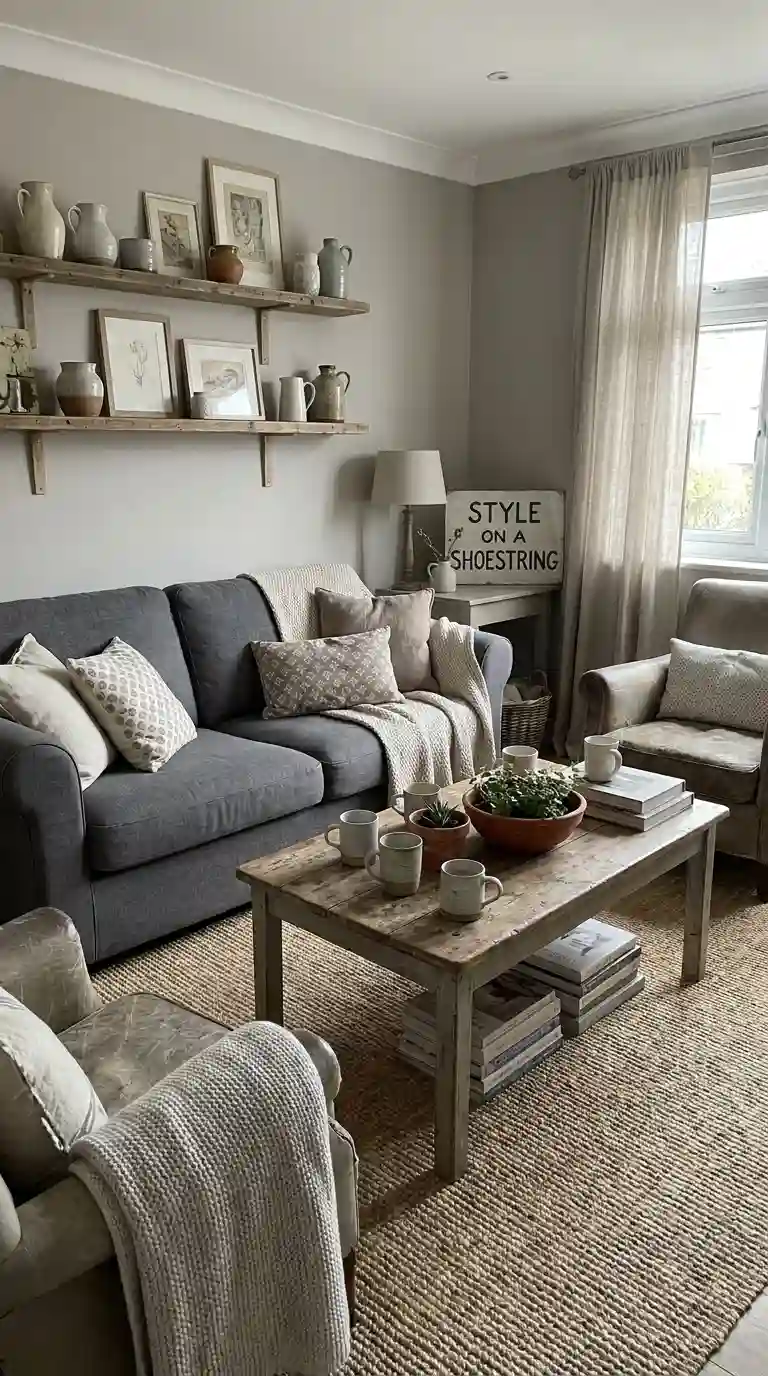
You do not need a large budget to create a beautiful grey and beige lounge. The palette itself is quite economical because it is so widely available across every price point. The key is knowing where to invest and where to save.
Invest in the sofa and the rug. These are the two pieces that will be most used, most seen, and most influential on the overall feel of the room. A well-made sofa in a quality grey or beige fabric will serve you for many years and elevate every other element around it. Similarly a good quality rug in the right size will anchor the room and make the space feel complete and cohesive.
Save on accessories, smaller textiles, and decorative objects. High street stores, vintage markets, and online platforms offer excellent options for cushions, throws, ceramics, and artwork at a fraction of the cost of designer equivalents. In a grey and beige lounge, the neutral palette actually makes budget pieces look more expensive than they are because the backdrop is so refined.
Grey and Beige Lounge Inspiration: Real Home Examples
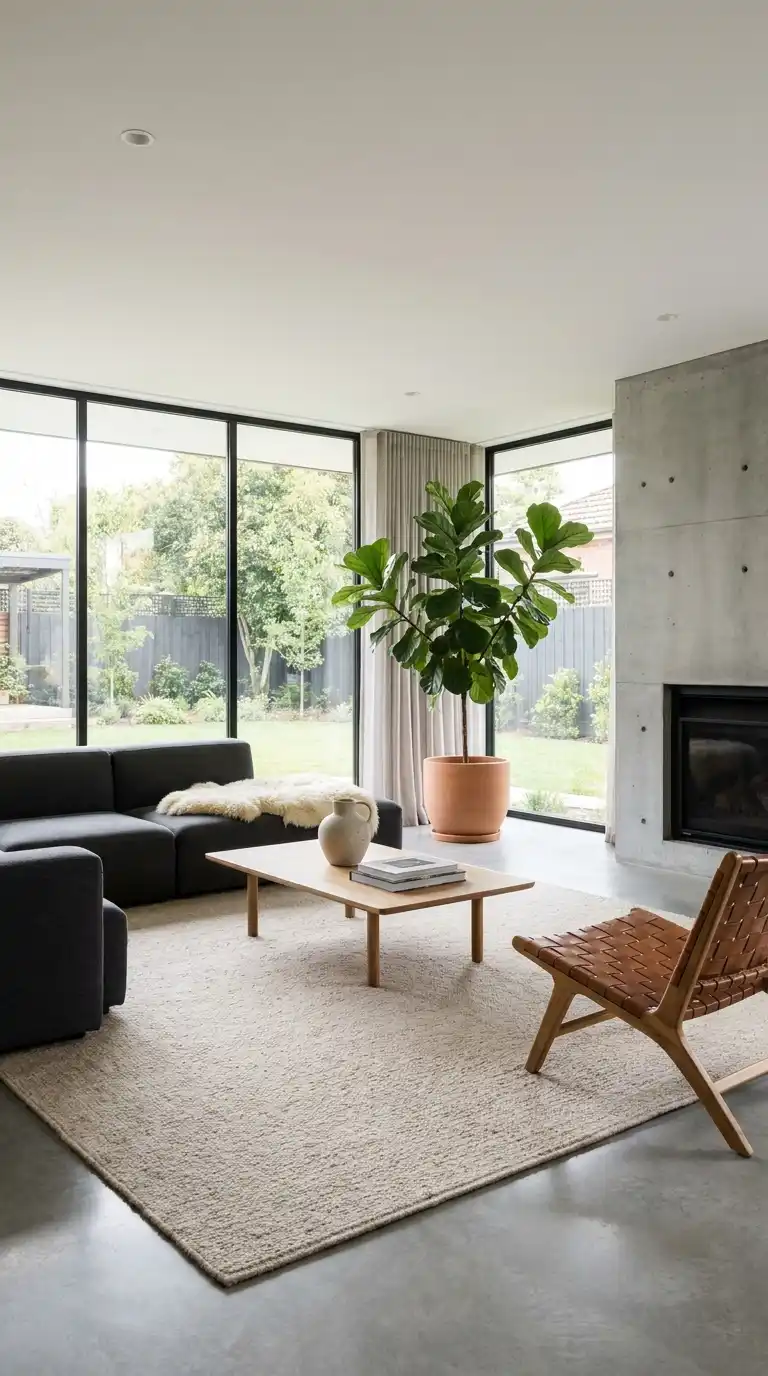
Sometimes the best way to understand how a design concept works is to see it in practice in real homes rather than perfect editorial shoots. The grey and beige lounge translates beautifully across a range of real-world settings, from Victorian terraces to modern new builds, from compact urban flats to sprawling family homes.
In a Victorian terraced house, a grey and beige lounge often incorporates the original architectural features as part of the palette story. White-painted cornicing against a warm grey wall, original wooden floorboards stained in a light honey tone, and a marble fireplace all contribute to a grey and beige lounge that feels both period-appropriate and completely current.
In a modern open-plan home, the grey and beige lounge tends to be more minimal and architecturally clean. Concrete floors, expansive windows, and clean-lined furniture work with the palette to create a sense of calm spaciousness. The challenge in these spaces is to add enough softness and warmth through textiles and plants to prevent the grey and beige lounge from feeling cold despite the generous proportions.
Final Thoughts
After everything we have covered, I hope you can see why the grey and beige lounge is such an enduring favourite among both professional designers and people who simply love their homes. It is a palette that rewards thoughtfulness. The more deliberately you approach your choices of shade, texture, material, and light, the more beautiful and personal the result becomes.
A grey and beige lounge is not the easy option. It is the sophisticated option. It requires you to work with subtlety and nuance rather than relying on bold color to make a statement. When you get it right, the result is a room that feels timeless, genuinely beautiful, and completely yours. It is the kind of room where people walk in and immediately feel at home, which is ultimately what great interior design is always trying to achieve.
Start with your palette, test your colors, invest in the key pieces, layer your textiles, get your lighting right, and do not be afraid to edit. The grey and beige lounge you have been imagining is well within reach, and the journey to creating it is half the pleasure.
Frequently Asked Questions
Q1. What colors go well with a grey and beige lounge?
A grey and beige lounge pairs beautifully with white, ivory, warm black, brass, natural wood tones, sage green, and dusty blush. These colors complement the neutral palette without overwhelming it. The best accent colors stay within the warm and earthy family, which maintains the calming, sophisticated character that a grey and beige lounge is known for.
Q2. Is grey and beige a good combination for a lounge?
Yes, grey and beige is one of the most successful color combinations for a lounge. Grey brings sophistication and coolness while beige adds warmth and comfort. Together they create a balanced, timeless palette that works with almost every furniture style, material, and lighting condition. It is the go-to combination for interior designers looking to create a space that is both elegant and livable.
Q3. What shade of grey works best in a beige lounge?
Warm greys with taupe, brown, or slightly purple undertones work best in a grey and beige lounge. Avoid cool blue-greys which can clash with the warmth of beige. Popular choices include Agreeable Gray by Sherwin Williams, Revere Pewter by Benjamin Moore, and Pebble Shore by Dulux. Always test paint samples in your actual room before committing.
Q4. How do I add color to a grey and beige lounge without ruining the look?
The safest way to add color to a grey and beige lounge is through accessories that are easy to change. Use cushions, throws, and vases in muted earthy tones like terracotta, sage green, dusty blue, or warm rust. Keep the main elements of the room in grey and beige and let the accessories carry the color. This approach allows you to update the room seasonally without any major expense or commitment.
Q5. What type of sofa suits a grey and beige lounge?
A sofa in either grey or beige works beautifully as the main piece in a grey and beige lounge. Linen, velvet, boucle, and cotton are all excellent fabric choices depending on the style direction. For a relaxed look, choose a linen sofa in a sandy beige tone. For a more polished feel, a deep grey velvet sofa makes a strong anchor piece. The key is to choose a quality fabric that photographs well and wears over time.
Q6. What flooring looks best in a grey and beige lounge?
Light hardwood floors in warm blonde or honey tones are the most complementary choice for a grey and beige lounge. They add warmth underfoot and connect the earthy quality of beige with the cooler tone of grey. Natural stone, pale travertine, and light-toned laminate are also good options. Dark floors work too but require more attention to keeping the upper half of the room light and airy to prevent the space from feeling heavy.
Q7. Can I use dark grey in a beige lounge?
Yes, dark grey can work very effectively in a grey and beige lounge as an accent or feature element. A dark grey feature wall, dark grey furniture, or dark grey accessories all create a striking contrast against warm beige that feels sophisticated and contemporary. The key is to balance the dark grey with enough warm beige and lighter tones elsewhere in the room to prevent the space from feeling closed in or heavy.
Q8. How do I make a grey and beige lounge feel cozy?
To make a grey and beige lounge feel cozy, focus on layering soft textures, warm lighting, and natural materials. Add chunky knit throws, velvet and linen cushions, and a plush area rug. Use warm white bulbs in table lamps and floor lamps rather than overhead lighting. Bring in plants for life and warmth. Add candles for fragrance and flickering warm light. These layers are what transform a stylish grey and beige lounge into a genuinely welcoming space.
Q9. What wall art looks good in a grey and beige lounge?
Art in a grey and beige lounge has great freedom. Abstract prints in earthy and neutral tones, black and white photography, nature-inspired botanical prints, and simple line drawings all work beautifully. Choose pieces that you genuinely love and that have some personal meaning. In a neutral palette like grey and beige, art becomes one of the primary vehicles for expressing personality and taste, so do not be afraid to choose something bold or unexpected.
Q10. How do I stop my grey and beige lounge from looking boring?
The secret to preventing a grey and beige lounge from looking boring is variation in texture, depth, and material rather than variation in color. Mix smooth velvet with rough natural fiber, matte finishes with slightly shiny ones, and flat surfaces with dimensional textural pieces. Introduce pattern subtly through a geometric rug or a tone-on-tone cushion. Add natural elements like plants, wood, and stone. Layer your lighting. A grey and beige lounge should feel rich and layered, not flat and uniform.
Q11. What plants work best in a grey and beige lounge?
Plants are one of the most effective accessories in a grey and beige lounge. Large statement plants like fiddle leaf figs, monstera deliciosa, and olive trees in ceramic or terracotta pots add vertical interest and genuine life to the room. Trailing plants like pothos or philodendron look beautiful on shelves and side tables. Smaller succulents and air plants add organic texture to coffee table arrangements. The green of foliage creates a natural and beautiful contrast with grey and beige tones.
Q12. Should curtains match the walls in a grey and beige lounge?
Curtains do not need to match the walls exactly in a grey and beige lounge, but they should sit within the same tonal family. Curtains in a slightly lighter or slightly richer tone than the walls create a gentle layering effect that adds depth without breaking the palette. Natural linen curtains are one of the most versatile options because the texture and organic quality of the fabric works beautifully in almost any grey and beige lounge regardless of the specific shades chosen