
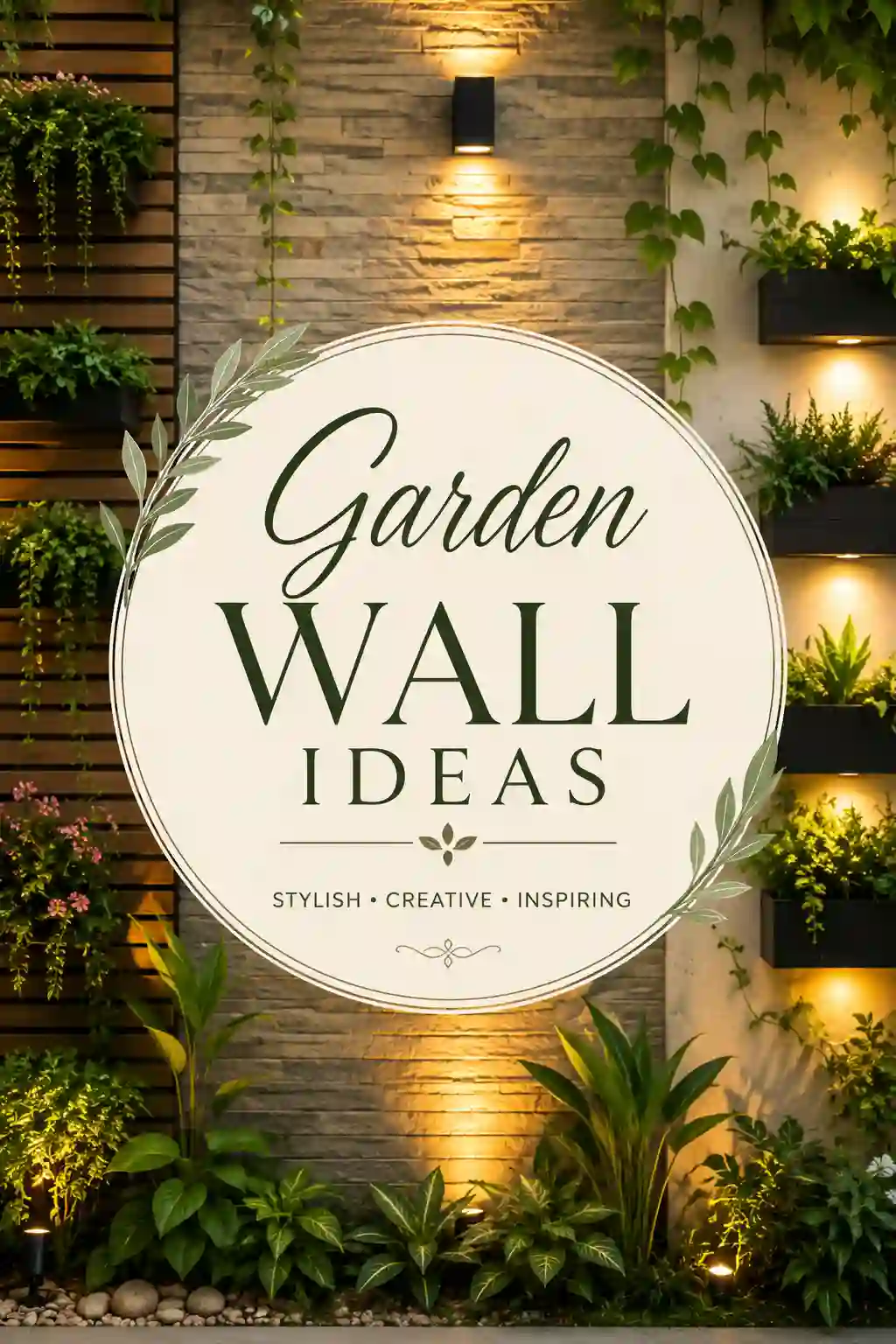
There is something about a well-built garden wall that makes the whole outdoor space feel finished. Not just tidier, not just more structured, but genuinely complete, like every other element in the garden finally has something to lean against. I became obsessed with garden wall ideas a few years back when I inherited a backyard that was nothing but flat grass and vague potential. The walls I built over the following two years changed everything about how that space looked, felt, and functioned.
Garden wall ideas are one of those topics that seem straightforward at first glance but open up into a genuinely complex and creative world once you start exploring. There are walls for privacy, walls for structure, walls for decoration, walls for retaining soil on slopes, walls that become garden features in their own right. The materials alone are enough to fill a book, and the styles range from formal and classical to wild and naturalistic.
This article pulls together the best garden wall ideas I have come across through personal experience, professional landscaping research, and hundreds of hours looking at real gardens. Whether you have a compact urban courtyard or a sprawling country garden, whether your budget is tight or generous, whether you want something you can build yourself or something that calls for a professional, there is a garden wall idea here for you. Let us get into it.
Also Read : Stunning Garden Curbing Ideas That Actually Work
Why Garden Wall Ideas Are Worth Thinking About Seriously
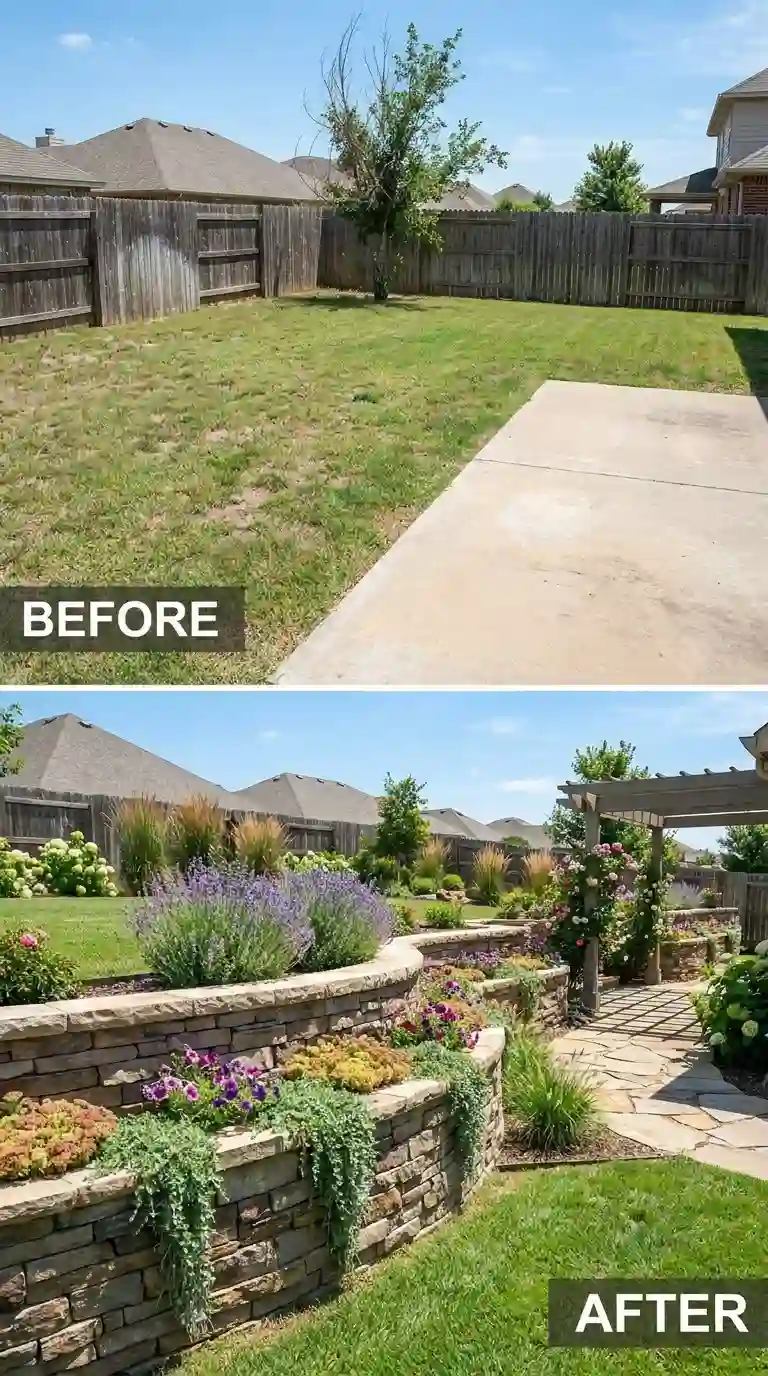
Before jumping into specific garden wall ideas, it is worth taking a moment to think about why walls matter so much in outdoor design. A garden wall does not just mark a boundary. It creates privacy, reduces noise, defines zones within a larger space, provides structure for climbing plants, retains soil on slopes, and adds genuine architectural character to what might otherwise be a forgettable yard.
The best garden wall ideas do all of these things at once while also looking beautiful. A well-designed garden wall becomes a backdrop for everything else in the garden, making your plants, paths, and furniture look more considered and intentional. It anchors the whole composition.
From a practical standpoint, garden walls can also increase property value. Buyers consistently respond positively to well-built outdoor structures, and a quality garden wall signals that the property has been cared for and thoughtfully improved. If you are on the fence about whether a wall project is worth the investment, the answer for most gardens is a confident yes.
The Best Materials for Garden Wall Ideas
Natural Stone Garden Wall Ideas
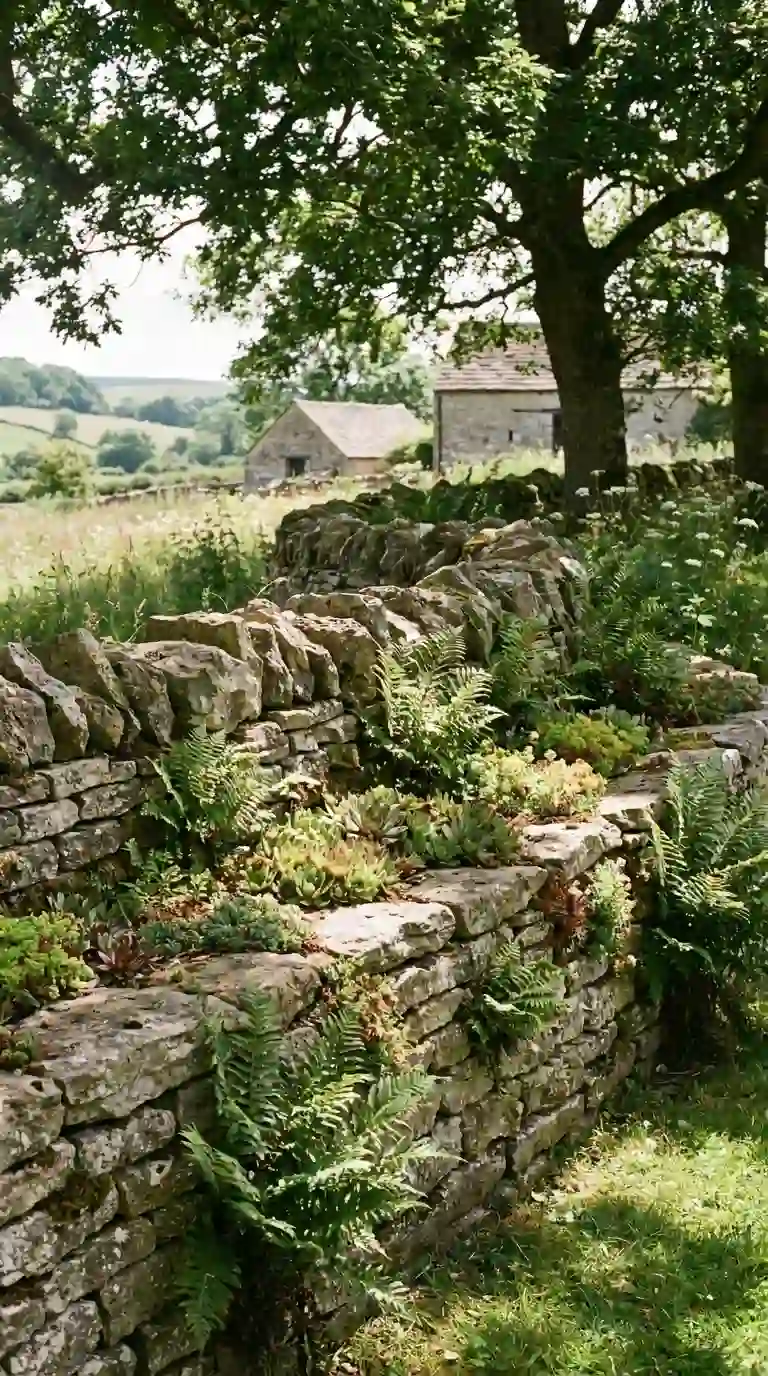
If I had to pick one material that appears most consistently in the best garden wall ideas I have ever seen, it would be natural stone. There is simply nothing else that has the same combination of beauty, durability, and authenticity. Stone walls look like they belong in the landscape in a way that manufactured materials never quite achieve. They feel permanent, grounded, and genuinely beautiful.
The most popular types of stone for garden wall ideas include limestone, sandstone, granite, slate, and fieldstone. Each has a different character. Limestone is warm and creamy, beautifully soft in colour, and weathers to a gorgeous patina over time. Sandstone ranges from pale gold to deep russet and has a layered, stratified texture that catches light beautifully. Granite is cooler and harder-edged, works brilliantly in contemporary gardens. Slate splits into thin, dramatic layers and has a moody, sophisticated quality.
Dry stone walls, where the stones are stacked without mortar, are one of the most iconic of all garden wall ideas. They require skill and patience to build well, but the result is a wall that looks genuinely ancient and integrates into the landscape with a naturalness that no mortared wall quite matches. Dry stone walls also provide habitat for wildlife, with gaps between stones becoming homes for insects, lizards, and small plants.
Also Read : 75 Brilliant Garden Fencing Ideas That Transform Your Outdoor Space Into a Private Paradise
Brick Garden Wall Ideas
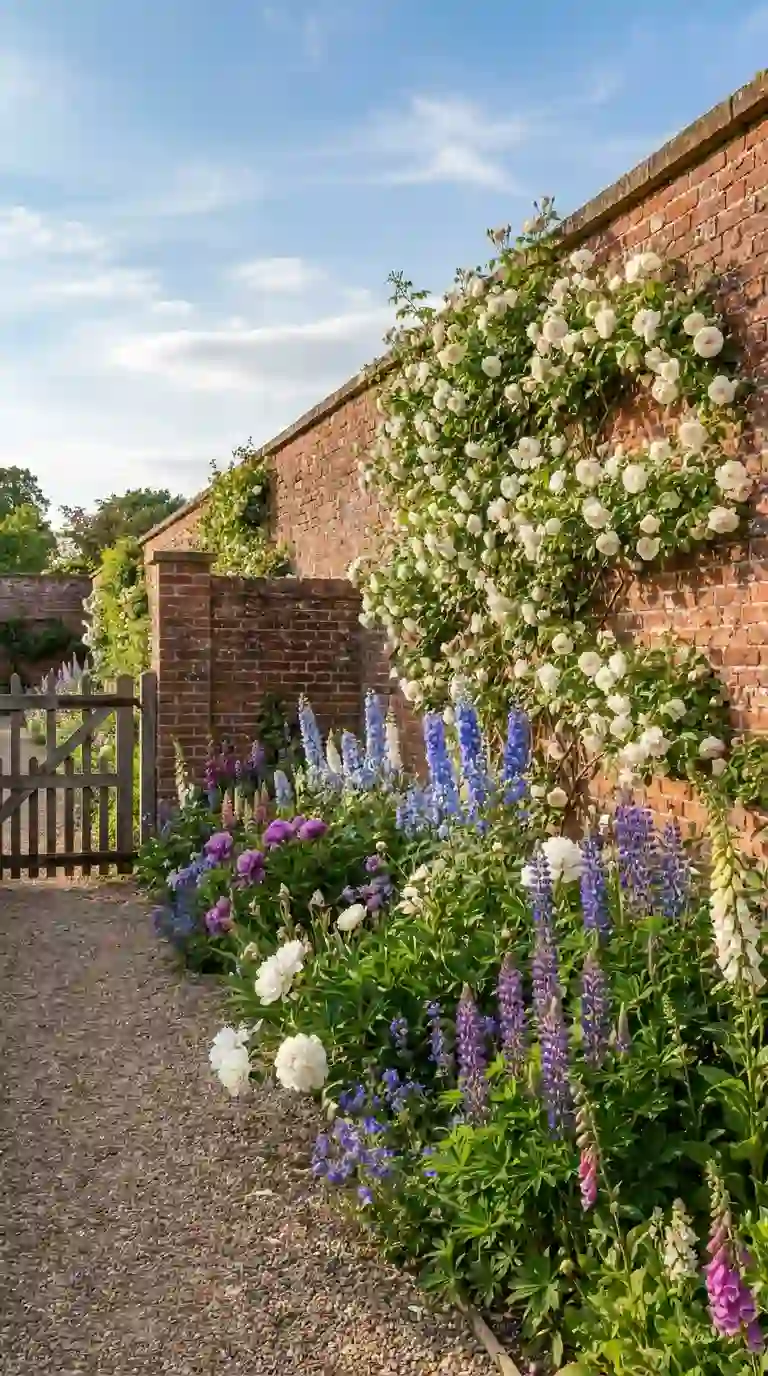
Brick is one of the most versatile and enduringly popular of all garden wall ideas materials. It is warm, familiar, and works across an enormous range of garden styles from formal Victorian to relaxed cottage to surprisingly contemporary. The key is in how you use it. The same brick laid in different bonds, different heights, or combined with different capping materials can produce completely different results.
Traditional red brick in a classic stretcher bond is perfect for walled kitchen gardens, formal rose gardens, and period property settings. Reclaimed brick, with its uneven faces, varying colours, and weathered character, is one of the best garden wall ideas for gardens that want an established, grown-in feel. Old brick from demolished buildings often has a richness and texture that new brick simply cannot replicate.
Contemporary garden wall ideas using brick tend to favour smooth, uniform engineering brick in darker shades, laid in more unusual bonds like herringbone or basket weave to add visual interest. Whitewashed or limewashed brick walls are another lovely option, creating a bright, Mediterranean feeling that works particularly well in south-facing gardens with warm climates.
Timber and Sleeper Garden Wall Ideas
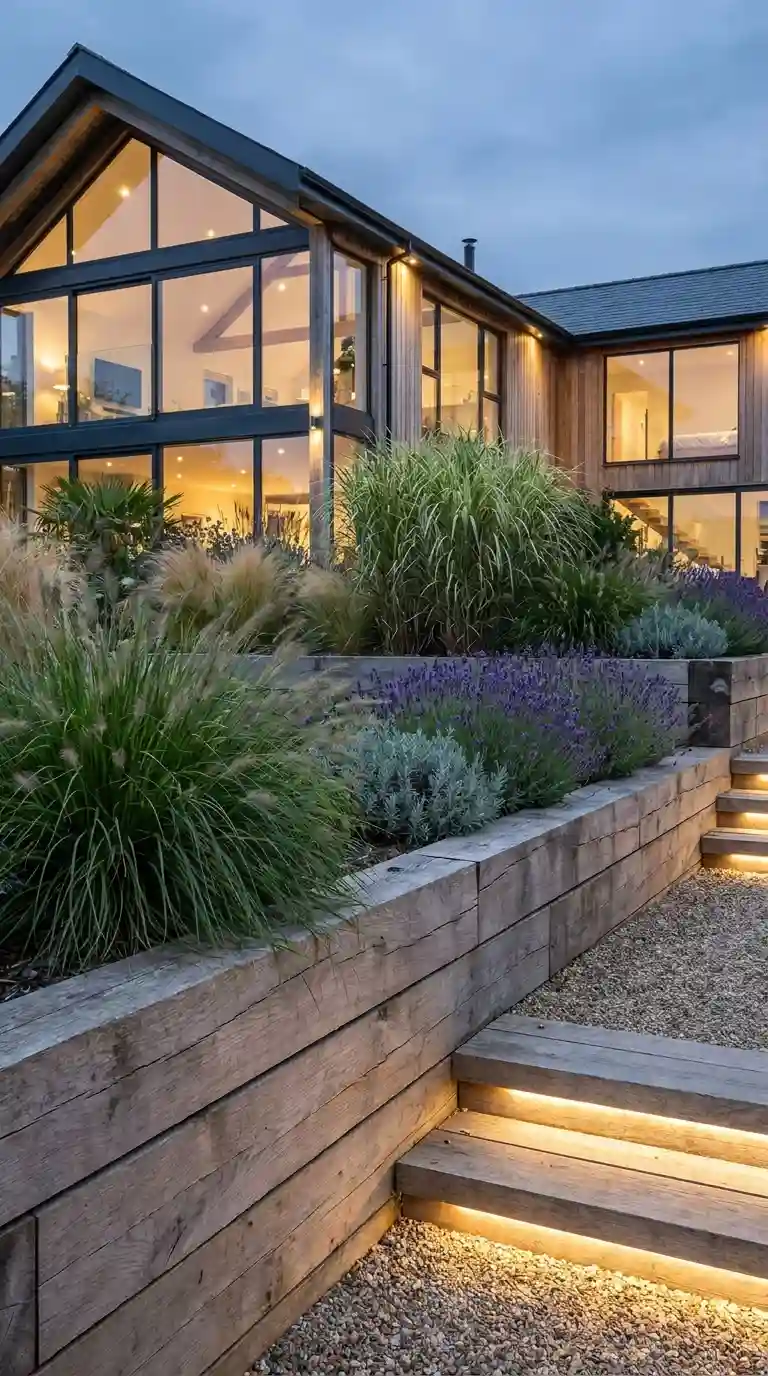
Timber brings a warmth and naturalism to garden wall ideas that stone and brick cannot quite match. Landscape sleepers, the thick rectangular timber beams originally used in railway construction, have become enormously popular for garden walls and raised bed construction over the last decade. Their substantial size and weight make them easy to stack into low walls without mortar, and they look fantastic in gardens that aim for a naturalistic, relaxed feel.
New hardwood sleepers are the premium option, and oak is particularly popular because it weathers to a beautiful silver-grey over time while remaining structurally sound for decades. Reclaimed sleepers have enormous character but need to be checked carefully since older railway sleepers were often treated with creosote, which can leach into soil and is not suitable near edible plants.
Beyond sleepers, sawn timber planks, split log edging, woven willow, and bamboo screening can all be used to create garden wall ideas with a natural, organic character. These softer materials work particularly well in woodland gardens, naturalistic planting schemes, and children’s play areas where the warmth of wood feels especially welcoming.
Also Read : 35 Brilliant Raised Garden Bed Ideas That Actually Work in Real Life
Gabion Garden Wall Ideas
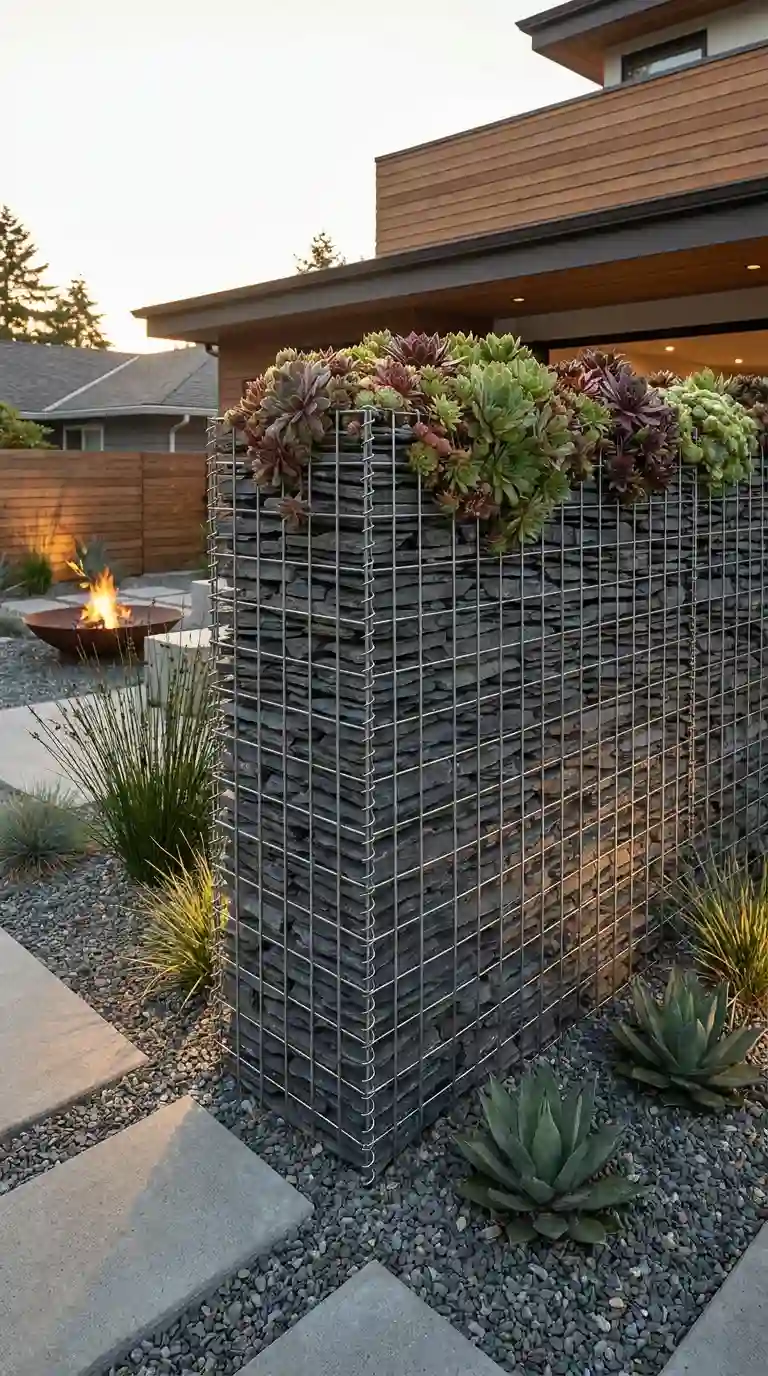
Gabions are wire mesh cages filled with stone, and they have become one of the most genuinely interesting garden wall ideas of the last two decades. Originally used in civil engineering for erosion control, gabions were adopted by landscape designers for their industrial-meets-natural aesthetic, their structural performance on slopes, and their surprisingly versatile appearance.
The beauty of gabion garden wall ideas is that the choice of fill material completely changes the look. Fill with chunky cobblestones for a traditional appearance. Fill with smooth slate pieces for something sleeker and more contemporary. Fill with recycled glass for something truly dramatic and unusual. Fill with mixed stone for a naturalistic effect. The wire cage itself becomes part of the design, and the textural play between the metal and the stone is genuinely compelling.
From a practical standpoint, gabion garden wall ideas are also very good at retaining soil on slopes because their weight and permeability mean they drain well and do not suffer from hydrostatic pressure behind them the way solid walls can. They are also relatively DIY-friendly, since the cages can be bought flat-packed and assembled on site without specialist tools.
Rendered and Painted Concrete Garden Wall Ideas
Rendered walls, meaning walls finished with a smooth coat of render or plaster that can then be painted, are the workhorses of contemporary garden design. They are popular garden wall ideas in modern architectural settings because they allow complete colour control and create clean, precise surfaces that are the perfect backdrop for bold planting or architectural garden furniture.
The base structure of a rendered wall is usually concrete block or dense concrete, which is utilitarian-looking on its own but transforms completely under a smooth render coat. Colour choices are essentially unlimited, from crisp white and warm off-white to charcoal, terracotta, sage green, and dramatic black. Some designers render walls in colours that deliberately echo or contrast with the planting, creating a painterly effect that is genuinely stunning.
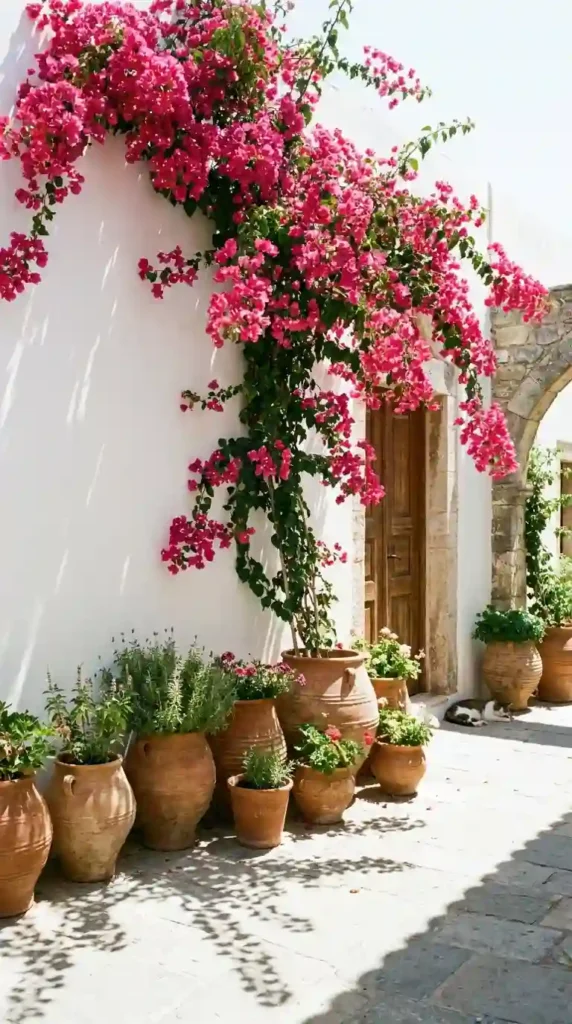
Rendered garden wall ideas are particularly popular in Mediterranean and tropical garden styles where walls are thick, smooth, and brilliantly white or terracotta, serving as the backdrop for bougainvillea, agave, and citrus. They also work beautifully in minimalist contemporary gardens where the clean surface acts as a neutral canvas for carefully chosen plants and materials.
Creative Garden Wall Ideas for Privacy and Screening
Privacy is one of the most common motivations for exploring garden wall ideas, and understandably so. As housing density increases, gardens are getting closer together and the need for genuine visual screening has never been greater. The good news is that garden wall ideas for privacy have evolved enormously, and the options available today are far more interesting than a plain fence or bare brick wall.
The most effective garden wall ideas for privacy are those that create genuine visual barriers without feeling oppressive or fortress-like. The trick is to use height, texture, and planting together so the wall feels like a generous garden feature rather than a defensive structure. A tall rendered wall covered in climbing plants, for example, screens just as effectively as a bare wall but feels completely different to look at from inside the garden.
Height is the key variable for privacy-focused garden wall ideas. Most residential garden walls max out at around 1.8 to 2 metres, which is roughly eye height for most adults and provides good screening without requiring planning permission in many regions. Above this height, local regulations often apply, so it is worth checking before you build.
Also Read : Mini Fairy Garden Ideas: 40 Small Fairy Gardens for Tiny Spaces
Living Garden Wall Ideas
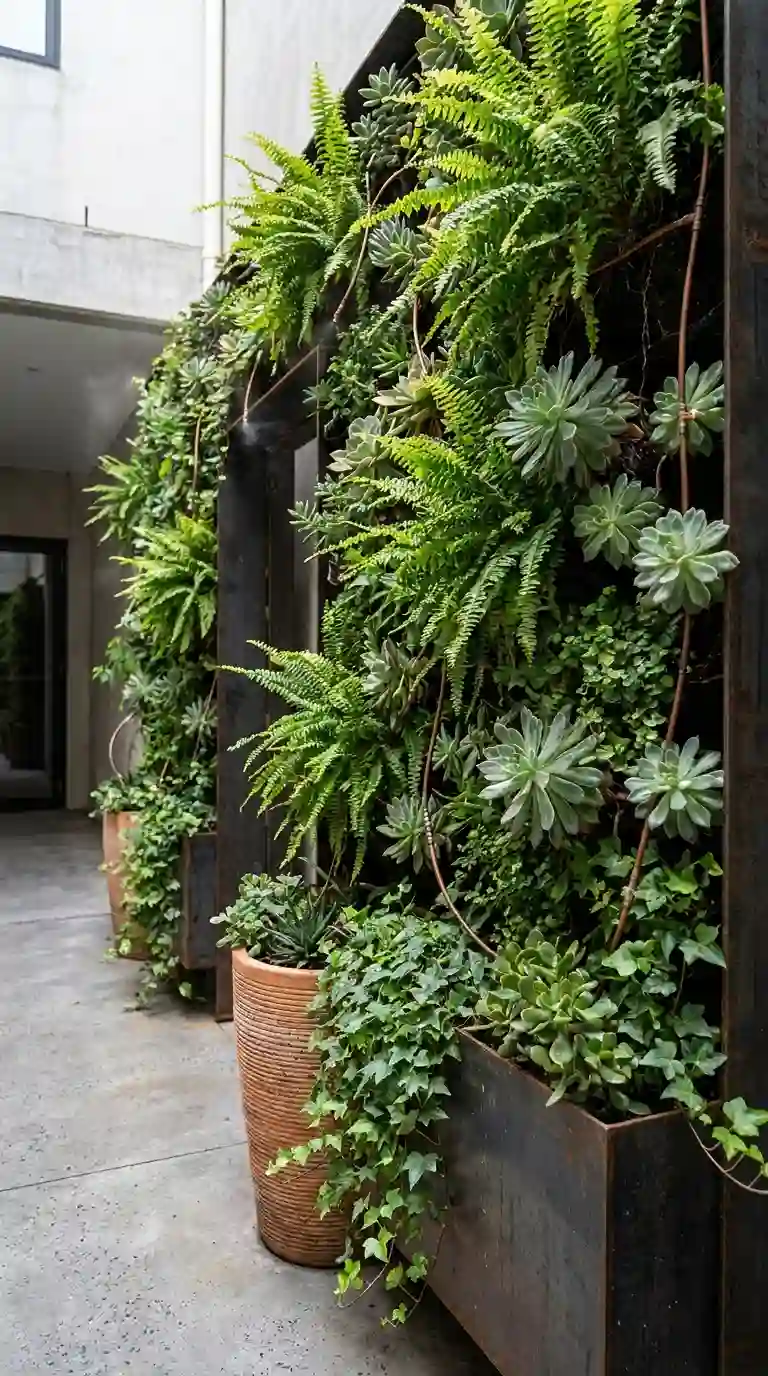
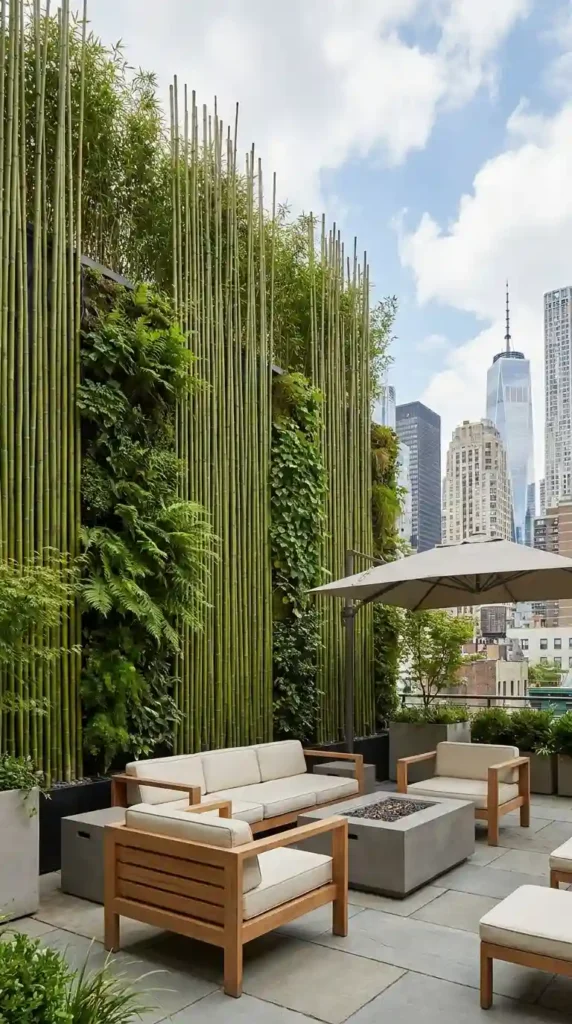
Living walls, also called green walls or vertical gardens, are one of the most exciting of all garden wall ideas for urban spaces where ground-level planting space is limited. A living wall turns a vertical surface into a densely planted garden, with plants growing from pockets, trays, or hydroponic systems attached to a wall structure.
Living garden wall ideas work on any scale, from a small freestanding panel that acts as a privacy screen to an entire building facade covered in plant life. The visual impact is extraordinary. A well-established living wall covered in ferns, sedums, and grasses moves gently in the breeze, changes with the seasons, and provides habitat for insects and birds in a way that no built wall ever can.
Maintenance is the honest consideration with living garden wall ideas. Plants in vertical systems dry out more quickly than those in the ground and may need regular watering via built-in irrigation systems. Choosing the right plants for your specific light conditions is critical. In shade, ferns, hostas, and ivy thrive. In sun, sedums, sempervivums, and herbs do well. A poorly matched plant selection leads to plant losses and a patchy appearance.
Trellis and Climbing Plant Garden Wall Ideas
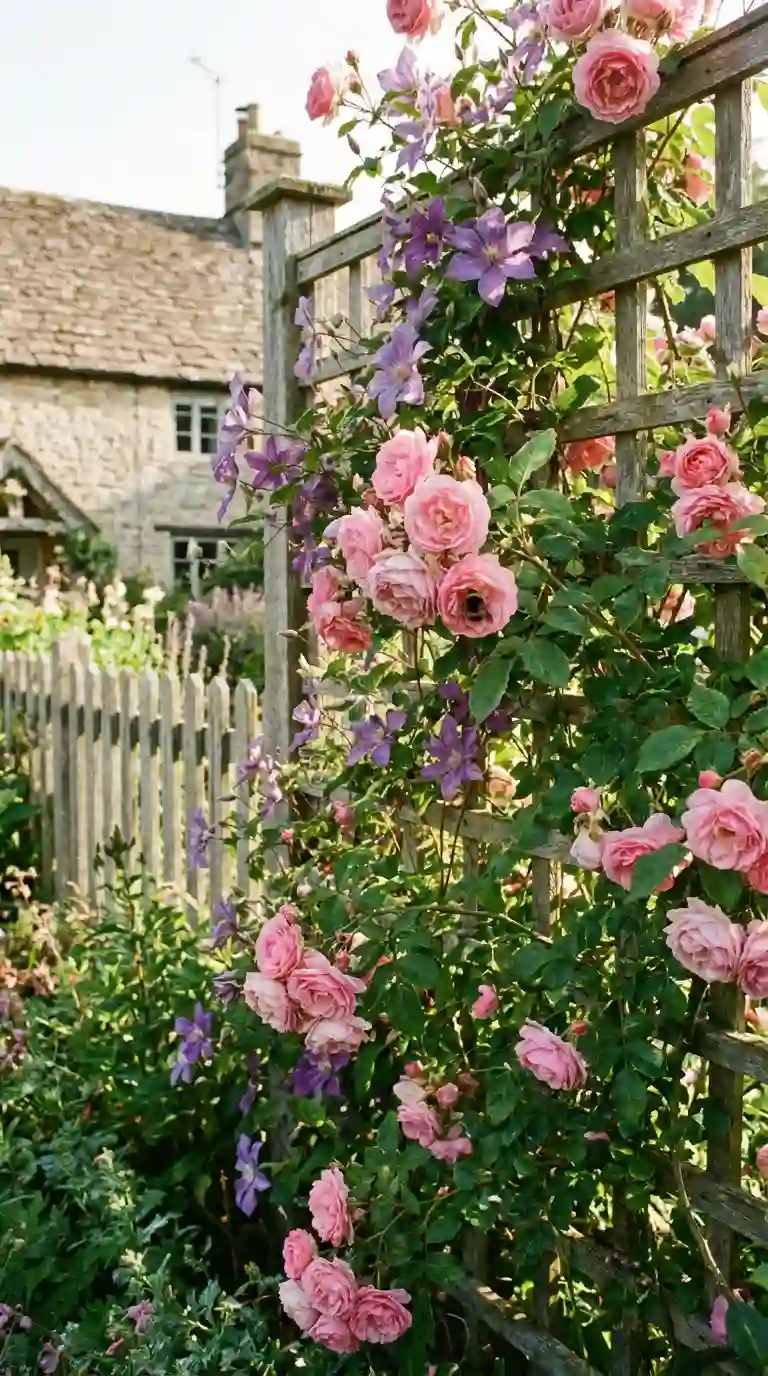
One of the most cost-effective and beautiful garden wall ideas is to combine a simple trellis or wire structure with carefully chosen climbing plants. The structure itself provides the framework, and the plants do the real work of creating privacy, beauty, and seasonal interest. This approach is particularly effective because it evolves over time as plants mature and fill in.
Climbing roses are among the most spectacular choices for this type of garden wall idea. They bring extraordinary flower power, wonderful fragrance, and winter structure from their woody stems. Clematis is another classic, available in dozens of varieties that bloom at different times from early spring to late autumn, meaning you can layer multiple varieties for nearly continuous colour.
For faster screening, evergreen climbers like Trachelospermum jasminoides, also known as star jasmine, or Lonicera japonica, which is Japanese honeysuckle, fill in more quickly and keep their leaves year-round. Wisteria is dramatic and beautiful but needs a very strong support structure and takes several years to establish properly before flowering.
Garden Wall Ideas for Sloping Gardens and Retaining
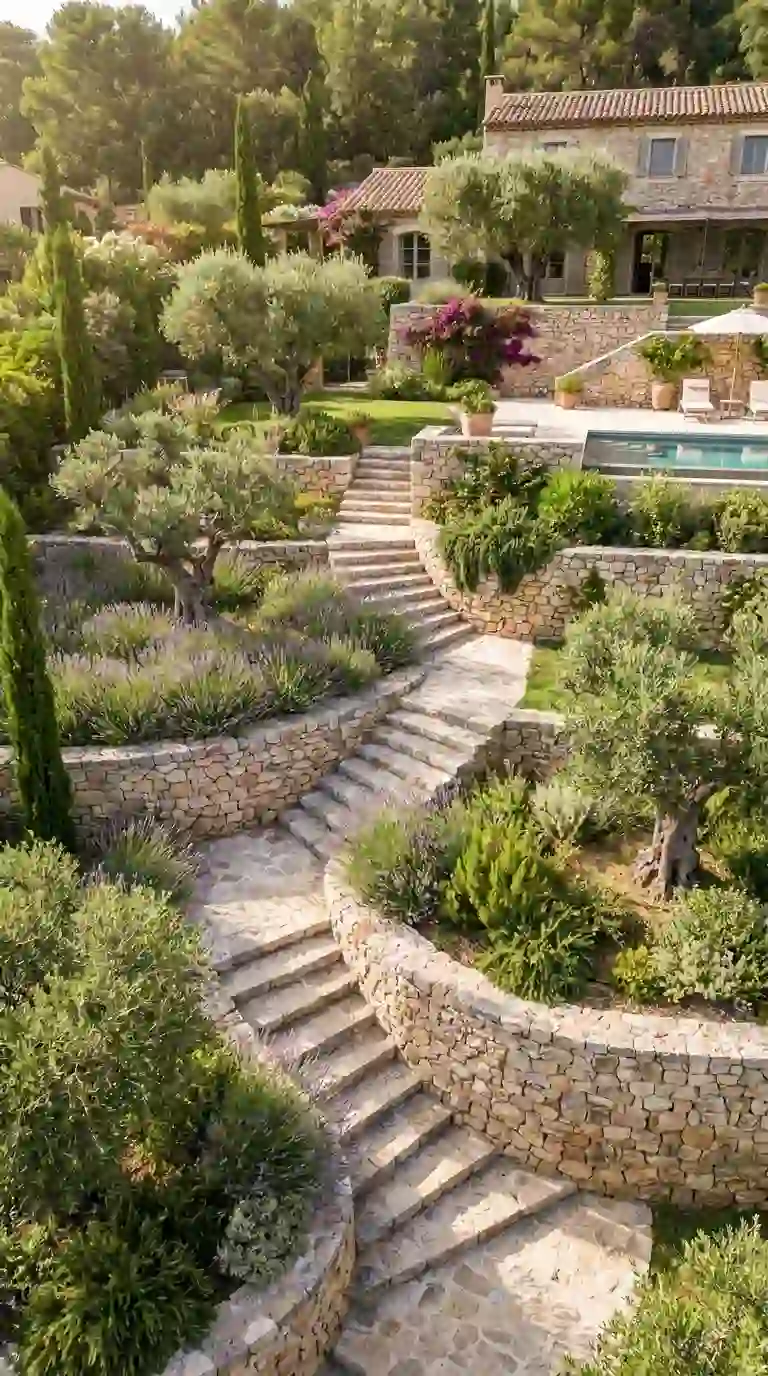
If your garden sits on a slope, retaining wall ideas become an essential consideration rather than just an aesthetic one. Without structural retaining walls, sloped soil erodes, slides, and makes the garden essentially unusable for planting or sitting. Good retaining garden wall ideas turn a difficult, frustrating slope into one of the most interesting and beautiful garden features you can have.
The principles of retaining wall construction are somewhat different from decorative wall building. A retaining wall is holding back the weight of soil and handling significant lateral pressure, which means the engineering matters. For walls under about 600mm in height, most DIY builders can handle the construction safely. For taller walls, engineering advice is strongly recommended to ensure the wall is properly founded, well-drained, and structurally sound.
The most beautiful retaining garden wall ideas use the slope to create terraces, essentially a series of level steps held by a sequence of walls. Each terrace becomes a planting bed, a lawn area, or a patio space. This approach maximizes usable garden area from a sloped site and creates extraordinary visual interest through the play of different levels.
Also Read : The Ultimate Guide to Low Lights Plant Indoor That Instantly Transform Your Home in 2026
Dry Stone Retaining Garden Wall Ideas
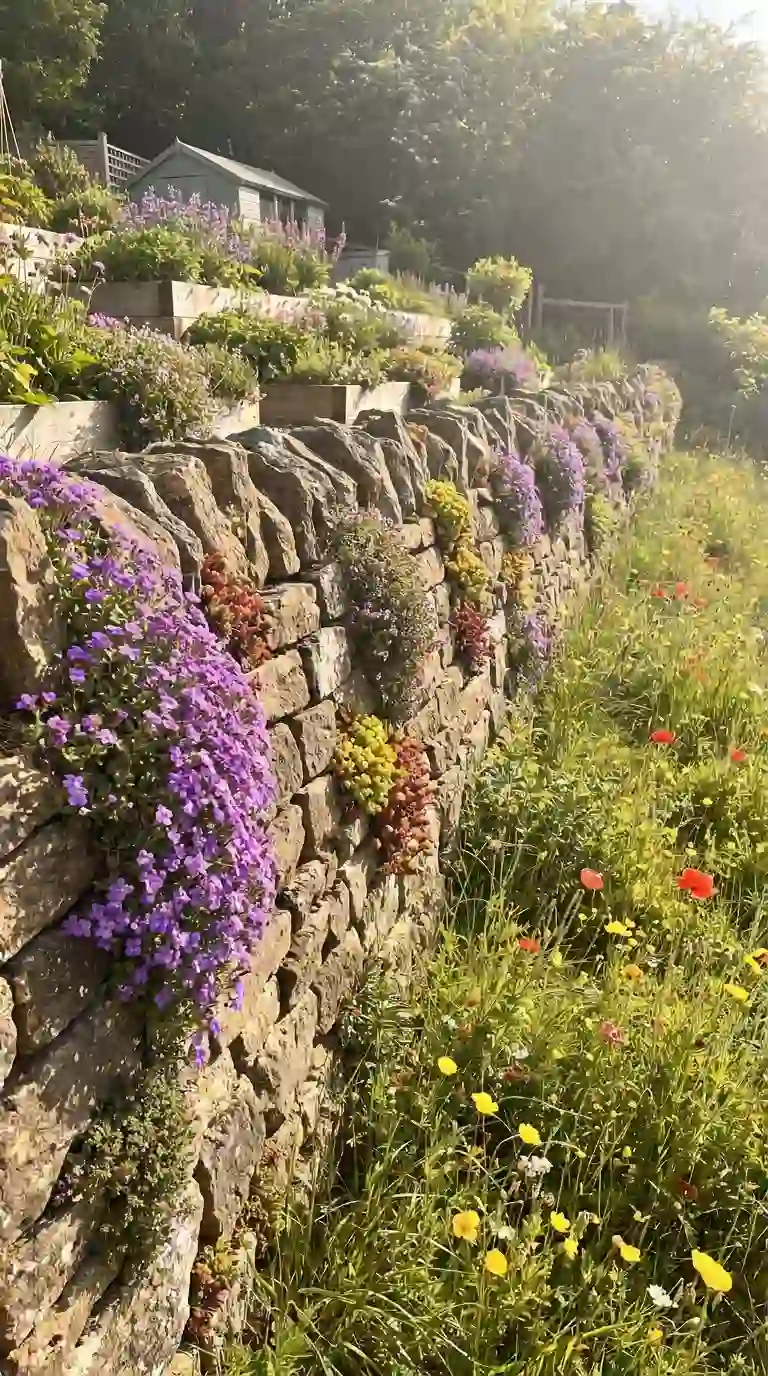
Dry stone retaining walls are among the finest garden wall ideas for slopes in natural settings. They are built without mortar, relying instead on the careful interlocking of stones, and this means they drain freely, which is a huge advantage for retaining walls. Water that builds up behind a solid wall creates enormous pressure and can cause failure. A dry stone wall lets the water through.
Building a dry stone retaining wall well requires developing a feel for the stones and understanding how they interlock. The basic principles are: start with your biggest, flattest stones as a foundation. Lean each course of stones slightly back into the slope. Cross joints with each new course so you are never stacking joints on top of each other. Use through stones, which are long stones that extend deep into the bank, at regular intervals for additional stability.
The planted dry stone retaining wall is one of the great garden wall ideas of the cottage and country garden tradition. Gaps between stones become homes for aubrietia, arabis, campanula, thyme, and countless other rock garden plants that thrive in the sharp drainage and warmth of the stone. The result is a wall that seems to bloom, an extraordinary effect that no other garden wall idea can replicate.
Timber Sleeper Retaining Garden Wall Ideas
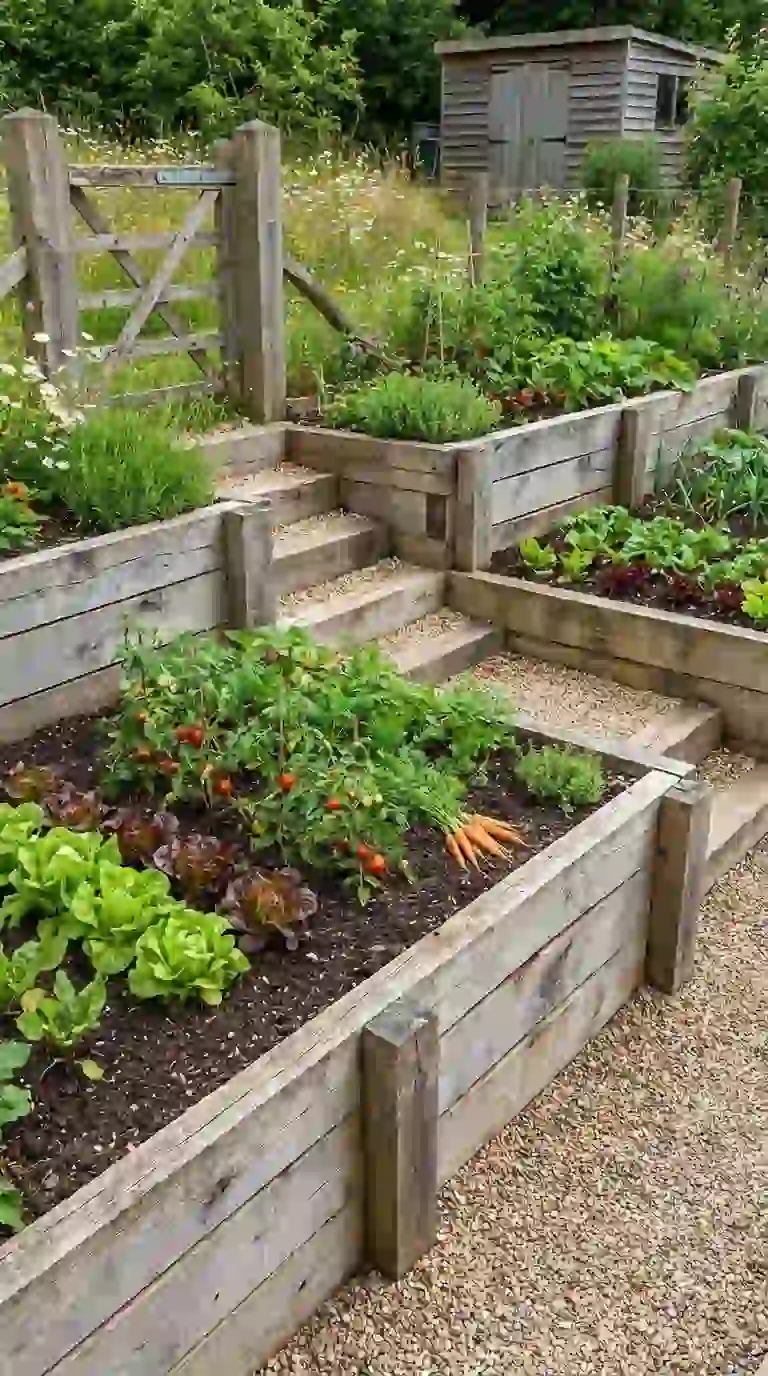
Timber sleeper retaining walls are one of the most popular DIY garden wall ideas for slopes, and it is easy to understand why. The sleepers are heavy and substantial enough to hold back significant amounts of soil, they look incredibly handsome in the garden, and with patience and some basic power tools, most capable DIY builders can install them.
The key to a successful timber sleeper retaining wall is good anchoring. Sleepers need to be fixed to vertical timber posts driven into the ground at regular intervals, or bolted together using long rebar stakes that pin them back into the slope. Without proper anchoring, the weight of soil will gradually push the wall forward over time, regardless of how heavy the sleepers are.
For garden wall ideas that use sleepers decoratively on flat ground, the approach is simpler since you are not dealing with lateral soil pressure. Sleepers stacked two or three high around a raised planting bed or along a garden edge create a handsome, substantial border that looks mature and intentional almost immediately after installation.
Garden Wall Ideas for Small Gardens and Courtyards
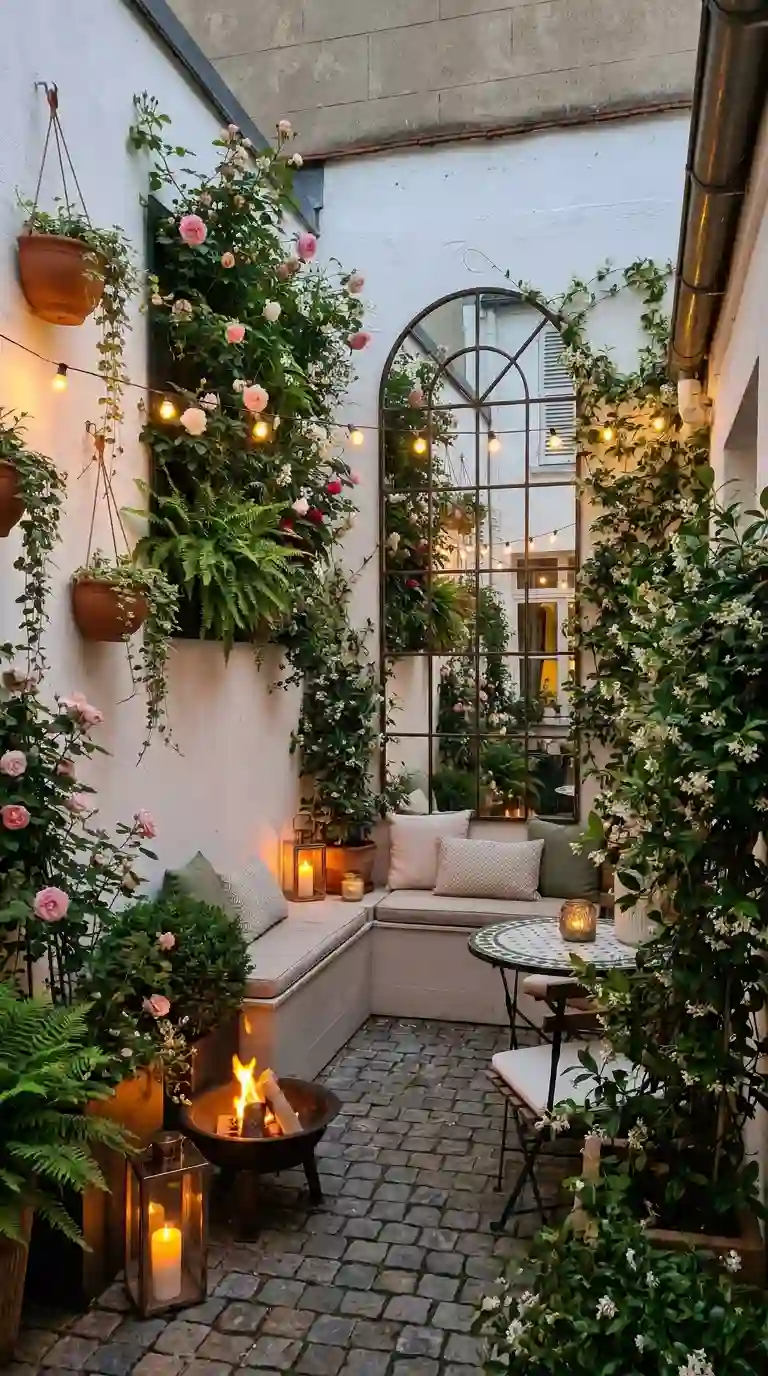
Small garden spaces actually benefit more from strong garden wall ideas than large ones. When ground space is limited, walls do incredible work to add vertical interest, define the edges of the space with intention, and create the feeling of an enclosed outdoor room. Some of the most compelling garden design I have ever seen has been in tiny urban courtyards where every wall is working as hard as it possibly can.
In small gardens, garden wall ideas need to be chosen particularly carefully because nothing is out of sight and every surface is always visible. This means the quality of the materials, the precision of the construction, and the integration with planting all need to be excellent. A rough, poorly built wall in a large garden can be hidden behind planting. In a tiny courtyard, it is always visible and will always detract.
Scale matters enormously in small-garden garden wall ideas. Very tall walls can make a small space feel like a pit. Very low walls disappear entirely and provide no enclosure. The sweet spot for most small gardens is somewhere between one and 1.5 metres, high enough to provide real enclosure and some privacy but low enough to feel open and not oppressive.
Mirror Wall Ideas for Gardens
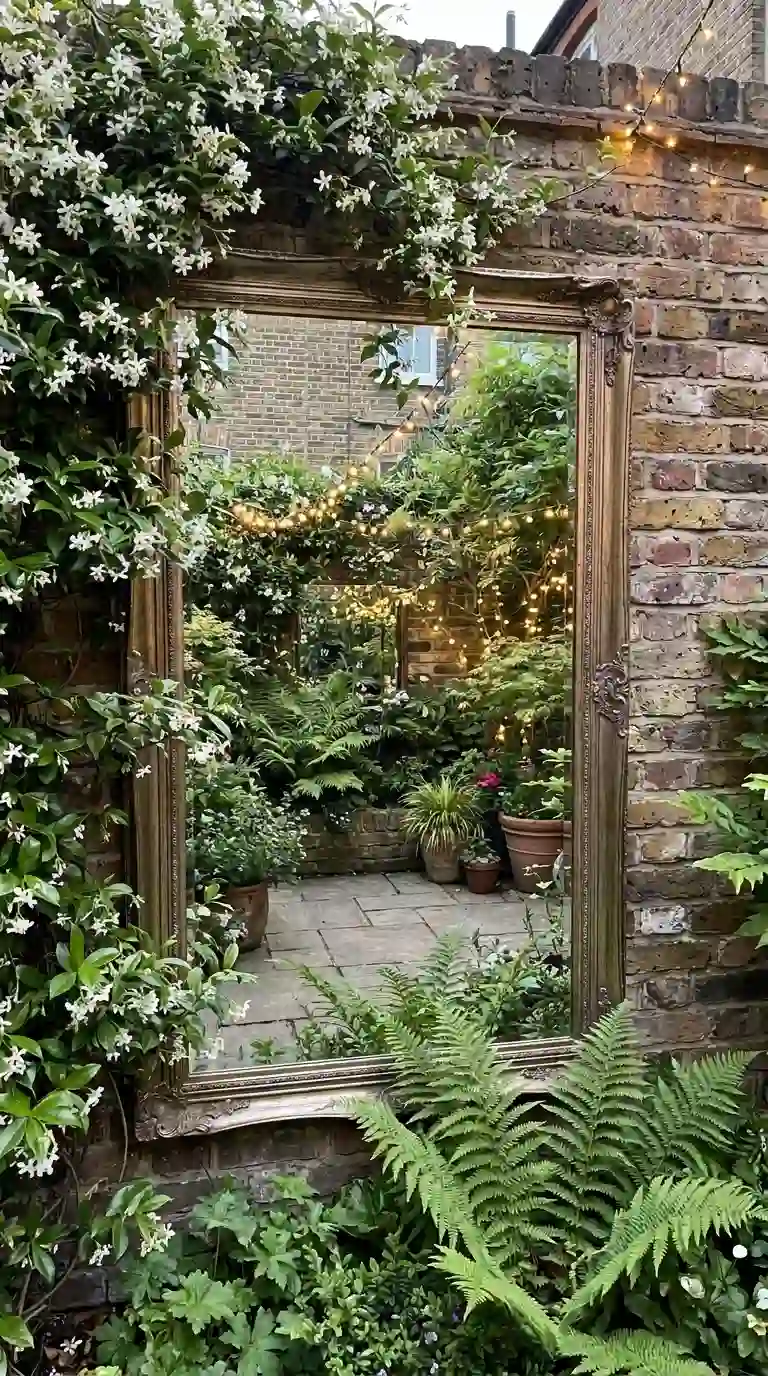
One of the most transformative of all small-garden wall ideas is the use of outdoor mirrors. A large mirror set into or against a garden wall creates a powerful illusion of space, reflecting the garden back at itself and making a small enclosure feel much larger. This trick has been used in formal garden design for centuries but has recently had a major resurgence in contemporary urban garden design.
The key to pulling off mirror garden wall ideas successfully is positioning and framing. A mirror that reflects a beautiful plant, an interesting sculpture, or a well-lit corner of the garden creates a genuinely magical effect. A mirror that reflects a wheelie bin or a bare concrete wall achieves the opposite result. Take time to think about exactly what your mirror will reflect before committing to its position.
Outdoor mirrors need to be specifically designed for garden use since standard mirrors will deteriorate rapidly when exposed to moisture. Look for mirrors with weatherproof frames and acrylic rather than glass faces, which are safer in a garden environment especially if children are present. Frame your mirror with climbing plants or tuck it into a hedge opening to make it look like a gateway into another garden space.
Also Read : Fairy Garden Ideas: 50 Magical Garden Designs for Your Home
Painted Feature Garden Wall Ideas
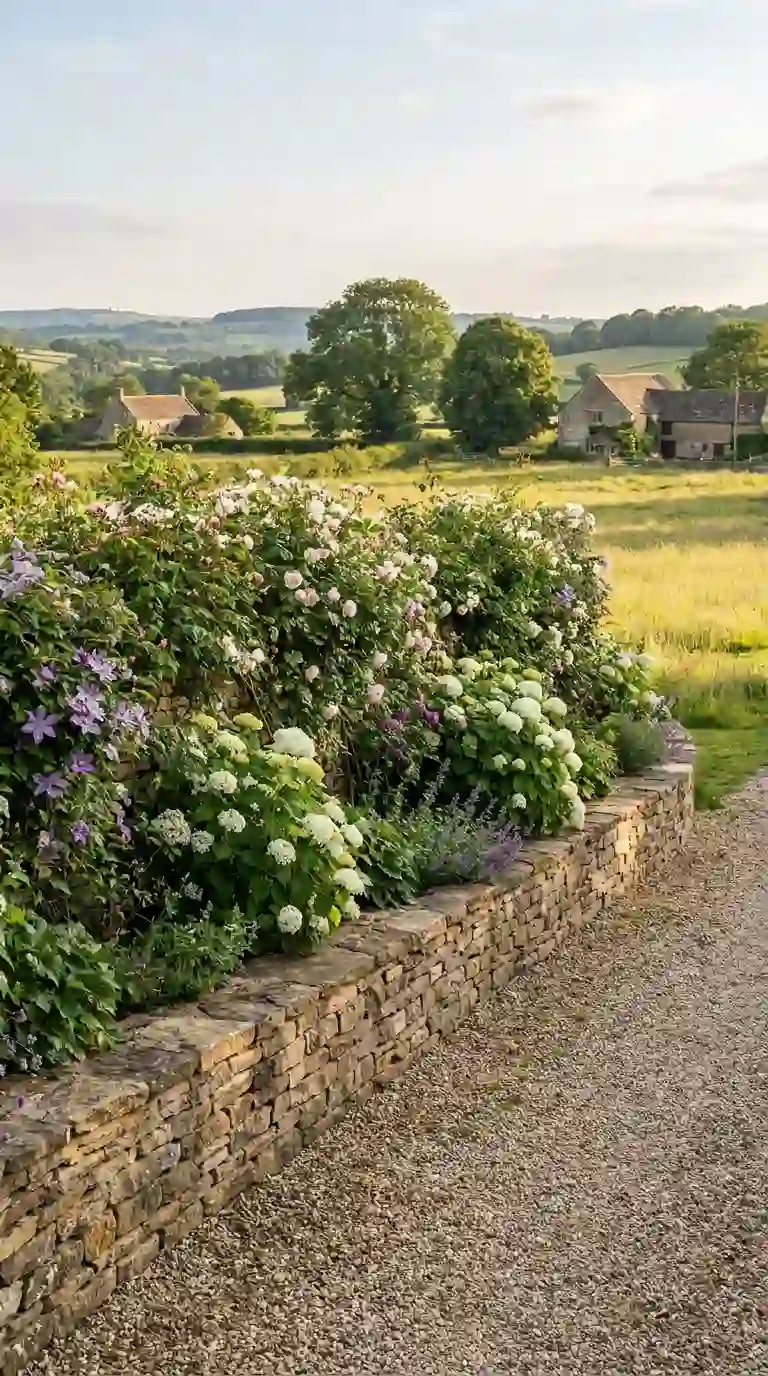
A painted wall can be one of the boldest and most impactful of all small-garden wall ideas. In a compact space, a single wall painted in a deep, rich colour creates an extraordinary backdrop for plants and garden furniture. Deep teal, warm terracotta, charcoal, sage green, dusty blue, the choices are essentially unlimited and each creates a completely different mood.
The painted feature wall idea works particularly well on the back wall of a garden, where it becomes the visual destination from the house. Choose a colour that complements your planting palette. Deep green walls make plants disappear into the backdrop in a beautiful way. Dark colours make a space feel intimate and sheltered. Warm terracotta or ochre creates a Mediterranean warmth that is wonderful for outdoor dining spaces.
Exterior masonry paint is the right product for painted garden wall ideas, and it is well worth buying good quality paint since cheap exterior paint fades, chalks, and flakes far more quickly than premium versions. Some designers layer two or three complementary colours for a more complex, layered effect that reads as richer and more interesting than a single flat colour.
Garden Wall Ideas Using Planting and Greenery
Some of the most beautiful garden wall ideas are not about the wall material at all but about how planting is integrated with the wall structure. A stone wall that is also a planting surface. A rendered wall that becomes a support for a structured climbing rose. A timber wall that becomes a living backdrop covered in ferns and trailing plants. In each case, the combination of built structure and living plant creates something greater than either could achieve alone.
The principle behind plant-integrated garden wall ideas is that walls and plants have a natural affinity. Plants soften the hardness of built materials, add colour and movement, change with the seasons, and bring the wall to life in ways that stone and concrete cannot achieve on their own. Meanwhile, the wall provides the structure, permanence, and frame that makes the plants look their best.
Timing matters with planted garden wall ideas. The plants need time to establish and grow before the full effect is achieved. This is why so many gardeners who invest in these ideas feel initially underwhelmed in the first season and then completely thrilled by year three or four when everything has grown in. Patience is genuinely rewarded with planted garden wall ideas more than almost any other garden design decision.
Espalier Trees as Garden Wall Ideas
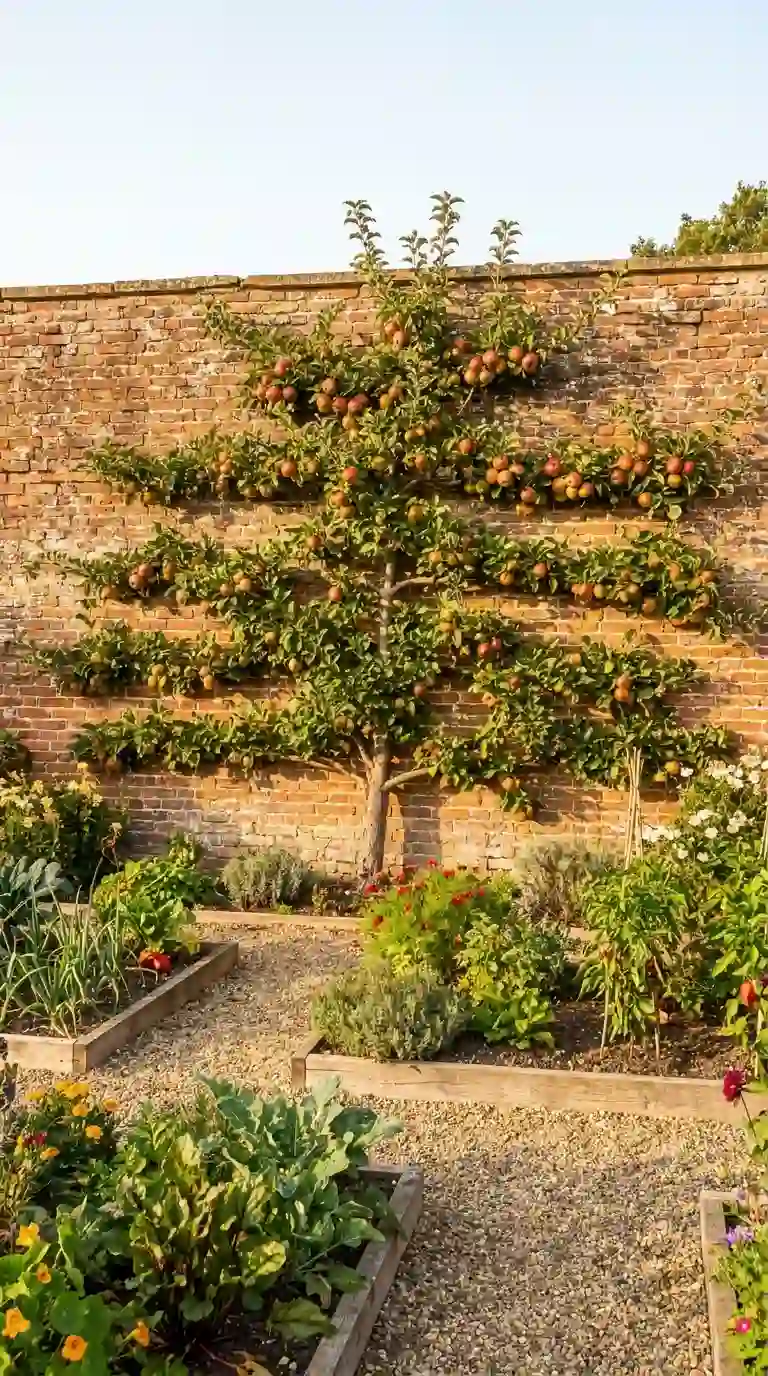
Training fruit trees flat against a wall, a technique called espalier, is one of the oldest and most beautiful garden wall ideas in the horticultural tradition. Espaliered apple, pear, and quince trees trained against south-facing walls produce fruit that benefits from the warmth and shelter of the wall, often ripening earlier and more successfully than trees in open positions.
Beyond productivity, espaliered fruit trees look absolutely stunning as garden wall ideas. The geometric patterns of horizontal branches against a rendered or brick wall have a formal elegance that few other garden features can match. In winter, the bare branches reveal the structure of the training and make a graphic, architectural pattern that is beautiful in its own right.
You do not need to restrict yourself to fruit trees. Magnolia grandiflora trained flat against a wall makes a dramatic evergreen feature. Pyracantha, with its brilliant berry displays in autumn and winter, is another classic wall-trained shrub that doubles as one of the most wildlife-friendly garden wall ideas available.
Hedgerow and Pleached Hedge Garden Wall Ideas
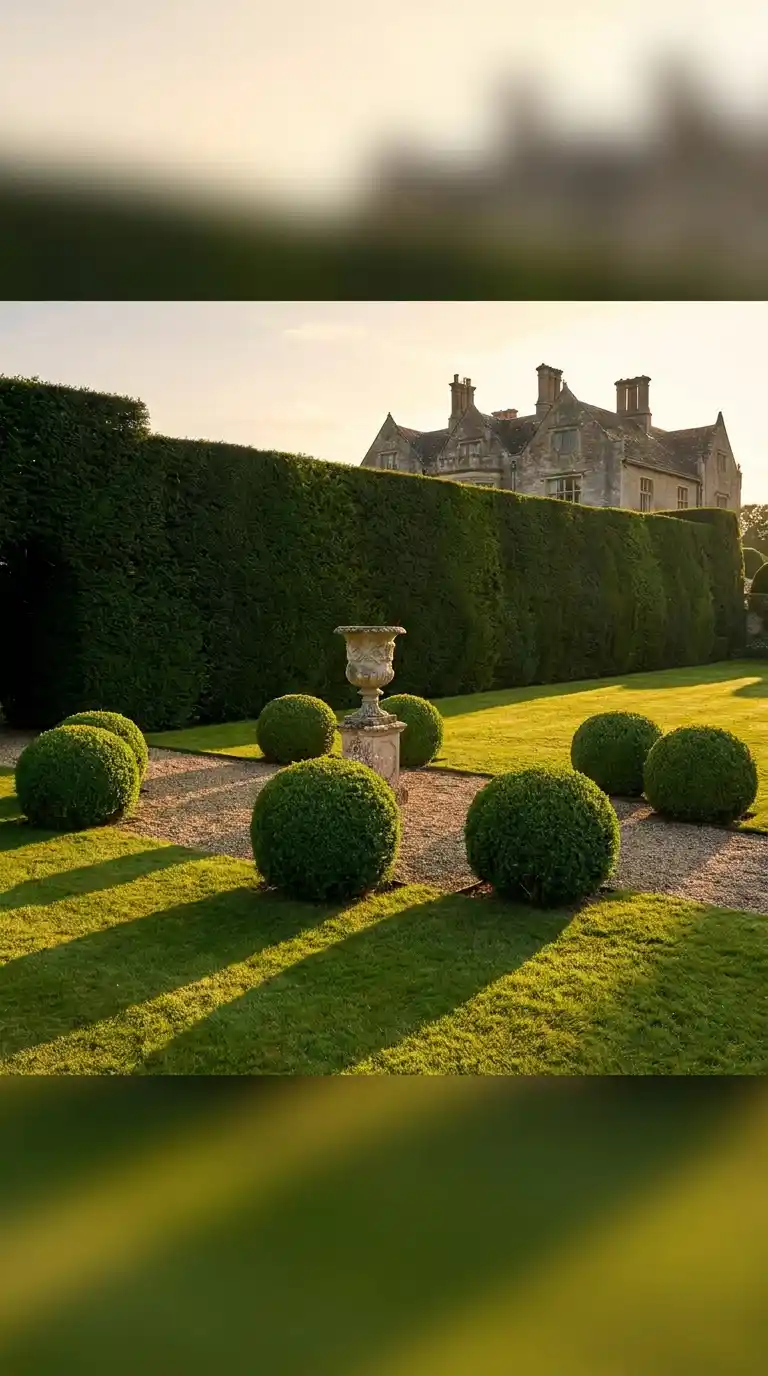
Hedges are, of course, the original living garden wall idea. They have been used to divide, enclose, and shelter gardens for thousands of years and they remain one of the most effective and beautiful ways to create garden structure. The choice of hedge plant determines both the practical performance and the aesthetic character of the living wall.
Yew, beech, hornbeam, and holly are the classic choices for formal garden wall ideas using hedges. Yew creates the darkest, densest, most formal effect and clips to an almost architectural precision. Beech holds its copper-coloured dead leaves through winter, creating a warm, burnished effect. Hornbeam is faster-growing than yew and almost as effective. Holly provides an impenetrable, glossy-leaved hedge that is also brilliantly wildlife-friendly.
Pleached trees take the living garden wall idea in an interesting direction. Pleaching involves training trees on a flat framework at a specific height, creating what looks like a hedge on stilts. The clear trunk beneath and the flat, neat canopy above create a formal, architectural effect that is particularly popular in contemporary gardens. Lime, hornbeam, and plane are the most commonly pleached trees.
Modern and Contemporary Garden Wall Ideas
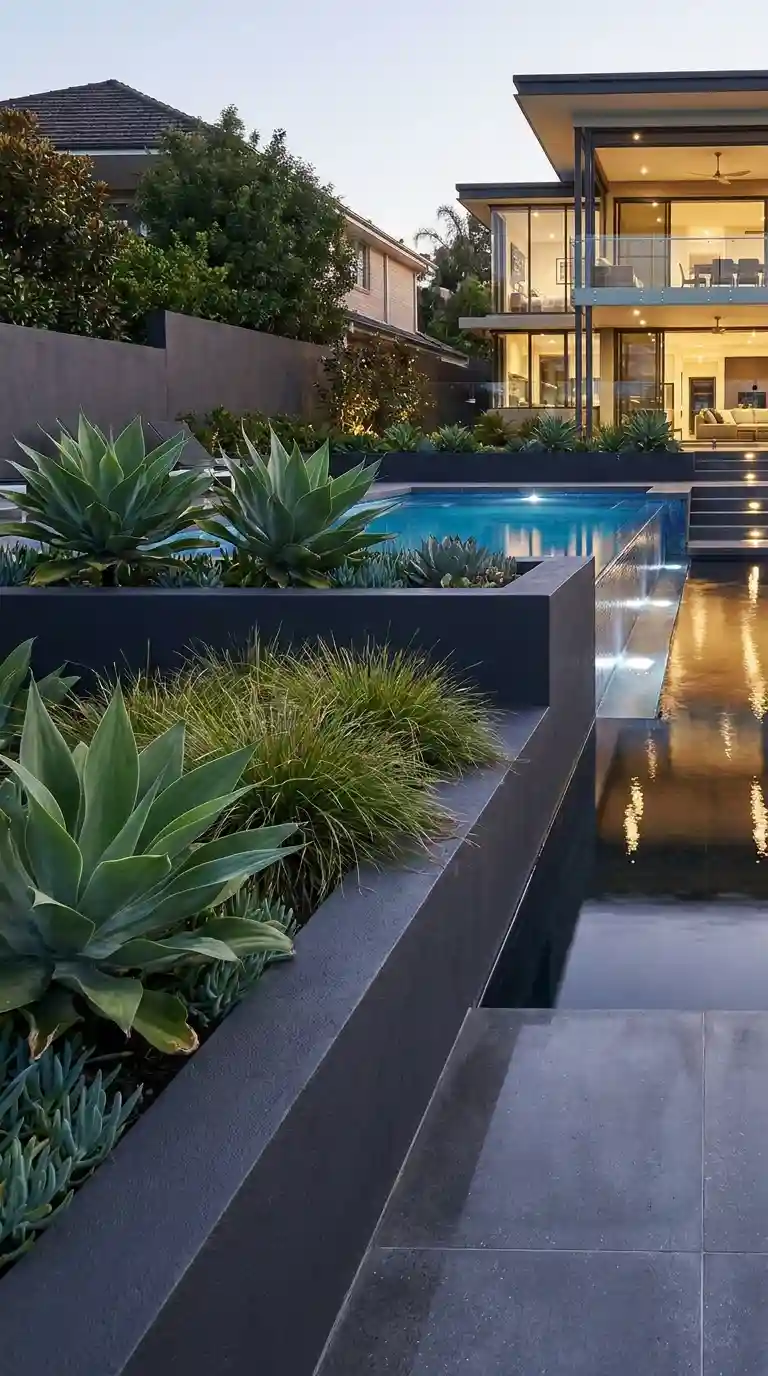
Contemporary garden design has pushed garden wall ideas in some genuinely exciting new directions over the last decade. Where traditional garden walls were primarily about permanence, enclosure, and formality, modern garden wall ideas are about texture, contrast, drama, and the interplay between natural and manufactured materials.
The dominant direction in contemporary garden wall ideas is towards greater simplicity and precision. Clean lines, smooth surfaces, carefully controlled colour palettes, and the deliberate juxtaposition of contrasting textures are the hallmarks of the best modern garden walls. A smooth rendered wall next to a rough gabion. A polished concrete panel beside weathering steel. A crisp white wall against black gravel.
Lighting has become an increasingly important element in contemporary garden wall ideas. Recessed wall lights, uplighters at the base of walls, downlighters set into the top of walls, and LED strip lighting integrated into coping details can transform a garden wall at night into something entirely different from its daytime appearance. The best modern garden wall ideas are designed with both day and night in mind.
Corten Steel Garden Wall Ideas
Corten steel, also known as weathering steel, has become one of the signature materials of contemporary garden design and features prominently in the most interesting modern garden wall ideas. Its defining characteristic is the warm rust patina that develops naturally on the surface as the steel weathers, actually protecting the underlying metal while creating a rich, complex orange-brown colour that looks extraordinary against green plants.
Corten steel garden wall ideas range from full structural walls clad in Corten panels to lower architectural screens used as decorative dividers. Laser-cut Corten panels with decorative patterns are a popular and distinctive option, with light filtering through the cut-outs to create beautiful shadow patterns on the ground. Custom designs can incorporate anything from simple geometric patterns to complex botanical or figurative motifs.
The practical considerations with Corten garden wall ideas are worth understanding before committing. During the early weathering phase, the steel runs a reddish-orange stain onto any adjacent surface. Do not position Corten directly against pale stone or concrete that you want to keep clean. Once fully weathered, usually after one to two years, the patina stabilises and the staining stops.
Glass and Perspex Garden Wall Ideas
For gardens where the view beyond the boundary is worth preserving, glass and clear perspex garden wall ideas offer the best of both worlds: structural enclosure with complete visual openness. Frameless glass panels supported on minimal posts or in ground channels can create a wind barrier and safety barrier while remaining essentially invisible, preserving the view and allowing light to flow freely through the garden.
Glass balustrade-style garden wall ideas are most commonly used at the edges of elevated decking, roof terraces, and pool surrounds where a safety barrier is required but the view beyond is the whole point of being there. They are also used along property boundaries where a rear garden backs onto a beautiful landscape or water view that would be completely blocked by a solid wall or fence.
Frosted and patterned glass garden wall ideas offer a middle ground between transparency and privacy. Etched, sandblasted, or cast glass panels transmit light while obscuring the view, creating beautiful glowing screens that are particularly effective in contemporary courtyard gardens where they catch and filter the light in constantly changing ways.
Low Budget Garden Wall Ideas That Still Look Stunning
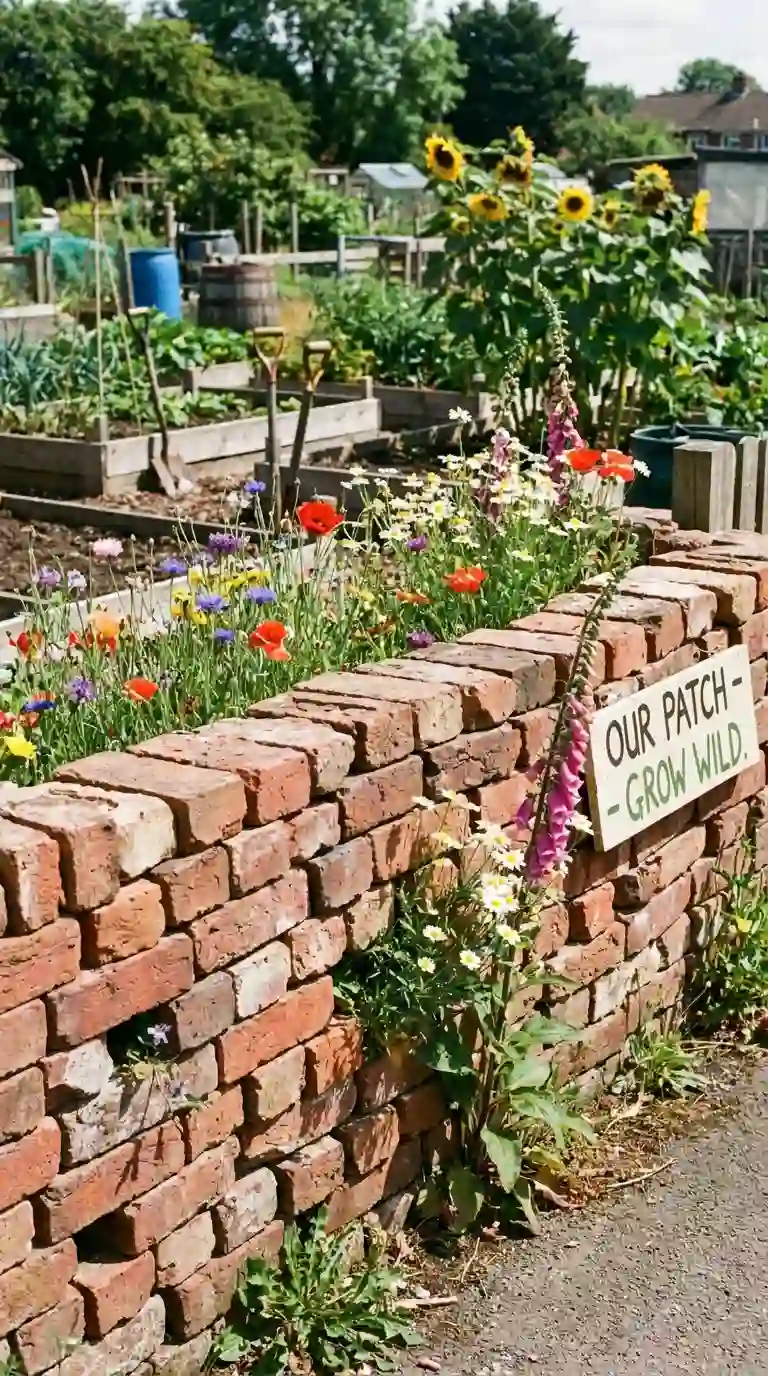
Great garden wall ideas do not have to cost a fortune. Some of the most beautiful garden walls I have ever seen were built with salvaged, recycled, or very inexpensive materials by gardeners with more patience than budget. The key is to choose your material honestly for what it is, build it with care, and let plants do the work of adding beauty and complexity.
Reclaimed materials are the first place to look when exploring budget garden wall ideas. Salvage yards and architectural reclamation centres are full of old bricks, stone slabs, granite setts, timber beams, and other materials that were destined for demolition but have years of useful life and genuine character remaining. Old brick from demolished Victorian buildings often has a richness and warmth that new brick costs three times as much to replicate.
Simple dry-stacked stone gathered from your own land or sourced cheaply from local farms and quarries is another outstanding budget garden wall idea. The stones cost almost nothing, and the labour is your own weekend time. The result, particularly when plants are allowed to colonise the gaps, is a wall of genuine beauty and permanence.
Pallet and Upcycled Garden Wall Ideas
Wooden pallets have had a remarkable second life in the garden over the last decade, and pallet garden wall ideas have become a staple of the budget outdoor design world. Pallets can be used vertically as simple screening panels, stacked horizontally as low retaining walls for raised beds, or disassembled and the planks used to create more refined timber wall constructions.
The important caveat with pallet garden wall ideas is to always check the pallet markings carefully before using them in the garden. Pallets stamped with HT have been heat-treated and are safe for garden use. Those stamped MB have been treated with methyl bromide, a toxic pesticide, and should never be used in gardens. When in doubt, do not use it.
Beyond pallets, old scaffolding boards, railway sleepers, and reclaimed timber planks all offer excellent material for budget-conscious garden wall ideas. These materials have genuine character from their previous lives and weather further in the garden to create an authentic patina that no new material can match. Seal or treat them appropriately for outdoor use and they will give years of service.
Concrete Block Garden Wall Ideas Made Beautiful
Plain concrete blocks are genuinely cheap, widely available, and extremely structurally sound. On their own they are not beautiful, but with the right treatment they become the foundation for some surprisingly attractive garden wall ideas. Rendering over concrete block and painting it is the most common approach and the results can be excellent. Cladding concrete block with natural stone, flint, or brick slips is another approach that gives the appearance of solid stone or brick at a fraction of the cost.
Some contemporary designers have chosen to celebrate rather than hide the utilitarian character of concrete blocks, leaving them exposed and using their industrial appearance deliberately as a design statement. In the right context, a raw concrete block wall has a bold, brutalist quality that works very well in contemporary urban garden settings. Combining exposed block with carefully chosen plants creates an interesting tension between the manufactured and the natural.
Garden Wall Ideas with Lighting and Special Features
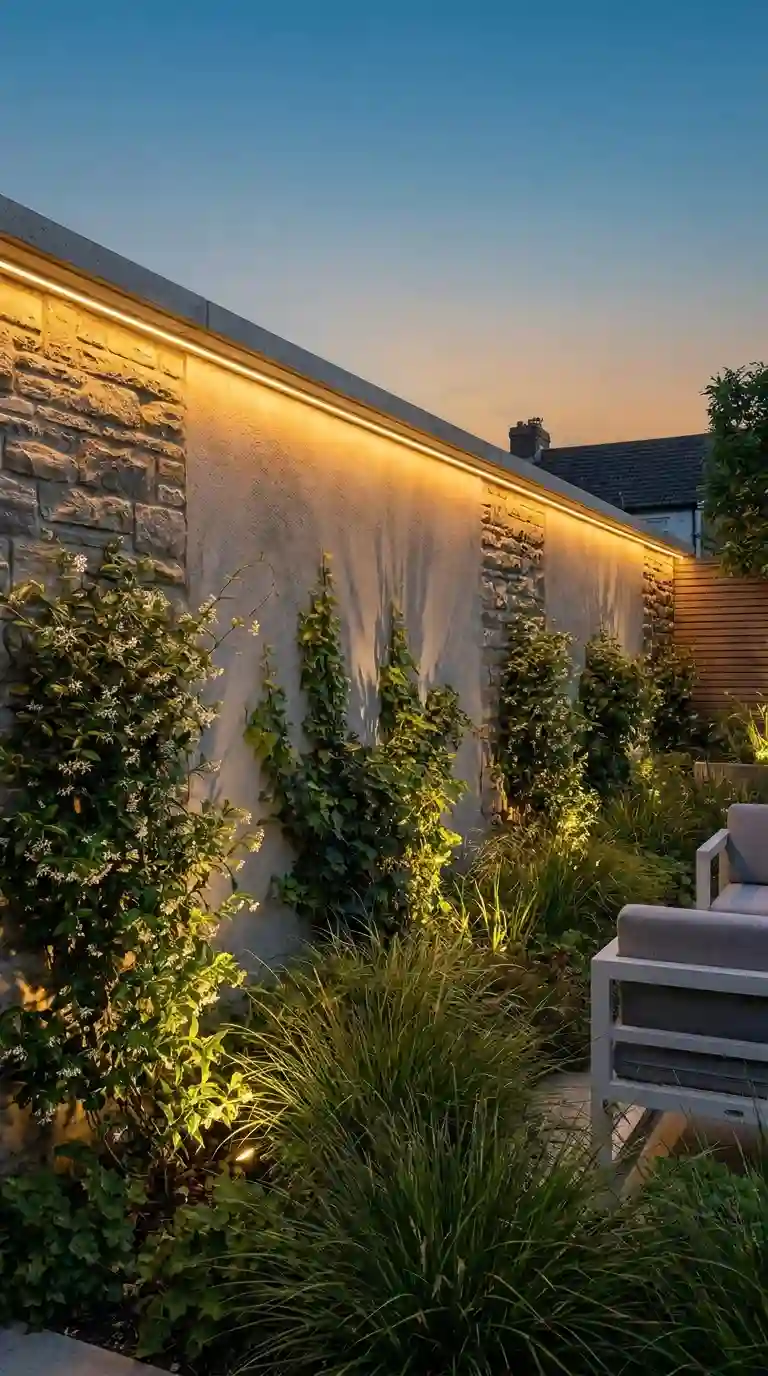
The best garden wall ideas think beyond the daytime appearance of the wall and consider how it will look as evening falls and garden lighting takes over. A wall that is beautiful in daylight but disappears into darkness at night is missing an opportunity. With thoughtful lighting integration, a garden wall can become a completely different and equally beautiful thing after sunset.
Integrated lighting is among the most sophisticated of garden wall ideas and works best when it is planned from the very beginning of the design process rather than added as an afterthought. Conduit for cables buried in or behind the wall during construction means the final result has no visible wiring. Recessed light fittings built into the wall face or the coping give a clean, architectural look.
The types of light effects possible with garden wall ideas are genuinely varied. Grazing light, where a fitting placed very close to the wall face throws light along the surface, is ideal for textured materials like rough stone or exposed brick because it emphasises every bump and shadow. Uplighting planted walls creates beautiful silhouettes of leaves and branches. Downlighting from the top of a wall creates pools of warm light on the ground below.
Water Feature Garden Wall Ideas
Combining a water feature with a garden wall is one of the most impressive of all garden wall ideas, and the results range from the gently contemplative to the dramatically theatrical. Wall-mounted water features, where water flows from a spout set into the wall face over a pool or basin at the base, are among the most popular and can be installed in gardens of almost any size.
The sound of running water from a wall-mounted feature adds an extra sensory dimension to the garden that no other garden wall idea can match. It masks background noise, creates a focal point, and adds movement to what is otherwise a static structure. In hot courtyard gardens, the sound of water alone creates a cooling psychological effect.
For more ambitious garden wall ideas, an entire wall face can become a water feature, with a thin sheet of water falling continuously over the surface. These water walls are dramatic, contemporary features that make an extraordinary impression. The wall face is usually polished stone, glass, or stainless steel, materials that show the moving water to best effect.
Garden Wall Ideas with Built-In Planters and Shelving
One of the most functional and beautiful of contemporary garden wall ideas involves building planters, shelves, or niches directly into the wall structure. Recessed planting pockets at different heights create a garden wall that is also a vertical garden. Alcoves and niches at eye level become display spaces for sculptures, ceramics, or lanterns. Built-in seating at the base of a wall adds function to the structure.
Built-in planter garden wall ideas work particularly well in courtyard and terrace settings where the wall becomes a multi-functional element rather than simply a boundary. A wall with integrated planters, lighting, and a built-in seating ledge is essentially a complete outdoor room feature compressed into a single structure, and the effect is both impressive and highly practical.
The most successful garden wall ideas with built-in features are those where the additions feel genuinely integrated rather than like an afterthought stuck to the surface. This means planning the positions and sizes of niches, shelves, and planters during the design phase and building them in as part of the wall structure from the outset.
Garden Wall Ideas for Front Gardens and Entrance Areas
The front garden wall is one of the most important design decisions you can make for your property because it is what the world sees first. Garden wall ideas for front gardens and entrance areas need to balance practicality, security, and aesthetics while also being consistent with the architectural style of the house and the character of the street.
For period properties, authentic materials are almost always the right choice for front garden wall ideas. Victorian and Edwardian houses look best with brick walls that match or complement the house brickwork, often topped with engineering brick or terracotta coping. Georgian houses suit rendered and painted walls or limestone, materials that reflect the formal, classical proportions of the architecture.
For contemporary houses, the range of appropriate front garden wall ideas is wider. Low walls in polished concrete, smooth render, or Corten steel all work well. Combining a solid low wall with a metal railing above is a popular approach that provides clear boundary definition while remaining open and light.
Pillar and Pier Garden Wall Ideas
Pillars and piers, those substantial vertical elements that mark entrances and anchor wall ends, are one of the most impactful details in front garden wall ideas. A well-proportioned pier with a quality coping stone or decorative finial immediately upgrades the perceived quality of any garden wall and signals that the property has been thoughtfully designed.
The proportions of piers in front garden wall ideas matter enormously. Piers that are too thin look spindly and fragile. Piers that are too squat look dumpy. As a rough rule, the pier height should be at least twice the wall height, and the pier face should be at least one and a half times the wall thickness. Piers should also be properly founded with deeper footings than the wall itself since they carry more load and are more exposed to lateral forces.
Decorative coping stones and finials on top of piers are the finishing detail that elevates front garden wall ideas from ordinary to distinguished. Ball finials in natural stone or cast stone have a classic character. Flat natural stone copings with a slightly projecting drip edge are elegant and practical. Reclaimed stone coping with a curved saddle top is one of the most beautiful details in traditional garden wall ideas.
Garden Wall Ideas Through the Seasons
One aspect of garden wall ideas that often gets overlooked in the planning stage is how the wall will look across all four seasons. A wall that looks spectacular in summer when climbers are in full flower may look bare and uninspiring in winter. The best garden wall ideas have year-round interest built into their design.
Evergreen climbers are an obvious solution to the winter interest problem in planted garden wall ideas. Ivy, Trachelospermum, Pyracantha, and Garrya elliptica all keep their foliage through the coldest months and provide continuing texture and colour. Mixing evergreen and deciduous climbers on the same wall gives you the best of both worlds, summer flower displays from the deciduous varieties and winter evergreen structure from the permanent ones.
The material of the wall itself also plays a role in seasonal appearance. Natural stone and brick take on different qualities in different lights and weather conditions. A limestone wall in winter frost looks completely different from the same wall in summer sun, and both are beautiful in their own way. Rendered walls in rich colours look their most saturated on grey overcast days, popping forward against the neutral sky.
How to Plan and Build Your Garden Wall Ideas Successfully
Having great garden wall ideas in your head or on a mood board is just the beginning. Turning those ideas into a real, well-built wall that will last for decades requires planning, preparation, and either good DIY skills or the right professional help. Here is what experience has taught me about making garden wall ideas a success in practice.
Start with the ground conditions. Before you buy a single brick or hire a contractor, understand what is underneath your garden. Clay soil expands and contracts with moisture and will move foundations if they are not deep enough. Sandy or loose soil needs careful compaction and potentially a wider footing. Rock close to the surface might limit how deep you can go. Getting this right at the start saves enormous problems later.
Think about drainage. One of the most common causes of garden wall failure is water getting behind or beneath the wall and causing pressure or frost damage. Any garden wall that retains soil needs weep holes or drainage channels to allow water to escape. Even free-standing garden walls benefit from a sloped top coping that sheds water quickly.
When to DIY and When to Call a Professional
Most low garden wall ideas, walls up to about 600mm in height that are purely decorative, are within the reach of a determined DIY builder with good research, careful preparation, and patience. The basic skills of laying bricks, setting stones in mortar, and creating level courses can be learned and practised by most people.
Taller walls, retaining walls that hold significant amounts of soil, walls close to the house or boundaries, and walls in locations with difficult ground conditions are projects where professional involvement is strongly advisable. A wall failure is not just an aesthetic problem. A collapsed retaining wall can damage property, injure people, and create significant legal liability.
When hiring a professional for garden wall ideas, look for someone with specific experience in the type of wall you want. A good bricklayer does not automatically know how to build a dry stone wall. A landscape contractor experienced in retaining structures is not the same as a decorative garden wall specialist. Ask to see examples of previous work, check references, and get at least three quotes before committing.
Final Thoughts
After years of thinking about, researching, and living with garden wall ideas in my own outdoor space, the thing I keep coming back to is this: a garden wall is one of the most permanent decisions you will make in your garden. Plants can be moved. Paths can be relaid. Furniture comes and goes. But a well-built garden wall, once it is there, becomes part of the garden’s character for decades
Frequently Asked Questions
1. What is the cheapest garden wall idea?
The cheapest garden wall ideas involve using reclaimed or salvaged materials and DIY labour. A dry-stacked stone wall using stone gathered from your own land costs almost nothing in materials. Reclaimed brick from demolition salvage yards is often very affordable. Pallet wood constructions are inexpensive but need careful sourcing to ensure safe materials. Simple concrete block walls are cheap to build and can be rendered to look much more attractive.
2. How tall can a garden wall be without planning permission?
In most parts of the UK, a garden wall can be up to 1 metre high without planning permission if it is adjacent to a highway, and up to 2 metres elsewhere. In the US, regulations vary significantly by state and municipality, but a common threshold is around 6 feet or 1.8 metres. Always check your specific local authority or municipality rules before building since permitted development rights vary and exceptions apply in conservation areas and listed building settings.
3. What is the best material for a garden wall?
There is no single best material for garden wall ideas since the ideal choice depends on your garden style, climate, budget, and practical requirements. Natural stone is the most beautiful and durable for naturalistic gardens. Brick is the most versatile and works across the widest range of styles. Concrete is the most cost-effective for structural applications. Timber sleepers are ideal for informal and naturalistic garden wall ideas. Metal is best for contemporary designs.
4. How do I build a garden wall on a slope?
Building a garden wall on a slope typically involves either stepping the foundations and the wall to follow the grade, or setting the foundation level and allowing the wall height to increase as the ground falls away. Retaining walls on slopes need to be properly engineered to handle the lateral pressure of the soil they are holding back, with good drainage and appropriate footing depth. For slopes steeper than about 1 in 3, professional advice is strongly recommended.
5. What plants grow best on garden walls?
Plants that thrive on or against garden walls include climbing roses, clematis, wisteria, ivy, Virginia creeper, Trachelospermum jasminoides, Pyracantha, and Hydrangea petiolaris. For dry stone walls and crevices, small rock garden plants like sempervivums, sedums, thyme, aubretia, and campanula are ideal. For the base of walls, shade-tolerant plants like hostas and ferns work well on north-facing aspects.
6. How deep should the foundations be for a garden wall?
For low decorative garden walls up to about 600mm in height, a foundation depth of 300 to 450mm is typically adequate in stable soil. For taller walls, foundations should be at least one third of the wall height in depth. In areas with clay soil subject to frost, foundations should be deeper to get below the frost line. Retaining walls need engineered foundations that account for the lateral loads they are resisting.
7. Can I build a garden wall myself?
Yes, many garden wall ideas are within the capability of a competent DIY builder. Low decorative walls in brick, dry stone, and timber sleepers are the most accessible for DIY construction. Good preparation, the right tools, and careful reading of building guides will get you to a good result. Taller walls, retaining walls, and walls in tricky ground conditions are best left to professionals.
8. What is a dry stone wall and how is it built?
A dry stone wall is built without mortar, relying entirely on the careful selection and interlocking of stones to create structural stability. The fundamental principles are: a wide base that tapers slightly toward the top, through stones at regular intervals that tie both faces of the wall together, careful bridging of joints from course to course, and a coping of upright stones or flat slabs at the top. Dry stone walls drain freely, which makes them excellent for retaining banks.
9. How do I make my garden wall look nice?
The most effective ways to improve a garden wall’s appearance include adding climbing plants for colour and texture, painting or rendering a tired brick or block wall in a fresh colour, improving the coping detail with a quality stone or brick coping, adding integrated lighting for evening interest, installing a water feature on the wall face, and adding decorative elements like recessed niches, planting pockets, or sculptural details.
10. What is a gabion wall and is it good for gardens?
A gabion wall is a structure made from wire mesh cages filled with stones or other materials. They are excellent for garden use, particularly as retaining walls on slopes, because they are very free-draining, structurally strong, and relatively easy to construct. The aesthetic is contemporary and industrial-natural, working best in modern garden settings. Fill material can be varied to change the appearance significantly.
11. How do I add plants to an existing stone wall?
To add plants to an existing stone wall, find or create gaps between the stones, remove any loose material, mix compost with the soil in the gap, and plant very small plants or push seeds into the cavity. Water carefully until established. Good plants for this purpose include sempervivums, sedums, thyme, aubretia, and small ferns. Avoid plants with aggressive root systems that could destabilise the wall structure.
12. What is the most durable garden wall material?
Natural stone is generally the most durable of all garden wall materials, with well-built stone walls capable of lasting centuries. High-quality engineering brick and dense concrete are also extremely durable materials. Timber is the least durable since it is subject to rot, insect damage, and weathering, though hardwood species like oak can last decades with appropriate treatment.
13. How can I make a cheap garden wall look expensive?
Several techniques can significantly improve the appearance of a budget garden wall. Rendering over plain concrete block and painting in a rich colour is one of the most effective. Adding a quality natural stone coping to the top of a basic brick wall transforms its perceived quality. Training climbing plants across the surface softens and beautifies any wall. Good lighting draws attention to the wall’s best features and away from its deficiencies.
14. What is the difference between a retaining wall and a garden wall?
A retaining wall is specifically engineered to hold back soil or other material against lateral pressure. It requires deeper foundations, drainage provision, and structural design appropriate to the load it is carrying. A garden wall is a more general term that can include retaining walls but more often refers to free-standing walls used for boundary marking, decoration, or privacy screening. Garden walls carry primarily vertical loads from their own weight rather than significant lateral soil pressure.
15. How much does it cost to build a garden wall?
Garden wall costs vary enormously depending on material, height, length, ground conditions, and location. As a rough guide, a simple brick garden wall might cost between 150 to 300 dollars or pounds per square metre of wall face, professionally built. Natural stone is typically 200 to 500 per square metre. Rendered concrete block is often cheaper at 100 to 200 per square metre. DIY construction can reduce costs by 50 percent or more, primarily by eliminating labour costs.