
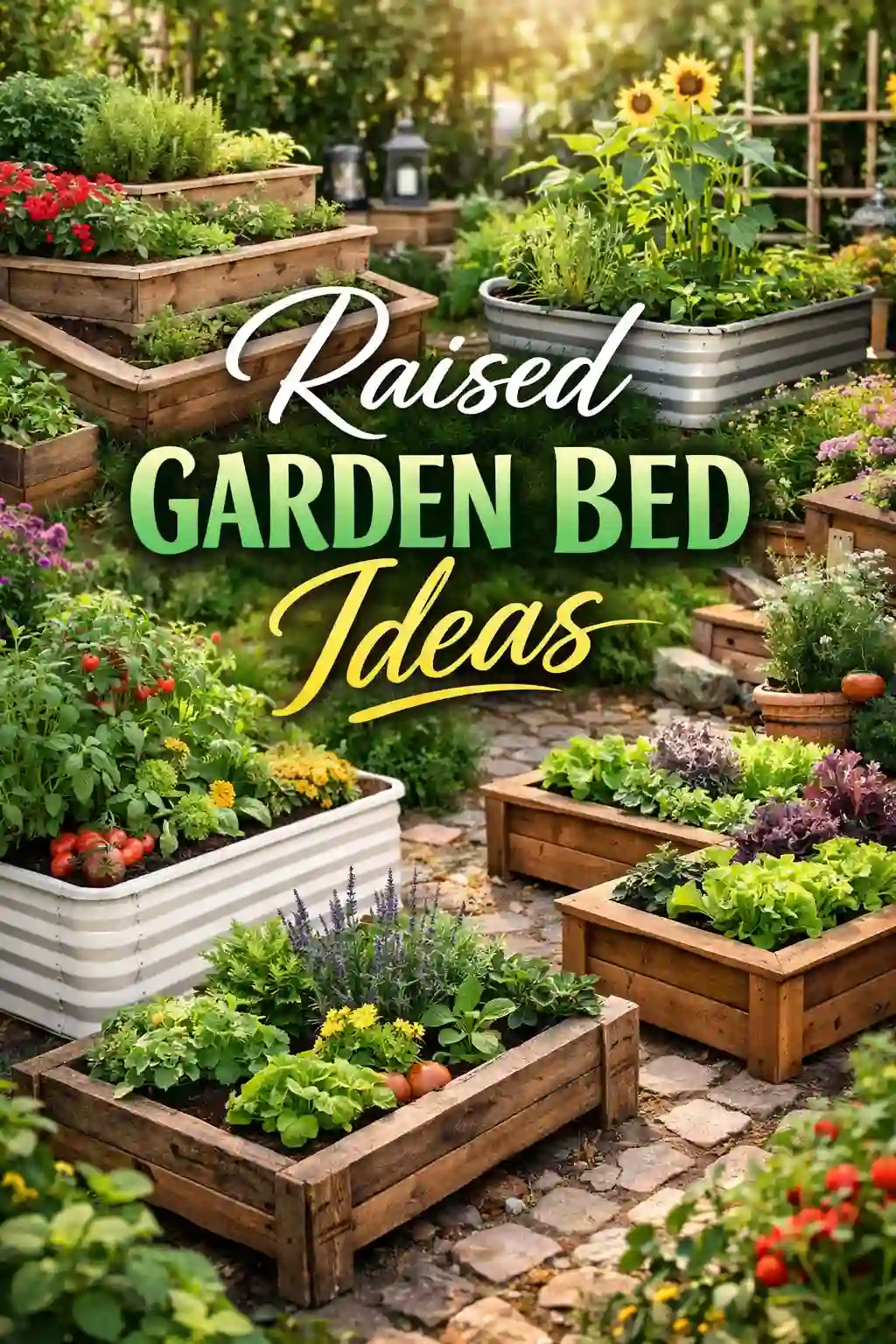
I still remember the first time I built a raised garden bed. It was a Sunday afternoon in early spring, my hands were covered in soil, and I was absolutely convinced I was doing something wrong. The boards kept shifting, the soil ratio felt off, and I had no clue whether my tomatoes would survive the summer. Fast forward a few years later, and my backyard now has seven thriving raised garden beds in different shapes, sizes, and materials. What started as a messy experiment turned into one of the most rewarding hobbies of my life.
If you are reading this, you are probably at that same curious crossroads. Maybe you have a patch of poor soil, a limited space, or just a dream of growing your own food. Whatever your reason, raised garden bed ideas are the place to start. They are flexible, beginner-friendly, and they genuinely work. In this article, I am going to walk you through everything from the most creative designs and materials to practical layout tips and soil advice so you can skip the guesswork I went through.
Whether you have a sprawling backyard or a small balcony, there is a raised garden bed idea here that will fit your life. Let us get into it.
Also Read : Mini Fairy Garden Ideas: 40 Small Fairy Gardens for Tiny Spaces
Why Raised Garden Bed Ideas Are Worth Every Penny and Every Effort
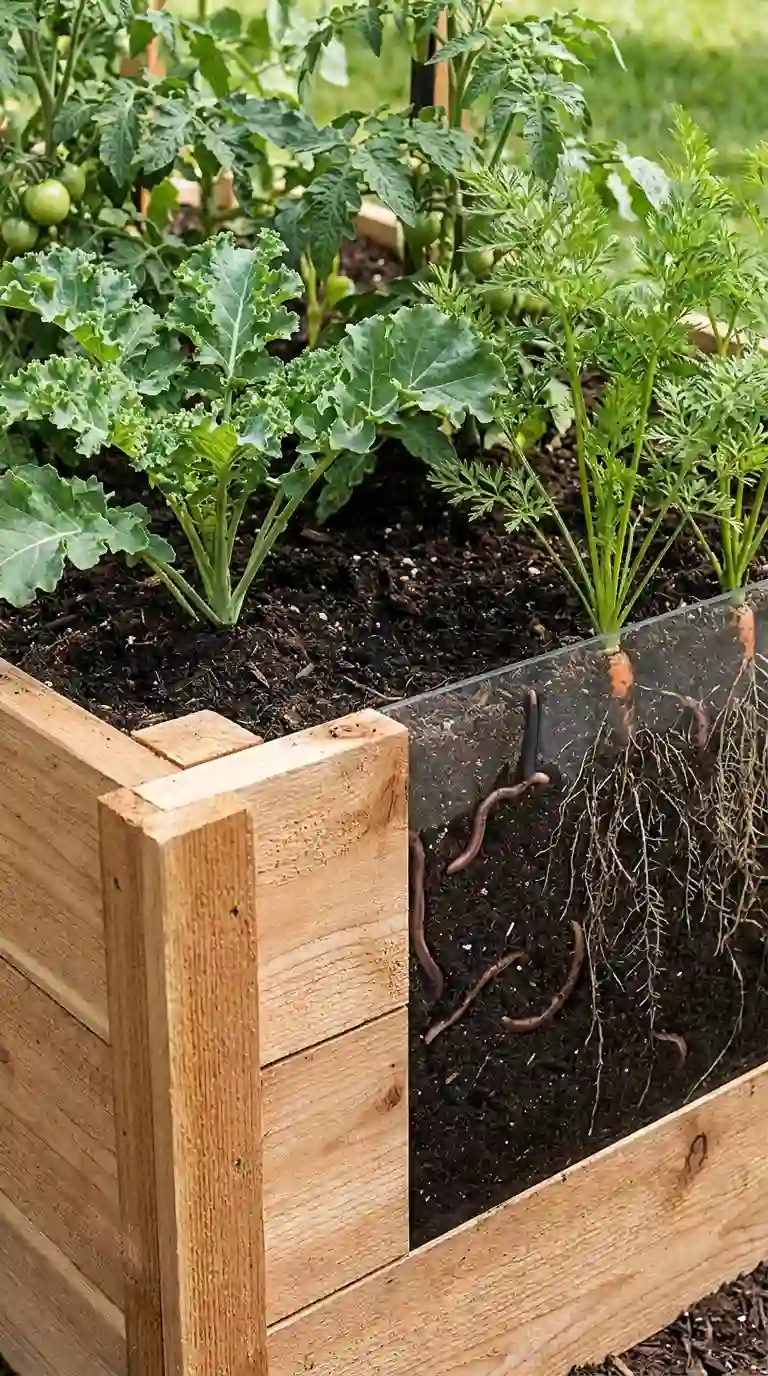
Before we dive into specific raised garden bed ideas, it is worth asking the big question: why bother at all? You could just plant directly in the ground, right? Well, yes, you could. But if your native soil is clay-heavy, compacted, or full of rocks like mine was, you would spend more time fighting the earth than actually growing anything.
Raised beds solve that problem entirely. You fill them with exactly the soil blend you want no compromises. The drainage is dramatically better, which means fewer waterlogged roots and less root rot. The soil also warms up faster in spring, which gives you a longer growing season compared to in-ground planting. I have seen gardeners in colder climates extend their growing window by nearly three to four weeks just by using raised beds.
Beyond the practical benefits, raised garden bed ideas bring a certain visual charm to your outdoor space. A well-designed garden bed is not just a growing area it becomes a landscape feature. When your neighbors walk by and ask what you did to your yard, you will be pointing at those raised beds with genuine pride.
Related post : Creative Balcony Garden Ideas Complete Guide for Beginners and Experts
Better Soil Control Means Better Plants
One of the most underrated benefits of raised garden beds is the total control you have over your growing medium. In a traditional ground garden, you are largely stuck with whatever soil nature gave you. With raised beds, you build your ideal mix from scratch. A standard blend of compost, topsoil, and coarse sand gives you something that drains well but holds enough moisture to keep roots happy.
This control extends to pest and disease management too. Soil-borne diseases that linger in the ground from season to season are far less likely to take hold in a raised bed where you refresh the soil regularly. I started doing this after a nasty case of bacterial wilt wiped out my ground-planted cucumbers one summer. Moved to raised beds the next year and the cucumbers have been unstoppable ever since.
Accessibility That Changes Everything
Raised garden bed ideas are not just for the aesthetically inclined. For older gardeners, people with mobility challenges, or anyone with a bad back, elevated beds are genuinely life-changing. You can design a raised bed at a height that eliminates bending completely. Some gardeners build their beds at counter height around 30 to 36 inches and garden standing upright. That shift alone can make the difference between continuing to garden and giving it up entirely.
Children also benefit enormously. A low raised bed at their height invites kids into the garden in a way that ground-level planting does not always manage. There is something about having their own defined space that makes children more engaged and more excited to tend their plants.
Also Read : Fairy Garden Ideas: 50 Magical Garden Designs for Your Home
The Best Materials for Raised Garden Beds: What I Recommend and Why
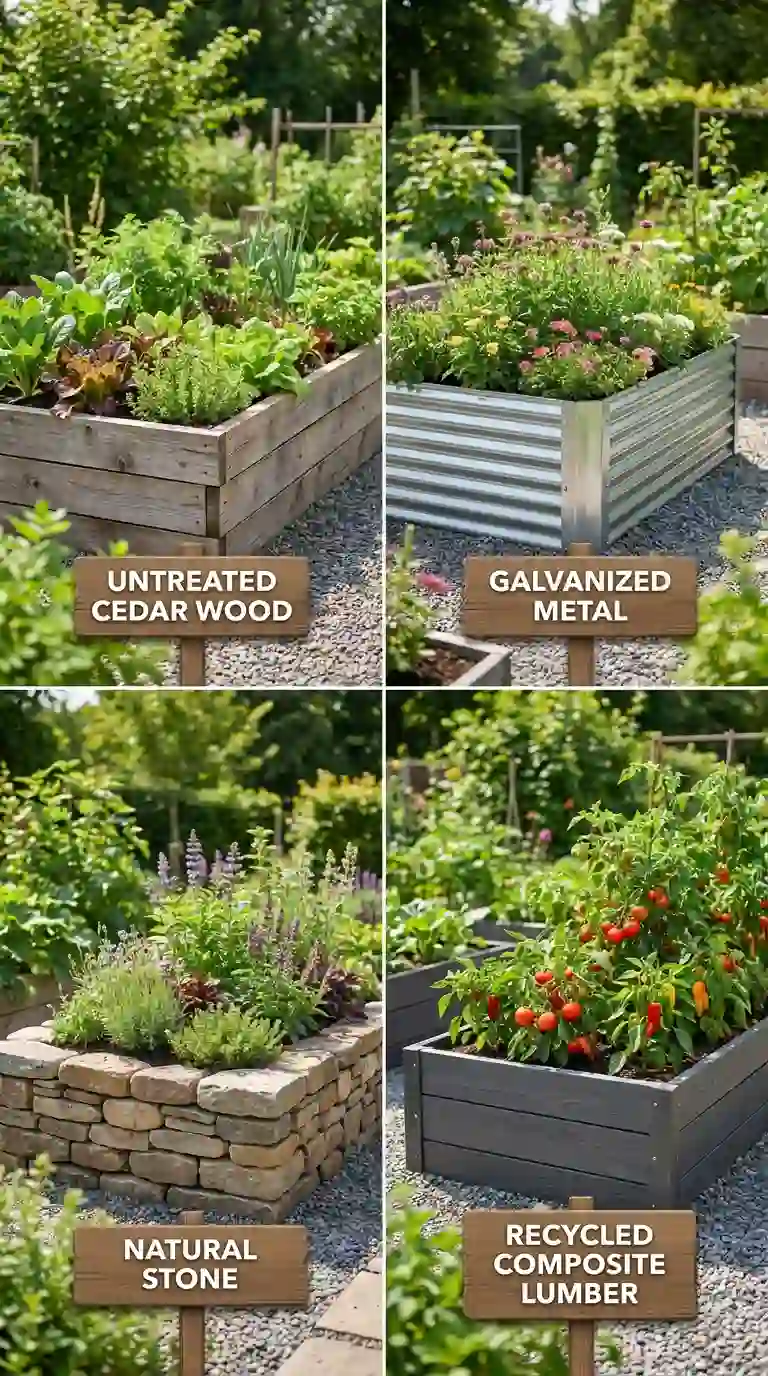
When you start looking at raised garden bed ideas, one of the first decisions you will face is material. Walk through any garden center and you will find wood, metal, stone, plastic, and everything in between. Each has real trade-offs, and I am going to give you the honest breakdown from someone who has used most of them.
Cedar Wood: The Gold Standard for Good Reason
If you ask most experienced gardeners what material they recommend for raised beds, the answer will almost always be cedar. Western red cedar has natural oils that make it highly resistant to rot and insect damage. A well-built cedar raised bed can last ten to fifteen years or more without any chemical treatment. It looks beautiful in the garden, smells amazing when you first cut it, and it is genuinely pleasant to work with.
The downside is cost. Cedar is not cheap, and prices have climbed in recent years. A simple 4×8 foot cedar raised bed kit can run anywhere from sixty to one hundred fifty dollars depending on the thickness of the boards. If budget is a concern, look for cedar at salvage yards or buy rough-cut cedar from local sawmills, which can be significantly cheaper than retail lumber.
Galvanized Metal Raised Beds: Sleek, Durable, and Modern
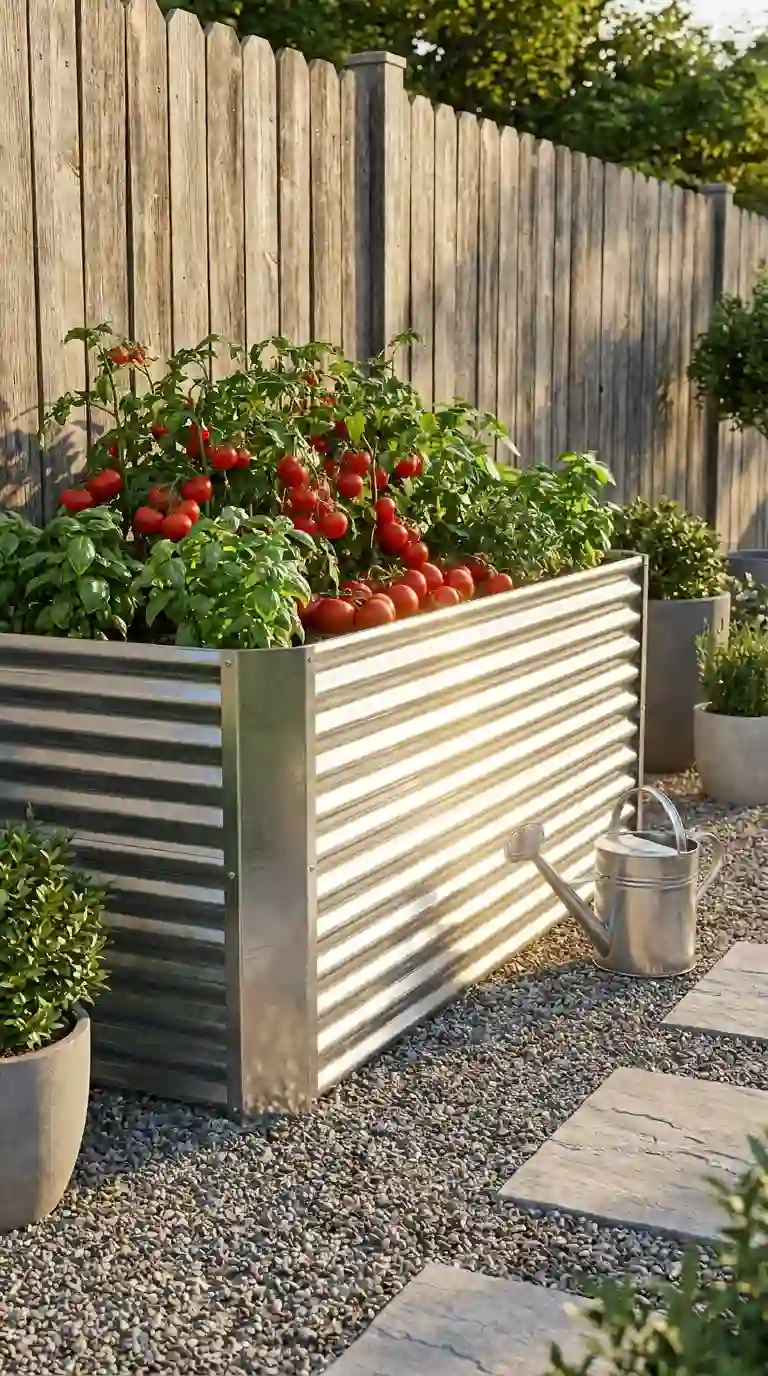
Metal raised garden bed ideas have surged in popularity in the past few years, and for good reason. Galvanized steel beds look stunning in contemporary garden designs, they last an extremely long time, and they heat up quickly in spring to give your plants a warm start. Corrugated metal beds in particular have a wonderful rustic-meets-modern aesthetic that photographs beautifully.
The concern people often raise about metal beds is whether the zinc coating in galvanized steel is safe for vegetables. Based on research and the experience of thousands of gardeners, galvanized metal beds are considered safe for food production. The zinc levels that could leach into soil are far below what would pose any health risk. However, if you want to play it completely safe, you can line the inside of a metal bed with food-safe fabric before filling it with soil.
Stone and Brick: Built for Eternity
If you want raised garden beds that will literally outlast you, stone or brick is the answer. A dry-stacked stone raised bed built correctly needs no mortar and can be adjusted and rebuilt as needed over time. It blends into the landscape in a way that looks completely natural, as if the garden has always been there.
The labor involved in stone bed construction is significant, and so is the material cost if you are buying stone. If you have access to natural fieldstone from your own property or a local source, however, the cost can drop to nearly zero. I helped a friend build stone beds on her Vermont property using stone she dug from her own fields, and they are without question the most beautiful raised beds I have ever seen in person.
Recycled and Upcycled Materials: Budget-Friendly Creativity
Some of the most creative raised garden bed ideas I have come across involve materials that most people would throw away. Old bathtubs make extraordinary raised beds with built-in drainage. Wooden pallets, when properly selected to avoid chemical treatment, can be assembled into functional growing beds quickly and cheaply. Even old galvanized stock tanks from farm supply stores double as gorgeous raised beds with excellent depth for root vegetables.
The key with recycled materials is knowing what to avoid. Never use railroad ties or pressure-treated lumber containing CCA (chromated copper arsenate) — older treated wood from before 2004 especially. Modern pressure-treated lumber labeled suitable for ground contact and garden use is generally considered safe, but if you are growing food and want total peace of mind, untreated cedar or naturally rot-resistant woods are the safer choice.
Top Raised Garden Bed Ideas by Style and Purpose
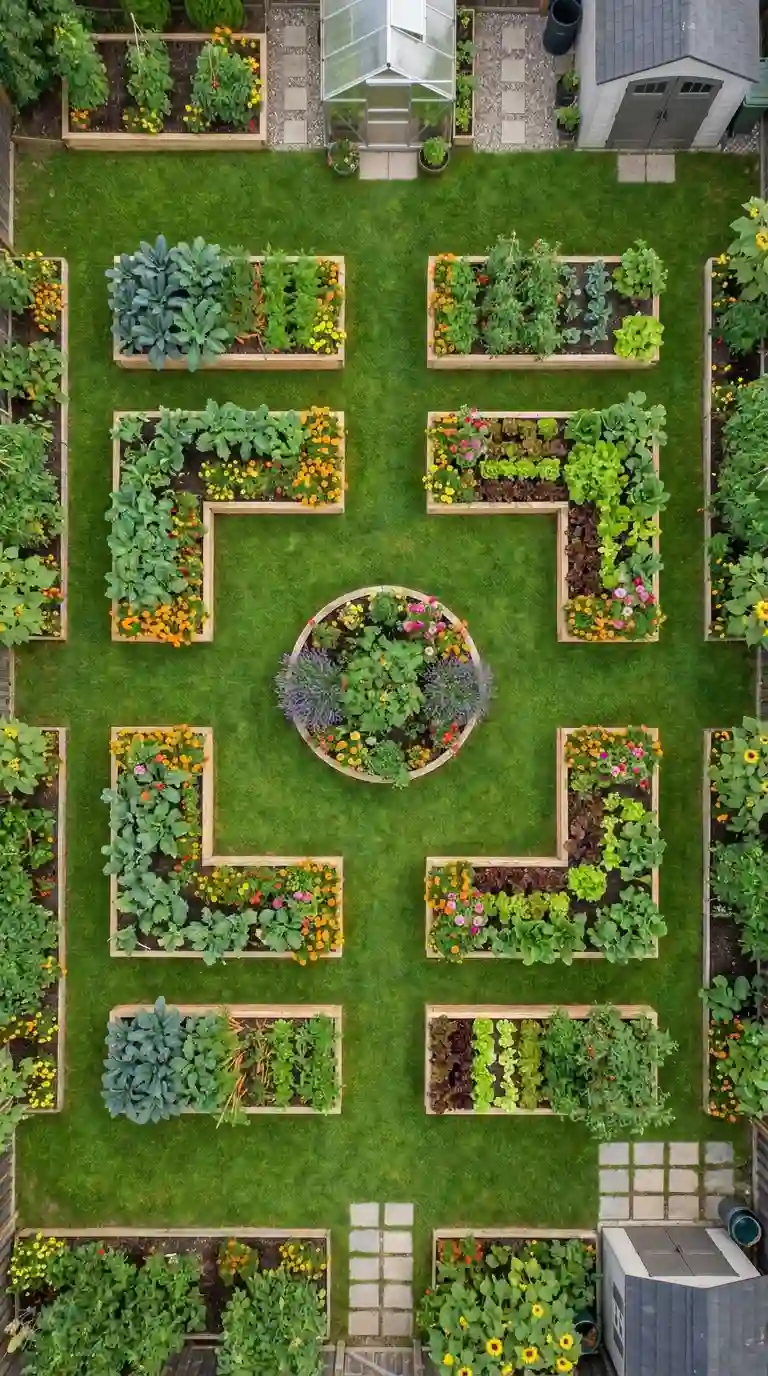
Now for the fun part. Let me walk you through the most popular and effective raised garden bed ideas organized by style, so you can find the one that matches your space, your budget, and your personal taste.
1. The Classic Rectangular Raised Bed
There is a reason the rectangular raised bed is the most common design in home gardens: it works. A standard 4×8 foot rectangular bed gives you 32 square feet of growing space while keeping every part of the bed reachable from the sides without stepping on the soil. The 4-foot width is especially important — it means a person of average height can reach the center of the bed from either side without strain.
For a beginner, I always recommend starting with one or two rectangular beds before getting more creative. Understand the basics of soil preparation, watering, and plant spacing in a simple format before adding complexity. You can always expand later. My very first bed was a plain 4×8 cedar rectangle, and it produced more food that first summer than I expected.
2. L-Shaped Raised Beds for Corner Spaces
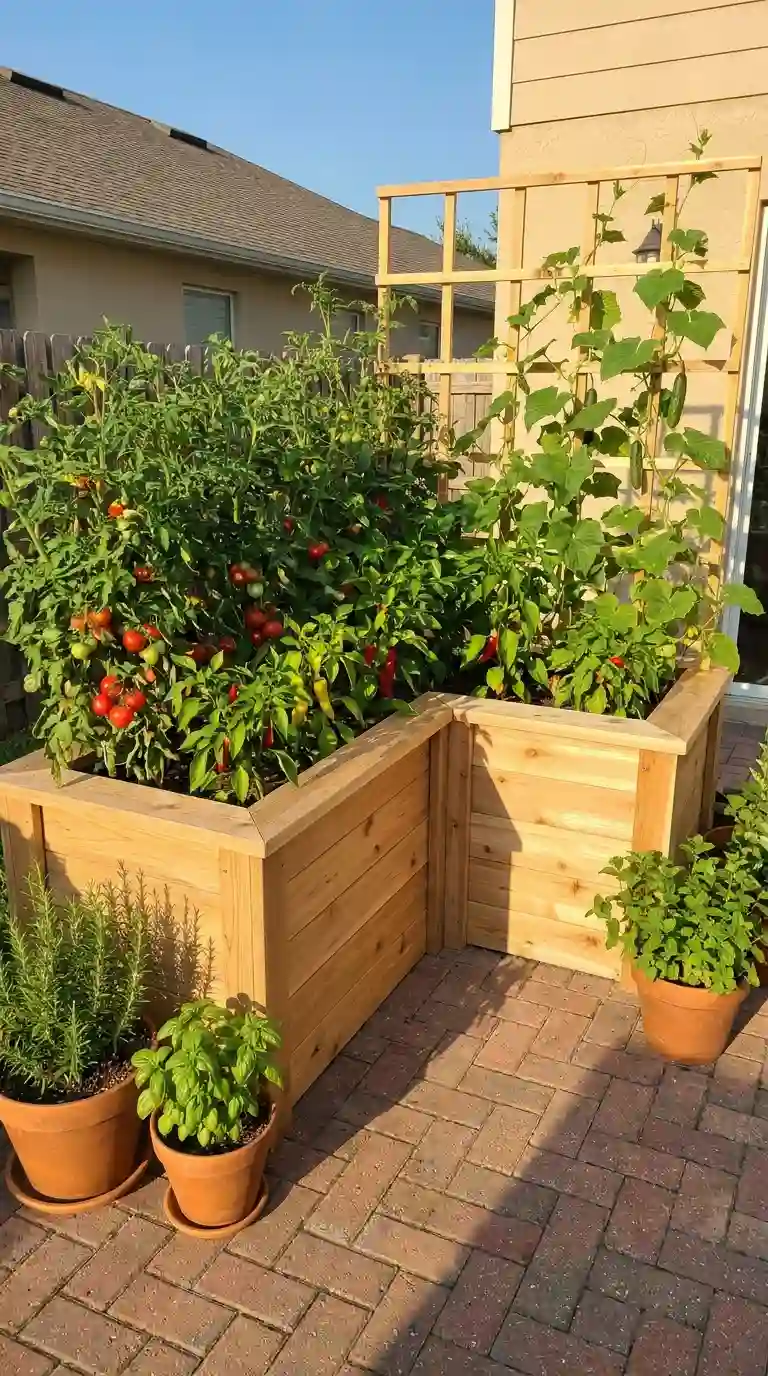
L-shaped raised garden bed ideas are brilliant for gardeners who want to make use of corner spaces in their yard or patio. They create a natural enclosure that can feel like a little garden room, especially when tall plants or trellises are added to the back section. They also allow you to create planting zones within the same structure — sun-loving vegetables in one arm, shade-tolerant herbs in the other.
Building an L-shaped bed is not much more complicated than building two rectangular beds joined at a corner. The trickiest part is making the corner joint sturdy enough to hold the weight of the soil. Using corner posts and securing them well is essential. I would recommend at least 4×4 inch corner posts sunk into the ground slightly for any L-shaped or U-shaped raised bed design.
3. Tiered Raised Garden Beds for Sloped Yards
If your yard has a slope, tiered raised garden bed ideas turn that challenge into a genuine asset. Instead of fighting the grade, you work with it, creating multiple levels of planting space that look intentional and stunning. Tiered beds are also excellent for creating visual drama in an otherwise flat landscape — they add dimension and structure that most gardens lack.
The most important thing to get right with tiered beds is drainage between levels. Water from the upper tier will drain down toward the lower tier, so make sure the soil in each level has excellent drainage built in and that your overall grading moves water away from structures. Some gardeners add a gravel layer between tiers to slow this movement and prevent soil erosion between levels.
4. Raised Beds with Built-In Seating
One of my absolute favorite raised garden bed ideas is building the frame tall enough and with a wide enough top rail to double as a bench. This idea is especially popular in community gardens and family spaces where people want to sit while they garden, eat lunch surrounded by their plants, or simply enjoy the space they have created.
The top cap or sitting rail needs to be at least six inches wide to be comfortable, and the height of the bed should be around 18 to 24 inches for seating to feel natural. Use wider, thicker lumber for the top rail — at least 2×6 inch boards — to provide enough surface area and structural support. Finish it with a light sanding so you do not end up with splinters when you sit down.
5. Keyhole Garden Beds
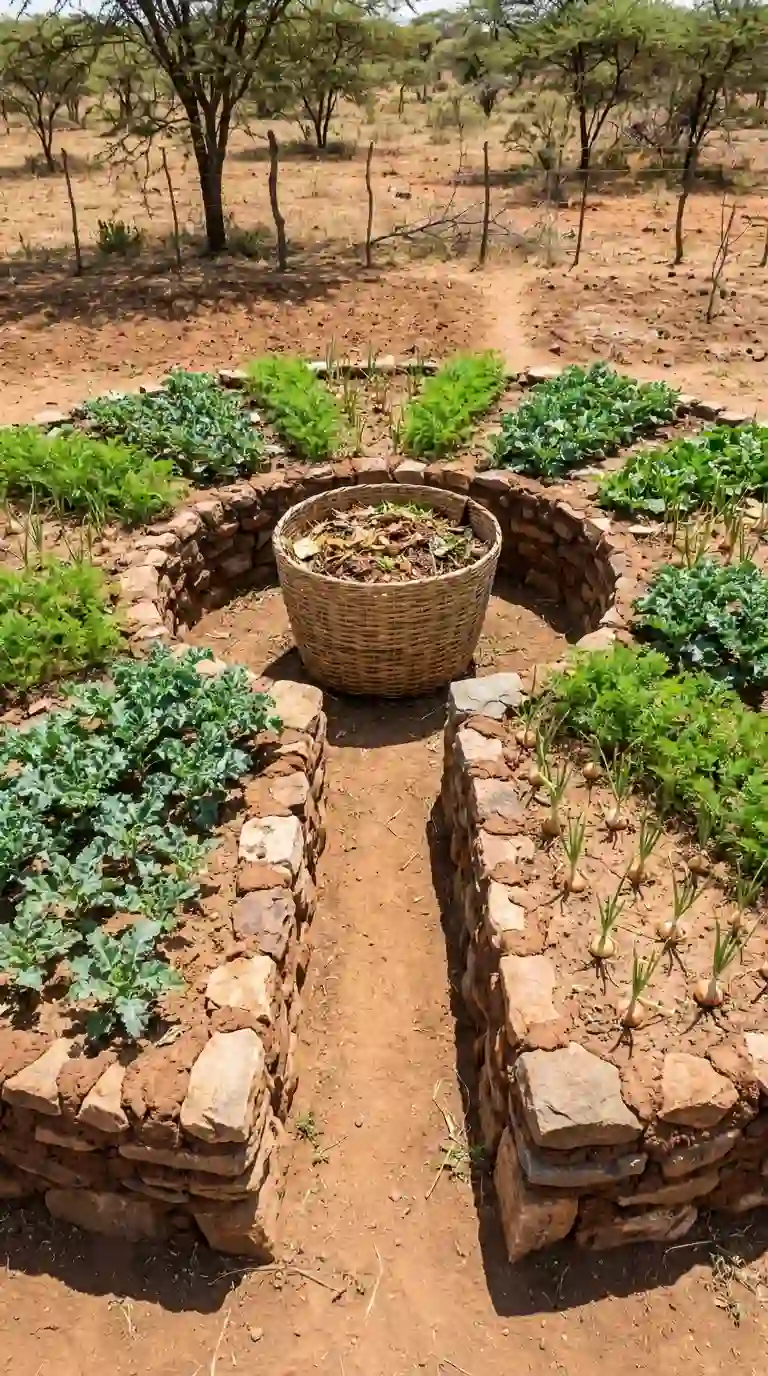
A keyhole garden is one of those raised garden bed ideas that comes from practical wisdom developed in arid climates, particularly in parts of Africa. The design is circular with a narrow path cut into the center, like a keyhole viewed from above. In the center of the circle stands a compost basket that feeds the garden constantly as organic matter breaks down.
The keyhole design maximizes planting area while keeping every part of the bed accessible via the central path. It is also highly water-efficient because the central compost basket acts like a wick that delivers moisture and nutrients directly to the surrounding roots. It is not the most common design in suburban gardens, but it is one of the most clever and resource-efficient I have ever encountered.
6. Vertical Raised Garden Beds for Small Spaces
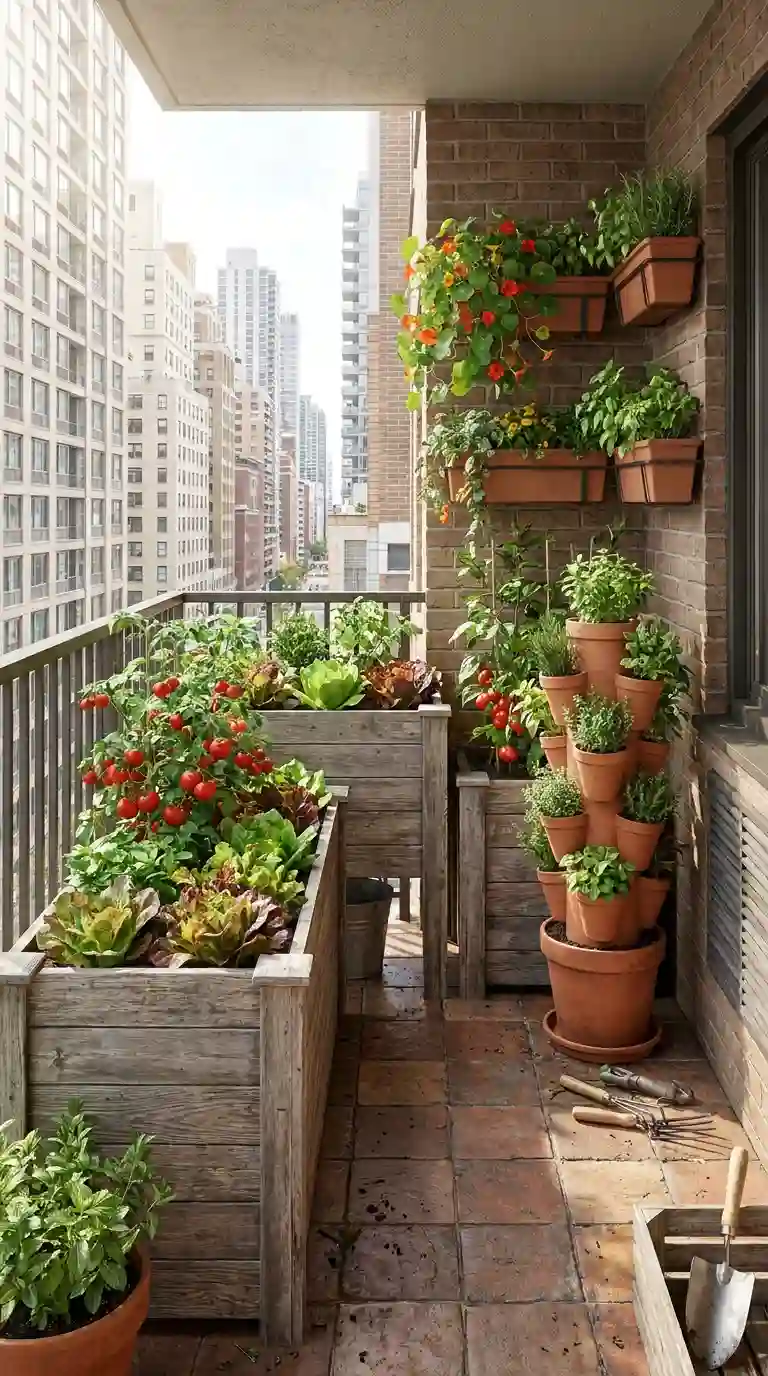
Not every raised garden bed idea involves spreading horizontally. Vertical raised garden beds are the answer for gardeners working with balconies, patios, or tiny urban backyards. These designs stack growing space upward, using wall-mounted pockets, stacked frames, or tower planters to let you grow a surprising amount of food in a very small footprint.
Strawberries, lettuce, spinach, herbs, and small peppers all do beautifully in vertical raised bed systems. The key challenge is watering — soil in vertical structures dries out faster than in traditional beds, so frequent watering or a drip irrigation system is worth the investment. I have a small tower planter on my apartment balcony that grows enough herbs to keep me supplied through summer without using much floor space at all.
7. Raised Garden Beds with Trellises
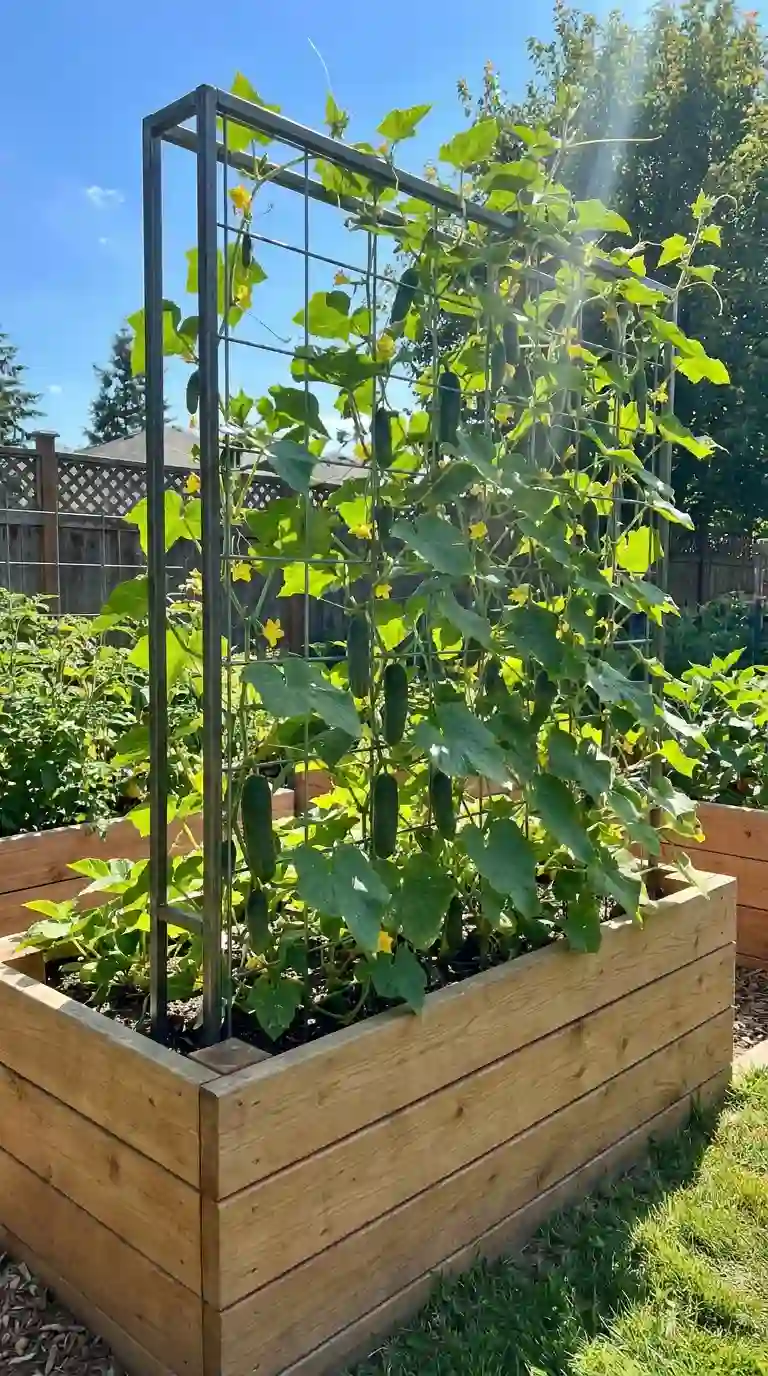
Adding a trellis to your raised garden bed ideas immediately unlocks a new category of vegetables: climbers. Cucumbers, pole beans, peas, and certain squash varieties all grow vertically given the chance, and they perform better that way — better airflow means fewer fungal diseases, and fruit that hangs freely is easier to spot and harvest.
A simple A-frame trellis or a flat trellis attached to the back of a raised bed adds almost no cost if you build it yourself using bamboo stakes and garden twine, or slightly more if you use hog wire panels that last indefinitely. Position trellis beds on the north side of your garden so the tall climbing plants do not shade the shorter beds beside them.
Raised Garden Bed Ideas for Specific Growing Goals
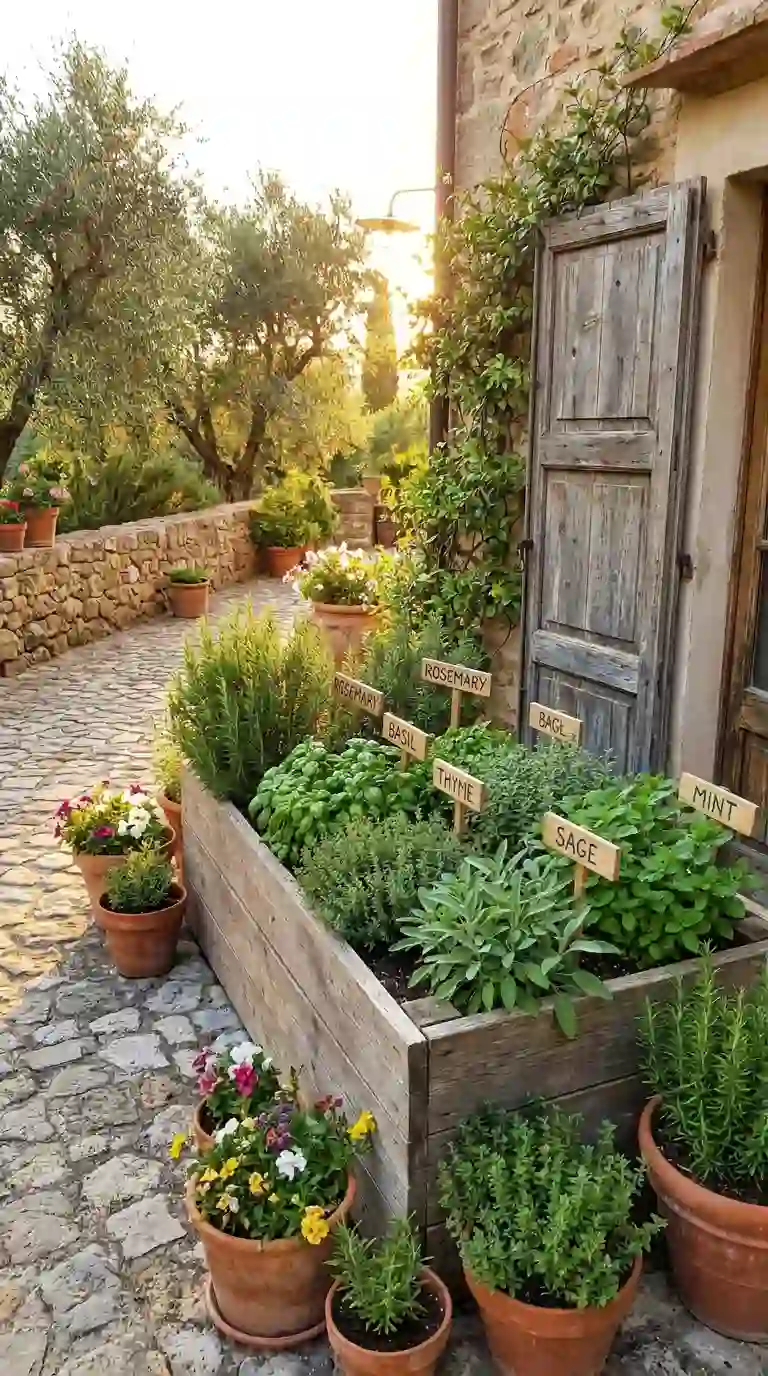
The best raised garden bed ideas are not just aesthetically pleasing — they are designed with a clear growing purpose in mind. Here are some specific setups worth considering depending on what you want to grow.
Dedicated Herb Gardens in Raised Beds
Growing herbs in a dedicated raised bed near your kitchen door is one of those decisions you will thank yourself for every single day. Fresh rosemary, basil, thyme, mint, chives, and parsley at arm’s reach while you cook changes the way you think about food entirely. Herbs are also among the easiest and most forgiving plants to grow, making a herb raised bed an ideal first project for beginners.
The one thing to watch with herbs is that some species, particularly mint, are aggressive spreaders. Plant mint in a container buried within the raised bed, or give it its own dedicated section with a physical barrier to prevent it from crowding out everything else. I learned this lesson the hard way after mint took over half my herb bed in a single season.
Strawberry Raised Beds: The Kid-Approved Setup
Strawberries are one of the most rewarding crops to grow in a raised bed, especially if you have children. The slightly elevated growing surface makes strawberries easy to spot and pick without bending, and the improved drainage that raised beds provide is exactly what strawberries prefer. They hate sitting in wet soil, and a well-built raised bed eliminates that problem completely.
A dedicated strawberry raised bed can be kept at ground level or elevated on legs for even easier picking access. Fill it with a mix of compost-enriched soil and consider using a weed-suppressing mulch like straw between the plants — hence the name strawberry, believed by many to refer to the traditional mulching practice. Allow runners to root within the bed to expand your plant population naturally each year.
Root Vegetable Beds: Depth Matters
Carrots, parsnips, beets, and daikon radishes all need something that most garden soils fail to provide: depth and loose, stone-free growing medium. This is where raised garden bed ideas really shine for root crops. By building a deeper bed — at least 12 to 18 inches for carrots, and ideally deeper for parsnips — you can fill it with a perfectly loose, fertile soil that lets roots grow straight and long without obstruction.
If building a very deep bed feels excessive, consider a hugelkultur approach within a moderate-depth bed. Bury logs or woody material at the bottom before filling with soil. As the wood decomposes over years, it creates a spongy, moisture-retaining layer that root crops absolutely love, and it adds effective depth to the growing zone without requiring an enormous amount of purchased soil.
Salad Garden Raised Beds: Cut and Come Again
A dedicated salad raised bed filled with lettuce varieties, arugula, spinach, and radishes is one of the most productive and satisfying raised garden setups possible. These crops grow quickly, can be harvested continuously using cut-and-come-again techniques, and regrow enough for multiple harvests from a single planting. A 4×4 foot raised bed planted intensively with mixed salad greens can provide enough salad for a family of four throughout spring and fall.
Because salad greens prefer cooler temperatures, a raised bed with a simple cold frame or row cover attached can extend the growing season into late fall and even through mild winters. I harvest salad greens from my covered raised bed well into December in my zone 6 garden, which feels like a small miracle every time I do it.
How to Build Your First Raised Garden Bed Step by Step
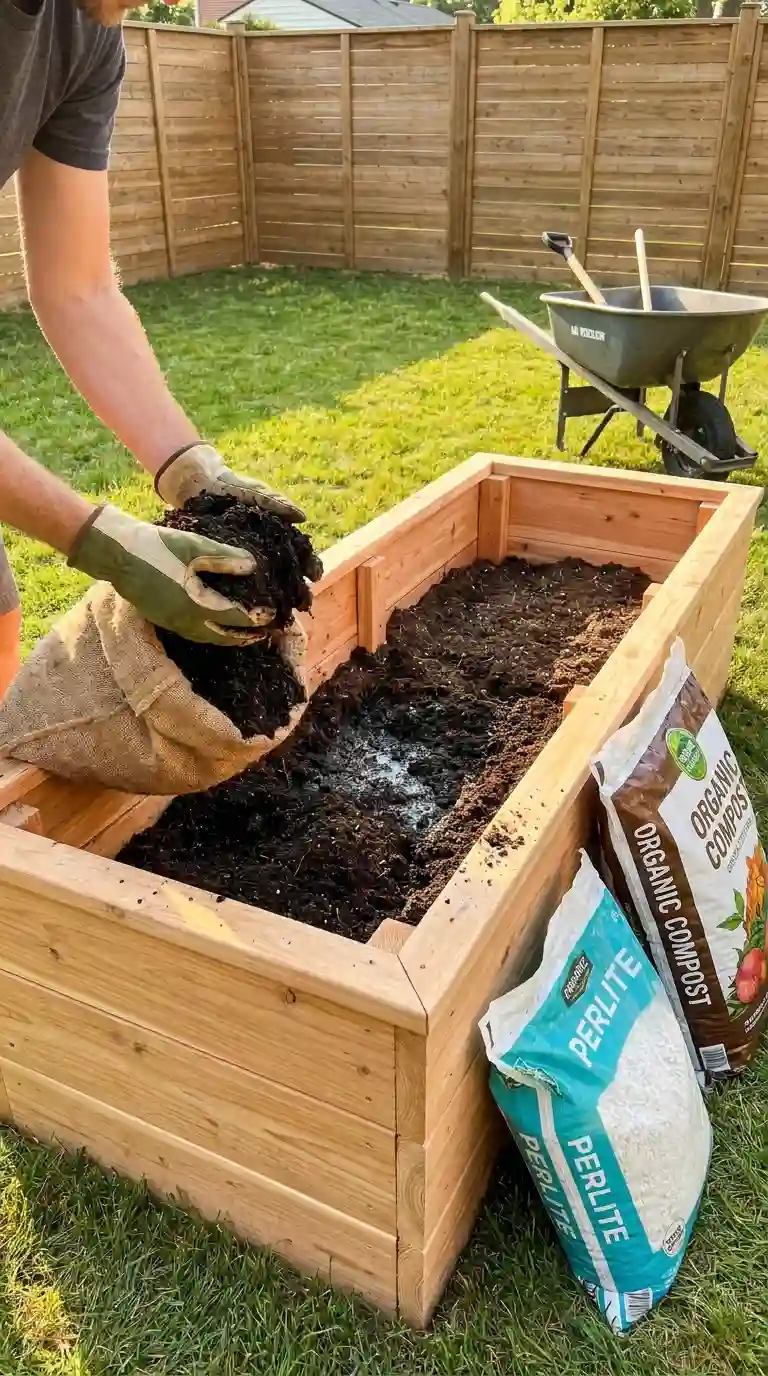
Knowing all the raised garden bed ideas in the world does not help if you are not sure how to actually build one. Let me walk you through the process of building a basic cedar raised bed from start to finish. I am going to keep this practical and avoid unnecessary jargon.
What You Will Need
For a standard 4×8 foot raised bed, you will need four 8-foot cedar boards (2×10 or 2×12 for a 10 to 12-inch depth), four corner posts cut from 4×4 cedar, exterior-grade screws (3 to 4 inch length), a drill, a saw if you are cutting your own lumber, and hardware cloth or landscape fabric for the bottom.
Optional but recommended: a level, a square, and a rubber mallet. The total material cost for a basic cedar raised bed runs roughly sixty to one hundred dollars depending on your local lumber prices. You can reduce that cost by shopping around at different lumber yards or buying unfinished rough-cut cedar.
Assembly from Start to Finish
Start by cutting your corner posts to the height you want your bed, typically 10 to 12 inches. Lay out your boards in the rectangle shape and use your square to confirm the corners are true right angles — this matters more than you might think. Attach each board to the corner posts using two screws per connection, pre-drilling to avoid splitting the cedar.
Once the frame is assembled, flip it upright and position it in your chosen location. If the ground is not level, use a level and adjust the soil beneath until the top of the bed frame is reasonably flat. Lay hardware cloth across the bottom of the bed before filling — this prevents voles, moles, and gophers from tunneling up into your bed and devastating your root crops. Staple the hardware cloth to the bottom edges of the boards.
The Soil Filling Strategy
The soil mix you use will determine more about your gardening success than almost any other decision. A classic and highly effective mix is often called Mel’s Mix after gardening author Mel Bartholomew: one third compost, one third peat moss or coconut coir, and one third coarse vermiculite or perlite. This blend is expensive up front but creates a light, nutritious, perfectly draining medium that most plants thrive in.
A more budget-conscious approach is to use 40 percent topsoil, 40 percent compost, and 20 percent perlite or coarse sand. This costs less and still performs well. The key is not to use plain topsoil alone — it compacts badly in raised beds and quickly begins to drain poorly. Always add organic matter generously, and plan to top up your bed with a couple of inches of compost each year to replenish what your plants use.
Raised Garden Bed Ideas for Small Spaces and Urban Gardens
Living in a city or a property with minimal outdoor space does not mean you cannot enjoy the benefits of a raised garden. Some of the most creative raised garden bed ideas I have ever come across came from urban gardeners working within serious constraints.
Container Raised Beds on Decks and Patios
Raised beds do not need to be anchored to the ground. Freestanding raised garden beds on legs — sometimes called elevated planters or table gardens — work beautifully on decks, patios, and concrete surfaces. They are self-contained, can be moved if needed, and are particularly useful for renters who cannot make permanent modifications to their outdoor space.
Many elevated planters come with drainage holes and trays already built in, making them suitable even for covered patio areas. Look for models with a reservoir at the bottom that provides some self-watering capability, which is especially helpful during summer when a container can dry out alarmingly fast in full sun.
Window Box Raised Beds: Herbs at Your Fingertips
Window box planters are essentially miniature raised garden beds, and they deserve more credit than they typically get. A long window box mounted beneath a kitchen window and filled with herbs gives you an accessible, low-maintenance growing space that requires almost no setup time. Basil, chives, parsley, thyme, and compact lettuce varieties all thrive in window boxes given enough sunlight.
The main challenge with window boxes is watering frequency. Because of their small soil volume, they dry out quickly in warm weather and may need daily watering during summer heat. A simple self-watering window box with a reservoir at the bottom solves this problem and reduces maintenance to once every few days even in summer.
Community Garden Raised Beds: Sharing the Dream
For urban residents without any private outdoor space, community gardens that offer individual raised bed plots are an incredible resource. Many cities have waiting lists for community garden plots, which speaks to how popular and valued this form of growing space has become. If you are on a waitlist, use the time to plan your layout, gather seeds, and research what grows best in your region.
Community raised garden bed ideas often involve maximum productivity in a limited space. Intensive planting methods like square foot gardening pair perfectly with raised beds and allow you to grow a surprising amount of food in a 4×4 or 4×8 foot plot. With thoughtful planning, a single raised bed plot can supply a significant portion of a household’s vegetable needs through the growing season.
Companion Planting in Raised Garden Beds: Growing Smarter, Not Harder
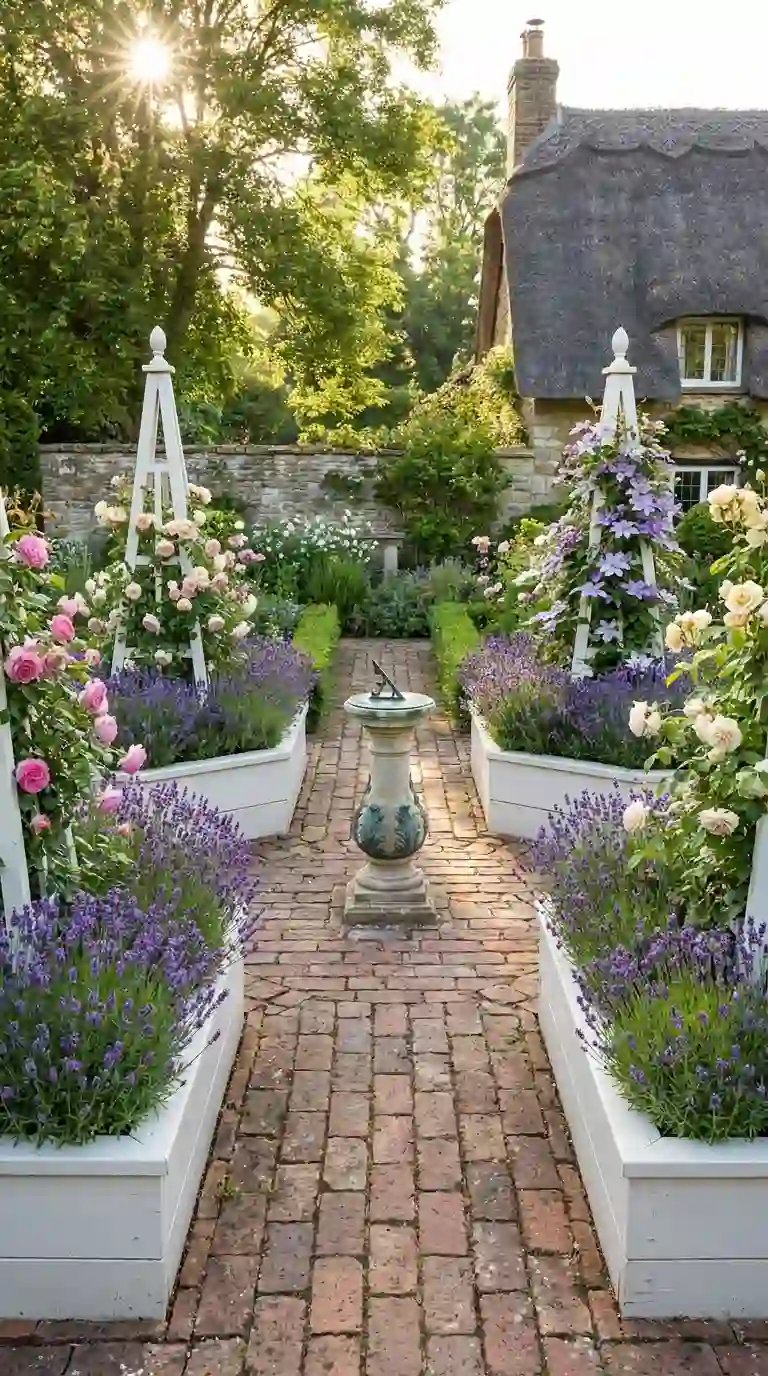
Once you have your raised garden bed built and filled, the next art to learn is companion planting. This is the practice of grouping plants together in ways that benefit each other, either by deterring pests, improving soil, or making efficient use of space. In a raised bed where space is premium, companion planting becomes especially powerful.
The Three Sisters: Corn, Beans, and Squash
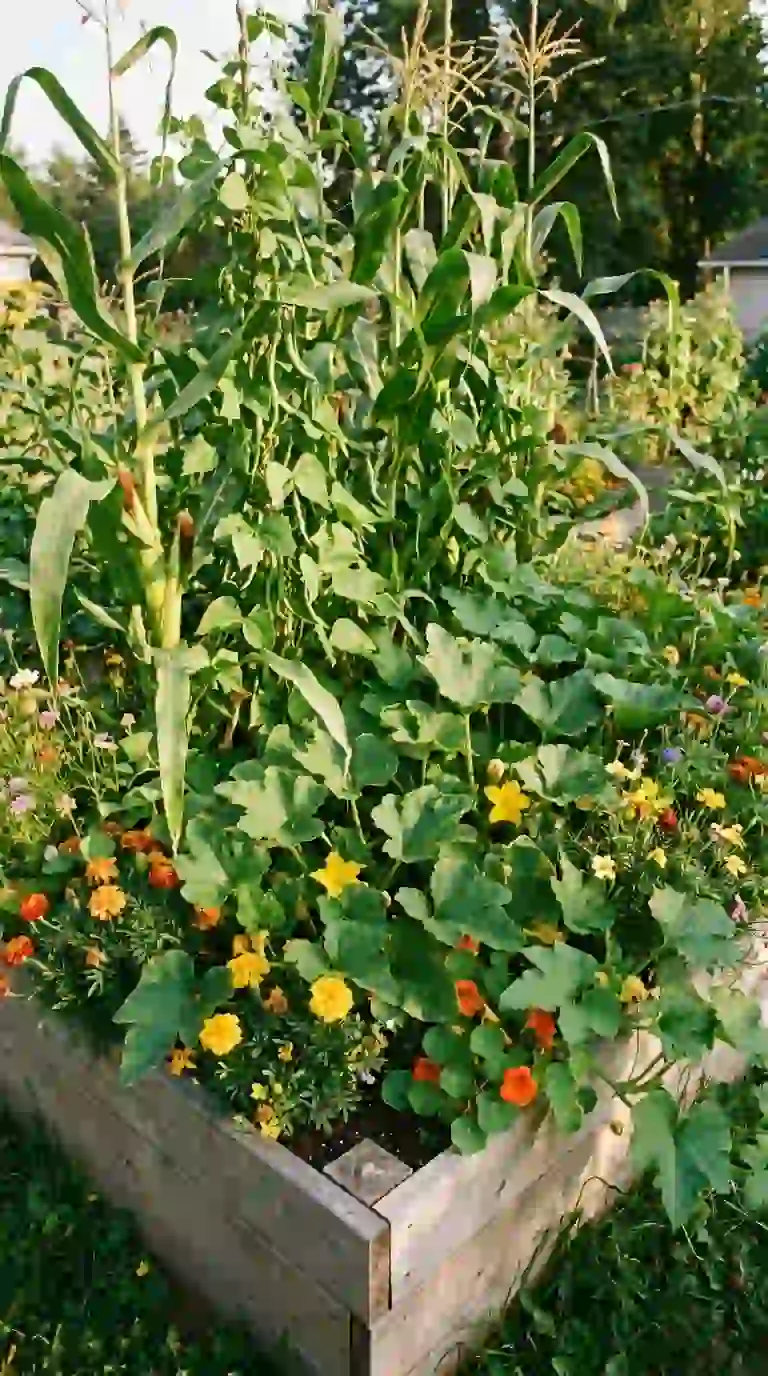
The most famous companion planting combination in North American gardening is the Three Sisters: corn, climbing beans, and squash. Indigenous communities across North America developed this system over thousands of years, and it is a perfect example of how plants can work together symbiotically. The corn provides a structure for the beans to climb. The beans fix nitrogen from the air into the soil, feeding both the corn and squash. The squash spreads its large leaves across the soil surface, suppressing weeds and retaining moisture.
This combination works beautifully in a large raised bed of at least 4×4 feet, ideally larger. Start the corn first and let it get a head start of a few weeks before introducing the beans and squash. A raised bed provides the excellent drainage that squash especially appreciates, and the deep soil supports the corn root system far better than compacted ground soil would.
Tomatoes and Basil: The Classic Pairing
Ask any Italian grandmother about growing tomatoes and basil together, and she will tell you it just makes sense. Beyond the obvious culinary pairing, basil is widely believed by gardeners to improve the flavor of tomatoes when grown nearby, and it is thought to repel certain pests including aphids and thrips. Whether the flavor improvement is scientifically measurable or not, the practical benefit of having fresh basil growing right beside your tomatoes in the same raised bed is undeniable.
Plant basil in the gaps between tomato plants and allow it to grow freely until it starts to flower — then pinch the flowers off to extend the leaf production. Both plants love the same conditions: full sun, consistent moisture, and warm temperatures. They are a natural fit for the same raised bed, and the result is both productive and visually beautiful.
Seasonal Raised Garden Bed Ideas: Making the Most of Every Month
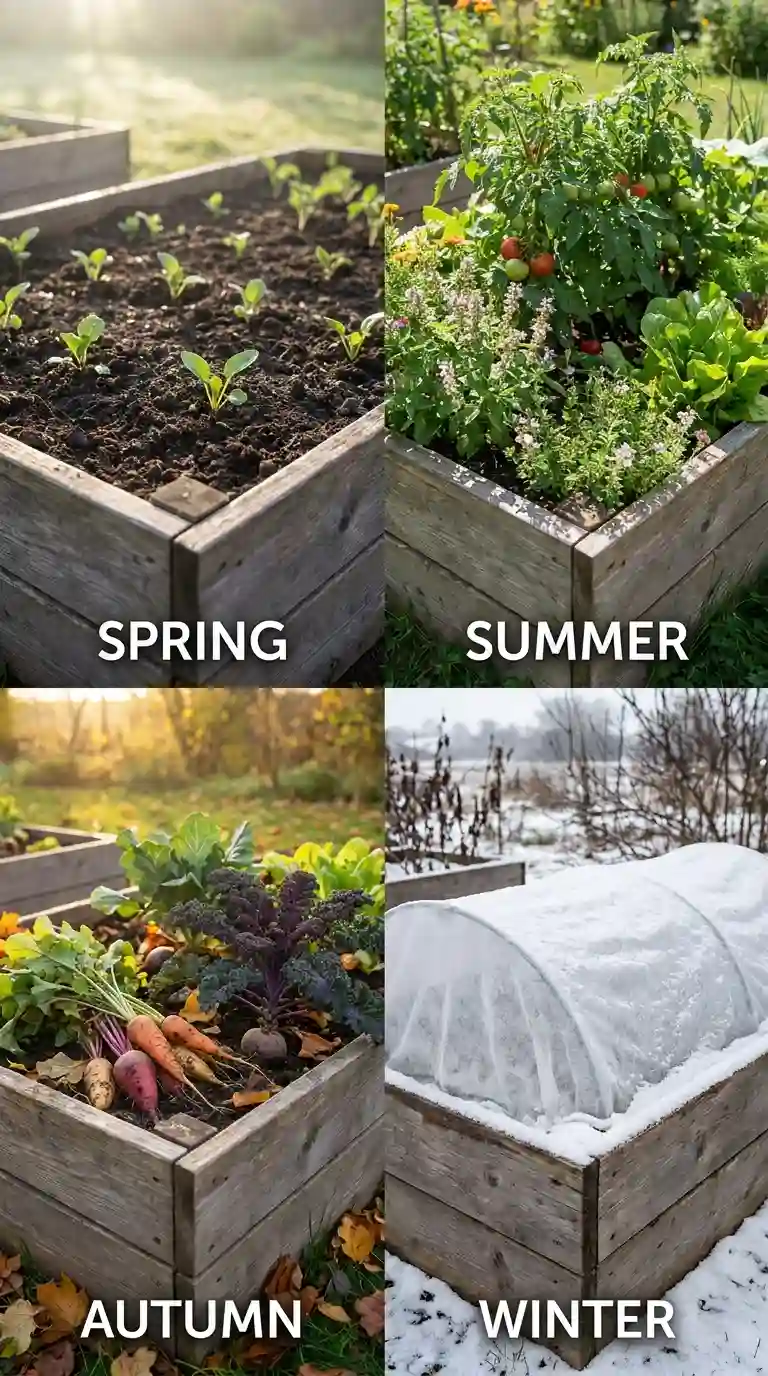
One of the great advantages of raised garden beds is how adaptable they are to year-round growing with a little planning. Here is how to think about your raised beds across the seasons.
Spring: Start Strong with Cool-Season Crops
As soon as your soil can be worked in spring, your raised beds are ready to plant. Because the soil in raised beds warms faster than ground soil, you can often start planting two to three weeks earlier than in-ground gardeners. Cool-season crops like peas, lettuce, spinach, arugula, kale, broccoli, and radishes can go in as soon as the soil temperature reaches 40 degrees Fahrenheit.
Start seeds indoors six to eight weeks before your last frost date and transplant them to the raised bed once they are established. This gives you a significant head start on the growing season and lets you have crops in the ground before summer heat forces cool-season plants into premature flowering.
Summer: Warm-Season Abundance
Summer is when raised garden beds truly earn their reputation. Tomatoes, peppers, cucumbers, squash, melons, beans, and eggplant all love the well-drained, warm growing environment that a properly built raised bed provides. Plant intensively but thoughtfully — check the mature size of each variety before planting and give them enough room to develop without competing too aggressively.
Summer raised bed management involves regular watering — typically deeper and less frequent is better than shallow daily watering, as it encourages roots to grow deep. Mulching the soil surface with straw, wood chips, or shredded leaves reduces water loss dramatically and keeps soil temperatures more stable during heat waves.
Fall and Winter: The Underused Growing Window
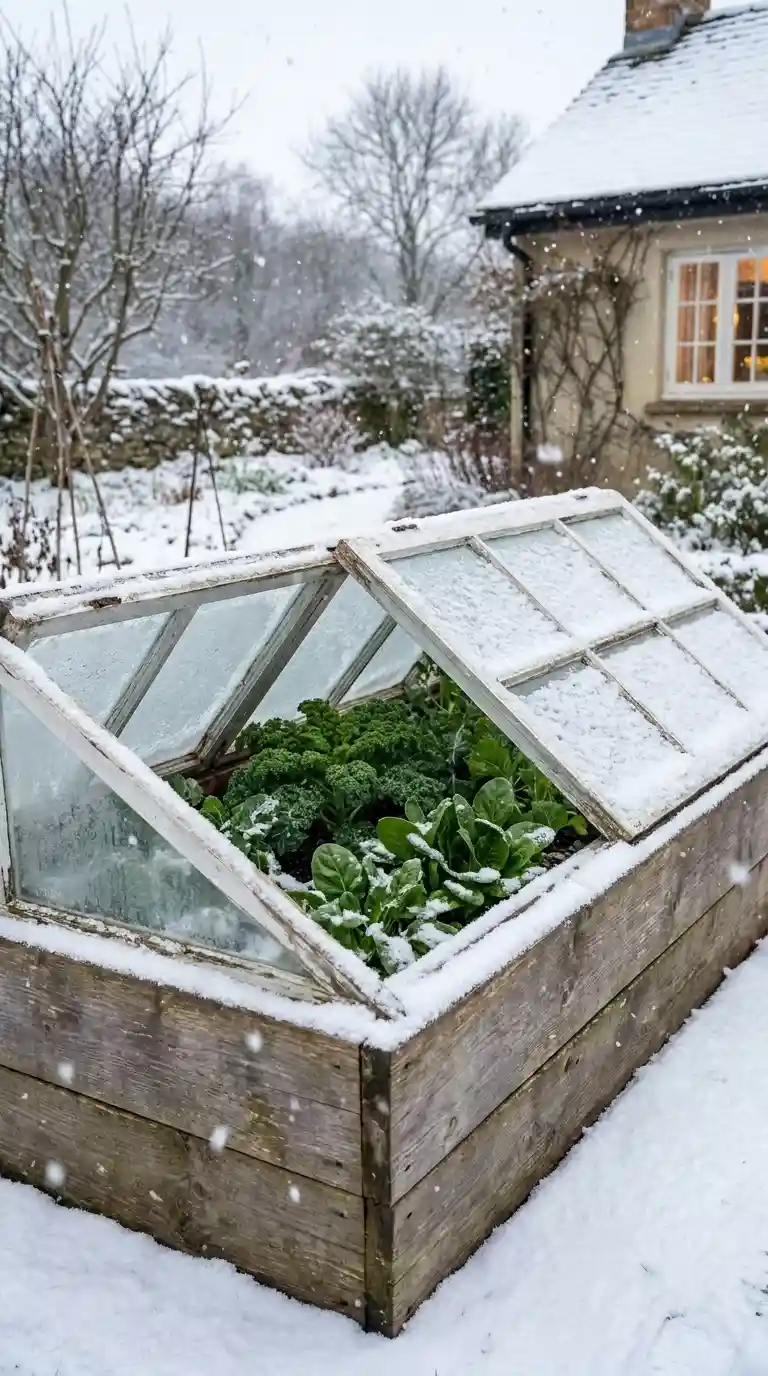
Many gardeners let their raised beds sit empty from October through March, which represents a missed opportunity. Cool-season crops planted in late summer and early fall can provide fresh vegetables well into winter in most climates. Kale, chard, spinach, carrots, parsnips, and many herbs are surprisingly cold-tolerant, especially when protected with a simple row cover or cold frame.
A cold frame is one of the most valuable additions to any raised bed setup. It is essentially a transparent lid — made from old storm windows, clear polycarbonate panels, or even thick plastic sheeting — that sits over the bed and traps solar heat. On a sunny winter day, the temperature inside a cold frame can be 20 to 30 degrees Fahrenheit warmer than the outside air temperature, creating a microclimate suitable for continued plant growth.
Watering Systems for Raised Garden Beds: Keeping It Simple and Effective
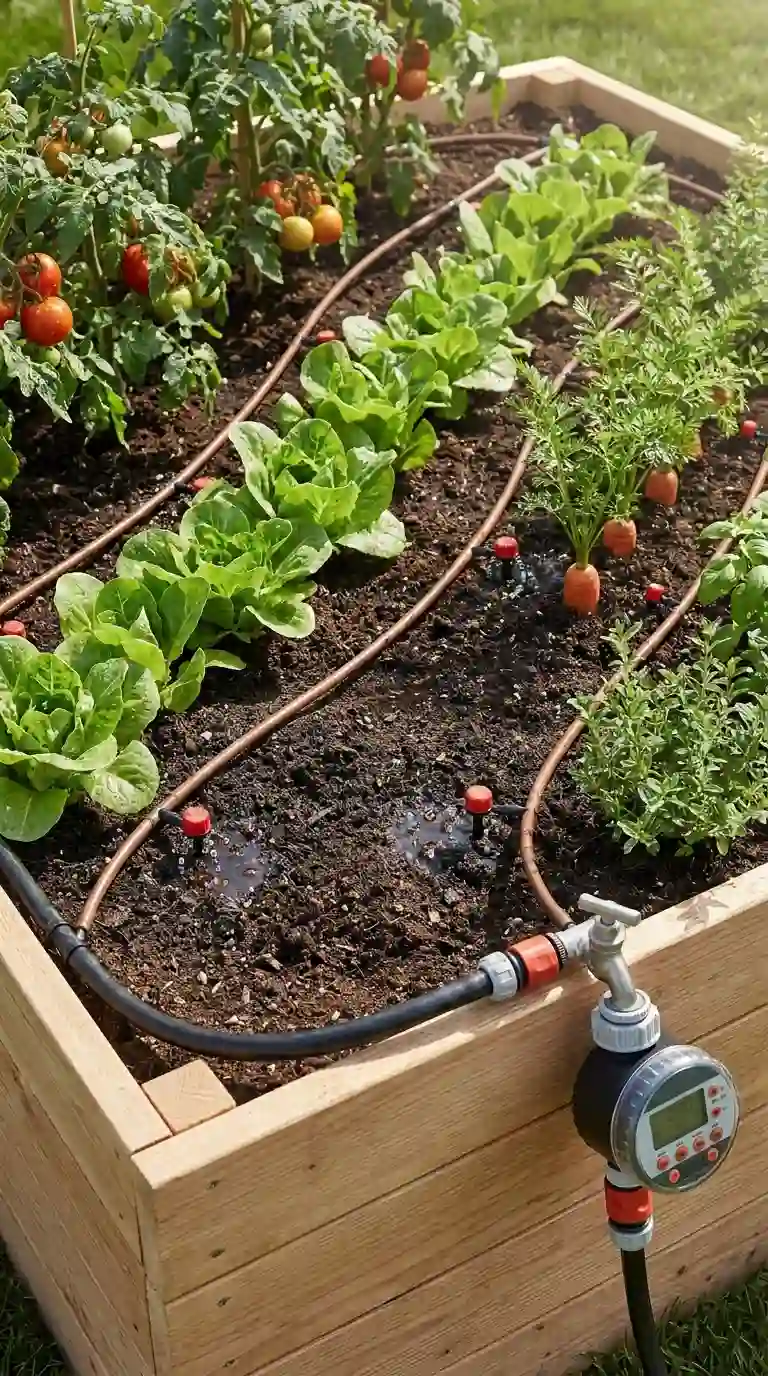
Watering is one area where a little investment in the right raised garden bed ideas pays dividends all season long. Let me share what actually works from practical experience.
Drip Irrigation: Set It and Mostly Forget It
Drip irrigation is the single most water-efficient and time-saving watering method for raised beds. Instead of overhead watering that wets the leaves and promotes fungal disease, drip systems deliver water directly to the soil surface near plant roots. This means less evaporation, lower disease pressure, and more consistent soil moisture — all of which lead to healthier, more productive plants.
Setting up a basic drip system for a couple of raised beds costs roughly forty to eighty dollars and can be done in an afternoon. Connect it to a battery-powered timer and your raised beds will water themselves even when you are away for a weekend. I added a timer to my drip system two summers ago and the improvement in plant performance was immediately noticeable.
Soaker Hoses: The Budget-Friendly Alternative
Soaker hoses are the lower-cost sibling of drip irrigation and work on the same principle. Water seeps slowly out along the entire length of the hose directly into the soil. They are easier to install than drip systems and cost a fraction of the price — a soaker hose for a standard raised bed costs around ten to twenty dollars.
The downside of soaker hoses is that they are less precise than drip emitters and can clog more easily, especially in areas with hard water. They also tend to degrade faster when exposed to UV light, so store them inside during winter. Still, for most gardeners with one or two raised beds, a soaker hose connected to a timer is an excellent and affordable solution.
Raised Garden Bed Ideas for Beautiful Garden Aesthetics
Your raised beds should not just produce food — they should make your garden a place you want to spend time in. Here are some design ideas that combine beauty with practicality.
Paint and Stain for Personality
An often-overlooked way to add character to wooden raised garden beds is with exterior paint or stain. A raised bed painted in a deep forest green, charcoal gray, or classic white immediately looks more intentional and polished in the landscape. Make sure to use an exterior-grade finish that is safe for use around edibles — water-based latex paints are generally considered safe once fully dried.
Dark colors absorb heat, which can be an advantage in cooler climates but a disadvantage in very hot regions where it might overheat the soil. Light colors reflect heat and look crisp in formal garden settings. Consider your climate and aesthetic preferences before choosing a color, but know that a simple paint job can genuinely transform the look of your garden.
Pathways Between Raised Beds: Functional and Beautiful
The space between your raised garden beds matters as much as the beds themselves. Well-planned pathways improve the overall function and appearance of your garden dramatically. A path at least 18 to 24 inches wide is necessary for comfortable walking and kneeling access. Wider is better — at least 30 to 36 inches if you plan to use a wheelbarrow.
Material choices for pathways range from free or cheap to genuinely beautiful. Wood chips are affordable, suppress weeds, improve the soil as they decompose, and look natural. Gravel paths are tidier but need edging to prevent spread. Brick, flagstone, and pavers create permanent, formal pathways that add significant value to the garden’s visual appeal and can last decades with minimal maintenance.
Raised Beds as Garden Focal Points
Some of the most impressive gardens I have visited use raised beds not just as growing spaces but as deliberate focal points in the landscape. A large octagonal raised bed in the center of a formal garden, surrounded by gravel paths and companion plantings, becomes a design statement as much as a production space.
Adding decorative elements within or near your raised beds — a simple tuteur, a decorative obelisk for climbing plants, or even well-chosen ceramic pots placed at the ends of beds — elevates the entire garden aesthetic. You do not need a huge budget to do this. Simple handmade tuteurs from bamboo and twine cost almost nothing and add instant vertical charm.
Common Mistakes to Avoid with Raised Garden Beds
After years of gardening in raised beds, I have made most of the common mistakes so you do not have to. Here are the ones that catch gardeners off guard most often.
Underestimating Soil Volume Needs
This catches almost every first-time raised bed builder. You fill your new bed with what looks like plenty of soil, plant your seedlings, water it in, and check it the next morning to find the soil level has dropped by several inches. Soil settles significantly after watering, particularly if it contains a lot of compost. Order more soil than your calculated volume and plan to top it up after the first few waterings before adding plants.
A useful rule of thumb: order or mix about 25 percent more soil than the calculated cubic footage of your raised bed. This accounts for settling and gives you enough to mound up slightly in the center, which promotes drainage toward the edges.
Placing Beds Where Drainage is Poor
The superior drainage of raised beds is one of their greatest strengths, but even a raised bed will have problems if it is sitting in a low spot that pools water. The elevation of a raised bed helps, but if water is pooling around the base of the bed and staying there, the moisture level in the soil will be higher than ideal. Over time, this can lead to root rot in susceptible plants.
Before building in a location, observe where water flows during a rainstorm. If the spot collects water, either amend the drainage beneath the bed by adding gravel, build a slightly elevated foundation, or choose a different location. Positioning raised beds on a gentle slope is actually ideal — water drains away naturally without any standing.
Overcrowding Plants
The abundance of rich soil in a raised bed can create a false sense of security about planting density. I have been guilty of cramming in more plants than recommended spacing allows, convinced that the extra fertility would compensate. It does not. Overcrowded plants compete for light, air circulation suffers and fungal disease follows, and root systems crowd each other out before plants reach full productive potential.
Follow spacing guidelines and use vertical growth to make the most of your space rather than horizontal crowding. A single well-spaced tomato plant in a raised bed will out-produce two crowded ones every time, both in fruit quantity and quality.
Budget-Friendly Raised Garden Bed Ideas That Do Not Sacrifice Quality
Not every great raised garden bed needs to be an expensive one. Here are some genuinely effective ways to reduce costs without compromising your growing results.
Sourcing Free or Cheap Materials
Facebook Marketplace and Craigslist regularly feature free or low-cost landscaping materials that work perfectly for raised bed construction. Untreated wooden pallets, old fencing boards, and leftover lumber from construction projects all show up with regularity. Stone and brick are also frequently offered free by homeowners who are removing old patios or retaining walls.
Local sawmills are another excellent source of affordable lumber. They often sell rough-cut slabs and off-cut pieces at a fraction of the cost of dimensional lumber from a home improvement store. The wood may need more work — rough edges, irregular thickness — but for a garden bed that is going to be covered in soil and plants, perfect dimensional accuracy is not necessary.
Making Your Own Compost
If there is one investment that pays back its cost almost immediately in the context of raised garden beds, it is a compost bin. The average home garden generates enormous amounts of organic waste — vegetable peels, coffee grounds, grass clippings, fallen leaves, and plant trimmings — that can all be converted into rich compost. That compost, used to fill and amend raised beds, is as good as or better than anything you can buy in a bag.
A basic compost bin can be made from four wooden pallets secured at the corners with wire — free materials, minimal labor, genuinely effective result. It takes about six months to a year to produce finished compost using a cold composting method, or as little as four to eight weeks if you actively turn and manage a hot compost pile. Either way, you are producing something valuable from what would otherwise be waste.
Raised Garden Bed Ideas for Kids: Growing the Next Generation of Gardeners
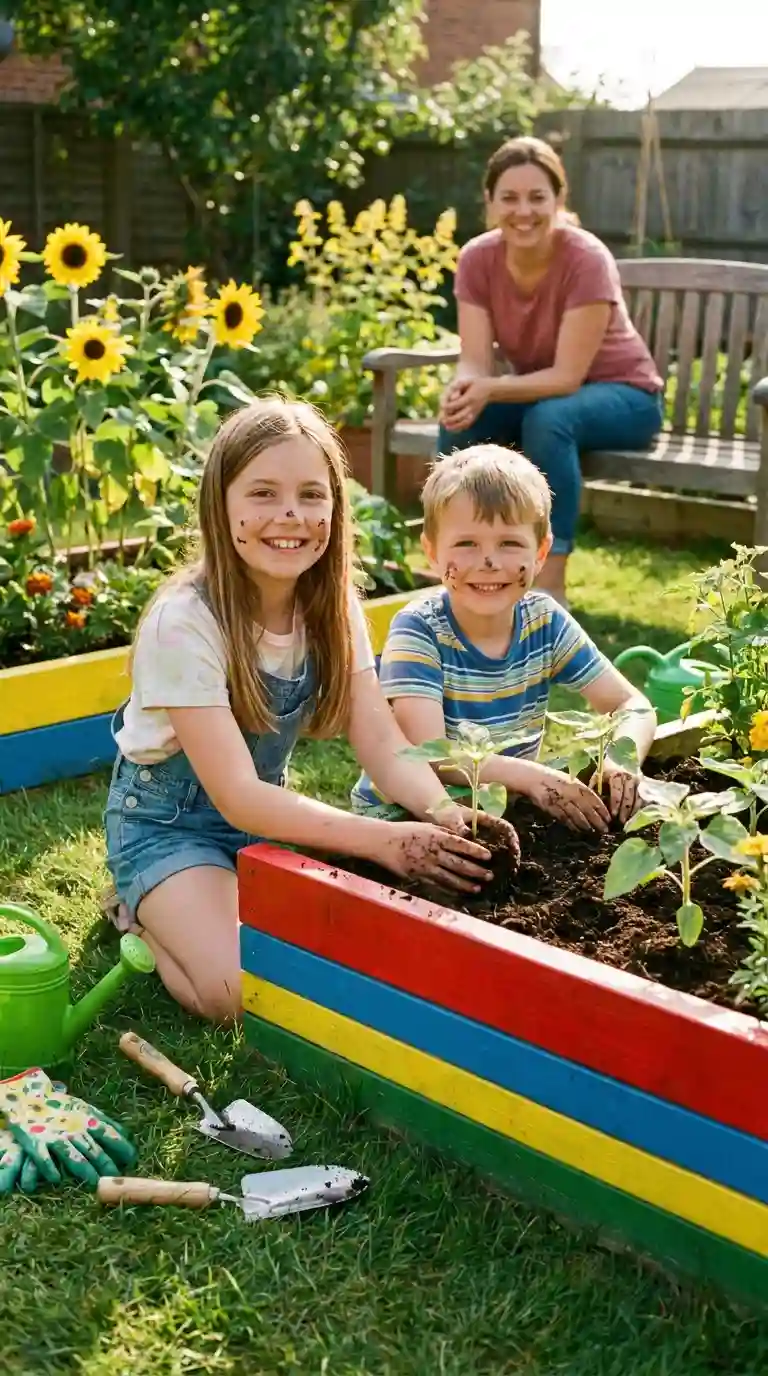
Getting children involved in gardening from a young age has benefits that go far beyond the garden. Research consistently shows that children who grow food are more likely to eat vegetables, more connected to where food comes from, and develop patience, responsibility, and a relationship with the natural world.
Child-Height Raised Beds
Design a raised bed specifically for the children in your life at their height. A low bed — six to eight inches off the ground — at a comfortable working height for a child removes the physical barrier that makes adult-height beds frustrating for young gardeners. Better yet, let them paint it whatever color they choose. Ownership builds enthusiasm.
Plant fast-maturing crops that reward short attention spans. Radishes are ready in three to four weeks. Cherry tomatoes produce abundantly and can be popped directly from the vine into a delighted mouth. Sunflowers provide drama and progress that a child can track week by week as the flower head grows taller and taller.
The Pizza Garden Raised Bed
One of the most popular raised garden bed ideas for children is the pizza garden: a circular or roughly round bed divided into wedge-shaped sections, each planted with a pizza topping. Tomatoes in one wedge, basil in another, peppers, oregano, garlic. When harvest time comes, the children get to pick their toppings and help make the pizza from their own garden.
This concept makes gardening immediately and concretely rewarding for children. It also turns the garden into a learning opportunity about where food comes from and how growing conditions affect flavor. Pizza garden beds have produced some of the best gardeners I know — they just started as children who thought they were playing.
Final Thoughts
Raised garden bed ideas are genuinely one of the most rewarding places to invest time, creativity, and resources in your outdoor space. Whether you build a single simple cedar rectangle this weekend or gradually develop an elaborate multi-bed food garden over several years, the process teaches you something new every season and delivers tangible, delicious results.
What I love most about raised beds after all these years is that they meet you where you are. Beginners find them forgiving and manageable. Experienced gardeners find endless room for refinement and experimentation. Children find them magical. People with physical limitations find them liberating. There is genuinely something for everyone in the world of raised garden beds.
Start small if you are unsure. Build one 4×8 foot cedar raised bed, fill it with good soil, and plant five or six of your favorite vegetables. Tend it through the season, observe what works, eat what you grow, and notice how you feel at the end of that first successful summer. I promise you: there will be a second bed. And then a third. The raised garden bed journey, once begun, rarely ends — it only grows.
Happy growin
Frequently Asked Questions
1. What is the best size for a raised garden bed?
The most popular and practical size is 4 feet wide by 8 feet long. The 4-foot width is key because it allows an average adult to reach the center of the bed from either side without stepping into the growing area and compacting the soil. The 8-foot length gives enough planting space to grow a meaningful variety of crops. For height, 10 to 12 inches works well for most vegetables, though root crops benefit from 18 inches or more.
2. What is the best wood to use for raised garden beds?
Western red cedar is the most widely recommended wood for raised beds because of its natural rot resistance and pleasant appearance. It can last 10 to 15 years without any chemical treatment. Douglas fir is a good, more affordable alternative that lasts around 5 to 8 years. Redwood is excellent but increasingly expensive and harder to source. Avoid pressure-treated lumber from before 2004 and always avoid wood treated with CCA.
3. How deep should raised garden beds be?
The ideal depth depends on what you are growing. Most vegetables do well in 10 to 12 inches of soil. Shallow-rooted crops like lettuce and herbs can get by with 6 to 8 inches. Deep-rooted crops like carrots, parsnips, and tomatoes benefit from 18 inches or more. If you are placing the bed on concrete or another non-soil surface, aim for at least 12 inches to give roots enough room.
4. Do raised garden beds need drainage holes?
Raised beds built directly on the ground do not need drainage holes because excess water can drain into the native soil below. However, if you are building an elevated planter on a deck or patio, drainage holes in the bottom are essential. Without drainage, the soil becomes waterlogged and plant roots suffocate. Space drainage holes every 6 to 8 inches across the bottom of any enclosed raised planter.
5. What do you put on the bottom of a raised garden bed?
The most important thing to add is hardware cloth or wire mesh to prevent burrowing pests from accessing the bed from below. Beyond that, many gardeners add a layer of cardboard directly on the soil surface to smother existing weeds before filling with growing medium. Some gardeners use the huge lkultur method and bury logs or wood chips at the bottom to add water retention and organic matter as they decompose.
6. How often should raised garden beds be watered?
Raised beds typically need watering more frequently than in-ground gardens because they drain faster and the soil volume is limited. In summer heat, you may need to water every one to two days, particularly for containers and shallow beds. The best approach is to check soil moisture by inserting your finger two inches into the soil — if it feels dry at that depth, it is time to water. Drip irrigation with a timer eliminates the guesswork entirely.
7. What is the best soil mix for raised garden beds?
The classic mix recommended by most experienced gardeners combines compost, topsoil or loam, and a drainage amendment like perlite, vermiculite, or coarse sand in roughly equal parts. A popular formula is one-third each of compost, peat moss or coconut coir, and coarse vermiculite. Avoid using native clay soil directly in raised beds as it compacts badly. Whatever mix you choose, prioritize compost — it is the single most important ingredient for plant performance.
8. Can you use regular garden soil in raised beds?
You can, but it is not ideal on its own. Regular garden or topsoil compacts over time in a raised bed environment, reducing drainage and making it harder for roots to penetrate. If you want to use garden soil, mix it with at least 40 to 50 percent compost and some perlite to improve its structure and drainage. Purchasing pre-blended raised bed soil mixes from garden centers is a convenient option that ensures good starting conditions.
9. How do you prevent weeds in raised garden beds?
Raised beds have a significant natural advantage over in-ground gardens when it comes to weed control — by starting with purchased soil rather than native soil, you eliminate most of the weed seed bank from the beginning. Maintain a low weed profile by mulching the soil surface with straw, wood chips, or shredded leaves, which suppresses weed germination effectively. Hand-weed any that do appear promptly, before they establish root systems and become difficult to remove.
10. How long do wooden raised garden beds last?
The lifespan of a wooden raised bed depends heavily on the wood species and whether it has been treated or finished. Untreated cedar typically lasts 10 to 15 years or more. Untreated pine or fir might last 5 to 8 years before showing significant rot. Painting or sealing the exterior of the bed can extend its life somewhat. Metal, stone, and brick raised beds last essentially indefinitely with minimal maintenance.
11. What vegetables grow best in raised garden beds?
Almost any vegetable grows well in a raised bed, but crops that particularly benefit include tomatoes, cucumbers, peppers, lettuce and salad greens, carrots and root vegetables, beans, squash, and herbs. Vegetables that require a lot of space to spread — pumpkins, large winter squash, sweet corn — are generally better suited to in-ground gardens unless you have multiple large raised beds to dedicate to them.
12. How do you prepare raised garden beds for winter?
At the end of the growing season, remove spent plants, roots, and any debris that could harbor disease or pests. Add a generous layer of compost to replenish nutrients used during the growing season. Plant a cover crop like winter rye or crimson clover to protect the soil from erosion and add organic matter when turned in spring. If you are not planting a cover crop, mulch the surface with straw or wood chips to prevent nutrient leaching over winter.
13. Can raised garden beds be placed on concrete?
Yes, raised garden beds work well on concrete surfaces as long as they are given adequate depth. Build or buy a bed with at least 12 inches of soil depth, and include proper drainage holes in the base if the bed is fully enclosed on the bottom. Some gardeners add a layer of gravel beneath the soil in concrete-placed beds to further improve drainage. Elevating the bed slightly off the concrete on small feet or blocks also helps.
14. Are raised garden beds worth the investment?
For most gardeners, raised beds are absolutely worth the investment. They produce higher yields per square foot than in-ground gardens, require less weeding, provide better growing conditions for most vegetables, extend the growing season, and eliminate the constraints of poor native soil. The initial cost is higher than simply planting in the ground, but the ongoing productivity and reduced effort more than offset this within one or two growing seasons.
15. How do you stop animals from getting into raised garden beds?
Hardware cloth buried beneath the bed prevents burrowing animals from below. For protection from above, a simple chicken wire or hardware cloth cover that can be lifted for access is the most effective solution against rabbits, squirrels, and similar small animals. Deer require either a full enclosure or a tall fence — deer can jump surprisingly high. A simple PVC hoop frame draped with lightweight bird netting protects against birds and most small mammals without much expense or effort.
16. What is the ideal location for raised garden beds?
Most vegetables need a minimum of 6 to 8 hours of direct sunlight per day, so choose a location that receives full sun for most of the day. Avoid areas directly beneath large trees, which create shade and compete aggressively for water and nutrients. Position beds reasonably close to a water source and with comfortable path access on all sides. South-facing positions in the northern hemisphere maximize sun exposure throughout the growing season.
17. How do you winterize a raised garden bed?
Remove all dead plant material at the end of the season, add three to four inches of compost to the surface, and either plant a cover crop or cover with mulch. If you live in a region with heavy snowfall, very cold wooden raised beds may benefit from being covered with burlap to reduce freeze-thaw damage to the wood over winter. Metal beds are largely unaffected by cold temperatures. Plan and order seeds during winter so you are ready to start strong in spring.