I have worked in a lot of different offices over the years. Some of them were the kind of places where you counted down the hours until you could leave. Fluorescent lights humming overhead, carpet that looked like it was installed during a different presidential administration, desks arranged in soul-crushing rows with zero personality anywhere in sight. I used to think that was just how offices were.
Then I walked into a genuinely well-designed office for the first time and the difference was so immediate and so physical that I stood in the doorway for a moment just taking it in. Natural light coming from two directions. Plants everywhere. A color palette that felt warm and considered. Spaces that clearly served different purposes. It felt like a place where someone actually wanted to work. That experience changed how I thought about office interior design ideas permanently.
Whether you are designing a commercial office from scratch, refreshing a tired workspace, or setting up a home office that you actually want to spend time in, great office interior design ideas make a difference that goes far beyond aesthetics. The research is clear and has been for years. Thoughtful workspace design directly affects productivity, creativity, employee wellbeing, and retention. It also sends a powerful message to every client who walks through your door about who you are and how seriously you take your work.
This article covers the full spectrum of office interior design ideas. We are talking about layout philosophy, furniture selection, lighting strategy, color psychology, material choices, biophilic design, home office considerations, small office solutions, and the specific details that separate offices that look good in photos from offices that actually work well for real people doing real work every day.
Why Office Interior Design Ideas Matter More Than Most People Realize
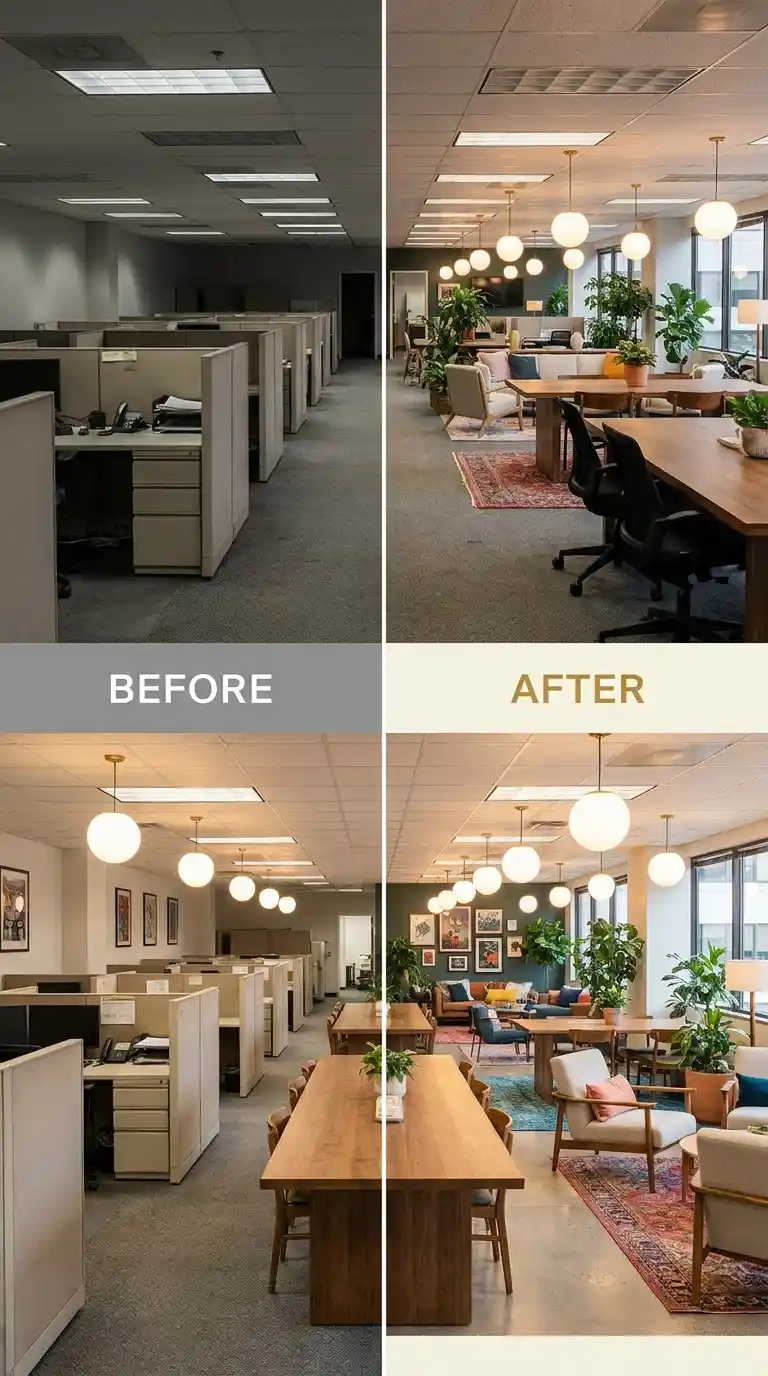
Most business owners and managers dramatically underestimate the impact that office interior design ideas have on their bottom line. The connection feels abstract until you see the data. Studies consistently show that employees in well-designed offices report significantly higher job satisfaction, experience fewer sick days, demonstrate measurably higher creativity and problem-solving ability, and are more likely to stay with an organization long-term.
The connection between office interior design ideas and productivity is not hard to understand when you think about it from a human perspective. We are environmental creatures. The spaces we inhabit affect our mood, our energy levels, our ability to concentrate, and our sense of belonging and purpose. An office that treats its occupants like interchangeable units in a processing facility produces people who feel exactly that way. An office designed with genuine attention to human needs and experience produces people who feel valued and motivated.
For client-facing businesses, office interior design ideas carry an additional dimension of importance. Your office communicates something about your brand, your values, and your competence before a single word is spoken in a meeting. A beautifully designed, thoughtfully appointed office tells a client that you pay attention to details, that you invest in quality, and that working with you will be a sophisticated and considered experience. These are powerful subliminal messages that smart office interior design ideas deliver automatically.
Also Read: Brilliant Interior Wardrobe Design Ideas That Instantly Upgrade Your Bedroom in 2026
Layout and Space Planning in Office Interior Design Ideas
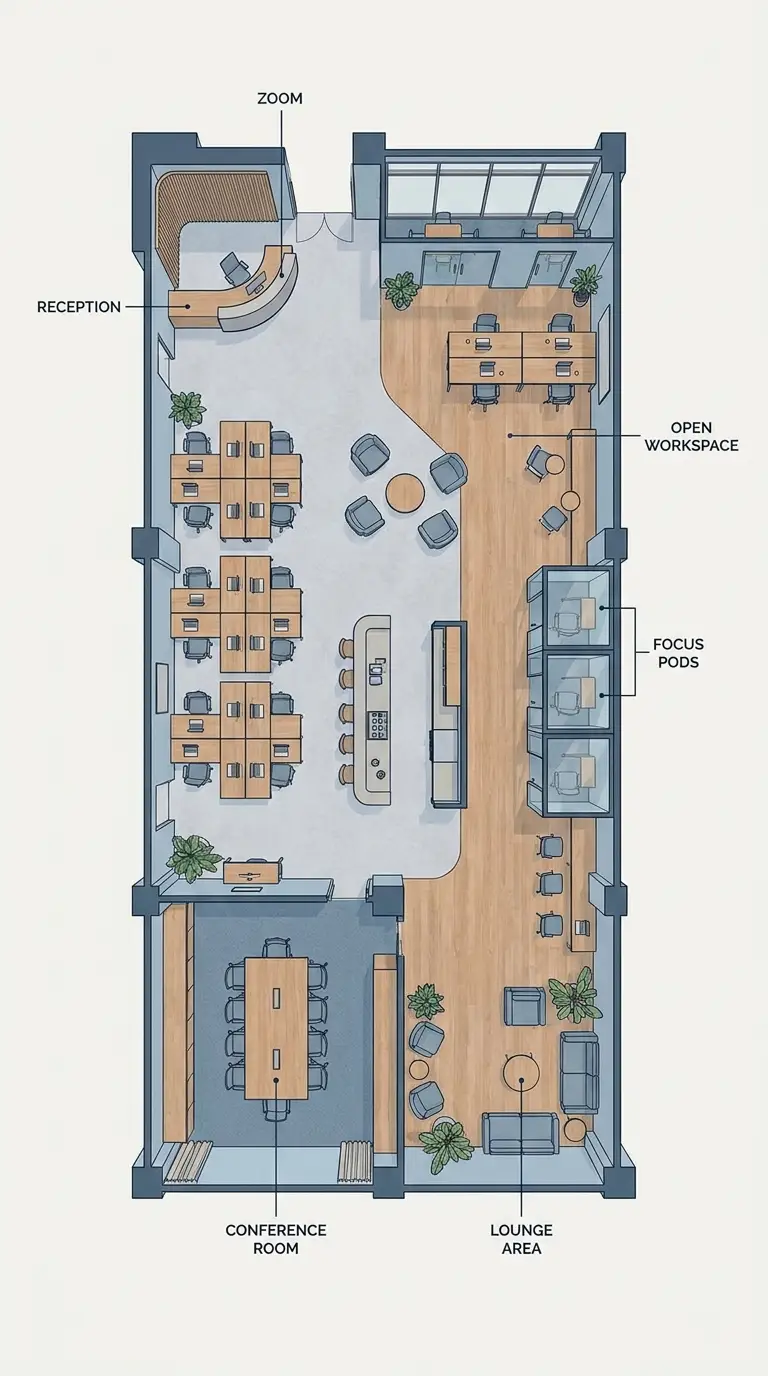
The layout of an office is the foundational decision in any office interior design project because everything else, the furniture, the lighting, the materials, all of it has to work within the framework the layout creates. Getting the layout right means understanding how the people in the space actually work, not how management assumes they work, and designing zones that support those real working patterns.
Modern office interior design ideas have moved decisively away from the traditional one-size-fits-all layout where everyone sits at identical desks in identical arrangements doing everything in the same space. The understanding now is that different types of work require fundamentally different environmental conditions. Focused individual work, creative collaboration, video calls, informal team check-ins, and client meetings all have different spatial needs that a single open plan cannot adequately serve.
Open Plan vs Private Workspace Balance
The great open plan office experiment of the last two decades has produced a complicated legacy. The idea was sound: remove barriers, encourage spontaneous collaboration, create visual equality across the organization. The reality was often a noisy, distracting environment where focused work became difficult, introverted employees felt permanently exposed, and the promised collaboration often did not materialize in the ways designers hoped.
The best contemporary office interior design ideas take a more nuanced approach. They preserve the energy and accessibility of open plan layouts while creating a range of private and semi-private spaces for work that requires concentration or confidentiality. Phone booths, focus pods, enclosed meeting rooms of various sizes, and quiet zones all give people the ability to choose their environment based on what they are doing at any given moment.
This activity-based approach is now the dominant philosophy in sophisticated office interior design ideas for good reason. When people have agency over their work environment, when they can move between collaborative and focused spaces as their day demands, their satisfaction and productivity both rise significantly. The office becomes a toolkit rather than an assignment.
Reception and First Impression Spaces
The reception area is the first thing clients, candidates, and visitors experience in your office, and great office interior design ideas treat this space as seriously as any other. The reception zone should communicate your brand identity clearly and immediately, feel welcoming rather than corporate and intimidating, and set the tone for everything that follows in the visitor’s experience of your organization.
In office interior design ideas for reception areas, the balance between form and function matters enormously. A beautiful reception desk that your receptionist cannot comfortably work at for eight hours, or a stunning feature wall behind a seating area that is actually uncomfortable to sit in, defeats the purpose. The best reception designs in any office interior design project are the ones that look exceptional and work beautifully for both the people who staff them and the people who move through them.
Brand elements in reception office interior design ideas should be integrated naturally rather than plastered on like afterthoughts. A feature wall in your brand color with subtly applied texture, a custom reception desk that echoes the geometry of your logo, branded materials displayed in a way that feels editorial rather than promotional: these approaches communicate brand identity with sophistication rather than force.
Also Read : 99 Brilliant Condo Interior Design Ideas That Make Small Apartments Look Luxurious
Color Psychology in Office Interior Design Ideas
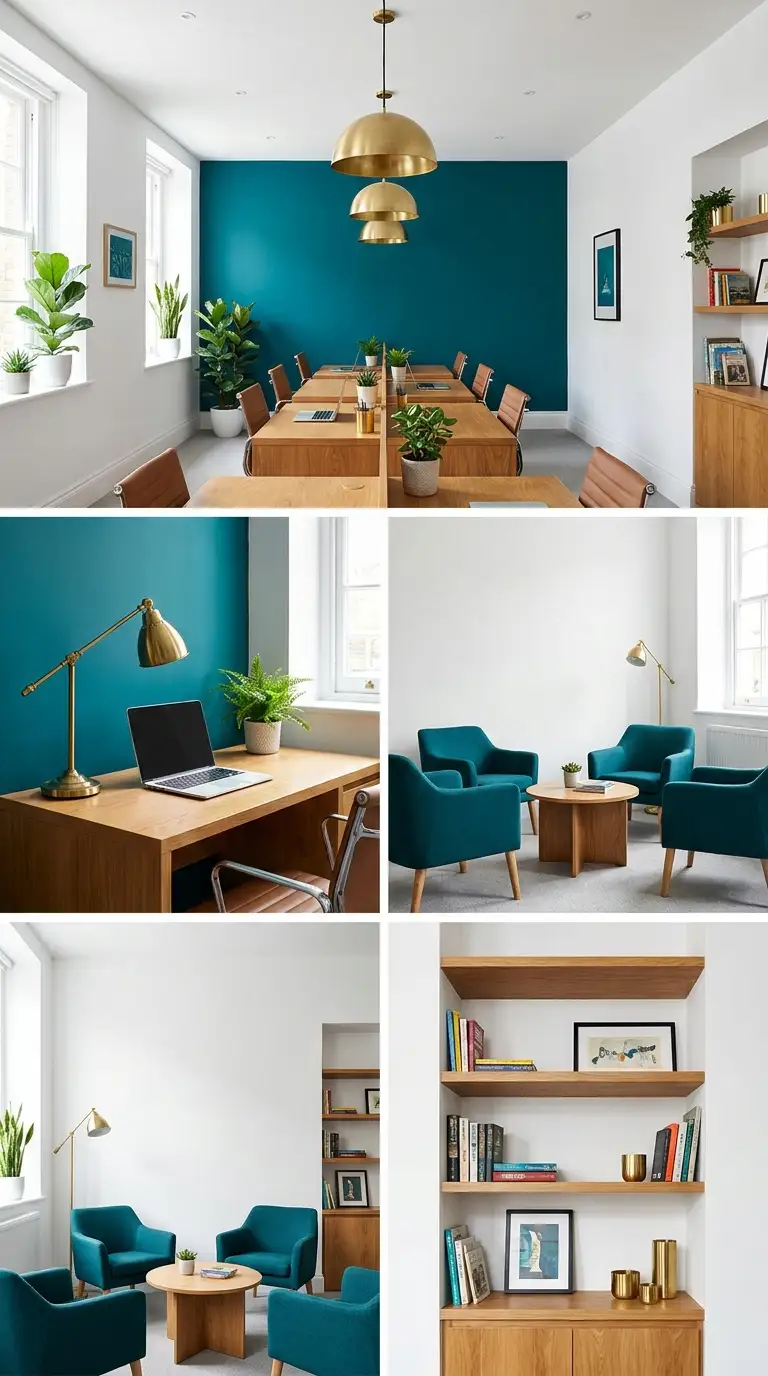
Color is one of the most powerful tools in office interior design ideas and one of the most frequently mishandled. The traditional corporate office defaulted to beige, gray, and off-white because these colors felt safe, neutral, and professional. The problem is that they are also associated with boredom, fatigue, and low stimulation, which is precisely the wrong environment for the kind of engaged, creative, energetic work that most organizations actually need from their people.
Understanding basic color psychology is genuinely useful for anyone working on office interior design ideas. Blue is associated with focus, calm, and trustworthiness, which is why it appears so frequently in financial and legal office interiors. Green promotes balance and a sense of natural wellbeing. Yellow stimulates creativity and optimism in moderate doses but becomes overwhelming in excess. Red raises energy and urgency but is difficult to sustain as a dominant color for long working hours.
Choosing the Right Color Palette for Your Office
The most sophisticated office interior design ideas do not choose a single dominant color but rather build a palette that uses color strategically. A neutral base, typically white, warm gray, or a light warm tone, covers the majority of the space and prevents visual fatigue. An accent color in your brand palette appears on feature walls, furniture pieces, and accessories to add energy and identity. Natural materials like wood, stone, and plants contribute organic warmth that no paint color can fully replicate.
In office interior design ideas for creative industries, bolder and more unconventional color choices work well and even help signal the creative culture of the organization to clients and recruits. A design agency with a deep mustard feature wall and terracotta upholstered meeting chairs sends a clear message about the kind of work that happens there. In contrast, office interior design ideas for law firms, financial institutions, or healthcare providers typically call for more restrained palettes that communicate precision, stability, and trustworthiness.
Zoning with color is one of the most practical and effective techniques in office interior design ideas for larger spaces. Using a warmer, more energizing color palette in collaborative zones and a cooler, calmer palette in focus and quiet areas reinforces the purpose of each zone environmentally. People feel the difference even when they do not consciously notice it, which is exactly how the best office interior design ideas work.
Lighting Strategies That Define Great Office Interior Design Ideas
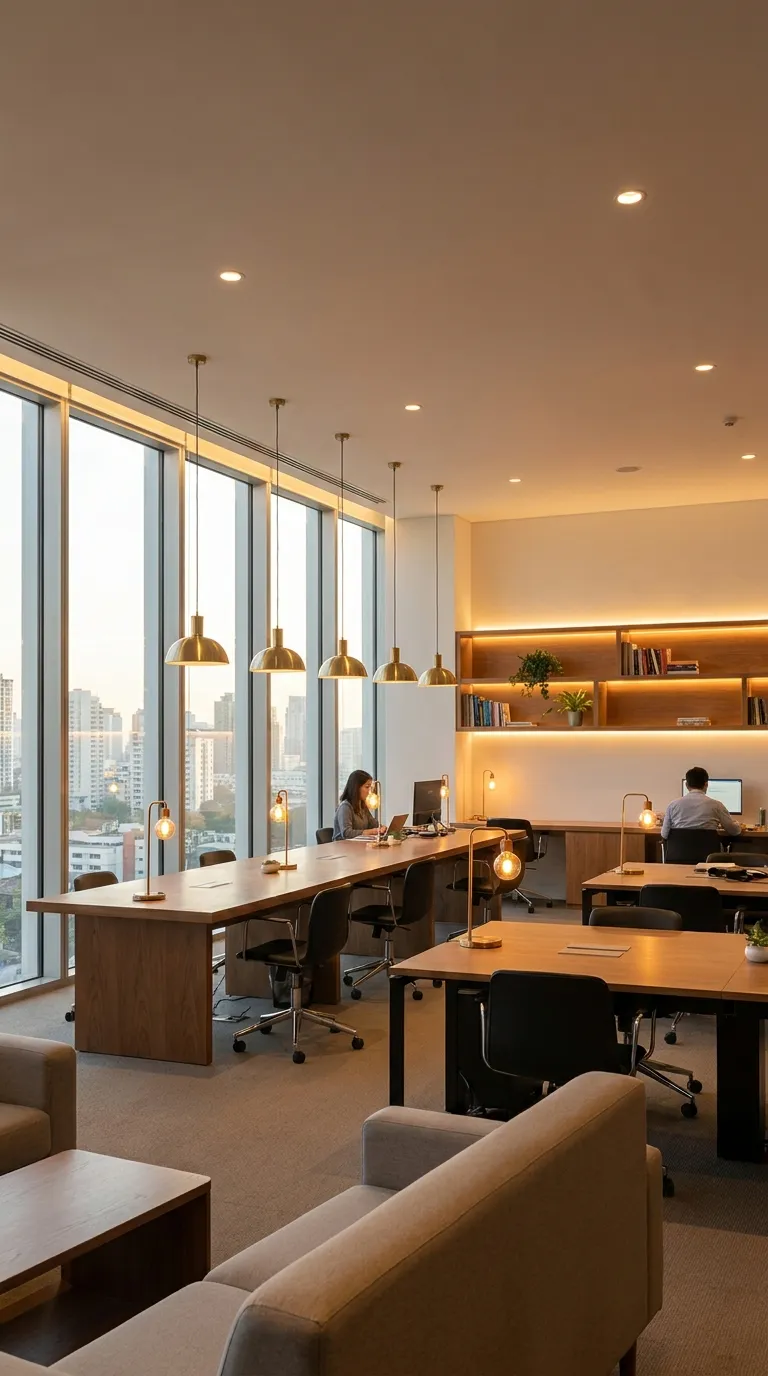
Lighting is the element of office interior design ideas that has the single most direct impact on how people feel and perform in the space, and it is the element that receives the least thoughtful attention in most office fit-outs. The standard approach, a grid of recessed fluorescent or LED downlights creating uniform flat illumination across the entire ceiling, is functional in the narrowest possible sense and terrible for human wellbeing in almost every other way.
Great office interior design ideas approach lighting the same way great residential interior design does: with layers. Ambient lighting provides the base level of illumination. Task lighting addresses specific work needs at individual workstations. Accent lighting highlights architectural features, art, and brand elements. And wherever possible, natural light is maximized because nothing artificial comes close to what daylight does for human mood, energy, and circadian health.
Natural Light Maximization
Maximizing natural light is the highest priority in any serious office interior design ideas project. The research on natural light in workplaces is overwhelming: employees who work near windows sleep better, report higher energy levels throughout the day, experience fewer headaches and eye strain incidents, and score higher on wellbeing measures than those in artificially lit spaces. Getting light deep into the floor plate of an office is one of the most valuable things office interior design ideas can achieve.
In office interior design ideas for existing spaces, maximizing natural light often means reconsidering where enclosed rooms are placed. A row of private offices along the window wall is a traditional arrangement that makes perfect sense for the occupants of those offices and is genuinely terrible for everyone else in the open workspace who gets no natural light at all. Contemporary office interior design ideas often flip this, placing the open collaborative workspace at the perimeter where it benefits from natural light and moving enclosed rooms to interior positions where natural light is not possible anyway.
Glass partitions instead of solid walls are one of the most common and most effective office interior design ideas for preserving light distribution in spaces that require some enclosed areas. A glass-fronted meeting room allows natural light from windows behind it to pass through into the workspace beyond. Glazed office fronts for private offices do the same. The additional benefit is visual connectivity, people can see into spaces without entering them, which increases the sense of openness and community even in divided floor plans.
Artificial Lighting Done Well
For the hours when daylight is insufficient, great office interior design ideas use artificial lighting that supports rather than fights against human biology. Warm-toned lighting in the range of 2700K to 3000K Kelvin feels natural, comfortable, and flattering in ways that cool white lighting at 5000K or above never does. The office interior design ideas that use cool white lighting at high intensity throughout are creating an environment that triggers alertness in the short term at the cost of fatigue, eyestrain, and discomfort over a full working day.
Tunable LED lighting systems, which can shift color temperature and intensity throughout the day, are appearing in more sophisticated office interior design ideas because they allow the lighting to support natural circadian rhythms. Cooler, brighter light in the morning supports alertness and focus. Warmer, slightly dimmer light in the afternoon and evening reduces the disruption to sleep cycles that late-day screen and bright light exposure causes. This technology represents some of the most genuinely science-backed office interior design ideas available.
Furniture Selection in Office Interior Design Ideas
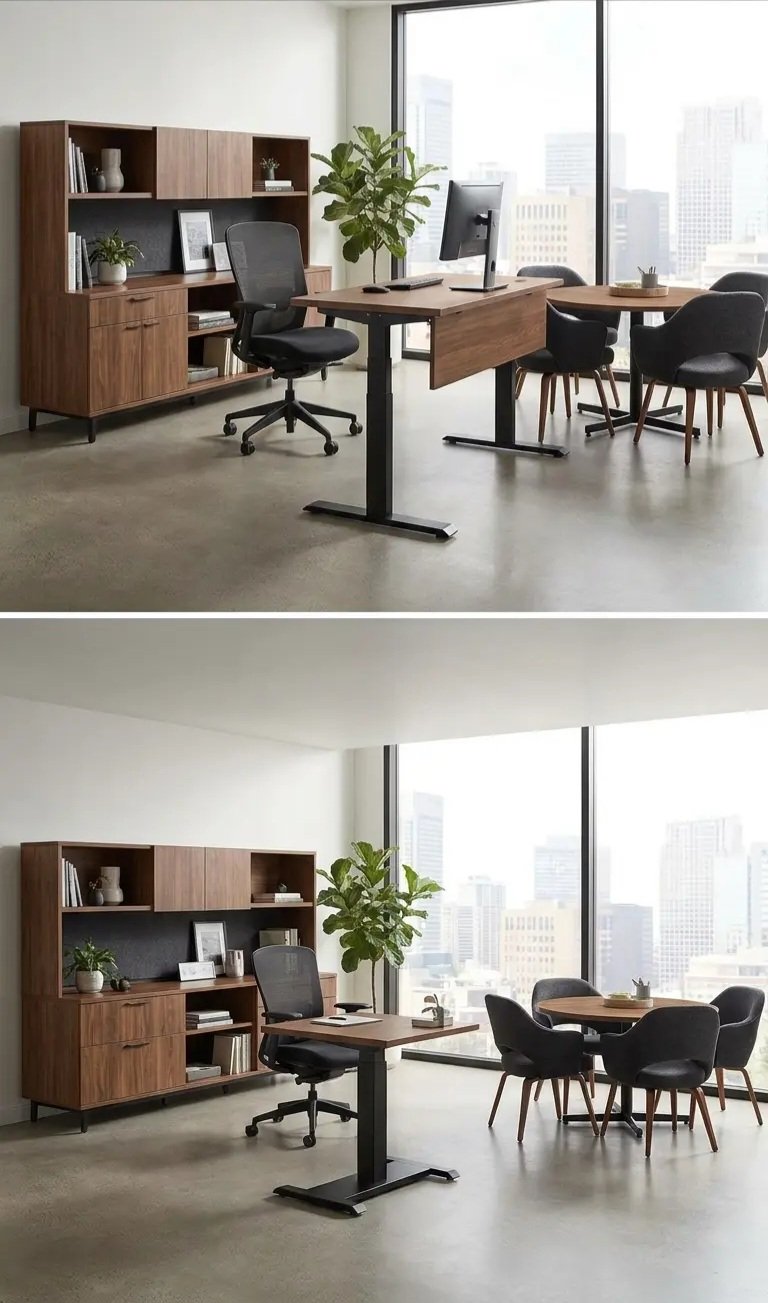
Furniture is where office interior design ideas meet real daily life, and the choices made here have direct consequences for the physical health, comfort, and productivity of everyone who uses the space. This is not the place to cut corners in the name of budget savings that look good on a spreadsheet and cost significantly more in lost productivity and staff health issues over time.
The ergonomic quality of task seating and desk setup is the most critical furniture consideration in any office interior design project. People spend the majority of their working hours at their desks, and chairs and desk configurations that do not support proper posture create cumulative musculoskeletal problems that result in sick days, reduced performance, and eventually significant discomfort for the affected individuals. Quality ergonomic chairs from established manufacturers are one of the most justifiable furniture investments in office interior design ideas.
Desks and Workstations
Sit-stand desks have moved from a luxury to a standard expectation in contemporary office interior design ideas as the research on the health consequences of prolonged sitting has accumulated. The ability to shift between sitting and standing postures throughout the day reduces back pain, improves circulation, and maintains energy levels in ways that fixed-height desks cannot. The quality and reliability of the height adjustment mechanism matters enormously, choose electric motors over hand cranks for ease of use that actually encourages regular adjustment.
In office interior design ideas for open plan workspaces, acoustic privacy at the desk level is an often overlooked consideration that has a major impact on people’s ability to concentrate. Low screens or acoustic panels between adjacent workstations, desktop acoustic panels that provide some visual privacy and sound absorption, and the strategic use of soft materials in the surrounding surfaces all help create desk environments where focused work is genuinely possible even in a shared space.
Storage solutions integrated into workstation design are one of the most practical office interior design ideas for maintaining tidy, organized workspaces. Under-desk pedestals with lockable drawers, overhead storage at workstations, and clean cable management solutions prevent the visual and physical clutter that accumulates at poorly planned workstations and makes the whole office look messier than it needs to be.
Collaborative and Lounge Furniture
The social and collaborative furniture in an office is where office interior design ideas get the most visible and the most personally expressive. Lounge seating in a breakout area, a long communal table in a collaborative zone, high stools at a standing-height counter: these pieces set the tone for how informal interaction and creative collaboration happen in the space.
The best collaborative furniture in office interior design ideas is comfortable enough to encourage people to actually use it without being so comfortable that it becomes a napping destination rather than a working one. Soft seating that supports upright but relaxed posture, surfaces at appropriate heights for working with laptops or notebooks, and some acoustic mitigation through the upholstered surfaces and soft materials in the area: these characteristics define furniture that supports the collaborative intent rather than merely decorating the space.
Biophilic Design in Modern Office Interior Design Ideas
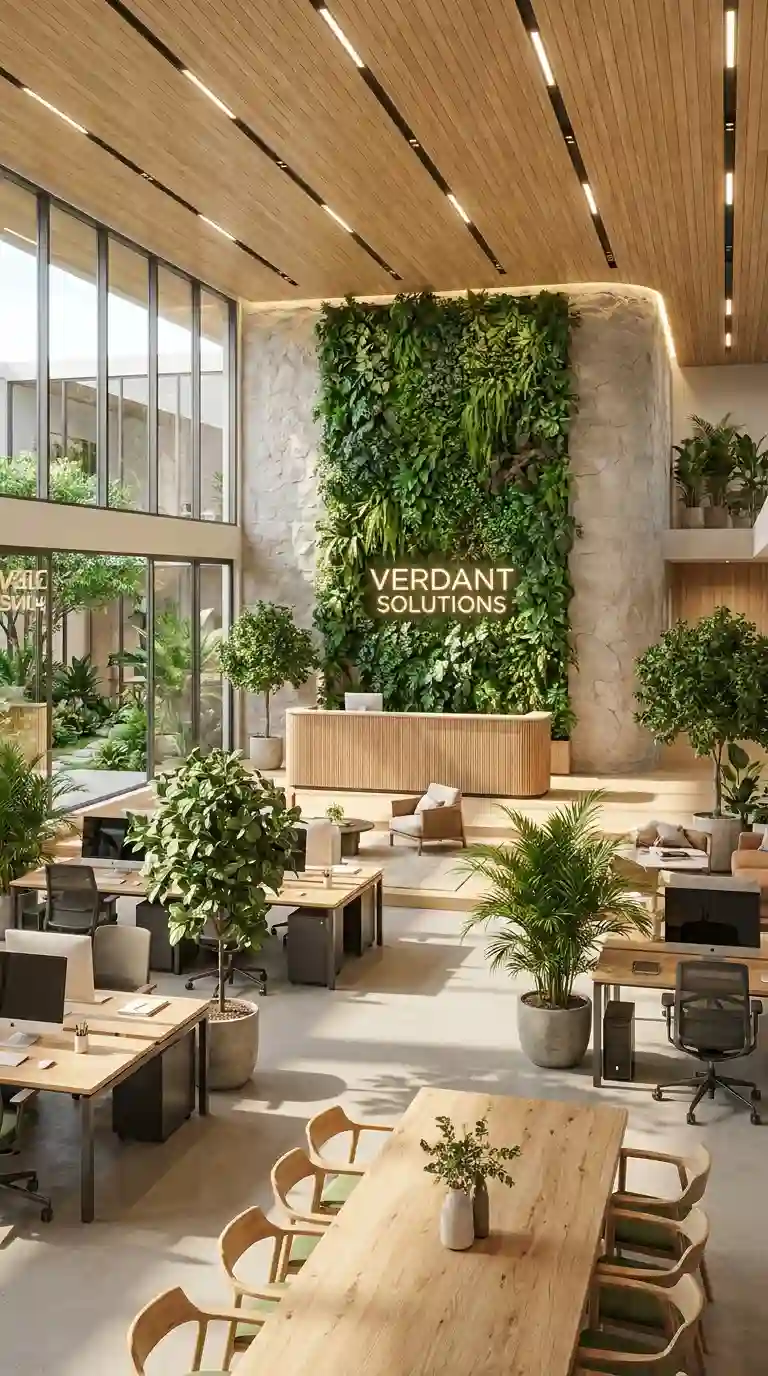
Biophilic design, the intentional incorporation of natural elements into built environments, has become one of the most evidence-backed and most genuinely transformative categories of office interior design ideas. The core principle is simple: human beings evolved in natural environments and our physiology, psychology, and cognitive function all work better in spaces that contain natural elements than in spaces that are entirely artificial.
The research supporting biophilic office interior design ideas is substantial. Studies have shown that offices with significant plant life and natural materials see meaningful reductions in stress levels and sick building complaints, and measurable increases in reported wellbeing and cognitive performance. These are not small effects. They represent genuine, quantifiable differences in how people experience and perform in their work environment.
Also Read : 10 Stunning House Interior Design Inspirations to Transform Your Home
Indoor Plants in Office Interior Design
Plants are the most accessible and most immediately impactful biophilic element in office interior design ideas. A single large specimen plant in a beautifully chosen pot makes a powerful visual statement in any space. A living plant wall creates a dramatic architectural feature that no manufactured material replicates. A scattering of well-chosen plants throughout a workspace transforms the atmosphere from clinical to vital in a way that is immediately felt by everyone who enters.
The selection and placement of plants in office interior design ideas requires some practical thought beyond pure aesthetics. Plants need light to survive, so placement near windows or under grow lights is essential for most species. Low-maintenance varieties like Zanzibar gem, snake plants, pothos, and peace lilies are excellent choices for office environments because they tolerate variable light conditions, irregular watering, and the air quality challenges of air-conditioned spaces without requiring constant attention.
Plant maintenance is the practical consideration that office interior design ideas sometimes overlook in the planning phase. Beautiful plants in an office look stunning for about three weeks after installation and then start to decline if nobody takes responsibility for their care. Including a plant care budget and designating someone responsible for watering and maintenance, or contracting with a professional plant service that replaces unhealthy plants regularly, is essential for keeping the biophilic elements of your office looking their best.
Natural Materials and Textures
Beyond plants, biophilic office interior design ideas incorporate natural materials that bring the sensory qualities of the natural world into the built environment. Wood is the most universally beloved of these materials because it carries warmth, variation, and an organic quality that no synthetic material fully replicates. Exposed wood ceiling beams, wood-clad feature walls, solid wood furniture, and wood flooring all introduce the natural quality that makes a space feel more human and more comfortable.
Stone, whether natural or high quality manufactured stone-look surfaces, carries a similar grounding quality in office interior design ideas. Stone reception desks, stone-textured feature walls, terrazzo flooring with its beautiful aggregate pattern, and natural stone accessories all introduce the textural richness of natural materials into the workspace. Paired with wood and plants, these materials create an office environment that feels genuinely connected to the natural world.
Home Office Interior Design Ideas That Actually Work
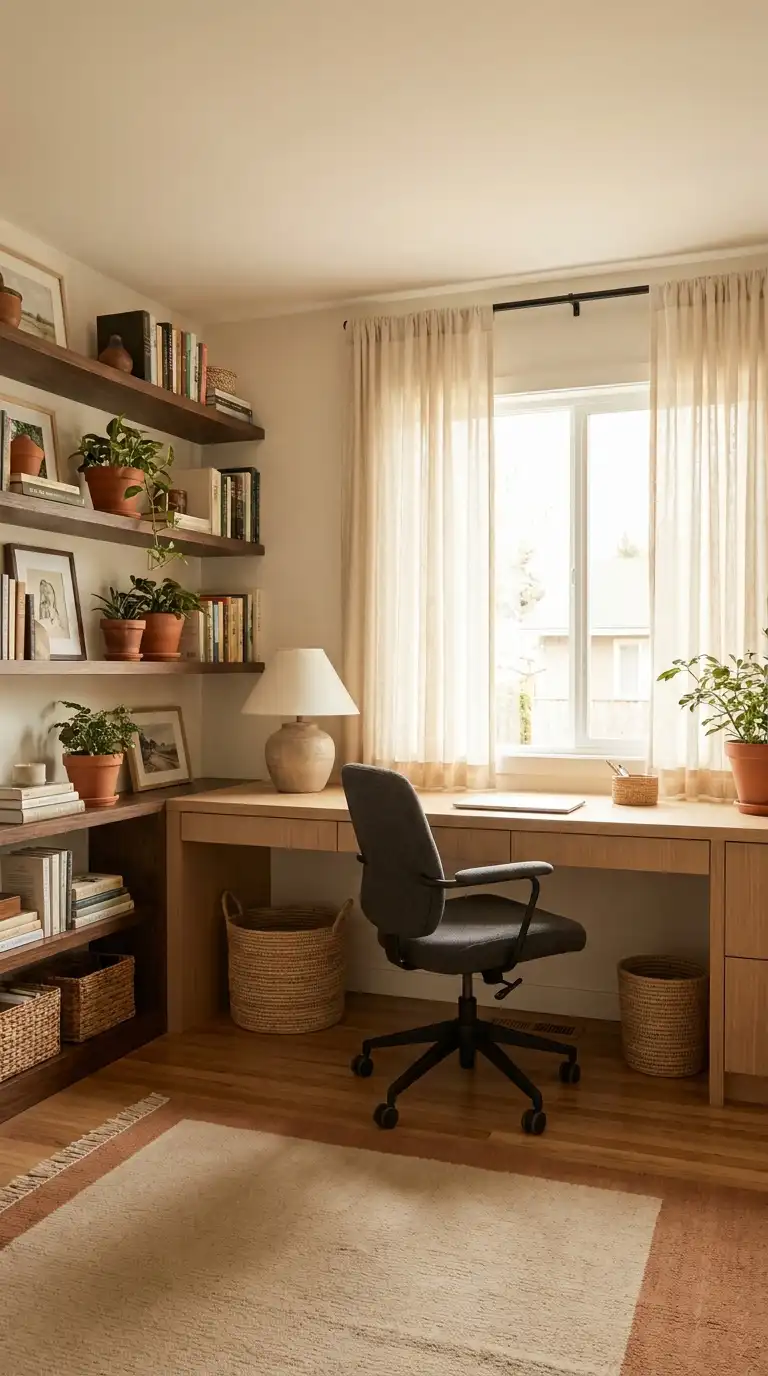
Home office interior design ideas have become one of the most practically important design categories for a huge proportion of the working population over the past several years. What was once a secondary concern, a desk in the corner or a laptop at the kitchen table, has become for many people their primary workspace for forty or more hours per week. The stakes for getting it right have risen accordingly.
The fundamental challenge of home office interior design ideas is that the home office has to do two things simultaneously that are somewhat in tension with each other. It needs to be a genuinely functional, professional workspace that supports focused work, video conferencing, and the full range of work activities. And it also needs to exist harmoniously within a home environment that serves family life, relaxation, and all the non-work activities that make a home function.
Dedicated Space vs Flexible Home Office Solutions
The ideal home office interior design starts with a dedicated room that can be physically closed off from the rest of the home. A dedicated space allows you to control acoustics for calls, maintain a consistent professional background for video conferencing, establish clear psychological separation between work and home life, and leave work in progress without having to clear it away when life requires the space for something else.
Not everyone has the luxury of a dedicated room, and home office interior design ideas for flexible or shared spaces require creative thinking about how to carve out a work zone that functions well without taking over the entire room. A well-designed home office nook built into a closet, a murphy-style desk that folds away when not in use, a purpose-built corner desk unit that makes efficient use of a bedroom or living room corner: these solutions can create genuinely effective home office interior design in limited space.
The acoustic environment of a home office is one of the most practically important elements of home office interior design ideas and one of the least glamorous to think about. Background noise from household activities, children, and pets compromises call quality and makes focused work harder than it needs to be. Acoustic panels, a thick rug, heavy curtains, and soft furnishings all help absorb sound within the space. Positioning the desk away from high-traffic areas of the home reduces the noise level at the source.
Home Office Lighting for Video Calls and Focus Work
Lighting in home office interior design ideas serves two distinct purposes that require slightly different approaches. For focus work, good task lighting that illuminates the desk without glare on the screen is the primary need. A quality desk lamp with adjustable color temperature, positioned to the side rather than behind or directly above the screen, provides the targeted illumination that makes sustained focused work comfortable.
For video calls, front-facing lighting that illuminates your face evenly is the critical consideration in home office interior design ideas. The classic mistake is positioning the desk with a window behind it, which creates a beautiful view for the person sitting at the desk and a dark, backlit silhouette on screen for everyone in the call. Repositioning the desk to face the window, or adding a dedicated ring light or LED panel light in front of the desk, solves this problem completely and immediately improves the professional quality of every video call.
Small Office Interior Design Ideas That Maximize Every Square Foot
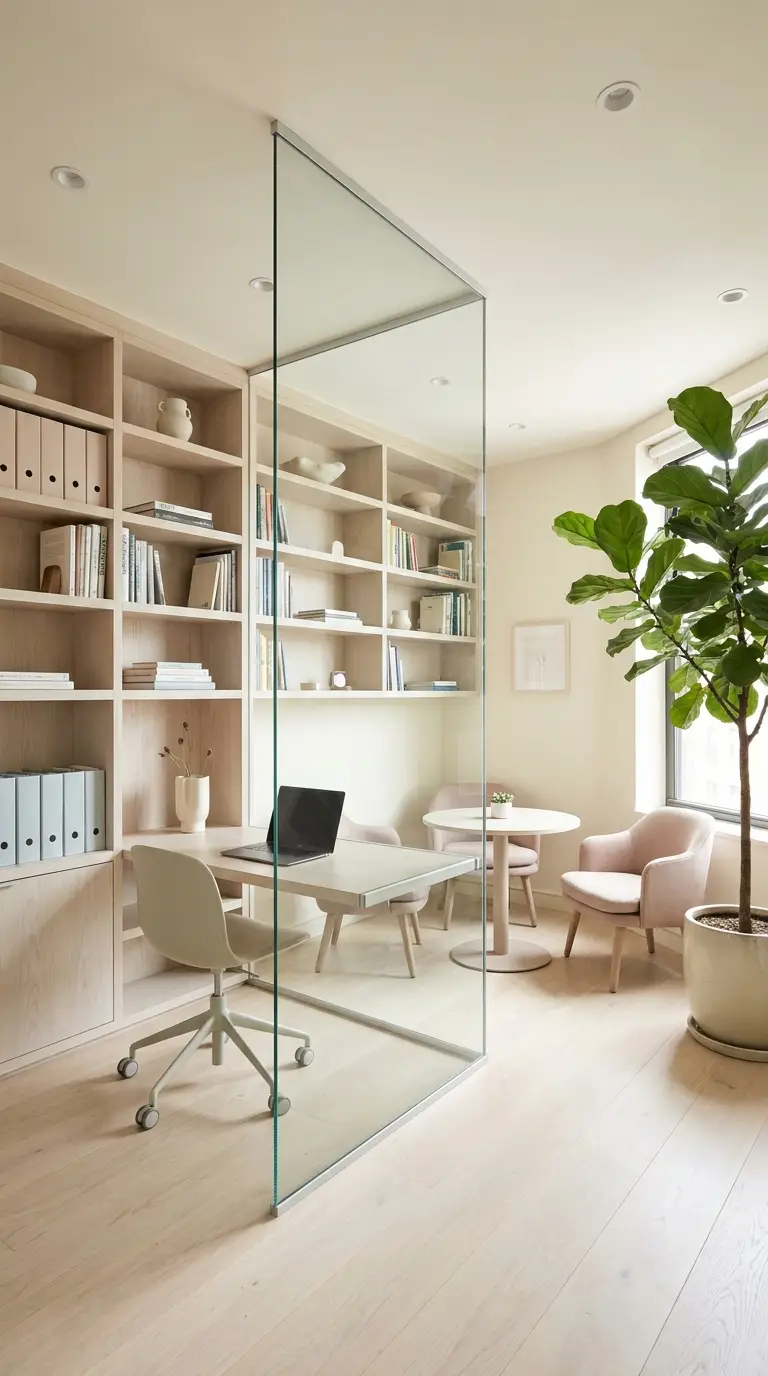
Small office interior design ideas are where design thinking earns its keep most clearly. Every decision in a small space matters more because there is no room for elements that do not pull their weight, no opportunity to hide mistakes behind square footage, and no margin for furniture that is slightly the wrong size or placement that is slightly off. A small office designed well feels remarkably complete. A small office designed carelessly just feels small.
The most important principle in small office interior design ideas is vertical thinking. The floor area of a small office is limited, but the vertical dimension is often underused. Floor-to-ceiling shelving and storage takes advantage of the full height of the room without claiming any additional floor space. Tall, slender furniture proportions keep the eye moving upward, which makes ceilings feel higher and rooms feel more spacious.
Color in small office interior design ideas should generally work toward making the space feel as open as possible. Light, neutral tones on the walls and ceiling create a sense of expansiveness that darker colors reduce. This does not mean small offices cannot have color or personality, but it does mean that bold colors are most effectively used in accents and accessories rather than as the dominant wall treatment in a space that is already challenged for size.
Multifunctional furniture is the practical cornerstone of small office interior design ideas. A storage ottoman that serves as extra seating for occasional guests. A credenza that provides both surface area and enclosed storage. A desk with integrated drawers that eliminates the need for a separate filing cabinet. Each piece that performs multiple functions reduces the total number of pieces required in the space, which directly translates to less clutter and more usable open floor area.
Office Interior Design Ideas by Industry and Workplace Culture
Creative Industry Office Interior Design Ideas
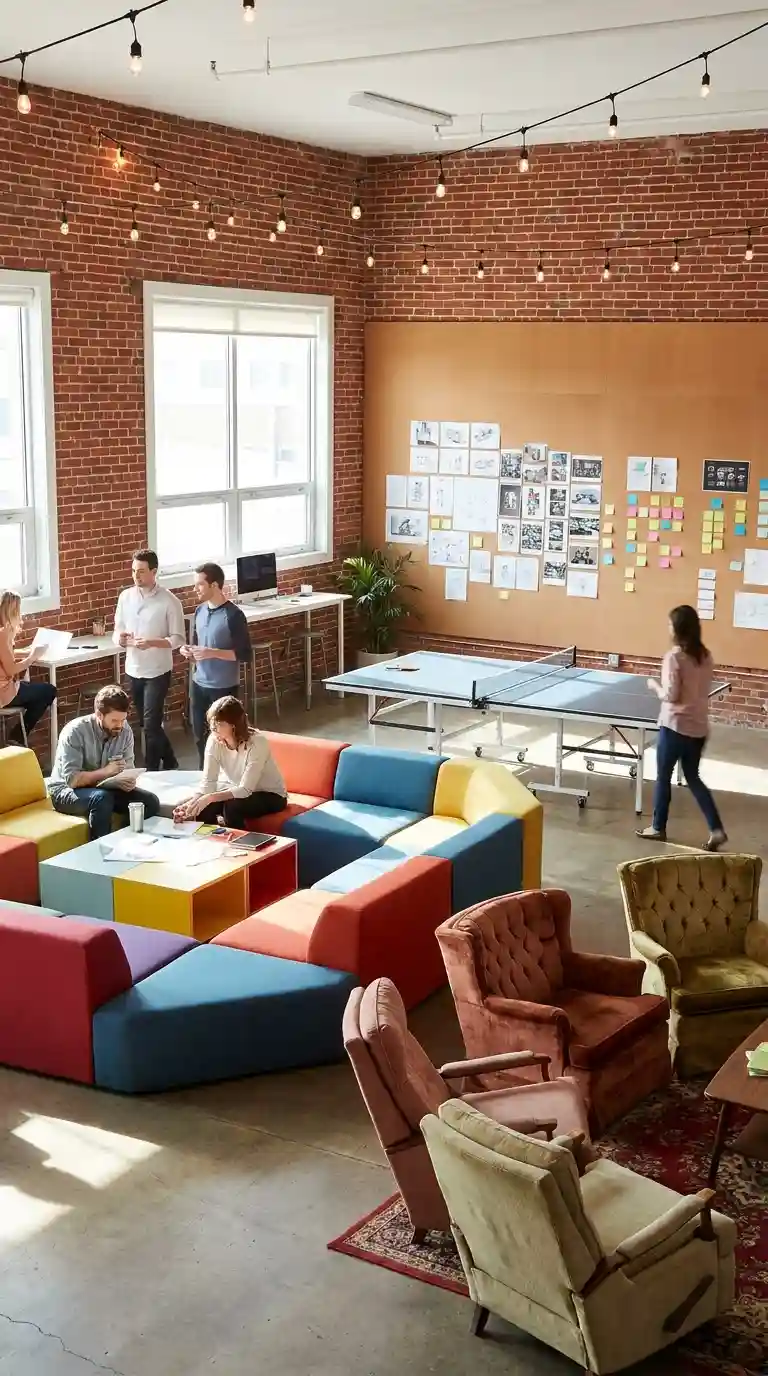
Creative agencies, design studios, advertising firms, and technology companies have driven some of the most innovative office interior design ideas of the past two decades precisely because they understand that their work product depends directly on the creative energy of their people, and that environment plays a real role in sustaining that energy. Creative office interior design ideas typically embrace materials, layouts, and aesthetic choices that would feel unconventional in more traditional professional contexts.
Exposed ceilings, brick walls, industrial materials, bold color choices, eclectic furniture mixing, and deliberately informal zones all characterize creative office interior design ideas. The message these spaces send to employees and clients alike is that rules are thoughtfully broken here, that creativity is genuinely valued, and that the people who work here are trusted to do great work without being managed by physical environment into conformity.
The risk in creative office interior design ideas is confusing aesthetics with function. An office that looks creative and edgy but makes focused work difficult, has terrible acoustics, and lacks adequate private space for sensitive conversations has prioritized image over the real needs of the people in it. The best creative office interior design ideas look distinctive and feel great to work in, which requires attention to the functional fundamentals as well as the signature aesthetic elements.
Corporate and Professional Services Office Interior Design Ideas
Law firms, financial institutions, consultancies, and other professional services organizations have their own set of office interior design ideas that balance the need for gravitas and trustworthiness with the increasing expectation among staff for environments that feel human and modern rather than stuffy and institutional. The days when a serious professional office meant dark wood paneling, heavy drapery, and generic art on every wall are genuinely over.
Contemporary professional services office interior design ideas achieve the required sense of quality and permanence through material excellence rather than conventional formality. Beautifully detailed millwork in a modern profile, high-quality stone or marble surfaces on reception desks and feature walls, substantial but cleanly designed furniture, and a controlled color palette with carefully chosen accent elements create spaces that feel genuinely impressive without the dated quality of the traditional professional office aesthetic.
Final Thoughts
The through line connecting every office interior design idea in this article is the same fundamental truth: the spaces where we work profoundly affect how we feel, how we perform, and how we relate to the organizations and colleagues that share those spaces with us. This is not a soft or subjective claim. It is supported by decades of research across disciplines from environmental psychology to workplace management to public health.
Great office interior design ideas are not about creating spaces that photograph well for Instagram or impress visitors for thirty seconds. They are about creating environments that sustain human performance and wellbeing for the thousands of hours that people spend in them over the course of careers. That is a meaningful design challenge and a meaningful responsibility for anyone who makes decisions about where and how people work.
Whether you are designing a global corporate headquarters or a home office in a spare bedroom, the principles are the same. Maximize natural light. Invest in ergonomic quality where it matters most. Create variety in the types of spaces available. Bring in natural materials and plants. Manage acoustics thoughtfully. Design for real human needs rather than aesthetic ideals. These office interior design ideas will produce spaces that genuinely serve the people in them, and that, ultimately, is what great design is for.
Frequently Asked Questions
1. What is the most important element in office interior design?
Lighting is consistently identified as the single most impactful element in office interior design ideas. Natural light in particular has a direct and measurable effect on employee wellbeing, productivity, and satisfaction. After lighting, ergonomic furniture quality and acoustic management are typically the next most critical factors for offices where people work for sustained periods. A beautiful office that is poorly lit, has uncomfortable furniture, and suffers from noise problems will fail its occupants regardless of how good it looks.
2. How can I make a small office look bigger?
Small office interior design ideas for maximizing perceived space include using light, neutral colors on walls and ceilings, maximizing natural light, using mirrors to reflect light and create depth, choosing furniture with legs rather than pieces that sit on the floor, using vertical space with floor-to-ceiling shelving, and keeping surfaces clear and organized. Glass partitions instead of solid walls maintain visual openness while still providing acoustic separation. Avoiding oversized furniture in proportion to the room is one of the most common and most important corrections in small office interior design.
3. What colors are best for an office interior?
The best colors for office interior design ideas depend on the nature of the work and the culture of the organization. Blue tones support focus and calm and work well in most professional contexts. Green promotes natural wellbeing and works beautifully with biophilic office interior design ideas. Warm neutrals create comfortable, welcoming environments. Creative industries can support bolder color choices. In all cases, a neutral base with strategic accent colors tends to outperform a single dominant color across the entire space.
4. How much does office interior design cost?
Office interior design costs vary enormously based on the scope of the project, the quality of materials and furniture, the location, and whether the work involves structural changes. A basic refresh of an existing office with new paint, furniture, and accessories might cost a few thousand dollars. A full fit-out of a new commercial space with custom millwork, high-end furniture, AV infrastructure, and professional design fees can reach several hundred dollars per square foot. Getting detailed quotes from multiple sources with clearly specified scopes is essential for accurate budgeting.
5. What furniture is essential for a home office?
Essential furniture for home office interior design ideas starts with a quality desk at the right size for your work activities and a genuinely ergonomic task chair that supports proper posture for extended periods. Beyond these two foundational pieces, adequate storage for your specific work materials, good task lighting, and a monitor at the correct height are the next priorities. Secondary furniture like a guest chair, a small sofa, or additional shelving depends on your specific work and space conditions.
6. How do I create a productive work environment in my office?
Creating a productive office environment through interior design ideas involves several interconnected considerations. Maximize natural light wherever possible. Invest in quality ergonomic furniture that reduces physical discomfort. Create a range of different workspace types to support different kinds of work. Manage acoustics so noise does not constantly interrupt focused work. Incorporate plants and natural materials. Establish clear visual organization so the space feels ordered rather than chaotic. Each of these factors contributes to an environment where sustained, quality work is genuinely possible.
7. What plants are best for an office interior?
The best plants for office interior design ideas are those that tolerate low to medium light conditions and require infrequent watering since busy office environments do not always allow for attentive plant care. Snake plants, ZZ plants, pothos, peace lilies, and Chinese evergreens are all excellent choices. Larger statement plants like fiddle leaf figs, rubber plants, and dracaenas work beautifully as focal points in office interior design when positioned near adequate light. For offices with very low natural light, a grow light integrated into the ceiling or shelving can support plants in positions that would otherwise be too dark.
8. How do I design an office for employee wellbeing?
Office interior design ideas that prioritize employee wellbeing focus on natural light access, ergonomic furniture throughout, variety in workspace types so people can choose environments that suit different tasks, acoustic management that makes focused work possible, indoor plants and biophilic elements, comfortable breakout and social spaces, and access to outdoor views or spaces where possible. Beyond the physical environment, providing adequate storage and organization systems prevents the clutter stress that poorly organized offices create.
9. What is the difference between open plan and activity-based working?
Open plan office interior design ideas remove walls and barriers to create a single shared workspace. Activity-based working, which represents the more evolved approach in contemporary office interior design ideas, provides a variety of different workspace types, open areas, quiet zones, enclosed focus pods, collaborative spaces, and social areas, and allows employees to choose the type of space that best supports what they are working on at any given time. Activity-based working addresses the well-documented shortcomings of pure open plan while preserving its energy and accessibility benefits.
10. How do I incorporate my brand into office interior design?
Brand integration in office interior design ideas works best when it feels woven into the fabric of the space rather than applied to surfaces as an afterthought. Brand colors can inform accent walls, upholstery choices, and accessory selections. Brand values can be expressed through material choices, the quality level of furniture, and the degree of formality or informality in the layout. Brand identity can be subtly referenced in custom millwork details, reception desk forms, and signage design. The most sophisticated office interior design ideas express brand through spatial experience rather than relying on logos and literal brand graphics alone.