
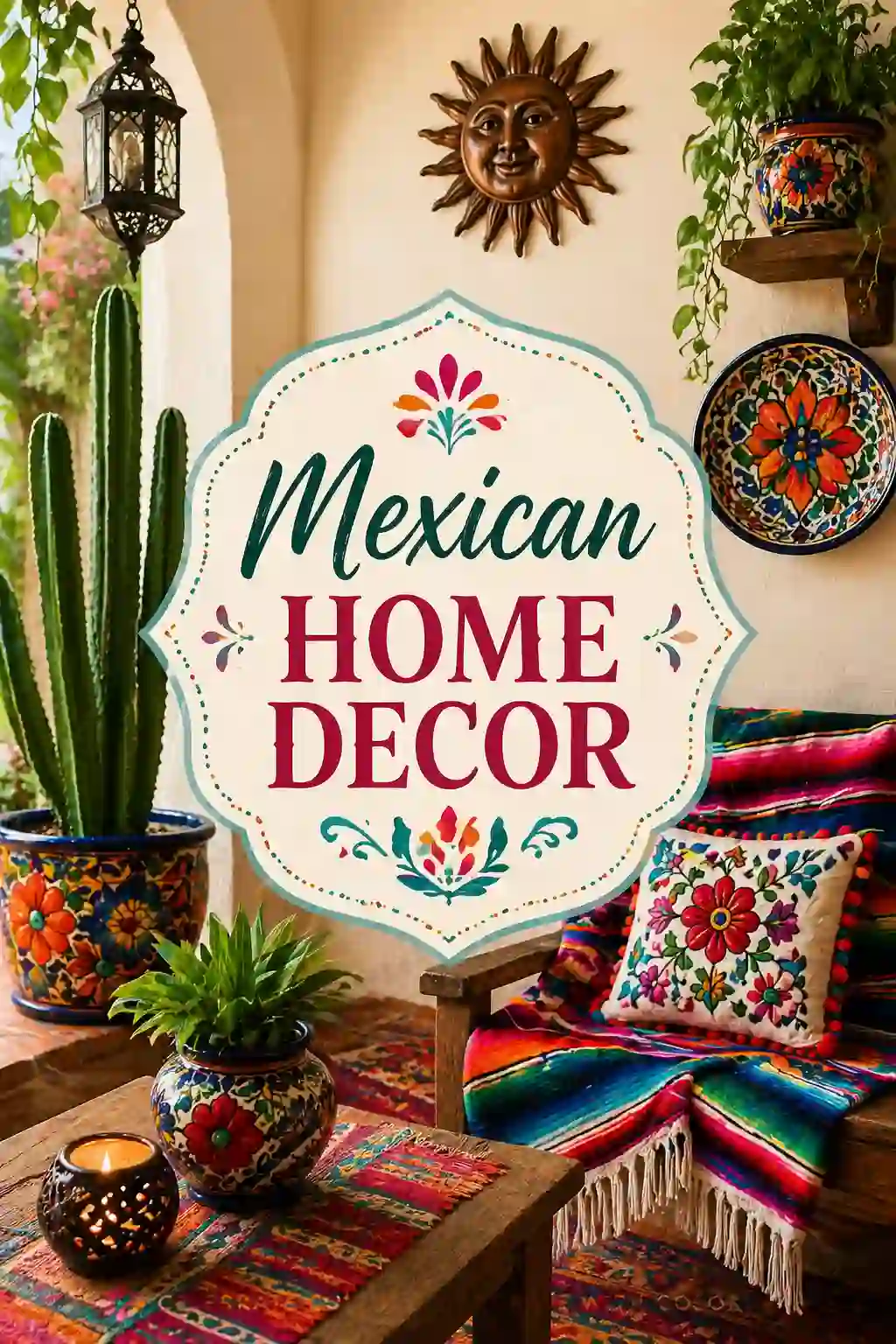
There is something almost magical about walking into a home decorated in a true Mexican style. The moment you step inside, you feel it that deep warmth, that burst of color, that sense of history and handcraft all woven together into something that feels alive. I remember the first time I visited a home in Oaxaca. Every corner had a story. Every wall, every shelf, every woven rug told you something about the people who lived there. That experience completely changed how I think about decorating a home, and ever since, I have been in love with Mexican home decor.
Mexican home decor is not just a trend. It is a living tradition that stretches back thousands of years, blending indigenous craftsmanship with Spanish colonial influence and modern creativity. Whether you live in a tiny apartment or a sprawling house, bringing elements of Mexican home decor into your space is one of the most rewarding things you can do. It adds soul to a room, and soul is something that no amount of mass-produced furniture can replace.
In this guide, I am going to walk you through everything you need to know about Mexican home decor the history behind it, the key design elements, the must-have pieces, where to find them, and how to put it all together without making your home look like a restaurant. Whether you are just starting out or you are ready to go all-in with a full room makeover, you will find plenty of ideas and inspiration here.
The Rich History Behind Mexican Home Decor
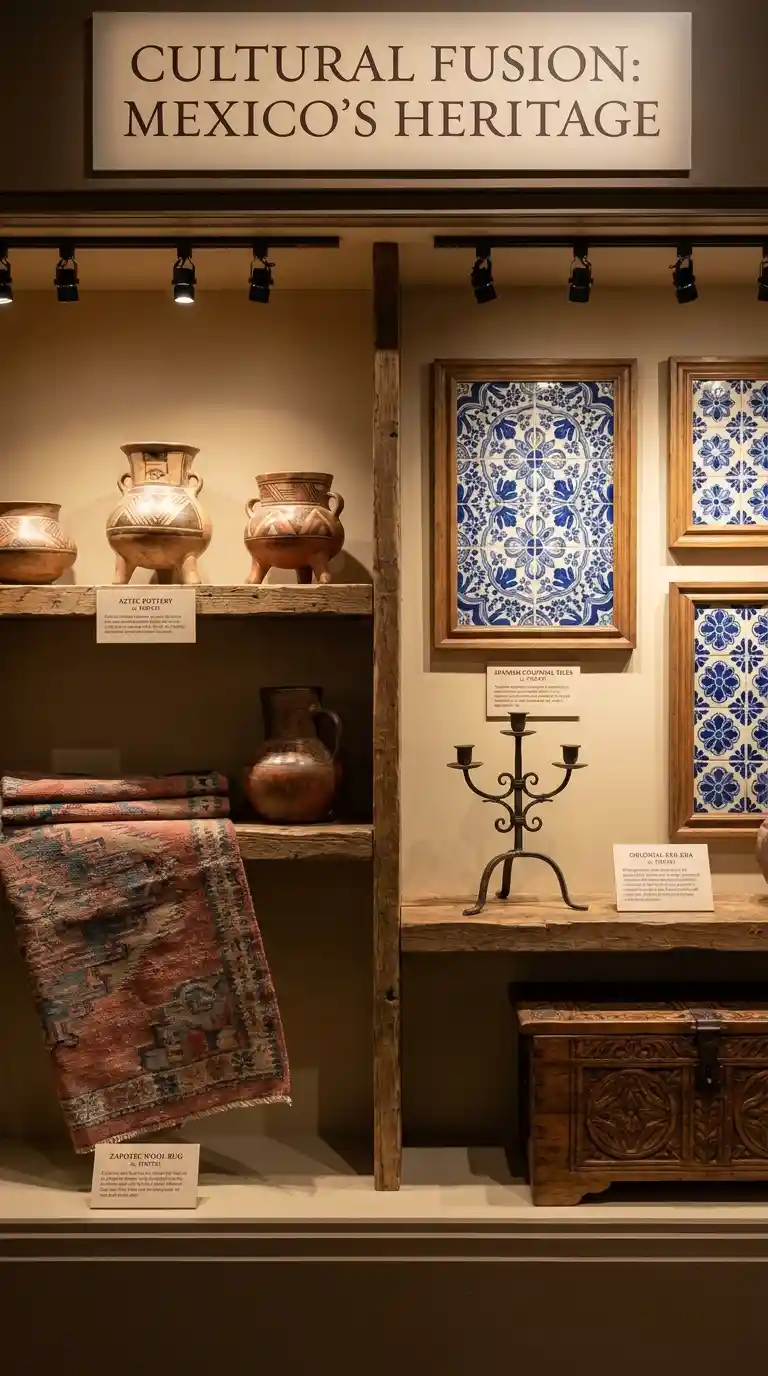
To truly appreciate Mexican home decor, you have to understand where it comes from. Long before the Spanish arrived in the 16th century, the indigenous peoples of Mexico the Aztecs, Mayans, Zapotecs, Mixtecs, and dozens of other civilizations had already developed incredibly sophisticated artistic traditions. They created intricate pottery, woven textiles, stone carvings, and painted murals that reflected their understanding of the natural world, their spiritual beliefs, and their social structures.
When the Spanish colonized Mexico, they brought with them their own decorative traditions Moorish tile work, Catholic religious imagery, wrought iron metalwork, and baroque architectural details. What happened next was one of the most fascinating cultural blends in history. Instead of one tradition simply replacing the other, the two merged and created something entirely new. That fusion is what we now recognize as traditional Mexican aesthetic bold, layered, deeply symbolic, and full of heart.
Over the centuries, Mexican artisans kept refining and evolving these traditions, and today Mexican home decor is celebrated worldwide. From the famous blue and white Talavera pottery of Puebla to the vibrant yarn paintings of the Huichol people, every piece of Mexican craftsmanship carries within it centuries of knowledge, skill, and love. When you bring these pieces into your home, you are not just buying decoration you are becoming a steward of living culture.
Also Read : Outdoor Decor Ideas – Transform Your Outdoor Space into a Stylish Retreat
Core Elements of Authentic Mexican Home Decor
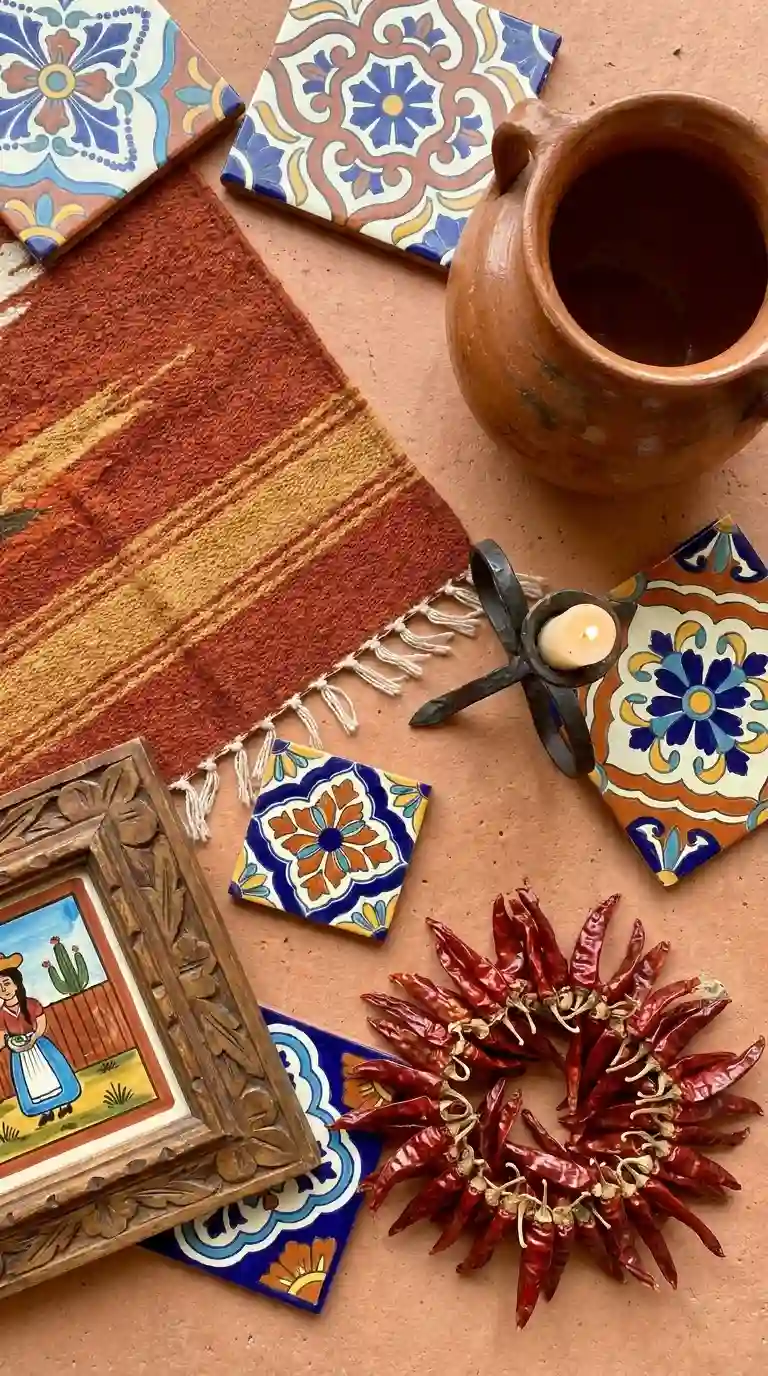
One of the things I love most about Mexican home decor is how it manages to feel both timeless and completely vibrant at the same time. There are certain elements that appear again and again across different regions and centuries, and understanding these building blocks will help you create a space that feels genuinely rooted in this tradition rather than just a superficial imitation of it.
Bold and Vibrant Color Palettes
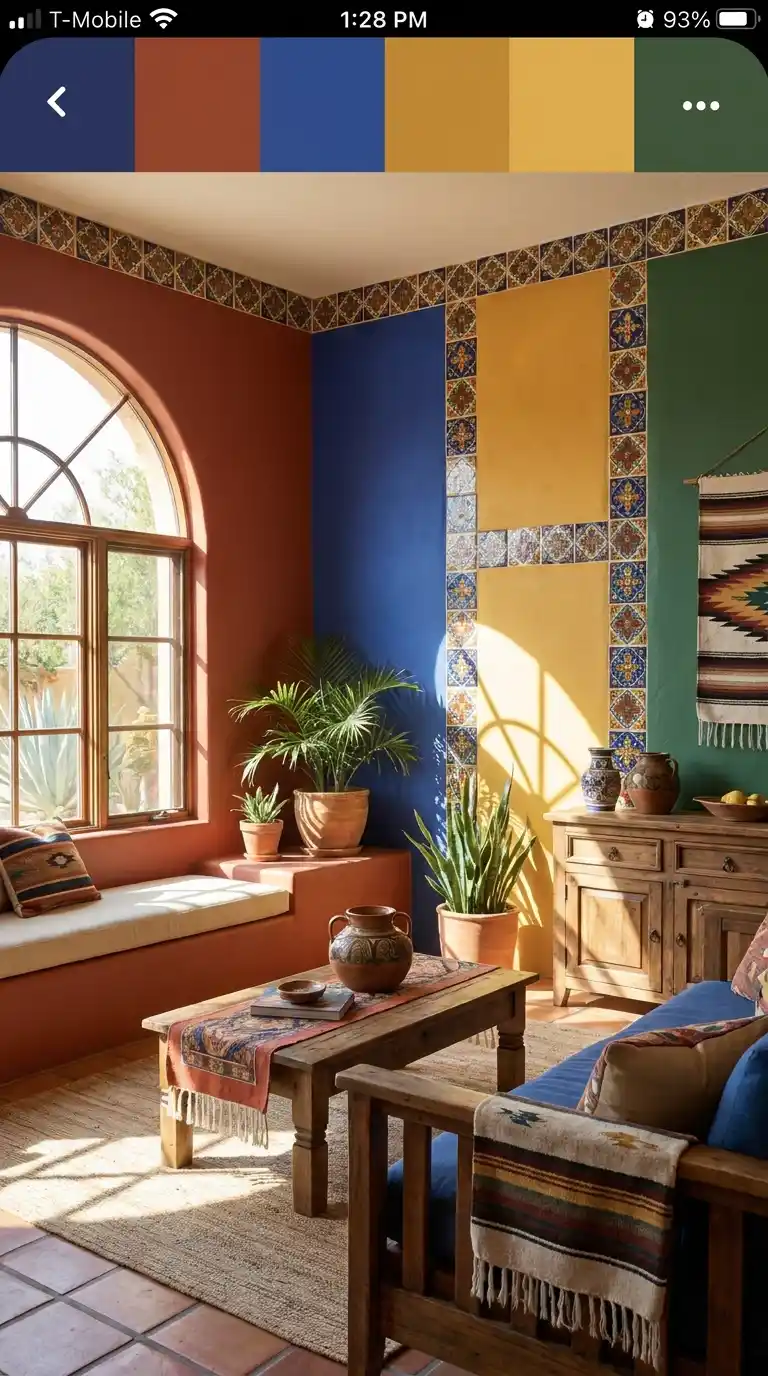
Color is perhaps the most instantly recognizable feature of Mexican home decor. Forget the beige-and-grey minimalism that has dominated interior design for the past decade. Mexican design is unafraid of color. Rich terracotta, deep cobalt blue, warm golden yellow, forest green, bright coral, and vivid magenta are all part of the vocabulary. These are not timid accent colors — they are the foundation of the entire look.
In traditional Mexican homes, walls are often painted in bold, saturated hues. You might see a deep burnt orange wall in the living room paired with cobalt blue trim, or a kitchen painted entirely in bright yellow with hand-painted tile backsplashes in multiple colors. The key is confidence. Mexican home decor teaches you to stop being afraid of color and to embrace it fully.
If you are not ready to paint your walls a bold color, you can introduce the Mexican color palette through textiles, ceramics, and accessories. Even a few brightly colored throw pillows or a hand-woven table runner can transform a neutral room and start to bring in that warm, festive Mexican energy.
Handcrafted Pottery and Talavera Ceramics
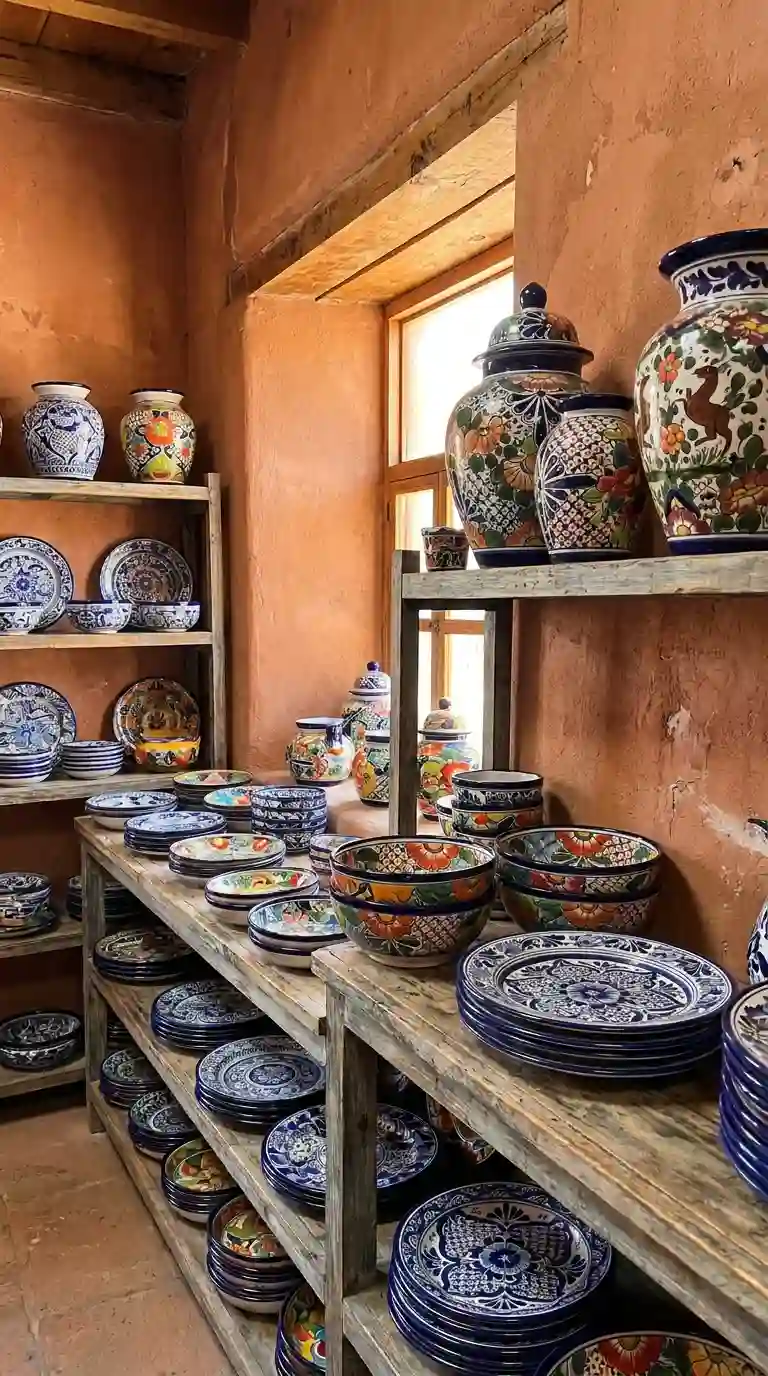
No discussion of Mexican home decor is complete without talking about pottery, and specifically Talavera. Talavera pottery originated in the city of Puebla and is one of the oldest craft traditions in the Americas. Characterized by its creamy white base and bold painted designs in cobalt blue, yellow, green, black, and orange, authentic Talavera is a UNESCO-protected art form. Each piece is handmade and hand-painted by skilled artisans who have spent years mastering the craft.
Talavera tiles are one of the most popular ways to bring Mexican home decor into a modern home. They are gorgeous on kitchen backsplashes, bathroom walls, fireplace surrounds, and even as decorative accents on staircases. A single row of Talavera tile can completely transform an otherwise ordinary surface. Talavera pots, plates, and bowls are equally stunning displayed on shelves or used as everyday functional pieces.
Beyond Talavera, Mexican pottery traditions include the black clay work of Oaxaca, the burnished red pottery of Michoacan, and the brightly painted majolica of various regions. Each style has its own distinct character, and mixing different types of Mexican pottery together creates a rich, layered look that feels collected and authentic rather than staged.
Rustic Wood and Wrought Iron
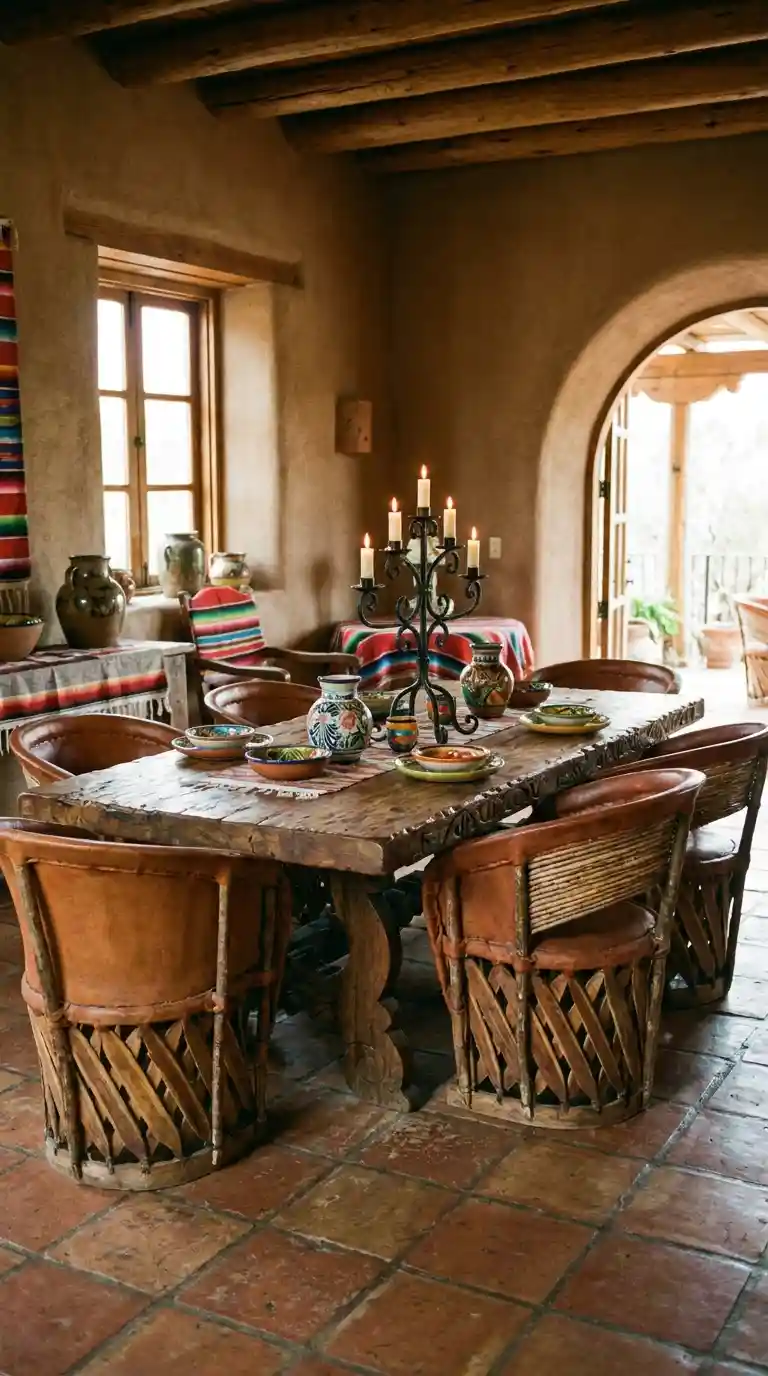
Mexican home decor has always embraced natural materials, and wood and iron are two of the most important. Heavy, carved wooden furniture think thick mesquite tables, rustic pine wardrobes, and hand-carved wooden frames gives Mexican interiors their characteristic sense of weight and permanence. These are pieces that feel like they have been in the family for generations, because often they have.
Wrought iron is equally important. Intricate wrought iron chandeliers, candle holders, window grilles, and furniture legs appear throughout traditional Mexican homes. The craftsmanship involved in creating these pieces is extraordinary Mexican ironworkers are capable of making incredibly delicate floral and vine patterns out of solid metal, and the results are both beautiful and durable.
When shopping for Mexican home decor furniture, look for pieces with visible tool marks and natural wood grain. Imperfection is part of the appeal. A dining table that shows the rings of the wood it came from and the marks of the craftsman who made it is infinitely more interesting than a machine-made piece with a perfectly smooth finish. That sense of honest, handmade quality is central to the whole spirit of Mexican home decor.
Textiles and Weavings That Define Mexican Home Decor
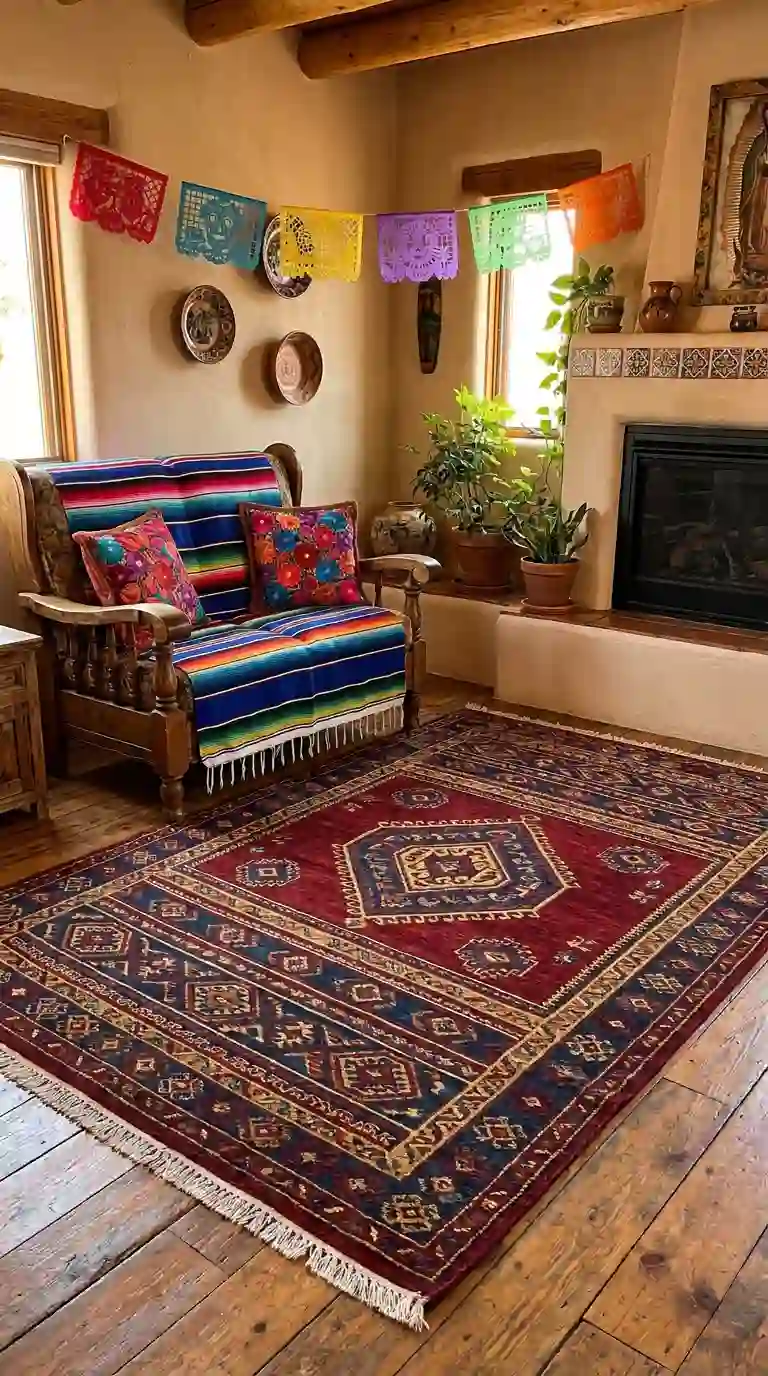
Textile traditions in Mexico are extraordinarily diverse and regionally specific. The Zapotec people of Oaxaca have been weaving on backstrap looms for thousands of years, creating geometric patterns of stunning complexity using natural dyes made from plants, insects, and minerals. The Huichol people create intricately beaded and yarn-painted textiles that represent their cosmological beliefs. The weavers of Chiapas produce textiles so elaborate they can take months to complete.
For Mexican home decor, textiles are one of the most accessible and transformative elements you can work with. A handwoven Zapotec rug on the floor instantly grounds a room in Mexican aesthetic. Embroidered throw pillows in bright floral patterns add warmth and personality to a sofa. A hand-loomed table runner transforms an ordinary dining table into something special. These are functional pieces of art that improve with use and age.
Serapes and Blankets
The serape is perhaps the most widely recognized of all Mexican textiles . those wide-striped woven blankets in bright colors that you have seen draped over furniture, used as tablecloths, and hung as wall art. Traditionally from the state of Saltillo, serapes are both beautiful and incredibly versatile in Mexican home decor. Drape one over the back of a sofa, hang one on a wall as a tapestry, or use one as a bold table covering.
Modern interpretations of the serape pattern appear in everything from pillowcases to curtains to bath mats, making it easy to incorporate this iconic look into any room of your home. The key is to use them confidently . let the stripes be the statement rather than trying to hide them behind other patterns.
Also Read: Must Have Floor Lamps for Living Room Ideas to Brighten Your Space
Embroidery and Otomi Art
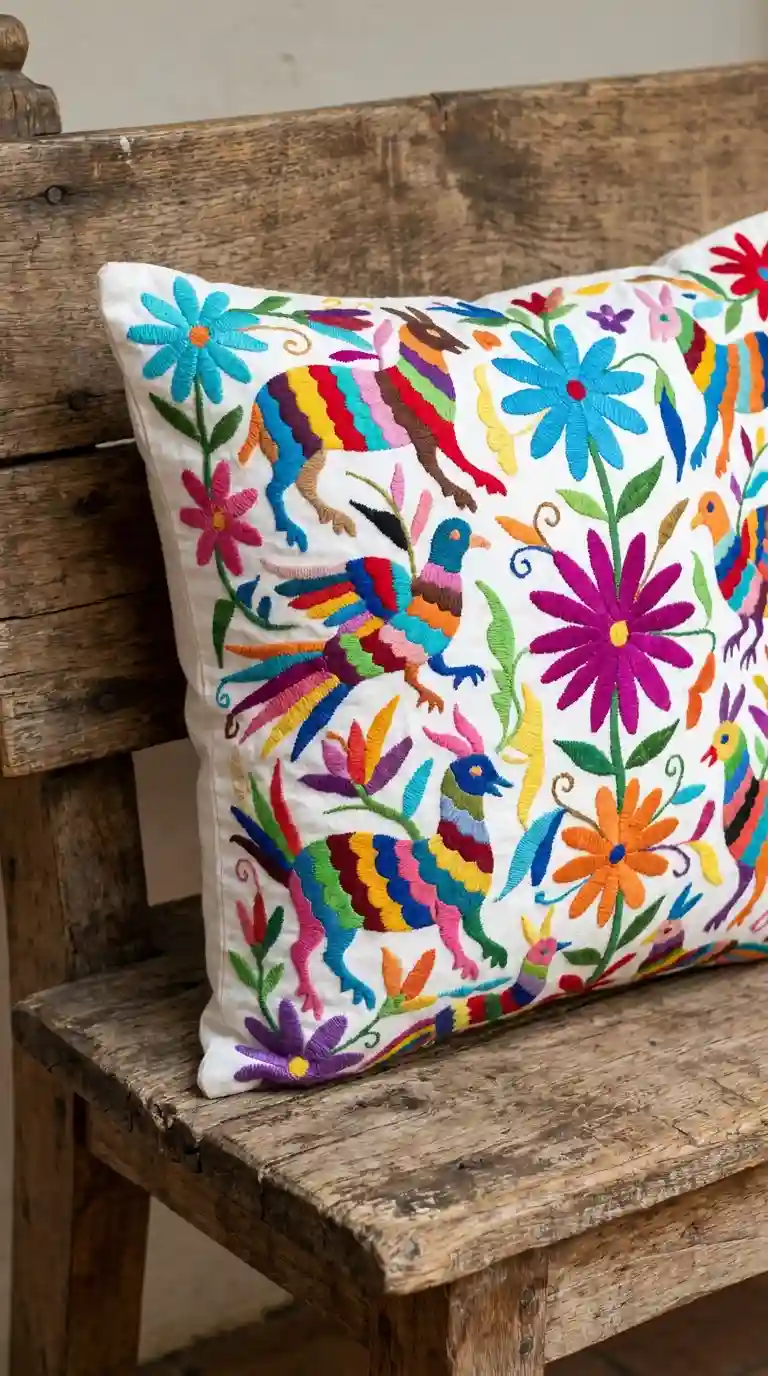
Otomi embroidery from the Hidalgo region of Mexico is one of the most beautiful and distinctive textile arts in the country. Otomi designs feature fantastical animals, birds, flowers, and human figures stitched in bright colors on white or natural-colored fabric. The style is bold, playful, and completely unique — there is nothing else quite like it in the world of textile art.
Otomi embroidery has become enormously popular in Mexican home decor over the past decade, and for good reason. A single Otomi pillow cover can completely change the energy of a room. An Otomi table runner turns an ordinary dinner into a celebration. And a large framed piece of Otomi embroidery makes for a stunning and culturally rich piece of wall art that will draw comments from every guest you have.
How to Incorporate Mexican Home Decor Into Every Room
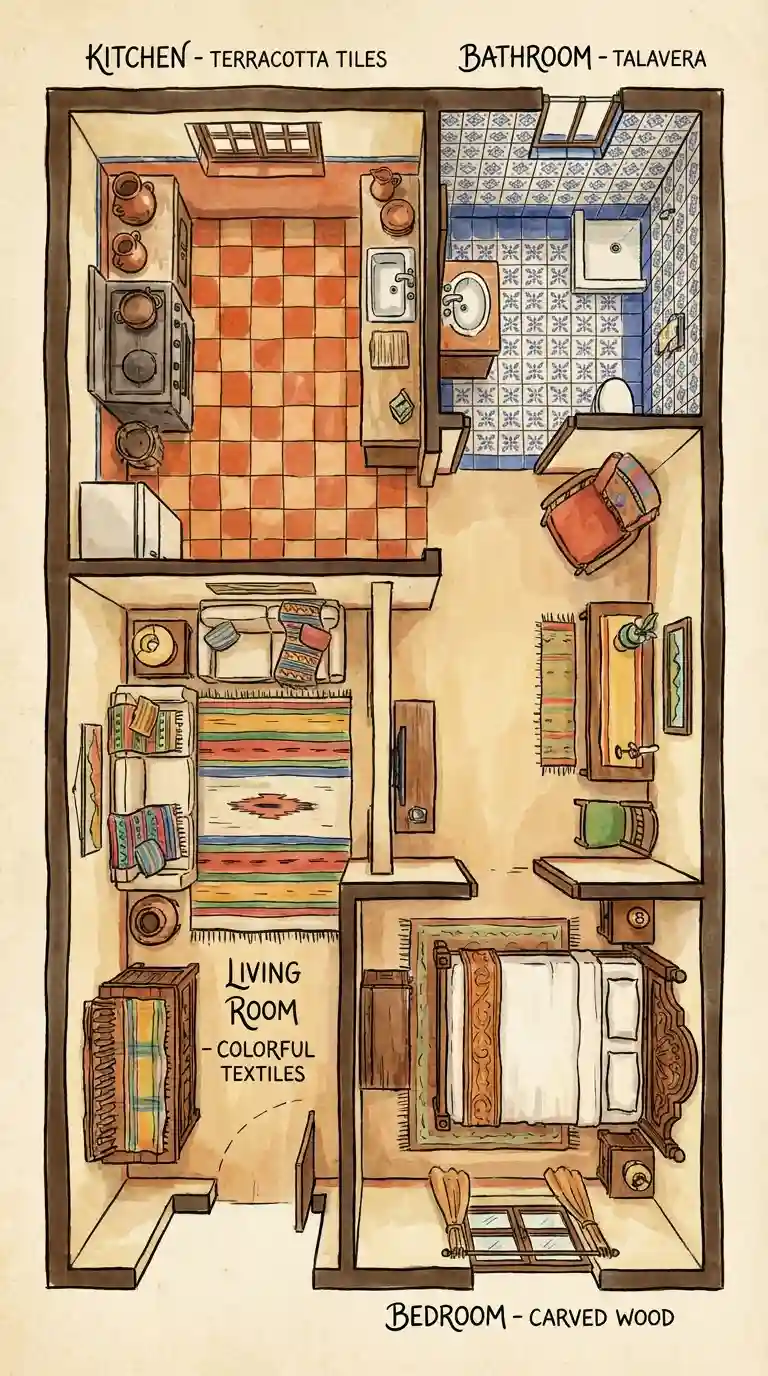
One of the questions I get asked most often is how to incorporate Mexican home decor into a modern home without it feeling overwhelming or theme-park-ish. The answer is to think of it as a conversation between cultures rather than a total takeover. You do not have to transform every room into a traditional Mexican interior — you just need to understand which elements carry the most weight and how to use them with intention.
The Living Room
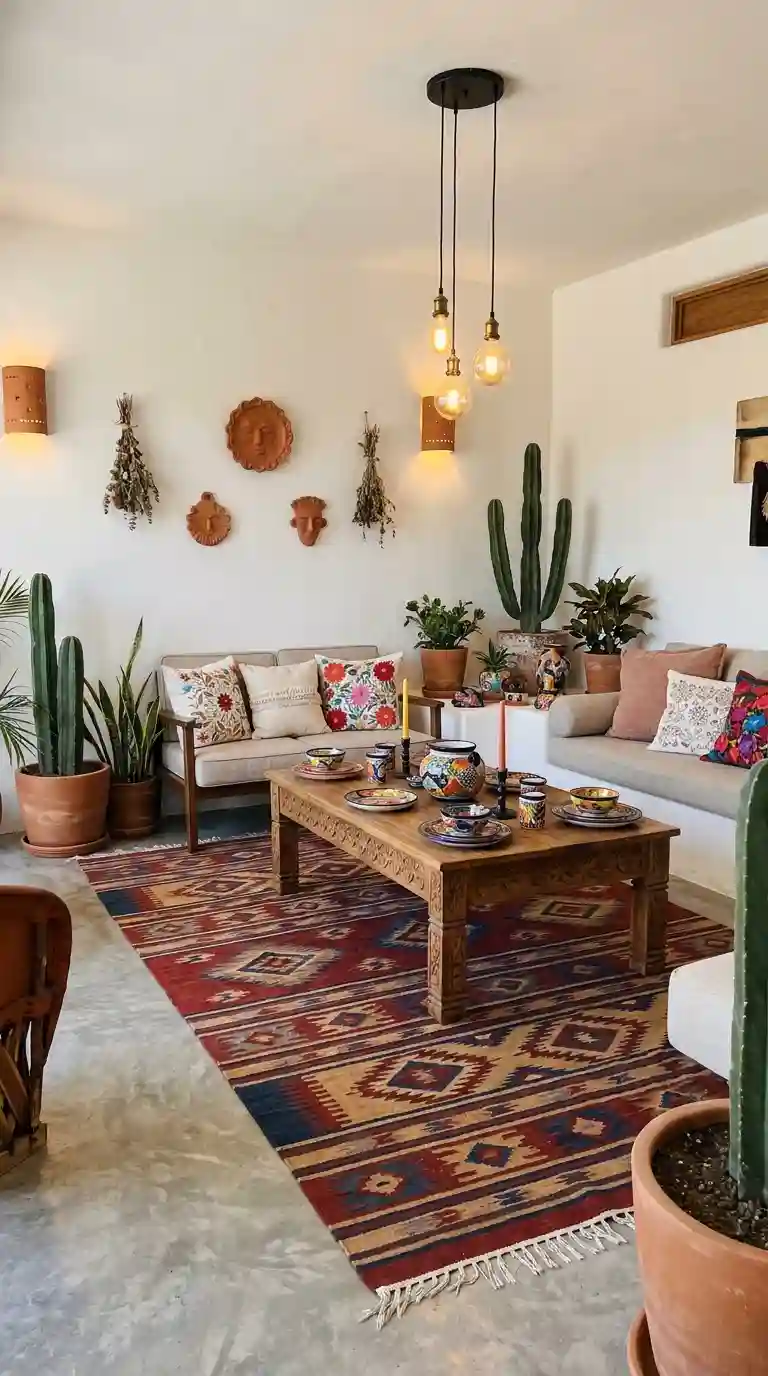
The living room is usually the best place to start with Mexican home decor because it is the room where you have the most flexibility and the most visual impact. Start with a statement rug — a large, handwoven piece in geometric patterns will anchor the entire room and set the tone for everything else. From there, build up with layers of color and texture.
Add a wooden coffee table with visible grain and carving details. Arrange a collection of Mexican pottery — a mix of Talavera pieces and black clay from Oaxaca — on a shelf or console table. Hang a few pieces of wall art that speak to Mexican artistic traditions: maybe a painted tin retablo, a piece of Huichol yarn art, or a framed collection of vintage Mexican movie posters. Drape a serape or hand-woven blanket over the arm of a sofa.
The magic of Mexican home decor in a living room is the layering. Each element adds to the others, and the overall effect is a room that feels warm, personal, and full of stories. Do not be afraid to mix periods and styles — a traditional clay pot next to a modern lamp can look completely intentional when done thoughtfully.
The Kitchen and Dining Area
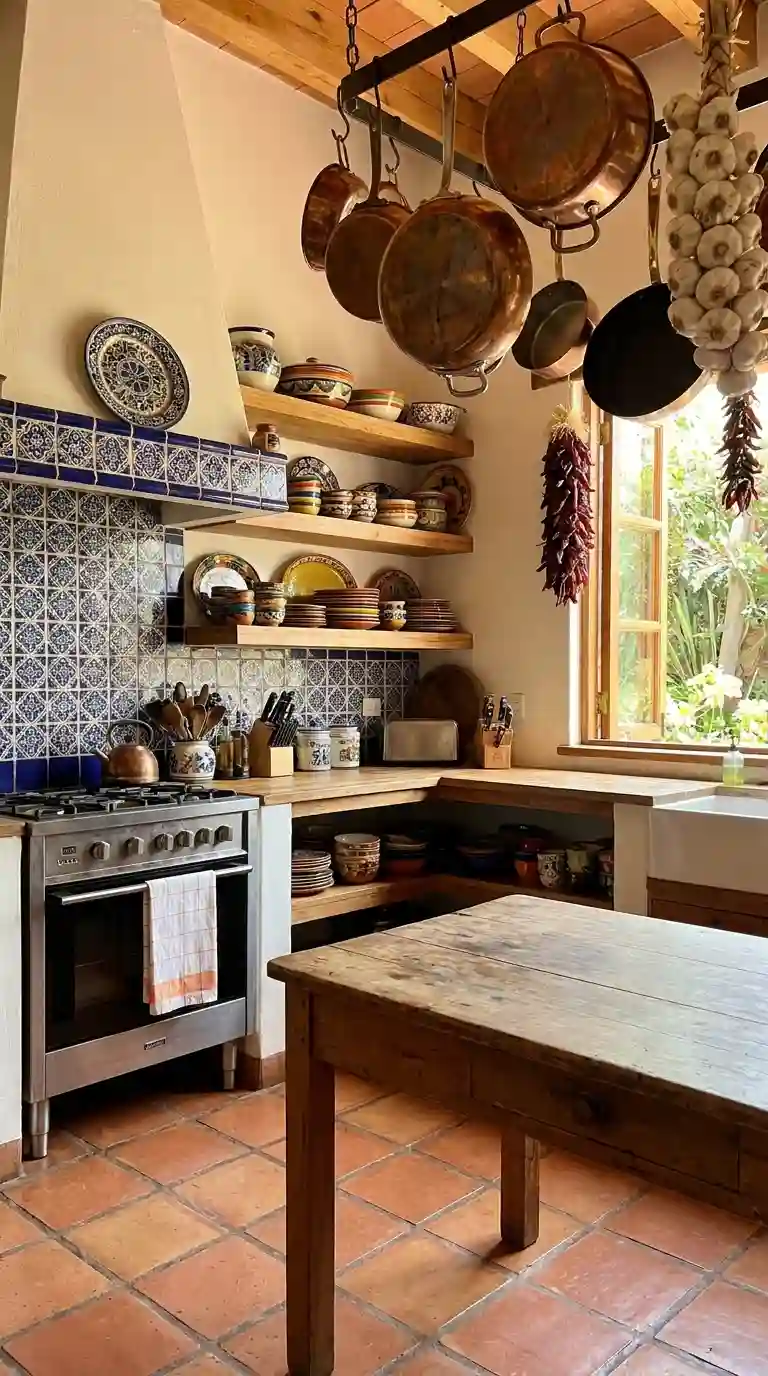
The kitchen is perhaps the most natural home for Mexican home decor, because food and cooking are so central to Mexican culture. A Talavera tile backsplash is one of the most popular and effective ways to bring Mexican design into a kitchen. Even a relatively small amount of these hand-painted tiles can completely transform the visual impact of the space.
Copper cookware from Santa Clara del Cobre in Michoacan is both functional and beautiful. Hanging a few copper pots above the stove adds an artisanal warmth that no modern stainless-steel appliance can match. Open wooden shelving displaying collections of colorful Mexican pottery and dishes doubles as both storage and decoration. A string of dried chili peppers or a ristra adds authenticity and wonderful color.
In the dining area, a hand-carved wooden dining table paired with leather and wood chairs sets a magnificent tone. Layer a hand-woven table runner down the center, place Talavera serving dishes filled with fresh fruit, and hang a wrought iron chandelier overhead. Add a few potted succulents and a small votive candle in a painted tin holder, and you have a dining space that feels genuinely special.
Also Read: 15 Timeless Antique Home Decor Ideas to Create a Warm and Elegant Space
The Bedroom
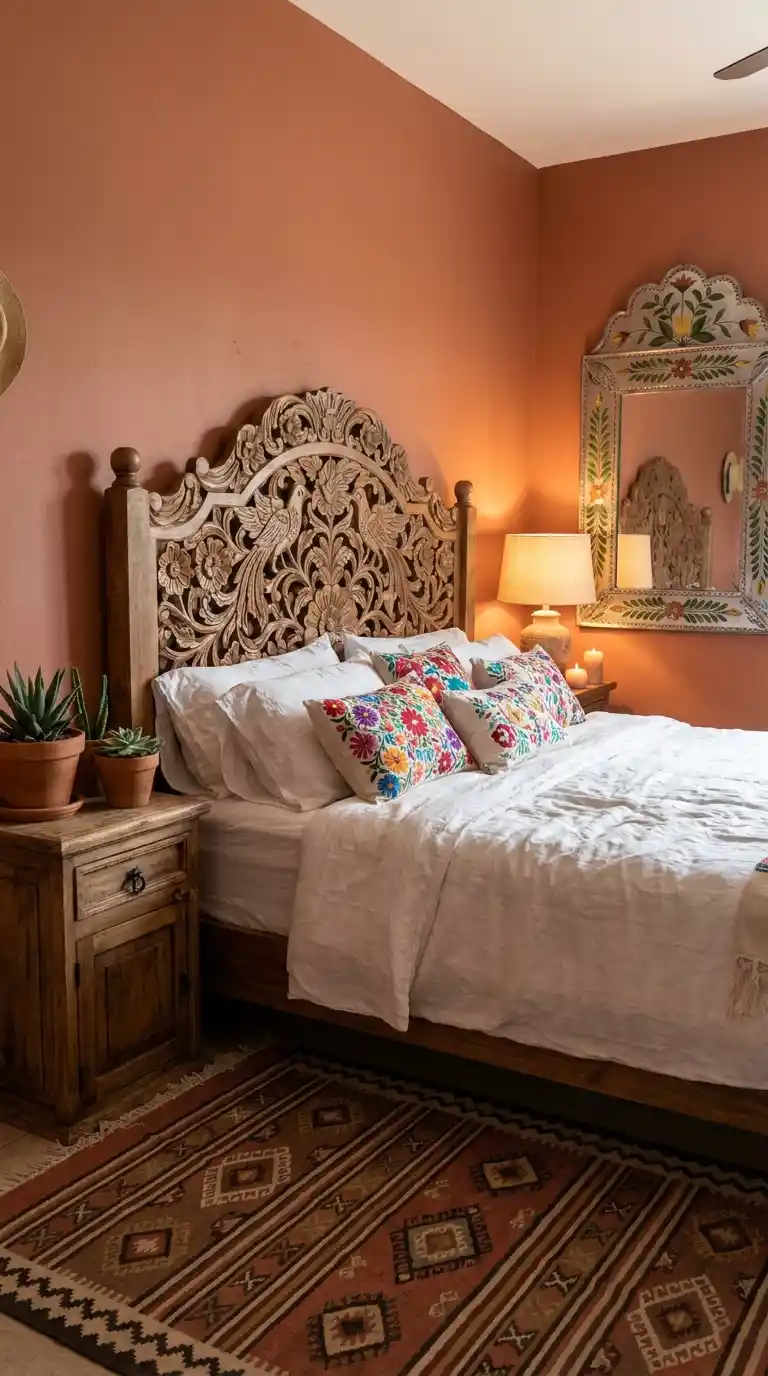
Mexican home decor in the bedroom is all about creating warmth and intimacy. A carved wooden headboard is an excellent starting point — look for one with floral or geometric carving details. Layer the bed with white or natural linen sheets for a clean base, then add embroidered pillow covers, a hand-woven blanket at the foot of the bed, and a colorful throw for a cozy, collected look.
Painted tin mirrors are a quintessential element of Mexican home decor and they work beautifully in a bedroom. The punched tin frames, often in sunburst or floral patterns, catch the light in the most beautiful way and add a sense of craftsmanship and warmth that modern mirrors simply cannot replicate. Hang one above a wooden dresser and pair it with a small collection of clay pottery pieces and a potted cactus.
Lighting in a Mexican-style bedroom should be warm and layered. A wrought iron chandelier overhead, supplemented by painted ceramic table lamps on the nightstands, creates the kind of gentle, amber-toned light that makes everything look more beautiful. Avoid harsh overhead fluorescents — they are the enemy of the warm, intimate atmosphere that Mexican home decor is all about.
The Bathroom
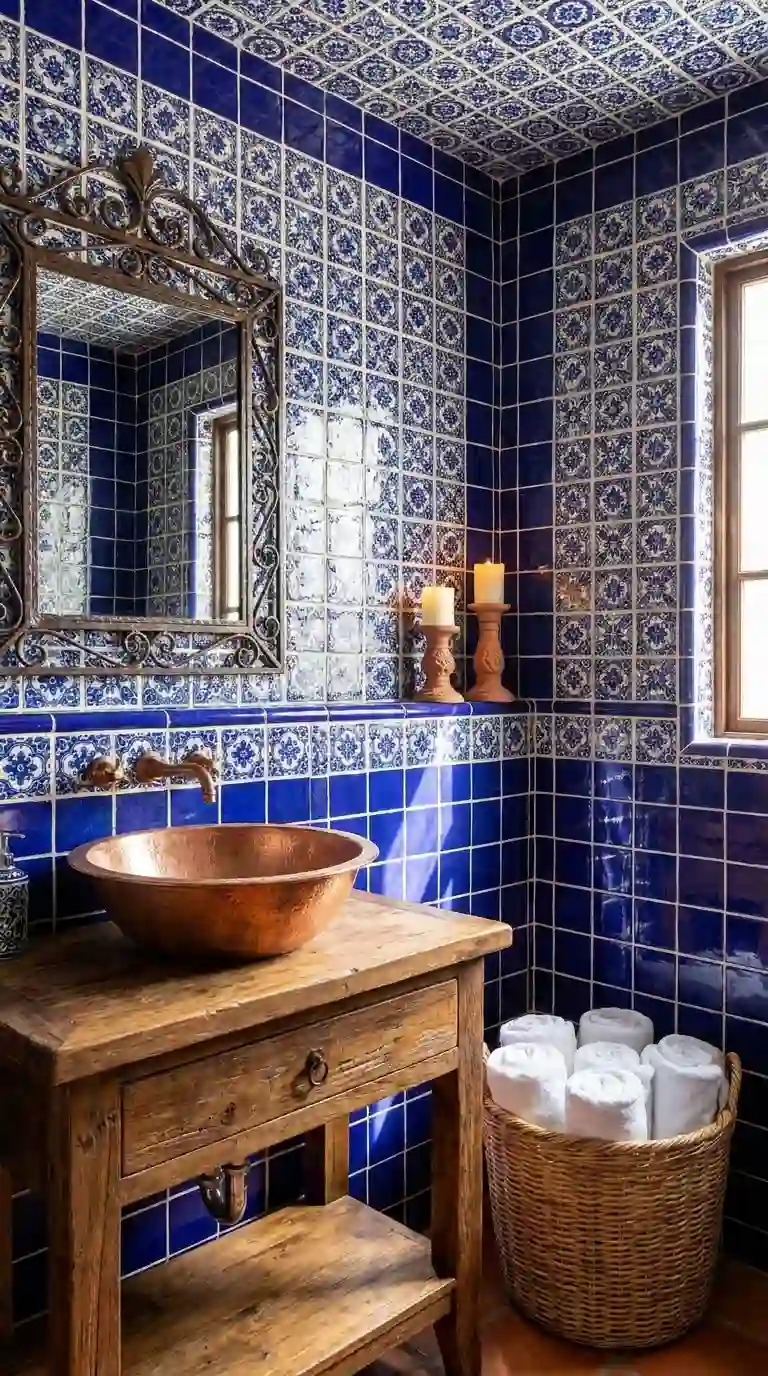
The bathroom might seem like an unlikely place for Mexican home decor, but it can be one of the most dramatic and beautiful rooms in the house when done right. Talavera tiles on the walls and floor transform even a small bathroom into something extraordinary. A hammered copper sink basin is a stunning focal point that combines beauty and function. A wrought iron or painted tin mirror frame adds authenticity and charm.
Even in a rental where you cannot change the tiles, you can bring Mexican home decor energy into the bathroom through accessories. Terracotta candle holders, hand-painted soap dispensers, woven baskets for storage, and a small piece of embroidered art can make a significant difference. Plants also work beautifully in a bathroom — a small potted fern or a trailing pothos adds the kind of lushness that complements the earthy, natural quality of Mexican design.
Architectural Details in Mexican Home Decor
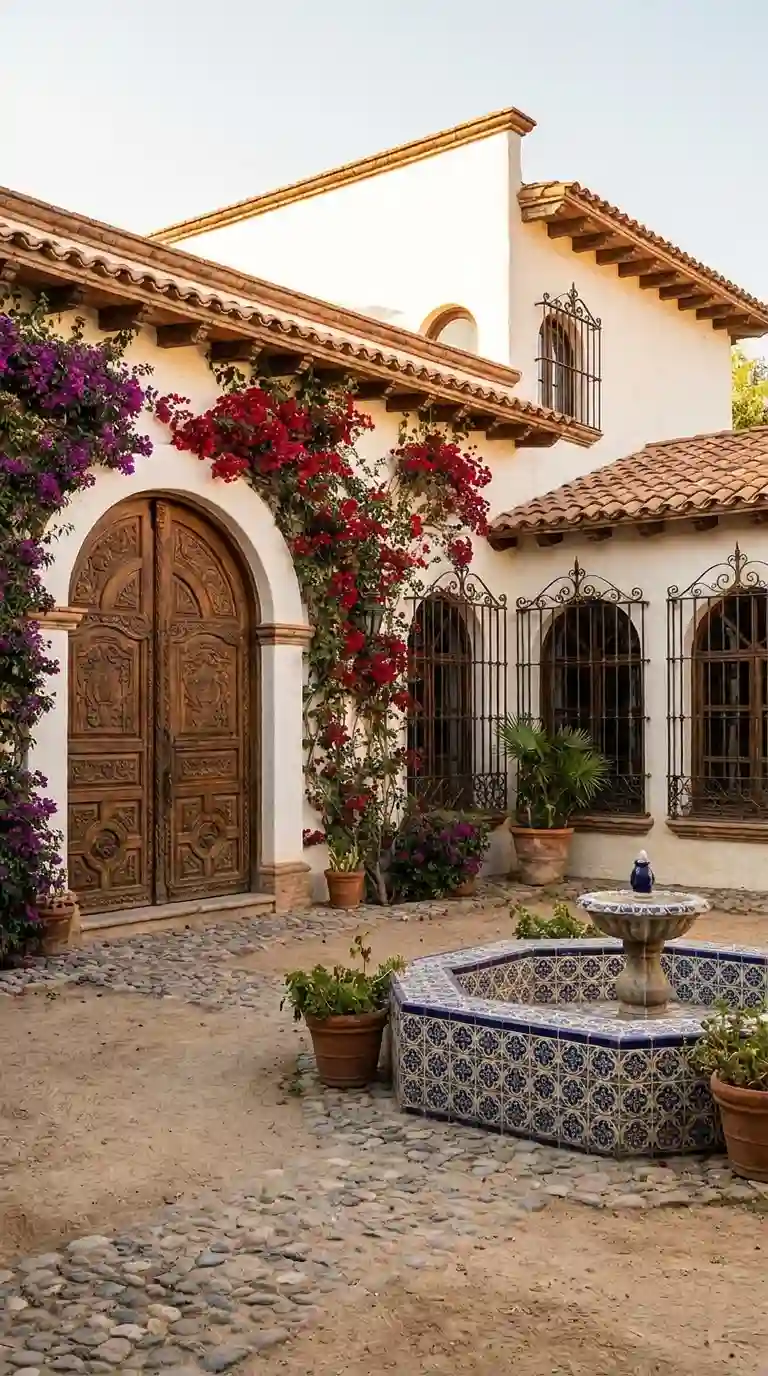
When people think about Mexican home decor, they often focus on the movable elements the pottery, the textiles, the furniture. But some of the most impactful aspects of Mexican interior design are the architectural details built into the structure of the home itself. Understanding these elements can help you make more informed decisions about renovations or even just help you choose the right kind of home if you are in the market.
Terracotta tile floors are one of the most beloved architectural features of traditional Mexican homes. The warm reddish-brown color of unglazed terracotta is incredibly versatile it looks beautiful with almost any color palette and it develops a gorgeous patina over time. Terracotta is also naturally cool underfoot, which makes it perfect for warm climates. If you are renovating a home, replacing cold ceramic or vinyl floors with terracotta can be one of the most transformative things you do.
Arched doorways and windows are another hallmark of Mexican architecture, particularly in the hacienda and colonial styles. If your home has or can have arched openings, this is a wonderful structural feature to work with. Thick walls, deep-set windows, and exposed wooden vigas (ceiling beams) are other architectural elements that appear frequently in traditional Mexican homes and add enormous character to the space.
Plants and Nature in Mexican Home Decor
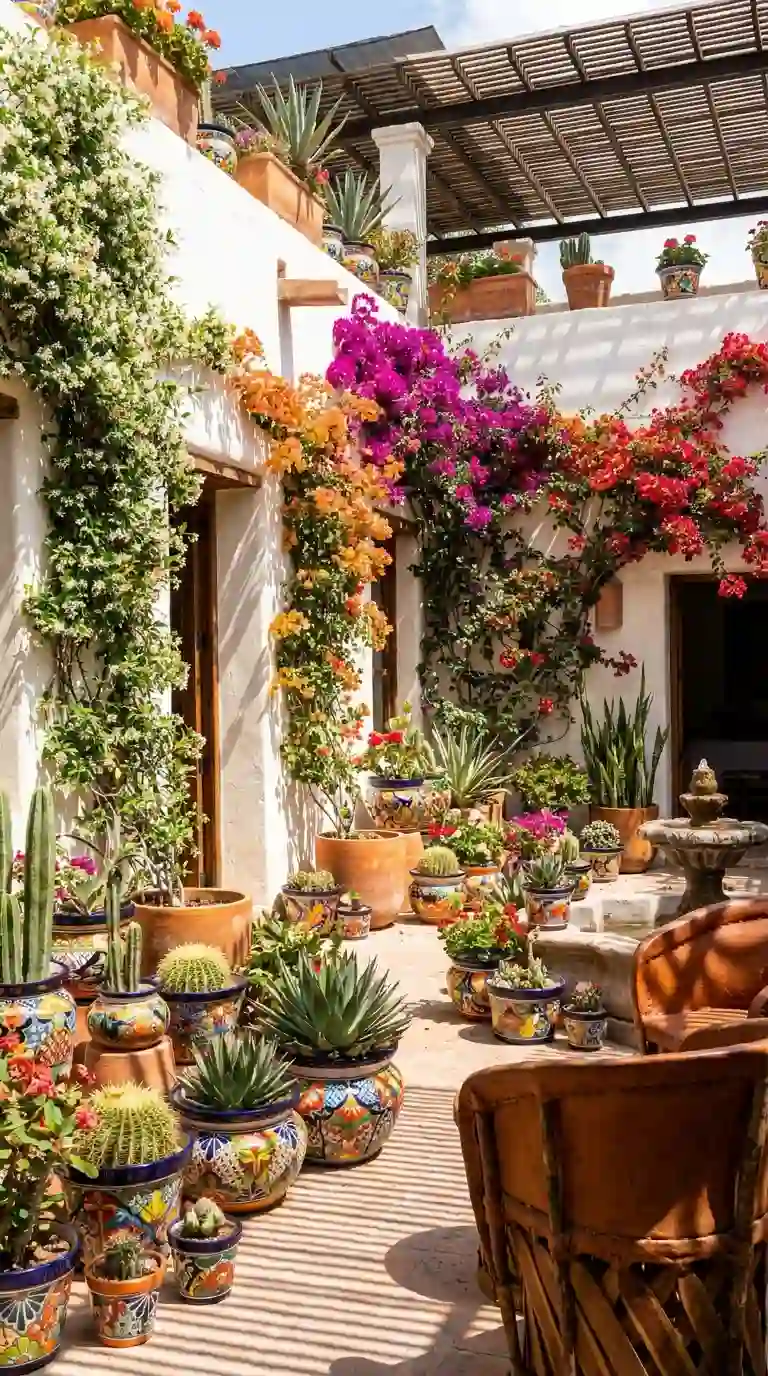
Nature has always been central to Mexican life and culture, and this is reflected beautifully in Mexican home decor. Plants are not an afterthought in a Mexican-style home they are an essential design element that connects the interior to the natural world and adds life and movement to a space.
Cacti and succulents are the most obvious choice, and for good reason they are native to Mexico, incredibly hardy, and sculptural in the most beautiful way. Arrange a collection of different sizes and species in painted terracotta pots or Talavera ceramic containers for a distinctly Mexican look. Agave plants make spectacular statement pieces in a garden or on a patio. Bougainvillea, with its blazing magenta and orange bracts, is one of the most iconic Mexican plants and it looks extraordinary climbing a whitewashed wall.
Inside the home, lush tropical plants like monstera, pothos, and bird of paradise complement the warm, earthy tones of Mexican home decor beautifully. Herbs like epazote, cilantro, and Mexican oregano can be grown in small painted pots in the kitchen, adding both beauty and function. Dried flowers and herbs — particularly marigolds, which are deeply significant in Mexican culture as the flower of the dead — can be used to create beautiful natural arrangements.
Shopping for Authentic Mexican Home Decor
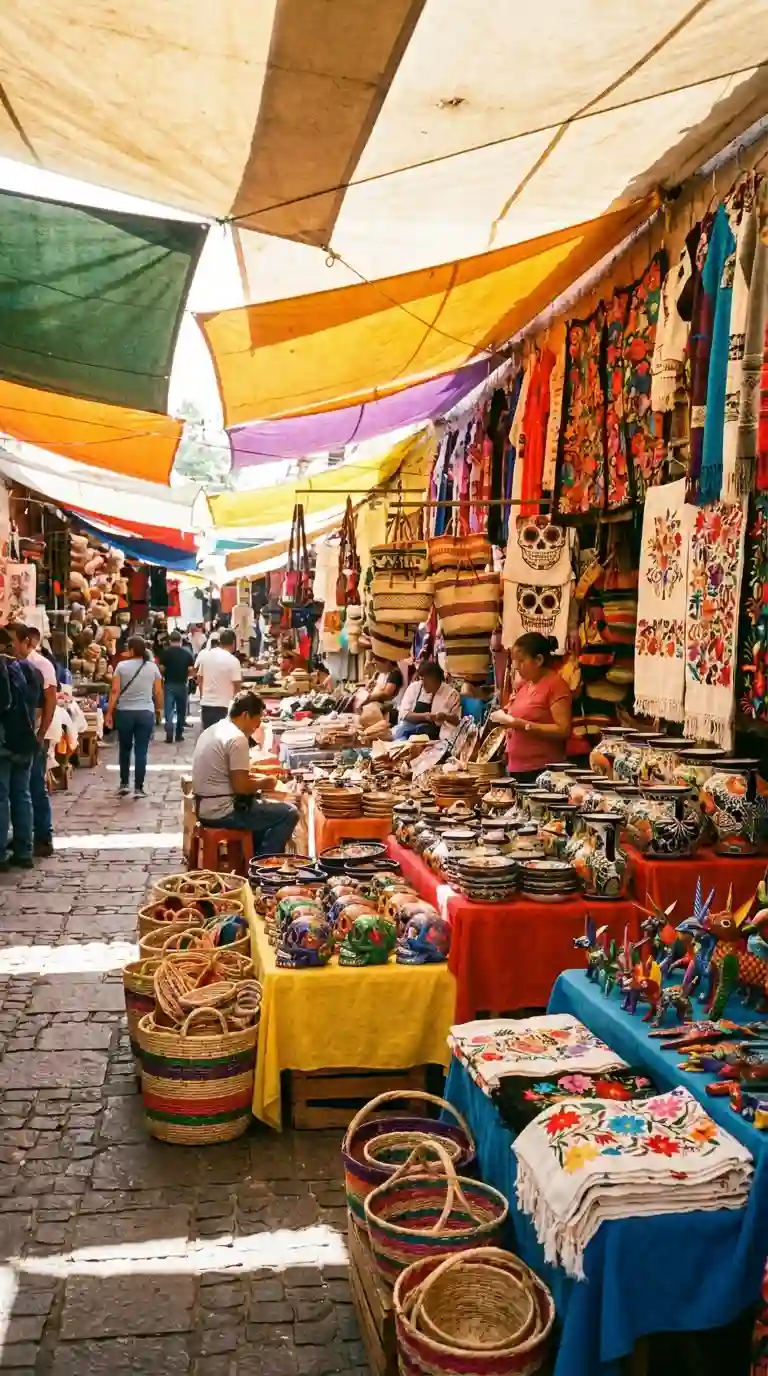
One of the most important things I want to say about shopping for Mexican home decor is this: authenticity matters, both ethically and aesthetically. There is a huge market for mass-produced imitations of Mexican craft traditions cheaply made items that mimic the look of handmade work without any of the cultural depth or quality. These items are not just inferior they actively undermine the artisans and communities whose traditions they are copying.
When possible, shop directly from Mexican artisans or from shops and online marketplaces that work directly with artisan communities and pay fair prices. Organizations like Novica, Techo, and various fair trade cooperatives offer a wide range of genuine Mexican crafts at prices that support the makers. When shopping online, look for sellers who can tell you the name of the artisan who made the piece, where they are from, and what materials were used. This information is a sign that you are dealing with a serious supplier.
Where to Find Mexican Home Decor Online
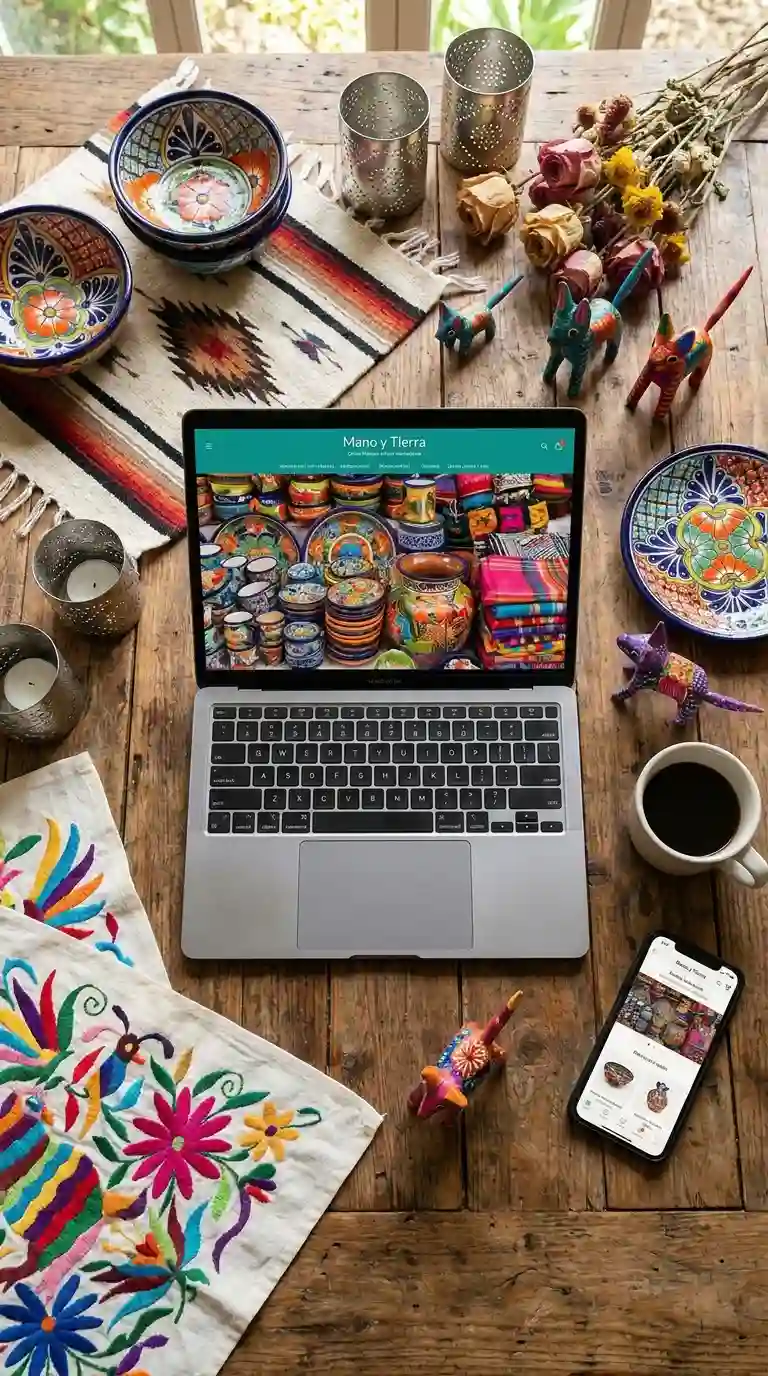
Online shopping for Mexican home decor has become much more accessible in recent years. Etsy is a good starting point there are many shops run by actual Mexican artisans or by importers who work directly with artisan communities. Look for shops with detailed descriptions, multiple photos, and reviews from verified buyers. Novica, which partners with National Geographic, is another excellent source with a strong commitment to fair trade practices.
For larger pieces like furniture, many Mexican furniture makers now ship internationally or have showrooms in cities with large Mexican-American communities. Searching for Mexican furniture importers in your city can be surprisingly productive. Flea markets, estate sales, and antique shops in areas with significant Mexican-American populations are also wonderful places to find one-of-a-kind vintage pieces that have real history.
DIY Mexican Home Decor Ideas That Actually Work
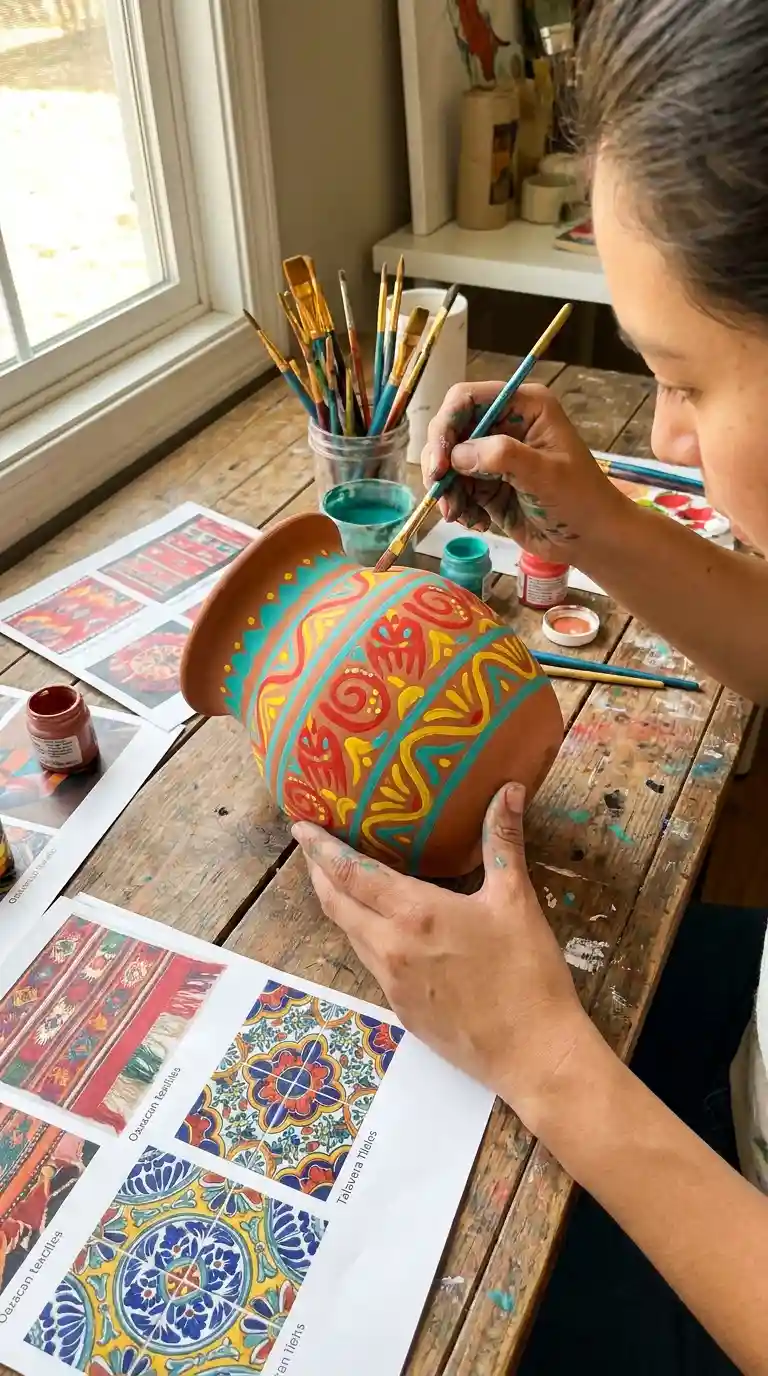
Not all Mexican home decor has to be purchased. Some of the most satisfying and personal pieces are things you can make yourself, and the tradition of handcraft that underlies Mexican design is itself something you can participate in. You do not need to be a master artisan to create beautiful pieces that add Mexican warmth and character to your home.
Painting terracotta pots is one of the most accessible DIY projects for Mexican home decor. Buy inexpensive terracotta pots from a garden center, clean them well, and paint them with acrylic or ceramic paints in bold Mexican colors. You can paint simple geometric patterns, floral designs, or even attempt your own version of Talavera-style painting. Even a simple coat of a bold solid color like cobalt blue or terracotta red transforms a plain pot into something with real character.
Papel picado the intricate cut-paper banners that are a staple of Mexican celebrations is another wonderful DIY project. You can buy tissue paper in bright colors and use scissors or a craft knife to cut out traditional patterns of flowers, birds, and geometric shapes. Strung on a twine line across a window or doorway, papel picado adds instant Mexican festivity to any room and costs almost nothing to make.
Creating a Mexican-Inspired Gallery Wall
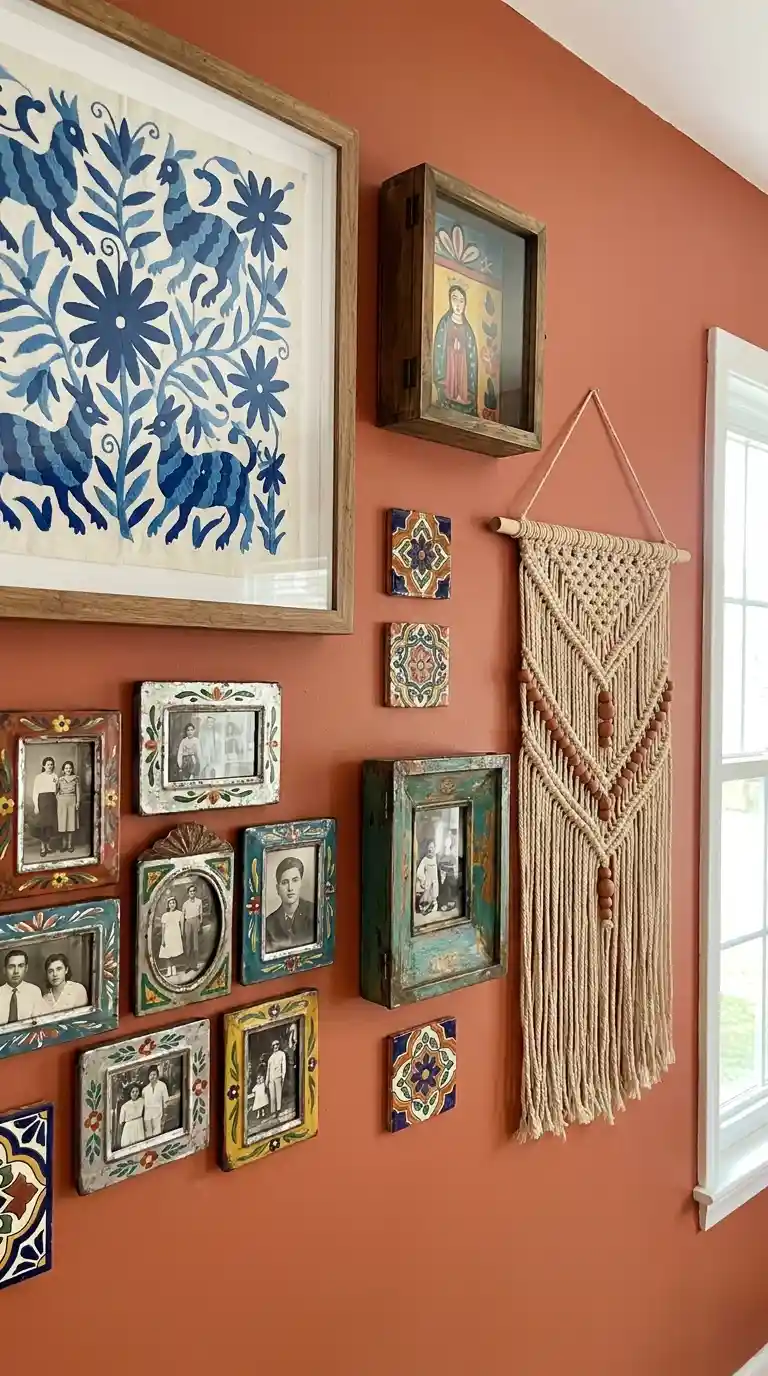
A gallery wall is one of the best ways to incorporate Mexican home decor without committing to major furniture purchases or architectural changes. The key is to mix different types of Mexican art and craft in different sizes and frames. A large piece of Otomi embroidery or a vintage Huichol yarn painting can serve as the anchor. Surround it with smaller pieces painted tin retablos, framed vintage Mexican postage stamps, a small piece of black clay pottery, a decorative Talavera tile.
Mix the frames too. Painted tin frames are quintessentially Mexican home decor and they come in all sizes. Unpainted wood frames in natural tones also work well. The eclectic mix of materials and sizes is what makes a gallery wall feel genuinely collected rather than designed, and that personal, accumulated quality is exactly what Mexican home decor is all about.
Seasonal and Festival Elements in Mexican Home Decor
One of the things I find most beautiful about Mexican home decor is how deeply it is connected to the rhythms of the year and the cycles of celebration and remembrance. Mexican culture has one of the richest traditions of seasonal decoration in the world, and incorporating even some of these seasonal elements into your home connects you to a living cultural calendar that has been maintained for centuries.
Dia de los Muertos, or Day of the Dead, is celebrated on November 1st and 2nd, and the decorative traditions associated with it are extraordinary. The ofrenda, or altar, is a central feature — a tiered display decorated with marigold flowers, photographs of the deceased, candles, food offerings, sugar skulls, and papel picado. Even a simplified version of an ofrenda, created as a way of honoring and remembering loved ones who have passed, adds profound meaning and beauty to a home.
Other seasonal Mexican home decor traditions include the elaborate papel picado and luminaria decorations of the Christmas posadas season, the vibrant spring colors associated with Semana Santa, and the explosion of flower arrangements and bright textiles that accompany local saint’s day celebrations. Each of these traditions offers rich visual inspiration that you can draw on throughout the year, keeping your Mexican home decor evolving and alive rather than static.
Mixing Mexican Home Decor With Modern Design
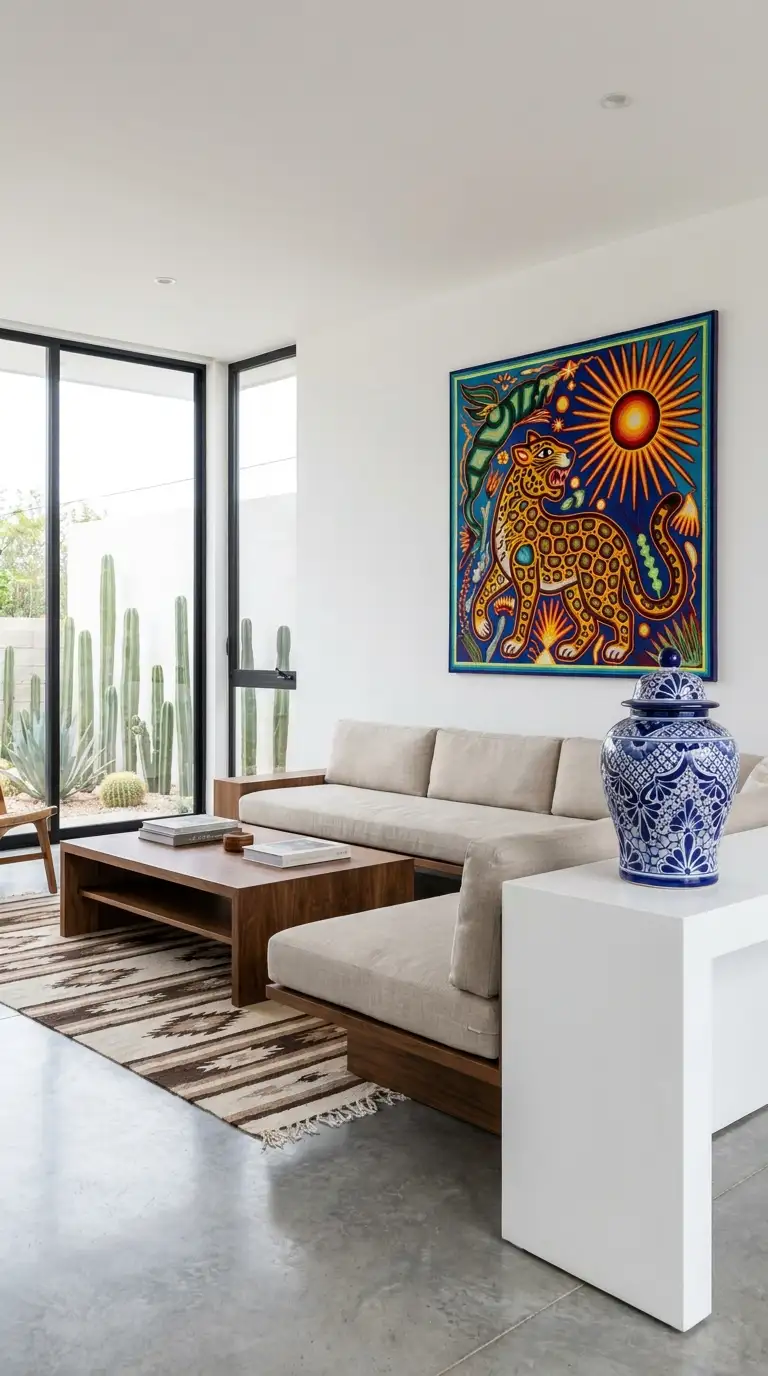
One of the most common misconceptions about Mexican home decor is that it only works in a completely traditional setting. In fact, some of the most beautiful interiors I have ever seen combine modern or minimalist design with carefully chosen Mexican elements. The contrast between the clean lines of contemporary design and the rich craftsmanship of Mexican artisan work can be absolutely stunning.
The trick to mixing Mexican home decor with modern design is to be selective and intentional. In a clean, minimalist room, a single dramatic piece of Mexican art a large Huichol yarn painting, a statement Talavera vase, a beautifully woven Zapotec rug can be the thing that gives the whole room its soul. You do not need to pile on lots of elements. One or two powerful pieces are enough.
Conversely, in a room that already has a lot of Mexican home decor character terracotta floors, colorful tiles, carved wood a few contemporary design elements can actually help balance the richness and prevent the space from feeling overwhelming. A sleek modern sofa in a neutral color, contemporary art lighting, or a simple glass coffee table can provide visual breathing room that lets the Mexican elements really shine.
Final Thoughts
I want to end this guide the way I started it with the feeling. Because ultimately, Mexican home decor is not about following a checklist of items to acquire. It is about creating a feeling. It is about warmth and generosity and the joy of beautiful things made by human hands. It is about color used as an act of courage rather than an accident. It is about honoring traditions that have survived centuries because they are rooted in something true.
When you bring Mexican home decor into your home, you are participating in something much bigger than interior design. You are supporting artisan communities who depend on the market for their crafts. You are celebrating a cultural tradition that has produced some of the most beautiful objects the world has ever seen. And you are making your home a place that feels alive — full of color, full of texture, full of stories.
Whether you start small with a single hand-painted mug or dive in with a full room redesign, I hope this guide has given you the knowledge and inspiration you need to begin your own journey with Mexican home decor. Take your time, buy things you truly love, learn the stories behind what you bring home, and trust your own sense of beauty. The most successful Mexican home decor is always personal, and your space — whatever it looks like — is waiting to be filled with color, warmth, and life.
Frequently Asked Questions
Q1. What are the key elements of Mexican home decor?
The key elements of Mexican home decor include bold and vibrant color palettes (terracotta, cobalt blue, golden yellow, deep green), handcrafted Talavera pottery and tiles, rustic carved wooden furniture, wrought iron accents, hand-woven textiles like Zapotec rugs and serapes, embroidered fabrics, terracotta floor tiles, papel picado, and lush plants like cacti and bougainvillea. Together, these elements create the warm, layered, culturally rich atmosphere that defines authentic Mexican home decor.
Q2. How do I make my home look Mexican without it feeling like a restaurant?
The key is restraint and intentionality. Choose a few high-quality, authentic pieces rather than filling every surface with items. Let your space breathe. Mix Mexican home decor elements with more neutral modern pieces to create contrast. Focus on one or two rooms rather than trying to transform the whole house at once. Choose pieces with real craftsmanship and cultural meaning rather than cheap reproductions, and the result will feel personal and curated rather than themed.
Q3. What colors are most associated with Mexican home decor?
Mexican home decor is famous for its bold use of color. The most characteristic colors include warm terracotta, deep cobalt blue, rich golden yellow, vibrant coral, forest green, bright magenta, and warm orange. These colors are often used together in combinations that might seem bold to more conservative sensibilities, but that reflect the joyful, life-embracing spirit of Mexican design. Do not be afraid to mix these colors — they were made to live together.
Q4. Is Talavera pottery expensive?
Authentic Talavera pottery from Puebla is indeed a premium product, because it is entirely handmade and hand-painted by skilled artisans following centuries-old techniques. Prices vary widely depending on the size and complexity of the piece. A single decorative plate might cost between $30 and $100, while a large set of tiles for a backsplash could run into hundreds or thousands of dollars. However, there are also many beautiful pieces of Mexican pottery in other regional styles — like Oaxacan black clay or majolica — that are more affordable while still being genuine handmade work.
Q5. What is the difference between Talavera and Mexican majolica?
Talavera is a specific type of majolica ceramic produced in the city of Puebla, Mexico, following strict traditional techniques that have been protected by Mexican law and recognized by UNESCO. True Talavera must be produced in Puebla using local clay and specific firing and glazing methods. Majolica is a broader term for tin-glazed earthenware that includes Talavera but also encompasses similar ceramics produced in other parts of Mexico and the world. Both are beautiful, but authentic Talavera commands higher prices due to its strict production standards and protected artisan status.
Q6. Can Mexican home decor work in a small apartment?
Absolutely. In fact, a small apartment can often be transformed dramatically by just a few well-chosen pieces of Mexican home decor. A vibrant rug, a few Talavera pieces on open shelving, some embroidered pillow covers, and a painted tin mirror can give even a tiny studio apartment enormous warmth and personality. The trick in a small space is to choose pieces that have both beauty and function a hand-painted ceramic bowl you actually use, a beautiful woven basket that also stores things, a painted wooden stool that serves as a side table.
Q7. What is papel picado and how do I use it in my home?
Papel picado, which translates to ‘pecked paper,’ is the traditional Mexican art of cutting intricate patterns from tissue paper or sometimes tin foil to create decorative banners. The designs typically feature flowers, birds, skulls (especially for Dia de los Muertos), and geometric patterns. In Mexican home decor, papel picado is hung in strings across windows, doorways, porches, or above dining tables to add color, movement, and a festive spirit. It is incredibly inexpensive, makes a big visual impact, and is one of the easiest ways to bring Mexican home decor energy into any space.
Q8. How do I care for handmade Mexican pottery?
Handmade Mexican pottery requires a bit more care than mass-produced ceramics. Most traditional Mexican pottery is not dishwasher safe — the high heat and harsh detergents can damage the glaze and painted designs. Wash by hand with mild soap and warm water. Avoid soaking for extended periods. Many pieces are also not microwave safe. For display-only pieces, simply dust regularly with a soft cloth. If you are using pottery for food, make sure it is lead-free (a requirement for pottery imported into the US and Canada) ask the seller for confirmation.
Q9. What plants best complement Mexican home decor?
Plants that complement Mexican home decor most naturally include cacti and succulents of all varieties, agave plants, bougainvillea (which grows beautifully in containers indoors if given enough light), monstera, bird of paradise, and tropical ferns. For a kitchen, growing herbs like cilantro, epazote, or Mexican oregano in painted terracotta pots adds both function and aesthetic appeal. Dried marigolds and dried chili ristras also serve as beautiful natural decorative elements with deep cultural resonance in Mexican home decor.
Q10. What is a Huichol yarn painting and where can I buy one?
Huichol yarn paintings are a sacred art form created by the Wixaritari (Huichol) people of the Sierra Madre Occidental mountains in western Mexico. Artists press colored yarn into a beeswax-coated board to create densely packed, dazzlingly detailed images of animals, deities, and spiritual visions. These paintings are deeply meaningful in Huichol culture and are considered windows into the spiritual world. They make extraordinary pieces of Mexican home decor wall art. You can find authentic Huichol yarn paintings through fair trade organizations, specialty galleries, and reputable online shops that work directly with Huichol artisan communities.
Q11. How do I create a Dia de los Muertos altar at home?
Creating a simple Day of the Dead altar at home is a beautiful way to honor Mexican tradition and remember your own loved ones who have passed. You will need a tiered or multi-level surface (traditional altars have multiple levels representing different planes of existence). Cover it with a cloth, then add photographs of the deceased, marigold flowers (fresh or dried), candles or votive lights, a glass of water, the favorite foods and drinks of those you are remembering, sugar skulls, and papel picado. The altar is meant to welcome the spirits home during the holiday and is a deeply moving and beautiful expression of Mexican home decor traditions.
Q12. What are some budget-friendly ways to incorporate Mexican home decor?
There are many affordable ways to bring Mexican home decor into your home. Paint a feature wall in a bold terracotta or cobalt blue. Buy inexpensive terracotta pots and paint them in bright colors yourself. Make your own papel picado from tissue paper. Sew or embroider your own pillow covers using Mexican-inspired patterns. Shop at import stores or ethnic grocery stores that carry inexpensive Mexican crafts. Browse flea markets and estate sales for vintage Mexican pieces. Even a few small, authentic touches — a hand-painted ceramic mug, a woven trivet, a small clay figure — can start to bring Mexican home decor warmth into your space.
Q13. What is the hacienda style and how does it relate to Mexican home decor?
The hacienda style refers to the design aesthetic of the grand Mexican estate houses that were built during the colonial period, roughly from the 17th through the 19th centuries. Hacienda style is characterized by thick adobe or stone walls, terracotta tile floors, heavy wooden furniture and beams, arched doorways, wrought iron details, large interior courtyards with fountains, and lush gardens. It is one of the most influential streams within Mexican home decor and has been enormously popular in the southwestern United States, where it blends naturally with the regional architecture and landscape.
Q14. Are there regional differences in Mexican home decor?
Yes, enormously. Mexico is a country of extraordinary regional diversity, and this is reflected in its design and craft traditions. Oaxaca is known for its black clay pottery, intricate hand-woven textiles, Zapotec rugs, and alebrijes (brightly painted carved wood animals). Puebla is the home of Talavera pottery and beautiful Baroque-influenced architecture. Michoacan is famous for its copper work and lacquerware. Jalisco produces beautiful blown glass and mariachi-associated decorative items. The Yucatan has a distinct style influenced by Mayan heritage and the tropical climate. Exploring these regional traditions can give tremendous depth and specificity to your Mexican home decor.
Q15. How is Mexican home decor different from Southwestern or Tex-Mex style?
These styles are related but distinct. Southwestern design, which is prevalent in states like New Mexico, Arizona, and Texas, is a fusion of Mexican, Native American Pueblo, and Spanish Colonial influences adapted over centuries in the American Southwest. It shares many elements with Mexican home decor — terracotta, turquoise, natural wood, woven textiles but has its own distinct visual vocabulary that reflects the particular multicultural history of the American Southwest. Tex-Mex style is more specifically associated with the Texas-Mexico border culture and often has a more casual, cowboy-influenced character. Authentic Mexican home decor draws more directly from Mexico’s own indigenous and colonial traditions without the mediation of the American Southwest context.