
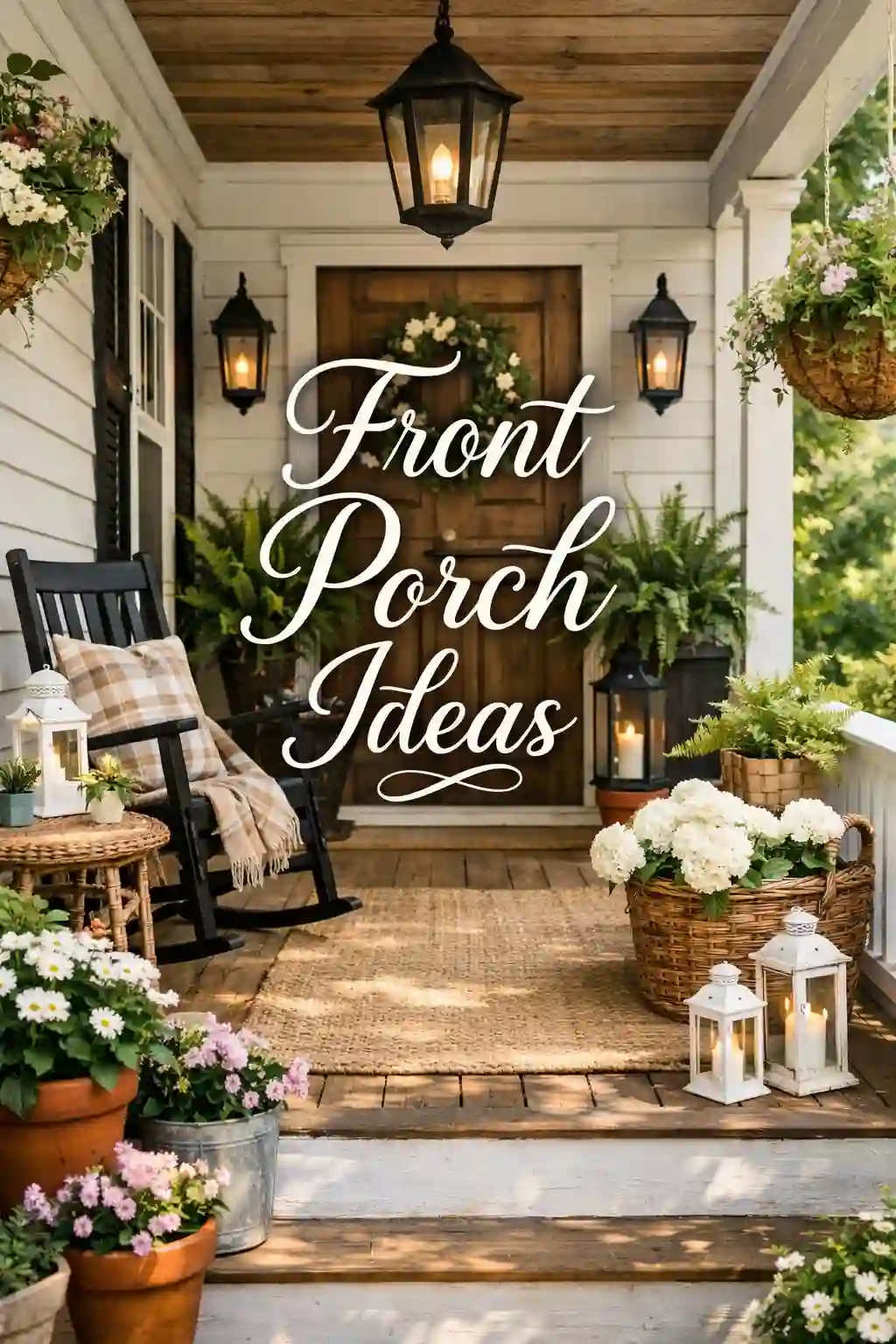
I grew up in a house with a porch that nobody ever used. It had two plastic chairs that faded to a chalky gray every summer and a welcome mat that said absolutely nothing welcoming about the people inside. For years, I walked past it twice a day without a second thought. Then one spring, after moving into my own home, I decided the porch was going to be different. Three weekends and a lot of creativity later, that bare concrete slab became the place where every neighborhood conversation happened. That was the moment I understood what a front porch is really for.
A front porch is not just an architectural feature. It is a declaration. It tells visitors who you are before they ring the bell. It shapes how your home feels from the street. And when it is done well, it becomes one of the most-used spaces in the entire house a buffer between the busyness outside and the comfort within.
Whether you have a sprawling wraparound porch or a narrow apartment stoop, this guide is packed with front porch ideas that work in the real world, not just on Pinterest boards. Let us walk through them together.
Also Read : Irresistible Outdoor Bar Ideas That Turn Any Backyard Into a Dream Escape
Why Front Porch Ideas Matter More Than Most Homeowners Realize
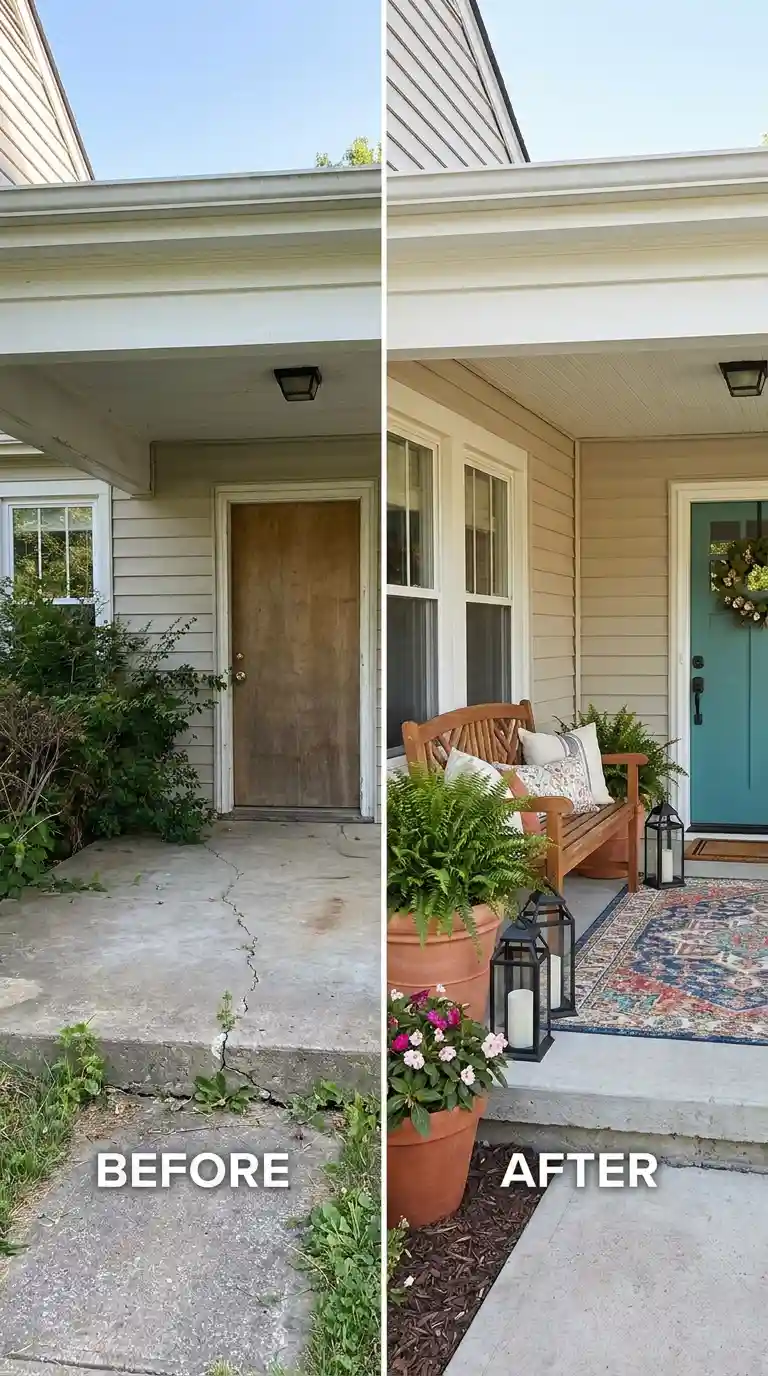
Real estate professionals will tell you that curb appeal can account for up to seven percent of a home’s sale price. But this is not really about money it is about the feeling a home projects before you even step inside. A well-considered front porch creates an immediate sense of warmth and care that sticks in the mind of everyone who walks by.
Beyond the visual impression, a front porch adds usable square footage to your home without the cost of a room addition. A comfortable, well-furnished porch is a place to drink your morning coffee, watch a summer rainstorm, have a quiet conversation, or simply sit and decompress after work. These moments add up to something genuinely meaningful over the life of a home.
The most successful front porch ideas balance beauty with function. A porch covered in decorative objects that you cannot actually sit on or use is just outdoor clutter. The best porches invite you to stay a while, and that quality starts with thoughtful planning before you spend a single dollar.
The Psychology Behind a Welcoming Porch
There is a reason certain houses feel inviting from the sidewalk while others feel closed off. It comes down to signals. A lit porch lantern says someone is home and expects visitors. A potted plant says this is a living space, tended and cared for. A visible seat says you are welcome to rest here. These are not complicated design concepts they are human instincts about safety, warmth, and belonging.
Front porch ideas that work consistently tap into these instincts. They use light, greenery, seating, and color in ways that feel natural rather than staged. When your porch looks like a space that real people actually enjoy, it automatically becomes more inviting than any amount of expensive decor could manufacture.
The Best Front Porch Ideas for Seating and Furniture
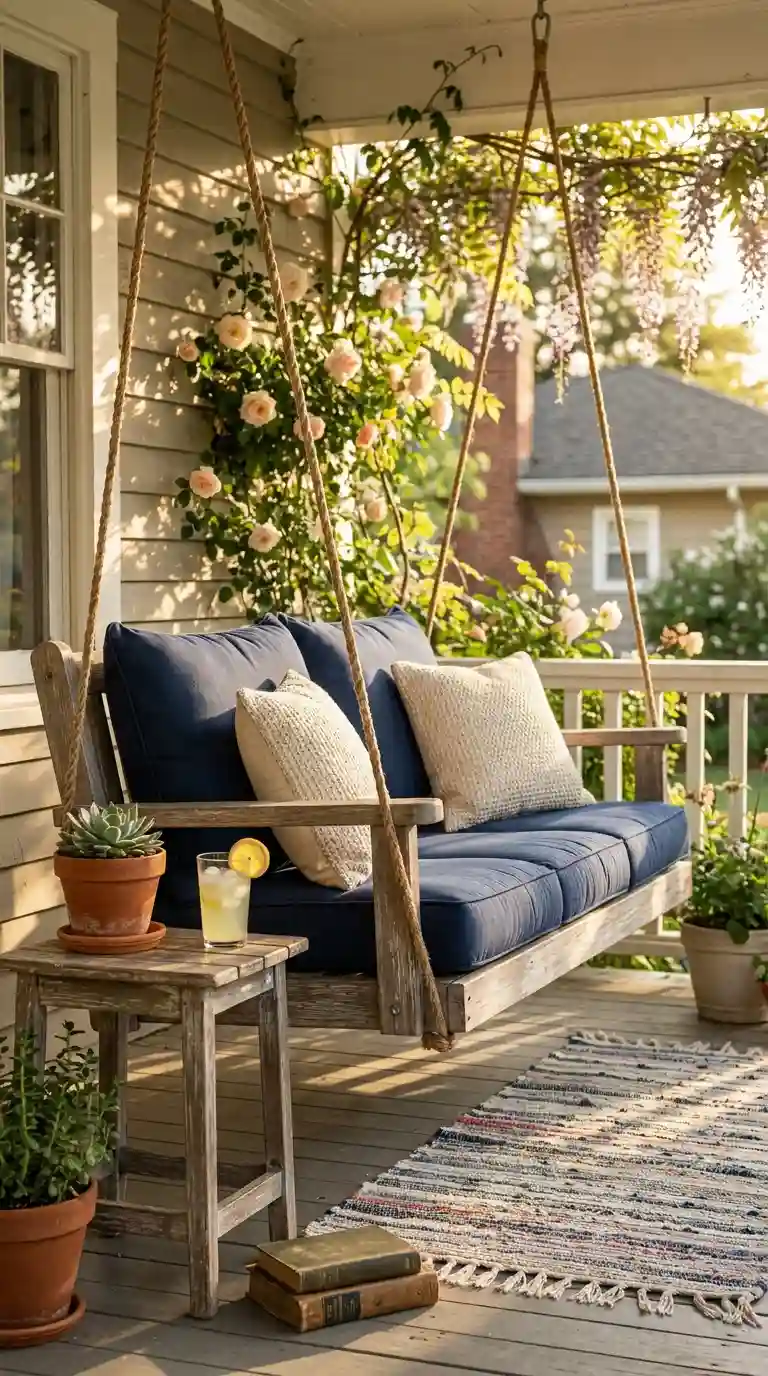
Nothing makes or breaks a front porch faster than the seating situation. I have visited beautiful porches with terrible chairs and left feeling faintly disappointed. The furniture you choose sets the tone for everything else and determines whether the space actually gets used.
The Classic Rocking Chair: Timeless for a Reason
If there is one piece of furniture synonymous with front porch living, it is the rocking chair. There is something deeply satisfying about rocking slowly on a warm evening that no other chair quite replicates. A pair of wooden or poly-lumber rocking chairs in coordinating colors is the simplest and most reliably beautiful front porch seating solution available. They work on porches of almost any size and in virtually any design style.
Poly-lumber rockers made from recycled plastic have become my personal recommendation for most homeowners. They look like painted wood, they are extremely durable, they never need sanding or repainting, and they stand up to weather without flinching. Yes, they cost more upfront than a basic wooden rocker, but the zero-maintenance factor makes them worthwhile over a five-to-ten year ownership period.
Porch Swings: The Upgrade That Pays Off
A porch swing is one of those front porch ideas that seems like a luxury until you have one, after which it becomes completely non-negotiable. A swing adds movement, charm, and a distinctly relaxed quality to any porch. It is particularly effective on larger porches where it can hang without dominating the entire space, and it is a guaranteed conversation starter for every first-time visitor.
When choosing a swing, pay close attention to the ceiling joists above a loaded porch swing can weigh several hundred pounds in motion, and it needs to be properly anchored to structural framing. If your porch ceiling is not suitable for hanging hardware, a freestanding swing frame is a safe and still-attractive alternative that can be positioned anywhere and moved easily.
Also Read : Outdoor Firepit Ideas: The Ultimate Guide to Creating a Cozy and Stylish Backyard
Small Porch? Think Bistro Table and Chairs
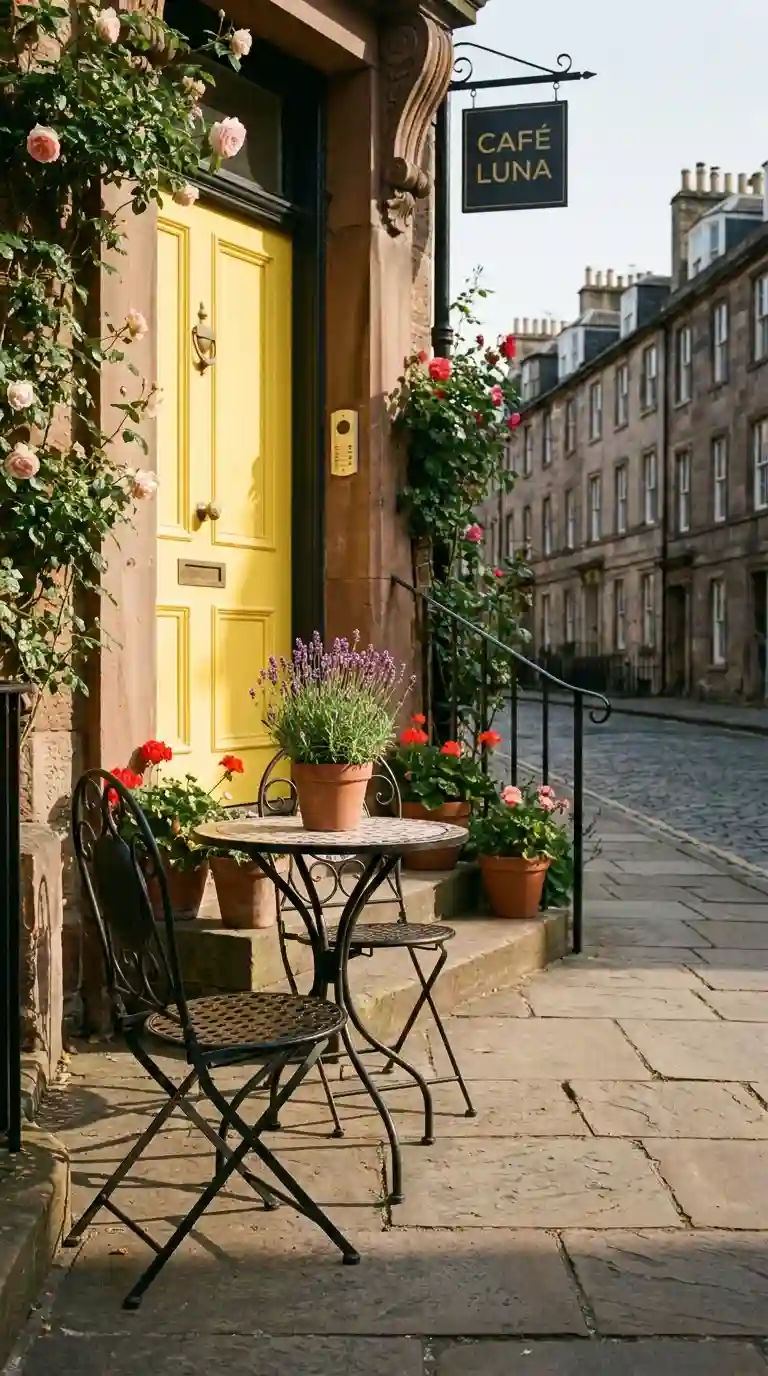
Not every front porch has room for a swing and a set of rockers. If you are working with a narrow stoop or a small covered entry, a bistro table with two metal or wicker chairs is one of the cleverest front porch ideas available. It creates a defined seating area without consuming much floor space, and it adds a charming European cafe quality to the entry that is disproportionate to its modest footprint.
Choose weather-resistant materials for any outdoor bistro set — powder-coated steel or aluminum chairs with a small zinc or faux-marble topped table look elegant, clean, and hold up beautifully through seasons of exposure. Add a small potted herb or a single bold flower in the center of the table and the whole composition comes together immediately.
Front Porch Ideas for Color and Curb Appeal
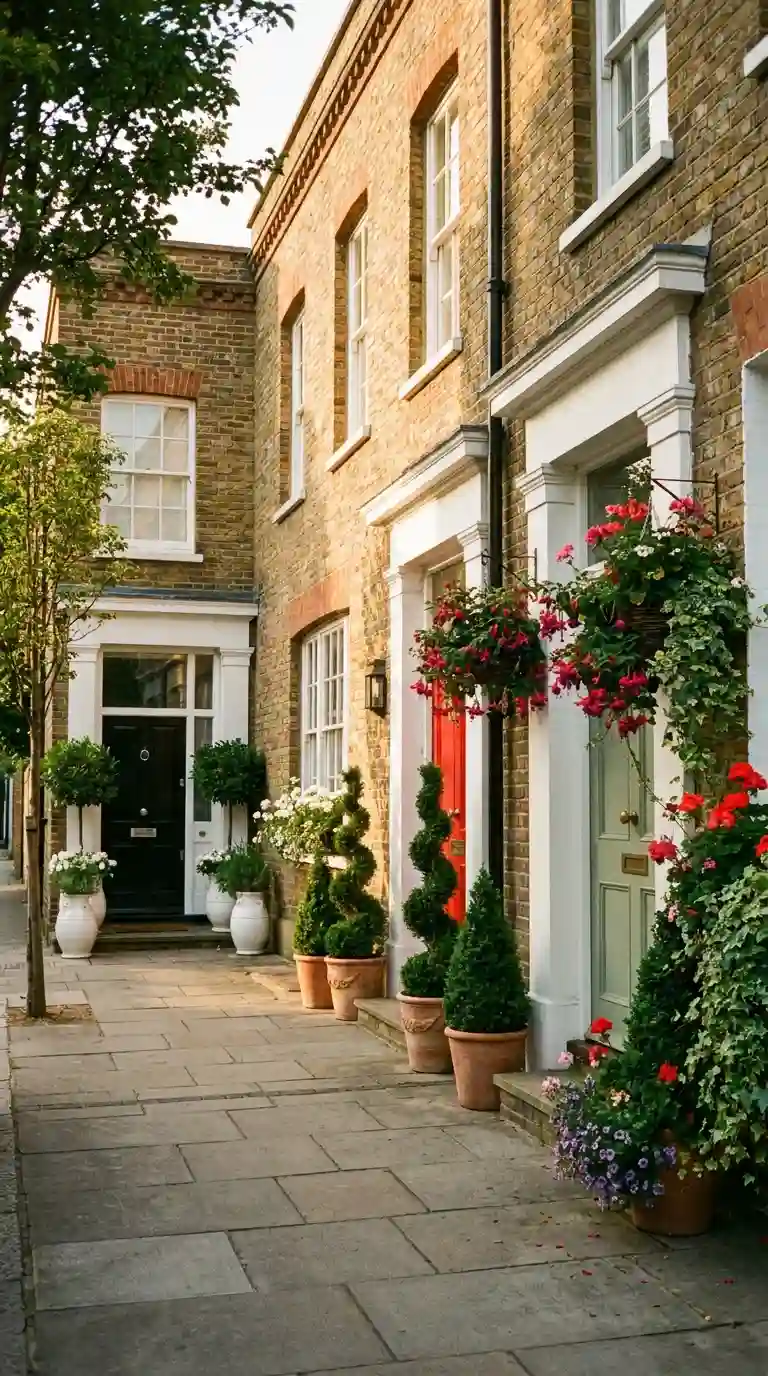
Color is the single most powerful and most affordable tool in your front porch design toolkit. A fresh coat of paint on the front door, a set of coordinating planters, or even a colorful outdoor rug can transform the appearance of a porch completely without any structural changes.
The Front Door: Where Color Decisions Begin
Your front door is the focal point of your porch and arguably the most important design decision you will make for your home’s exterior. A bold, well-chosen door color draws the eye, adds personality, and signals confidence in a way that a standard white or brown door simply cannot. Deep navy, forest green, fire engine red, glossy black, and warm terracotta are all colors that consistently look stunning on front doors across a variety of home styles.
The key to choosing the right door color is to look at the fixed colors of your home — the brick, siding, stone, or stucco — and choose a door color that either complements those tones or creates a deliberate, attractive contrast. A brick house with warm red tones pairs beautifully with a deep forest green door. A gray clapboard house looks striking with a bold navy or matte black door. Take a photo of your home’s exterior before shopping for paint and use it as a reference at the store.
Outdoor Rugs: The Foundation of a Styled Porch
An outdoor rug is one of those front porch ideas that seasoned decorators reach for immediately because it solves so many problems at once. It defines the seating area, adds color and pattern, softens the look of concrete or painted wood floors, and makes the entire space feel more intentional and finished. A porch without a rug often looks like furniture floating randomly in space. A porch with a rug feels like a designed room.
Choose an outdoor rug that is sized proportionally to your seating arrangement — ideally large enough that the front legs of all your chairs sit on it. Natural fiber looks like sisal or jute adds organic warmth, while geometric or floral patterned polypropylene rugs are highly durable and easy to clean with a garden hose. Avoid rugs that retain moisture, as they can encourage mildew and damage your porch floor over time.
Porch Ceiling Color: The Often-Missed Opportunity
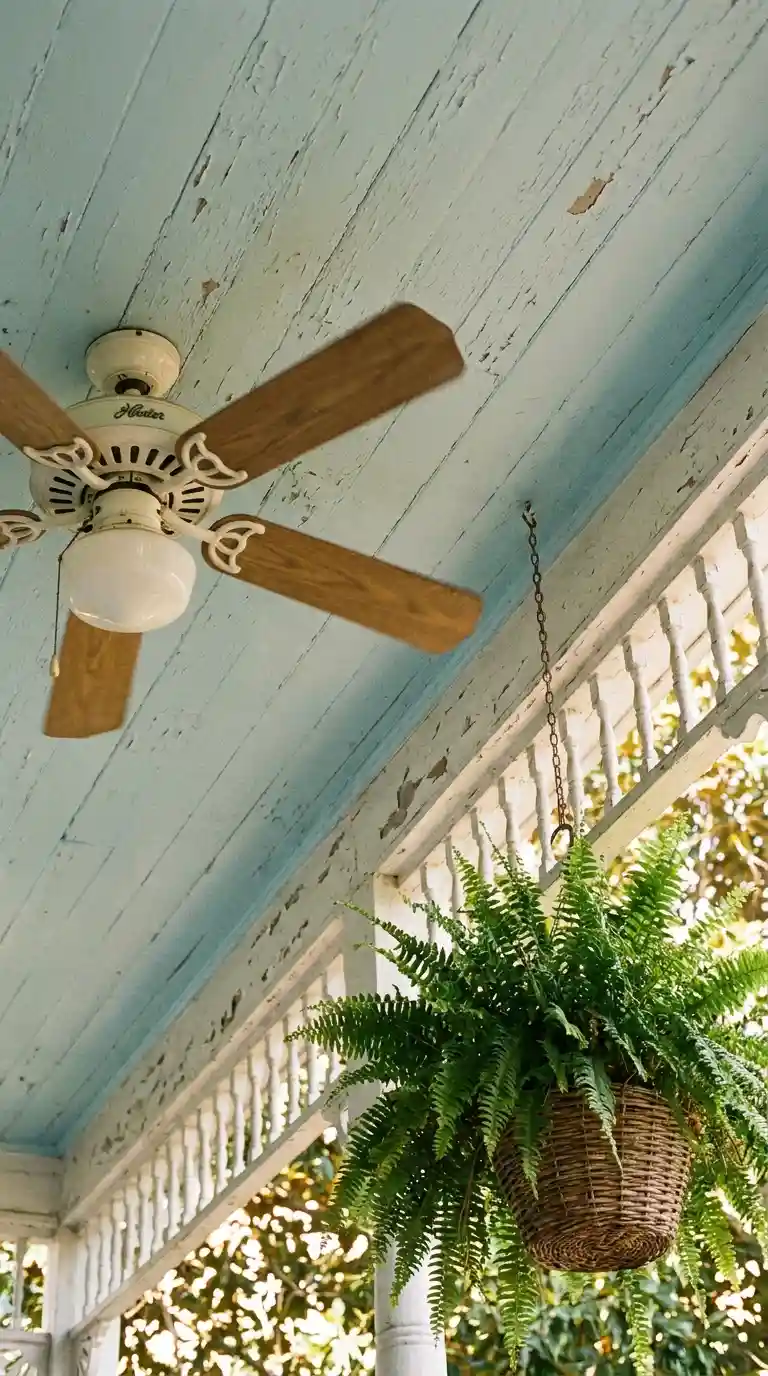
Here is a front porch idea that surprises people when they first hear it: paint your porch ceiling. Specifically, paint it a color called haint blue, a pale blue-green that has been used on Southern porch ceilings for centuries. The tradition originated as a folk belief that the color would ward off spirits, but its staying power is purely aesthetic that cool, soft blue creates a sky-like effect that makes even a low ceiling feel open and airy, and it looks beautiful reflected in the light of porch lanterns at dusk.
Even if you do not go for haint blue, a painted porch ceiling in any soft color is a detail that visitors notice and remember even if they cannot quite articulate why. It shows a level of care and attention that elevates the entire front porch experience.
Lighting Front Porch Ideas That Create Magic After Dark
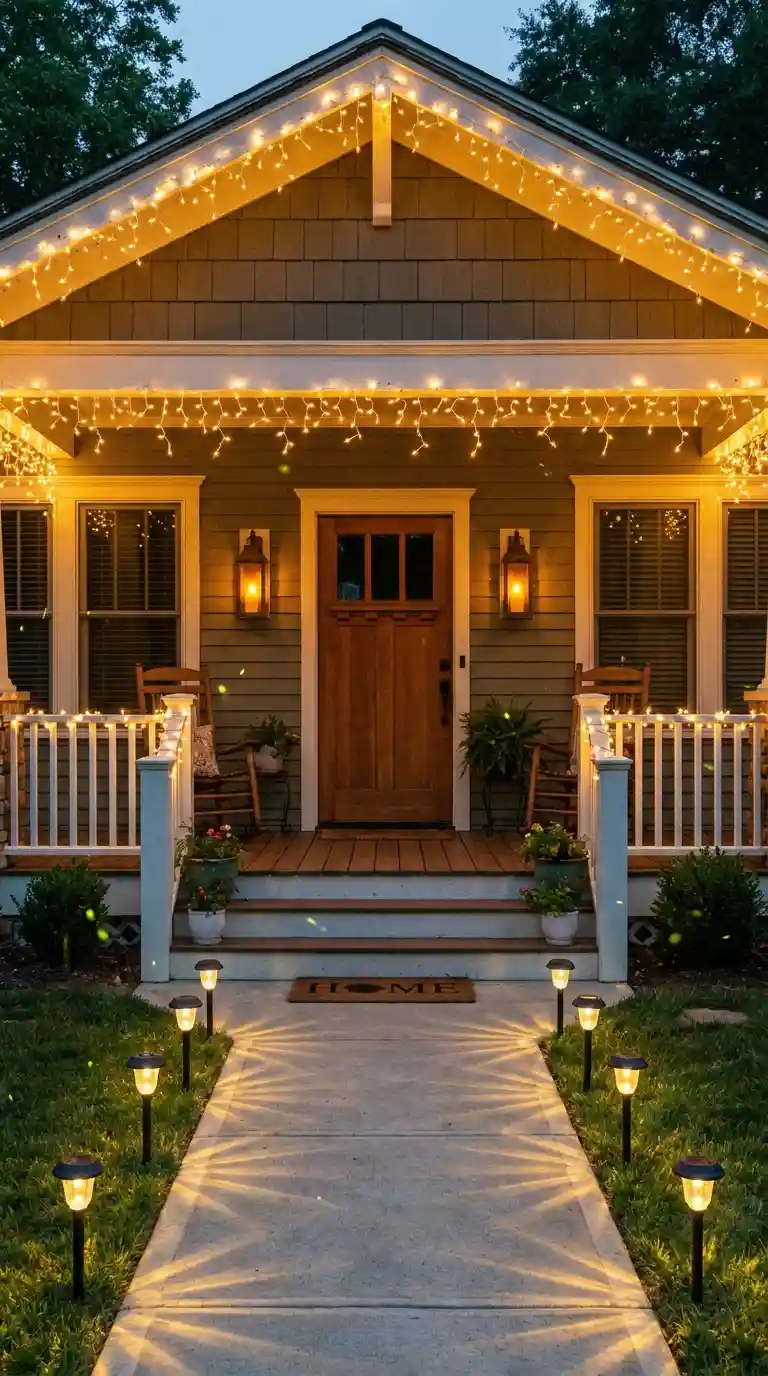
Most homeowners think about their porch in daylight and completely ignore how it looks after dark. This is a significant missed opportunity. Good porch lighting creates warmth and safety, extends the usability of the space into the evening, and gives your home a welcoming glow that is visible from the street at all hours.
Lanterns and Wall Sconces: The Foundational Lighting Layer
Every front porch needs at minimum one pair of flanking wall sconces beside the front door. These provide the baseline safety lighting that allows visitors to see your door, your step, and your face clearly when you open it. Beyond function, well-chosen sconces frame the door beautifully and add architectural interest. Matte black lantern-style sconces work with almost any home style and are currently one of the most popular and broadly appealing choices available.
Scale matters enormously with porch lighting. A sconce that looks perfect at the hardware store might look comically small beside a tall door at home. As a rough guide, porch sconces should be roughly one-quarter to one-third the height of the door they flank. When in doubt, go slightly larger rather than smaller.
String Lights: Instant Atmosphere for Almost No Money
String lights are one of my favorite front porch ideas because the return on investment is almost absurd. A twenty-five foot strand of warm white globe lights draped along a porch roofline costs around twenty to thirty dollars and transforms the nighttime appearance of a porch completely. The soft, warm glow they cast makes any space feel festive, intimate, and inviting in a way that harsh overhead lighting never achieves.
Use outdoor-rated string lights specifically indoor lights are not built to handle moisture and temperature swings. Warm white bulbs (2700K to 3000K color temperature) look far more inviting than cool white or daylight bulbs, which can feel clinical and cold. Wrap them loosely along railings, drape them beneath the porch ceiling, or weave them through container plants for a layered, magical effect.
Solar Pathway Lights: Low-Effort, High-Impact
The path from the sidewalk to your porch steps is part of your front porch’s overall presence, and lighting it serves both aesthetic and safety purposes. Solar-powered pathway stake lights require no wiring, no electricity cost, and installation that takes about ten minutes. They charge during the day and automatically illuminate at night, creating a guided pathway effect that is welcoming and practical simultaneously.
Choose pathway lights that complement your porch aesthetic rather than fighting it. Simple copper or matte black stake lights look clean and work with most home styles. Avoid novelty or overly decorative pathway lights that clash with the overall look — simplicity tends to age better and look more intentional.
Plant and Garden Front Porch Ideas That Bring Life to Your Entry
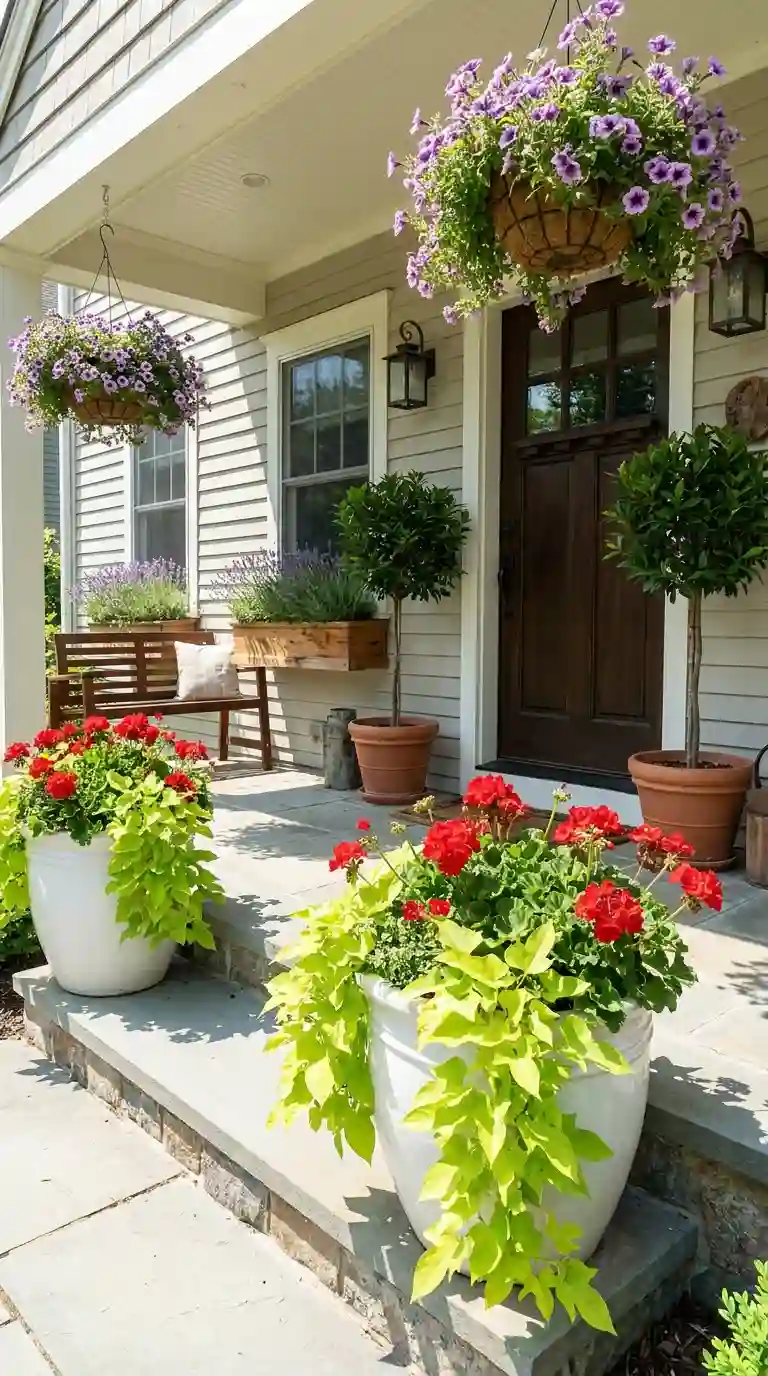
Plants are arguably the most powerful tool in the front porch designer’s kit. They add color, texture, fragrance, and life to a space in a way that no manufactured decor can fully replicate. Even a single well-chosen container plant can elevate an otherwise plain porch entry significantly.
Container Plants: Versatile, Movable, and Endlessly Variable
Large container plants flanking the front door are among the most classic and reliably effective front porch ideas. Two matching oversized planters at least 18 to 24 inches in diameter filled with bold, full plants create a sense of arrival and formality that draws the eye directly to the entry. Hydrangeas, ornamental grasses, lemon cypress trees, bay laurel topiaries, and large-leafed tropical plants like elephant ears all make excellent anchor container plants.
The secret to container plants that look lush rather than sparse is the thriller, filler, spiller formula. Plant one tall, dramatic focal plant in the center (the thriller), surround it with a mounding mid-height plant that fills the container (the filler), and add a trailing plant that cascades over the rim (the spiller). This combination creates the full, layered look that you see in professionally designed planters.
Hanging Baskets: Vertical Color Without Taking Floor Space
Hanging baskets are a brilliant front porch idea for smaller entries where floor space is limited. They add color and greenery at eye level and above without consuming any precious square footage on the porch floor. A pair of hanging baskets flanking the door or three spaced along the porch ceiling in a row creates a lush, cottage-garden quality that is extremely appealing.
Water is the critical management factor with hanging baskets. Because they are exposed on all sides and have relatively small soil volume, they dry out very quickly in warm weather and may need daily watering during summer heat. Consider self-watering hanging baskets with a built-in reservoir, or invest in a long-handled watering wand that makes reaching them easy and prevents you from needing a ladder every morning.
Window Boxes: A European Touch That Works Everywhere
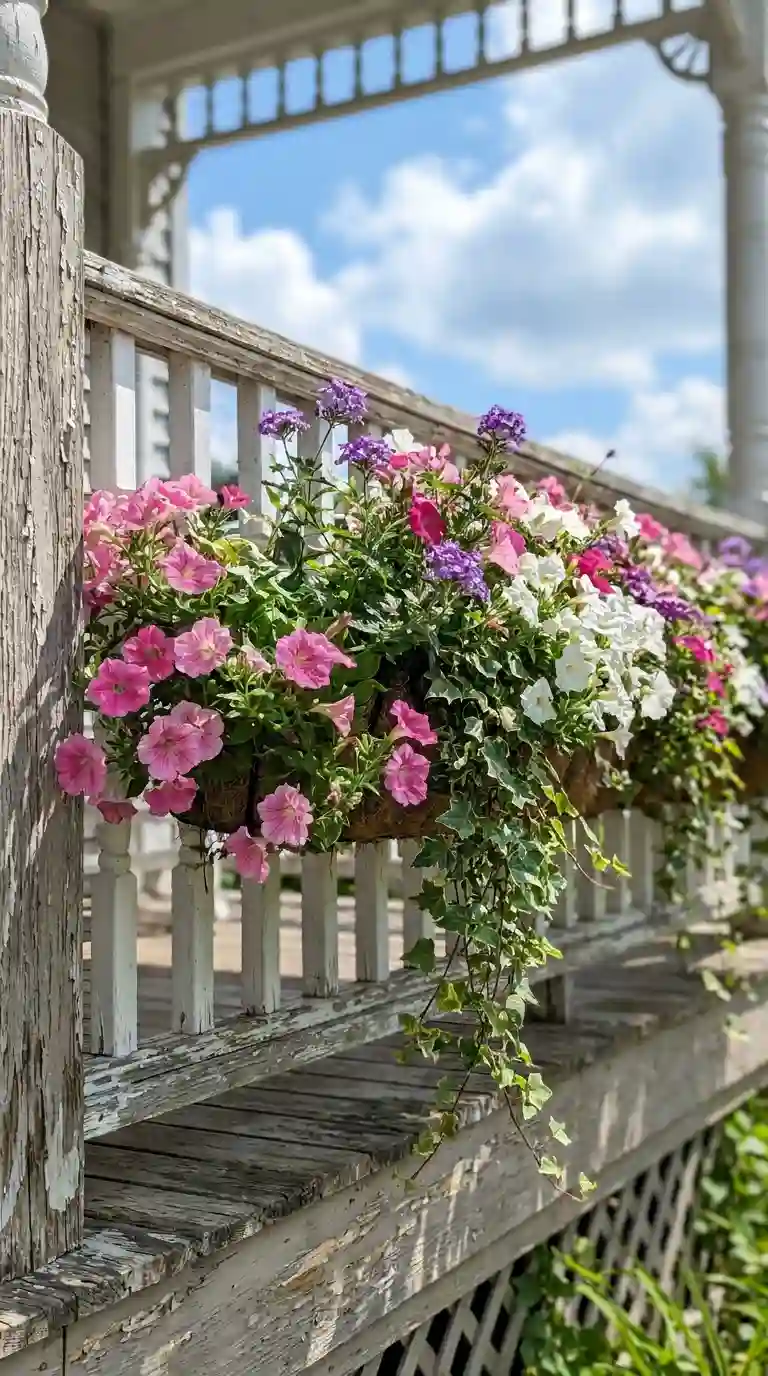
A window box mounted beneath a porch window or along the porch railing is one of those front porch ideas that photographs beautifully and adds charm completely out of proportion to its cost and complexity. Filled with trailing lobelia, petunias, bacopa, or herbs, a well-planted window box creates a cottage or European farmhouse quality that elevates any home’s exterior.
Install window boxes with proper drainage holes in the bottom are non-negotiable and use a moisture-retaining potting mix rather than garden soil, which compacts and drains poorly in containers. Line the inside of wooden window boxes with coco liner to slow moisture loss and extend the box’s life by preventing constant wood-to-wet-soil contact.
Seasonal Front Porch Ideas: Decorating Through the Year
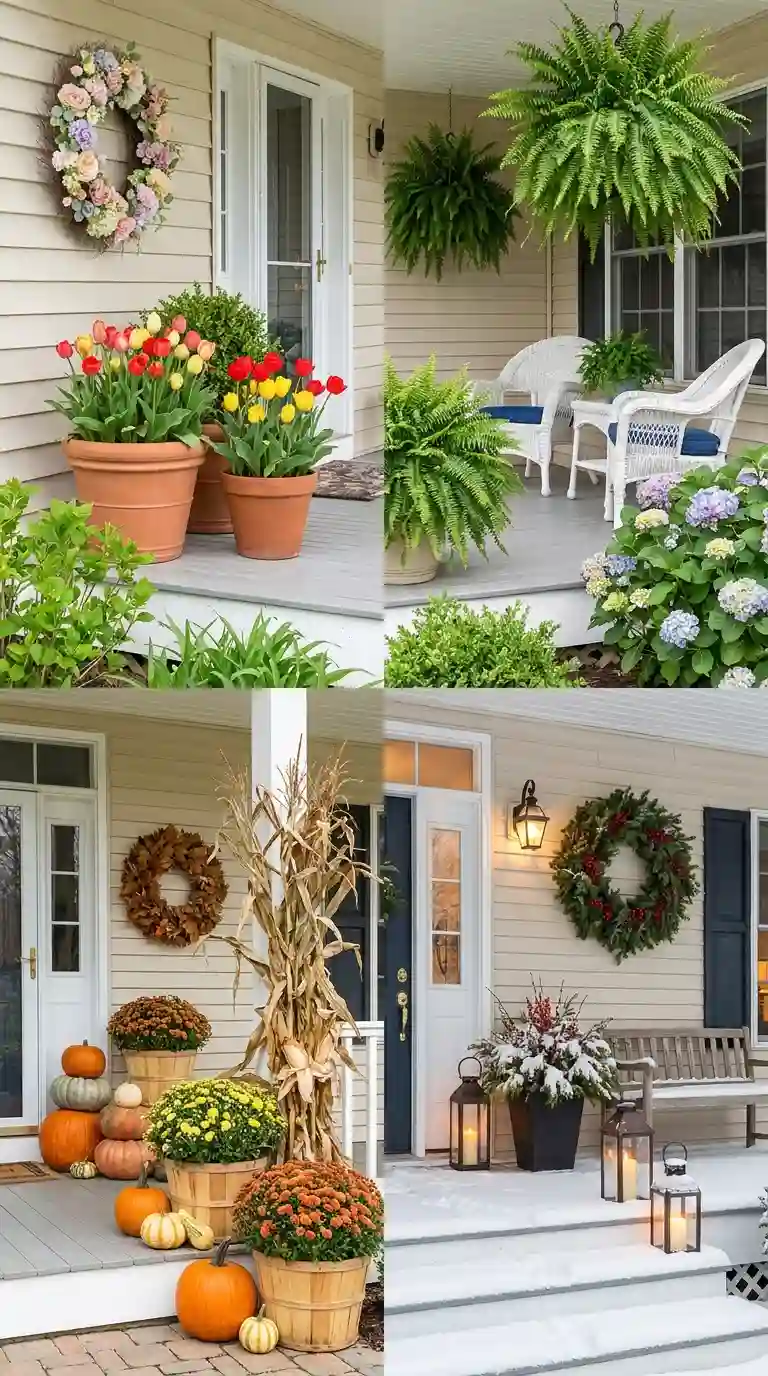
One of the things I enjoy most about having a front porch is the opportunity to change its look with the seasons. A porch that shifts with the time of year feels alive and cared-for in a way that static decoration simply cannot match. And seasonal decorating does not need to be expensive it just needs to be thoughtful.
Spring Porch Refresh: Light, Fresh, and Hopeful
Spring is the ideal time to give your front porch a full refresh after winter. Swap out any weathered or faded pieces, power wash the floor and railings, and bring in fresh color through new planters and a new seasonal wreath. Spring front porch ideas typically lean into pastels, fresh greens, and the first bold blooms of the season tulips, daffodils, pansies, and hyacinths in window boxes and containers look wonderful and signal the return of warmth beautifully.
A simple grapevine or boxwood wreath on the front door dressed with a few stems of forsythia or spring blooms signals the season change without any major investment. Replace heavy winter doormats with lighter, brighter ones. Add a new outdoor throw pillow or two in fresh spring colors to your seating. These small changes add up to a significant visual shift.
Summer: Full and Lush with Maximum Color
Summer front porch ideas center on abundance. This is the season to lean fully into overflowing container plants, trailing vines, hanging baskets dripping with petunias and bacopa, and every color the gardening world has to offer. A summer porch at its best looks like the garden and the living room had a happy collision full of life, color, and the invitation to sit and stay a while.
Functional additions matter in summer too. A ceiling fan if your porch is covered makes evening sitting dramatically more comfortable in humid climates. A small side table beside each seating area for drinks and books makes the space feel more livable. An outdoor pillow in a bold pattern or tropical print captures the season’s energy and refreshes the look of furniture you already own.
Fall: The Season When Porches Truly Shine
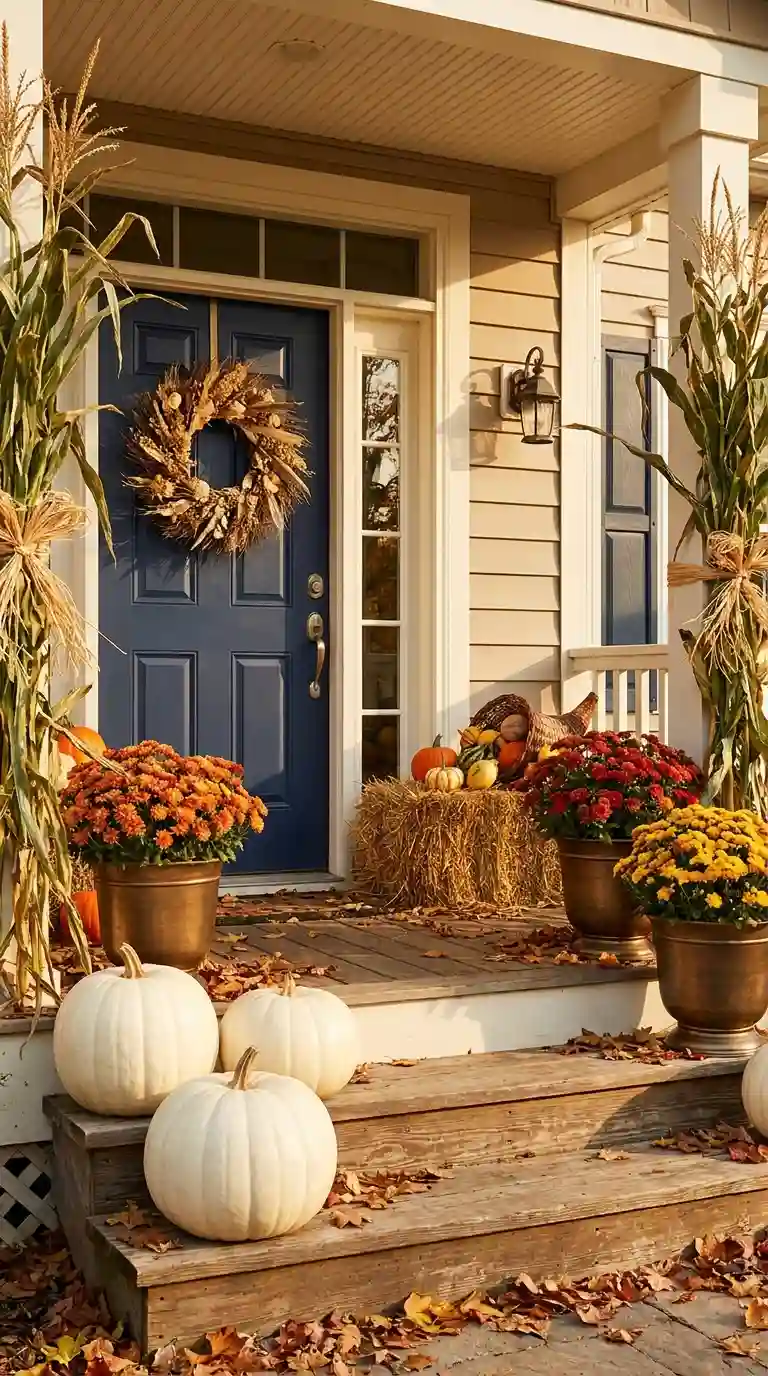
If there is a single season that belongs entirely to front porch culture, it is autumn. Fall front porch ideas are where American decorating imagination runs particularly wild and with good reason. Pumpkins, gourds, dried corn stalks, chrysanthemums in rust and gold, bales of straw, and wreaths of dried botanicals all combine into something genuinely beautiful that photographs well and ages gracefully through the whole season.
The key to a fall porch that feels styled rather than cliché is restraint and layering. Start with your large pumpkins in odd numbers three or five looks more natural than two or four. Add mums in your porch’s accent color. Layer in a hay bale as a platform for smaller gourds and squashes. Finish with lanterns filled with small pumpkins or battery candles and a simple wreath on the door. Step back and remove anything that feels like too much.
Winter and Holiday Front Porch Ideas
Winter porches can be as beautiful as any other season with the right approach. The classic holiday porch fresh pine garland along the railings, a wreath on the door, lanterns or urns filled with pine cones and berries, and string lights casting a warm glow through the cold air — is a genuinely lovely thing. It does not need to be elaborate. Simple materials done well always look better than elaborate decorating done carelessly.
After the holiday season, transition your winter porch to a quieter, more minimal aesthetic. A simple wreath of twigs or dried botanicals, a pair of evergreen topiaries or boxwood balls in planters, and a weighted outdoor throw draped on your porch chair signal that the space is still alive and inhabited even in the coldest months. This quiet winter presence is often more sophisticated than any holiday display.
Front Porch Ideas by Home Style: Matching Your Design to Your Architecture
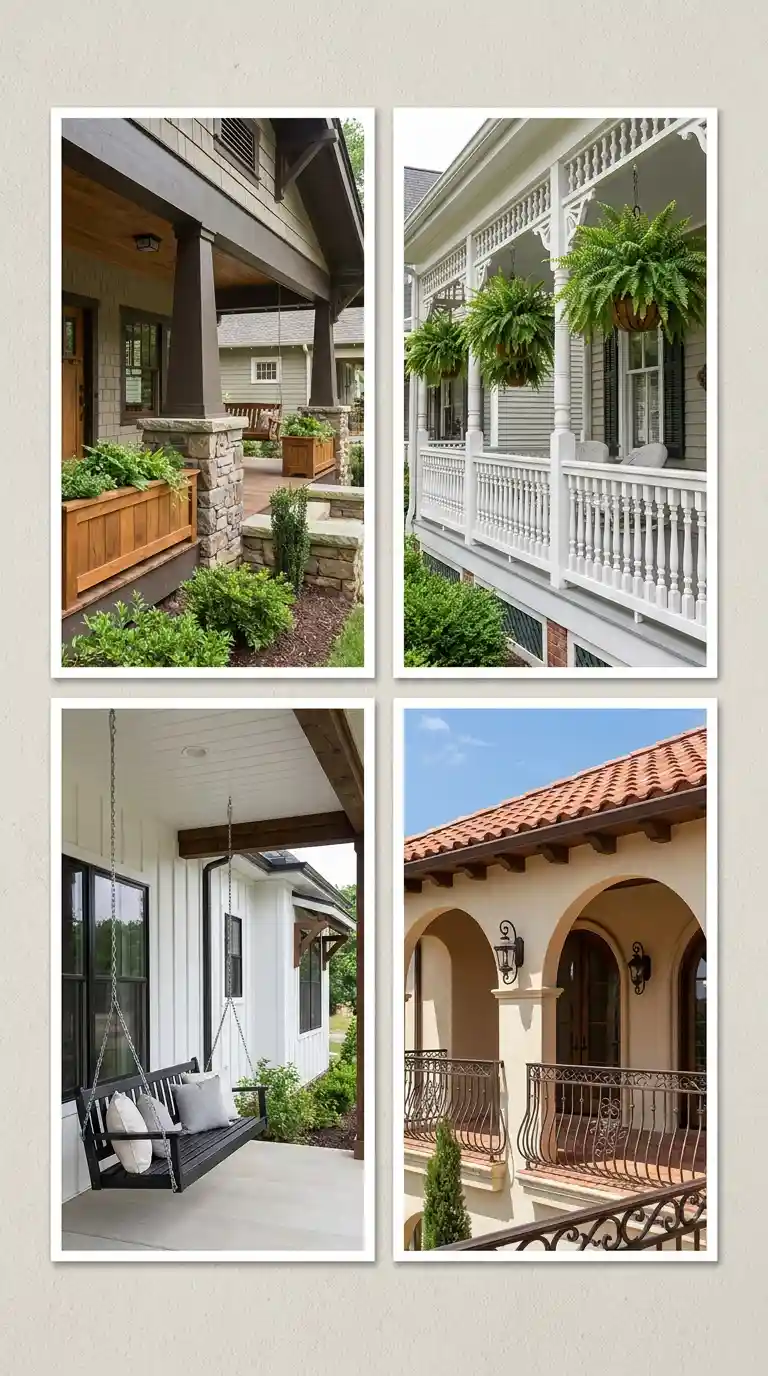
One mistake I see often in front porch decorating is choosing decor that fights the architecture of the home. A hyper-modern porch treatment on a Victorian house feels incongruous. Country-rustic decor on a sleek contemporary home feels equally off. The best front porch ideas work with the architectural language of the house rather than against it.
Craftsman and Bungalow Porches
Craftsman and bungalow homes typically have wide, deep front porches with tapered columns, exposed rafter tails, and built-in wooden benches or planters that are part of the original architecture. Front porch ideas for these homes should honor that built-in character. Natural materials wicker, rattan, teak, and wrought iron suit the Craftsman aesthetic far better than plastic or ultra-modern metal. Earth tones and the classic Craftsman color palette of olive greens, warm tans, and deep reds look at home here.
Period-appropriate lantern lighting, a simple craftsman-style house number sign, and container plants that include bolder, architectural species like Japanese maples or large ornamental grasses all reinforce the Craftsman character. Avoid anything that looks too fussy or frilly Craftsman design is rooted in honest materials and straightforward beauty.
Farmhouse Style Front Porch Ideas
The farmhouse front porch has dominated design media for years, and its appeal is easy to understand. It combines nostalgia, practicality, and a warmth that feels genuinely livable. Classic farmhouse front porch ideas include a black front door or Dutch door, shiplap or board-and-batten porch details, a porch swing with simple linen cushions, galvanized metal planters, and black iron light fixtures.
Layers of texture are the farmhouse decorator’s secret weapon on the porch. A woven jute rug layered with a smaller flat-woven cotton rug, a wooden crate used as a side table, a galvanized watering can repurposed as a planter, and a simple linen throw on the swing arm combine to create that effortlessly collected look that characterizes the best farmhouse porches.
Modern and Contemporary Porch Ideas
A modern or contemporary home calls for front porch ideas that share its design vocabulary: clean lines, minimal ornamentation, high-quality materials, and a restrained color palette. Black, white, gray, and warm wood tones dominate the modern porch palette. Furniture choices should have simple, architectural silhouettes — think powder-coated steel chairs, a concrete side table, or a low platform daybed with a simple cushion.
Plant choices for modern porches tend toward architectural species: columnar trees like Italian cypress or upright junipers, architectural succulents, or a single dramatic specimen plant in a sleek concrete or matte black planter. The restraint that characterizes modern design also applies here — fewer, bolder choices almost always look better than many small ones.
Budget Front Porch Ideas That Look Expensive
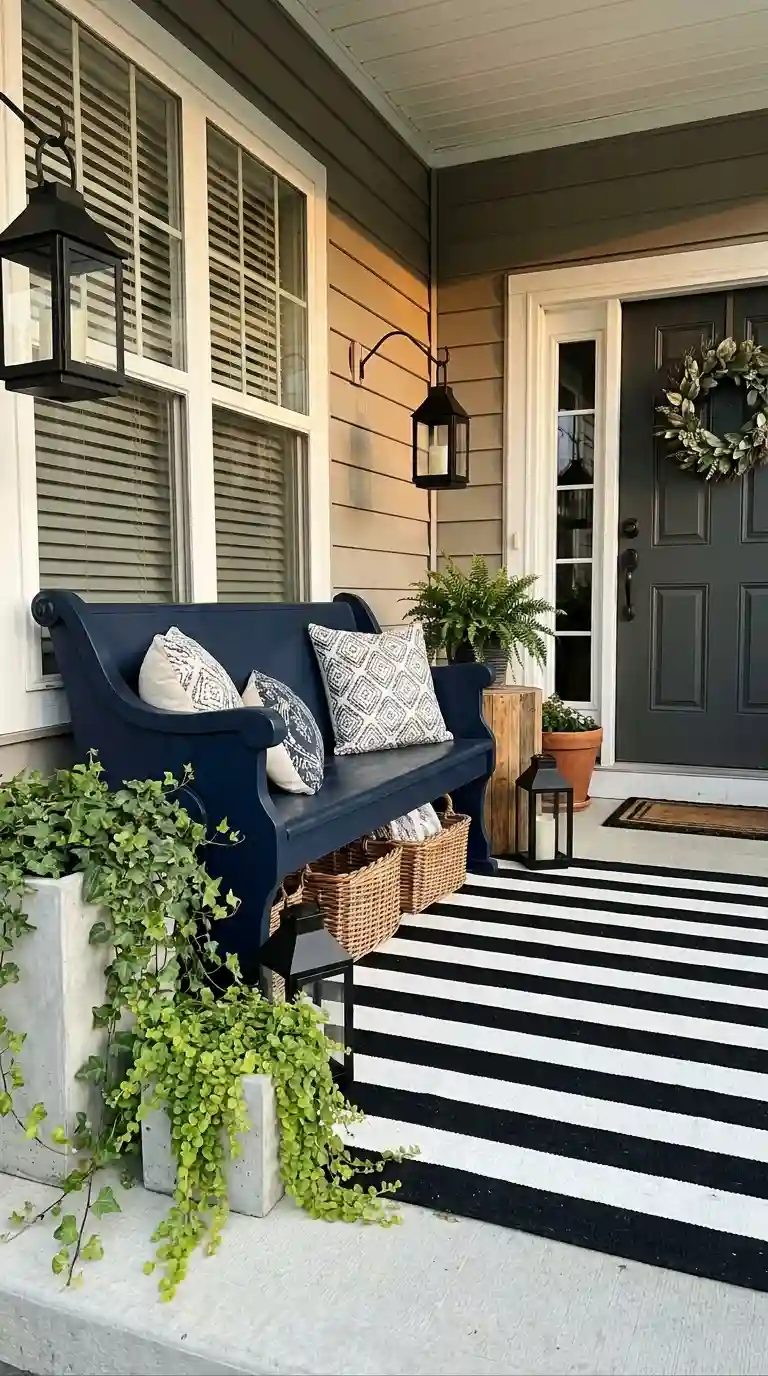
You do not need a significant budget to have a porch that looks thoughtfully designed. Some of the best front porch ideas I have come across came from people working with serious financial constraints who used creativity and resourcefulness to remarkable effect.
Thrift and Secondhand Finds
Outdoor furniture benches, chairs, side tables, and plant stands shows up at thrift stores, garage sales, and Facebook Marketplace with regularity. Wooden and metal pieces that look tired and worn can be completely transformed with a coat of exterior spray paint. A coat of matte black spray paint is particularly effective at making cheap or dated metal furniture look intentionally styled and modern.
Old wooden shutters leaned against the porch wall make striking decorative backdrops. A wooden ladder repurposed as a plant stand adds vertical interest for virtually no cost. A collection of mismatched thrifted lanterns unified by the same spray paint color feels curated rather than random. The key with budget front porch ideas is to commit fully to a cohesive color story so that dissimilar elements read as a collection rather than clutter.
DIY Projects Worth the Effort
A few genuinely worthwhile DIY front porch projects can make an outsized difference. Building a simple wooden planter box from cedar fence boards costs a fraction of buying a comparable planter at a garden center. Pouring concrete stepping stones or pavers for a pathway costs less than purchasing them and can be done over a single weekend. Even making your own wreath from foraged branches, seasonal flowers, or dried botanicals costs almost nothing and produces something uniquely personal.
Painting your front door is the highest-value single DIY project available to most homeowners. A quart of exterior paint costs roughly thirty to forty dollars, and the project takes an afternoon. The visual impact especially with a bold, well-chosen color is immediate, dramatic, and often worth far more than its cost in the impression it creates for visitors and from the street.
Small Front Porch Ideas That Maximize Every Square Inch
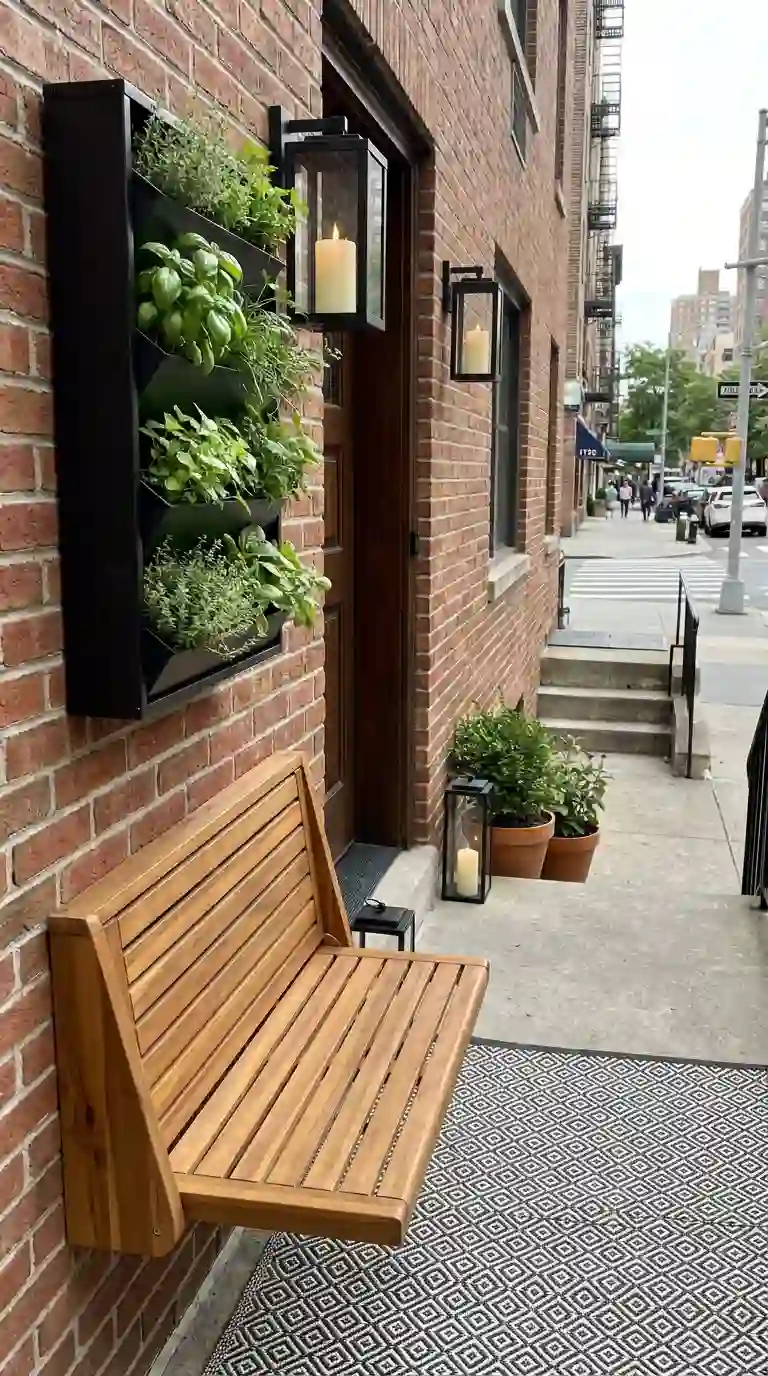
Not everyone has the luxury of a sprawling wraparound porch, and that is completely fine. Some of the most charming front porch ideas I have encountered were on porches so small that a single person had to turn sideways to pass. Small porches simply require smarter thinking.
Vertical Space Is Your Best Friend
When floor space is limited, think up. Wall-mounted planters, hanging baskets, tall narrow planters, and wall sconces with climbing plants can transform a small porch entry without consuming the floor space you cannot afford to sacrifice. A pair of wall-mounted metal plant holders flanking the door, each holding a trailing plant, adds the greenery of traditional ground planters without any of the floor footprint.
A wall-mounted bench that folds flat when not in use is a wonderful small-porch seating solution. It provides a place to sit when you want one and disappears against the wall when you do not need it, keeping the narrow floor space open for traffic. Combined with a mounted coat hook for outdoor bags or seasonal wreaths and a single statement light fixture, even a very small entry can feel considered and welcoming.
The Power of One Bold Statement Piece
On a small front porch, one strong statement piece outperforms five mediocre ones every time. This might be a single extraordinary door wreath that changes with the seasons. Or a spectacular large-scale planter overflowing with color. Or a unique house number sign in a distinctive material. Whatever it is, commit to it fully and let it carry the design weight of the whole porch.
The danger on small porches is overcrowding in the hope that more decoration equals more charm. It does not. Overcrowding a small porch makes it feel claustrophobic and messy. Edit ruthlessly and leave breathing room between elements. The things that remain will look more intentional and more beautiful for having space around them.
Front Porch Ideas for Privacy and Enclosure
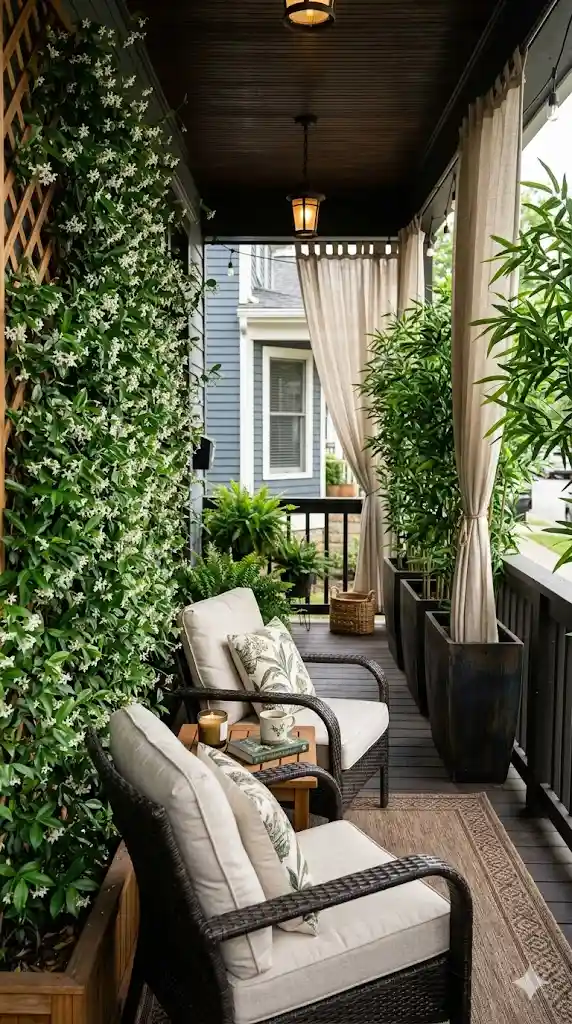
One challenge that front porches face that back porches and patios do not is visibility. A front porch, by its nature, is on display to the street. For many people, this visibility limits how comfortable they feel truly relaxing there. The good news is there are some excellent front porch ideas for adding privacy without sacrificing the openness that makes a porch a porch.
Plants as Privacy Screens
Tall plants in large planters are one of the most attractive and natural-feeling ways to add privacy to a front porch. A row of columnar evergreens, tall ornamental grasses, or bamboo in sleek planters along the porch railing creates a partial visual barrier that softens the feeling of being on display without creating a solid wall. The plant screen moves gently in the breeze and changes subtly through the seasons, keeping the porch feeling alive rather than walled-off.
Climbing plants on a trellis or lattice panel are another excellent option. Jasmine, climbing roses, clematis, and mandevilla all cover a simple lattice structure quickly and beautifully, creating a lush semi-private screen with the added bonus of fragrance in the case of jasmine and roses. Install the trellis at one or both open ends of the porch for the most effective privacy coverage.
Outdoor Curtains and Shades
Outdoor curtain panels are one of those front porch ideas that immediately adds a sense of luxury and enclosure. Hung from a tension rod or a simple curtain rod between porch columns, outdoor curtains can be drawn when you want privacy and pulled back when you want the view. They billow gently in the breeze and make any porch look more like an outdoor room.
Choose outdoor-rated fabrics that can handle UV exposure and moisture — Sunbrella is the gold standard for outdoor fabric durability, but there are many more affordable options that perform well in covered porch environments. Neutral, light colors like natural linen, white, or soft gray work with virtually any color scheme and give the porch a calm, airy feeling when closed.
Front Porch Furniture Arrangement Tips That Most People Get Wrong
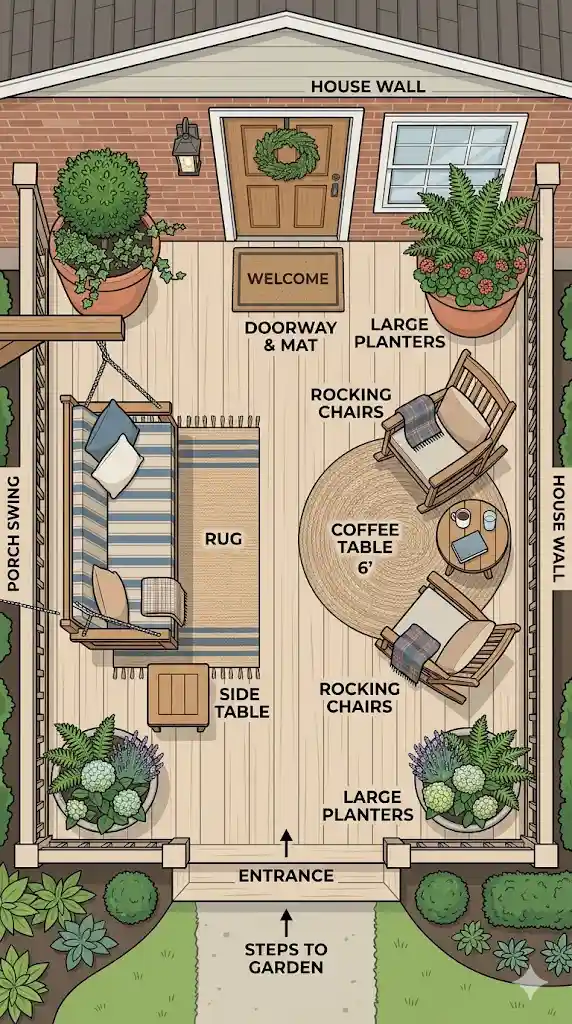
Even the most beautiful porch furniture fails if it is arranged poorly. Furniture placement on a front porch follows a few simple principles that, once understood, make every arrangement decision much easier.
Create Conversation, Not a Waiting Room
The biggest furniture arrangement mistake on front porches is lining chairs up against the wall like a waiting room. This kills conversation and makes the space feel institutional rather than welcoming. Instead, angle chairs toward each other with a small table between them. This positioning encourages face-to-face engagement and immediately makes the space feel more social and intentional.
If you have a porch swing, position it so that it faces or angles toward any other seating on the porch. A swing isolated on one end of the porch facing the street while chairs are lined against the wall creates two separate zones that do not communicate. Bring elements together into a unified conversation area and the whole porch becomes more inviting.
Leave Room to Move
Thirty-six inches is the minimum comfortable pathway width for walking between pieces of furniture. On smaller porches, this can be challenging, but squeezing furniture together to fit more pieces always backfires — the result looks cramped and feels uncomfortable in use. Be willing to reduce the number of furniture pieces to maintain comfortable movement and breathing room in the layout.
The porch should have a natural flow from the steps to the front door that is never blocked by furniture. Arrange seating to the sides of this natural pathway rather than directly across it. This keeps traffic flowing easily while still using every available area of the porch for comfortable seating.
The Finishing Touches: Small Front Porch Ideas with Big Impact
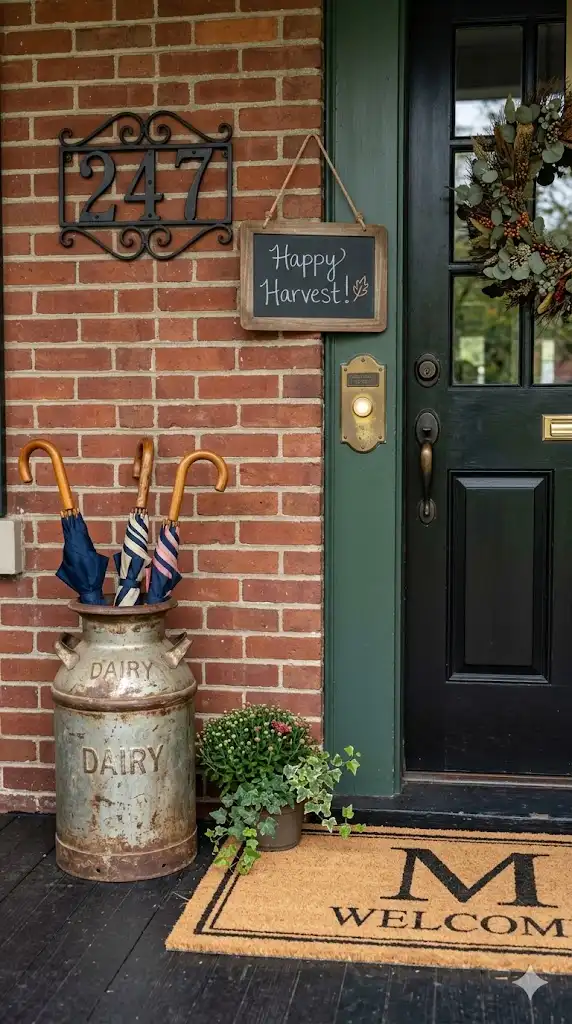
The finishing touches are what separate a nice porch from a truly memorable one. These are the details that visitors notice on their way to the door and remember long after they leave. None of them are expensive or complicated they are simply the marks of someone who cares about the whole picture.
The Welcome Mat: Your Home’s Handshake
A welcome mat is one of those front porch ideas where the return on a small investment is genuinely remarkable. A mat that says something through its words, its pattern, or its color tells visitors something about the people inside before the door even opens. A bold geometric pattern signals modern sensibility. A botanical print suggests a love of gardens and nature. A simple striped mat in the home’s accent color is clean, elegant, and always appropriate.
Replace your mat more often than you think you need to. A worn, faded, or dirty mat is one of the most noticeable signals of neglect from the street even more than faded paint or overgrown plants. A fresh mat costs ten to thirty dollars and takes thirty seconds to swap. It is the easiest upgrade you can make to any front entry.
House Numbers: A Functional Detail Worth Getting Right
Your house number is a functional necessity, but it is also a design opportunity that most people ignore entirely. Standard stamped metal numbers affixed to a mailbox or brick are serviceable but forgettable. A set of oversized ceramic, black iron, or brushed brass numbers mounted prominently beside or above the door, or displayed on a dedicated house number plaque, adds a finished quality to the entry that looks intentional and polished.
Match the finish of your house numbers to other metal elements on your porch — door hardware, light fixtures, and mailbox should ideally share the same metal tone. Mixing brass with matte black with polished nickel feels confused and incomplete. Choose one metal finish and carry it consistently through all the hardware on your porch for a coordinated, designer-quality look.
Seasonal Wreaths: The Simplest Way to Signal Change
A wreath on the front door is one of the most universally appealing front porch ideas because it is visible from the street, immediately communicates the season or holiday, and requires no porch furniture rearrangement or major decorating effort. A fresh-cut eucalyptus wreath, a dried wildflower wreath, a bold magnolia leaf wreath, or a simple twig wreath dressed with a single ribbon can each carry an entire season’s worth of decoration single-handedly.
Invest in a wreath hanger specifically designed for your door the over-the-door hook style requires no hardware and damages nothing. For larger or heavier wreaths, use a small cup hook or a proper exterior-rated wreath hook. Avoid using tape or adhesive strips on painted doors, as they reliably pull paint off when removed.
Closing Thoughts
After years of thinking about front porches designing them, decorating them, sitting on them, and noticing them on every street I walk down I am more convinced than ever that a well-loved front porch is one of the best investments a homeowner can make. Not just financially, though it does improve curb appeal and property value. But in terms of daily quality of life, in terms of neighborhood connection, and in terms of the simple pleasure of having a beautiful, comfortable place to begin and end each day.
The front porch ideas in this article cover a wide range of styles, budgets, and porch sizes because there genuinely is no single right way to design a porch. The right front porch is the one that reflects who you are, works within your space and budget, and actually gets used. That last part matters most. A stunning porch that nobody sits on is just an expensive exterior photograph.
Start with one change. Paint the door. Buy two rocking chairs. Hang a basket. Plant something in a pot by the steps. Any one of these things will make a difference. And once you start noticing the difference once neighbors stop to comment, once you find yourself sitting outside more, once the porch becomes part of your daily rhythm you will understand exactly what a front porch is really for. It is for living.
Now go make your porch worth sitting on.
Frequently Asked Questions
1. What are the most popular front porch ideas right now?
The most popular front porch ideas currently trending include modern farmhouse styling with black accents and natural wood elements, maximalist plant arrangements with oversized container gardens, statement front doors in bold colors like deep navy and terracotta, string light installations for evening ambiance, and mixed-material furniture combinations that blend wicker with metal or teak. Outdoor curtain panels for privacy are also growing quickly in popularity.
2. How do I make my front porch more inviting?
The most effective ways to make a front porch more inviting are adding comfortable seating positioned to encourage conversation rather than lining the wall, introducing plants and greenery at multiple heights, ensuring good lighting for evening visits with warm-toned bulbs, using a fresh and attractive welcome mat, and choosing a bold or well-considered front door color. Fragrant plants like lavender or jasmine near the entry add an extra sensory welcome that guests notice immediately.
3. What should I put on my small front porch?
For a small front porch, focus on a few well-chosen elements rather than trying to include everything. A pair of small chairs or a bench, one or two vertical planters or hanging baskets, good lighting, a quality welcome mat, and a wreath on the door are typically enough. Use the vertical space on your walls and columns for planters and lights rather than consuming the limited floor space. A bold door color draws attention upward and makes the entry feel larger than it is.
4. How can I add privacy to my front porch?
Privacy on a front porch can be added using tall plants in large planters along the railing, lattice panels or trellis structures with climbing plants, outdoor curtain panels hung between columns, or solid privacy screens in wood, metal, or composite materials. The most natural-looking solution is a combination of tall columnar plants and a lower lattice with climbing plants, which creates a layered privacy screen that looks intentional and attractive from the street.
5. What colors look best on a front porch?
The best front porch colors depend on your home’s existing color palette. For the door, bold colors that coordinate with the home’s fixed elements such as deep navy, forest green, fire engine red, matte black, or warm terracotta are consistently popular. Porch floors look excellent in deep charcoal gray, classic porch gray-blue, or warm cream. Ceilings in haint blue or soft white reflect light beautifully and feel open and airy. Always pull from at least one color in your home’s exterior when choosing porch accent colors.
6. What is the best furniture for a front porch?
The best front porch furniture is weather-resistant, comfortable, and appropriately scaled for your porch size. Poly-lumber rocking chairs are excellent for durability and low maintenance. A porch swing adds charm and is highly popular. For smaller porches, a bistro table with two chairs is a practical and attractive solution. Wicker or rattan furniture with outdoor cushions adds texture and comfort. All-weather wicker, teak, cedar, powder-coated steel, and aluminum are the most reliable material choices for longevity and appearance.
7. How do I decorate my front porch on a budget?
Budget front porch ideas include shopping thrift stores and Facebook Marketplace for secondhand furniture to refresh with exterior spray paint, making your own planters from cedar fence boards, propagating plants from cuttings of existing plants, using solar lights which require no electrical work, buying seasonal plants on clearance at the end of each season, and focusing investment on one or two high-impact items rather than many small ones. A fresh coat of paint on the front door is the single highest-value budget upgrade available to most homeowners.
8. What plants are best for a front porch?
The best plants for front porches depend on your light conditions. For full sun, geraniums, petunias, lantana, marigolds, and portulaca are reliable performers. For shade or partial shade, impatiens, begonias, ferns, caladiums, and coleus are excellent choices. For year-round greenery in planters, boxwood topiaries, lemon cypress, and dwarf junipers work well in most climates. Herbs like rosemary and lavender add fragrance near the entry and are useful in the kitchen as a bonus.
9. How do I hang a porch swing safely?
Hanging a porch swing safely requires attaching the hardware to structural ceiling joists, not just the porch ceiling boards or drywall. Locate your joists using a stud finder, then use eye bolts with a minimum load rating of 500 to 800 pounds more than you think you need. Use swing hangers with a swivel design that allows the chain to rotate without stress fractures developing over time. If you are not confident in your ceiling’s structural capacity, consult a contractor before hanging any swing.
10. What type of lighting is best for a front porch?
The best front porch lighting uses multiple layers. Wall sconces flanking the door provide safety and framing. String lights along the roofline or railings create warmth and evening atmosphere. A ceiling fan with a light kit provides both cooling and ambient light in covered porches. Solar stake lights along the pathway add safety and charm. Use warm white bulbs in the 2700K to 3000K color temperature range throughout they are far more inviting than cool or daylight bulbs.
11. How wide does a front porch need to be?
A functional front porch should be at least six feet deep to accommodate seating comfortably. Eight to ten feet of depth allows for a more fully furnished porch with a seating group and room to move. Twelve feet or more creates a truly spacious porch suitable for a dining area or multiple seating groups. Width is typically determined by the home’s facade, but at a minimum, a porch should span the width of the front door plus a few feet on either side to feel proportional to the house.
12. What is the difference between a porch, veranda, and stoop?
A porch is a covered outdoor structure attached to the entry of a house, typically with a roof supported by columns or posts. A veranda is similar but typically wraps around more of the house often on two or more sides and is associated with warmer climates and Victorian architecture. A stoop is a small, uncovered platform or set of steps at the front entry, typically without a roof or columns. In common usage, the terms are often used loosely, but these are the traditional distinctions.
13. How do I keep my front porch clean and maintained?
Regular front porch maintenance includes sweeping the floor and steps at least weekly, power washing the floor, railings, and ceiling once or twice per year, checking and tightening any loose railings or steps promptly, cleaning light fixtures and replacing burned bulbs as needed, watering and deadheading plants regularly, replacing the welcome mat when it shows wear, and touching up paint on doors, railings, and trim as needed. Staying on top of small maintenance tasks prevents them from becoming large and expensive repairs.
14. Can I add a porch to my home if I do not have one?
Yes, adding a front porch to a home that does not currently have one is a significant but worthwhile home improvement project. It typically requires a building permit, foundation work, structural columns, a roof structure, and finished flooring. The cost varies widely depending on size and materials but generally runs from ten thousand to forty thousand dollars or more for a professionally built porch. In most markets, a well-built front porch adds more to resale value than its construction cost, making it a sound long-term investment.
15. What is haint blue and why is it used on porch ceilings?
Haint blue is a range of pale blue-green colors traditionally used on porch ceilings in the American South, particularly in the Lowcountry of South Carolina and Georgia. The tradition originated in Gullah Geechee culture, where the color was believed to ward off haints restless spirits because they could not cross water, and the blue ceiling was thought to resemble water. Today the color is used primarily for its beautiful aesthetic effect it creates a sky-like quality on porch ceilings and casts a flattering, cool reflected light on everything beneath it.