
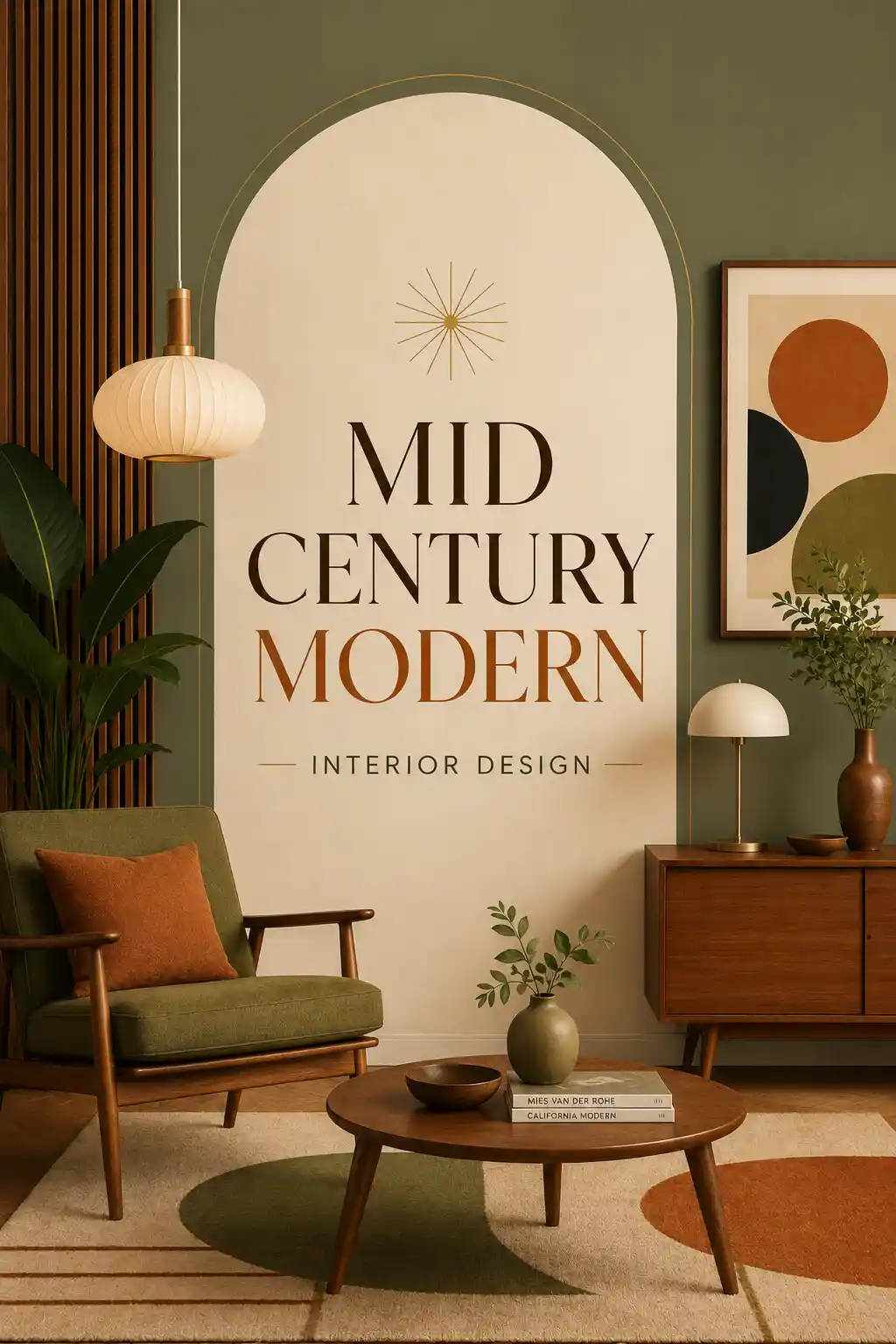
There is something deeply satisfying about a well-put-together mid century modern interior design that makes you stop and stare. Maybe it is the clean lines that feel almost too logical to argue with. Maybe it is the warm wood tones that bring a room alive without any fuss. Or maybe it is how the style somehow manages to feel both retro and completely fresh at the same time. Whatever the reason, mid century modern interior design has been charming homeowners, decorators, and architects for decades, and it shows absolutely no signs of slowing down.
I got into mid century modern interior design years ago when I inherited a small apartment that had absolutely nothing going for it. The ceilings were low, the natural light was weak, and I had very little money to spend. A friend suggested I look into mid century modern design principles, and within a few weeks of research and thrift store hunting, that apartment transformed into something I was genuinely proud to live in. That experience changed how I see interiors forever, and I want to share everything I have learned since then with you.
This guide covers mid century modern interior design from top to bottom. Whether you are completely new to the style or you have been collecting vintage pieces for years and want to take your space to the next level, you will find real, useful, and detailed ideas here. Let us start from the very beginning.
What Exactly Is Mid Century Modern Interior Design?
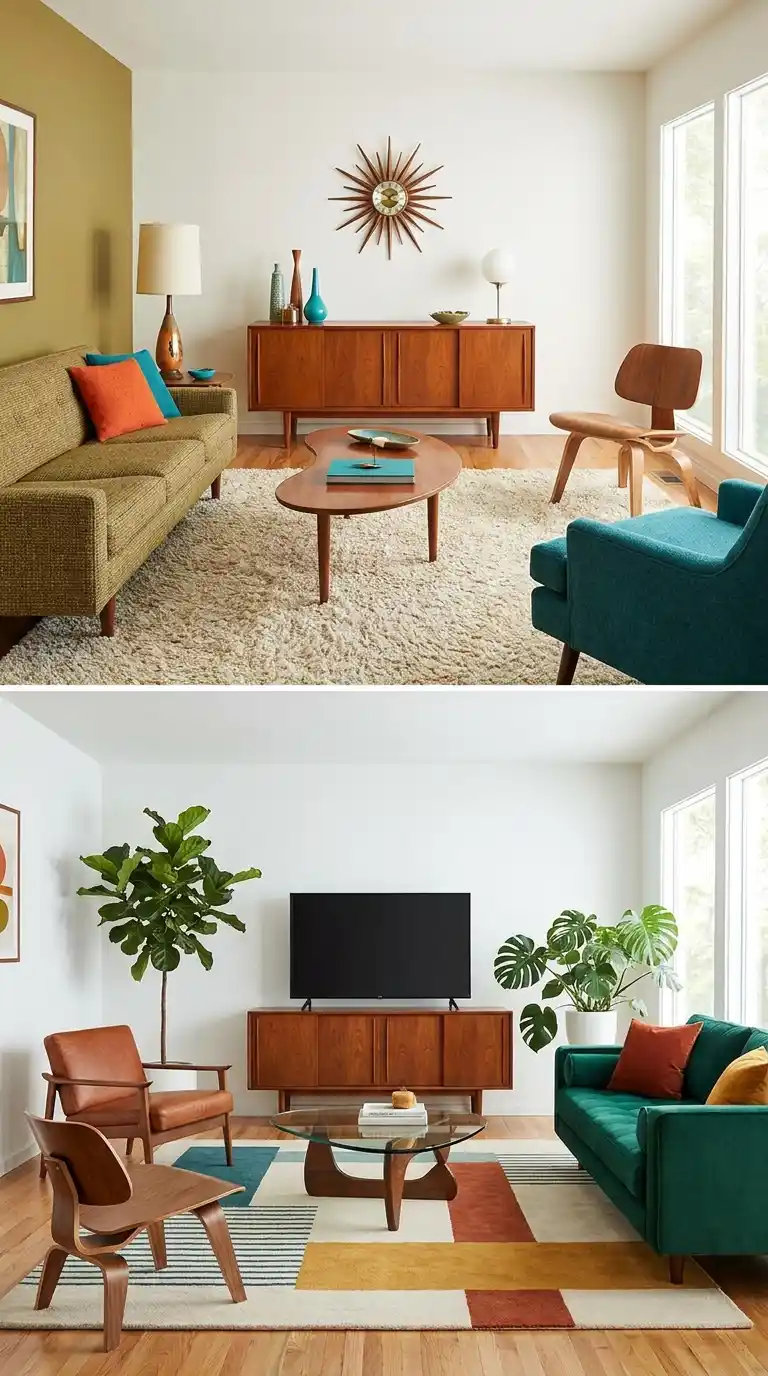
Mid century modern interior design refers to an aesthetic movement that originated roughly between the 1940s and 1970s. It grew out of a post-war optimism that believed design should be both beautiful and accessible to everyday people. Architects and designers of that era wanted to break away from the heavy, ornate styles that came before and create furniture, homes, and objects that were simple, functional, and honest in their use of materials.
The movement was heavily influenced by Scandinavian design sensibilities, organic modernism from designers like Charles and Ray Eames, and the Bauhaus school philosophy that form should always follow function. These ideas came together to create a look that was clean without being cold, minimal without being boring, and sophisticated without being snobbish.
Today, mid century modern interior design is interpreted in many ways. Some people go all-in with authentic vintage pieces and period-accurate color palettes. Others borrow just the bones of the style and mix it with contemporary elements. There is no single wrong way to approach it, and that flexibility is one of the reasons it remains so beloved. The style works in small apartments, large family homes, rustic cabins, and urban lofts alike.
Also Read : Transform Your Home’s First Impression: 95+ Stunning Entryway Table Decor Ideas
The Core Principles Behind Mid Century Modern Interior Design
1. Form Follows Function
This is the foundational rule of mid century modern interior design. Every piece of furniture, every design choice, every layout decision should serve a purpose. In a mid century modern space, nothing is there simply to fill a void or look impressive. A sofa must be comfortable and beautifully shaped. A coffee table must be easy to reach and pleasing to look at. A light fixture must provide good illumination and contribute to the room’s visual interest.
When I first applied this principle to my own space, it meant getting rid of a lot of stuff I had accumulated out of habit rather than intention. Once I removed anything that did not have a clear function or genuine beauty, the room immediately felt more open and more intentional. That edit is one of the most powerful things you can do in mid century modern interior design.
This principle also extends to the overall layout. Mid century modern rooms tend to be thoughtfully arranged so that movement through the space feels natural. Furniture is not pushed against walls the way many people default to. Instead, pieces float in the room, creating conversation areas and visual breathing room.
2. Clean Lines and Organic Shapes
Mid century modern interior design is instantly recognizable by its clean horizontal and vertical lines paired with occasional organic, curved shapes. Think of the classic Eames lounge chair. It has a structured shell but also gently curves to fit the human body. That combination of geometric precision and organic warmth is the hallmark of the style.
In furniture, you will notice tapered legs, flat surfaces, and minimal ornamentation. Cabinet doors do not have decorative moldings. Chair backs are simple and uncluttered. Table edges are clean rather than carved. This restraint gives mid century modern spaces their calm, collected feeling.
However, the clean lines are almost always balanced with curves somewhere in the room. A round coffee table offsets a rectangular sofa. A kidney-shaped accent chair softens a boxy bookshelf. The interplay between straight and curved is what gives mid century modern interior design its visual energy and keeps it from feeling sterile.
3. Natural Materials and Warm Wood Tones
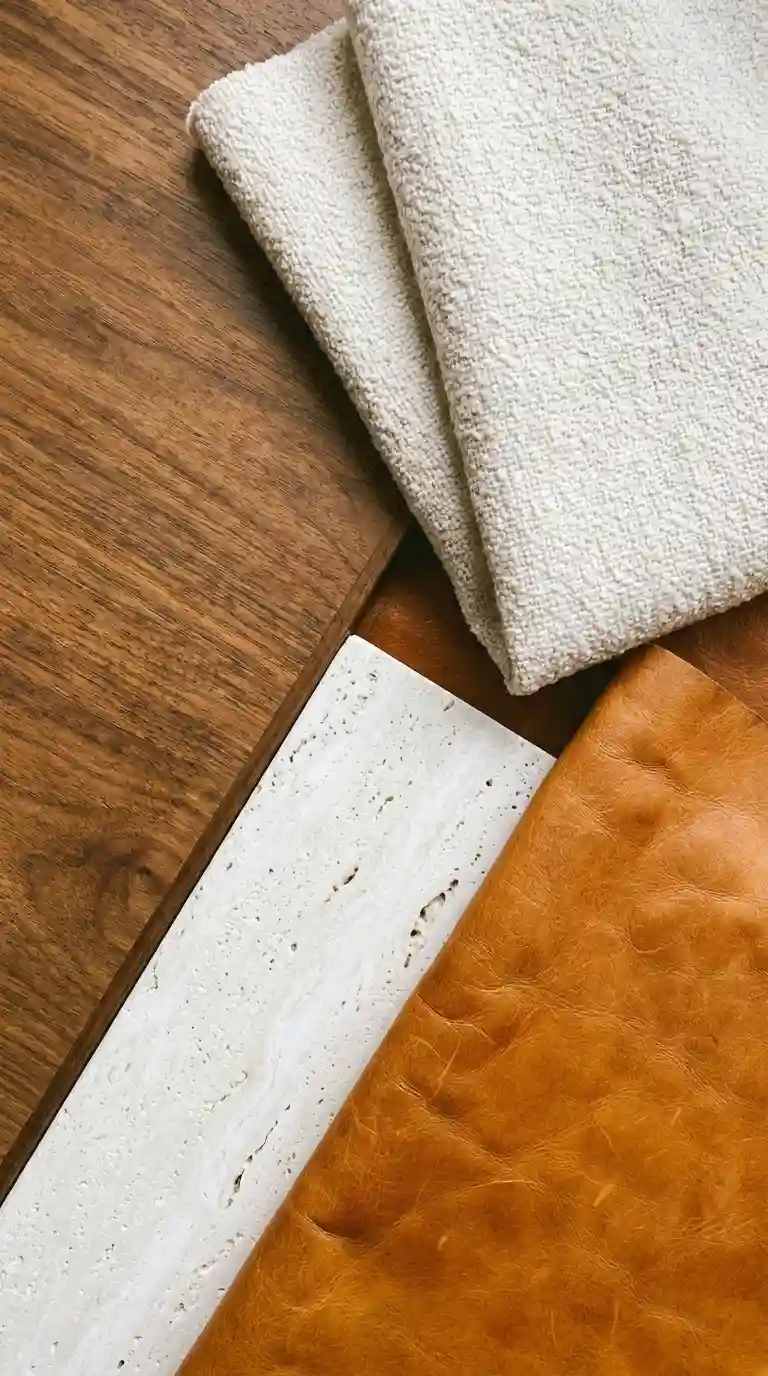
Wood is the heart of mid century modern interior design. Walnut, teak, rosewood, and oak were the preferred choices of original mid century designers, and they remain the most recognizable materials associated with the style today. The wood is always allowed to speak for itself. Grain is celebrated, not hidden. Finishes are typically matte or satin rather than high-gloss.
Beyond wood, mid century modern design embraces materials like leather, wool, stone, and glass. These are materials that age beautifully and feel honest. You will rarely see faux finishes or plastic imitations in a well-executed mid century modern space. Even when working with a limited budget, the goal is to find pieces that use genuine materials, even if they are smaller or simpler.
4. A Connection Between Indoors and Outdoors
Many of the homes that helped define mid century modern interior design were built with an intentional connection to the natural world outside. Large windows, glass walls, sliding doors that open to patios, and the abundant use of houseplants all contributed to this philosophy. The indoors and outdoors were meant to feel like a continuous conversation rather than two separate experiences.
You can bring this principle into any home, regardless of its architecture. Large windows that are left uncovered or dressed with simple linen panels let light flood in. Houseplants placed throughout the room bring organic texture and life. Stone or terrazzo flooring connects the inside to earth tones found in nature. Even a single beautiful piece of driftwood used as a sculptural accent tells this story.
5. Optimism in Color
Mid century modern interior design is known for a very specific color palette that manages to feel both bold and harmonious. The base is almost always neutral: warm whites, creamy off-whites, soft tans, and warm grays. On top of that neutral foundation, the style introduces accent colors that feel energetic and joyful without being garish.
Think mustard yellow, burnt orange, avocado green, teal, and rust red. These colors appeared on sofas, accent chairs, throw pillows, rugs, and artwork in mid century modern homes across America and Europe. Today, these exact shades are still the most reliable way to signal the style while keeping a space feeling fresh and current.
Mid Century Modern Interior Design: Room by Room
The Living Room
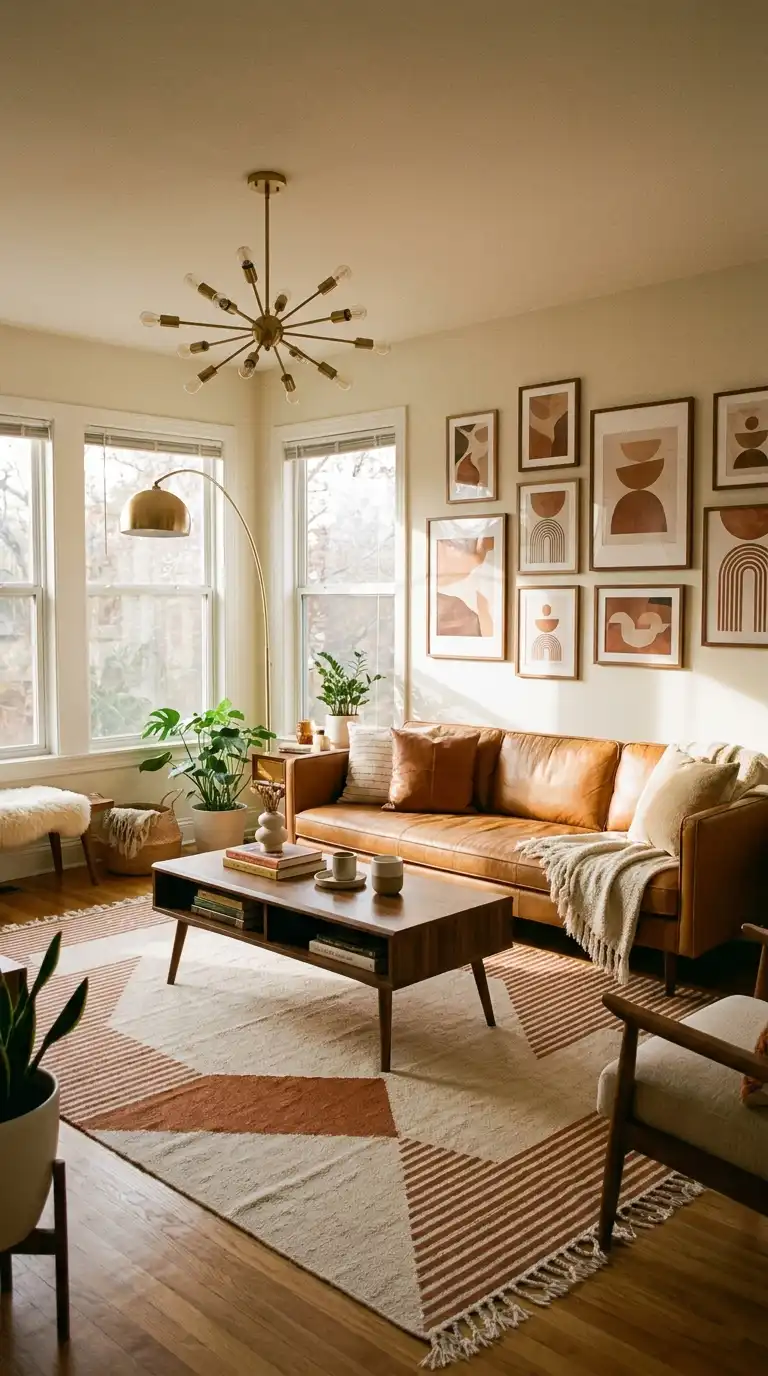
The living room is where mid century modern interior design really has a chance to shine, and it is where most people start when they are embracing the style. The foundation is almost always a low-profile sofa in a solid, warm color like camel leather, dusty teal, or warm gray. Sofa legs should be visible, tapered, and made of wood. This lifted quality is essential to the mid century modern look because it creates visual lightness and makes even a large sofa feel less imposing.
Pair the sofa with one or two accent chairs that have strong silhouettes. The Eames shell chair, the Tulip chair, or any chair with a sculptural, architectural quality works beautifully. A round or rectangular wood-framed coffee table at a low height completes the seating area. On the floor, a large geometric or abstract area rug in warm tones anchors the space and adds pattern without overwhelming it.
For lighting, mid century modern living rooms often feature arc floor lamps, Sputnik-style pendant lights, and table lamps with ceramic or wood bases and simple drum shades. These layers of light give the room warmth and depth at night. During the day, the emphasis is on natural light, so keep window treatments minimal and sheer wherever possible.
Also Read : Black and Beige Bathroom Ideas That Actually Feel Warm, Not Cold and Clinical
The Bedroom
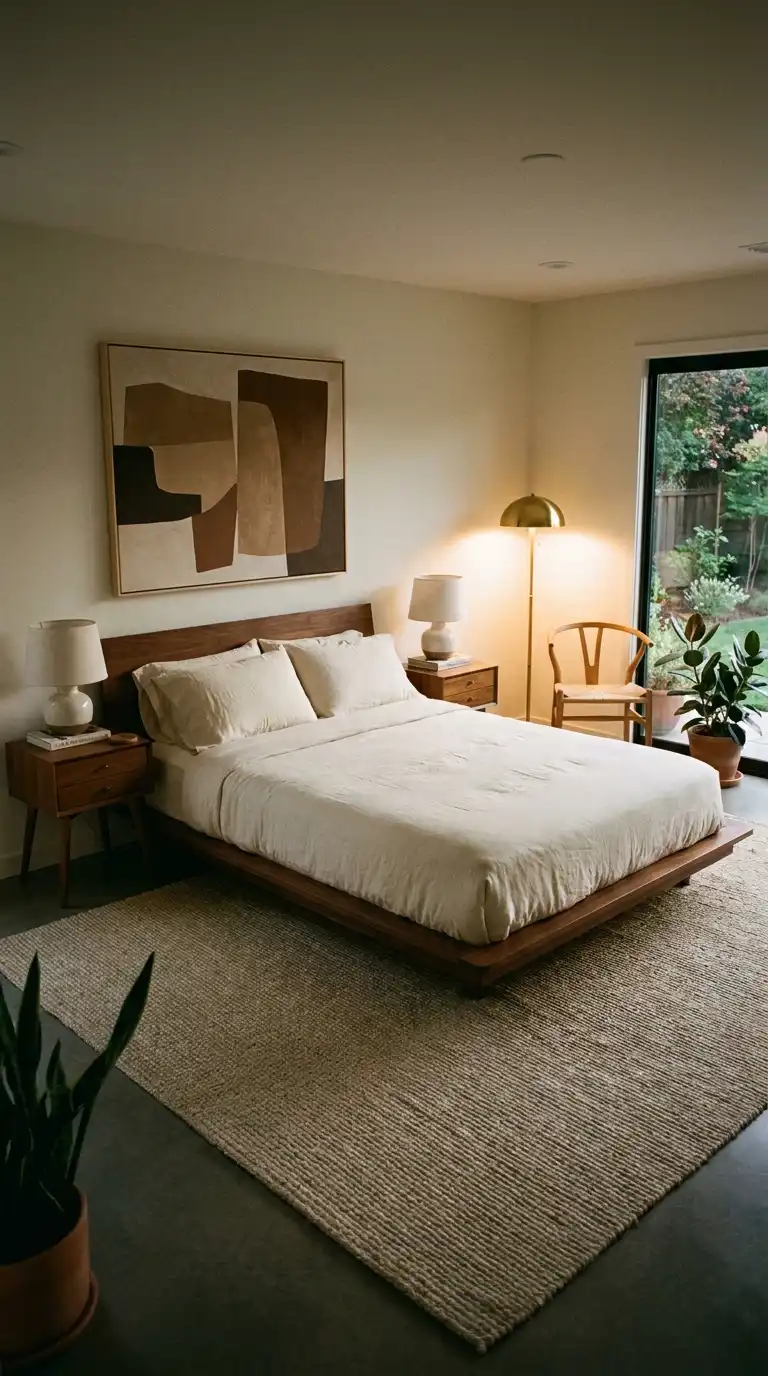
A mid century modern bedroom is a study in calm restraint. The bed is typically low to the ground with a simple upholstered or wood-framed headboard. Platform beds work perfectly here because they reinforce the low horizontal lines that define the style. Bed linens in solid, muted tones or subtle geometric patterns complete the look.
Nightstands should be minimal and functional, perhaps with a single drawer and tapered legs. A teak or walnut dresser with simple hardware or no hardware at all handles storage without adding visual noise. A lounge chair in the corner with a floor lamp creates a reading nook that feels genuinely inviting rather than just decorative.
Mid century modern interior design in the bedroom also benefits from wall art that is thoughtful and intentional rather than excessive. One or two large-format abstract prints or even a graphic textile piece hung on the wall can anchor the room without making it feel busy. Keep the color palette soft and warm, perhaps warm white walls with walnut wood tones and a single accent color in a dusty blue or warm sage.
The Kitchen
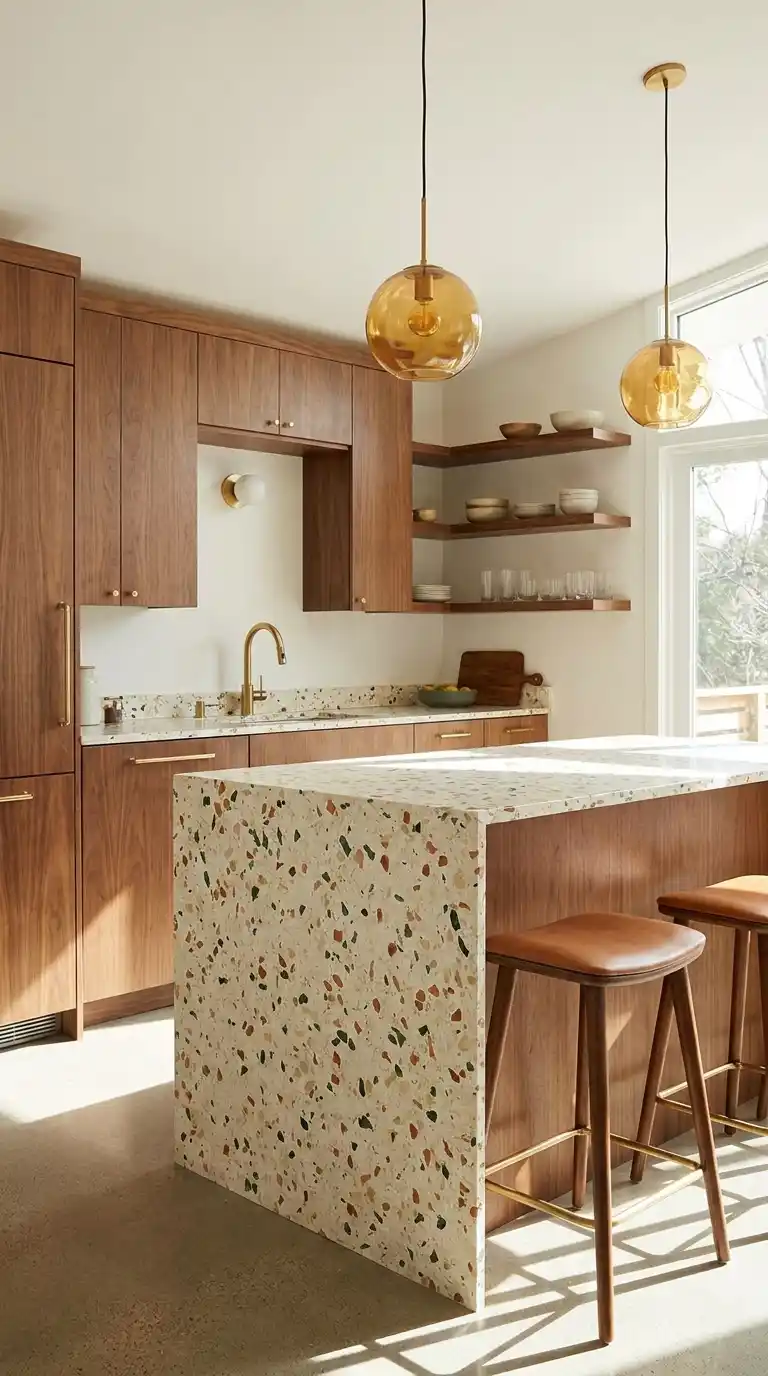
Mid century modern interior design in the kitchen is all about simplicity, warmth, and functionality working together. Flat-front cabinetry in warm wood tones or matte paint finishes replaces the ornate cabinet styles of earlier decades. Hardware, if used at all, tends to be small, simple, and in a warm metal like brass or brushed gold.
Countertops in natural stone, butcher block, or terrazzo feel completely at home in a mid century modern kitchen. Open shelving made of solid wood instead of upper cabinets on one wall gives the kitchen an airy, collected quality. Display a few carefully chosen ceramic pieces, a wooden cutting board, and some simple glassware on those shelves to bring warmth and personality to the space.
If the kitchen has an island or peninsula, consider bar stools with tapered wooden legs and simple leather or fabric seats. A pendant light or two in a warm metal finish hung over the island adds the kind of dramatic focal point that mid century modern kitchens are known for. Even small details like a vintage-style toaster or a ceramic kettle in a warm color can reinforce the overall aesthetic.
The Dining Room

The dining room is one of the most satisfying spaces to design in the mid century modern style because the combination of a sculptural dining table and a set of statement chairs is inherently dramatic and deeply pleasing. Look for a dining table with clean lines, a wood top in teak or walnut, and tapered or pedestal legs. Round and oval dining tables work particularly well in this style because they soften the geometry of the room and encourage conversation.
Dining chairs can be one of the most exciting places to express mid century modern design. Wire-frame chairs, molded plastic shell chairs, wishbone chairs in natural oak, and upholstered side chairs with wooden legs are all classic options. Mixing two different chair styles at the same table, for example wooden wishbone chairs paired with an upholstered captain’s chair at each head, is a popular and beautiful approach.
Overhead, a Sputnik chandelier, a cluster of globe pendants, or a single large globe light in amber glass creates the perfect focal point. A sideboard or credenza against one wall handles storage while also serving as a display surface for a lamp, some framed prints, and a few decorative objects. A dining room in this style feels both special and completely livable.
The Home Office
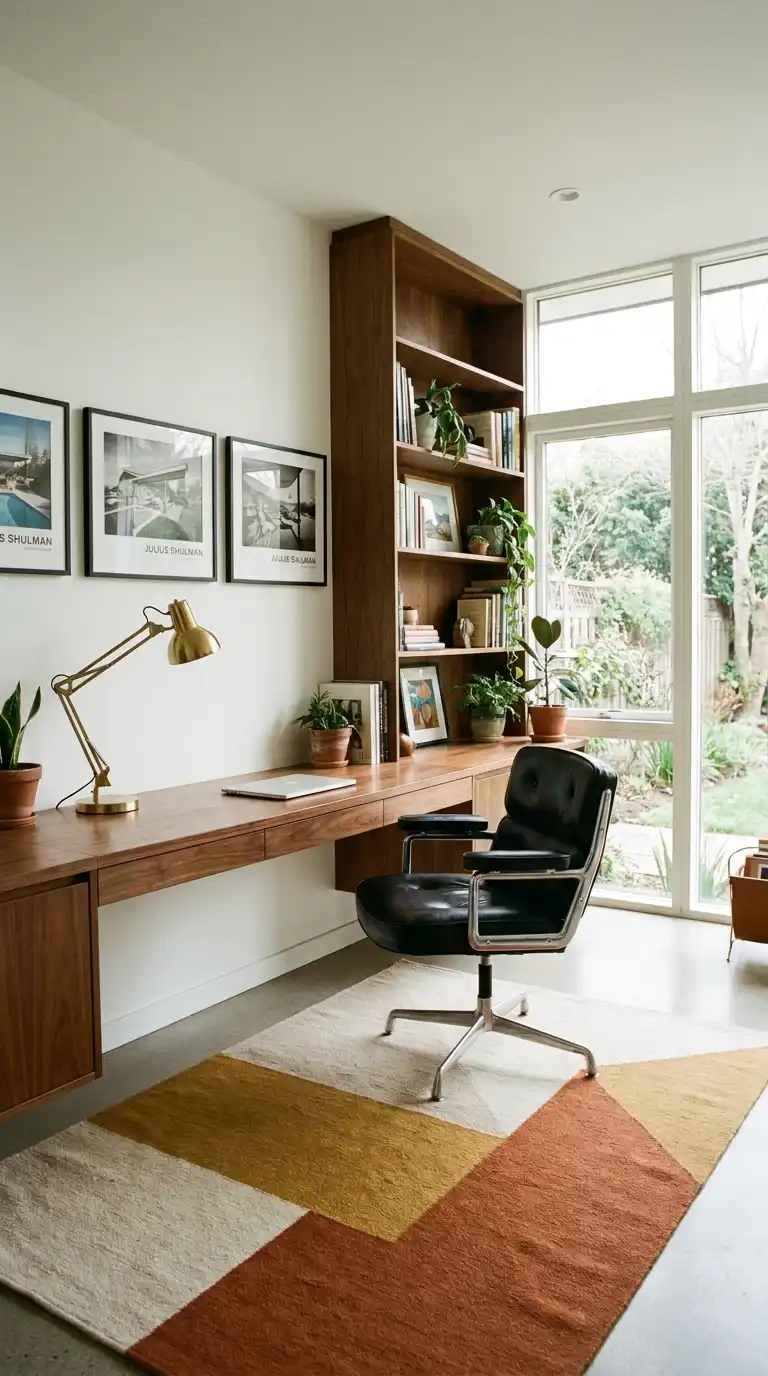
The home office is where mid century modern interior design is particularly practical because the style’s emphasis on functionality aligns perfectly with a workspace. A simple, clean-lined desk in walnut or oak with minimal drawers and no unnecessary ornamentation creates a focused and inspiring workspace. Pair it with a properly ergonomic chair that also has visual appeal, perhaps a molded shell chair on a swivel base or a low leather task chair with wooden armrests.
Storage in a mid century modern home office tends to be built-in shelving along one wall or a simple credenza that handles filing and supplies without being visually overwhelming. Books, plants, and a few well-chosen objects on the shelves add personality. A vintage-style desk lamp in brass or black provides focused task lighting.
For the walls, consider a single large architectural photograph, an abstract print, or a framed map. A small area rug under the desk in a geometric pattern grounds the space and separates the work zone from the rest of the room. This style of home office feels professional and personal at the same time, which is exactly what a great workspace should feel like.
The Bathroom
Mid century modern interior design translates beautifully to bathrooms. The key elements are simple vanities with open legs or floating designs, terrazzo tile, geometric mosaic floors, and fixtures in brushed gold or matte black. A floating vanity in a warm wood finish with an undermount ceramic sink and simple brass faucet instantly brings the style into the bathroom.
Walls in a mid century modern bathroom might feature large-format tiles in warm white or a warm gray, with a contrasting geometric tile in the shower niche or as a border. Mirrors tend to be frameless or have a thin brass frame. Lighting is warm and layered, with a simple wall sconce on either side of the mirror for flattering, functional illumination.
Even in a small bathroom, the mid century modern principles of clean lines, natural materials, and warm tones can transform the space dramatically. A simple wood-framed mirror, a small live plant, a bar of handmade soap on a ceramic tray, and a quality linen hand towel in a warm neutral shade make any bathroom feel curated and beautiful.
Color Palettes That Define Mid Century Modern Interior Design
One of the most enjoyable parts of working with mid century modern interior design is selecting a color palette. The style has a very distinct and well-established range of colors, but there is still plenty of room for personal interpretation. Here is how to think about color in this context.
The Base Layer
Always start with a warm neutral base. This is the color of your walls, your largest furniture pieces, and your primary textiles. Warm white, creamy ivory, soft mushroom, and warm greige are all excellent choices. These tones reflect light beautifully and create the sense of calm openness that mid century modern spaces are known for. Avoid cool whites or grays because they push the palette in a Scandinavian or contemporary direction that conflicts with the warmth of the style.
If you want to use a wall color beyond white, consider a warm sage green, a rich terracotta, a deep forest green, or a dusty blue. These deeper tones work especially well in studies, bedrooms, and dining rooms where you want to create a more intimate atmosphere. Against a warm, saturated wall color, natural wood furniture and mid century modern accessories really pop.
Accent Colors That Feel Authentic

The most historically accurate accent colors for mid century modern interior design are mustard yellow, burnt orange, avocado green, turquoise, and rust red. These were the colors that appeared on sofas, rugs, and accessories in the homes of the 1950s and 1960s, and they remain closely associated with the style. Today, you can use these colors in updated, slightly muted versions that feel contemporary while still honoring the aesthetic.
Mustard yellow as a throw pillow or a single accent chair is one of the easiest ways to signal mid century modern style. Rust or burnt orange in a rug or curtain panel adds richness and warmth. A teal or turquoise piece of ceramic art or a velvet ottoman introduces a jewel-toned note that keeps the palette from feeling too earthy. The key is restraint. Choose one or two accent colors and let them do the work.
Metals and Finishes
The metals used in mid century modern interior design are as important as the colors. Brass is the dominant choice and appears in lighting fixtures, cabinet hardware, faucets, and decorative objects. It is warm, slightly antique in quality, and pairs perfectly with walnut wood and earthy tones. Brushed brass or unlacquered brass that develops a natural patina over time feels the most authentic to the era.
Black is also common in mid century modern spaces, particularly in light fixtures, thin-frame furniture legs, and graphic accessories. The contrast between warm wood, warm brass, and matte black creates a visual tension that is incredibly satisfying. Chrome occasionally appears in this style but should be used sparingly, as it pushes things in a more industrial or contemporary direction.
Furniture Pieces Every Mid Century Modern Interior Design Needs
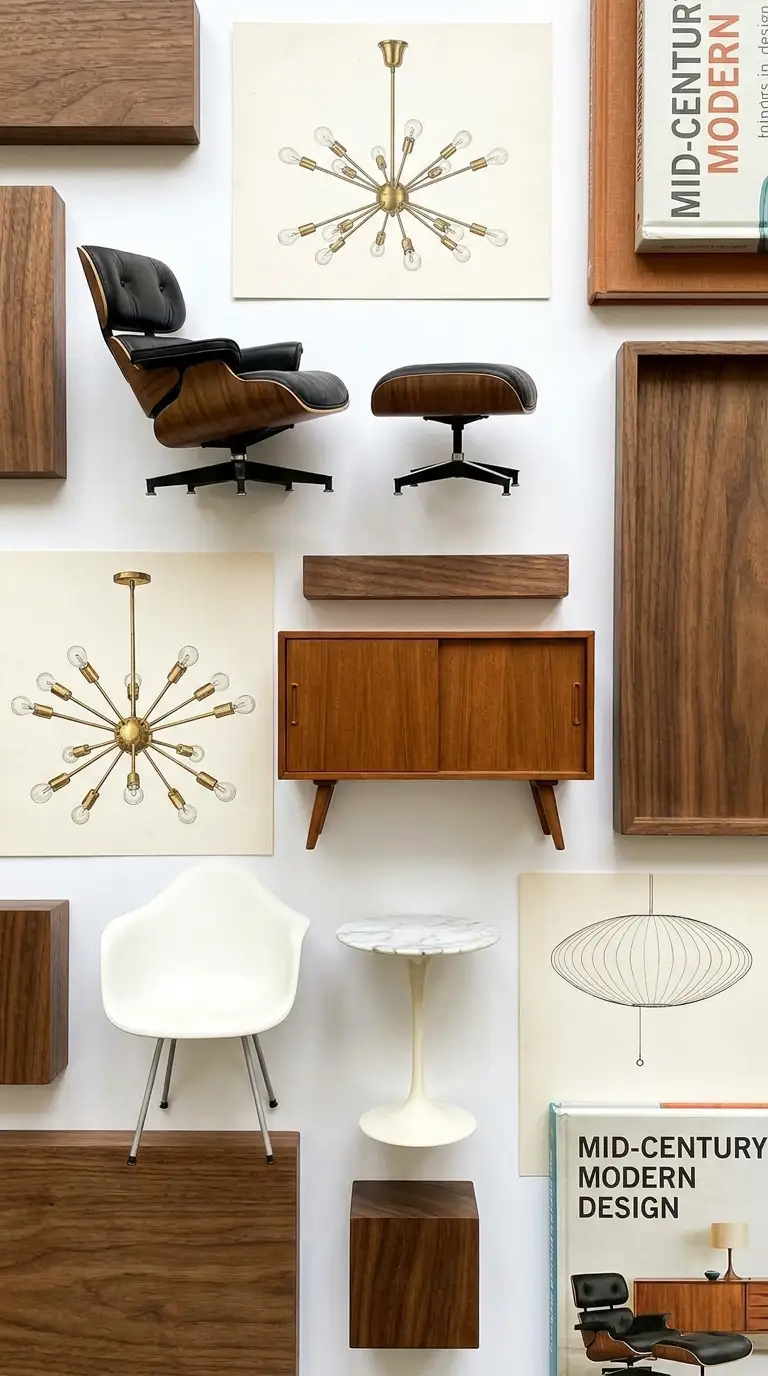
Certain furniture pieces are so closely associated with mid century modern interior design that they have become almost shorthand for the style. You do not need to own authentic vintage versions of all of them, but understanding what they are and why they matter will help you make better choices when shopping.
The Eames Lounge Chair and Ottoman
Designed by Charles and Ray Eames in 1956, the lounge chair and ottoman is perhaps the most iconic piece of mid century modern furniture ever created. Its molded plywood shell, premium leather upholstery, and angled structure make it both a design object and one of the most comfortable chairs ever built. An authentic Herman Miller version is a significant investment, but there are many high-quality reproductions available that capture the spirit of the original without the museum-worthy price tag.
Even one Eames-inspired lounge chair in a living room or bedroom reading nook instantly elevates the space and signals a deep understanding of mid century modern design. It works in virtually any color of leather and pairs well with walnut side tables and simple floor lamps.
The Sputnik Chandelier
Named after the Soviet satellite launched in 1957, the Sputnik chandelier is a starburst-shaped light fixture with arms radiating from a central sphere. It captures the optimism and space-age excitement of the mid century era perfectly. Available in brass, black, and chrome finishes, it works in dining rooms, entryways, and living rooms. Even in a room with otherwise understated decor, a Sputnik chandelier makes a strong statement.
The Credenza and Sideboard
The low, long credenza or sideboard is an absolutely essential piece of mid century modern interior design. Originally designed for dining rooms, it has migrated into living rooms, bedrooms, and home offices. Made of teak or walnut with simple cane-front or flat-front doors and tapered legs, a good credenza handles storage beautifully while serving as a display surface for lamps, art, plants, and decorative objects.
A credenza also has the practical advantage of keeping a room’s visual weight low and horizontal, which is exactly what mid century modern design calls for. It makes any wall it sits against feel more intentional and composed.
The Arc Floor Lamp
The arc floor lamp, with its long curved arm extending from a heavy marble base, is one of the most practical and beautiful lighting solutions in mid century modern interior design. It allows you to position light directly over a sofa or reading chair without the need for a pendant or ceiling fixture. The Arco lamp by Castiglioni is the archetype, but there are many excellent versions at accessible price points.
The Egg Chair and Shell Chair
Designed by Arne Jacobsen, the Egg chair is one of the most architecturally striking pieces associated with mid century modern interior design. Its enveloping shell creates a private, cocoon-like sitting experience while also functioning as a sculptural object in any room. The Eames shell chair, available in molded plastic or fiberglass in dozens of colors and on multiple base options, is more versatile and accessible, making it a popular choice for dining rooms, home offices, and bedrooms.
Must Read : 40 Stunning Game Room Furniture Ideas That Will Completely Transform Your Entertainment Space
How to Layer Textiles in Mid Century Modern Interior Design

Textiles are where you can really personalize a mid century modern space and add warmth and comfort to what might otherwise feel too spare. The key is to choose fabrics that feel natural, textural, and slightly tactile.
Bouclé fabric, with its loopy, nubby texture, is incredibly popular in current interpretations of mid century modern interior design. A bouclé sofa or accent chair in cream or warm gray adds incredible warmth and visual interest. Wool in geometric patterns, whether as a throw blanket draped over a sofa or a large area rug, is another staple. Natural leather on cushions or a chair seat, combined with warm wood, creates an extremely satisfying material contrast.
For curtains and drapes, linen is the most appropriate choice. It is natural, ages beautifully, and hangs in relaxed, gentle folds that complement mid century modern spaces without competing with the furniture’s strong silhouettes. Keep curtain colors in warm neutrals or match them to the wall color for a calm, seamless look. Long, floor-grazing panels add drama and height to a room without introducing pattern.
Plants and Greenery in Mid Century Modern Interior Design
Plants are not optional in mid century modern interior design. They are genuinely essential to the style’s identity and its desire to maintain a connection between the built environment and the natural world. The designers and homeowners who created the mid century modern aesthetic understood that greenery brings life, humidity, and texture to a space in ways that no designed object can replicate.
Best Plants for the Style
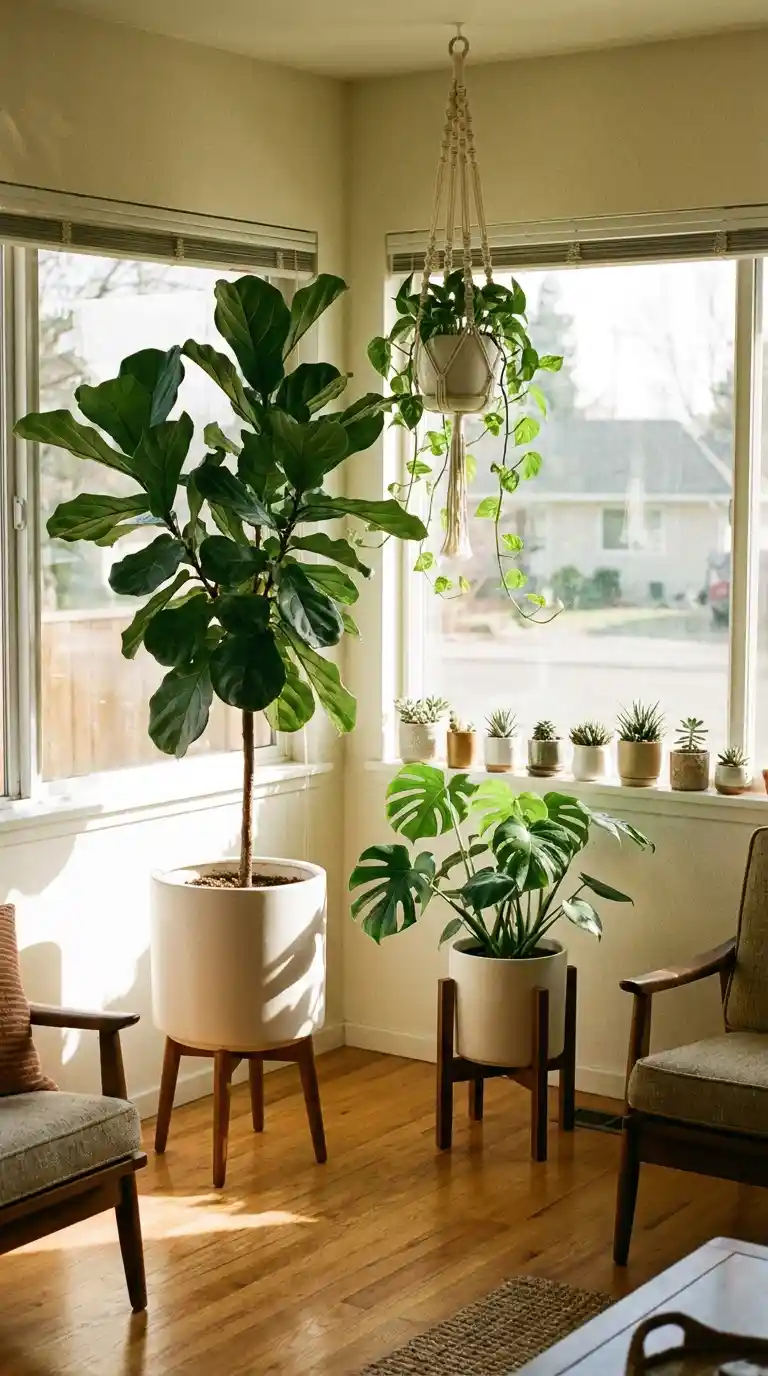
Fiddle leaf fig trees are almost synonymous with mid century modern interior design in the current era. Their large, architectural leaves and tree-like structure make them a natural focal point in any room. A single fiddle leaf fig in a ceramic or travertine pot in a corner of the living room transforms the entire space.
Bird of paradise plants, rubber trees, monstera deliciosa, and snake plants are also extremely popular choices. All of these have strong, sculptural forms that complement the clean lines and organic shapes of mid century modern furniture. Trailing plants like pothos or string of pearls look beautiful on credenzas and bookshelves, adding organic movement to the structured arrangement of objects.
For smaller accents, collections of succulents in simple ceramic pots on a windowsill or dining table, or a single air plant displayed on a piece of driftwood, add botanical interest without requiring significant care. The point is not to have the maximum number of plants but to choose each one deliberately and display it well.
Mid Century Modern Interior Design on a Budget
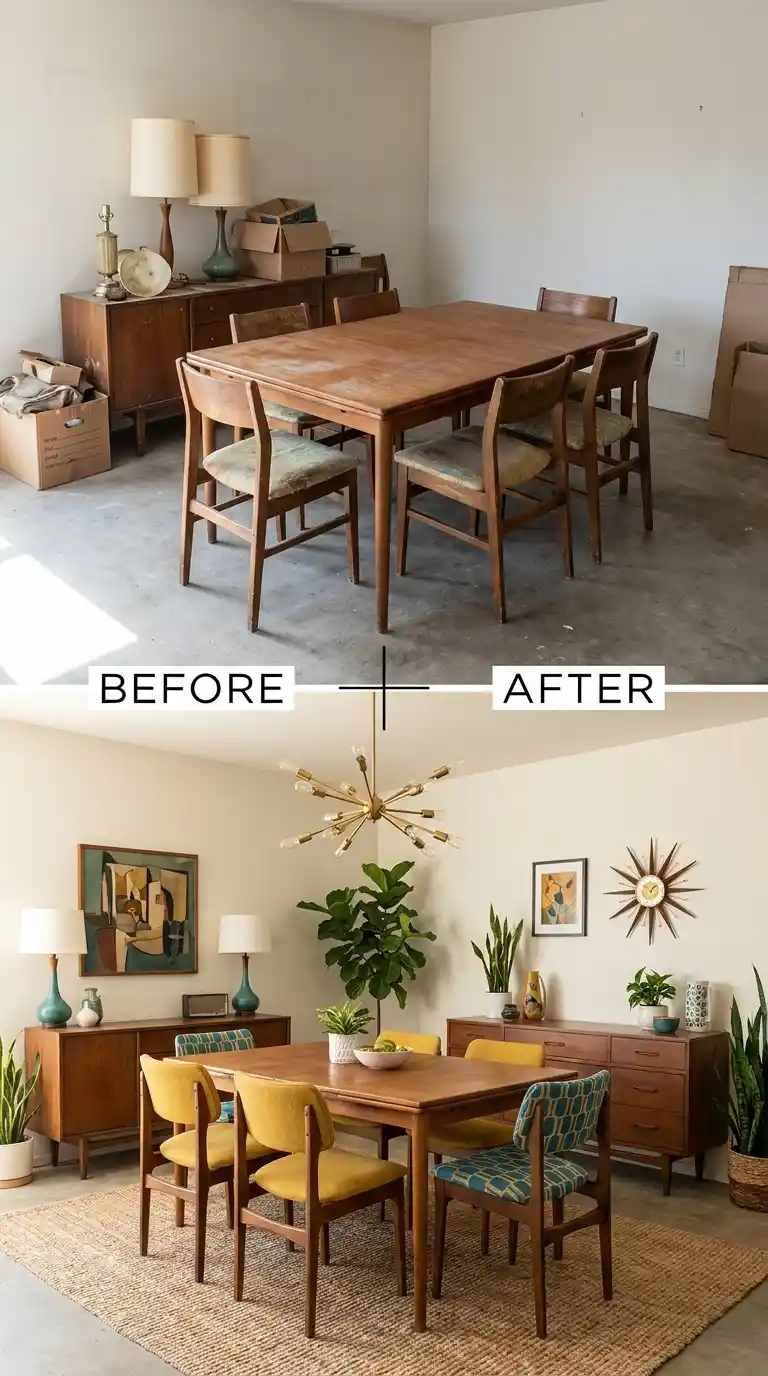
One of the questions I get asked most often is how to achieve mid century modern interior design without spending a fortune. The good news is that this is genuinely possible, and in some ways, the thrift store approach to the style actually produces more authentic results than buying everything new, because authentic vintage pieces were made from real materials with real craftsmanship.
Thrift Stores and Estate Sales
Thrift stores, estate sales, and garage sales in established suburban neighborhoods are excellent sources for genuine mid century modern pieces. A teak side table, a set of walnut dining chairs, a brass table lamp, or a credenza in good condition can regularly be found for a fraction of their current retail value. The key is patience. You need to visit these sources regularly and know what you are looking for.
When evaluating vintage pieces, look for solid wood construction, joinery that is tight and without significant gaps, and surfaces that can be refinished. A dull or scratched teak coffee table might look terrible in a thrift store but can be completely transformed with teak oil and a light sand. A set of chairs with outdated upholstery can be reupholstered in a fabric of your choice for a modest cost.
Strategic Investing
If your budget is limited, prioritize spending on the pieces that will have the most visual impact: the sofa, the dining table, the lighting fixtures, and the area rug. These are the anchors of a room and are worth saving for. Accent pieces, throw pillows, plants, and decorative objects can be sourced inexpensively at thrift stores, markets, and budget retailers.
Many retailers now offer mid century modern inspired furniture at accessible price points. While these pieces may not have the same quality of materials as authentic vintage furniture, they can serve as placeholders while you save for better pieces or search for vintage finds. Focus on items that have clean lines and real wood details rather than those that rely on cheap imitations of the style.
Common Mistakes People Make in Mid Century Modern Interior Design
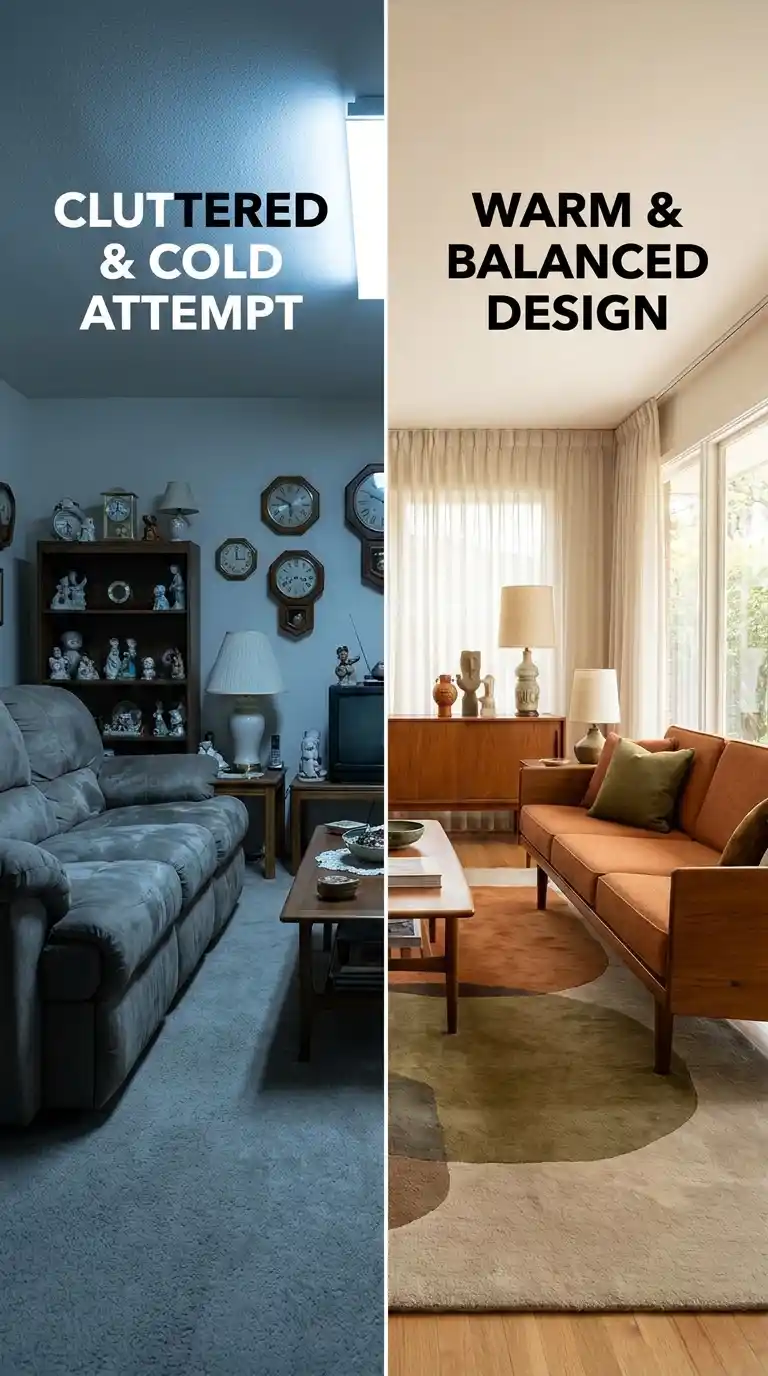
After spending years studying and practicing mid century modern interior design, I have noticed a few consistent mistakes that people make when trying to achieve the style. Being aware of them will save you time, money, and frustration.
Overcrowding the Space
Mid century modern interior design depends on negative space. It needs breathing room to work. One of the most common mistakes is filling every surface, corner, and wall with objects and furniture. The result feels cluttered and anxious rather than calm and collected. The rule I follow is to put out what you think you want, then remove at least a third of it. That edited version will almost always feel better.
Ignoring Lighting
Lighting is one of the most transformative elements in any interior, but it is often the last thing people think about. In mid century modern interior design, layered lighting is critical. You need ambient light from overhead fixtures, task light from floor lamps and desk lamps, and accent light from table lamps and perhaps some recessed fixtures. Without this layering, even a beautifully furnished room will feel flat and uninspiring after dark.
Choosing the Wrong Scale
Scale is everything in mid century modern interior design. A sofa that is too large overwhelms a room. A coffee table that is too small gets lost. A rug that does not extend far enough under the furniture looks like it was placed there by accident. Before purchasing any major piece, measure your room carefully and sketch out the floor plan. Confirm that the dimensions of the piece you are considering will work in proportion to the space.
Missing the Warmth
Mid century modern design at its best is warm, inviting, and deeply human. When it goes wrong, it becomes cold, stark, and unwelcoming. This usually happens when people use too many cool tones, skip the textiles, or choose furniture that is beautiful but uncomfortable. Always balance visual restraint with physical warmth. Layer in soft throws, comfortable cushions, warm lighting, and living plants to keep the space feeling like a real home.
Bringing Mid Century Modern Interior Design Into Contemporary Homes

Most of us do not live in homes that were built in the 1950s and 1960s. We live in newer construction with different architectural characteristics, different ceiling heights, and different proportions. The good news is that mid century modern interior design adapts beautifully to contemporary homes when you understand how to apply its principles rather than its exact aesthetics.
Working with Open Floor Plans
Many contemporary homes have open floor plans that combine living, dining, and kitchen areas in one large space. Mid century modern interior design handles this beautifully because the style’s emphasis on furniture arrangement to create zones works perfectly in open layouts. Use area rugs to define the living area. Position your dining table as a visual anchor between the kitchen and the living space. Create visual continuity by using the same wood tones and metal finishes across all areas.
Updating Traditional Architecture
If you live in a home with traditional architectural details like crown molding, decorative trim, or a fireplace with an ornate mantel, you do not need to gut the space to achieve mid century modern interior design. Instead, paint all the woodwork and trim the same warm white as the walls to create a clean, unified background. Then furnish the space entirely in the mid century modern style. The contrast between the traditional bones and the modern furniture often produces incredibly charming results.
Mid Century Modern in Small Spaces
Small apartments and studio spaces are actually ideal candidates for mid century modern interior design because the style’s principles of restraint, multi-functionality, and visual lightness are exactly what small spaces need. A sofa on tapered legs takes up less visual space than one that sits on the floor. A credenza provides substantial storage without visual bulk. A round dining table with a pedestal base takes up less floor space than a rectangular one with legs at the corners.
Choose furniture that serves multiple purposes wherever possible. A dining table can also be a workspace. A bench at the foot of the bed provides seating, storage, and a surface for styling. A sideboard in the living room handles media equipment storage, extra linens, and serves as a display surface. The mid century modern ethos of functionality above all else makes it exceptionally well-suited to small space living.
Mid Century Modern Interior Design Inspired by Iconic Designers

Understanding the designers who created mid century modern interior design gives you a deeper appreciation for why things are the way they are in this aesthetic. Here is a brief look at some of the most influential figures and what their work can teach you today.
Charles and Ray Eames
Charles and Ray Eames were perhaps the most influential figures in mid century modern design. Working from their studio in California, they developed groundbreaking techniques for molding plywood and fiberglass into organic, ergonomic shapes. Their approach to design was rooted in genuine curiosity about how people lived and what they needed. Everything they created was rigorously tested for both function and beauty. The lounge chair, the shell chair, the molded plywood chair, and countless other pieces remain in production today.
George Nelson
George Nelson served as design director at Herman Miller from 1945 to 1972 and created some of the most enduring pieces associated with mid century modern interior design. The Nelson bench, the bubble lamp, the marshmallow sofa, and the comprehensive storage systems he developed all reflected his belief that good design should solve real problems beautifully. His influence on American interior design cannot be overstated.
Arne Jacobsen
Danish architect and designer Arne Jacobsen brought a particularly elegant and refined quality to mid century modern design. His Egg chair, Swan chair, and Ant chair are among the most architecturally distinctive pieces ever created. Jacobsen understood that furniture could be sculpture, and he pursued that idea with extraordinary discipline. His work reminds us that mid century modern interior design at its best is genuinely artistic.
Florence Knoll
Florence Knoll was as much an editor and curator as she was a designer. She assembled a collection of furniture for the Knoll company that remains the gold standard of mid century modern design. Her own pieces, including her Knoll sofa and credenza, are exercises in refined simplicity. She believed that interior design was architecture at its most human scale, and that belief comes through in every space her work inhabits.
Read Also : Transform Your Sleep Space: The Complete Guide to Choosing Ceiling Lights for Bedroom That Actually Work
Styling Shelves and Surfaces in Mid Century Modern Interior Design
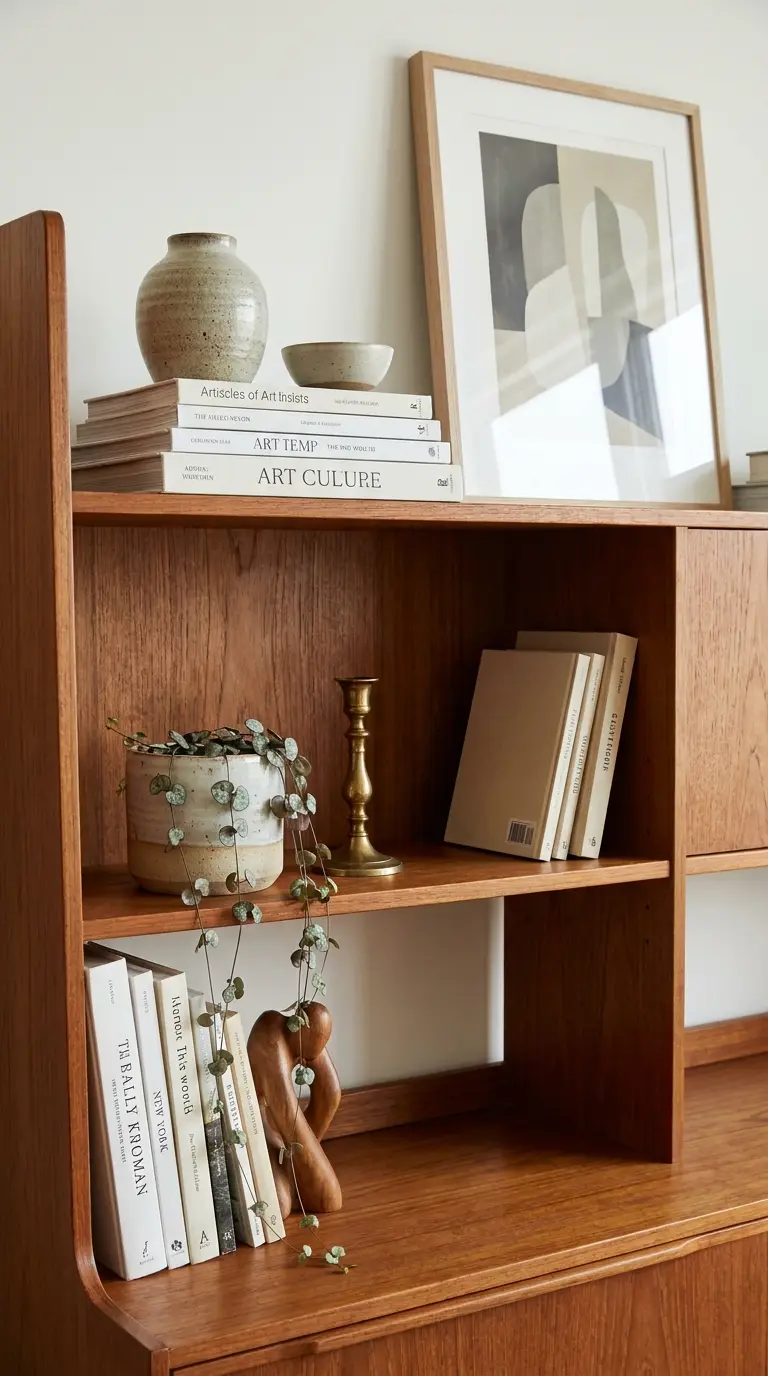
The way you style your shelves, credenzas, coffee tables, and other display surfaces is where the personality of your mid century modern space really comes through. This is an area where many people struggle because they either put out too much or make choices that feel generic. Here are some principles that will help.
The Rule of Odd Numbers
When grouping objects on a shelf or surface, use odd numbers. Three objects, five objects, seven objects. An odd number of items creates a more dynamic and visually interesting arrangement than an even number, which tends to feel static and symmetrical. Within each grouping, vary the height, scale, and texture of the objects to create visual movement.
What to Display
In a mid century modern space, the objects on display should feel personal, curated, and tactile. Ceramics in organic shapes, particularly in earthy tones like terracotta, cream, sand, and forest green, are perfect choices. Wooden sculptures, abstract art books stacked horizontally with a small object on top, vintage brass candleholders, a single stem of dried pampas grass or eucalyptus in a simple vase, and small framed prints are all excellent options.
Do not fill every inch of shelf space. Empty space on a shelf is as important as the objects themselves. It lets each piece breathe and be appreciated individually rather than competing for attention in a crowded row.
Coffee Table Styling
A mid century modern coffee table should be styled with restraint. A stack of two or three design or art books, a small ceramic tray holding a candle and a stone or crystal, and a small plant or dried botanicals are usually all you need. The goal is to make the surface look thoughtfully arranged rather than decorated, like it belongs to someone who lives and works there rather than someone trying to photograph it for a magazine.
Art and Wall Decor in Mid Century Modern Interior Design
Art is an important part of mid century modern interior design, but it is used selectively and strategically rather than as wallpaper. The style tends to favor a few large, impactful pieces over many small ones clustered together.
Abstract expressionism is the most natural artistic companion to mid century modern design. Bold shapes, strong colors, and energetic compositions that feel spontaneous and human-made are ideal. You do not need to spend a fortune on original artwork. High-quality fine art prints, vintage poster reproductions, and work by emerging local artists can all be displayed beautifully in a mid century modern space.
If you want to create a gallery wall, the mid century modern approach is to keep it simple and geometric. Three frames in a horizontal line, or a grid of six identical frames with different artwork inside, or a single large canvas flanked by two smaller ones on either side. Always use frames in the same metal finish or the same wood tone to create cohesion. Mix framed works with an unframed canvas or a textile piece to add variety.
Lighting Strategy for Mid Century Modern Interior Design
Lighting deserves its own section in any discussion of mid century modern interior design because it is genuinely one of the most transformative elements you can work with. The right lighting makes a room feel warm, layered, sophisticated, and alive. The wrong lighting makes even the most beautiful furniture look flat and uninspiring.
Ambient Lighting
Ambient lighting is the base layer, the general illumination that makes the room usable. In mid century modern spaces, this often comes from a pendant light or chandelier overhead. The Sputnik chandelier and the globe pendant are the most iconic choices, but a sculptural cluster of bubbles or a simple drum pendant in natural materials also works beautifully. The goal is a fixture that reads as a design object in its own right rather than simply a functional necessity.
Task Lighting
Task lighting serves specific functions: reading, working, cooking, grooming. In the living room, this comes from floor lamps positioned near seating. The arc floor lamp over the sofa, the tripod floor lamp beside the reading chair, and the table lamp on the side table are all classic mid century modern task lighting solutions. In the home office, a brass adjustable desk lamp is both functional and beautiful. In the bedroom, matching bedside wall sconces or table lamps provide symmetry and functionality.
Accent Lighting
Accent lighting creates drama and draws attention to specific elements in the room. Picture lights illuminate art. Recessed spotlights highlight a plant, a sculpture, or a textured wall. Under-cabinet lighting in the kitchen creates a warm, welcoming glow in the evenings. The warm, honey-toned light that accent lighting produces is deeply flattering to the wood tones and earthy colors of mid century modern interior design.
Seasonal Updates to Mid Century Modern Interior Design
One of the pleasures of having a well-established mid century modern interior design foundation is how easily you can update it seasonally without spending much money or effort. Because the bones of the style are simple and neutral, swapping out textiles, plants, and small accessories is all it takes to make the space feel fresh and seasonally appropriate.
In autumn and winter, bring in deeper, richer tones. Replace the summer’s linen throw with a heavy wool one in rust or forest green. Swap out lightweight cushion covers for velvet or bouclé ones in deep amber or warm terracotta. Add a few dried botanicals, pinecones, or seasonal branches to your styled surfaces. Candles in warm amber glass holders add flickering warmth on dark evenings.
In spring and summer, lighten everything up. Replace heavier textiles with linen and cotton in pale cream, soft sage, and warm white. Bring in fresh plants and flowers. Open curtains fully to let in maximum light. Use rattan or wicker accent pieces that feel naturally summery. A few stems of pampas grass or eucalyptus in a simple vase is all you need to bring the season indoors.
People Also Ask
Q1. What is mid century modern interior design?
Mid century modern interior design is an aesthetic movement from the 1940s to 1970s that emphasizes clean lines, organic shapes, natural materials, and a connection between function and beauty. It is characterized by warm wood tones, tapered furniture legs, bold accent colors, and a philosophy that good design should be both beautiful and accessible.
Q2. What colors are used in mid century modern interior design?
The color palette includes warm neutral bases like off-white, cream, and warm greige, paired with bold accent colors like mustard yellow, burnt orange, avocado green, teal, and rust red. Warm wood tones and brass metal finishes are also central to the color story.
Q3. What furniture is typical of mid century modern interior design?
Typical pieces include low-profile sofas with tapered legs, Eames lounge chairs, shell chairs, credenzas and sideboards in teak or walnut, Sputnik chandeliers, arc floor lamps, round or oval dining tables, and platform beds. All share clean lines, minimal ornamentation, and warm material choices.
Q4. What is the difference between mid century modern and contemporary design?
Mid century modern draws specifically from the 1940s to 1970s era and features warm wood tones, bold accent colors, and a humanistic approach to design. Contemporary design is more neutral in color, more minimalist in form, and does not reference any specific historical era. The two styles share clean lines but differ significantly in warmth and material palette.
Q5. Is mid century modern interior design still popular in 2025?
Yes, mid century modern interior design remains one of the most popular and enduring interior design styles. Its timeless principles, adaptability to different spaces and budgets, and balance of warmth and restraint ensure it continues to resonate with homeowners, designers, and decorators.
Q6. How do I add mid century modern design to my home without renovating?
Start with furniture, lighting, and accessories. Replace heavy or ornate furniture with pieces that have clean lines and tapered legs. Add a Sputnik chandelier or arc floor lamp. Introduce warm wood tones through side tables, a credenza, or a dining table. Add plants and earthy accent colors through cushions, throws, and rugs.
Q7. What wood is most associated with mid century modern interior design?
Walnut is the most iconic wood of mid century modern interior design, followed closely by teak, rosewood, and oak. These woods share warm, rich grain patterns that age beautifully and complement the earthy color palettes associated with the style.
Q8. Can I mix mid century modern with other design styles?
Yes, mid century modern blends beautifully with Scandinavian design, bohemian decor, and even some industrial elements. The key is to maintain the core mid century modern principles of clean lines and warm materials while allowing other influences to add personality and texture.
Q9. What kind of rugs work best in mid century modern interior design?
Geometric patterns, abstract shapes, and solid colors in warm earthy tones work best. Wool rugs in cream and charcoal, rust and ivory, or terracotta and natural are all excellent choices. Vintage Moroccan rugs with abstract tribal patterns are also very popular in mid century modern spaces.
Q10. What plants are popular in mid century modern interior design?
Fiddle leaf figs, rubber trees, bird of paradise plants, monstera deliciosa, snake plants, and pothos are the most popular choices. Large sculptural plants in simple ceramic or travertine pots make the strongest impact, while smaller plants add texture and life to shelves and surfaces.
Q11. How do I style a mid century modern credenza?
Keep it simple and intentional. Use a mix of heights by leaning framed art against the wall above it, placing a table lamp on one end, and grouping three to five objects of varying sizes including a plant, a ceramic piece, and a candle or small sculpture. Leave space between groupings to allow each object to breathe.
Q12. What lighting fixtures are most associated with mid century modern design?
The Sputnik chandelier, arc floor lamp, George Nelson bubble lamp, globe pendant lights, and tripod floor lamps are the most iconic mid century modern lighting choices. Brass and black finishes are the most appropriate metal choices for the style.
Q13. Is mid century modern interior design good for small apartments?
It is actually ideal for small apartments. The style’s emphasis on functionality, visual lightness from tapered furniture legs, multi-purpose pieces, and restrained decoration makes it exceptionally practical and beautiful in limited spaces.