
I remember the day I walked into my apartment and felt completely overwhelmed. Stuff was everywhere. Boxes in corners, clothes on chairs, random items covering every flat surface. I had been living like that for months, telling myself I would clean it up eventually. But the clutter kept growing, and so did my stress. That was the moment I seriously started looking into minimalist home organization, and honestly, it changed everything.
Minimalist home organization is not about throwing away everything you own or living in a cold, bare space with nothing on the walls. It is about being intentional with what you keep, where you store it, and how it all fits into your daily life. When you strip your home down to only the things that actually serve a purpose or bring you genuine happiness, something shifts. The air feels lighter. Your mind feels clearer. And finding your keys in the morning becomes surprisingly easy.
In this guide, I am going to walk you through everything I have learned about minimalist home organization, from the basic principles all the way through room-by-room strategies and storage ideas that actually work in real homes. Whether you live in a tiny apartment or a spacious house, this approach can be adapted to fit your space and your lifestyle. So let us get into it.
Also Read : The Ultimate Guide to Victorian Gothic Home Decor: Dramatic, Dark, and Deeply Beautiful
What Is Minimalist Home Organization and Why Does It Actually Work
At its core, minimalist home organization is the practice of reducing what you own to only the essentials and then creating a clear, logical system for everything that remains. The goal is not perfection or aesthetics alone. It is function. When every item in your home has a specific place, and when that place actually makes sense for how you live, you spend less time searching for things, less time cleaning, and less mental energy managing your environment.
The reason this approach works so well is rooted in psychology. Studies on the relationship between clutter and mental health consistently show that a disorganized living environment increases cortisol levels, which is the primary stress hormone in the body. When your home is cluttered, your brain registers those unfinished tasks and unresolved decisions as ongoing stressors. Every pile of unsorted mail, every crammed drawer, every overfull closet is subtly pulling your attention and draining your focus.
Minimalist home organization breaks that cycle. By creating systems where everything is visible, accessible, and in its place, you reduce the mental load that comes with managing a home. You will notice the difference almost immediately. Walking into a simplified, organized space feels calming in a way that is hard to describe until you have experienced it yourself.
The Core Principles of Minimalist Home Organization You Need to Know
Before you start sorting through your belongings, it helps to understand the guiding ideas behind minimalist home organization. These principles are not rigid rules, but they give you a framework to make decisions quickly and consistently as you go through your space.
Keep Only What You Use and Love
This is the foundational principle. Every item in your home should either have a clear, regular use or bring you genuine joy. If something has been sitting untouched for over a year, if it belongs to an old version of your life, or if you keep it purely out of obligation, it is probably time to let it go. Minimalist home organization is built on the idea that less stuff means less to manage, less to clean around, and more space for the things that actually matter.
The tricky part is being honest with yourself. We are all guilty of keeping things we might need someday or items we feel guilty about getting rid of. But every time you hold onto something that does not belong in your current life, you are choosing clutter over clarity. Give yourself permission to let go.
Also Read: 21 Stunning Study Table Decoration Ideas That Make Studying Feel Inspiring
Everything Needs a Home
In a well-organized minimalist home, nothing is just floating around. Every single item has a designated spot where it lives when it is not being used. This sounds simple, but it is genuinely the secret behind spaces that stay organized long-term. When you know exactly where something belongs, putting it away becomes automatic and effortless.
The location you choose for each item should make sense for how and when you use it. Your scissors should live near where you wrap gifts or open packages. Your daily vitamins should sit next to your coffee maker. Minimalist home organization is not about hiding everything in drawers for the sake of looking clean. It is about creating systems that work with your actual habits, not against them.
One In, One Out
Once you have decluttered and organized your space, the one-in-one-out rule is what keeps it that way. Every time a new item enters your home, something else needs to leave. Buy new shoes? Donate an old pair. Get a new kitchen gadget? Part with one you rarely use. This principle prevents the slow creep of clutter from taking over again, which is one of the most common challenges people face after doing a big clean-out.
It takes some discipline at first, but over time it becomes second nature. You start to think more carefully before you bring something new home, which is one of the most powerful side effects of embracing minimalist home organization.
How to Start Your Minimalist Home Organization Journey Without Feeling Overwhelmed
One of the biggest mistakes people make when they decide to embrace minimalist home organization is trying to do everything at once. They spend an entire Saturday pulling things out of every closet, get overwhelmed halfway through, and end up with a home that looks worse than before they started. I made this exact mistake my first time.
The better approach is to start small and build momentum. Choose one drawer, one shelf, or one corner of a single room. Spend thirty minutes there and do not move on until that spot is sorted, everything has a place, and it looks the way you want it to look. That small win creates motivation for the next session.
The Four-Box Method for Decluttering
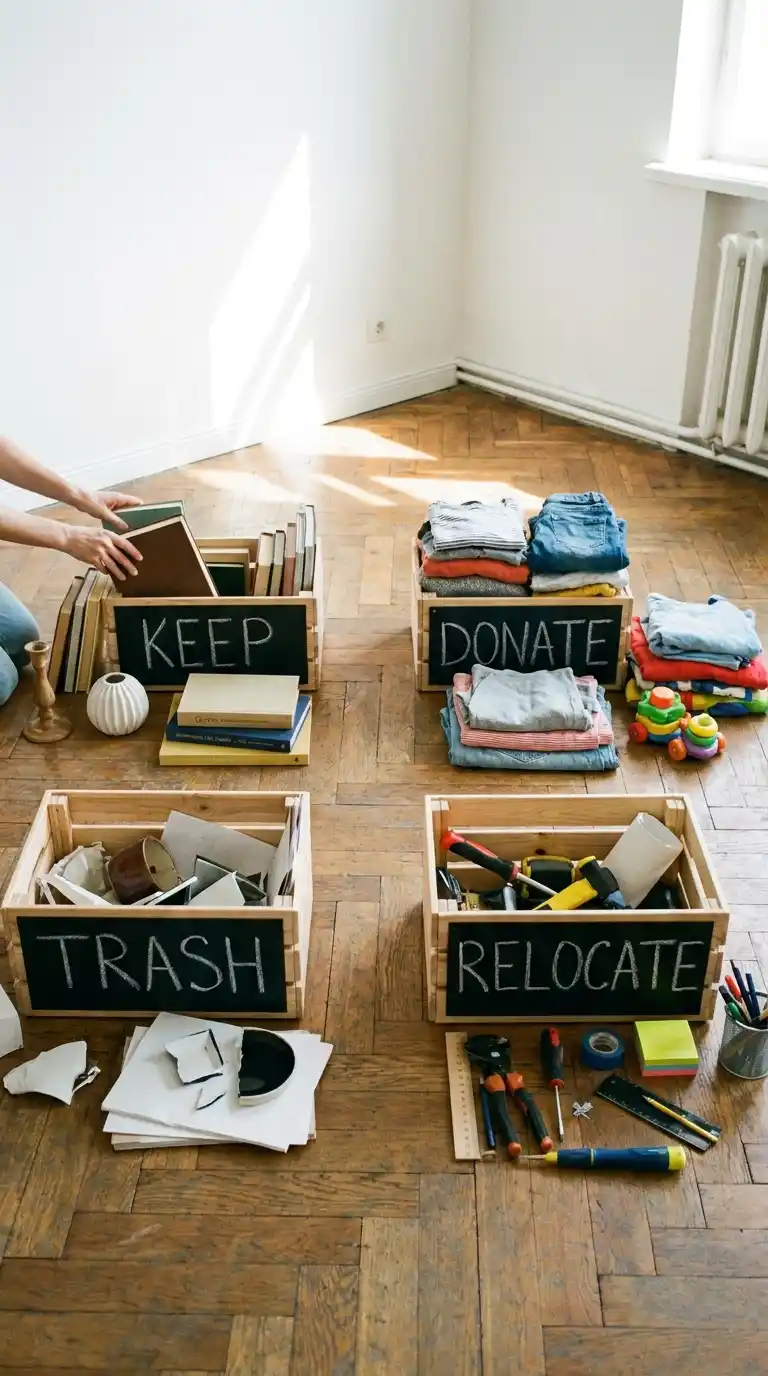
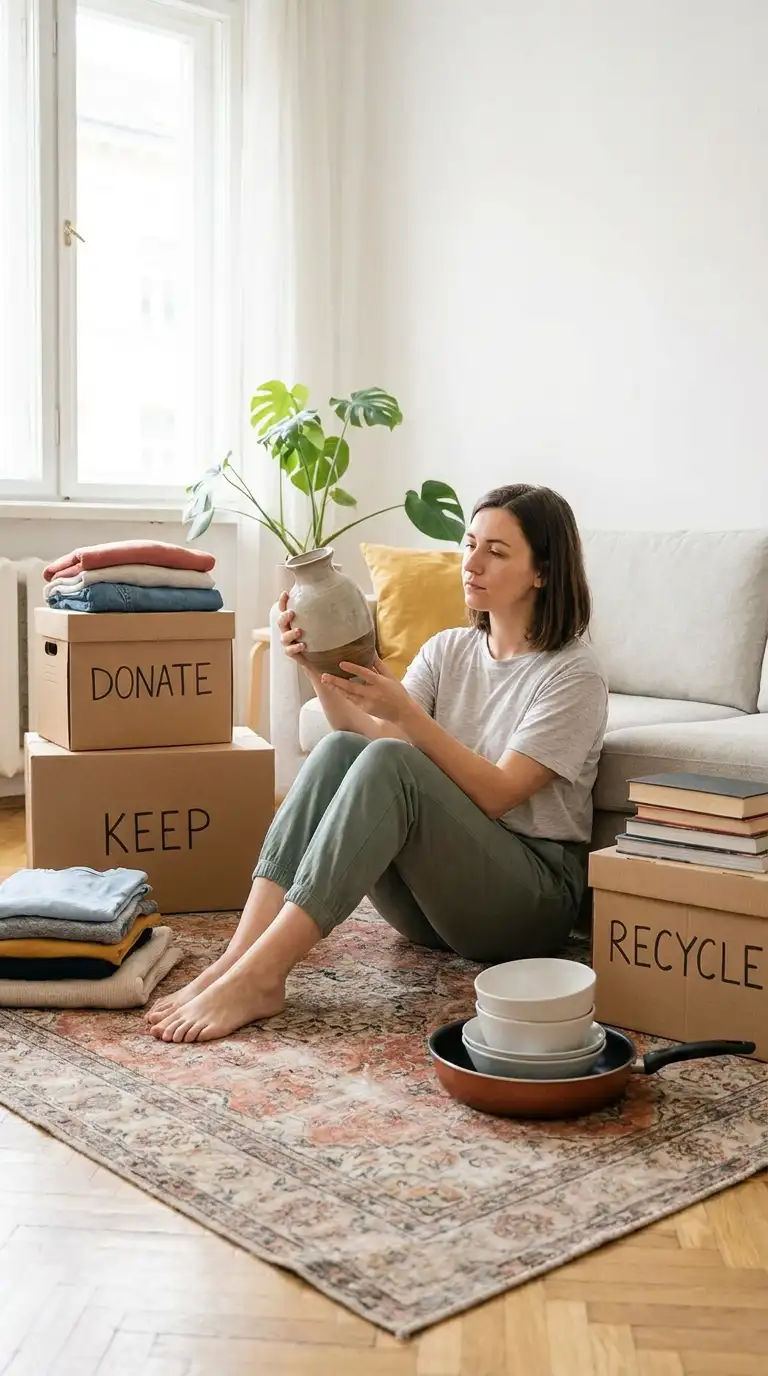
A practical tool that works really well for minimalist home organization is the four-box method. Get four boxes or bags and label them Keep, Donate, Trash, and Relocate. As you go through a space, every single item goes into one of these categories. Nothing gets put back without a decision being made.
The Relocate box is especially useful because it prevents you from getting distracted moving things to other rooms mid-session. You stay focused on the space you are working on. Once you are done, you deal with the Relocate box by finding proper homes for each item in their correct rooms.
Room by Room Versus Category by Category
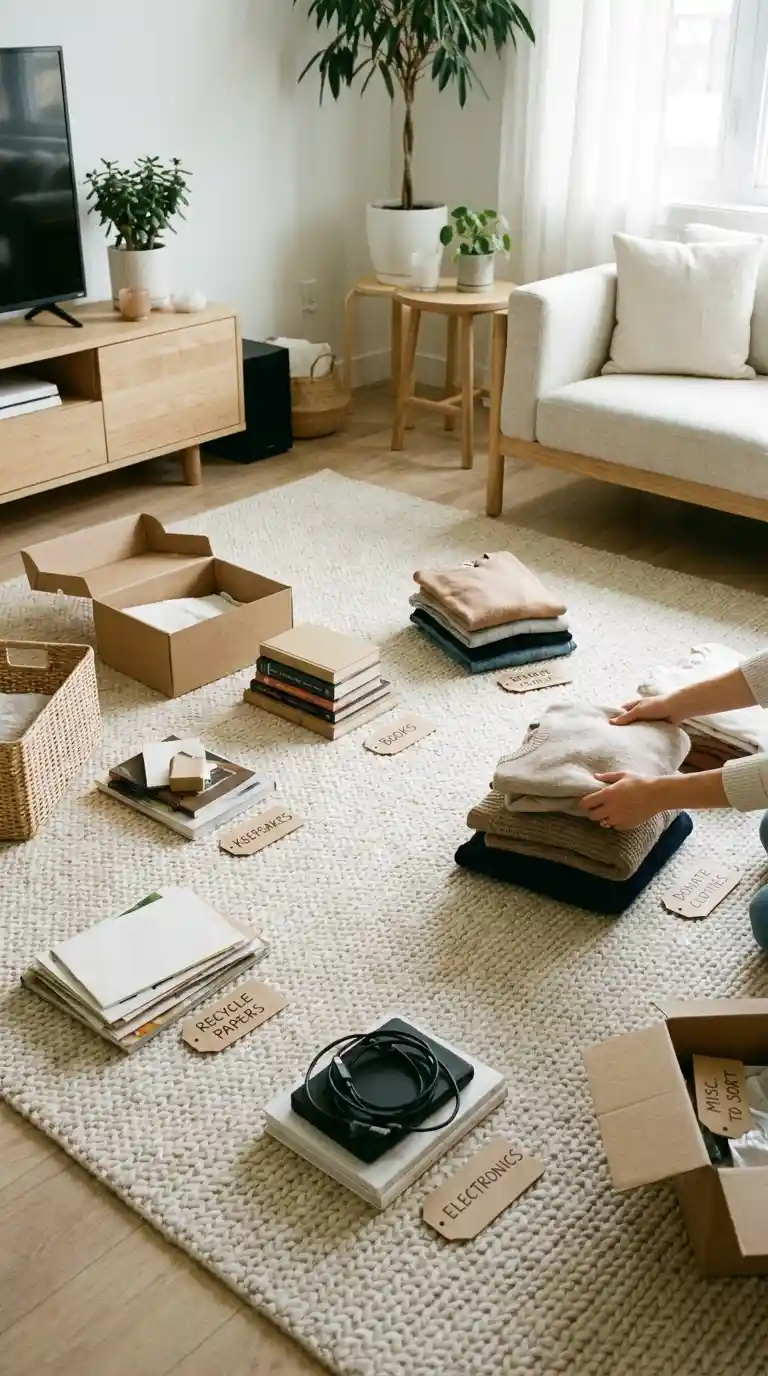
There are two main approaches to organizing your home: going room by room or going category by category. The room-by-room method is intuitive and works well for most people. You tackle the living room, then the bedroom, then the kitchen, and so on until the whole home is done.
The category-by-category method, popularized by organization expert Marie Kondo, involves gathering every item of the same type from all over your home before sorting through it. This approach reveals how much you actually own of a particular category and makes decisions easier. Either method can work beautifully for minimalist home organization. The best one is simply the one you will actually stick with.
Also Read : 27 Stunning Wall Mirror Decorating Ideas to Instantly Transform Your Home
Minimalist Home Organization Room by Room: The Complete Breakdown
Now let us get into the practical details. Below is a room-by-room guide to applying minimalist home organization in every area of your home. These are not just theoretical suggestions. These are strategies I have personally tried and refined over time.
The Kitchen: The Hardest Room to Organize Minimally
The kitchen is where minimalist home organization meets the most resistance. We accumulate gadgets, duplicates of tools, pantry items we never use, and cabinets full of things we have forgotten we own. A minimalist kitchen does not mean you can only have a pot and a pan. It means every item earns its place through regular, genuine use.
Start by pulling everything out of your cabinets and drawers. This is the only way to see what you actually have. Then sort ruthlessly. How many spatulas do you really need? Do you use that spiralizer you bought three years ago? Are there expired pantry items taking up shelf space? Keep only what you use consistently, then group similar items together and assign each group a logical home.
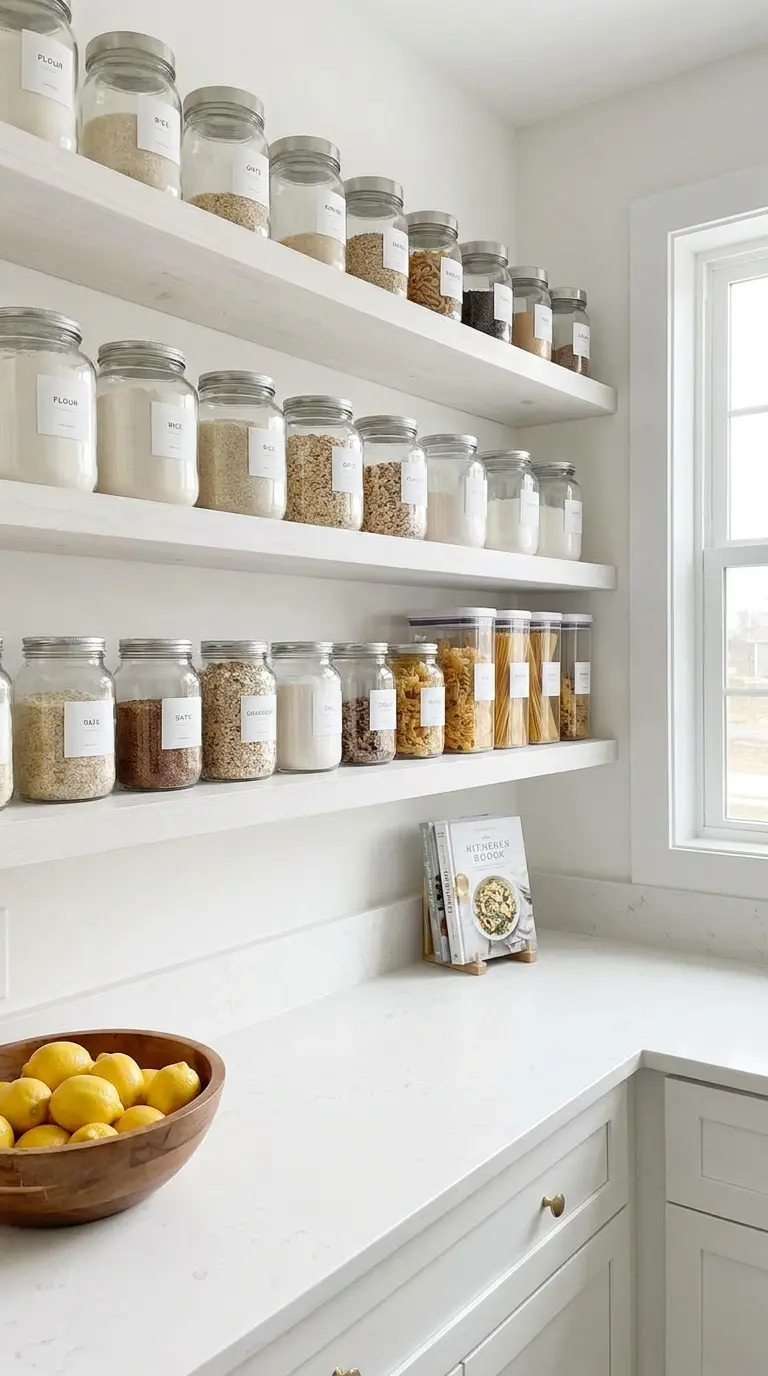
For minimalist pantry organization, clear containers are a game-changer. Transferring dry goods like pasta, rice, and cereals into matching glass or acrylic containers makes the pantry look clean and makes it easy to see when you are running low on something. Label each container clearly and line them up in a consistent row. This single change can make even a modest pantry look completely transformed.
The Bedroom: Creating a Peaceful, Clutter-Free Sanctuary
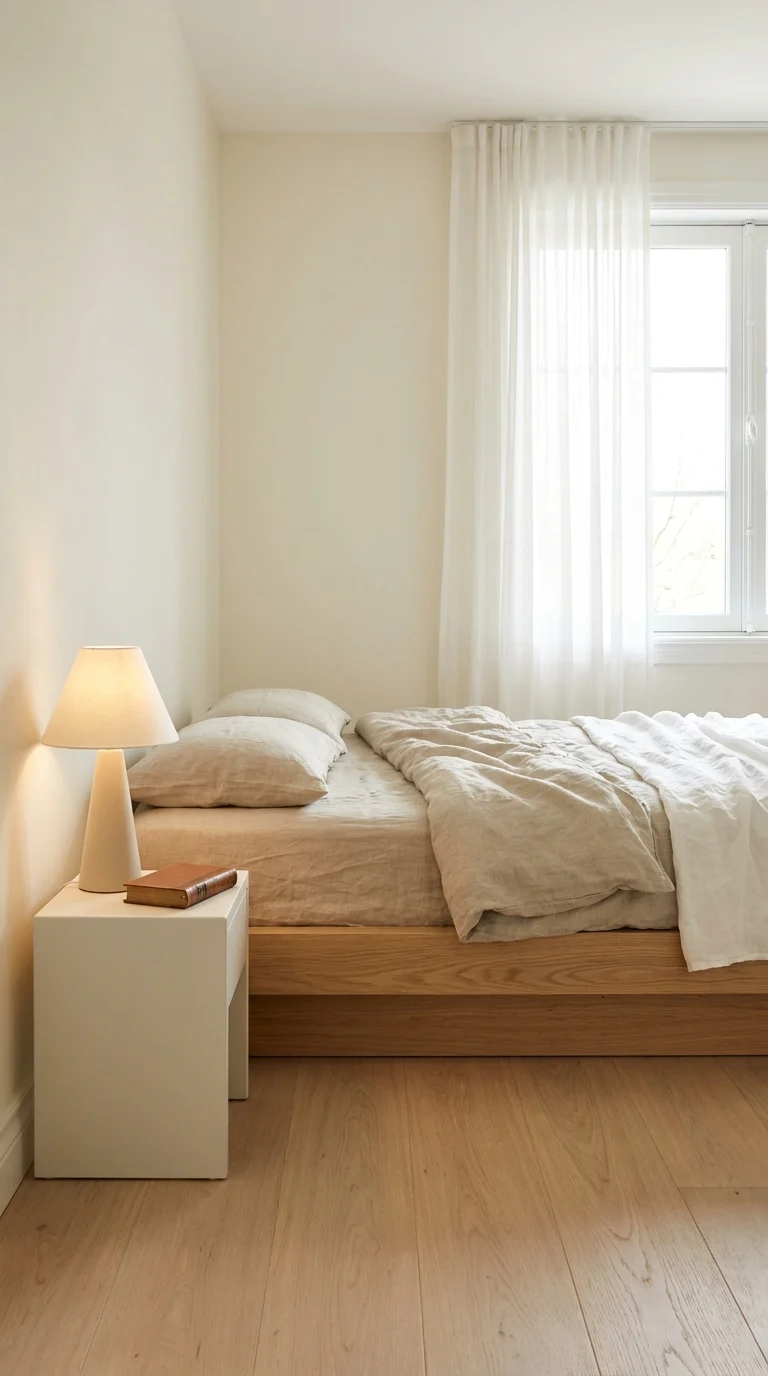
Your bedroom should be the most calm and clutter-free room in your home, because it is where you rest, recover, and start each day. Yet for many people, it becomes a dumping ground. Clothes pile up on chairs, surfaces collect random items, and the under-bed space becomes a mysterious storage zone.
Minimalist home organization in the bedroom starts with the closet. Reduce your wardrobe to pieces you genuinely wear and love. A capsule wardrobe approach, where every item coordinates with others, makes getting dressed simpler and keeps the closet manageable. Hang clothes with all hangers facing the same direction so you can easily see what you reach for and what has been hanging untouched for months.
The nightstand is another key area. Limit yourself to only what you actually use at bedtime: maybe a book, a lamp, and your phone charger. Nothing else needs to live there. Keeping surfaces clear in the bedroom dramatically changes the energy of the space and makes it easier to wind down at night.
The Living Room: Functional Minimalism for Everyday Life
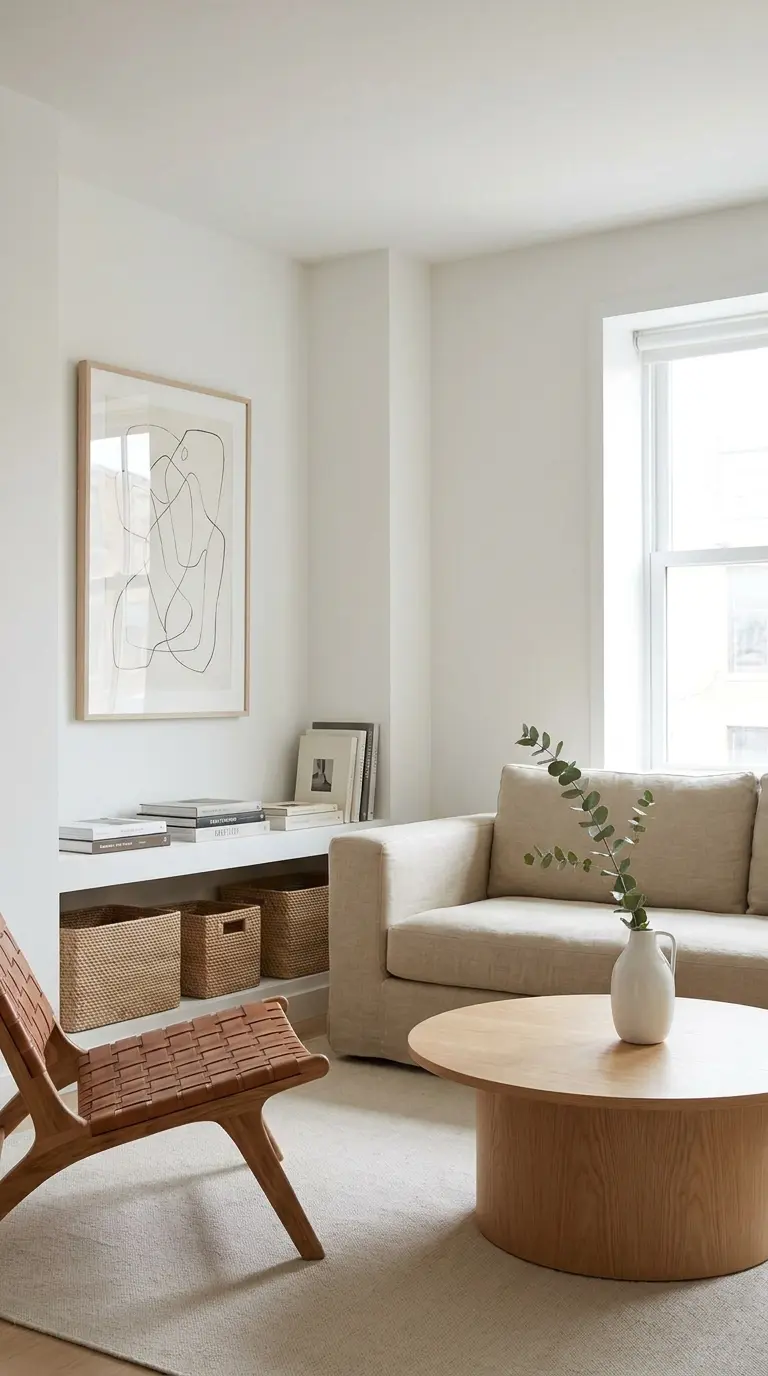
The living room is the heart of the home and often the first place guests see, which is why getting the minimalist home organization right here matters so much. The key is to choose furniture with intention and eliminate decorative items that do not serve a purpose or tell a story about who you are.
One of the most effective strategies for minimalist living room organization is to use furniture that doubles as storage. An ottoman with a hidden compartment, a coffee table with drawers, or a media console with closed cabinet doors can hold the everyday items you need without leaving them on display. The goal is to have clear surfaces as the default state.
For media and cables, which are often the biggest source of visual chaos in a living room, invest in a cable management system or box. Gather all cords, run them through a simple organizer, and hide the power strip behind the TV console. This single change eliminates a huge amount of visual noise and makes the room feel significantly more polished.
The Bathroom: Small Space Big Organization Impact
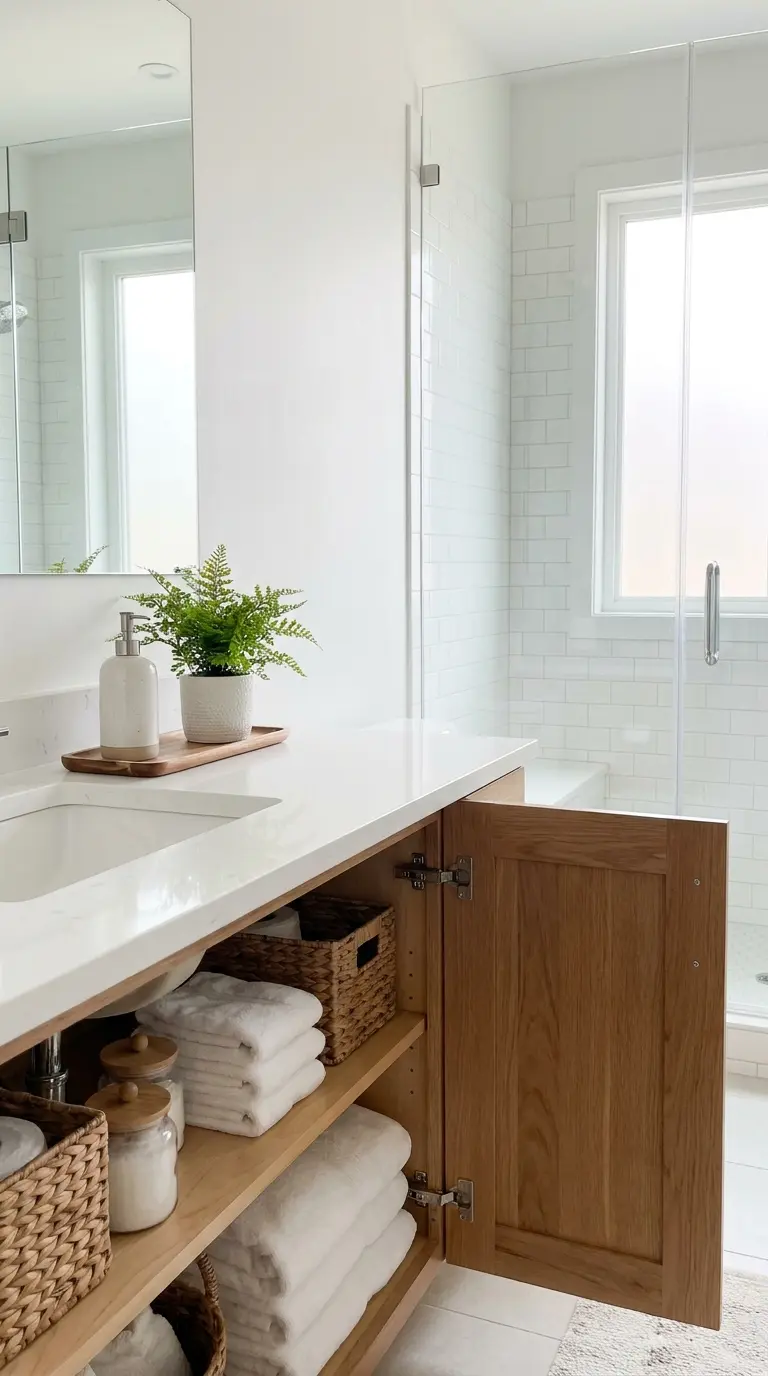
Bathrooms tend to collect an enormous amount of product, and because the space is usually small, clutter in the bathroom becomes overwhelming quickly. Minimalist home organization in the bathroom is one of the fastest areas to see dramatic results because the scale is manageable.
Start by removing everything from the counters, cabinets, and shower. Look at what you actually have. Most people discover expired products, duplicates, and items they forgot they owned. Throw away anything expired or empty and donate unopened products you do not intend to use. Then, put back only what you use regularly.
Under the sink is often wasted space. Use small baskets or a simple two-tier organizer to maximize the vertical space and group similar products together: hair care in one spot, cleaning supplies in another, first aid in a separate section. Keeping the counter completely clear except for the most used daily items makes a small bathroom feel significantly larger and cleaner.
The Home Office: Minimalism for Maximum Focus
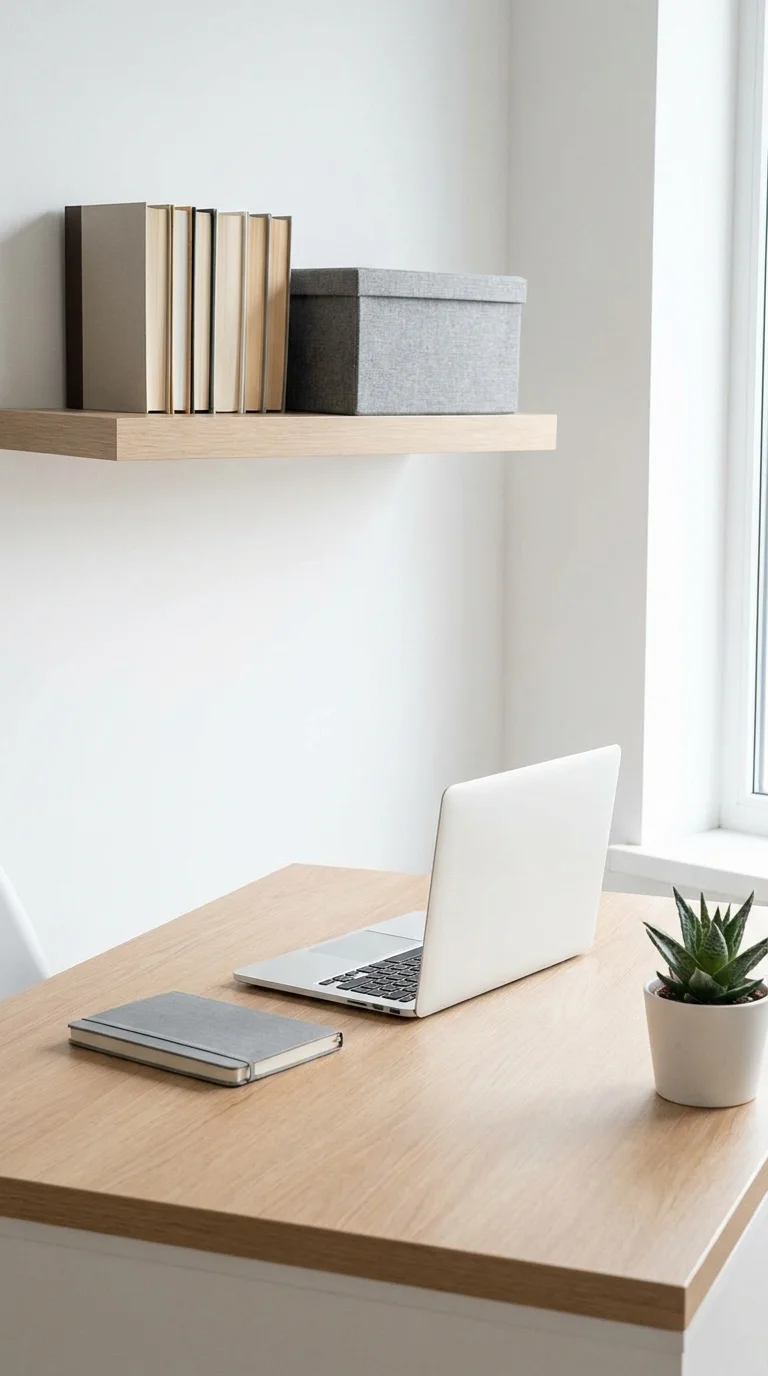
A cluttered workspace kills productivity. If you work from home, your office setup has a direct effect on your focus and output. Minimalist home organization in the home office is really about creating an environment that supports deep work and eliminates distraction.
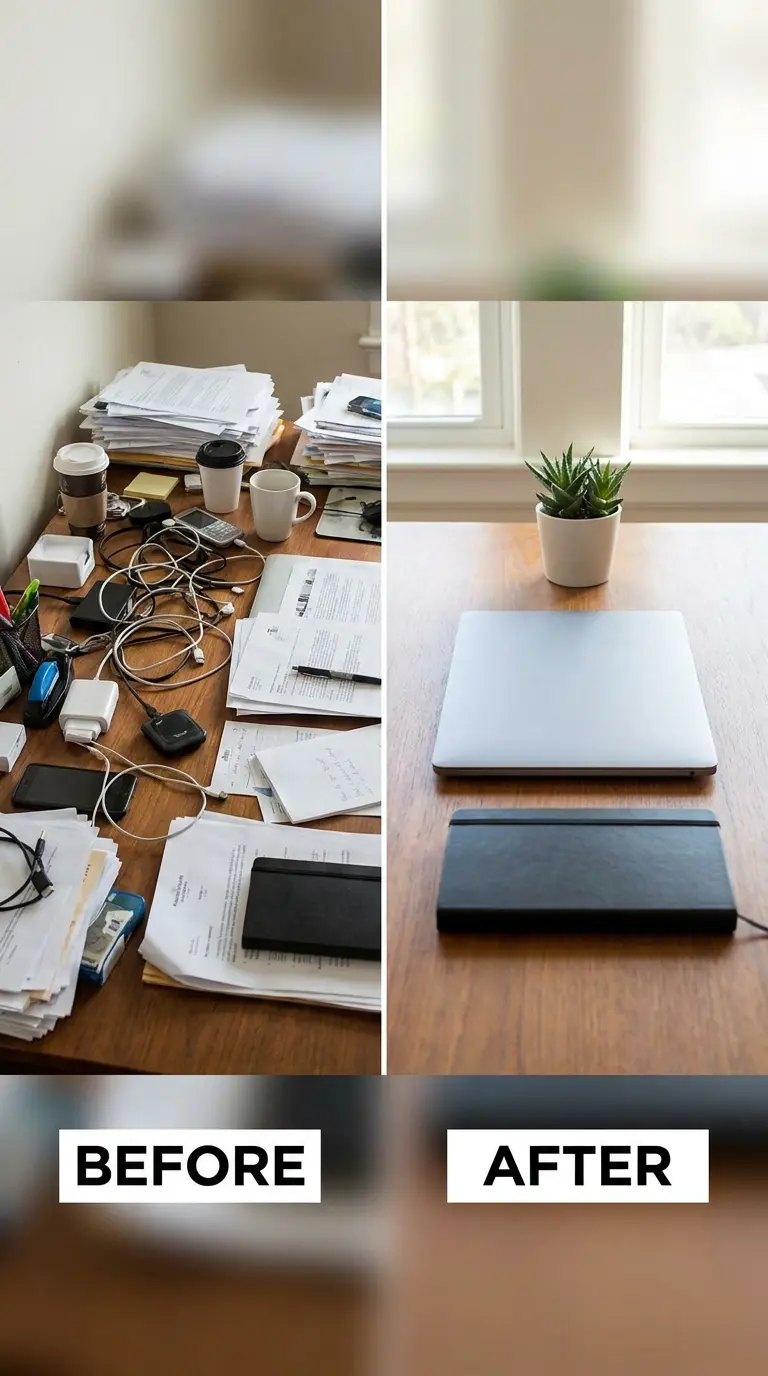
Keep your desk surface as clear as possible. The only things that should live on your desk are the items you use every single day: your laptop or monitor, a notepad, a pen, and maybe a small plant if that helps you feel grounded. Everything else should be stored out of sight in drawers or a nearby shelf.
For paper management, which is one of the biggest clutter sources in any office, go as digital as possible. Scan documents and file them digitally. Use a simple inbox tray for items that need action today and deal with everything else immediately. The pile system, where papers just accumulate on the desk, is the enemy of minimalist home organization in any workspace.
Smart Storage Solutions That Support Minimalist Home Organization
One of the most common misconceptions about minimalist home organization is that you need to get rid of almost everything you own. In reality, smart storage plays a huge role. The difference between a cluttered home and an organized one is often not the amount of stuff but how it is stored and whether it is visible or hidden.
Vertical Space Is Your Best Friend
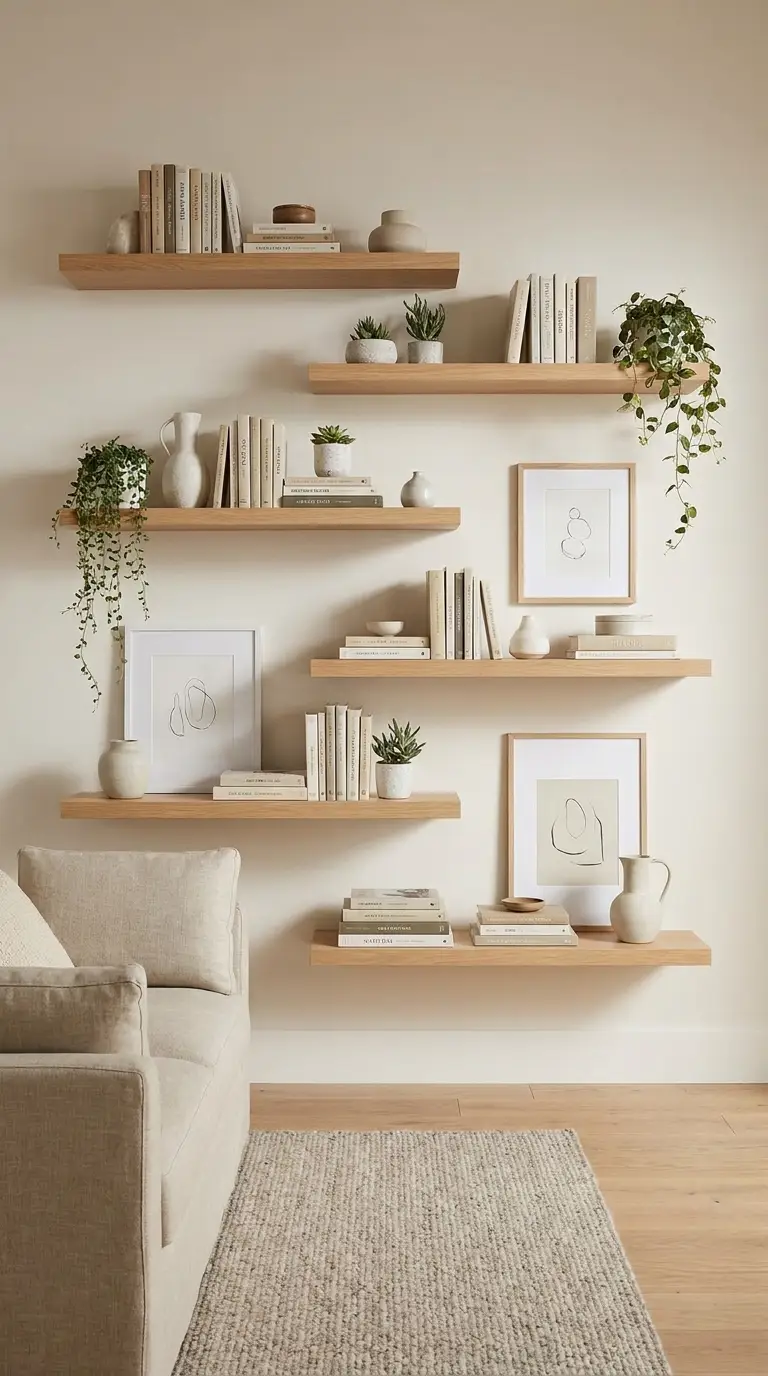
Most people use only the first few feet of their wall space and ignore the vertical potential of a room. Installing floating shelves up to ceiling height, using tall bookshelves, or adding hooks higher on walls takes advantage of space that would otherwise go completely unused. Minimalist home organization is as much about thinking creatively about where things go as it is about reducing what you own.
In kitchens, install a pegboard on the wall for hanging pots, pans, and utensils. In bathrooms, use a tall ladder shelf to store towels and toiletries vertically. In bedrooms, utilize the full height of the closet by adding a second hanging rod or extra shelves above the existing ones. Vertical storage dramatically increases capacity without requiring more floor space.
Also Read : 50 Gorgeous Handmade Wall Decor Ideas That Will Transform Your Walls Into Works of Art
The Power of Baskets, Bins, and Boxes
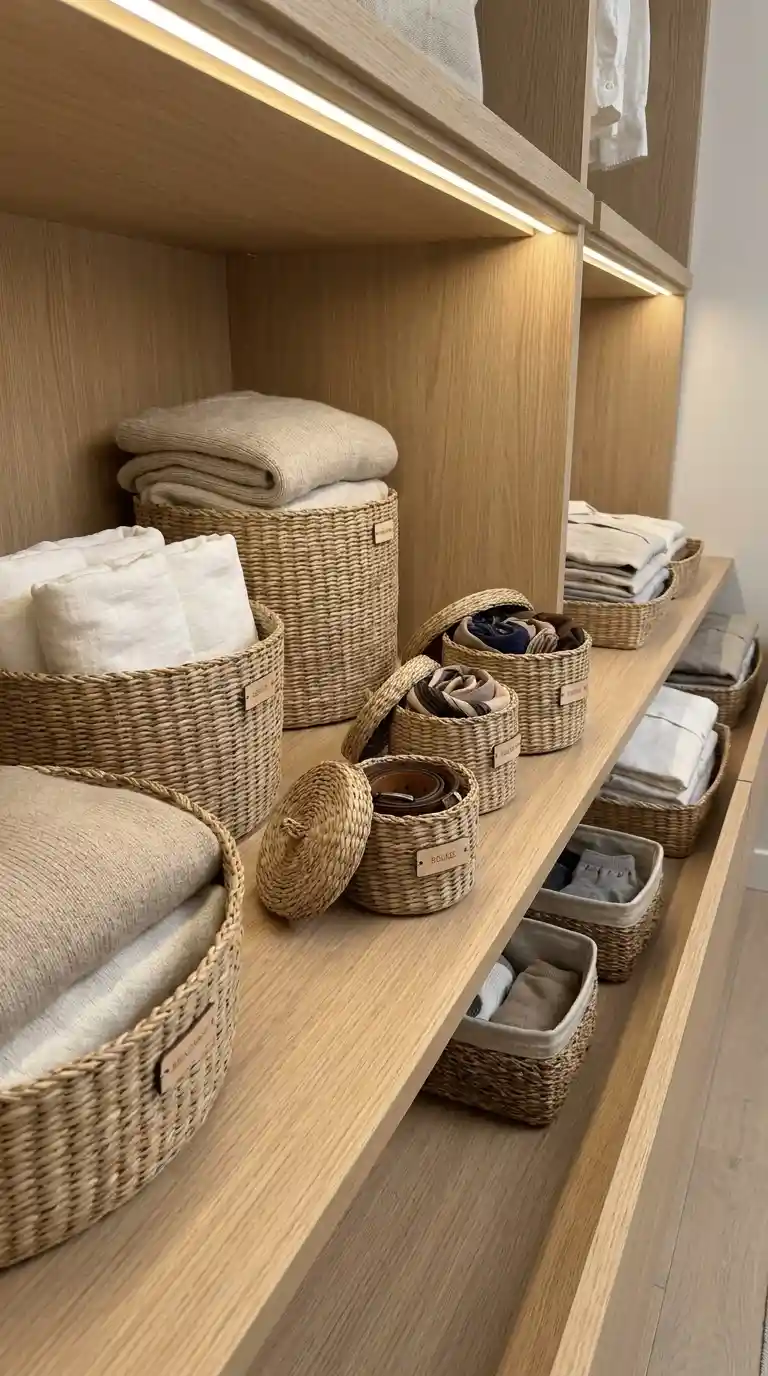
Containers are the backbone of minimalist home organization because they create structure where there would otherwise be chaos. A basket for throw blankets in the living room, bins for snacks in the pantry, and boxes for seasonal items in the closet all work on the same principle: group similar items together and give the group a defined home.
The visual consistency of matching containers makes a space feel calmer and more intentional. When everything is in a similar style of basket or bin, the storage itself becomes part of the aesthetic rather than a source of visual clutter. Choose containers that fit the style of your home and commit to using them consistently throughout each space.
Hidden Storage Furniture
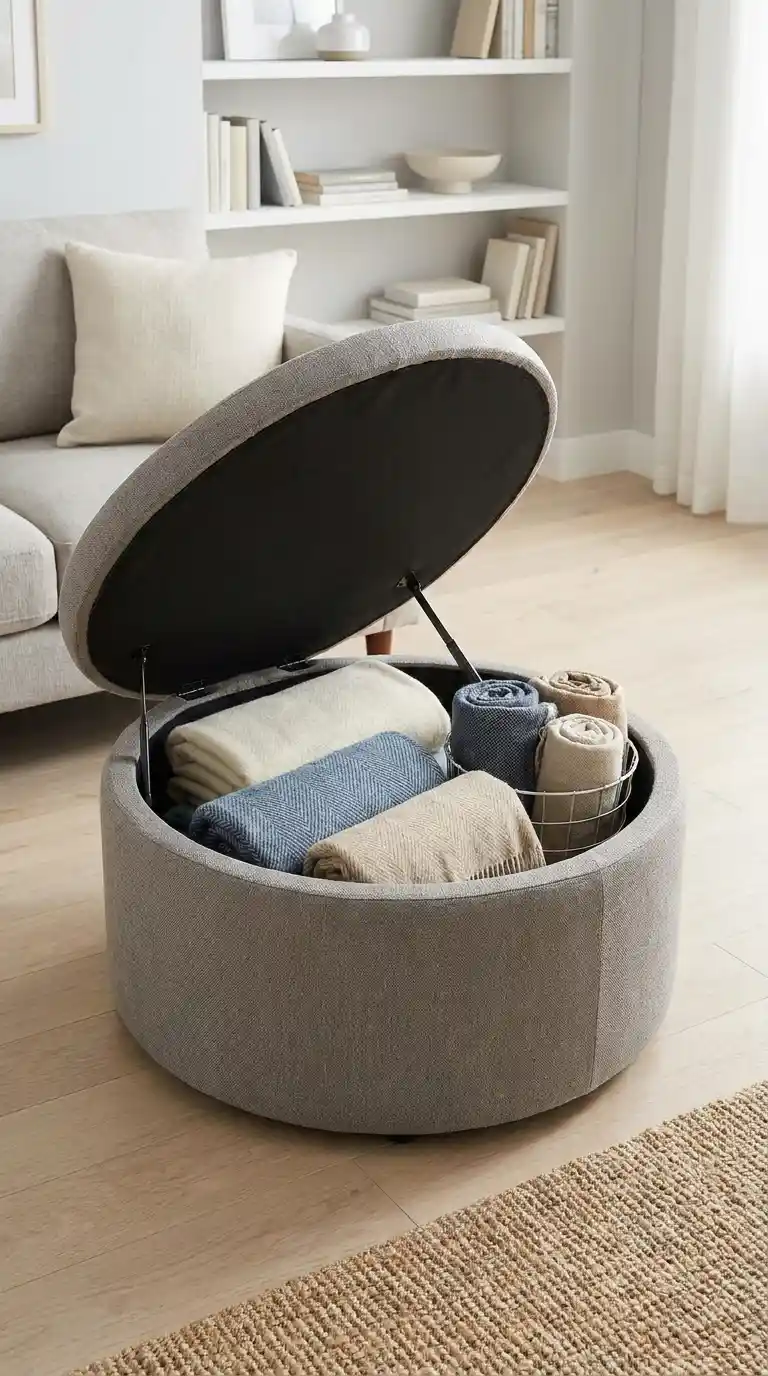
In smaller homes especially, furniture that doubles as storage is one of the smartest investments you can make for minimalist home organization. An upholstered bed frame with deep drawers underneath, a window seat with a hinged top for storage, and a hallway bench with a compartment inside all serve a decorative and practical purpose simultaneously.
When you shop for new furniture, make it a habit to ask: does this piece do double duty? Could it hold something while also looking beautiful? Choosing these kinds of pieces reduces the need for additional storage units, which ultimately means less furniture and a cleaner, more minimalist feel.
Minimalist Home Organization on a Budget: You Do Not Need to Buy More to Organize Better
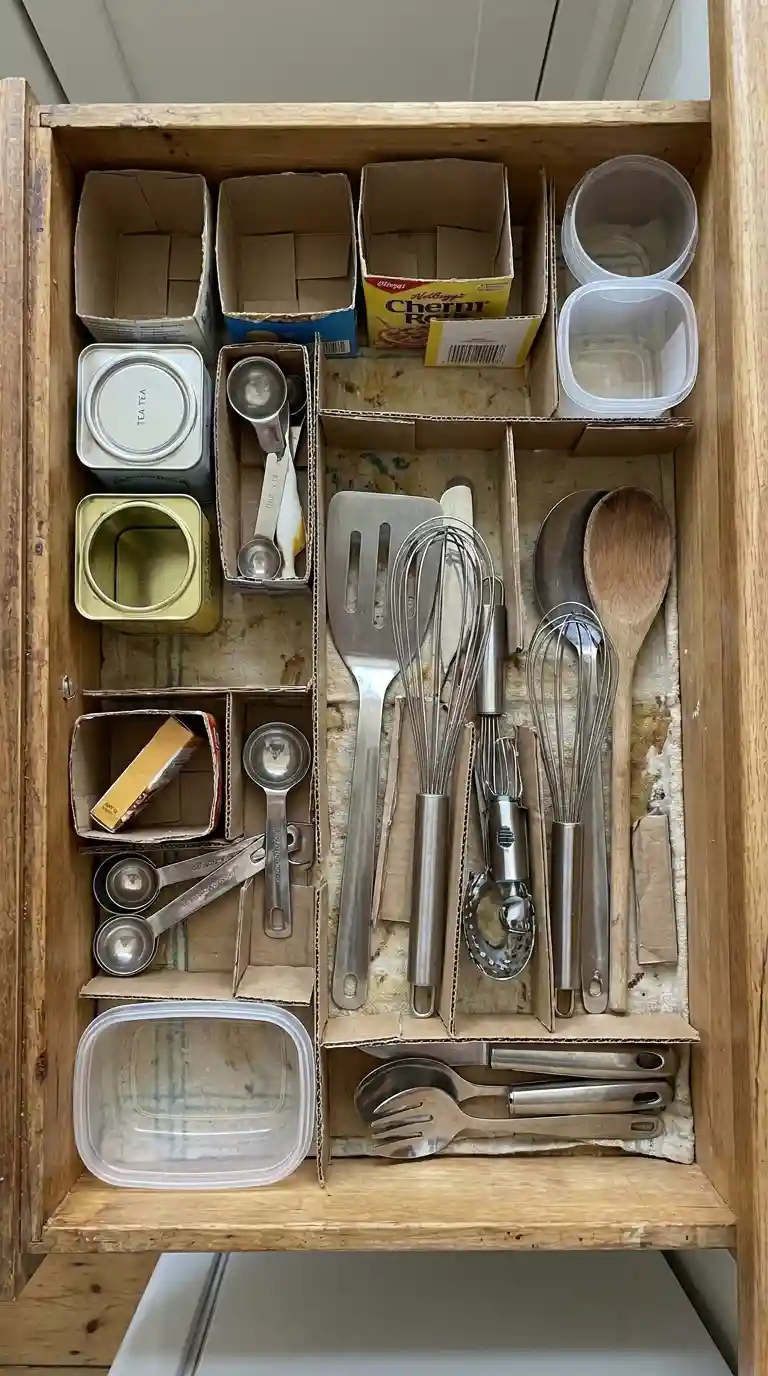
Here is something the home organization industry does not want you to hear: you do not need to buy expensive storage products to organize your home. In fact, buying a bunch of new storage bins and containers before you have decluttered is one of the most common mistakes people make. You end up with organized clutter, which is still clutter.
The first and most important step in minimalist home organization costs nothing at all: getting rid of what you do not need. Once you have genuinely reduced your belongings, you will often find you already have more than enough containers, boxes, and storage solutions at home. Shoeboxes lined up in the closet, glass jars in the kitchen, and magazine holders repurposed for document storage all work beautifully.
When you do need to purchase items, start with the basics and buy quality over quantity. A set of uniform hangers, a few good baskets, and some drawer dividers will take you further than a cart full of cheap, mismatched organizers. Thrift stores and discount shops can be excellent sources for glass containers, baskets, and shelving units that work just as well as anything you would buy new.
Also Read : Brilliant Small Hallway Ideas That Make Every Inch Count and Every Guest Stop to Look
Minimalist Home Organization for Families: Making It Work When You Have Kids
When I share my love of minimalist home organization with parents, the most common response I get is something like that sounds amazing but I have kids so it is completely impossible. And I understand that reaction. Kids come with a lot of stuff: toys, art supplies, sports equipment, school papers, and a seemingly endless stream of things that multiply overnight.
But minimalist home organization is actually even more beneficial for families because a calmer, cleaner environment helps children focus, play more creatively, and feel less overwhelmed. Research in early childhood development shows that children play more deeply and imaginatively when they have fewer toys available at once rather than an overwhelming selection.
Toy Rotation: The Game Changer for Minimalist Family Homes
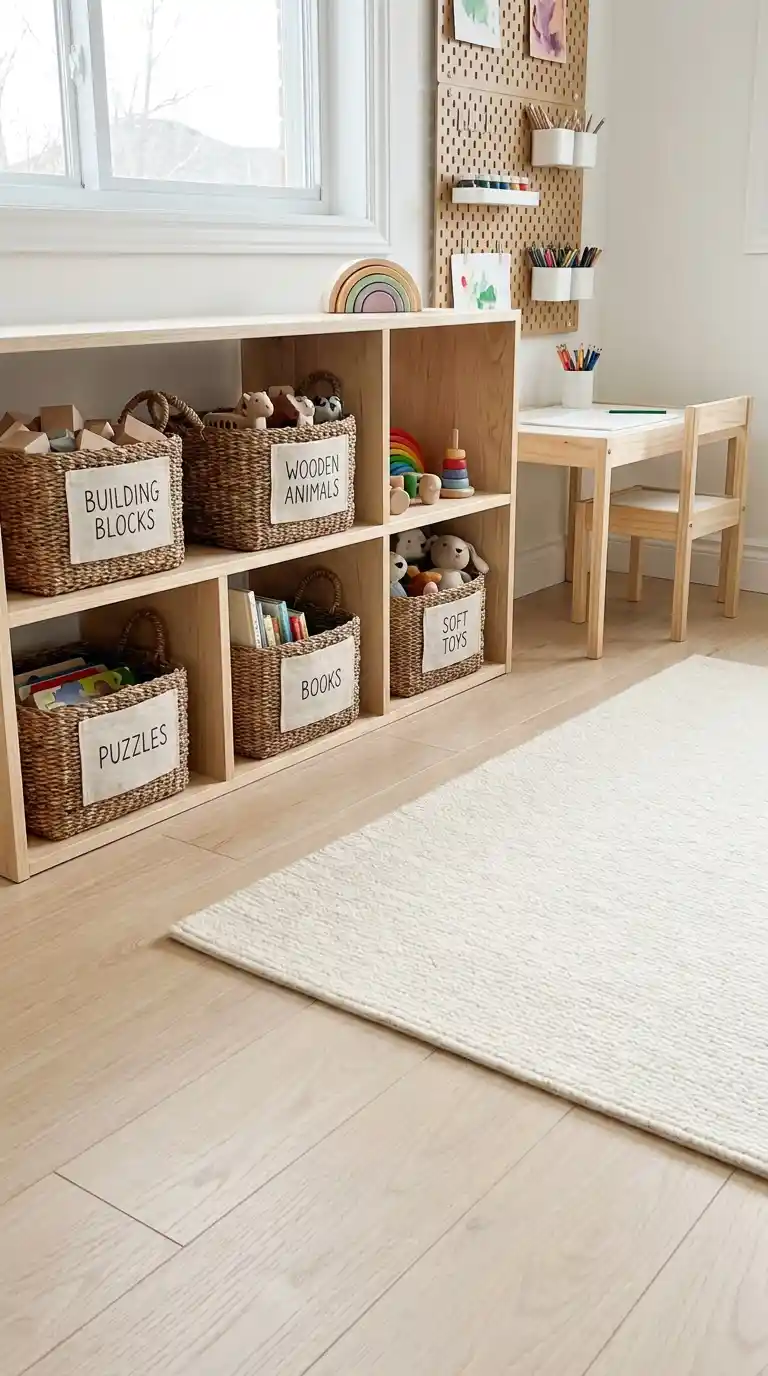
Toy rotation is one of the most effective strategies for maintaining minimalist home organization when you have young children. Instead of having all toys available at all times, you keep a portion of toys in rotation and store the rest out of sight. Every few weeks, you swap them out. Children experience the stored toys as almost new when they reappear, which extends the life of toys and keeps interest high.
For the toys that are in rotation, use a simple system: a low shelf or a few labeled bins that children can access and clean up independently. Teaching children to put things away is easier when the system is simple and the expectations are clear. Fewer toys in a space that is easy to tidy means that clean-up time actually happens, which makes a real difference in maintaining minimalist home organization day to day.
Command Center for the Family Chaos
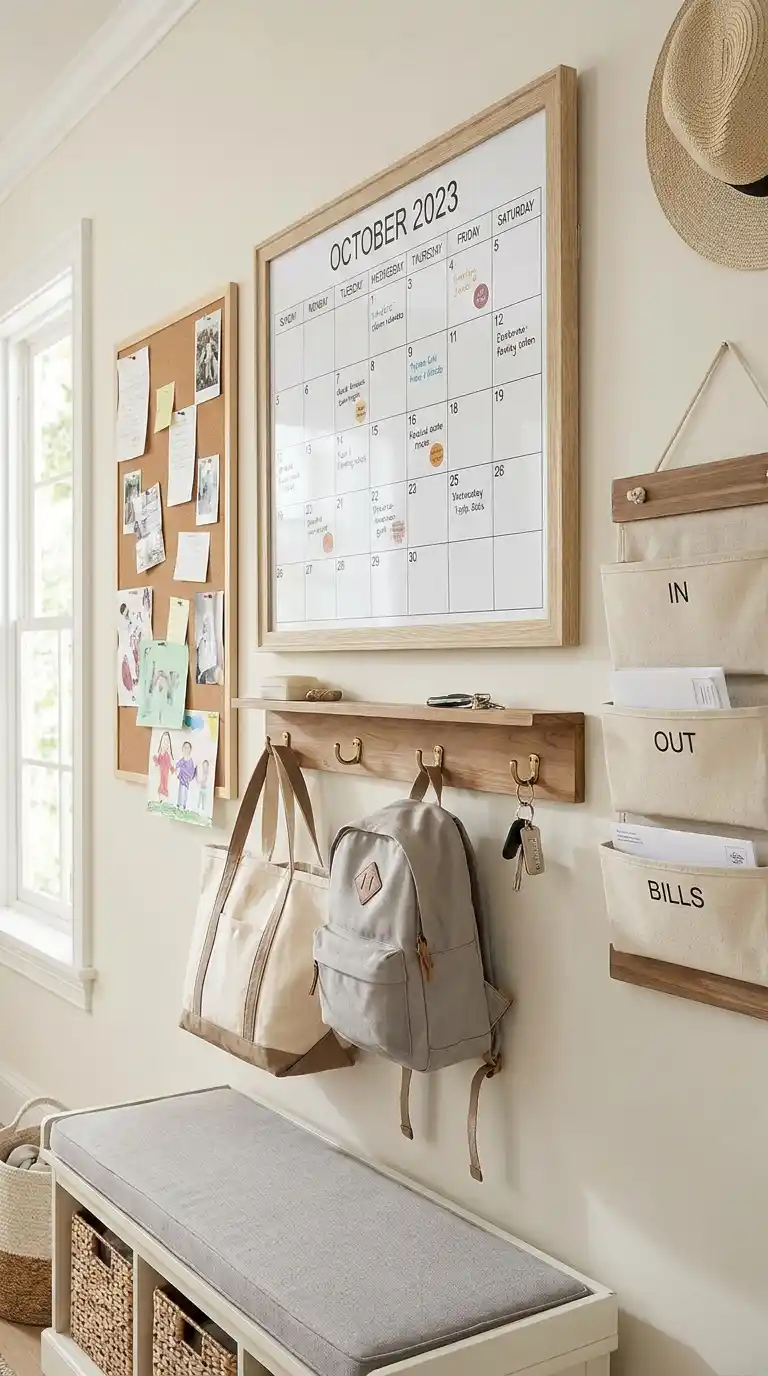
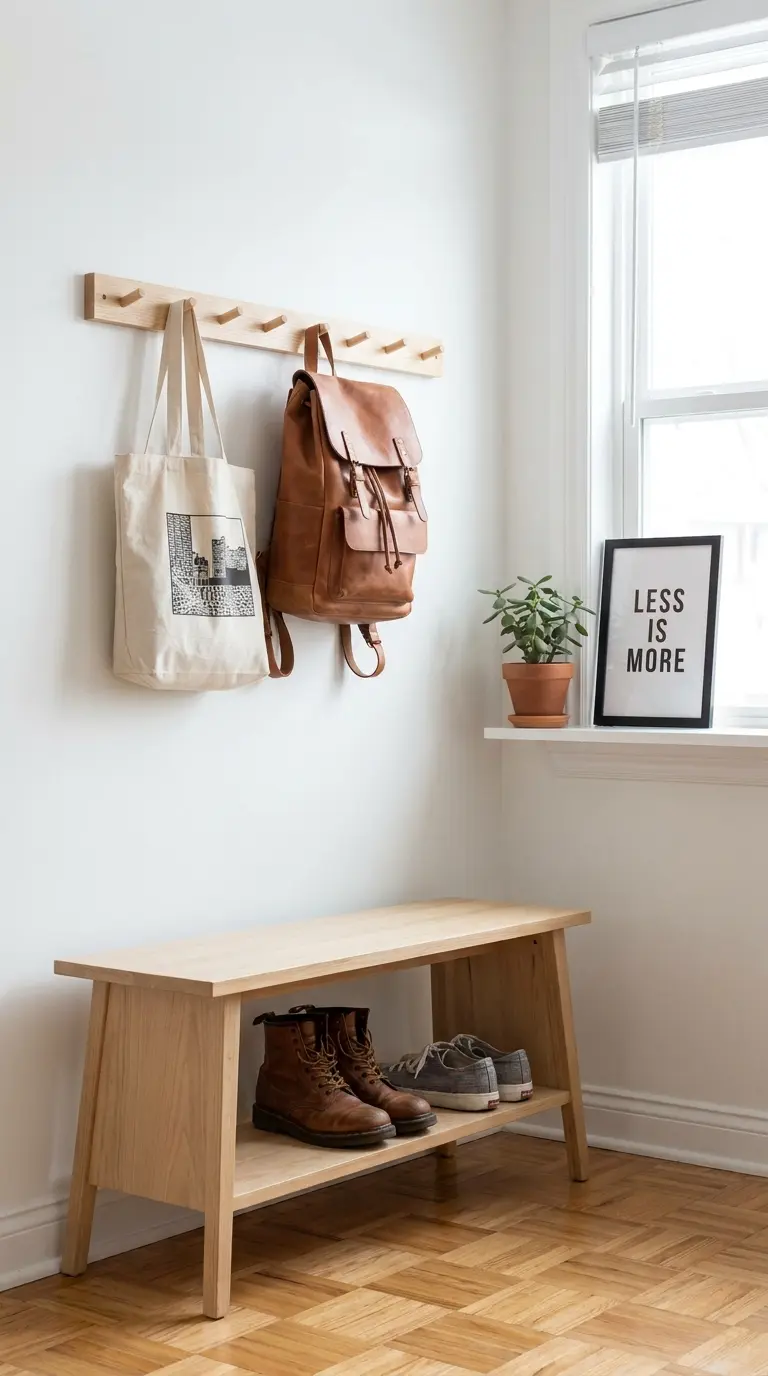
One area that helps families maintain minimalist home organization is creating a dedicated command center, usually near the entryway or kitchen. This is a designated zone where all the family logistics live: a calendar, a mail slot, a hook system for bags and keys, and a small whiteboard for reminders and grocery lists.
Without a command center, these items spread out across every surface in the house. Mail ends up on the kitchen counter, permission slips get lost in school bags, and keys end up on a different surface every day. Centralizing all of this administrative life into one organized spot keeps the rest of the house clear and keeps the family coordinated without the usual chaos.
Maintaining Minimalist Home Organization Long Term: Habits That Actually Stick
Getting organized is one thing. Staying organized is another challenge entirely, and it is where most people eventually fall back into old patterns. The secret to maintaining minimalist home organization long term is not willpower or motivation. It is building systems and habits that make the tidy state the path of least resistance.
The Daily Reset Habit
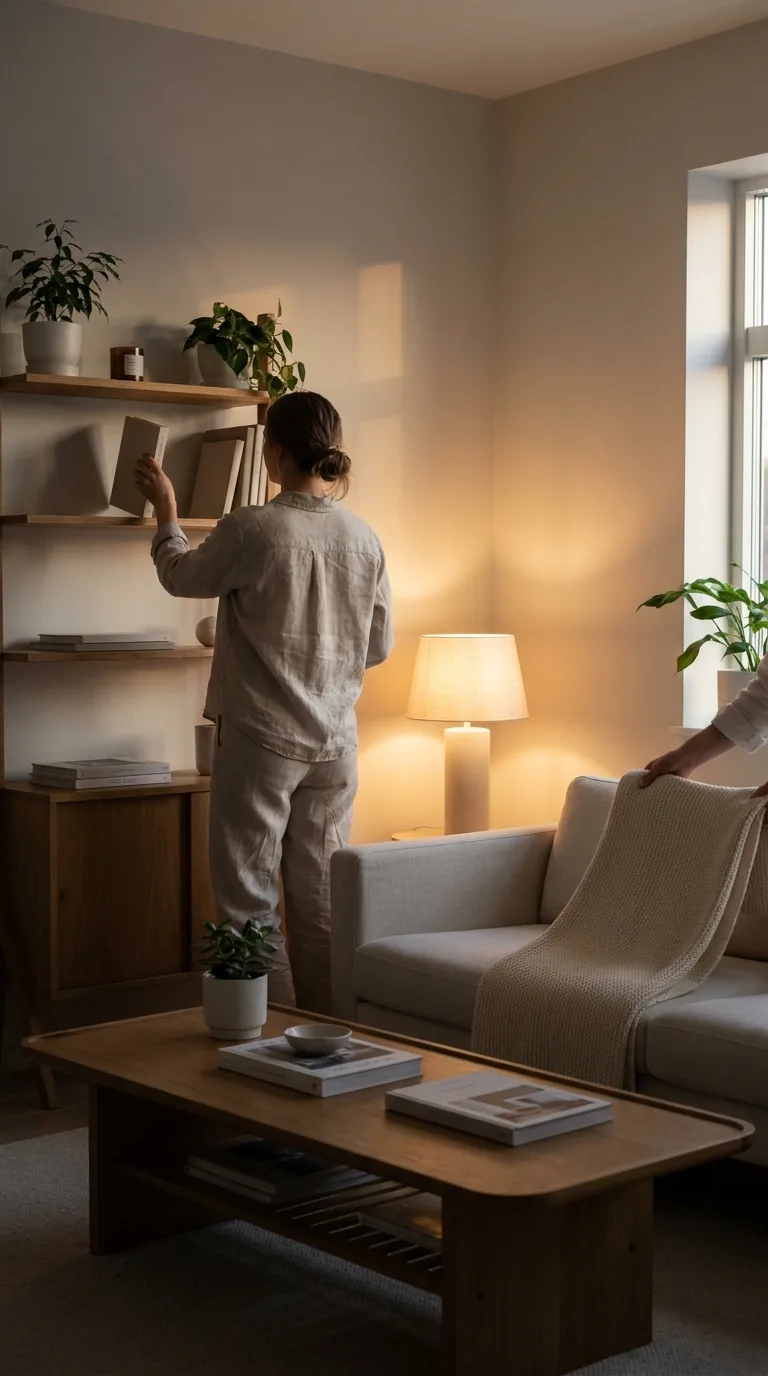
One of the most powerful habits you can build for minimalist home organization is the daily reset. This is a ten to fifteen minute routine, usually done in the evening before bed or first thing in the morning, where you do a quick pass through your home returning things to their proper places.
The daily reset is effective precisely because it stops clutter from accumulating. If you deal with five displaced items each evening, you never reach the point where the mess feels overwhelming. You maintain the organized state with minimal effort rather than requiring a major clean-up session every few weeks. It becomes a small, manageable ritual rather than a dreaded chore.
Also Read : The Ultimate Guide to Bookshelf Styling: Expert Tricks That Make Any Shelf Look Like a Magazine Spread
Seasonal Decluttering Sessions
Even with the best systems in place, things accumulate over time. Gifts arrive, we make purchases, and life brings new items into our homes. To keep minimalist home organization sustainable, schedule a seasonal declutter: once every three months, go through each room and evaluate whether the current contents still make sense.
These seasonal sessions do not need to be long or exhaustive. Even a thirty-minute walk through the house with a donate box can make a meaningful difference. The goal is to prevent the slow drift back toward clutter that happens when we stop paying attention to what is coming in versus what is going out.
Shopping Intentionally
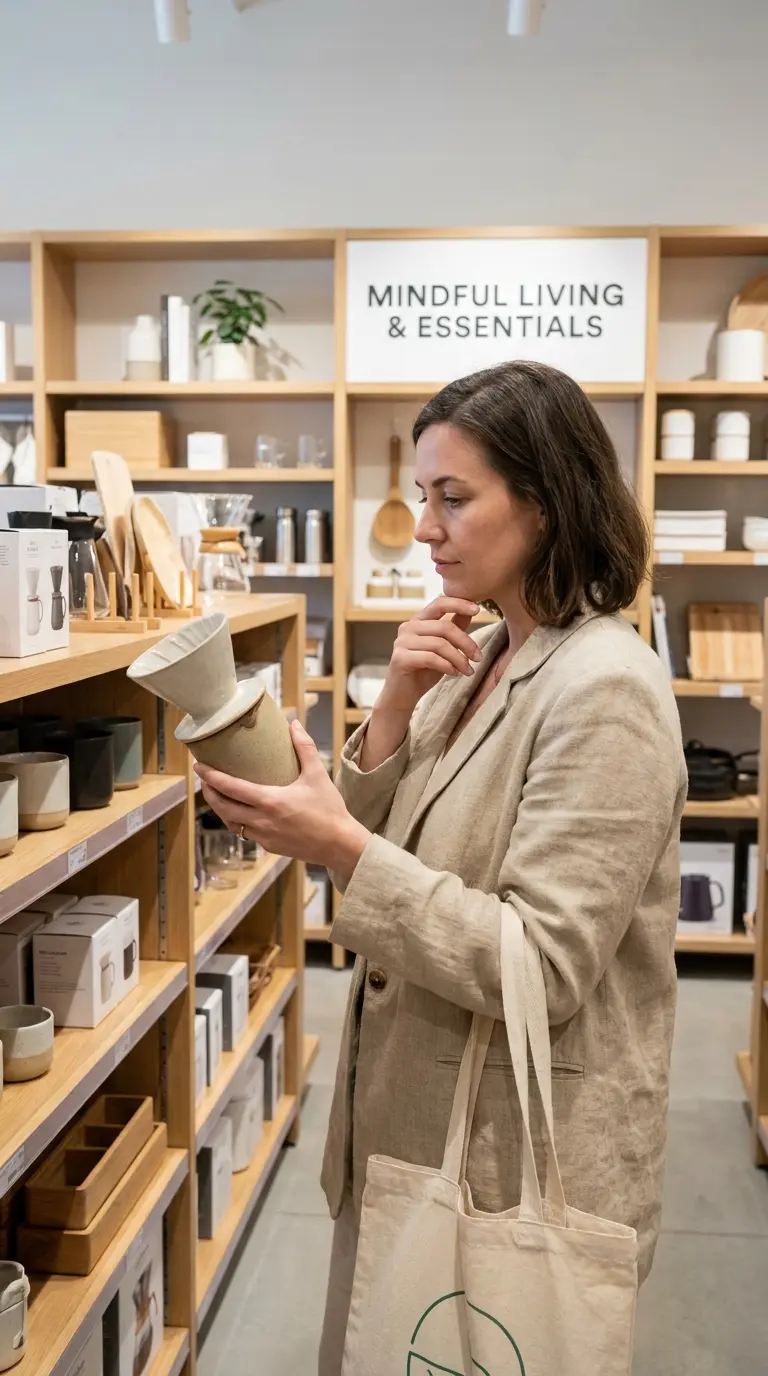
Perhaps the most underrated element of minimalist home organization is what happens before items even enter your home. Shopping with intention, meaning buying only what you have specifically decided you need, is how you prevent clutter from accumulating in the first place.
Before buying anything new, ask yourself three questions: Do I have a specific need for this? Do I have space for this? Do I already have something that does the same job? If the answer to any of these is unclear, wait. Give yourself a day or a week. If you still want or need it after that waiting period, then it is likely a genuine addition to your home rather than an impulse buy that will eventually become clutter.
The Mental Health Benefits of Minimalist Home Organization
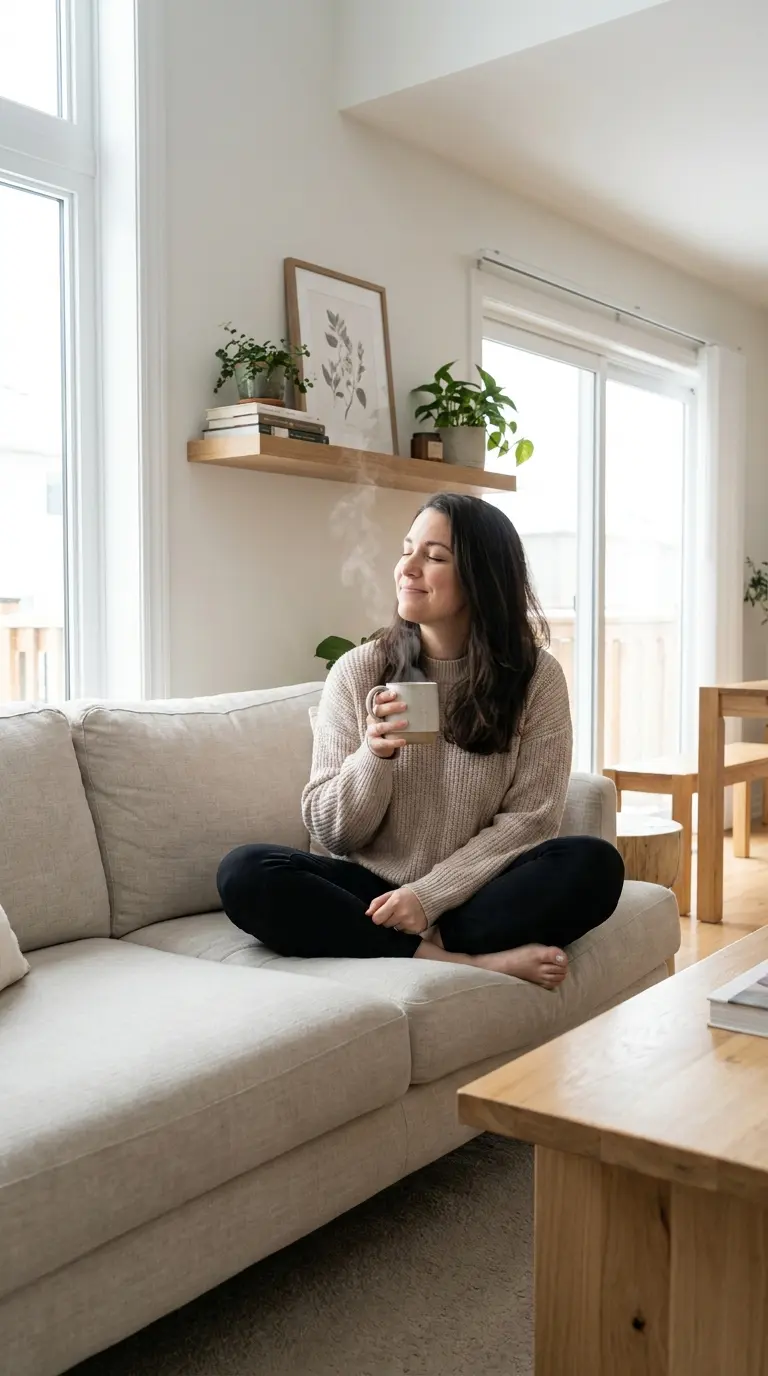
I have touched on this throughout the article, but it deserves its own dedicated section because the mental health connection is genuinely one of the most compelling reasons to pursue minimalist home organization. The relationship between our environment and our mental state is deeper than most people realize.
Multiple studies have shown that people who describe their homes as cluttered or disorganized have higher levels of the stress hormone cortisol throughout the day. They report lower levels of life satisfaction, feel less capable of relaxing at home, and have more difficulty with focus and decision-making. In contrast, people who describe their homes as restful and organized feel more in control of their lives and report higher overall wellbeing.
Minimalist home organization creates what psychologists call an organized external environment that mirrors and supports an organized internal state. When your surroundings are calm and clear, your thoughts tend to follow. Many people who take on a serious minimalist home organization project report that it creates a ripple effect into other areas of their life, from feeling more productive at work to feeling more present in their relationships.
Common Mistakes to Avoid When Practicing Minimalist Home Organization
After going through this process myself and helping others do the same, I have noticed several patterns in where people go wrong. Avoiding these common mistakes will save you a lot of frustration and keep your minimalist home organization efforts from unraveling.
Organizing Before Decluttering
This is by far the most common mistake. People buy a bunch of storage solutions and start putting things in bins and on shelves before they have decided what to keep. The result is an organized collection of things they do not actually need or use. Minimalist home organization always starts with reducing. Organize what remains, not everything you currently have.
Creating Systems Too Complicated to Maintain
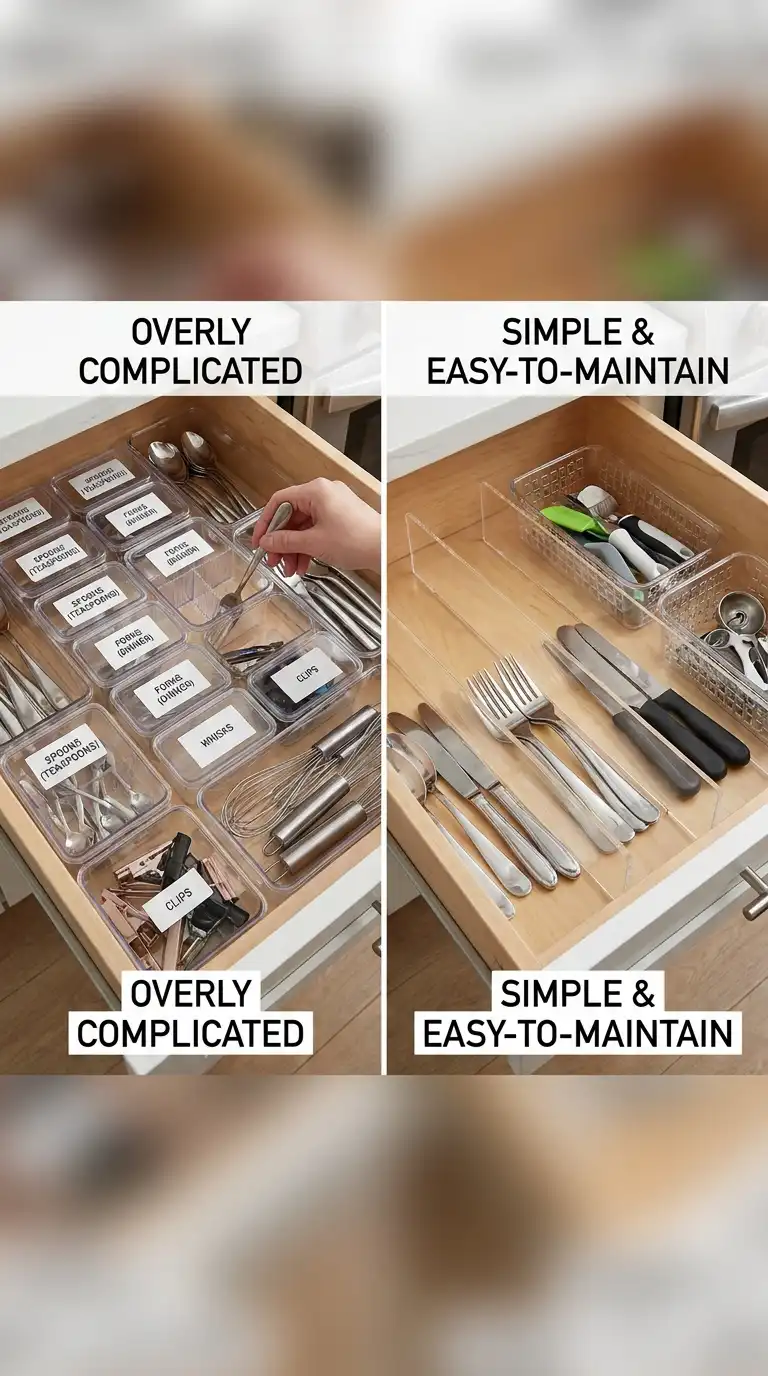
Some people take minimalist home organization to an extreme where every item has a highly specific, complex place that takes significant effort to maintain. The system becomes so detailed that it collapses under the weight of everyday life. Good organization systems should be simple enough that a tired, distracted version of you can maintain them without thinking. If a system is hard to keep up with, simplify it.
Expecting the Home to Stay Perfect
Life is lived in the home, and minimalist home organization is not about achieving a museum-quality state and then keeping it frozen in time. Things get messy. Kids leave toys out. Dishes pile up when you are busy. The goal is to have systems that make returning to order quick and easy, not to maintain perfection around the clock. Release the expectation of a permanently pristine home and focus instead on how fast you can bring it back to a calm, functional state.
Comparing Your Space to Social Media
Minimalist homes on social media often look like architectural renders with no actual evidence of human life. Perfect natural light, zero personal items on any surface, and a level of curation that belongs in a design magazine. Real minimalist home organization looks like a functional, comfortable home where everything has a place and surfaces are generally clear. It does not look like a photo shoot. Stop comparing your everyday home to someone else’s staged content.
Minimalist Home Organization Products Worth Investing In
While you absolutely do not need to spend a lot of money to organize your home, there are a handful of products that genuinely make minimalist home organization easier and more sustainable. These are items I come back to again and again.
Uniform slim velvet hangers are one of the single best purchases for a minimalist closet. They replace bulky mismatched hangers, create visual consistency, and dramatically increase the amount of space in your closet. The slim profile means you can fit nearly twice as many items in the same space.
Drawer dividers in various sizes are another investment that pays off in every room. From organizing the junk drawer to dividing the sock drawer to separating kitchen utensils, dividers create structure inside storage spaces and prevent the slide back into chaos. Look for adjustable versions that can be reconfigured as your needs change.
Clear stackable bins for the pantry, cleaning closet, and bathroom cabinets make it possible to see everything at a glance without having to move items to find what you need. The clarity and stackability both serve minimalist home organization goals: visibility reduces the chance of buying duplicates, and vertical stacking maximizes cabinet space.
How Minimalist Home Organization Transforms Your Daily Routine
Here is something I did not fully anticipate when I started my minimalist home organization journey: the impact on my daily routines was just as significant as the visual changes to my space. When your home is organized minimally and intentionally, your mornings run smoother, your evenings wind down faster, and the general pace of daily life shifts in subtle but meaningful ways.
Getting dressed in a decluttered, organized closet takes a fraction of the time it used to. Making dinner in a kitchen where everything has a clear home is more enjoyable and efficient. Cleaning the house is faster when surfaces are already clear and storage is well-organized. These individually small time savings add up across a week to hours of your life returned to you.
The downstream effect on decision fatigue is also real. When you own fewer things and every item has a place, there are simply fewer choices to make in the course of a day. Should I wear this or that? Where did I put that? Which drawer is that in? Minimalist home organization eliminates these small daily friction points one by one, and the cumulative result is more headspace for things that actually matter.
Closing Thoughts
Minimalist home organization is not a trend, a phase, or an aesthetic choice reserved for people with large budgets and spare time. It is a deeply practical approach to creating a home that actually supports the life you want to live. When you remove the excess, give everything a clear home, and build habits that maintain that order, the effect on your daily experience is genuinely remarkable.
I started this journey because I was stressed and overwhelmed by my own living space. What I found on the other side was not just a cleaner apartment. I found more time, more mental clarity, more money in my pocket, and a home that genuinely felt good to come back to at the end of the day. That is what minimalist home organization can do.
Start where you are. Start with one drawer or one shelf. Use the principles in this guide as your framework and your daily habits as your safety net. It does not have to be perfect. It just has to be better than it was yesterday. And that is always enough to begin.
Frequently Asked Questions
1. What is minimalist home organization?
Minimalist home organization is the practice of reducing your belongings to only what you use and love, then creating clear and logical systems for storing and managing what remains. It focuses on function first and aesthetics second, aiming to create a home that is easy to maintain, calming to live in, and free from unnecessary clutter.
2. How do I start minimalist home organization if I feel overwhelmed?
Start with one small area: a single drawer, a bathroom cabinet, or one corner of a room. Spend thirty to forty-five minutes there and complete it before moving on. Building momentum with small wins is far more effective than trying to do everything at once and burning out.
3. How many items should a minimalist own?
There is no specific number. Minimalism is not about owning exactly one hundred things or living from a single backpack. The right amount is whatever allows you to live comfortably, access what you need easily, and maintain your space without it feeling like an ongoing burden. It varies significantly based on lifestyle, family size, and personal values.
4. Does minimalist home organization mean my home has to look cold or bare?
Not at all. A minimalist home can be warm, personal, and beautifully decorated. The difference is intentionality. Instead of filling every surface with things out of habit, you choose a few meaningful objects that you genuinely love and display them thoughtfully. The result is often more visually powerful than a space packed with many things competing for attention.
5. What are the best storage solutions for a minimalist home?
The most effective storage solutions for minimalist home organization include furniture with hidden storage, uniform containers and baskets, drawer dividers, vertical shelving, and hooks. The key is choosing storage that keeps items out of sight while making them easy to access, and using consistent styles throughout each room to maintain visual calm.
6. How do I maintain minimalist home organization with children?
Toy rotation, simple labeled storage at child height, and a designated spot for all school items are the most effective strategies. Involve children in the process from a young age by giving them ownership over keeping their own spaces tidy. The simpler the system, the more likely children are to follow it independently.
7. How is minimalist home organization different from regular organization?
Regular organization focuses on finding places for everything you own. Minimalist home organization begins by questioning whether everything you own needs to stay, then creates systems for the reduced set of items that remain. It results in less maintenance, less cleaning, and more functional use of your space.
8. Can I practice minimalist home organization in a small apartment?
Minimalist home organization is actually ideal for small spaces because maximizing function in limited square footage is the core challenge of apartment living. Vertical storage, multi-purpose furniture, and ruthless editing of belongings are even more impactful in a small space than in a large one.
9. How long does it take to achieve minimalist home organization?
For most people, the initial declutter and organization process takes between one and three months of working on it consistently a few hours each week. The speed depends on how much you have accumulated, how quickly you make decisions, and how large your home is. Maintenance, once you have good systems in place, takes far less time than the initial setup.
10. What should I do with items I am decluttering?
Items in good condition can be donated to local charities, sold online through platforms like Facebook Marketplace or eBay, given to friends and family, or dropped at a community swap or free store. Items that are broken or worn out should be recycled where possible or disposed of responsibly. Clothing in particular has many donation options through local shelters, church organizations, and clothing drives.