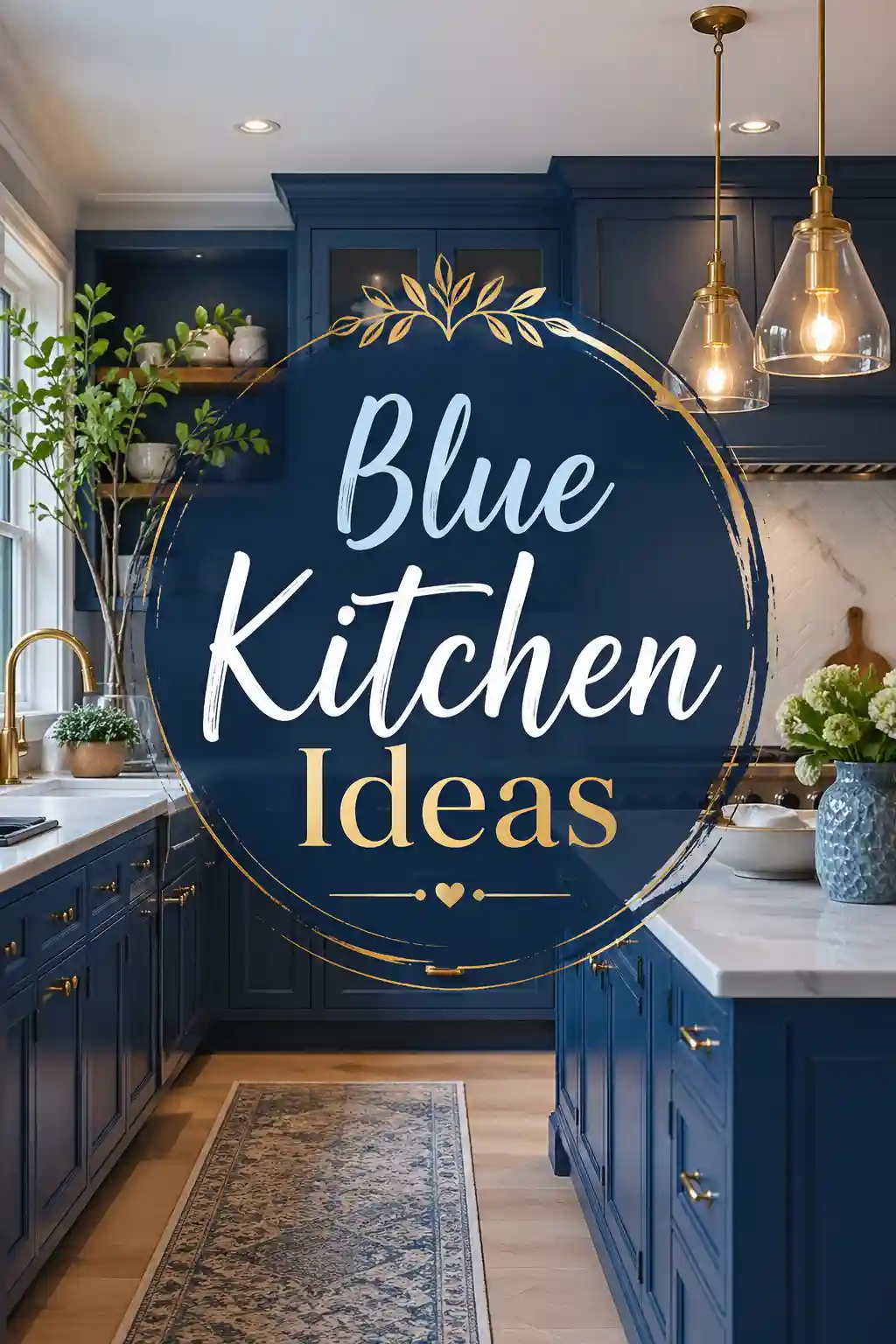
I have to be honest with you I did not always love blue kitchens. When a friend of mine repainted her entire kitchen in a slate-toned navy four years ago, I thought she was making a mistake she’d regret by spring. I was completely wrong. Walking into that kitchen felt like stepping into a room that had always been exactly what it needed to be. That experience changed how I think about color in the most personal rooms of a home, and it sent me down a long, wonderful rabbit hole of blue kitchen ideas that I still have not fully climbed out of.
Blue is not a single color. That sounds obvious, but it’s worth saying plainly, because so many people hesitate when they think “blue kitchen” they picture something cold, clinical, maybe too bold. What they don’t realize is that blue kitchen ideas span an extraordinary range, from barely-there powder tones that feel almost white in morning light, to deep inky shades that make a kitchen feel like the most sophisticated room in the house. The keyword here is versatility, and blue has it in abundance.
This guide pulls from years of following design trends, speaking with interior designers, and visiting real homes where blue kitchens were done brilliantly (and a few where lessons were learned the hard way). Whether you’re planning a full renovation or just thinking about repainting your lower cabinets, you’ll find blue kitchen ideas here that feel genuinely achievable and genuinely beautiful.
Why Blue Kitchen Ideas Are Having Their Biggest Moment Yet
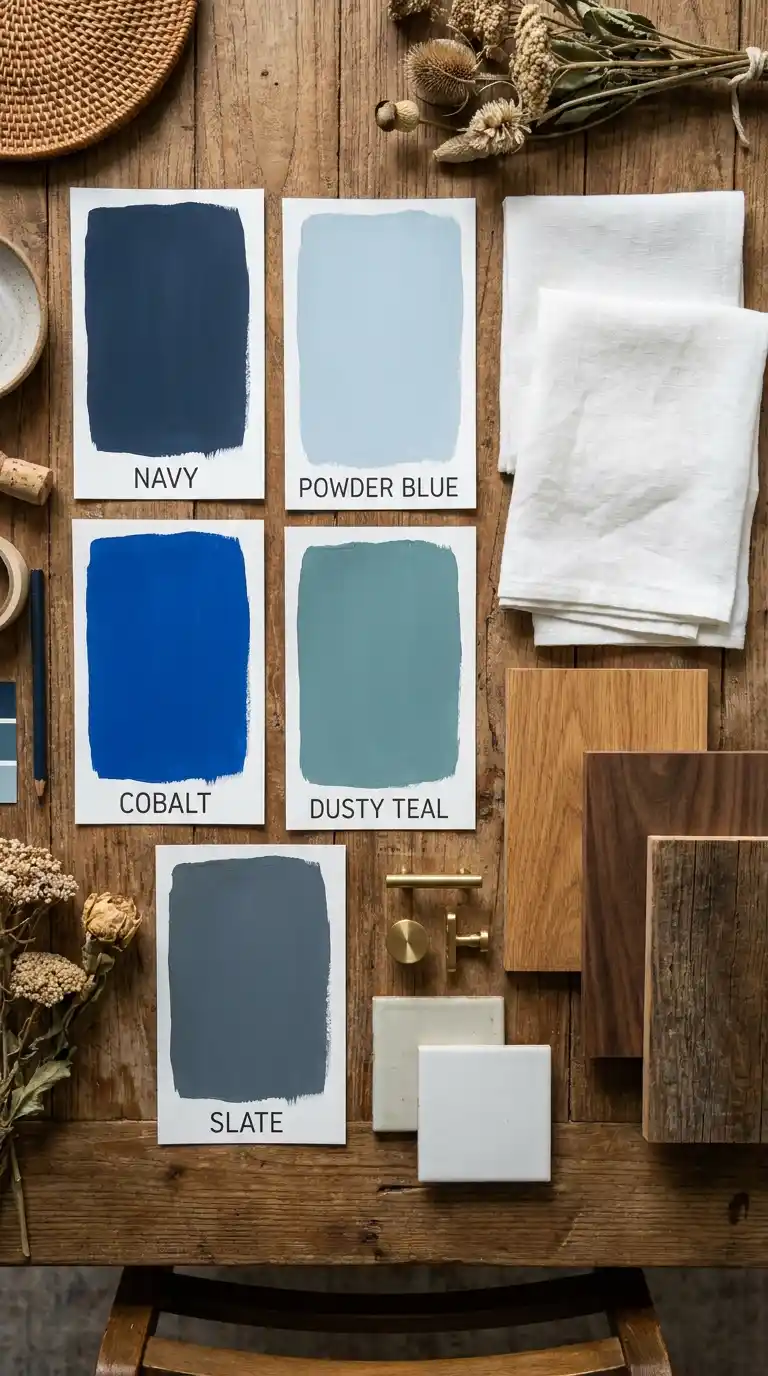
There’s a reason blue kitchen ideas have dominated design conversations for several years running now. White kitchens had their long, glorious reign, and gray had its era too. But blue offers something those neutrals never quite could a sense of emotion. Blue connects to sky and water and calm. It is scientifically shown to lower stress and make people feel at ease, which, when you think about how much time families actually spend in kitchens, matters enormously.
Designers like to talk about blue as a “forever color” and they mean it. Unlike trendy jewel tones that feel exciting for a season and dated the next, blue has a classical history in home design. Think of the blue-and-white Dutch tiles that have graced kitchens for centuries, or the traditional navy of a New England farmhouse kitchen. Blue kitchen ideas have roots that go very, very deep.
Another reason blue has surged? The rise of bespoke cabinetry and custom paint options means homeowners can now land on exactly the right shade not the blue from the hardware store’s limited palette, but a blue mixed precisely to their vision. That control has unleashed a wave of genuinely original blue kitchen ideas that photograph beautifully and live even better.
The Psychology Behind Blue in the Kitchen
Blue is often the top color people choose when asked to name their favorite and that popularity carries into design decisions. In a kitchen specifically, blue does something interesting: it creates a visual anchor. Kitchens can feel chaotic with appliances, open shelves, and the general business of daily life. A blue kitchen whether the whole room or just the cabinetry provides a strong visual statement that organizes everything around it.
There’s also the conversation around blue suppressing appetite, which some homeowners worry about. Practically speaking, this effect is largely overstated. A warm navy kitchen with natural wood accents and good lighting doesn’t read as cold at all it reads as rich and intentional. The key, as we’ll explore throughout this guide, is always in the combination and the lighting.
Navy Blue Kitchen Ideas for a Timeless, Sophisticated Look
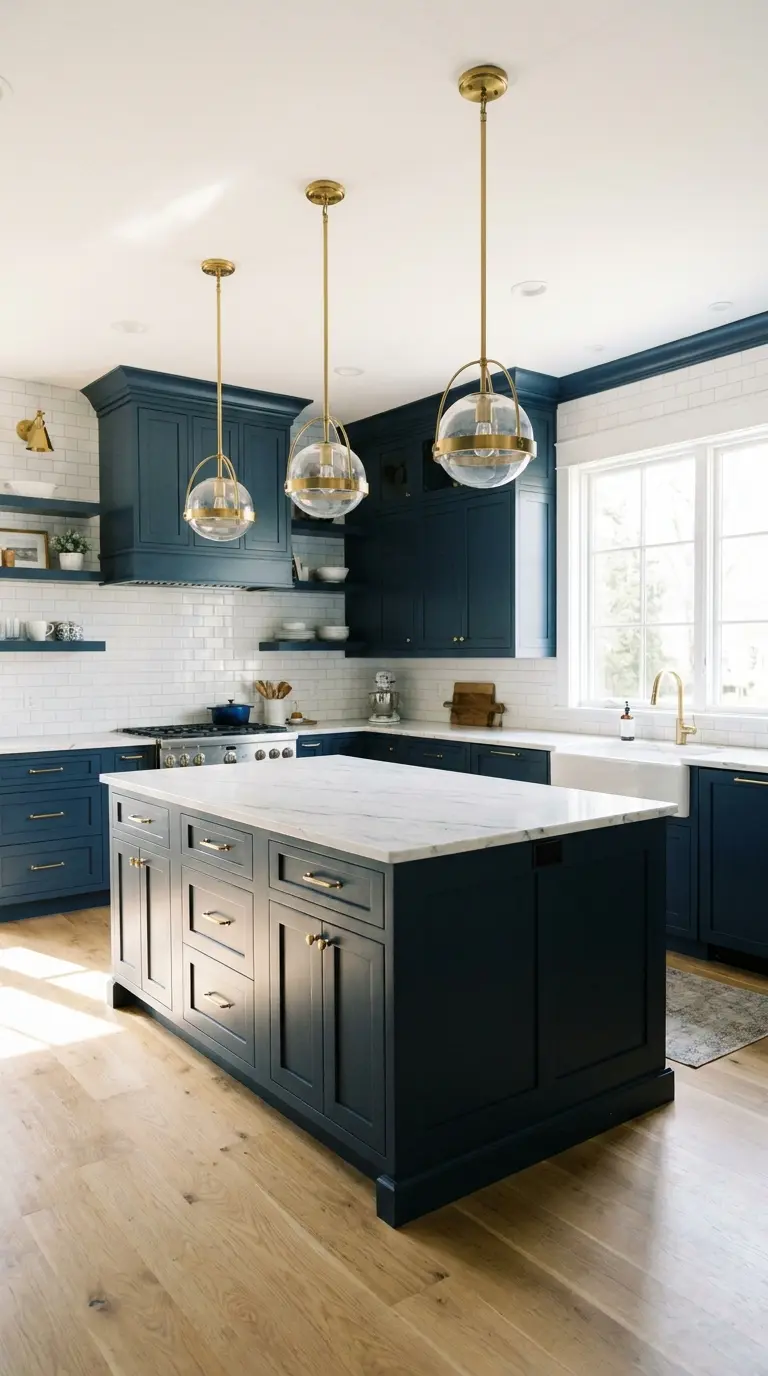
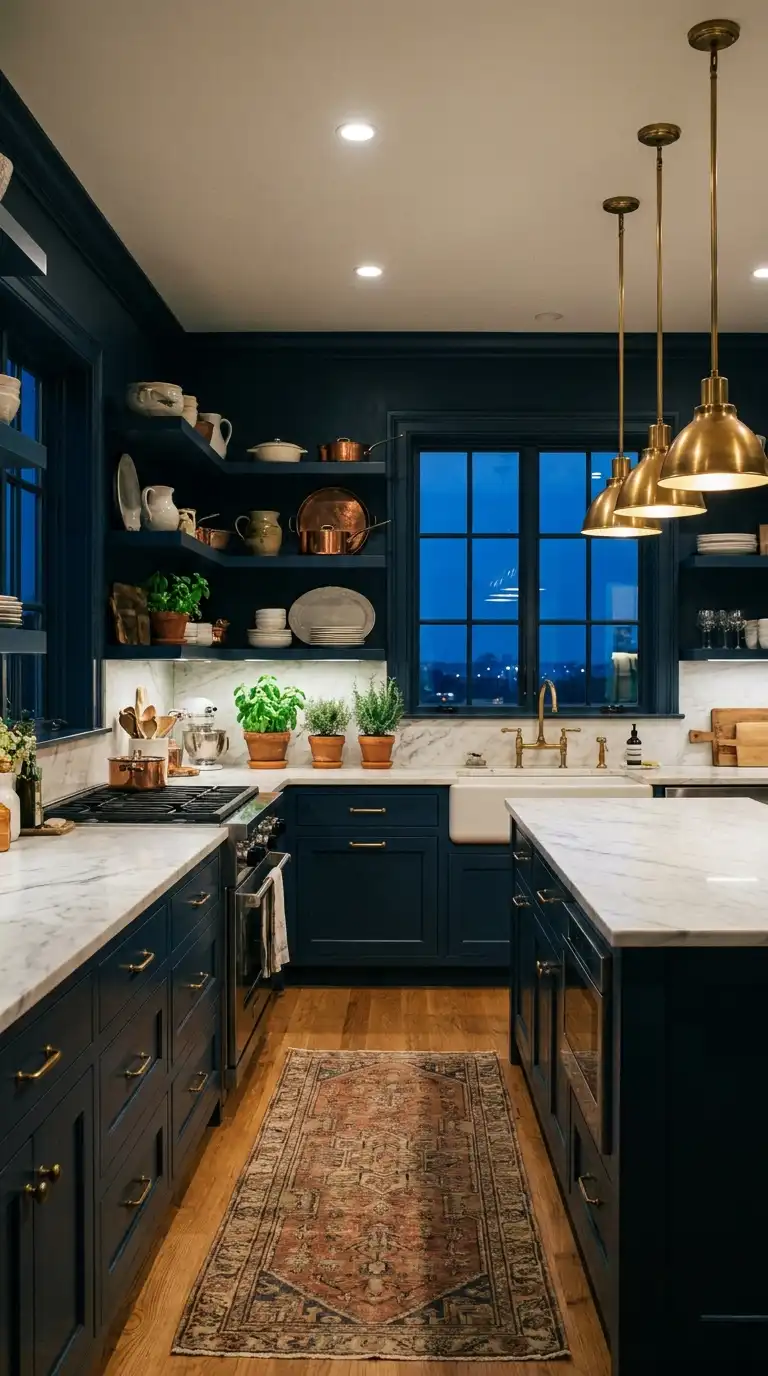
If you had to pick one blue kitchen idea that works in almost every home, in almost every style, navy would be it. Navy is deep enough to feel purposeful and serious, but it’s not so dark that it swallows a room. It pairs effortlessly with brass and gold hardware (a combination that has become something of a design cliché, but a cliché for good reason it genuinely works). It looks stunning against white countertops and natural wood tones. Navy blue kitchen ideas feel elevated without feeling precious.
One thing I’ve noticed in the navy kitchens that work best is that the shade of navy matters as much as the decision to go navy at all. There’s a version of navy that leans slightly green think of Benjamin Moore’s Hale Navy and there’s a version that leans more purple, like Farrow and Ball’s Hague Blue. Both are stunning, but they work with different things. Hale Navy feels more casual and works beautifully with warm wood tones. Hague Blue is darker and slightly more theatrical it tends to work better in larger kitchens with strong natural light.
Navy Kitchen Cabinets with Gold Hardware
The pairing of navy blue kitchen cabinets with gold or brushed brass hardware is one of those combinations where the whole is genuinely greater than the sum of its parts. The warmth of the gold against the cool depth of navy creates a tension that reads as luxurious without being overdone. If you add a creamy white countertop quartz works particularly well here you get a three-toned palette that satisfies something very deep in how humans respond to visual harmony.
For homeowners who find solid gold too loud, aged brass is a softer option. It has a slightly antiqued quality that leans into a more collected, lived-in aesthetic perfect if your navy blue kitchen ideas lean more traditional farmhouse than contemporary glam. Oil-rubbed bronze is another option that reads as dark and moody, complementing very deep navies beautifully.
Also Read : How to Decorate Shelves Like a Pro: The Ultimate Guide to Stunning, Soul-Filled Shelf Styling
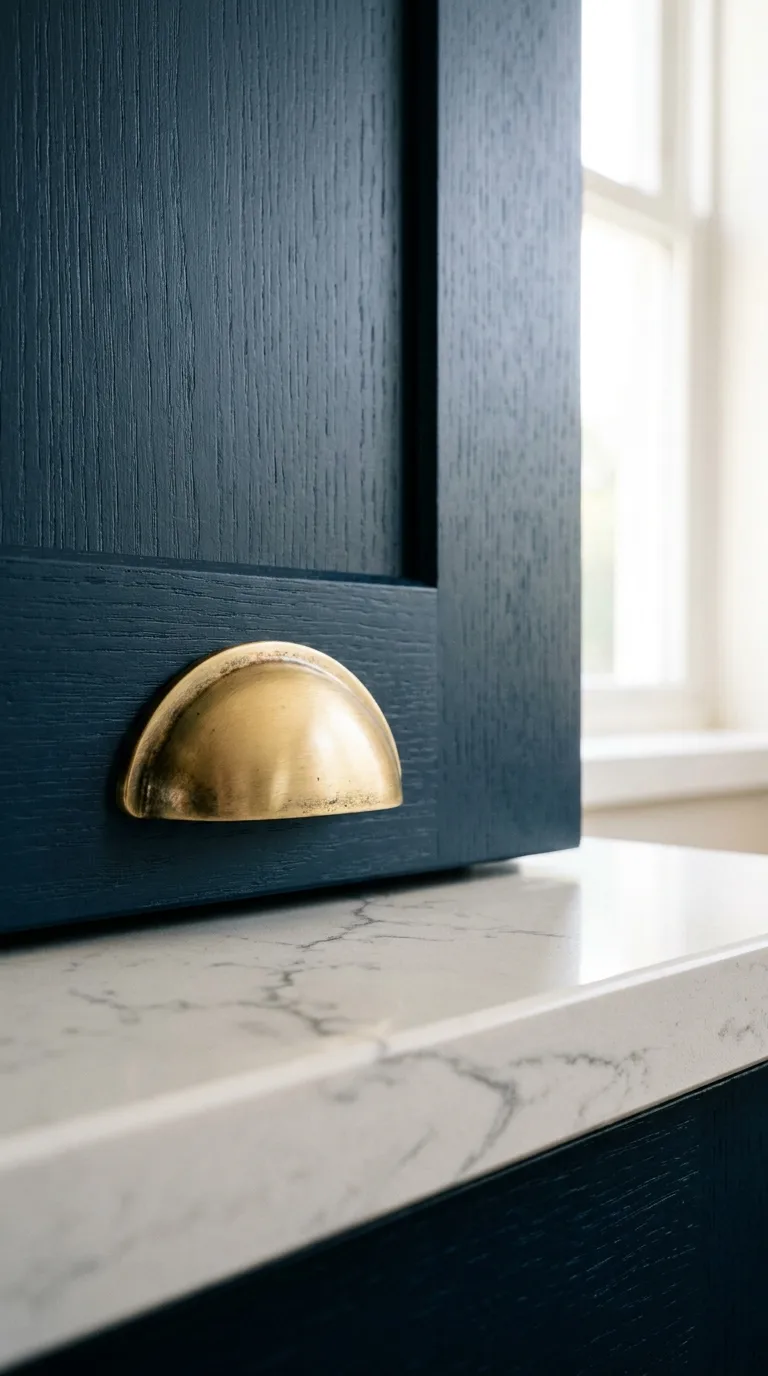
Navy blue kitchen ideas work best when balanced with lighter elements — white countertops, natural wood open shelving, or light-colored flooring. Too many dark surfaces in the same space can feel heavy, so balance is everything.
Navy Blue Kitchen with an Open-Plan Layout
One consideration that doesn’t get enough attention in navy blue kitchen discussions is how the color reads when the kitchen opens into a living or dining space. In an open-plan layout, navy kitchen cabinetry essentially becomes a piece of the overall room design. This can be spectacular when done intentionally a navy kitchen anchoring a neutral open-plan space creates a focal point that draws the eye and organizes the entire room.
The best approach in open-plan spaces is to carry one element of the kitchen color into the adjacent area a navy throw pillow, a navy dining chair, or even a navy-backed shelving unit. This connects the spaces without making the kitchen feel isolated or bolted on.
Light Blue Kitchen Ideas for an Airy, Bright Space
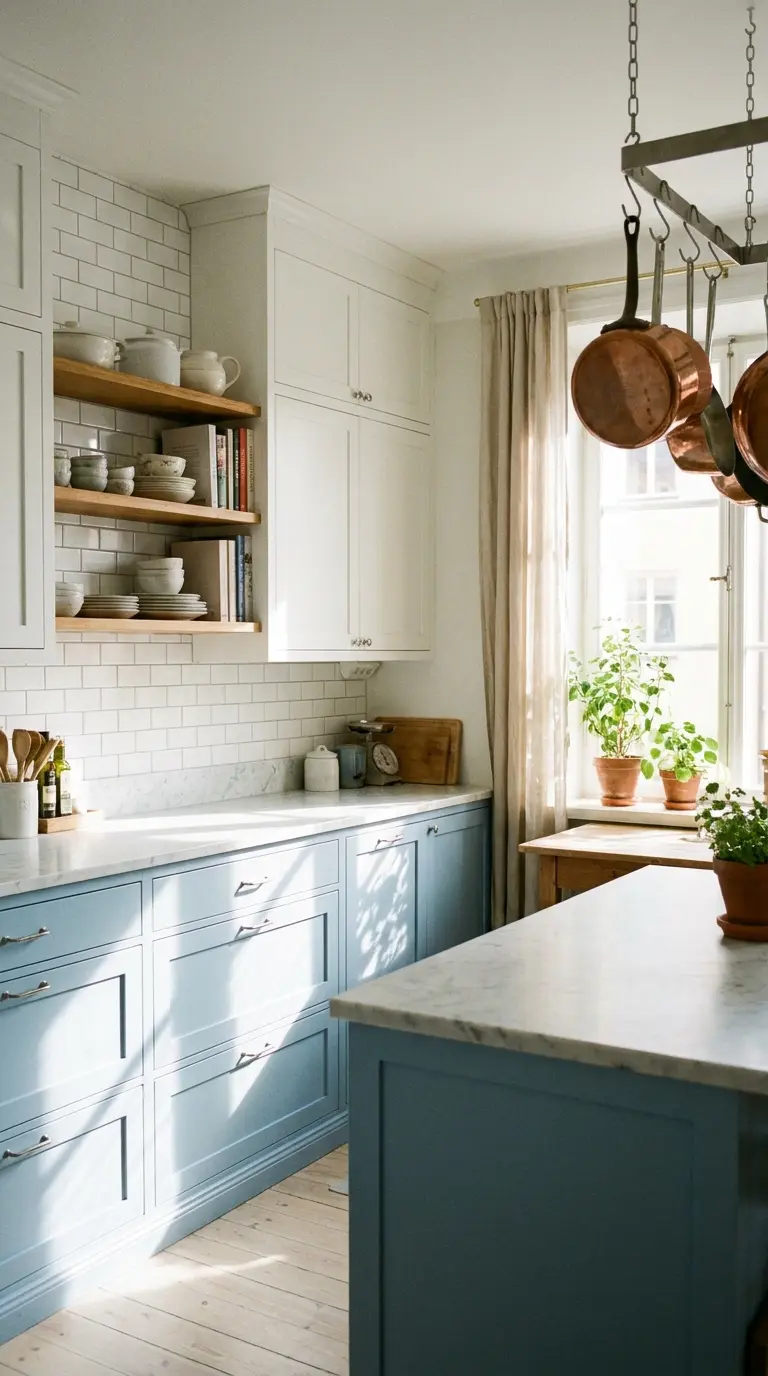
Not every household wants to go deep. For those who love blue but want to keep things light and breezy, powder blue and soft sky blue kitchen ideas offer all the charm with none of the drama. These lighter shades work particularly well in smaller kitchens, north-facing rooms, or any space where maximizing the sense of lightness and openness is a priority.
Light blue kitchen ideas also tend to photograph beautifully in the morning light — that quality that Instagram designers sometimes call “golden hour kitchen magic.” There’s a softness to powder blue that makes a kitchen feel genuinely welcoming, like a room someone actually cooks and lives in rather than a staged showroom. That casual, human quality is part of why light blue kitchens have such enduring appeal.
Pale blue kitchen cabinets — especially lower cabinets paired with white upper cabinets — are a classic approach that works in traditional, contemporary, and transitional styles alike. The contrast between the light blue base and the white upper keeps the space from feeling heavy while giving the kitchen a defined color identity.
Duck Egg Blue Kitchen Ideas
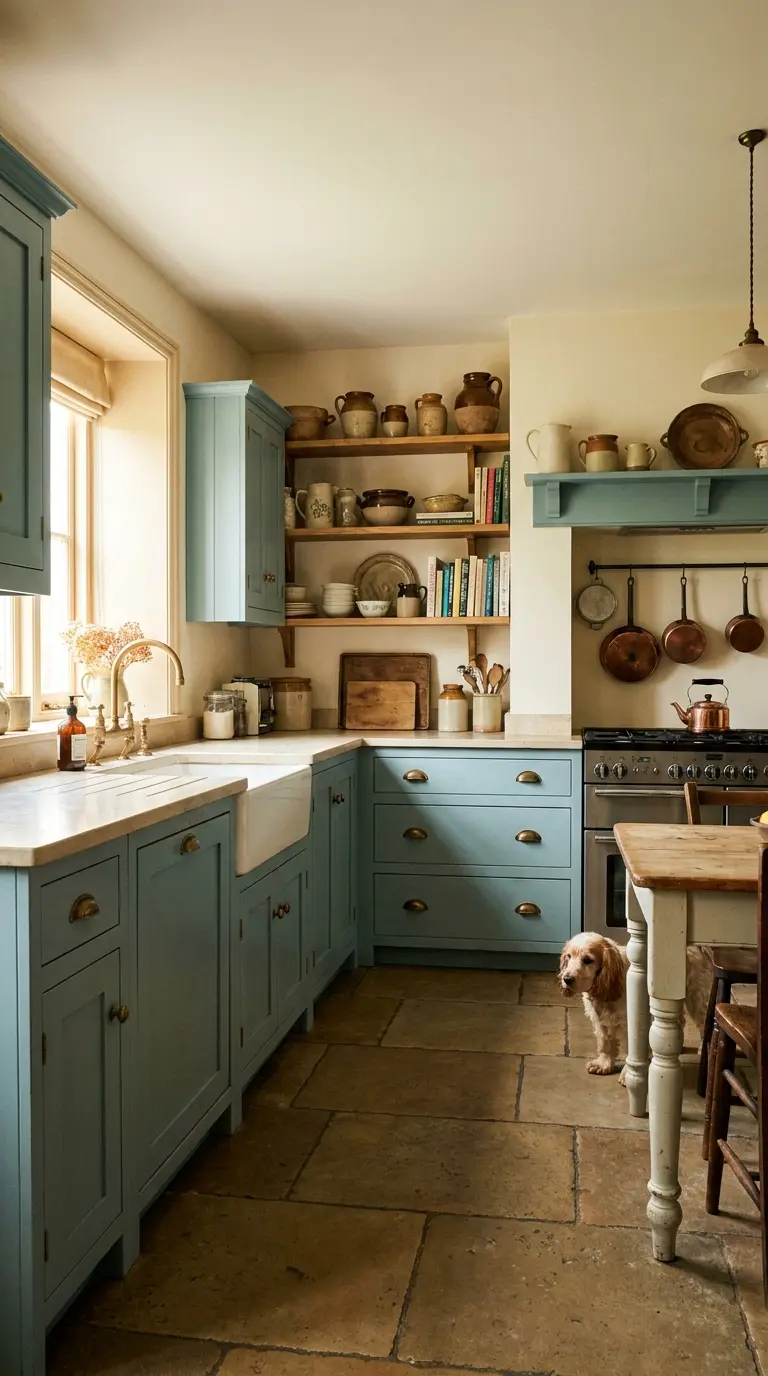
Duck egg blue is a particular shade worth singling out — it sits in that lovely territory between blue and green, with a gentle warmth that reads almost vintage. If you’ve ever seen an old painted dresser in an English country house or a vintage Aga range cooker, that’s often the color family we’re talking about. Duck egg blue kitchen ideas feel timeless in a very specific way — not modern, not antique, just quietly beautiful.
Farrow and Ball’s Mizzle, Edward Bulmer’s Celestial Blue, and Little Greene’s Air Force are all in this territory. Paired with warm cream or off-white cabinetry, stone countertops, and flagstone or terracotta floors, duck egg blue creates a kitchen that feels like it has been there for generations — and will be there for many more.
Blue and White Kitchen Ideas That Never Go Out of Style
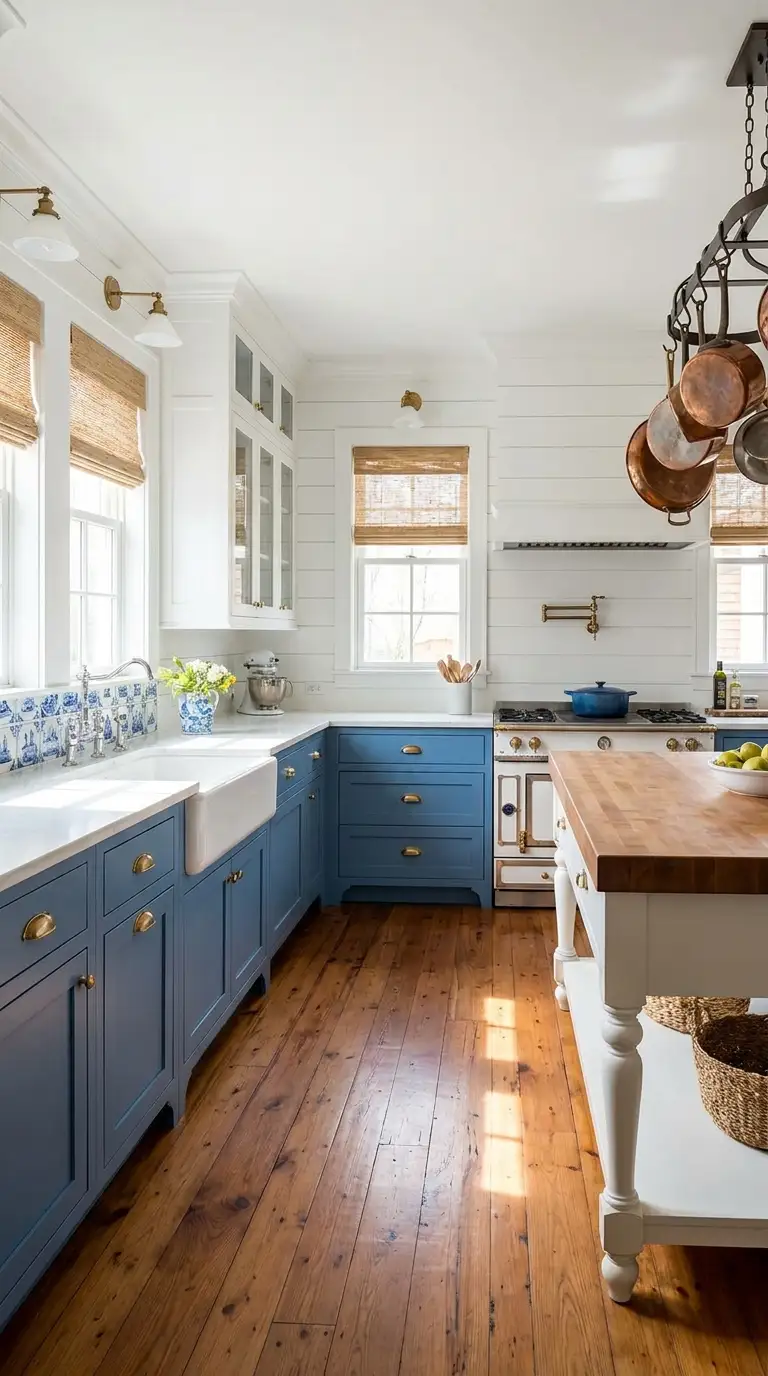
Blue and white is arguably the most enduring color combination in the history of home design. From Chinese porcelain to Delft tiles to the classic American coastal cottage kitchen, blue and white has been a design staple across cultures and centuries. When you translate this into blue kitchen ideas, the combination takes on fresh energy while keeping its timeless quality intact.
The most common iteration is white upper cabinets paired with blue lower cabinets — a formula so reliably successful that it almost doesn’t need explanation. The white lifts the room visually, keeps it feeling open, and gives the blue a counterpoint that stops it from dominating. Meanwhile, the blue adds warmth, interest, and a sense of color commitment that all-white kitchens often lack.
Blue and White Tile Kitchen Backsplash Ideas
One of the most impactful blue kitchen ideas that doesn’t require repainting a single cabinet is a blue and white tile backsplash. This approach borrows from the centuries-old tradition of hand-painted Delft tiles while feeling completely contemporary when executed well. A mosaic of blue geometric tiles, or a simple blue and white subway tile layout, can transform the visual weight of a kitchen without any structural changes.
Pattern matters enormously here. A small repeating geometric pattern reads as subtle and sophisticated. A larger, bolder pattern — like a classic Mediterranean Majolica design — makes a much stronger statement and essentially becomes the focal point of the entire kitchen. Both approaches are valid, but they require different levels of confidence and different supporting design choices.
Hague Blue
Cornflower
Sky Blue
Duck Egg
Hale Navy
Powder Blue
Bold Cobalt Blue Kitchen Ideas for the Brave Decorator
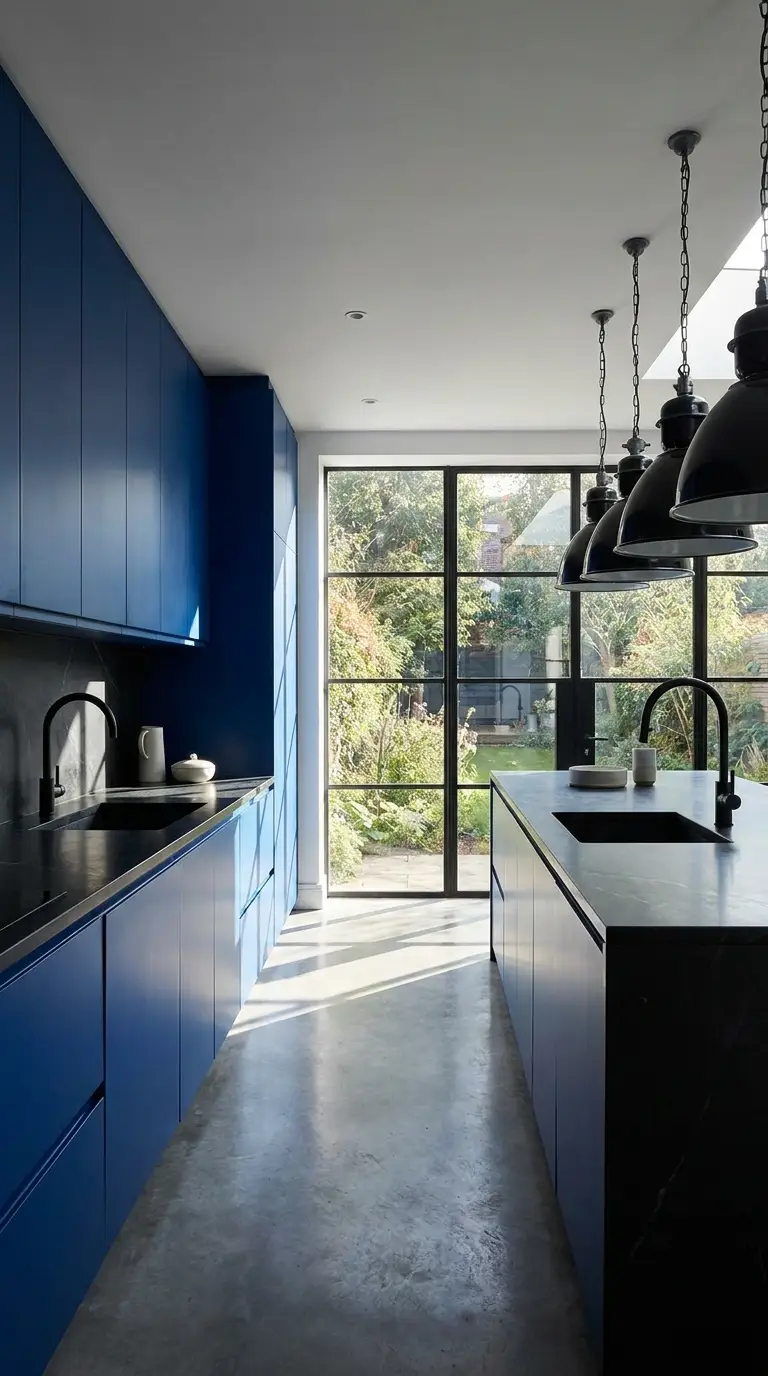
For homeowners who want blue kitchen ideas with real dramatic impact, cobalt is the answer. Cobalt blue is bright, saturated, unmistakably bold — and in the right kitchen, it is absolutely electrifying. Unlike navy (which is dark and weighted) or powder blue (which is light and airy), cobalt lives in the middle ground of the blue spectrum in terms of brightness but turns the saturation dial all the way up.
Cobalt blue kitchen ideas tend to work best in contemporary or modern kitchens with clean lines, minimal ornamentation, and strong architectural features. The color is too loud to play supporting role — it needs space and simplicity around it to shine. Black hardware and fixtures work brilliantly against cobalt — the high contrast is sophisticated rather than jarring. White or light concrete countertops balance the intensity of the blue without competing with it.
One blue kitchen idea I’ve seen done with real bravery is a cobalt blue kitchen island against all-white surrounding cabinetry. The island becomes a jewel-like centerpiece — something you’d expect to see in a design magazine — while the white cabinets keep the overall space from feeling overwhelming. If you love cobalt but aren’t ready to go all-in, this approach is a brilliant middle path.
Cobalt Blue and Brass Kitchen Styling
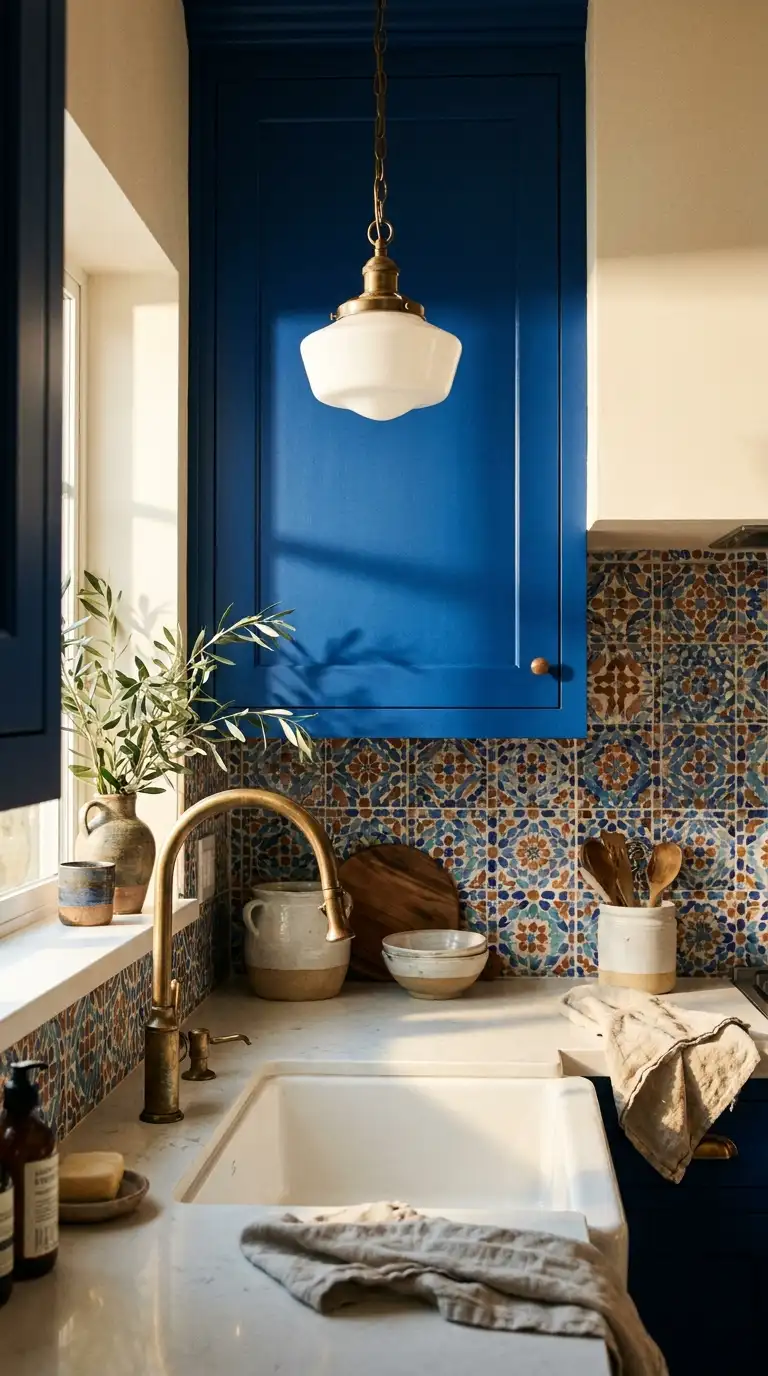
If navy and gold is a classic combination, cobalt and brass is its bolder, more contemporary sibling. The brightness of cobalt actually makes brass look richer more genuinely golden rather than just yellow. This pairing has a slightly Mediterranean or Moroccan feel that works beautifully in kitchens with Mediterranean-inspired architectural details: arched niches, mosaic tile floors, exposed beams.
Blue Kitchen Cabinet Ideas — Choosing the Right Shade
Of all the blue kitchen ideas in this guide, cabinet color is probably the decision with the most consequences — because it’s also the most permanent (or at least, the most expensive to change). Choosing the right shade of blue for kitchen cabinets is part science, part instinct, and part careful testing against your specific room conditions.
The first and most important rule: always test in your actual space. Paint companies know this and provide sample pots for exactly this reason. A blue that looks sophisticated in a showroom under artificial lighting can look completely different in your north-facing kitchen in January. Buy two or three samples, paint large swatches (at least A4 size, ideally larger) on different walls, and observe them at multiple times of day and in artificial evening light as well.
Warm Undertone Blues
Hale Navy, Indigo, Prussian Blue. Work well with warm wood tones, brass, and cream countertops. Feel cozy and traditional.
Cool Undertone Blues
French Gray, Pale Powder, Purbeck Stone. Work with crisp whites, chrome fixtures, and stone countertops. Feel modern and crisp.
Matte vs. Gloss Blue Kitchen Cabinets
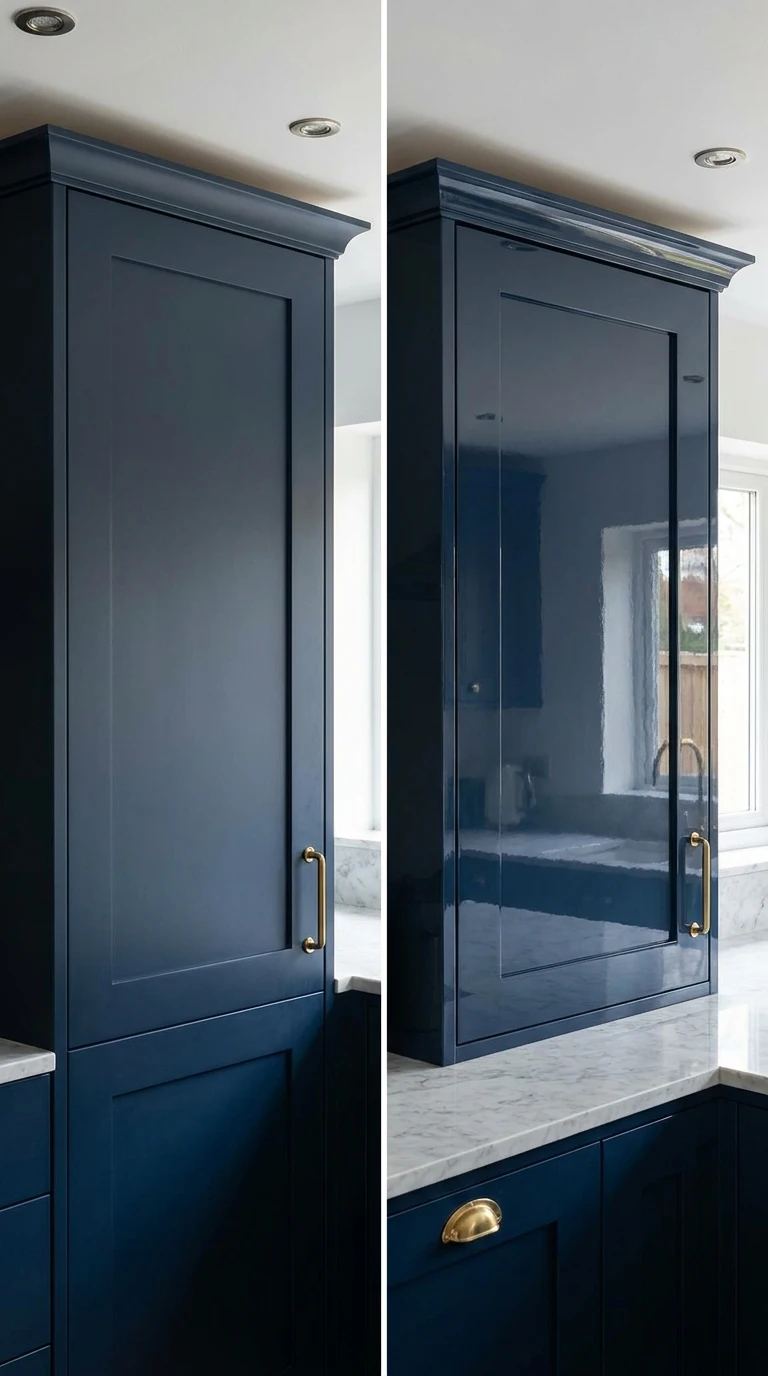
The finish you choose for blue kitchen cabinets changes everything. Matte finishes absorb light and feel sophisticated, slightly chalky, with a depth that gloss can’t match. They’re also wonderfully forgiving of fingerprints and small marks — something any household with children will appreciate. The downside is that matte finishes can be slightly harder to clean over time and may need more frequent touching up.
Gloss or semi-gloss finishes reflect light and make colors look more vivid and saturated. A cobalt blue kitchen in a gloss finish looks completely different — more vibrant, more dynamic — than the same color in matte. Gloss also wipes clean easily. The trade-off is that gloss shows every fingerprint and can look slightly dated in very traditional settings. For a contemporary kitchen, though, a high-gloss blue cabinet is a genuinely exciting choice.
Two-Tone Blue Kitchen Cabinet Ideas
One of the most sophisticated blue kitchen ideas gaining traction in recent years is the two-tone cabinet approach. This typically means different shades — or different colors entirely — for upper and lower cabinets. The most popular iteration uses a deeper blue on the lowers and white on the uppers, but there are more adventurous options: a dusty blue on the lowers paired with a deep sage on the uppers, for instance, or a pale sky blue on the uppers with a deep petrol blue below.
Two-tone cabinetry works because it mirrors what happens naturally in a room — lighter values tend to float up, heavier values ground a space. Blue lower cabinets and white upper cabinets is essentially mimicking the visual logic of earth and sky, which is why the combination reads as so intuitively right even to people who can’t explain why they like it.
Blue Kitchen Island Ideas That Become the Heart of the Home
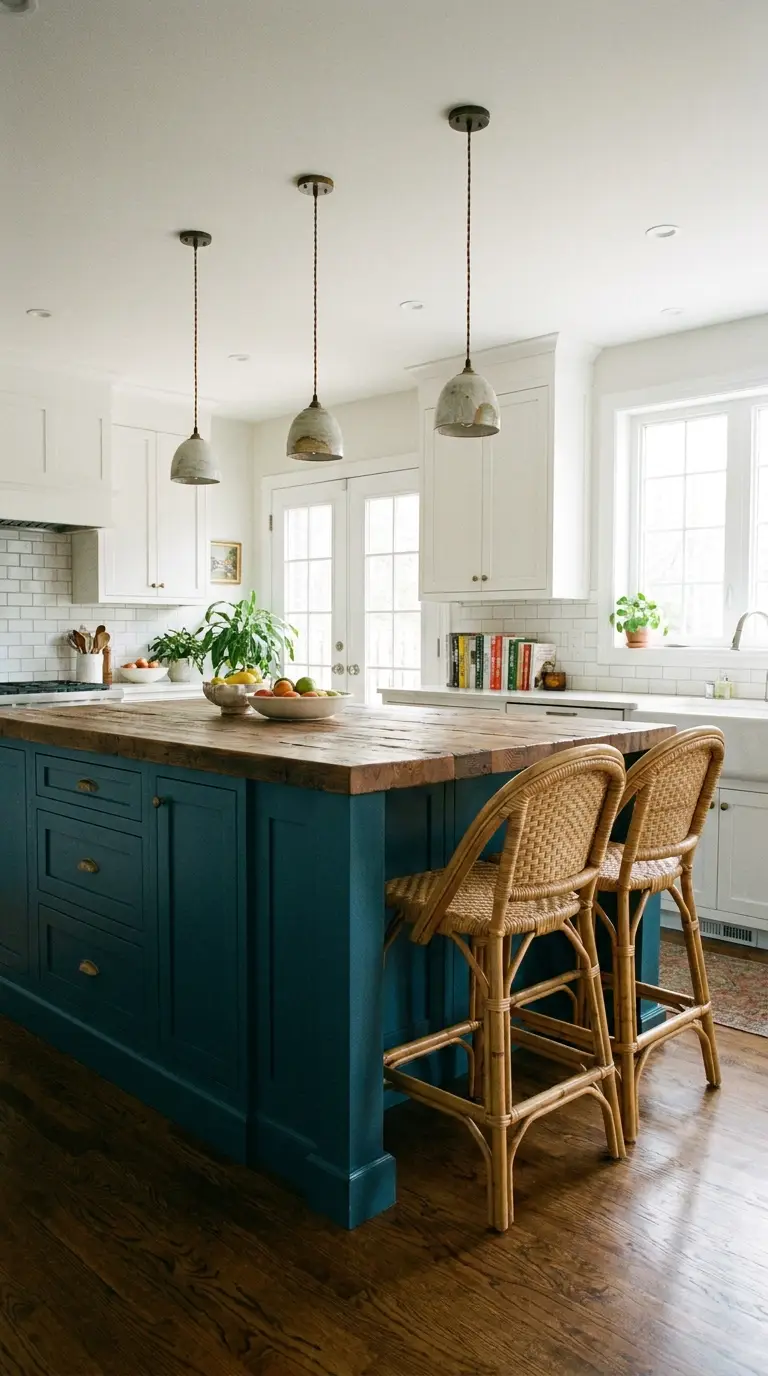
If you’re not ready to repaint your entire kitchen but want to experiment with blue kitchen ideas, a blue island is one of the most impactful and most reversible ways to bring the color in. A blue island against white or neutral surrounding cabinetry creates a deliberate focal point. It says: this is where things happen, this is the center of this home.
The beauty of the standalone blue island as a design choice is the amount of creative freedom it offers. You can go bolder with the island because the risk is contained if you choose a shade too bright or too intense, it’s not the whole kitchen, just one piece of furniture. Many designers recommend going a shade or two deeper on the island than you would dare to go across the whole room the island can absorb the extra intensity in a way that cabinets wrapping an entire room cannot.
Styling a Blue Kitchen Island
Counter stools are the obvious starting point. Rattan stools against a navy island create a relaxed, coastal feel. Black leather stools against a deep cobalt blue island feel contemporary and confident. White upholstered stools against a powder blue island feel fresh and Scandinavian. The material of the island countertop matters too — warm butcher block wood on top of a blue base creates contrast and warmth; white marble creates a more refined, hotel-like aesthetic.
Designer Tip
When choosing a blue island color, pull it from the same color family as any blue accents already in your kitchen — a blue tile backsplash, blue pottery on open shelves, or even a blue runner rug. This creates visual coherence without making the space feel over-planned.
Small Blue Kitchen Ideas That Feel Big
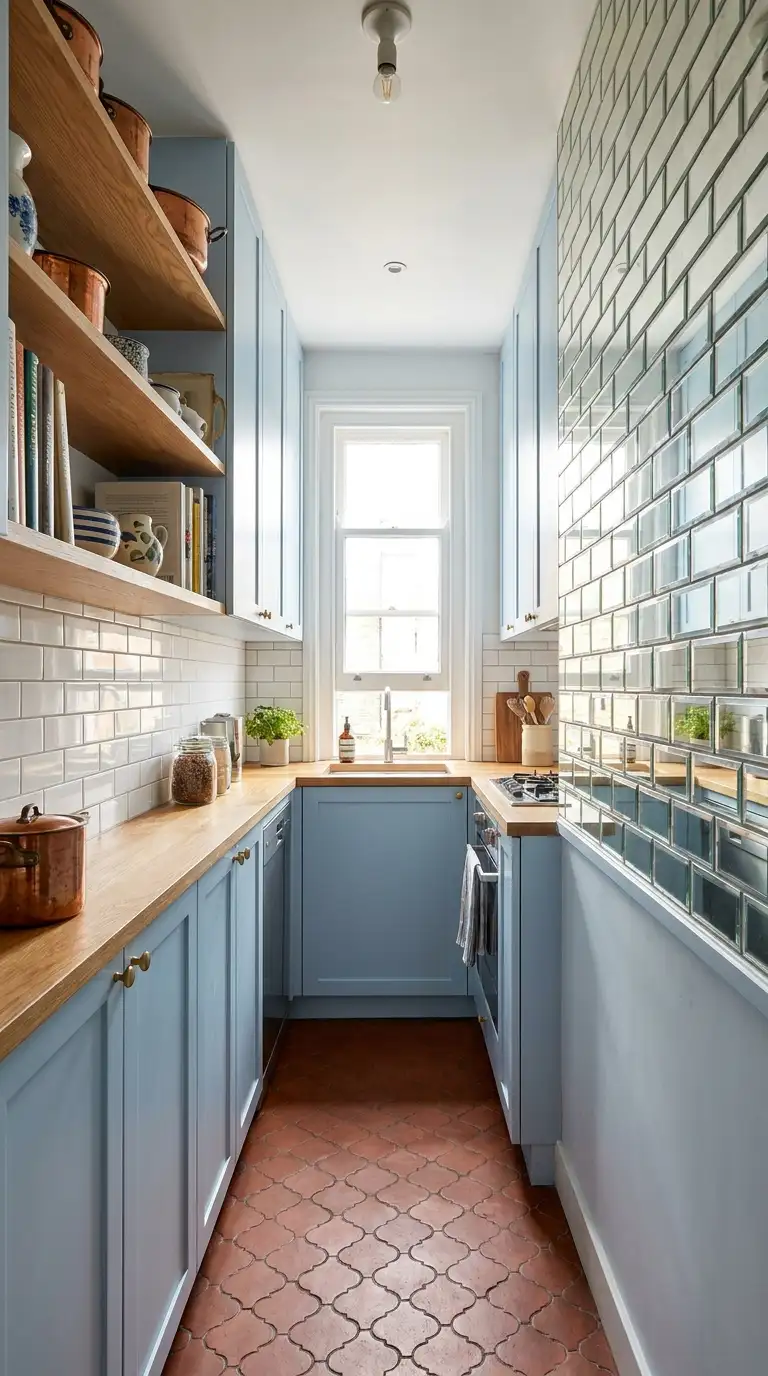
There’s a persistent myth in home design that dark or saturated colors make small rooms feel smaller. While this can be true in certain contexts, small blue kitchen ideas have consistently proven that the right approach to color in a compact space can actually create a sense of depth, intention, and even expansiveness — when done thoughtfully.
The key for small blue kitchens is keeping the palette focused and the surfaces uncluttered. A small kitchen where every surface is visually competing for attention will feel chaotic regardless of color. A small kitchen where one color — say, a soft duck egg blue on all the cabinets — creates visual continuity actually has a better spatial reading than a small kitchen with too many different finishes and colors fighting for dominance.
Reflective Surfaces and Light in Small Blue Kitchens
For a small blue kitchen to feel open rather than enclosed, light management is crucial. Glossy cabinet finishes help by bouncing light around the room. A mirrored or metallic tile backsplash adds another dimension of reflectivity. Under-cabinet lighting not only makes the workspace more functional but creates a glow that lifts the cabinets visually, making them feel lighter and less heavy.
Open shelving in a small blue kitchen replaces the visual weight of upper cabinet doors with air and lightness. Displaying white crockery, clear glassware, or light-colored ceramics on open shelves keeps the overall composition bright while showing off the blue cabinets below to maximum effect.
Blue Kitchen Backsplash Ideas Worth Pinning Forever
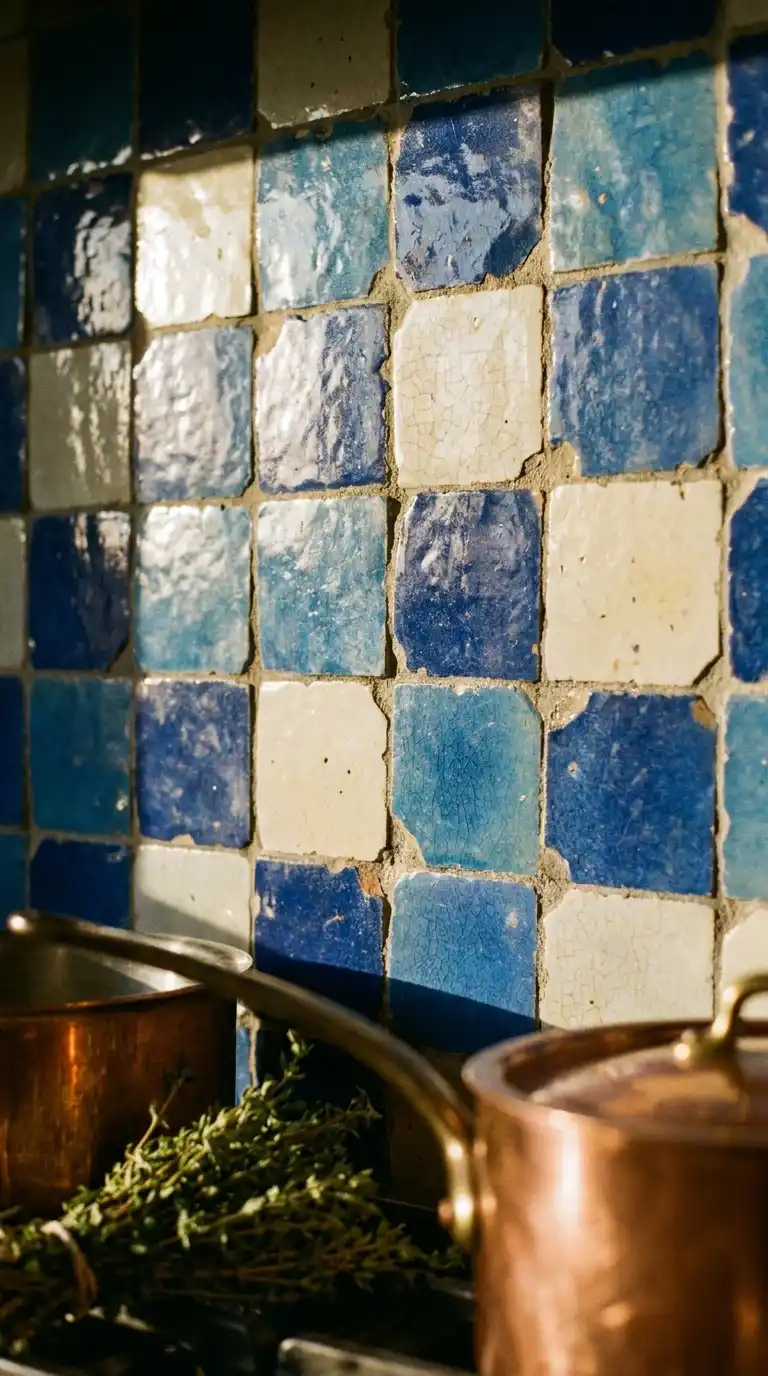
A blue kitchen backsplash is one of the smartest ways to introduce the color without any cabinet painting involved. It’s typically a smaller surface area, the tile installation is relatively contained, and if you fall out of love with it, replacing a backsplash is far less disruptive than repainting all your cabinetry. For renters, a peel-and-stick blue tile option exists that opens up this approach even to those without permission to make structural changes.
Blue subway tiles are probably the most popular entry point — they’re affordable, widely available, and look good in almost any kitchen style. But the world of blue kitchen backsplash ideas extends far beyond the subway tile. Zellige tiles — those handmade Moroccan clay tiles with their beautiful uneven surfaces and varied glaze — have become enormously popular for their ability to make a blue surface feel alive and artisanal rather than flat and manufactured.
Patterned Blue Tile Backsplash Ideas
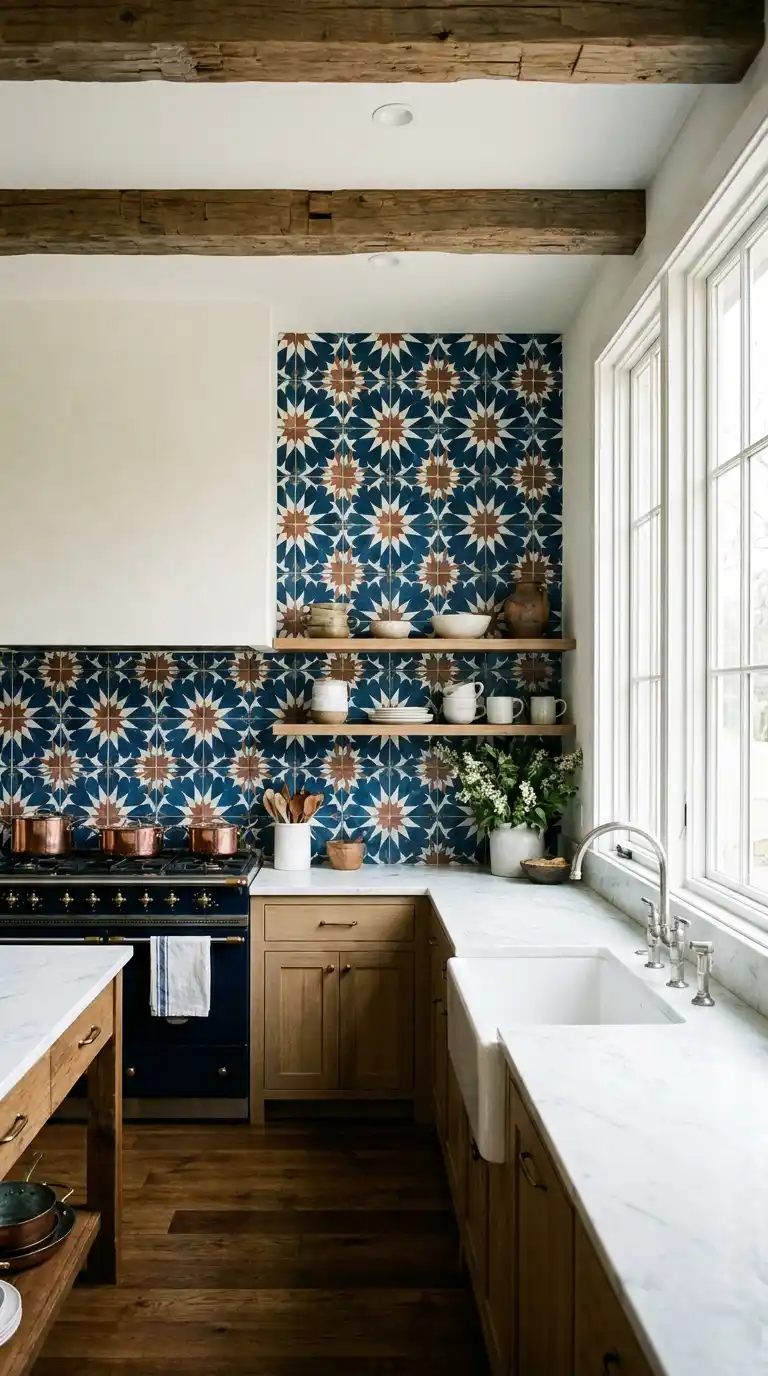
Spanish and Portuguese encaustic cement tiles offer intricate blue and white geometric patterns that transform a backsplash into genuine art. These tiles are thick, heavy, and require professional installation, but the result is a kitchen backsplash that no design magazine could ignore. Paired with simple, handle-free white or wooden cabinetry, a patterned blue tile backsplash becomes the entire story of the kitchen.
Blue Kitchen Ideas with Natural Wood Accents
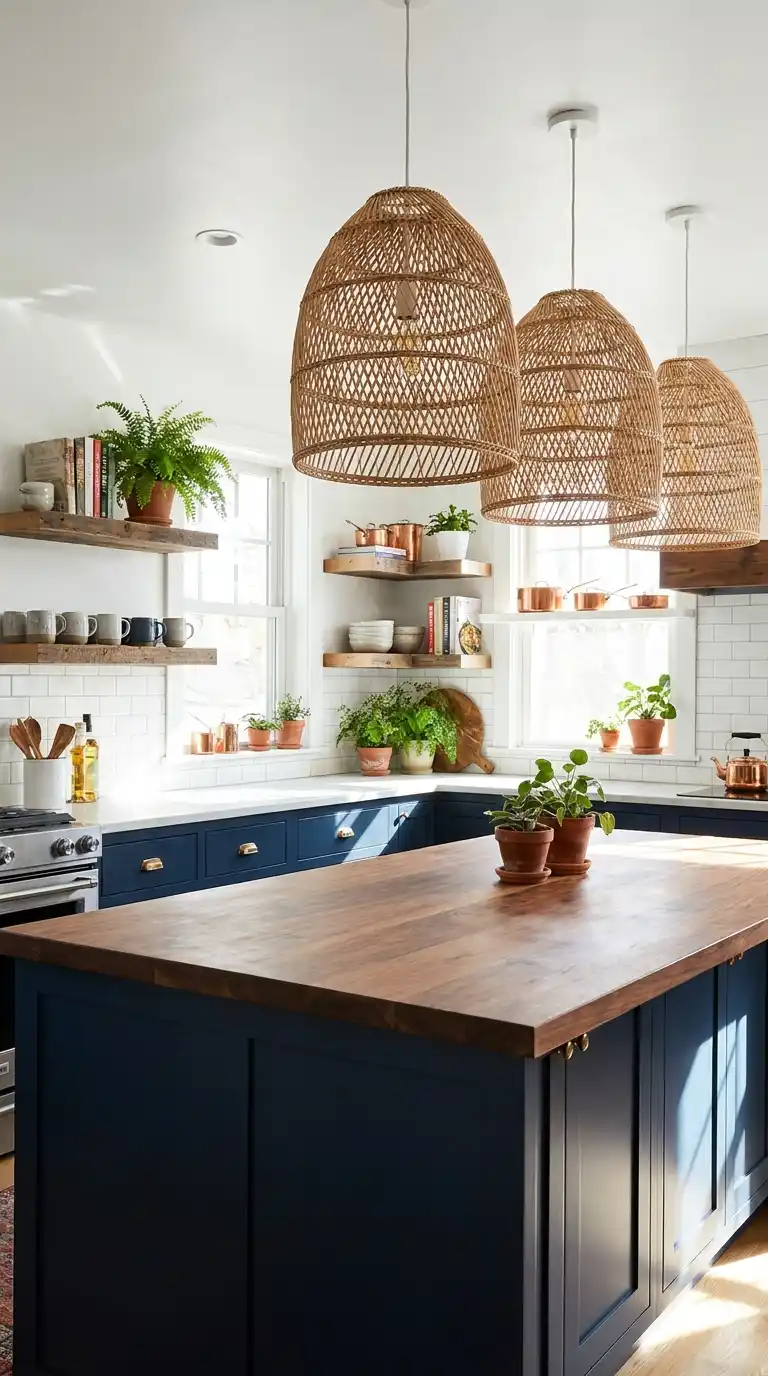
Some of the most beautiful blue kitchen ideas I’ve encountered pair the blue with warm, natural wood. This is a combination that appears across many design traditions — the Scandinavian kitchen with its painted blue cabinets and pine surfaces, the English cottage kitchen with its duck egg walls and scrubbed oak island, the contemporary urban kitchen with its navy lower cabinets and walnut open shelving.
Wood softens blue in a way that white cannot. White creates contrast — a crisp, defined visual separation between the blue and everything else. Wood creates warmth — a blending of cool and warm tones that feels organic and lived-in. For households where the kitchen is a genuine gathering place — where children do homework at the island and friends gather while someone cooks — the blue-and-wood combination tends to feel more welcoming and less design-forward than blue and stark white.
Choosing the Right Wood Tone for Blue Kitchens
Not all wood tones work equally well with all blues. Lighter, honey-toned woods — pine, ash, birch — pair best with lighter blues like powder blue, sky blue, and duck egg. The two lightness levels match, creating a harmonious, Scandinavian-inflected atmosphere. Darker, richer woods — walnut, mahogany, dark oak — pair better with deeper blues like navy, indigo, and petrol. Again, the weight matches: the dark richness of the wood finds its counterpart in the depth of the blue, and the two tones anchor each other rather than competing.
Blue Kitchen Ideas on a Budget
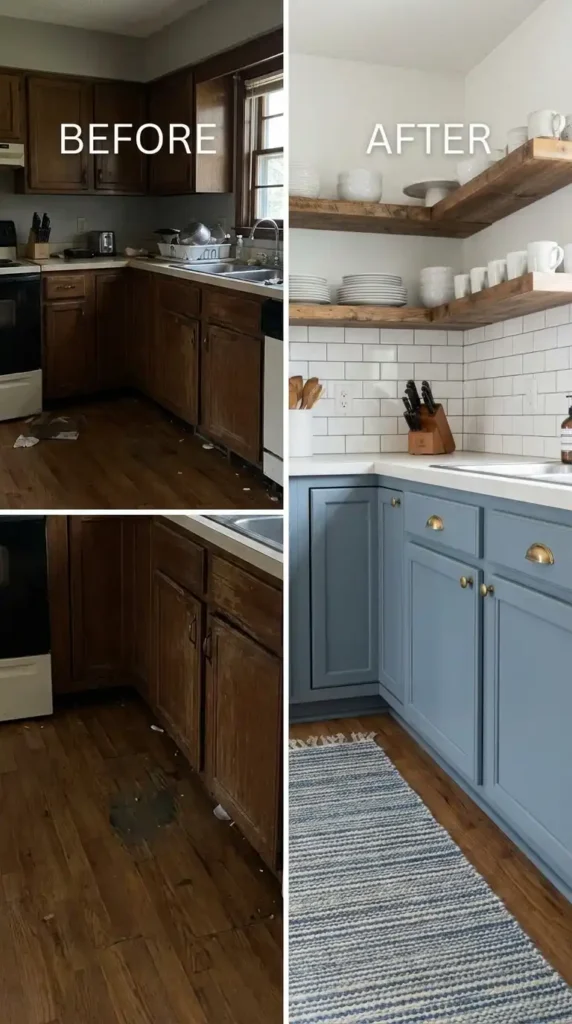
Not every blue kitchen idea requires a full renovation budget. Some of the most charming blue kitchen ideas cost almost nothing, relying instead on creativity, a can of good paint, and some patience. The single most impactful low-budget change in any kitchen is paint — and this applies to cabinets as well as walls. Cabinet painting, when done properly with the right preparation and the right primer, creates genuinely beautiful results that hold up remarkably well in a kitchen environment.
Budget blue kitchen ideas can also come through accessories. A collection of blue and white pottery on open shelves, a navy blue runner rug, blue ceramic light switch covers, blue window treatments — these smaller decisions layer together into a cohesive blue kitchen feel without touching a single cabinet or countertop. This approach is particularly useful in rental situations or for those who want to test a blue color direction before committing to it permanently.
DIY Blue Kitchen Cabinet Painting Guide
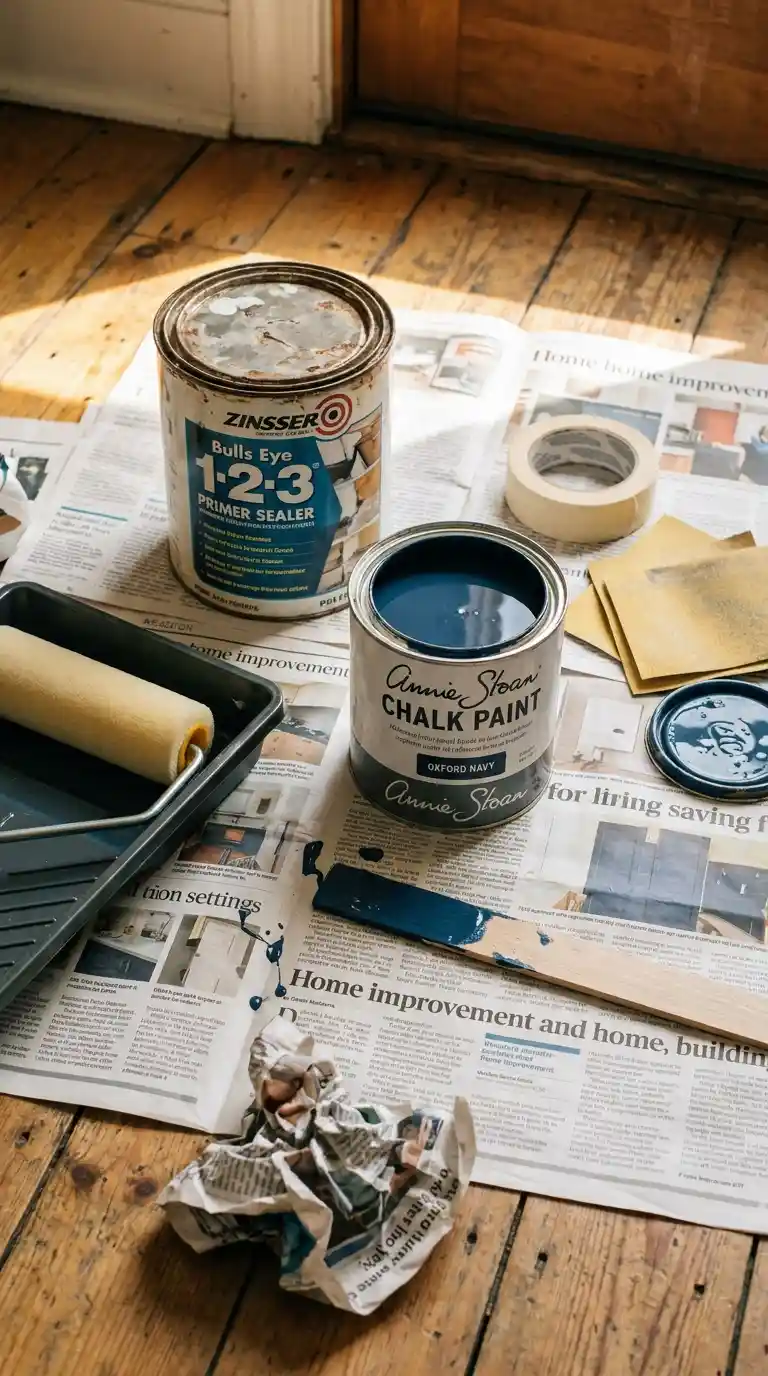
For those taking on cabinet painting themselves, the preparation stage is everything. Remove cabinet doors and drawer fronts, clean them thoroughly with a degreaser, sand lightly to roughen the existing finish, and apply a good-quality primer before any paint goes on. Skipping any of these steps almost always results in paint that chips, peels, or looks uneven within months. Done properly, painted kitchen cabinets can last for many years without any significant deterioration.
For blue specifically, the coverage can sometimes be an issue. Blues, particularly medium tones, are notorious for requiring more coats than other colors. Expect three coats of paint rather than two — and let each coat dry fully before applying the next. The extra patience pays off in a finish that looks professional and even.
Blue Kitchen Ideas for Different Home Styles
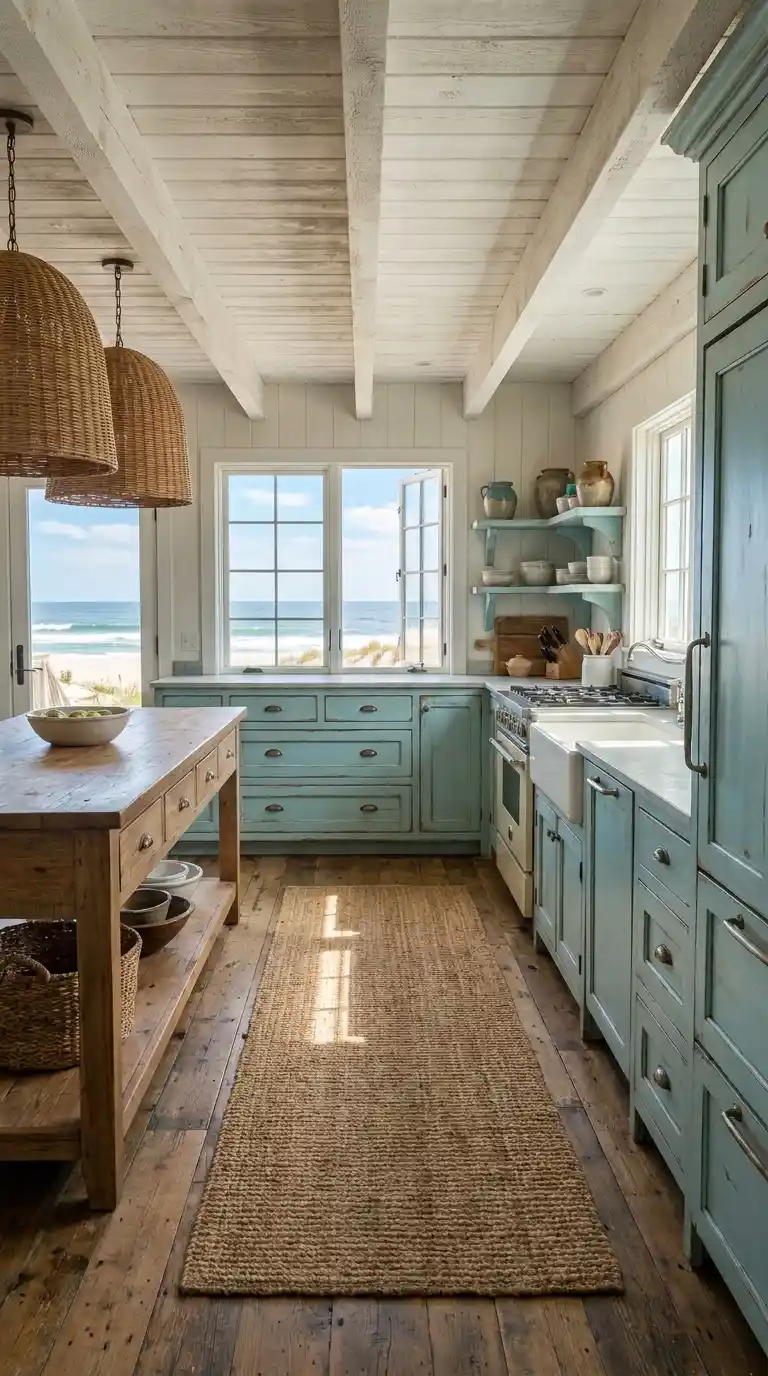
One thing worth addressing directly is how blue kitchen ideas adapt across different architectural and interior design styles. Blue is versatile enough to work in almost any home style, but the specific shade and approach needs to match the character of the space.
In a traditional or Victorian home, deep navy or dark teal in a shaker-style cabinet with period-appropriate hardware (cup pulls, bin handles) feels absolutely right — it honors the home’s bones while giving the kitchen a sense of color and character that all-white never would. In a contemporary or minimalist home, clean-lined handleless blue cabinets in a bold cobalt or deep navy with integrated appliances feel genuinely architectural. In a coastal or beach house, faded denim blue, aqua, or soft sky blue with whitewashed wood and rattan accents creates that effortless, salt-air atmosphere that coastal interior design has always sought.
Blue Kitchen Ideas in Modern Farmhouse Homes
The modern farmhouse style has embraced blue kitchen ideas perhaps more enthusiastically than any other design aesthetic. The combination of shiplap walls, open shelving, farmhouse sinks, and blue cabinetry has become something close to a signature look for this entire design category. A muted, slightly dusty blue — think Sherwin-Williams’ Tidewater or Benjamin Moore’s Boothbay Gray — works particularly well in modern farmhouse kitchens, where the slight gray undertone makes the blue feel aged and authentic rather than fresh off a paint roller.
Accessorizing and Finishing Your Blue Kitchen
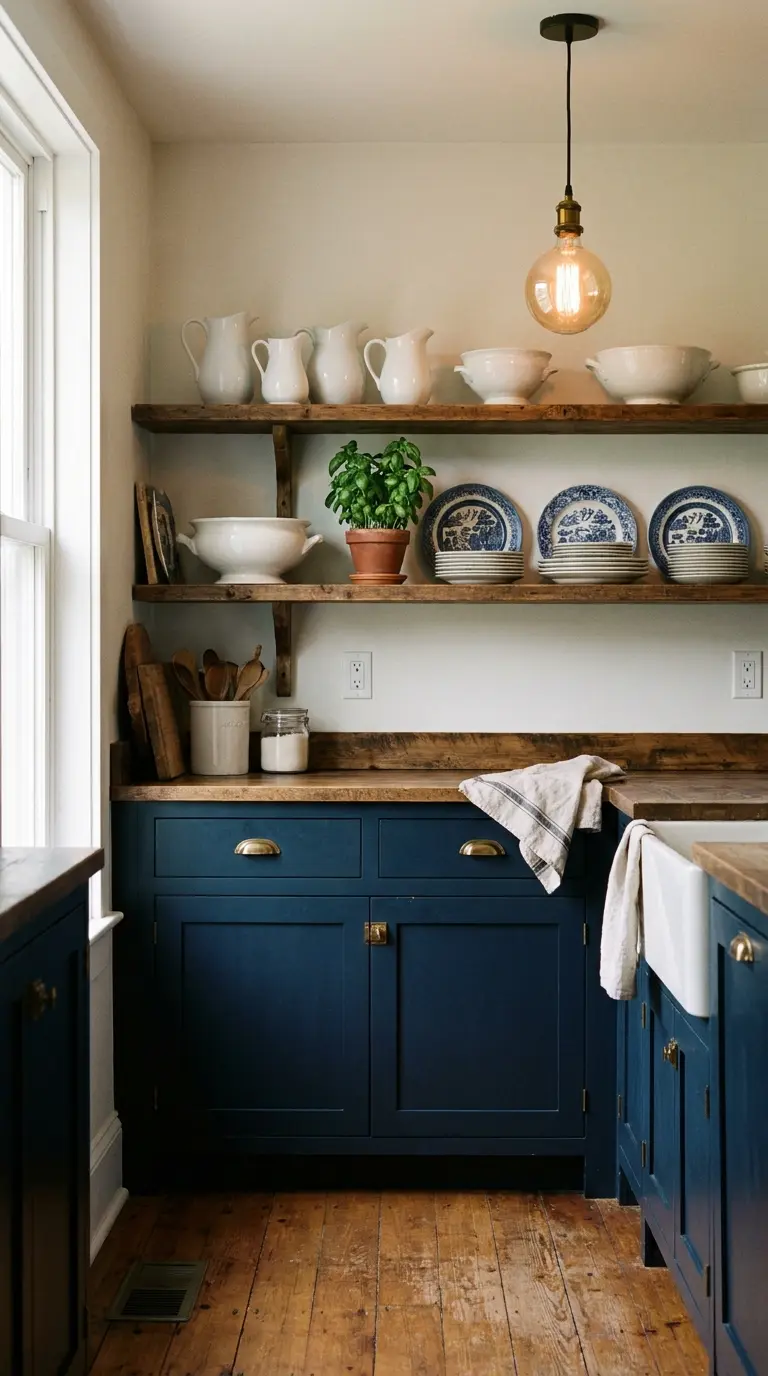
The cabinets and countertops are the foundation of any blue kitchen, but the accessories and finishing touches are what turn a good blue kitchen into a great one. And this is where personal taste really gets to show itself because the options for how to complete a blue kitchen are genuinely endless.
Lighting is the first consideration beyond the structural elements. Pendant lights over an island or peninsula are the most visible lighting fixture in most kitchens, and they have an outsized influence on how the whole space reads. Warm-toned bulbs make blue cabinetry feel richer and more welcoming. Cool daylight bulbs make it feel crisper and more contemporary. Brass pendant lights complement warm-toned blues beautifully. Black metal pendants create high contrast with any shade of blue. Rattan or wicker pendants soften the whole scene into something coastal and relaxed.
Plants are underrated in blue kitchens. Greenery and blue have a natural affinity — they exist together in every garden and landscape in the world — and bringing that combination indoors in the kitchen creates something genuinely alive-feeling. Fresh herbs in clay pots, a trailing pothos on a high shelf, or a statement plant like a fiddle-leaf fig near a window all look spectacular against blue cabinetry.
Your Blue Kitchen Journey Starts Here
Blue kitchen ideas span the full spectrum from barely-there whispers of sky to the deepest, most confident declarations of midnight navy. Whatever your home style, your budget, and your comfort with color, there is a blue kitchen idea in this guide that is exactly right for you. Start with a sample pot. Live with it for a week. Trust what you feel — because the kitchen that makes you happy every single morning is always the right choice.
Frequently Asked Questions
1. What is the most popular shade of blue for kitchen cabinets?
Navy blue remains the most consistently popular shade for kitchen cabinets, favored for its versatility and timeless appeal. Hale Navy by Benjamin Moore and Hague Blue by Farrow and Ball are two of the most specified shades among interior designers. However, softer blues like duck egg and powder blue have gained significant ground in recent years, particularly in coastal and Scandinavian-inspired homes.
2. Do blue kitchens add value to a home?
Well-executed blue kitchens can absolutely add value to a home, particularly when the blue is used thoughtfully — neutral enough to appeal to a range of buyers, high-quality in execution, and paired with timeless finishes. However, very bold or unusual blue choices (like electric cobalt on all cabinets) can be polarizing in the resale market. If resale value is a priority, a mid-toned navy or subtle blue-gray is the safest choice.
3. What color countertops go best with blue kitchen cabinets?
White quartz or white marble countertops are the most universally successful pairing with blue kitchen cabinets, as they create clean contrast and allow the blue to be the star. Warm wood countertops (like butcher block or walnut) add warmth and work beautifully with navy and darker blues. Light concrete or stone countertops work well with contemporary blue kitchen designs, particularly cobalt or medium blues.
4. Is blue a good color for a small kitchen?
Yes, blue can work very well in a small kitchen when chosen and applied thoughtfully. Lighter blues like powder blue or sky blue are the easiest choices as they maintain brightness. Even deeper blues can work in small kitchens if paired with reflective surfaces, adequate lighting, and light-colored countertops and walls. The key is to keep surfaces uncluttered and the palette focused.
5. What hardware finish works best with blue kitchen cabinets?
Brass and gold hardware are the most popular choices for blue kitchen cabinets, offering warm contrast against cool blue tones. Brushed brass is slightly more understated than polished gold and works in both traditional and contemporary kitchens. Black hardware is a growing choice for contemporary blue kitchens, creating high-contrast and modern-looking results. Chrome works well with lighter blues in more contemporary settings.
6. Can you mix blue kitchen cabinets with colored walls?
Absolutely — mixing blue cabinets with colored walls can create beautiful, layered interiors. The safest approach is to keep the wall color in the same cool tone family as the blue, using a lighter or more muted version. Warm wall colors like terracotta, warm white, or sage green can create stunning contrast against navy or deeper blues. Avoid using another saturated color that competes directly with the blue cabinets.
7. How do I make my blue kitchen feel warmer?
To warm up a blue kitchen, focus on the materials and accents around the blue. Warm wood countertops, open shelving, or flooring immediately soften the cool quality of blue. Brass or gold hardware adds warmth. Warm-toned pendant lights and under-cabinet lighting make a significant difference. Plants, wicker accessories, and warm-colored ceramics on open shelves all contribute to making a blue kitchen feel cozy rather than cold.
8. What backsplash goes with blue kitchen cabinets?
White subway tile is the most classic and versatile backsplash choice for blue kitchen cabinets, creating clean contrast without competing. White marble or stone-effect tile adds elegance. For something more adventurous, blue and white patterned tiles (Moroccan zellige, encaustic cement tiles, or Delft-style patterns) extend the blue theme beautifully. Natural stone backsplashes in warm tones create contrast and warmth against blue cabinets.
9. What floor color works best with a blue kitchen?
Light hardwood floors are among the most universally successful choices for blue kitchens — the warm wood tone counterbalances the cool blue beautifully. White, cream, or light gray tile floors also work well, keeping the space bright. Dark floors can work in larger blue kitchens with good lighting, creating a dramatic, layered effect. Terracotta or warm stone tile floors pair particularly well with duck egg or teal-toned blues, adding Mediterranean warmth.
10. Should kitchen upper and lower cabinets be the same blue?
Not necessarily — and in fact, two-tone approaches where upper and lower cabinets are different colors are highly popular right now. Many designers recommend a deeper blue on the lower cabinets and white or a lighter tone on the uppers to maintain visual lightness in the upper portion of the kitchen. However, if your kitchen has excellent natural light and high ceilings, all-blue cabinets throughout can look stunning and cohesive.
11. What paint brand makes the best blue for kitchen cabinets?
Farrow and Ball, Benjamin Moore, and Sherwin-Williams are the most highly regarded paint brands for kitchen cabinet painting in terms of depth of color and finish quality. Farrow and Ball’s Hague Blue and Pitch Blue are design-world favorites. Benjamin Moore’s Hale Navy and Van Deusen Blue are popular in North America. For budget-friendly options, Rust-Oleum’s cabinet paint line and Annie Sloan’s Chalk Paint offer accessible alternatives with good results when properly applied.
12. Is blue a timeless color choice for a kitchen?
Blue is one of the most enduring color choices in kitchen design — arguably more timeless than gray, which has shown signs of dating, and more interesting than white. The history of blue and white in kitchen design goes back centuries across many cultures, suggesting it’s not a trend but a fundamental aesthetic affinity. Navy in particular has been a classic kitchen choice for decades and shows no signs of declining. Choosing mid-toned, dusty, or classic navy blues over highly saturated or very trendy shades maximizes long-term appeal.
13. What appliances look best in a blue kitchen?
Stainless steel appliances are the most versatile choice for blue kitchens, as they work with every shade of blue without competing or clashing. White appliances pair beautifully with lighter blues for a softer, more cohesive look. Black stainless appliances create a dramatic contemporary feel against navy or cobalt blue cabinets. Some homeowners in very design-forward blue kitchens choose colored appliances — a cream or red range cooker, for instance — to add a focal-point contrast.
14. How do I choose between navy and light blue for my kitchen?
The choice largely comes down to the amount of natural light in your kitchen, the size of the space, and your personal design preferences. Navy works best in kitchens with good natural light, larger rooms, or as a deliberate dramatic statement. Light blue is more forgiving in smaller spaces, north-facing rooms, or for homeowners who want color without drama. Another approach: compromise with a medium dusty blue deep enough to have presence, light enough to feel airy.
15. What color should I paint my kitchen walls if I have blue cabinets?
White or very pale walls are the classic and safest choice for blue kitchen cabinets — they let the blue be the star and keep the space feeling open. Very pale blues or blue-grays on the walls can create a tonal, monochromatic kitchen look that feels sophisticated when done with care. Warm whites with yellow or cream undertones work particularly well with navy cabinetry, adding warmth without competing. Sage green walls are a beautiful, slightly unexpected pairing with blue cabinets that works particularly well in traditional or farmhouse-style kitchens.