

I want to start with a confession. When my partner first suggested we paint our bedroom black, I said no. Immediately, firmly, and without any discussion. My exact words were something like, “That sounds like a decision we would deeply regret by Tuesday.” I pictured a dark cave, a space that would feel heavy and oppressive, a room that would make waking up on gray mornings feel even grimmer than they already do.
That conversation happened about four years ago. Today, our bedroom has black walls, a black ceiling, black bedding layered with warm gold and cream accents, and it is genuinely the most beautiful and restful room in our home. Guests who see it for the first time almost always say the same thing: “I never thought I would like a black bedroom, but this is stunning.”
If you are feeling what I felt before we made the leap, this article is for you. Black bedroom ideas are not about making a space feel smaller or darker or more depressing. When done right, they create something that feels intentional, cozy, dramatic, and deeply personal. Let me show you exactly how to get there.
Why Black Bedroom Ideas Work Better Than You Expect
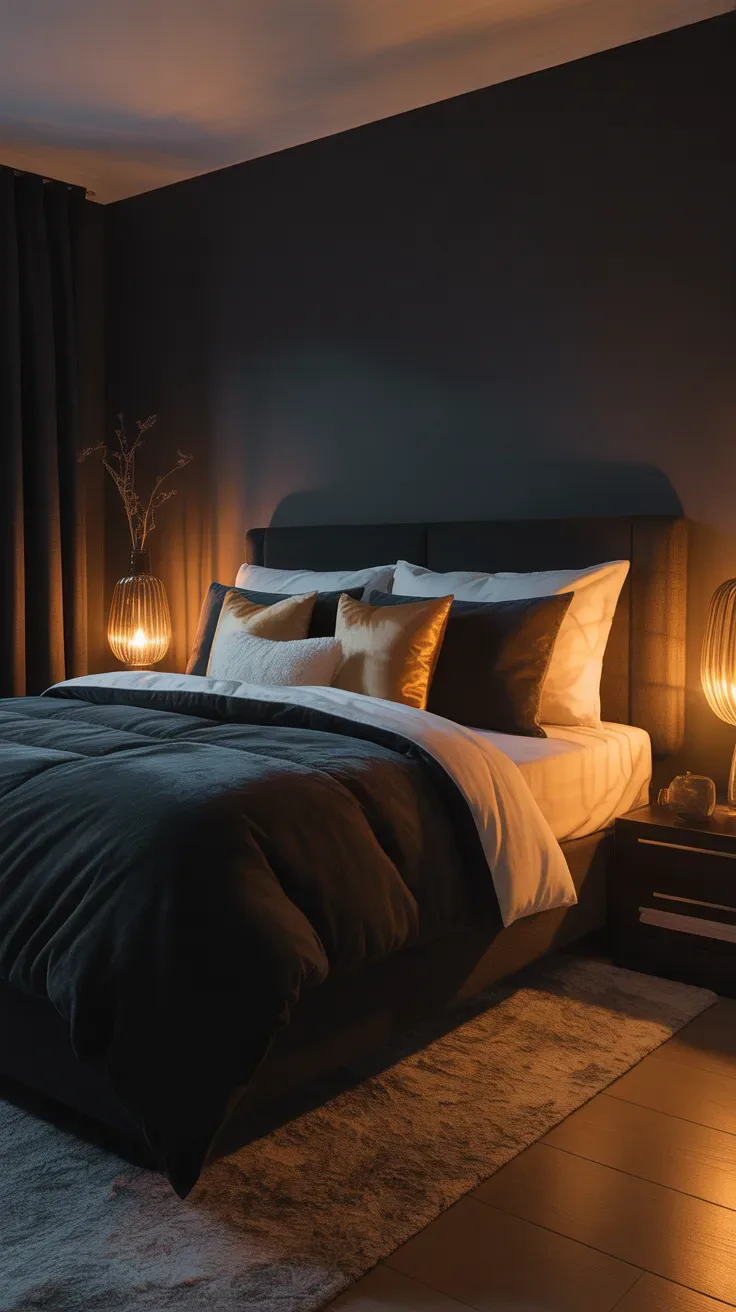
The most common objection to black bedroom ideas is that black will make the room feel smaller and darker. And here is the thing that objection is based on a misunderstanding of how dark colors actually work in a space. Yes, black absorbs light rather than reflecting it. But that quality, which sounds like a disadvantage, actually creates something remarkable: it removes visual distraction.
In a white or light-colored room, your eye bounces from wall to wall, from corner to corner, constantly processing the boundaries of the space. In a dark room, those boundaries recede. The walls seem to dissolve, and what remains is the furniture, the lighting, and the atmosphere you have created. Interior designers call this effect enveloping, and it is one of the reasons that dark bedrooms so often feel more luxurious and intimate than their lighter counterparts.
Beyond the visual theory, there is a practical benefit to black bedrooms that almost no one talks about: they block light extraordinarily well. If you struggle with early morning sunlight disrupting your sleep, dark walls particularly when combined with dark curtains create a naturally dim environment that supports deeper, longer sleep. My sleep genuinely improved after we repainted our bedroom, and while I cannot prove causation, I have a strong suspicion the darkness had something to do with it.
Also Read : Stunning Pink Wallpaper Bedroom Ideas You Will Absolutely Love in 2026
The Unexpected Coziness of a Dark Room
Think about the spaces where you feel most comfortable and relaxed outside of your home. Cozy restaurants with dark walls and candlelight. Intimate bars with low lighting and rich wood tones. Home theaters designed to feel enveloping and immersive. These spaces all use darkness deliberately because darkness creates a psychological sense of enclosure and safety that light, airy spaces simply cannot replicate.
Your bedroom is the most private and personal room in your home. It is where you decompress, where you sleep, where you begin and end each day. The case for creating a cozy, enveloping atmosphere in that specific room is actually very strong. Black bedroom ideas lean into that psychology rather than fighting against it, and the result tends to be a room that people never want to leave.
Choosing the Right Shade of Black for Your Bedroom
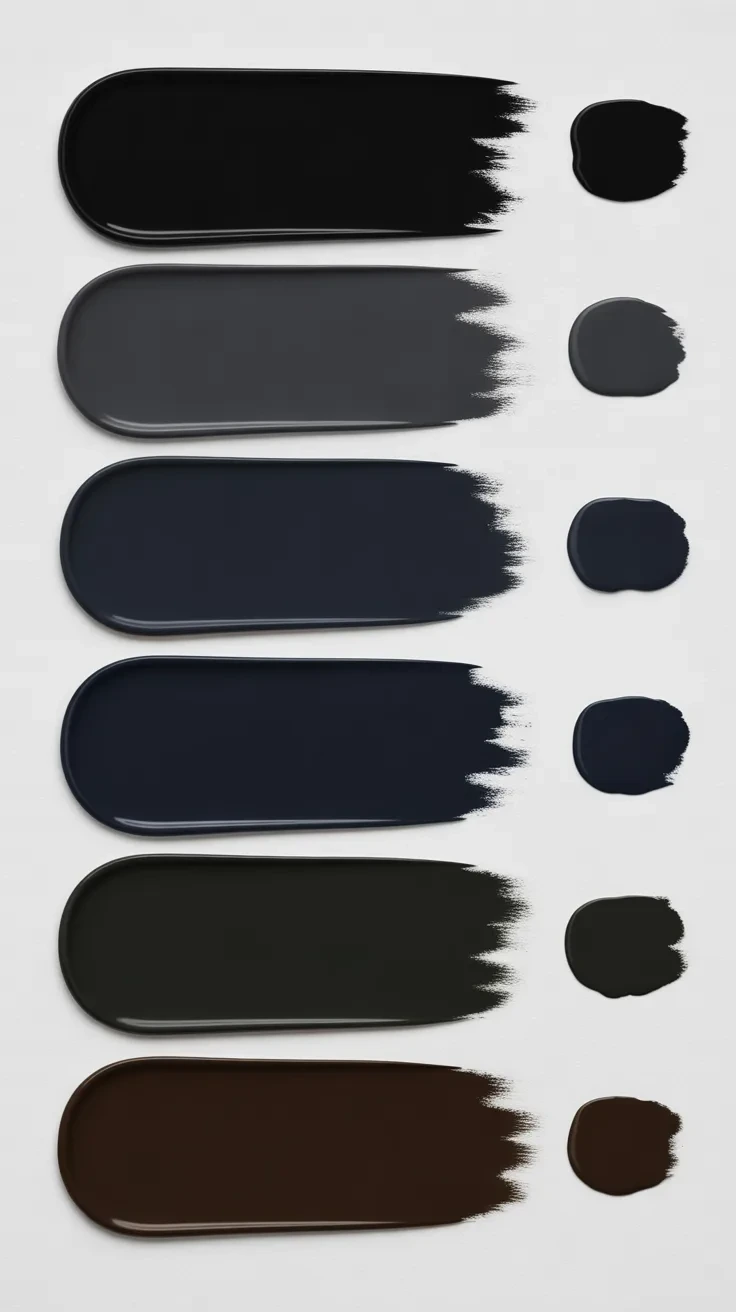
Here is something the home design world does not always make clear: black is not a single color. Within what we broadly call black, there is an enormous range of undertones and finishes that produce dramatically different results on bedroom walls. Choosing the right one for your specific room and your specific aesthetic is one of the most important decisions in executing black bedroom ideas successfully.
True Black Versus Near-Black: Understanding the Difference
True black paint the kind that is as close to pure black as you can get reads very differently from what most designers call near-black. Near-black paints have discernible undertones of navy, charcoal, green, brown, or purple that reveal themselves in different lighting conditions. These undertones can make the color feel warmer, cooler, more sophisticated, or more rustic depending on what they are and how your room’s light plays with them.
For bedrooms, near-black shades with warm undertones those that lean slightly brown, olive, or even warm gray tend to feel more comfortable and livable than true black or cool-toned near-blacks. A color like Farrow and Ball’s Off-Black or Benjamin Moore’s Black Panther sits in this warm near-black territory and creates a space that feels rich and atmospheric without feeling stark or cold.
Also Read : Best Boho Bedroom Ideas Relaxed Chic Vibe That Feels Effortless
Matte Versus Satin Versus Gloss: Finish Matters as Much as Color
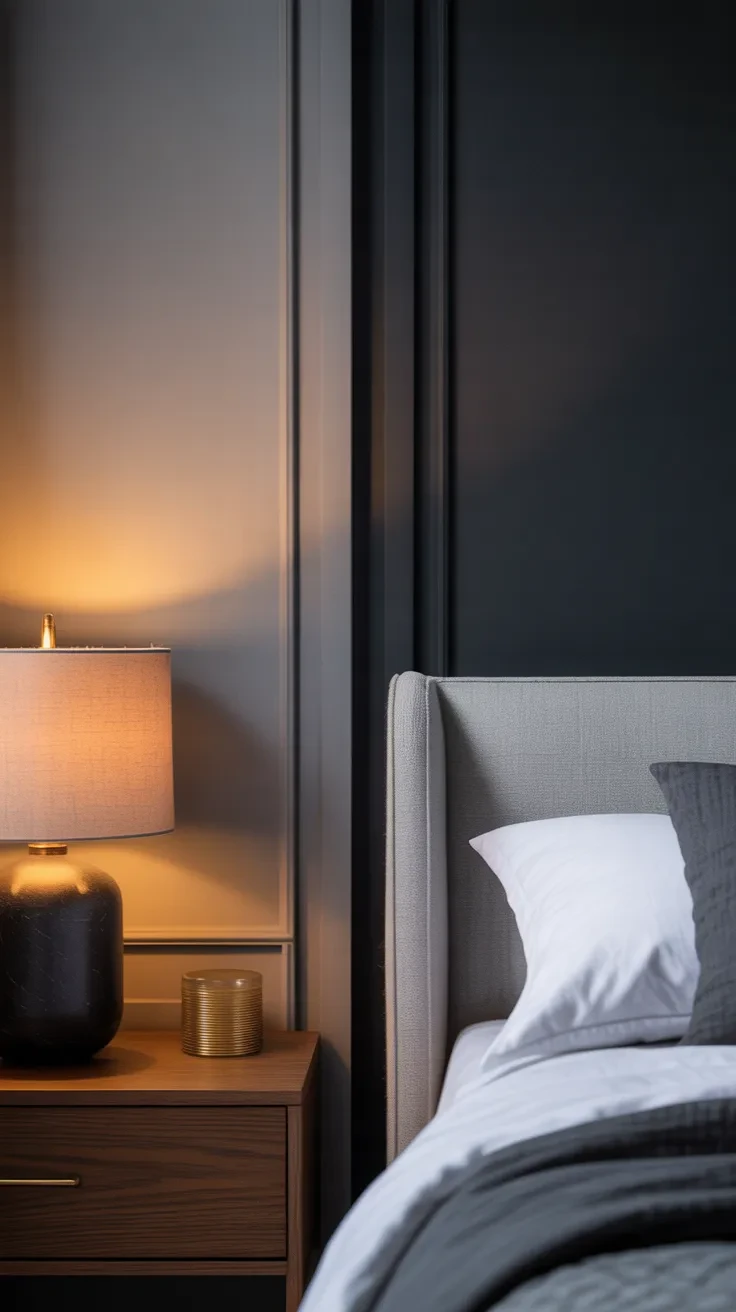
The finish you choose for black walls will affect the feel of the room as dramatically as the specific shade you select. Matte black absorbs light completely and creates the softest, most velvety look — it is the finish most associated with the moody, atmospheric bedroom aesthetic and tends to hide wall imperfections beautifully. The downside is that matte finishes are harder to clean and can scuff more easily than other finishes.
Satin and eggshell finishes have a very slight sheen that adds a subtle dimension to black walls without making them look reflective. This finish is more practical for bedroom walls because it is easier to wipe clean and holds up better to the occasional bump or mark. High-gloss black is a dramatic choice that creates a reflective, lacquered look — stunning in small doses such as a single accent wall or built-in shelving, but potentially overwhelming on all four walls of a bedroom.
Black Bedroom Ideas for Every Style and Aesthetic
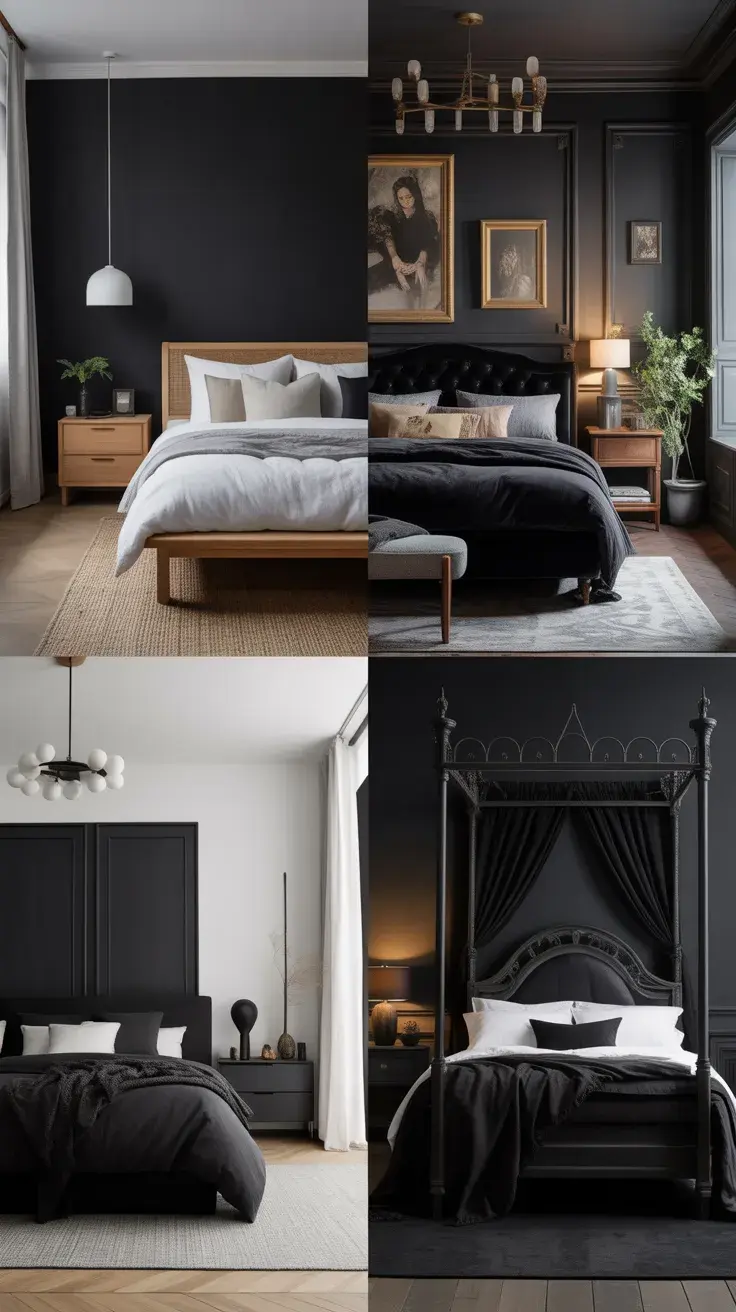
One of the most wonderful things about black bedroom ideas is how many different design aesthetics they can serve. Black is not a style — it is a foundation. Depending on the materials, textures, and accent colors you pair with it, a black bedroom can feel minimalist and Zen, maximalist and glamorous, industrial and raw, or romantic and Gothic. Here is how the same dark foundation takes on completely different personalities across different design styles.
Minimalist Black Bedrooms: Less Is So Much More
The minimalist black bedroom strips everything back to essentials and lets the darkness itself become the statement. Think platform beds low to the ground in matte black or dark walnut, a single sculptural bedside light, crisp white or cream bedding that pops against the dark walls, and nothing on the walls except perhaps one large piece of intentional artwork. No clutter, no excess, no distraction.
This approach works particularly well in smaller bedrooms because it removes the visual noise that can make a small room feel chaotic. The dark walls recede and the carefully chosen pieces become sculptural and considered. If you tend toward a more restrained personal aesthetic and you want your bedroom to feel like a sanctuary rather than a showcase, minimalist black bedroom ideas might be exactly right for you.
Maximalist Black Bedrooms: Drama Without Apology
At the other end of the spectrum, the maximalist black bedroom uses darkness as a backdrop for extraordinary richness and visual complexity. Velvet upholstered headboards in deep jewel tones — emerald, sapphire, or burgundy — against black walls. Layered bedding in multiple textures and patterns. Vintage oil paintings in ornate gilded frames. A chandelier dripping with crystals. Mirrored furniture that multiplies the candlelight. Every surface considered, every corner given purpose.
What makes the maximalist approach work is that black provides visual coherence to what might otherwise feel chaotic. When everything sits against the same dark background, even a very layered and busy arrangement of objects gains a unified quality. The black becomes the thread that ties together the velvet, the brass, the silk, the crystal, and the antique wood into a cohesive whole.
Industrial Black Bedrooms: Raw Meets Refined
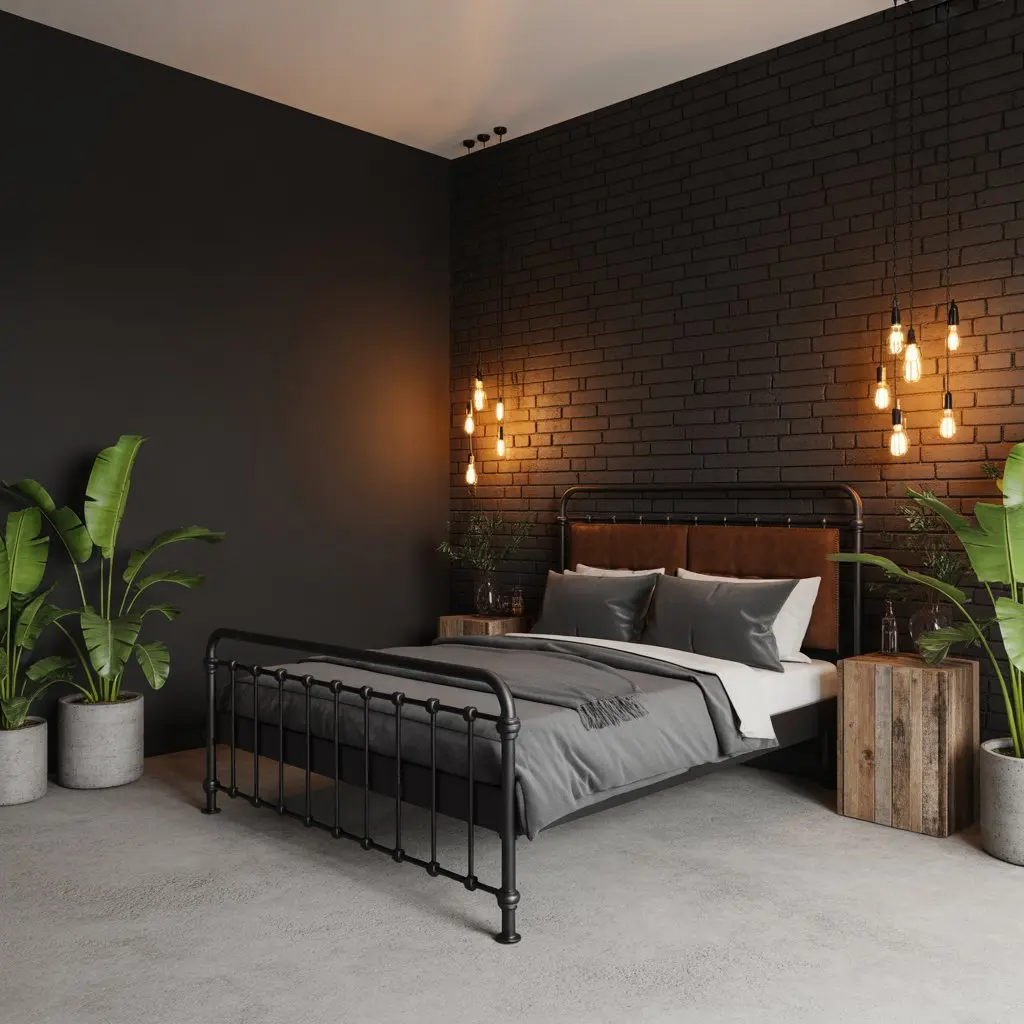
The industrial black bedroom takes inspiration from converted loft spaces and factory buildings: exposed brick painted black or left in its natural tone against black accent walls, raw steel bed frames, concrete-effect surfaces, Edison bulb pendant lights hanging from visible cord, and mixed wood tones that feel worn rather than polished. This is a more relaxed interpretation of black bedroom ideas, one that feels genuinely lived-in and comfortable rather than formally designed.
Industrial black bedrooms pair particularly well with accent materials like weathered leather, raw linen, reclaimed wood, and brushed steel. The combination of black with these organic, imperfect materials creates a warmth that prevents the space from feeling cold or corporate. Add a few plants — dark green foliage looks extraordinary against black walls — and the industrial black bedroom becomes one of the most genuinely appealing and personal bedroom styles available.
Black Bedroom Accent Colors That Make the Design Sing
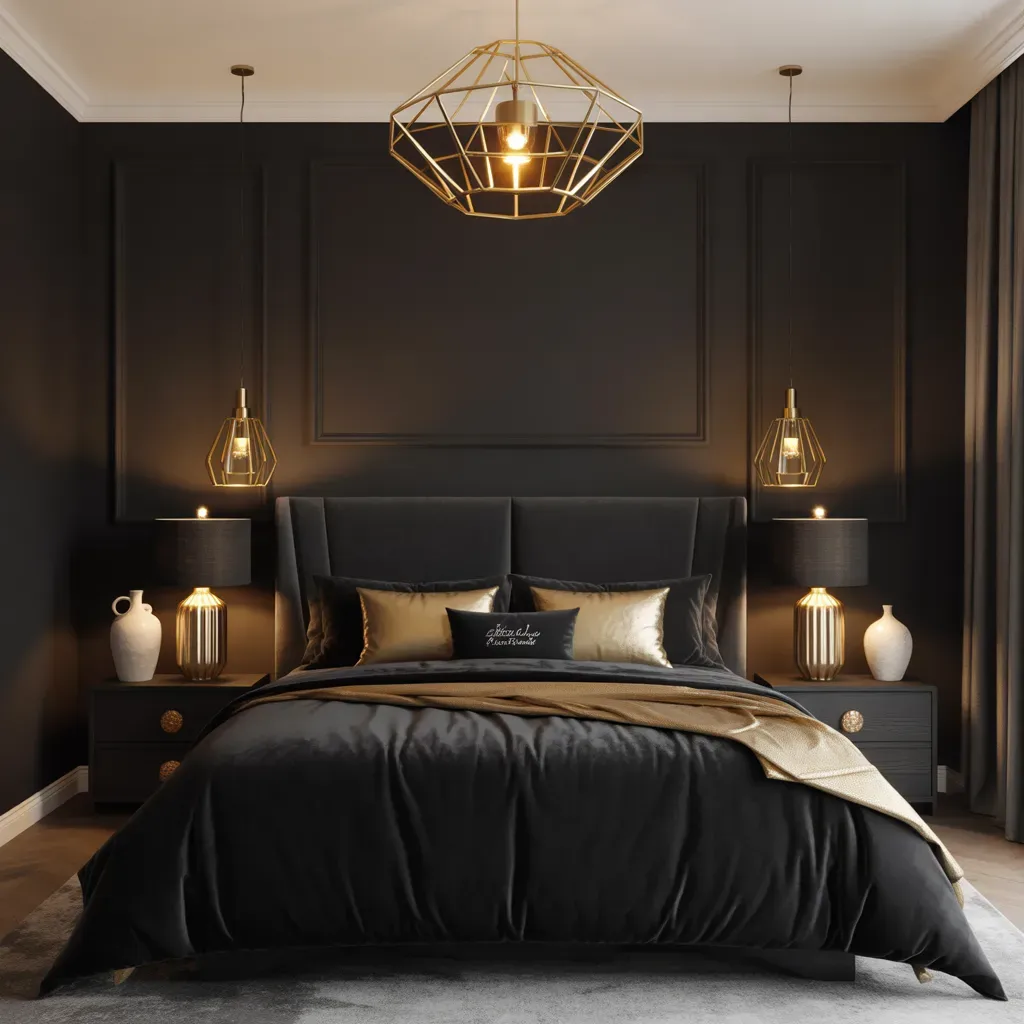
Black on its own is a powerful foundation, but the accent colors you pair with it are what give a black bedroom its personality and soul. The right accent combination can make a black bedroom feel warm and luxurious, cool and contemporary, natural and grounded, or playful and unexpected. This is where your individual taste gets the most room to express itself within your black bedroom ideas.
Black and Gold: The Timeless Luxury Combination
If there is one color combination that appears in black bedroom design more than any other, it is black and gold. And the reason is simple: it works with extraordinary consistency. Gold — whether in the warm yellow-gold of polished brass, the cooler champagne of brushed gold hardware, or the aged quality of antique gilt frames — creates a warm, luminous contrast against black that reads immediately as luxurious and considered.
You do not need to go heavy on the gold to make this combination work. In fact, restraint is more effective. A few key gold accents — bedside lamps, drawer pulls, a mirror frame, the legs of a bench at the foot of the bed — create the visual warmth the room needs without tipping into territory that feels overdone or flashy. Think of gold as seasoning: used in the right quantity it elevates everything, used too liberally it overwhelms.
Black and White: Clean, Graphic, and Always Current
The black and white bedroom is a masterclass in contrast and has never really gone out of style because it simply works too well to become dated. White bedding against black walls creates a crisp, graphic quality that feels both sophisticated and clean. Add white trim work, white window frames, and white ceiling for a bedroom that has all the drama of black without any sense of heaviness or oppression.
The key to making black and white work without feeling clinical is texture. When both colors appear in multiple textures — matte black walls, glossy black side table, crisp white cotton sheets, chunky white knit throw, white lacquered dresser — the room gains depth and tactile richness that prevents it from feeling flat or sterile. Pattern works beautifully in this palette too: a black and white geometric rug, striped pillowcases, or graphic artwork adds visual interest without introducing additional color.
Black and Warm Neutrals: The Cozy Alternative
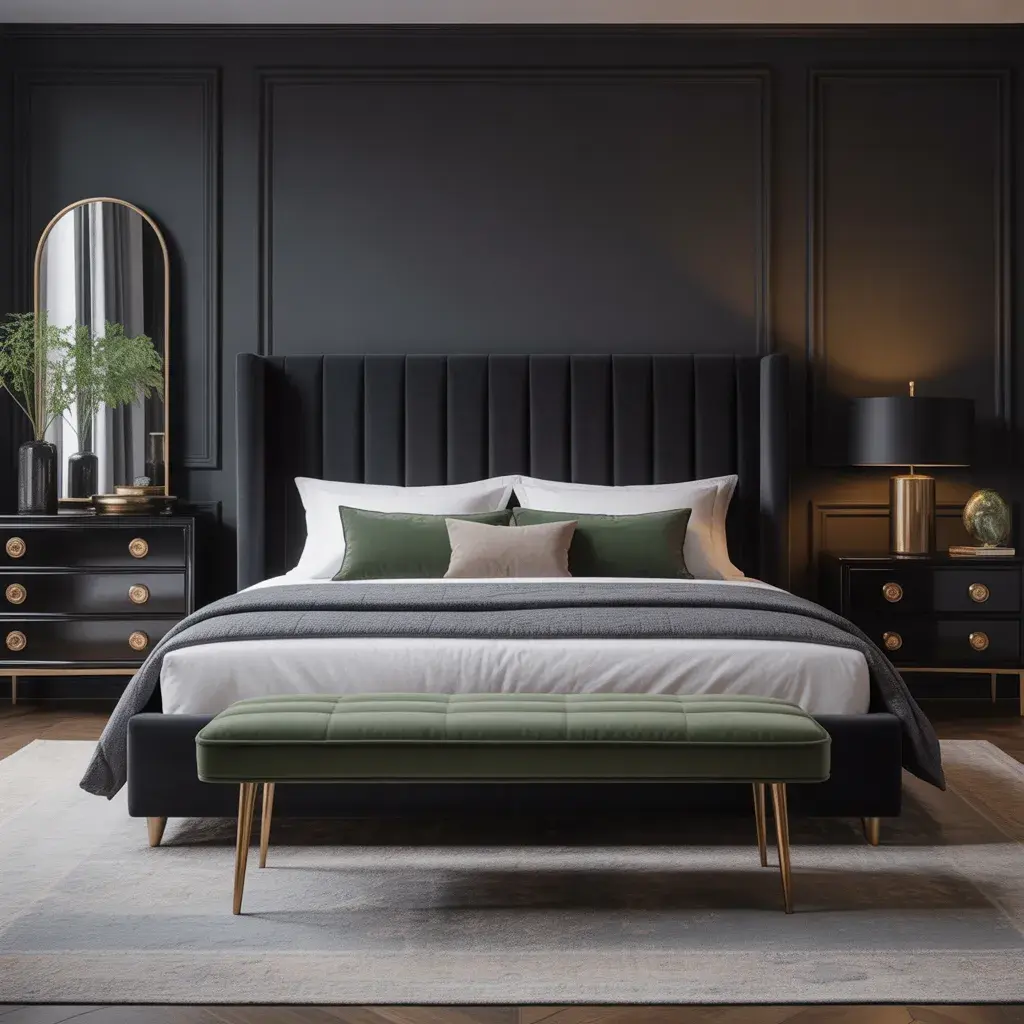
For those who want the depth of a black bedroom but worry about the space feeling cold or severe, pairing black with warm neutrals cream, camel, warm beige, terracotta, and natural wood tones — creates an alternative that feels deeply cozy and welcoming. This combination has a strongly organic quality: black like rich soil, neutrals like stone and sand and dried grass. It feels grounded and natural rather than dramatic and formal.
Linen bedding in natural undyed tones, a wood-framed bed in a warm walnut or oak finish, rattan or woven accent pieces, and terracotta vessels with trailing plants create a black bedroom that feels more like a beautiful forest cabin than a sleek city apartment. This interpretation of black bedroom ideas is particularly appealing if your overall home aesthetic tends toward the natural and organic rather than the polished and glamorous.
Lighting in Black Bedrooms: Getting It Exactly Right
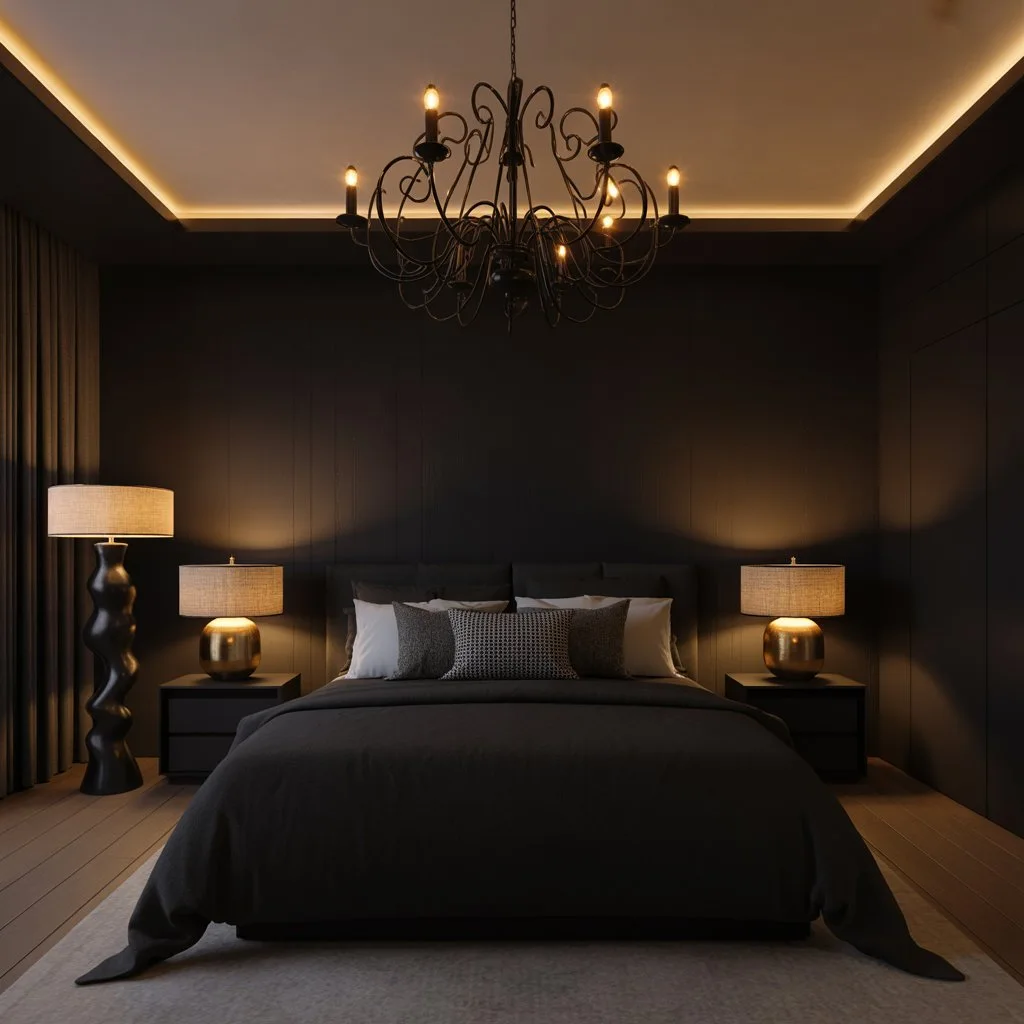
Lighting is important in every bedroom, but in a black bedroom it becomes absolutely critical. Poorly planned lighting in a dark room does not just look bad — it makes the room genuinely difficult to function in and removes all the atmospheric quality you were trying to create in the first place. Getting the lighting right is the single most important technical element of executing black bedroom ideas successfully.
Layer Your Light Sources
The rule of layered lighting applies everywhere in interior design, but it matters most in dark rooms. You need at minimum three types of light working together: ambient light that fills the general space, task lighting for specific functions like reading, and accent lighting that creates atmosphere and visual interest. Rely on a single overhead fixture in a black bedroom and you will end up with a room that feels either too dark to function in or harshly over-lit — neither of which is what you are going for.
Start with your ambient source: a ceiling fixture that provides general illumination. In a black bedroom, a statement chandelier or pendant in black or brass adds to the aesthetic while serving the functional purpose. Layer in bedside lamps for reading light — table lamps with warm-toned shades diffuse light beautifully and add considerable warmth to dark walls. Then add accent lighting: a floor lamp in a corner, LED strips behind a headboard, or small spotlights aimed at artwork or plants.
Warm Light Temperature Is Non-Negotiable
In a black bedroom, the color temperature of your bulbs matters enormously. Cool white light — anything above 3500 Kelvin — will make a black bedroom feel cold, clinical, and genuinely unpleasant. Warm white light in the 2700K to 3000K range creates a golden, amber-toned glow that transforms the atmosphere completely, bringing out the richness of dark walls and making the whole room feel intimate and welcoming.
Edison-style bulbs with their visible warm filaments are a particularly beautiful choice for bedside lamps and exposed fixtures in black bedrooms because they add a warm orange glow that plays beautifully against dark walls. Dimmable bulbs on all your circuits give you the ability to adjust the mood from functional daytime light to deeply atmospheric evening ambiance with just a simple adjustment.
Mirrors and Reflective Surfaces: Amplifying the Light You Have
One practical concern about black bedrooms is that they absorb light rather than reflecting it, which means you need to be smarter about maximizing the light you do introduce. Mirrors are the most obvious tool — a large mirror, particularly one positioned to reflect a light source like a bedside lamp or a window, can double the perceived luminosity of a dark room.
Beyond mirrors, other reflective surfaces do important work in black bedrooms: glossy ceramic vases, polished metal accents, mirrored furniture, glass-fronted frames. These surfaces catch and scatter light in ways that add sparkle and dimension to a room that might otherwise feel flat. This is one of the reasons that black and gold combinations work so well — the gold surfaces are inherently reflective and bring light back into the space in the most beautiful way.
Black Bedroom Furniture: What Works and What to Avoid
Furniture choices in a black bedroom require more thought than they do in a neutral room because the relationship between furniture and background is much more complex when both are dark. You are essentially making decisions about contrast, texture, and visual separation in ways that you simply do not need to think about when walls are white or cream.
Matching Black Versus Contrasting Tones
The first question most people face when furnishing a black bedroom is whether their furniture should match the walls or contrast with them. There is no single right answer, but there is a useful framework: matching creates depth and drama, contrasting creates definition and clarity. A black bed against black walls creates a moody, almost cinematic quality. A walnut bed against black walls creates clear definition and a warm organic contrast.
My personal approach, and one that I have seen work consistently in black bedroom ideas across many different homes, is to match the larger furniture pieces to the wall tone while using smaller accent pieces to introduce contrast. A black bed frame blends into the dark walls but sits on a cream rug that anchors it. A black dresser against a black wall is differentiated by a warm wood top and brass hardware. This approach gives the room coherence while preventing the furniture from disappearing entirely.
Upholstered Furniture in Dark Rooms
Upholstered furniture — beds with fabric headboards, upholstered benches and chairs, tufted ottomans — is particularly beautiful in black bedrooms because soft textiles catch light differently from hard surfaces and add a dimensional quality that makes the room feel luxurious rather than heavy. Velvet is the material that performs best in dark rooms because its pile creates a play of light and shadow that gives depth and richness to any color it is applied in.
A velvet headboard in deep jewel tones — emerald, sapphire, plum, or wine — against black walls is one of the most reliably stunning combinations in black bedroom design. The headboard becomes a piece of art in its own right, its color singing against the dark background in a way it never could against a white wall. Even velvet in the same dark tonal family as the walls, such as a charcoal or deep gray headboard against black walls, creates a beautiful textural contrast.
Black Accent Wall Ideas: The Commitment-Free Entry Point
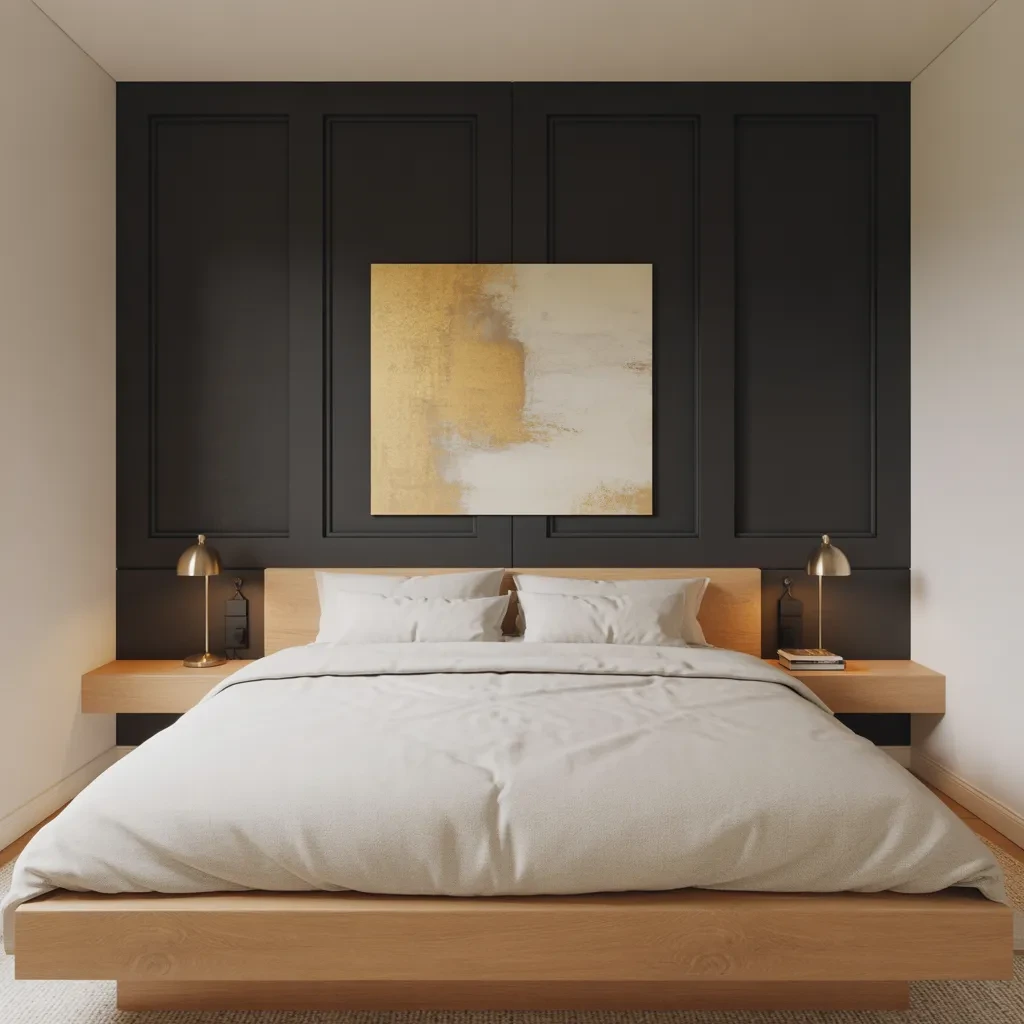
Not everyone is ready to paint all four walls black, and that is completely reasonable. The black accent wall is the gateway into black bedroom ideas for people who want drama without full commitment, and done right it can be just as impactful as a fully black room. The key is using the accent wall with intention rather than treating it as a compromise.
The Bed Wall: Always the Right Choice
When doing a single black accent wall in a bedroom, position it behind the bed. This placement works for several reasons: the bed wall is the natural focal point of a bedroom and is already the most architecturally considered wall in the space. Anchoring the bed against a dark wall makes both the bed and the wall more visually significant, giving the room a clear center of gravity that the eye is drawn to immediately upon entering.
A black bed wall works in rooms of any size. In a small bedroom, it creates the optical illusion of depth that makes the room feel larger than it is. In a large bedroom, it adds intimacy and warmth to what can otherwise feel like a vast, impersonal space. Pair the black wall with a statement headboard, flanking wall sconces at bedside height, and a large piece of artwork centered above the headboard for a result that looks thoroughly designed and intentional.
Beyond Paint: Black Accent Wall Alternatives
The black accent wall does not have to be paint. Some of the most beautiful black bedroom ideas I have seen use alternative wall treatments that add texture and dimension along with color. Black shiplap paneling creates a rustic, farmhouse-adjacent quality. Black brick — whether genuine or a thin brick veneer — adds raw, industrial texture. Black wallpaper with a subtle pattern, like a tonal damask or a botanical print in black on black, creates visual interest that plain paint cannot.
Blackened steel panels, black-stained wood slats, and even a gallery wall with black frames against a painted black wall are all valid interpretations of the black accent wall concept. Each material brings its own character to the space and shifts the overall feel of the room significantly. The material choice should be guided by the rest of the bedroom’s aesthetic — shiplap for farmhouse and coastal, steel for industrial, wallpaper for traditional and maximalist, clean painted surfaces for minimalist and contemporary.
Black Bedroom Ideas for Small Rooms: Defying the Conventional Wisdom
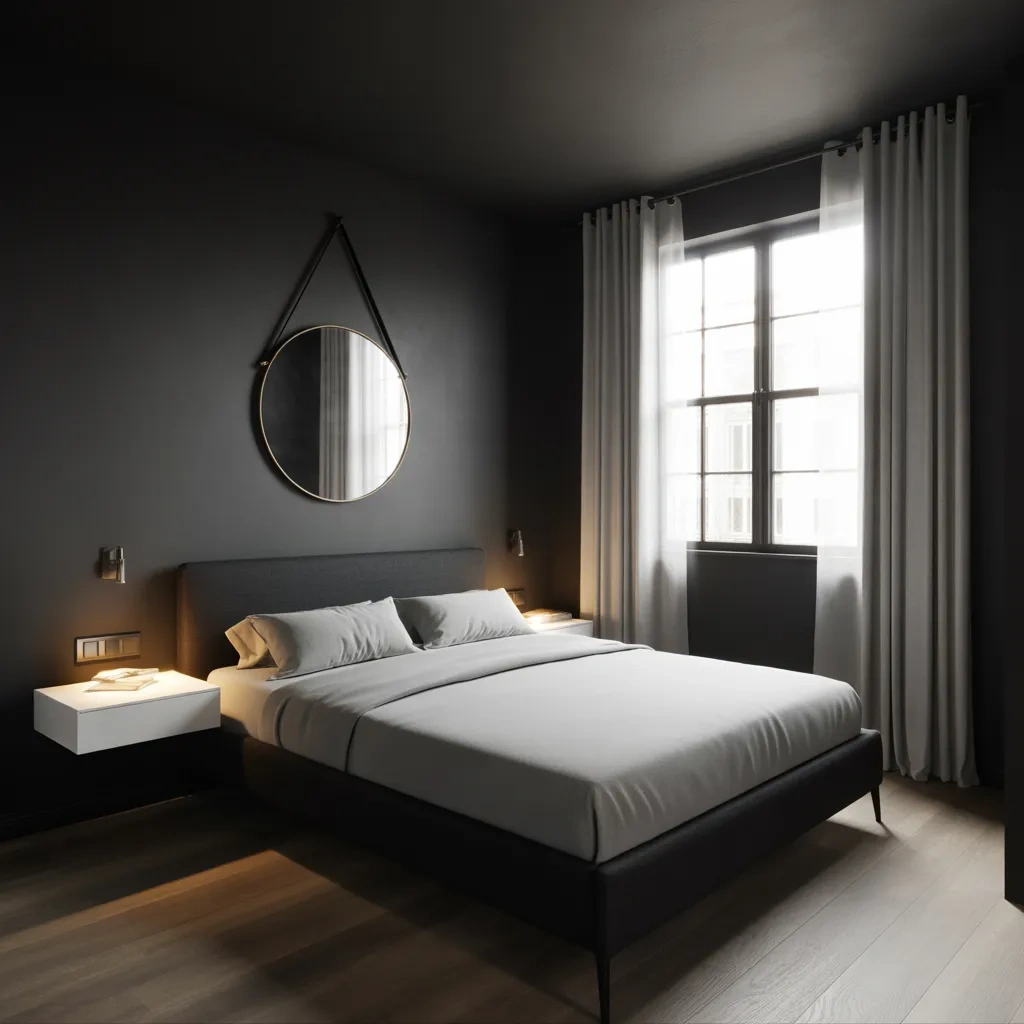
The most persistent myth about black bedrooms is that they will make a small room feel even smaller. In practice, this is simply not what happens when black bedroom ideas are executed correctly in compact spaces. Dark walls in a small room remove the visual boundary definition that actually makes us perceive a room as small — instead of seeing the corners and edges clearly, they recede into shadow and the space feels more expansive and undefined.
The rules for small black bedrooms are the same as for small rooms in any color: keep furniture appropriately scaled, maintain generous pathways, minimize clutter, and use light strategically. The dark walls do not exacerbate these requirements — in fact, the dramatic quality of dark walls in a small room can make a compact bedroom feel more like a deliberate jewel box than a cramped afterthought.
Strategic Use of White and Light in Small Black Bedrooms
In a small black bedroom, white and bright elements are your best friend because they provide the visual punctuation that prevents the darkness from feeling oppressive. White bedding is the most important element — it lights up the bed, creates a clear focal point, and makes the room feel balanced. White ceiling paint reflects downward light and makes the ceiling feel higher than it actually is. White trim on door frames and windows creates a clean architectural frame around the dark walls.
Mirrors sized generously for the space are especially effective in small black bedrooms. A large mirror on one wall, particularly one positioned opposite a window, bounces natural light around the room and creates the visual impression of an additional room beyond the reflection. This is not just a design trick — it genuinely changes how the space feels and functions, and it is one of the most useful tools in the small black bedroom design toolkit.
Black Bedding and Textiles: Layering for Luxury
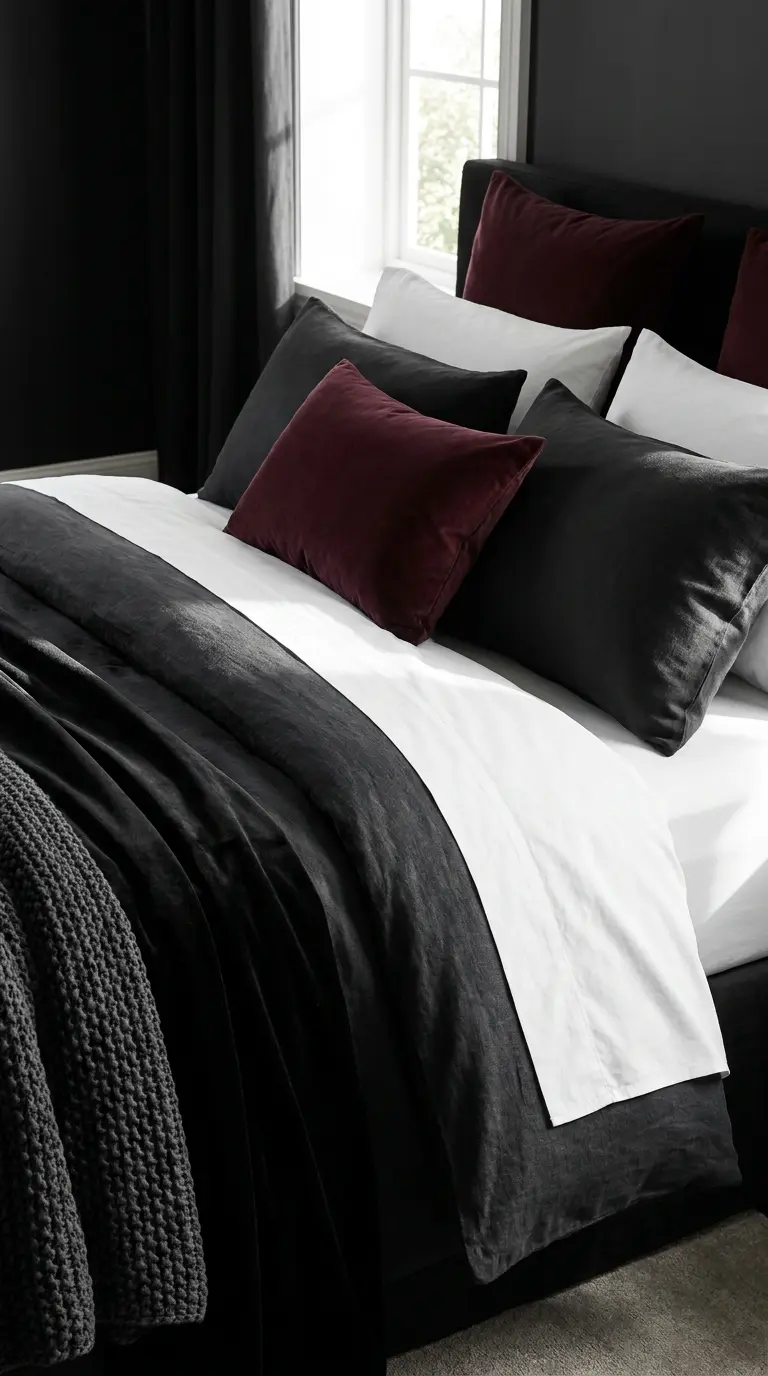
The bedding and textiles you choose for a black bedroom are just as important as the wall color because they occupy a significant portion of the visual field in any bedroom and dramatically influence how the finished space feels. In a black bedroom specifically, bedding is where you have the opportunity to introduce warmth, texture, and contrast that prevents the room from feeling flat or cold.
The Case for White Bedding in a Black Bedroom
Counterintuitive as it might seem, white or very light bedding is often the best choice for a black bedroom. The contrast is striking — crisp white sheets against dark walls create a visual moment that is immediately beautiful and that reads as both clean and luxurious. White bedding in a black room looks intentional rather than accidental, the light against the dark having a quality that is almost graphic in its boldness.
From a practical standpoint, white bedding in a black bedroom also gives you extraordinary flexibility with accent colors through pillows and throws. A dark navy or emerald throw over white bedding against a black wall creates a beautiful triadic relationship. Deep burgundy accent pillows add warmth. A tan or camel blanket introduces warmth and organic texture. White bedding is a neutral canvas that works with virtually any accent direction you choose.
Texture Is Everything in Dark Rooms
In a light-colored room, color variation across surfaces does the visual work of creating depth and interest. In a dark room where many surfaces share a similar tone, texture takes over that role completely. This is why the most beautiful black bedrooms always feature a rich layering of different textures: smooth velvet beside rough linen, glossy ceramic against matte paint, soft knit alongside crisp cotton, polished wood touching raw plaster.
Every textile in a black bedroom should be chosen with texture in mind alongside color. Do not reach for the first duvet that comes in black or dark gray — hold it, feel it, and consider how its surface will catch light differently from the wall behind it. The difference between a flat, lifeless black bedroom and a rich, layered one is almost entirely in the textural complexity of the materials chosen.
Plants in Black Bedrooms: The Element That Changes Everything
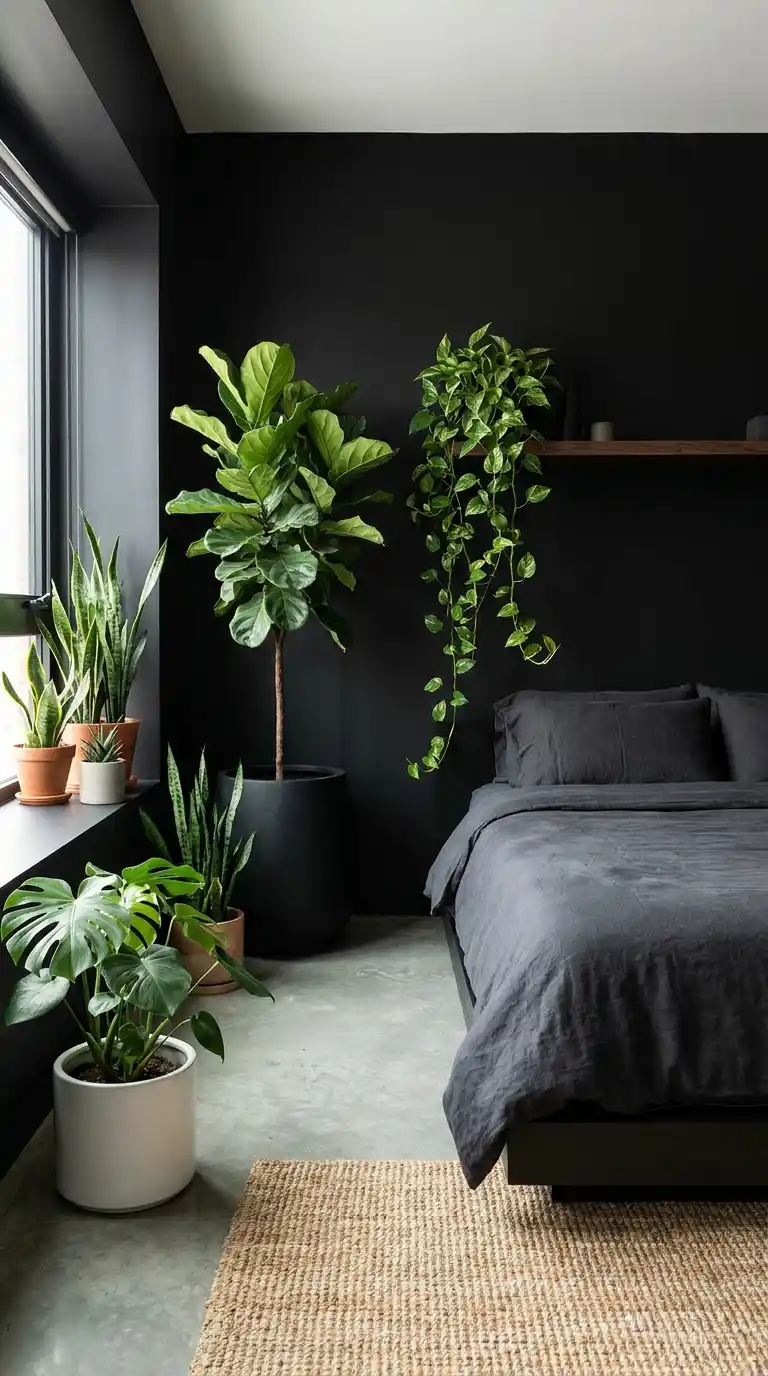
If there is a single element that most consistently transforms a good black bedroom into a truly spectacular one, it is plants. Dark green foliage against black walls creates a contrast that is genuinely stunning and deeply natural-feeling — it evokes the quality of a forest at dusk, something primordially beautiful that our brains respond to on an instinctive level.
Plants in black bedrooms also serve the practical purpose of introducing life and oxygen into what can otherwise feel like a very designed, controlled environment. There is something about the organic, living quality of a plant that softens the formality of a carefully decorated room and makes it feel genuinely inhabited rather than staged. I added a large fiddle leaf fig to the corner of our black bedroom about a year after the initial redesign, and it was the element that finally made the room feel truly complete.
Best Plants for a Black Bedroom
Not all plants suit dark rooms equally. For a black bedroom, lean toward plants with large, sculptural leaves that read clearly against the dark background rather than small-leaved varieties that get lost. Fiddle leaf figs with their large wavy leaves are one of the best options. Monsteras with their distinctive split leaves have a tropical drama that works beautifully in dark, atmospheric rooms. Snake plants provide strong vertical structure and sculptural quality, and they are extraordinarily tolerant of low-light conditions.
For trailing plants that work on shelves or in hanging positions, pothos and philodendrons are both excellent choices with their long, trailing stems and heart-shaped leaves in deep green that catches light beautifully against dark walls. From a practical standpoint, plants in bedrooms genuinely improve air quality, and the added benefit of having living organisms in a room that is designed primarily for rest feels deeply right.
Final Thoughts
I started this article with a confession about my fear of the black bedroom, and I want to end it with something that took me by surprise after we finally made the change: waking up in a dark room feels completely different from what I imagined it would. I expected to feel groggy, heavy, reluctant to get up. Instead, the dark, cocooning quality of the room made sleep feel deeper and more genuine, and the warm lamplight of morning felt more like a gentle invitation than an assault.
The black bedroom I was afraid of turned out to be the most restful, most personal, most genuinely beautiful space I have ever lived in. And from what I have heard from the dozens of people I have shared this journey with over the years, my experience is far from unique. The black bedroom tends to convert everyone who tries it.
So if you are standing where I stood four years ago, unconvinced but curious, I want to tell you what no one told me then: trust the vision. Start with a single wall if the full commitment feels like too much. Choose your accent colors thoughtfully. Get the lighting right. Add a plant. Layer your textiles with care. And then step back and see what you have created. I think you will be as surprised as I was by how much you love it.
The dark room is waiting. It is more beautiful than you think.
Frequently Asked Questions
1. Will a black bedroom make my room feel smaller?
This is the most common concern about black bedroom ideas, and the reality is more nuanced than a simple yes or no. Dark walls do absorb light rather than reflecting it, but they also cause the boundaries of the room to visually recede, which can actually make a room feel more expansive and less clearly defined in its dimensions. Many designers report that dark rooms feel larger, not smaller, because the corners and edges disappear. With the right lighting strategy and some reflective elements like mirrors, a black bedroom in even a compact room can feel intimate and considered rather than cramped.
2. What colors go well with black bedroom walls?
Black is one of the most versatile backdrop colors available and works beautifully with a wide range of accent colors. Gold and brass create a luxurious, warm contrast. White creates a crisp, graphic, timeless effect. Warm neutrals like cream, camel, and terracotta create a cozy, organic feeling. Jewel tones — emerald, sapphire, ruby, and amethyst — create dramatic and glamorous combinations. Blush pink against black has a surprising and beautiful quality. Even other dark colors like deep navy or forest green create rich, sophisticated tonal combinations when paired with black.
3. Is it okay to have a black bedroom ceiling?
Absolutely, and many designers argue that a black ceiling is actually the bolder and more beautiful choice compared to a single black wall. A dark ceiling creates an enveloping, cocoon-like quality that is extremely effective in a bedroom context. It also visually defines the sleeping space as a separate, more intimate zone. The common concern that a dark ceiling will make the room feel lower is not consistently borne out in practice — many people find that a dark ceiling feels dramatic rather than oppressive when paired with the right lighting. Balance it with lighter elements elsewhere in the room and you will likely love the result.
4. How do I make a black bedroom look cozy rather than gloomy?
The difference between a cozy black bedroom and a gloomy one is almost entirely in the warmth of the elements you pair with the darkness. Warm-toned lighting in the 2700K range transforms the atmosphere immediately. Soft, layered textiles in velvet, linen, and knit add tactile warmth. Natural wood tones introduce organic warmth. Plants bring living energy. Candles or candle-style bulbs create a particularly intimate quality. Avoid cold white lighting, bare surfaces, and minimal soft furnishings if coziness is your goal for your black bedroom ideas.
5. What type of flooring works best with a black bedroom?
A wide range of flooring options work well with black bedroom ideas. Warm hardwood floors in medium to dark tones like walnut or dark oak create a rich, unified look. Lighter hardwood floors in honey or blonde tones create a beautiful contrast with dark walls. Concrete or stone-effect flooring supports an industrial or contemporary aesthetic. A large area rug in a neutral or accent color is one of the most effective ways to introduce warmth and define the sleeping zone within a dark room, regardless of the underlying flooring material.
6. What bedding colors look best in a black bedroom?
White bedding is the most popular and arguably the most beautiful choice for a black bedroom because the contrast is striking and it creates a sense of freshness and cleanliness against dark walls. Cream and warm ivory are softer alternatives that create a slightly less stark contrast while still being very effective. Dark bedding charcoal, navy, deep green creates a more tonal, enveloping look that is very dramatic but requires more textural layering to prevent the bed from disappearing into the walls. Jewel-toned accent pillows work beautifully against both white and dark base bedding in a black bedroom.
7. How much natural light does a black bedroom need?
More natural light is always beneficial in a black bedroom, but it is not an absolute requirement. A north-facing bedroom with limited natural light can still be a beautiful black bedroom if the artificial lighting is layered and thoughtfully planned. In fact, some of the most atmospherically beautiful black bedrooms I have seen had relatively modest natural light — the darkness becomes more consistent and the room feels more intentionally atmospheric throughout the day. If your room has strong natural light, that is a bonus, but do not let a lack of it stop you from exploring black bedroom ideas.
8. Should a black bedroom have white trim?
White trim in a black bedroom creates a crisp, clean architectural definition that many designers love. It frames the dark walls in a way that looks intentional and polished, and it provides a bridge between the dark walls and the other lighter elements in the room. However, black trim with black walls creates a more seamless, enveloping look that is equally valid and arguably more dramatic. Both approaches work — the choice depends on whether you want your architecture to recede or to be defined. Many of the most beautiful black bedroom ideas use white ceilings with black walls and keep the trim in a middle ground like a dark charcoal or very deep gray.
9. Can I use wallpaper in a black bedroom?
Wallpaper is a wonderful option for black bedroom ideas and opens up possibilities that plain paint cannot. A tonal black-on-black wallpaper with a subtle pattern adds texture and sophistication without interrupting the dark palette. A bold floral wallpaper in black with metallic accents creates extraordinary drama on a single feature wall. A geometric pattern in black and gold can anchor the design direction of the entire room. Wallpaper in a black bedroom works particularly well on the bed wall as an alternative to plain paint that adds depth and visual interest.
10. What kind of curtains work best in a black bedroom?
For maximum drama and the best light control, floor-to-ceiling curtains in black, charcoal, or very deep navy work beautifully in a black bedroom — they create a seamless wall of darkness when closed and a dramatic frame when open. For a contrasting approach, crisp white linen curtains against black walls create a beautiful fresh contrast and allow light to filter through softly. Velvet curtains in jewel tones add opulence and texture. Regardless of color, choose curtains that extend well above the window frame and pool slightly on the floor for the most dramatic and considered look.
11. Is a black bedroom a good idea for a master bedroom?
A black bedroom is particularly well suited to a master bedroom for several reasons. Master bedrooms are typically the most private rooms in a home, which means the personal, intimate quality of a dark room is especially appropriate. They also tend to be the largest bedrooms, giving you the space to balance darkness with enough furniture and accent elements to prevent it from feeling oppressive. And because master bedrooms are where you spend approximately a third of your life, creating a space that genuinely feels restful, luxurious, and deeply personal is worth the creative investment that black bedroom ideas require.
12. How do I add warmth to a black bedroom?
Warmth in a black bedroom comes from several sources working together. Warm-toned lighting is the fastest and most impactful fix switch to bulbs in the 2700K range immediately. Natural wood tones in furniture and decor add organic warmth that no other material replicates. Soft textiles in warm colors cream, camel, terracotta, warm mustard introduce visual warmth. Candles or candle-style lighting add a flicker and warmth that no electric light can fully replicate. Plants with lush green foliage bring living energy. And layering multiple different textures throughout the room creates a richness that reads as warmth regardless of color.
13. Can a black bedroom work in a rental where I cannot paint the walls?
Yes, with some creative thinking. Removable wallpaper has improved dramatically in quality and now offers genuine black and dark options that apply easily and remove cleanly when you move out. A large-scale tapestry or fabric wall hanging in dark tones can cover a significant portion of a wall and create a similar atmospheric effect. Dark furniture concentrated in the room shifts the overall palette significantly even without dark walls. Dark bedding, dark curtains, and dark accents can collectively create a bedroom that reads as intentionally dark and designed even on white rental walls. Black bedroom ideas are absolutely achievable without touching a painted surface.
14. What artwork looks best in a black bedroom?
Black bedrooms are extraordinary backdrops for artwork because virtually any piece of art becomes more dramatic and more visible against a dark wall. Abstract pieces in warm gold, copper, and cream tones look stunning. Large-scale black and white photography has a gallery-quality impact. Botanical prints and nature-inspired artwork bring an organic contrast. Vintage oil paintings in dark wooden or gilded frames look particularly magnificent against black walls. Whatever your taste, invest in at least one large-scale piece of artwork for the bed wall — it becomes the room’s most important visual statement and a dark wall makes it sing in a way that a white wall simply cannot.
15. How do I style a black bedroom without it looking too dark?
The secret to styling a black bedroom that feels atmospheric rather than oppressive is balance. Balance the dark walls with a light ceiling and lighter bedding. Balance the visual weight of dark furniture with reflective accents like mirrors and metallic surfaces. Balance the absorption of dark matte surfaces with the reflection of glossy and polished elements. Balance the formality of a dark, designed room with the organic softness of plants and natural materials. And balance the statement-making nature of a black bedroom with genuine personal touches — the books you actually read, the photographs that actually matter to you, the objects that tell your real story.