
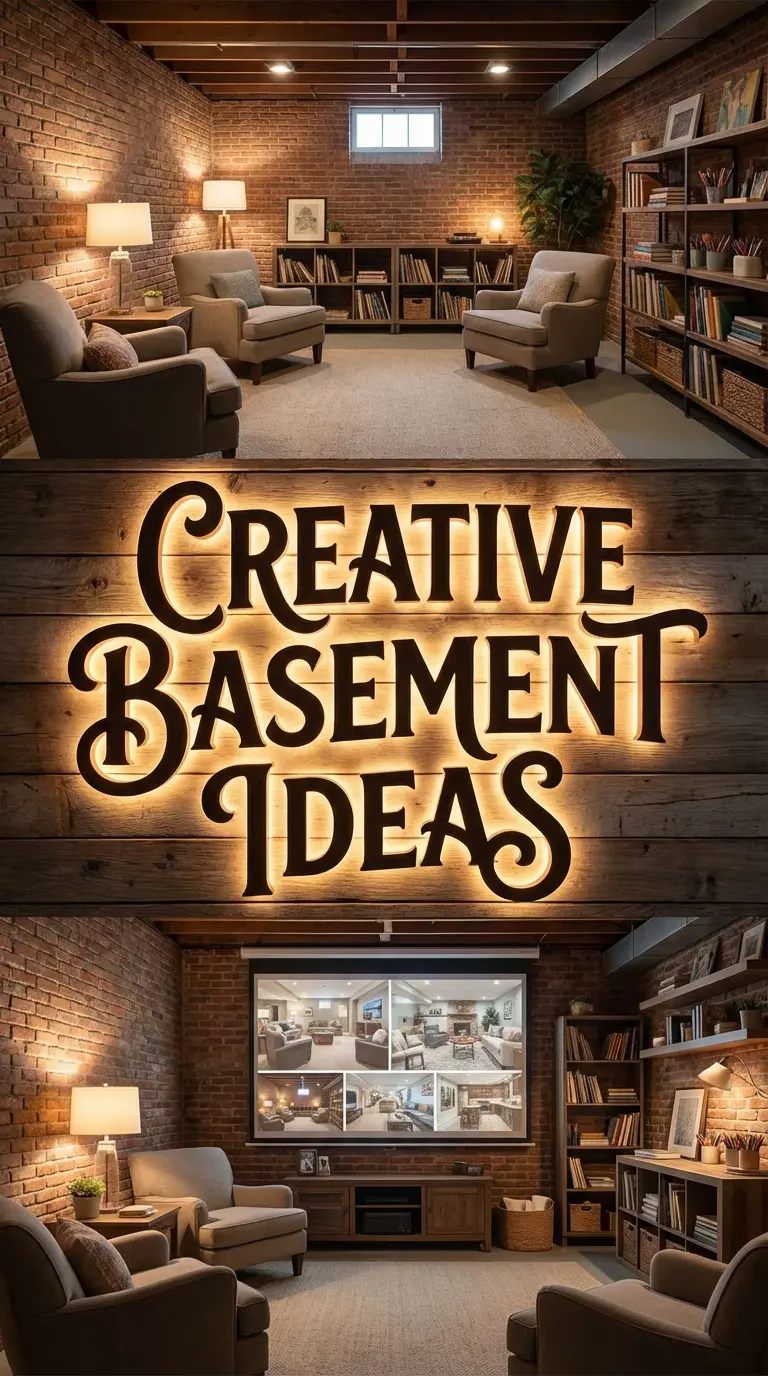
Let me be honest with you. When we bought our home, the basement was the last thing on
my mind. It was damp, dark, and smelled like old cardboard boxes. My husband wanted to
throw a few shelves in there and call it a day. But something stopped me I kept thinking
about all that square footage just sitting there, doing absolutely nothing.
That was three years ago. Today, our basement is one of the most-used rooms in our
house.
That was three years ago. Today, our basement is one of the most-used rooms in our house. It has become the spot where our kids do homework, where my husband watches football on weekends, and where I run my small online business. The transformation was not easy, but it was absolutely worth it.
If you are sitting on a basement that feels wasted, this article is for you. I have put together more than 50 basement ideas that cover every budget, every family type, and every lifestyle. Whether you want something simple or something jaw-dropping, you will find ideas here that will make you see your basement in a completely different way.
Also Read : Outdoor Firepit Ideas: The Ultimate Guide to Creating a Cozy and Stylish Backyard
Why Your Basement Deserves More Attention Than You Are Giving It
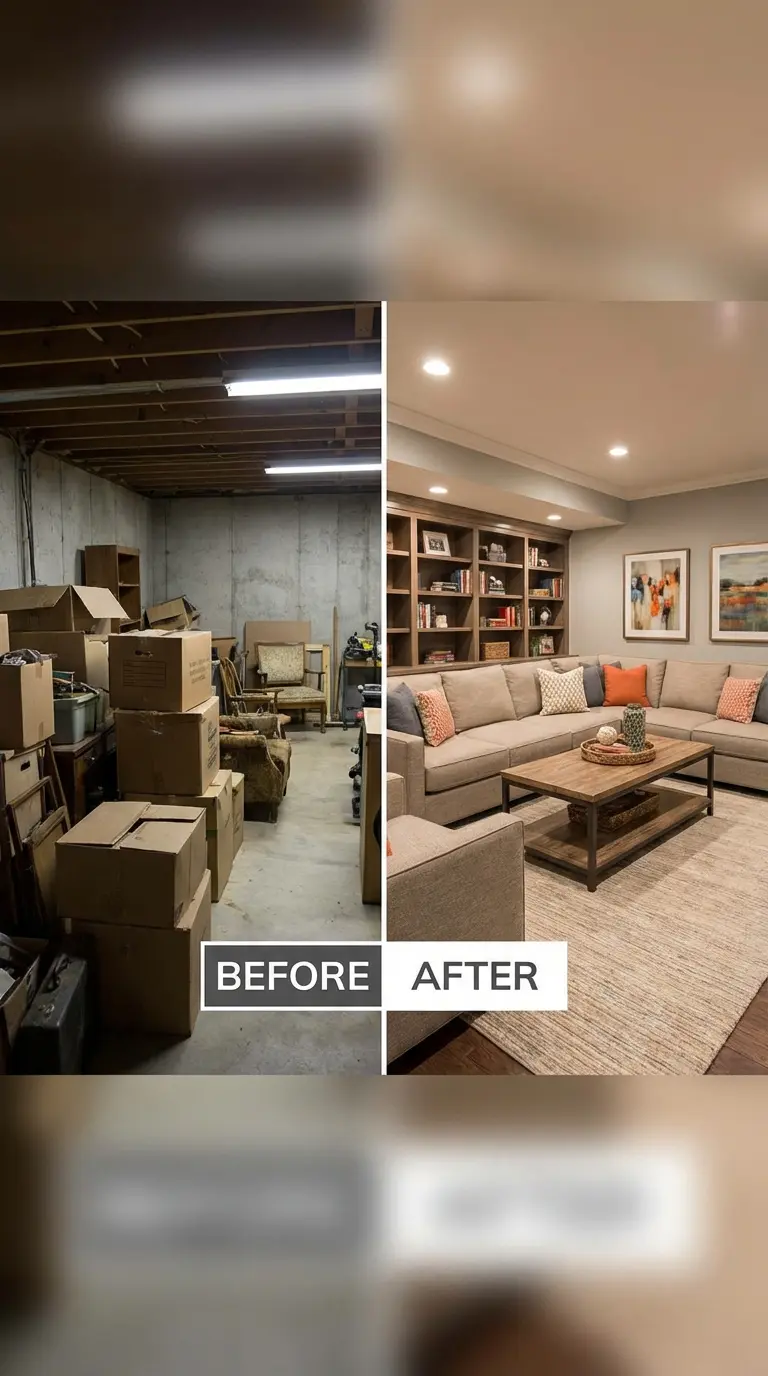
Most homeowners think of their basement as extra storage, and nothing more. But when you actually stop and calculate the square footage sitting below your feet, the numbers are eye-opening. A typical basement adds anywhere from 600 to 1,500 square feet to a home and in most cases, that space is either completely empty or stuffed with boxes nobody ever opens.
Here is the thing: finishing or even partially renovating your basement can add serious value to your home. According to real estate experts, a finished basement can return 70 to 75 cents on every dollar you invest. That is a better return than many kitchen remodels. Beyond the money, though, it is about comfort and function. Extra space changes how a family lives.
And before you assume it will cost a fortune, let me reassure you. Many of the basement ideas in this guide are budget-friendly. Some require nothing more than a weekend, a coat of paint, and a few smart storage solutions. You do not need a contractor or a massive budget to start transforming your space.
Also Read : 60+ Elegant Living Room Valance Ideas That Instantly Transform Your Space
Planning Your Basement Ideas Before You Pick Up a Paintbrush
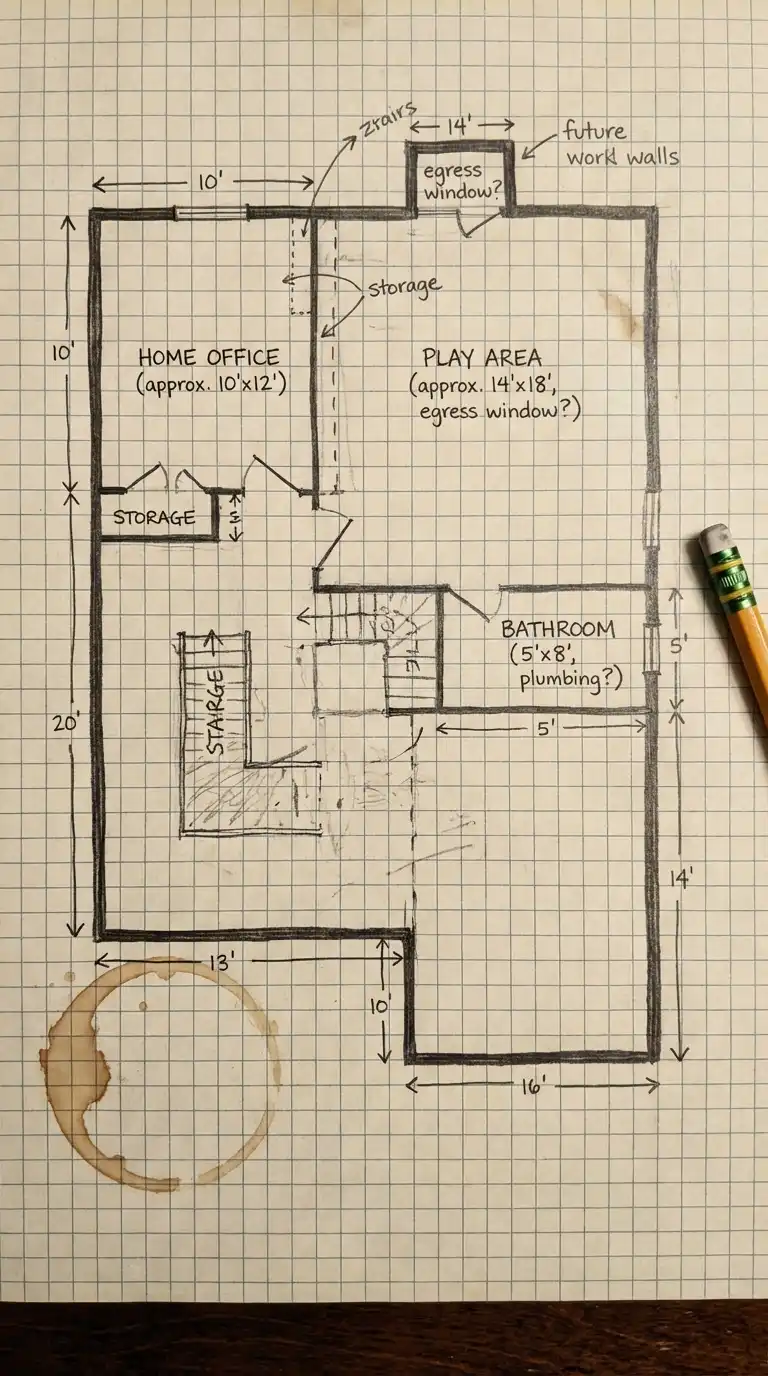
Before diving into any specific basement ideas, it helps to do a little planning. I made the mistake of jumping straight into buying furniture before I actually thought through how we wanted to use the space. Do not repeat my mistake. A few hours of planning will save you weeks of headaches later.
Start by asking yourself one simple question: how does your family actually live? Do your kids need a dedicated play area? Do you work from home and need a quiet office? Do you entertain often and wish you had a separate space for hosting? Your answer to that question will point you directly toward the right basement ideas for your situation.
Next, take a realistic look at your basement’s condition. Check for moisture, because no renovation will hold up if water keeps seeping through the walls. Look at your ceiling height rooms with less than seven feet of clearance will feel cramped unless you design them carefully. And think about natural light, because most basements have very little of it, which means lighting design becomes especially important.
Checking for Moisture Before Starting Any Basement Project
Moisture is the enemy of any finished basement. Before you do anything else, tape a piece of plastic sheeting about 12 inches square flat against your basement wall with waterproof tape on all four sides. Leave it for 24 to 48 hours. If condensation forms on the inside of the plastic, moisture is coming through the wall. If it forms on the outside, the issue is humidity in the air. Each problem has a different solution.
Wall moisture usually requires waterproofing paint, a sump pump, or in serious cases, professional waterproofing. Air humidity is often solved with a quality dehumidifier and improved ventilation. Either way, solve this problem before you spend a single dollar on flooring, furniture, or drywall. Trust me on this one.
The Most Popular Basement Ideas for Families with Kids
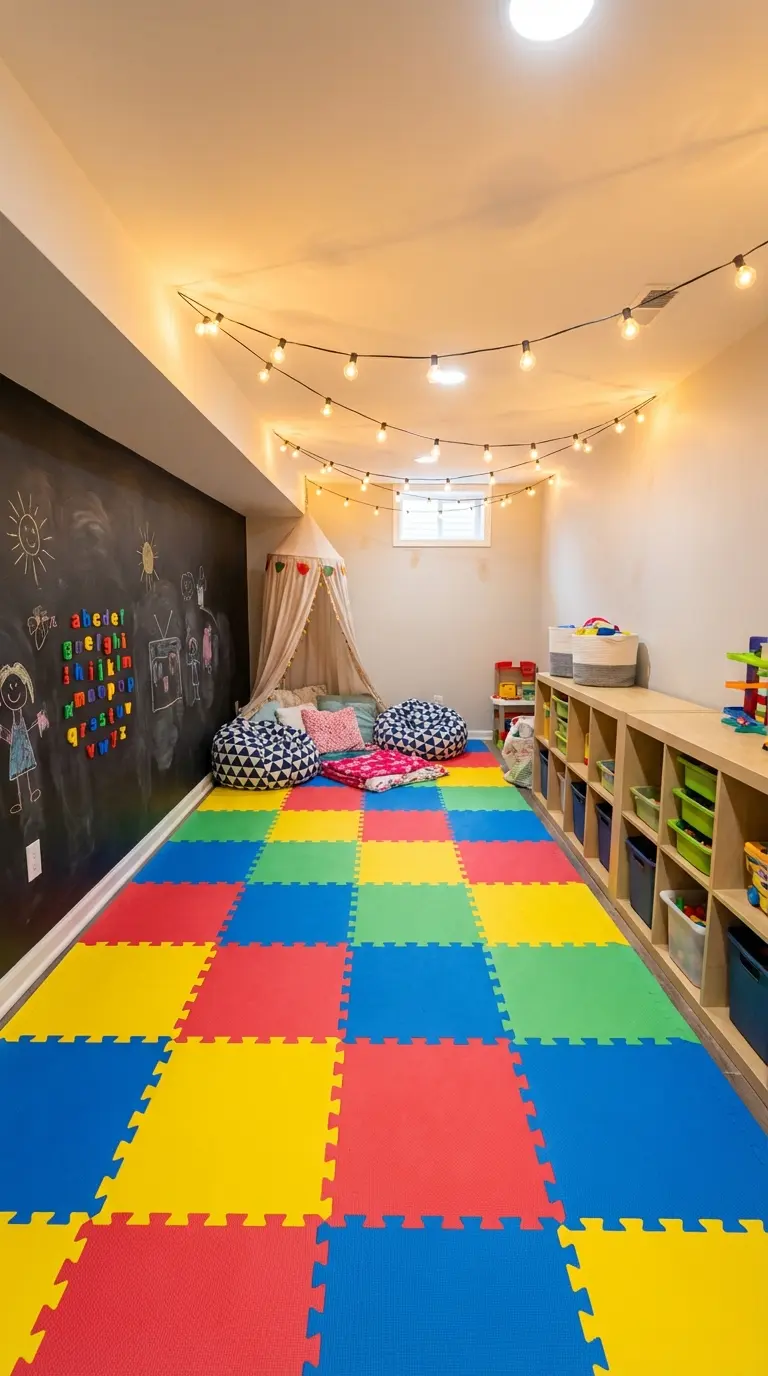
If you have children at home, converting your basement into a family-friendly space is one of the smartest things you can do. It gives kids a dedicated area to play, make noise, and be messy — all without taking over the main living areas of your house. As someone who spent years stepping on LEGOs in the living room, I cannot overstate how life-changing this is.
A basement playroom works especially well because it can grow with your kids. When they are young, you set it up for imaginative play with soft flooring, toy storage, and maybe a small reading corner. As they get older, the same space can evolve into a teen hangout, a gaming room, or a study area. The versatility is part of what makes it such a smart basement idea.
For the flooring, foam interlocking tiles are a brilliant choice for young children. They are soft, easy to clean, affordable, and can be swapped out as tastes change. Add some wall-mounted storage cubbies, a low bookshelf, a chalkboard wall, and a cozy reading nook, and you have created a space kids will actually want to use.
Creating a Teen Hangout Zone in the Basement
Teenagers need their own space, and a basement is perfect for it. A teen hangout zone typically includes comfortable seating like a large sectional sofa or floor cushions, a big screen television, a gaming setup, and maybe a mini fridge stocked with snacks. The goal is to create a space that feels like their own without being completely unsupervised.
Add a foosball table or a pool table if you have the room. These pieces of furniture become natural gathering spots where kids will invite friends over. And here is the hidden bonus for parents: you always know exactly where your teenager is on a Friday night. That peace of mind alone is worth every dollar spent on the renovation.
Home Theater Basement Ideas That Will Blow Your Mind
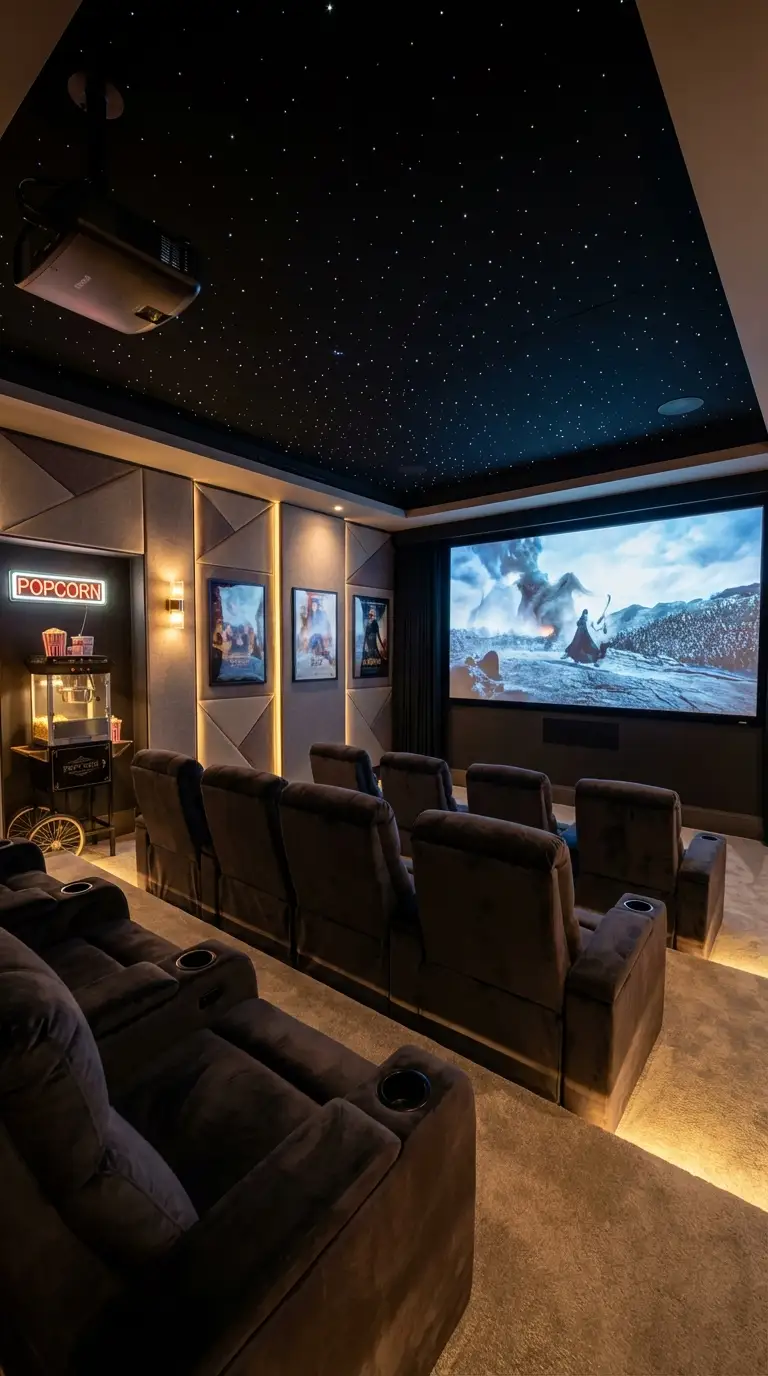
Of all the basement ideas I have ever come across, the home theater consistently tops the list of crowd favorites. There is something genuinely thrilling about watching a movie in a room designed specifically for that experience — with the right sound, the right lighting, and the right seating. It turns an ordinary evening into an event.
Basements are actually ideal for home theaters for several reasons. They tend to be naturally dark, which is perfect for projection screens. The walls and ceiling can be insulated for sound without much difficulty. And because they are below ground level, sound does not travel as easily to the rest of the house — meaning you can crank up the volume without waking anyone up.
For a budget-friendly version, start with blackout curtains on any small windows, a quality projector, and a pull-down screen. Add some comfortable recliners or a large sectional, a decent surround sound system, and dimmable lighting. That is really all you need. For a more premium experience, you can invest in tiered seating platforms, acoustic panels, and a dedicated media server.
Acoustic Design Tips for Your Basement Theater
Sound is everything in a home theater, and basements need a little help in this department. Hard concrete walls and floors bounce sound around in ways that muddy the audio. To fix this, add plush rugs to absorb floor reflections, hang thick curtains or acoustic panels on walls, and consider a drop ceiling with acoustic tiles. These changes make an enormous difference in sound quality.
If you are serious about the audio experience, invest in a subwoofer that is specifically rated for small rooms. A subwoofer that is too powerful for your space will create a booming, distorted sound. Your local audio specialist can help you match the right equipment to your room size. Also, make sure your seating position is not placed directly against the back wall, as that creates bass buildup that sounds unpleasant.
Home Office Basement Ideas for Remote Workers and Entrepreneurs
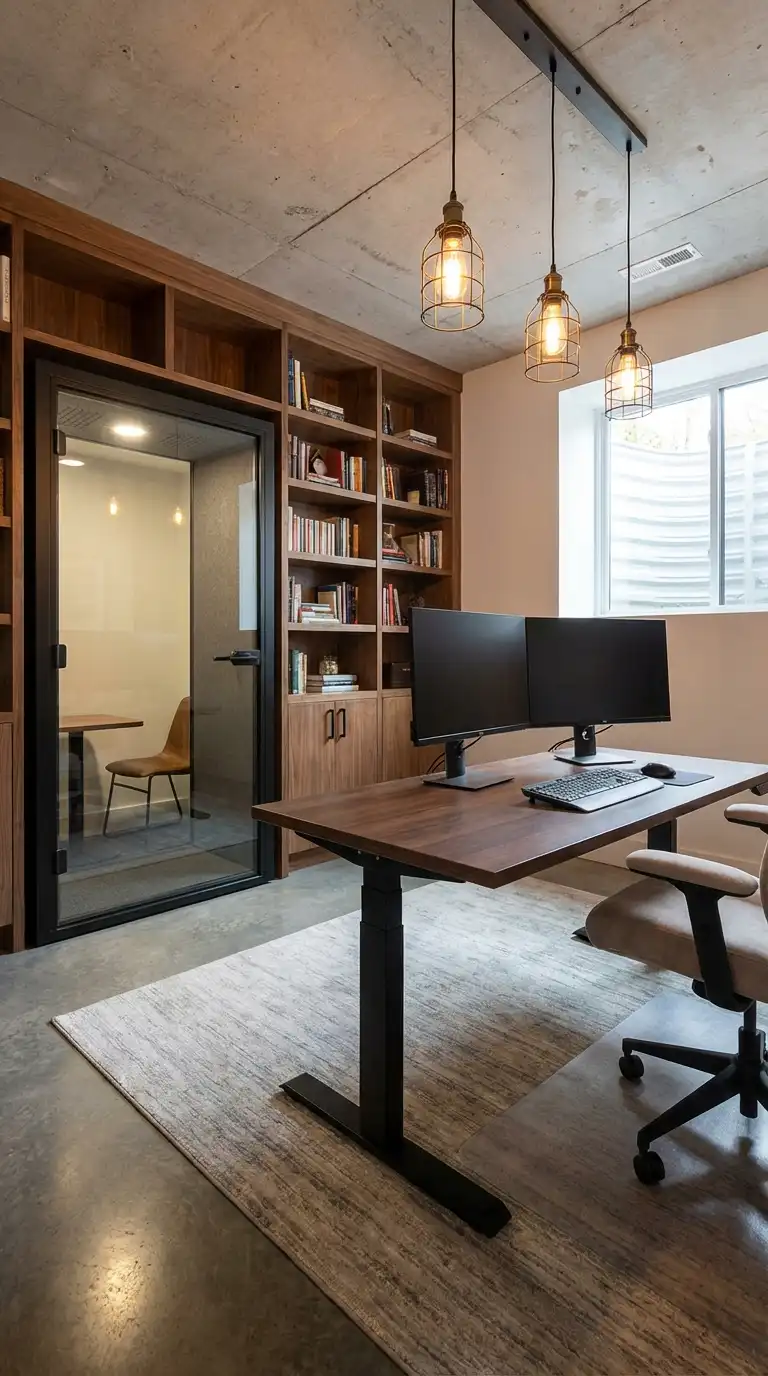
Working from home has changed how millions of people think about their living space. And if you are among those who need a dedicated workspace, the basement is one of the best places to put it. It is naturally separated from the noise and activity of the main house, which means fewer distractions, better focus, and a cleaner line between work life and home life.
A basement home office does not need to feel like a dungeon. In fact, with the right design choices, it can become one of the most inspiring rooms in your house. The key is to compensate for the lack of natural light with smart artificial lighting. Think layered lighting: overhead ambient light, task lighting on your desk, and accent lighting on shelves or walls. Together, these create a space that feels bright, warm, and welcoming.
Built-in shelving is a particularly good choice for basement offices. It maximizes wall space that would otherwise go unused, keeps your workspace organized, and gives the room a polished, professional look. If you do client calls or video meetings, consider adding a simple acoustic backdrop or a dedicated camera wall with good lighting.
Separating Your Basement Office from the Rest of the Home
One challenge with basement offices is that family members do not always respect the boundary between workspace and living space. Solving this is partly about physical design and partly about setting expectations. A glass panel or a sliding barn door that closes your office area sends a clear visual signal that you are in work mode. It is a small detail, but it really does help.
Adding a small coffee station or a mini fridge near your workspace means you do not have to keep running upstairs during the workday. It sounds like a small thing, but those trips up and down the stairs break your concentration more than you would think. Keeping everything you need in the basement helps you stay in a productive flow.
Basement Bar Ideas That Make Entertaining Effortless
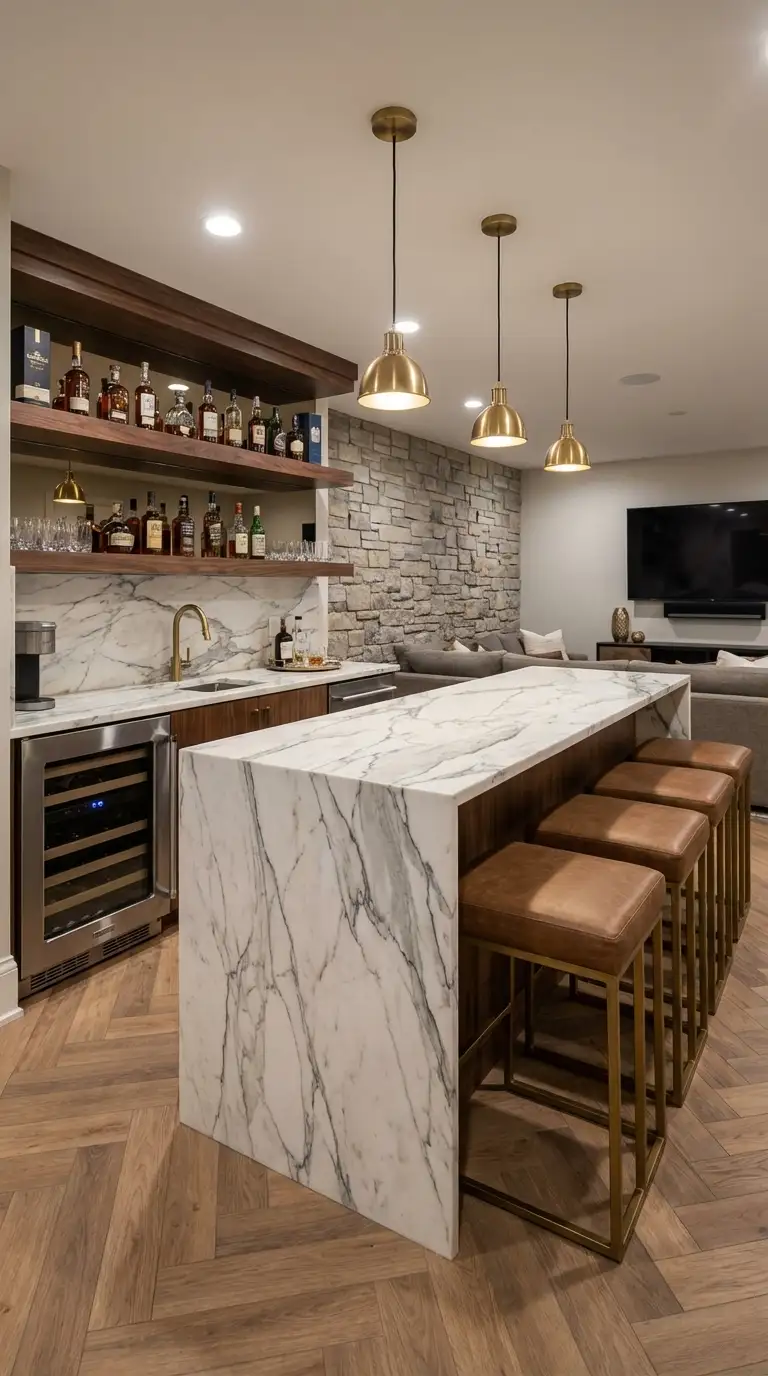
If you love hosting friends and family, a basement bar might be the most fun you will ever have with a renovation project. It transforms your lower level into an entertainment hub — a place where people naturally gather, conversations flow, and evenings stretch late into the night. I have never met a homeowner who regretted adding a bar to their basement.
You have two main options: a dry bar or a wet bar. A dry bar has no plumbing and functions more like a serving station. You can keep a mini fridge under the counter for drinks, stock the shelves with glassware and bottles, and create a beautiful space without touching a single pipe. A wet bar includes a sink, which makes it much more functional but also requires plumbing work.
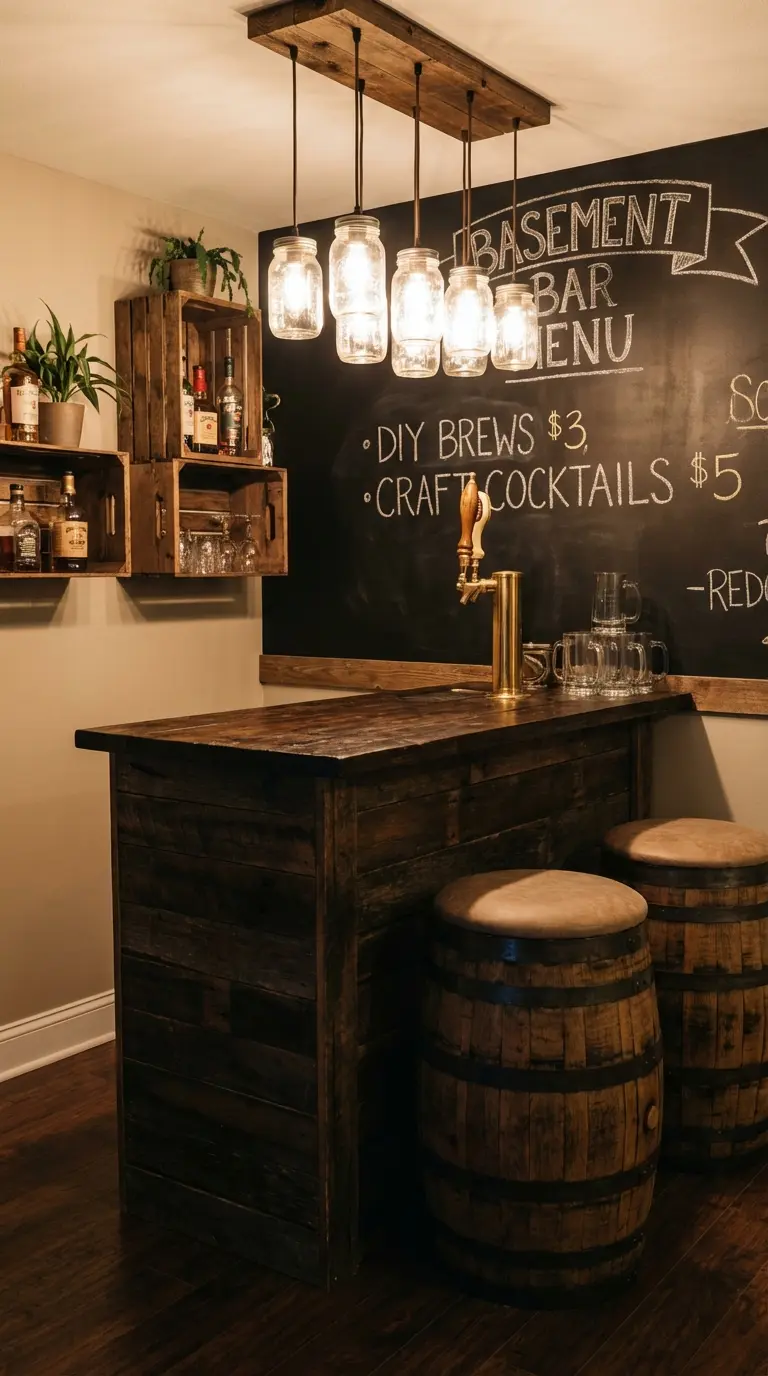
For the aesthetic, reclaimed wood shelving, brick accent walls, and pendant lighting create a warm, pub-like atmosphere that people love. Add a few bar stools, a dartboard on the wall, and maybe a small television, and you have got a space that rivals your favorite local bar. The beauty of doing it yourself is that you can personalize every detail to your own taste.
How to Stock and Design Your Basement Bar on a Budget
You do not need to spend a fortune to create a great basement bar. Start with the basics: a countertop surface (butcher block is affordable and looks great), some open shelving, and under-counter refrigeration. IKEA’s kitchen cabinets work remarkably well as bar cabinets and cost a fraction of custom-built alternatives.
Secondhand shops and estate sales are treasure troves for bar accessories. Vintage glassware, cocktail shakers, and decanters can be found for next to nothing and add character that brand-new items simply cannot replicate. A secondhand bar cart can become the centerpiece of your whole setup. Build the bones of your bar, then fill it in over time as your budget allows.
Gym and Fitness Basement Ideas for Health-Focused Homeowners
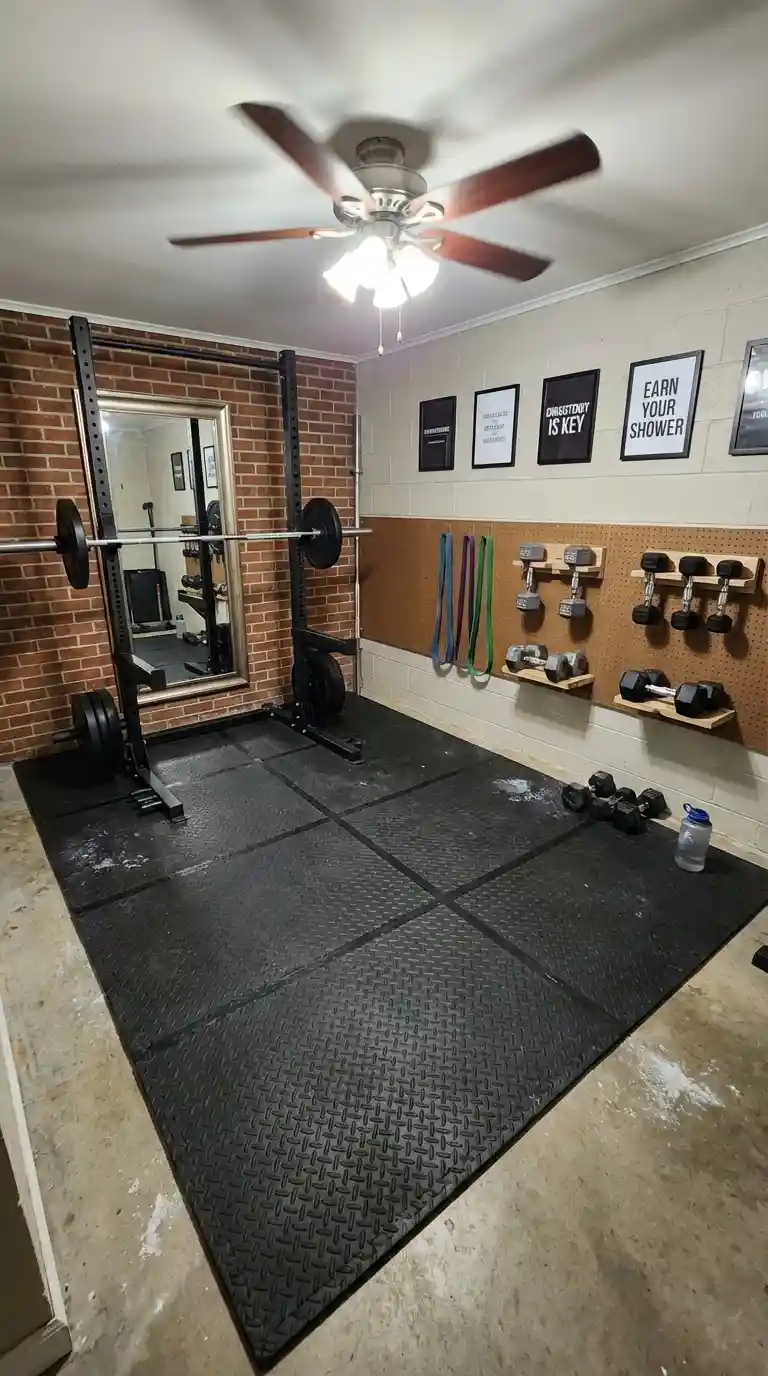
A home gym is one of the most practical basement ideas you can act on, especially if you have ever paid for a gym membership you barely use. Once the equipment is in your basement, there is no commute, no waiting for machines, and no closing time. Your gym is always open, always available, and completely customized to your workout style.
Rubber flooring is essential for any basement gym. It protects your concrete floor, reduces noise, cushions your joints during high-impact workouts, and is easy to clean. Interlocking rubber tiles are the most flexible option — you can cover exactly the area you need and add more later as your gym grows.
Start with the equipment that matches your actual fitness goals rather than buying everything at once. A quality power rack, barbell, and weight plates cover strength training. A rowing machine or stationary bike covers cardio. Add a mirror on one wall so you can check your form, hang some motivational artwork, and install a strong Bluetooth speaker system. That is a complete gym setup that will serve you for years.
Ventilation and Lighting for Your Basement Gym
Basements tend to get stuffy during intense workouts, and poor ventilation makes the space uncomfortable and can even be a health concern. A ceiling fan combined with a portable air purifier goes a long way toward keeping the air fresh. If your basement has small windows, keeping them open during workouts helps too. For a more permanent solution, a dedicated HVAC vent into the basement workout area makes the biggest difference.
Lighting in a gym should be bright and energizing — the opposite of what you might want in a bedroom or theater. LED shop lights mounted to the ceiling provide excellent illumination at a very low cost. Avoid dim, yellowish lighting in a gym space. Bright, cool-toned light keeps you alert and makes the room feel larger, which is especially important if you are working with a smaller basement footprint.
Guest Suite Basement Ideas for Welcoming Visitors
If you frequently host overnight guests, converting part of your basement into a guest suite is a thoughtful and practical investment. It gives your visitors their own private space with a sense of independence that a pull-out sofa in the living room simply cannot offer. And when guests are not visiting, the room can serve other purposes.
For a legal basement bedroom in most jurisdictions, you will need an egress window — a window large enough for a person to exit through in an emergency. This is not just a building code requirement; it is a genuine safety feature. Check your local building codes before finalizing any plans for a basement bedroom. The egress window installation typically costs between $1,000 and $3,000 depending on your soil conditions and foundation type.
Beyond the egress window, focus on making the space feel warm and inviting. Soft bedding, good bedside lighting, adequate closet space, and a nearby bathroom all contribute to a guest experience that feels genuinely comfortable. If you can add a small television and some local area guides or recommendations, your guests will feel truly welcomed.
Creative Basement Ideas for Artists, Musicians, and Makers
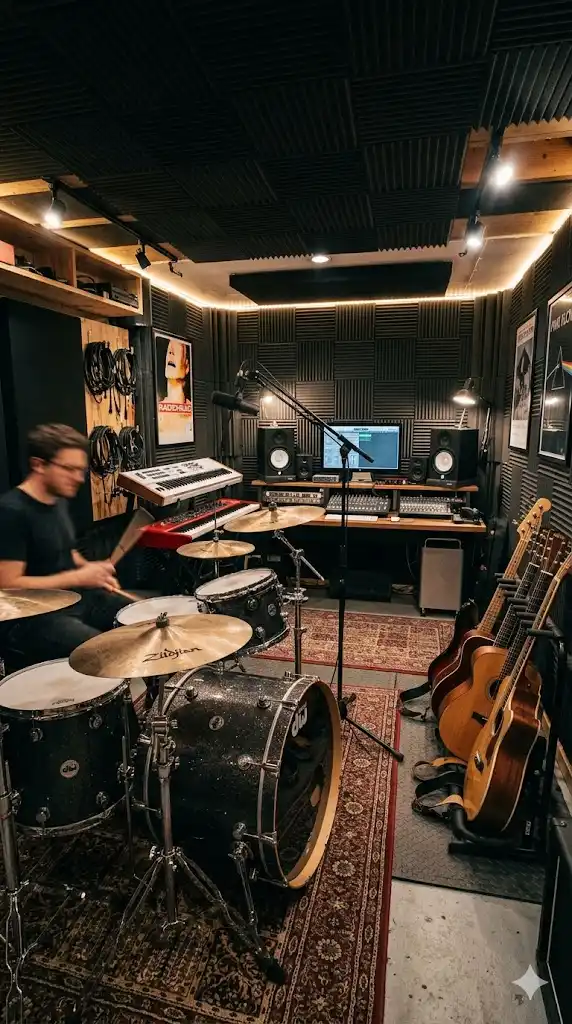
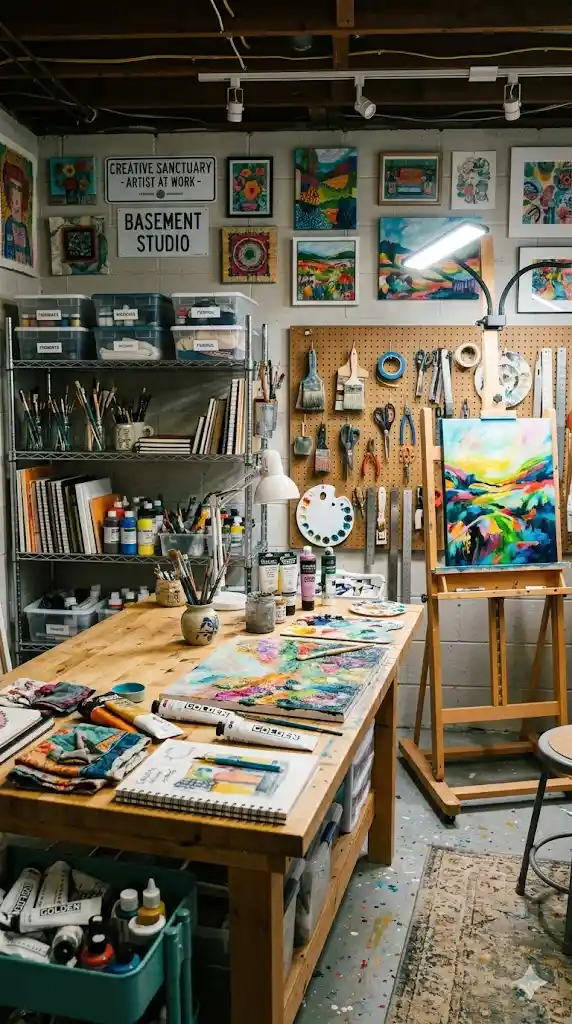
For those with a creative side, the basement offers something truly special: a space where mess is okay, noise is contained, and you can leave a project out overnight without worrying about disrupting the household. It is the closest thing to a proper studio that most homeowners will ever have, and the possibilities are genuinely exciting.
A music practice room in the basement is a dream for musicians. With some acoustic foam panels and heavy curtains, you can dramatically reduce sound transmission to the rest of the house. Add some sound-dampening floor mats, treat the ceiling with acoustic tiles, and you have a space where you can practice drums, electric guitar, or vocals at a reasonable volume without your family losing their minds.
For visual artists, the basement makes a wonderful painting studio, pottery workspace, or crafting room. The key is great lighting — especially color-accurate LED panels that do not distort how your work actually looks. Add plenty of open shelving for supplies, a deep utility sink if possible, and a durable flooring surface that you do not mind getting paint or clay on. Then let your creativity run wild.
Building a Woodworking Shop in Your Basement
Woodworking enthusiasts often find the basement to be the perfect home for their tools. The space can accommodate a workbench, a table saw, a drill press, and ample lumber storage without encroaching on any living spaces. The key considerations for a basement woodworking shop are dust collection and ventilation, as sawdust can be a respiratory hazard and a fire risk if not managed properly.
Invest in a quality dust collector and connect it to your major power tools. Install additional ventilation or a window fan to draw fresh air into the space. Organize your tools on French cleat wall systems, which are flexible, adjustable, and surprisingly easy to build yourself. A well-organized basement workshop is a joy to work in and makes every project more enjoyable from start to finish.
Basement Flooring Ideas That Look Great and Last for Years
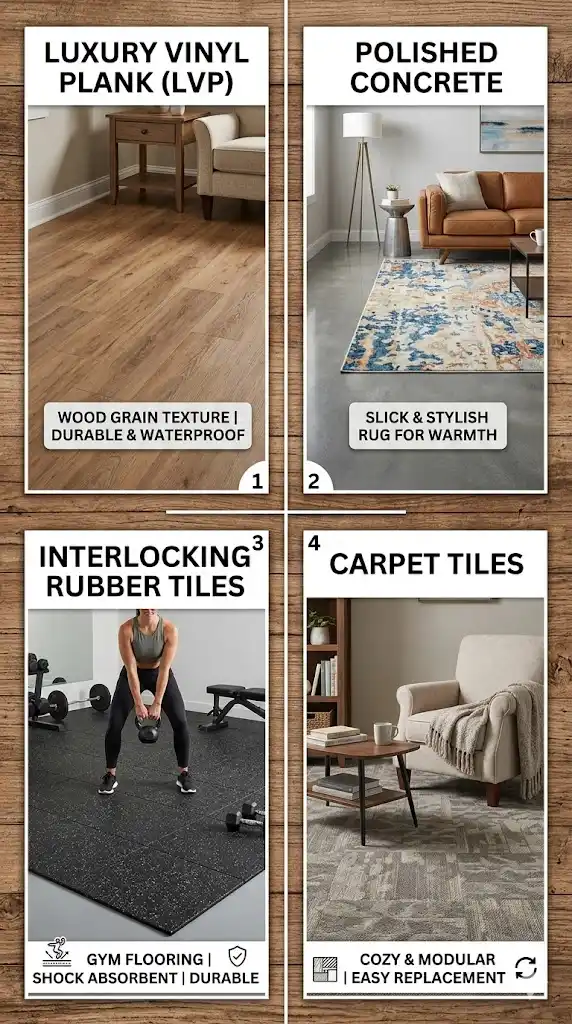
Choosing the right flooring is one of the most important decisions in any basement project. Unlike upper floors, basements present unique challenges: moisture seeping from below, temperature fluctuations, and the risk of flooding. Not every flooring material can handle these conditions, so choosing wisely from the start saves you from expensive replacements later.
Luxury vinyl plank, often called LVP, has become the most popular choice for basement flooring and for very good reason. It looks just like hardwood, feels comfortable underfoot, handles moisture exceptionally well, and is surprisingly affordable. It clicks together easily for a DIY-friendly installation, and if one plank gets damaged, you can replace just that section without redoing the entire floor.
Polished concrete is another fantastic option that has become increasingly trendy in modern basement designs. If your concrete subfloor is in decent condition, grinding and polishing it creates a sleek, industrial-chic look that pairs beautifully with exposed pipes, brick walls, and modern furniture. Layer it with area rugs to add warmth and define different zones within the space.
Basement Lighting Ideas That Eliminate the Cave-Like Feel
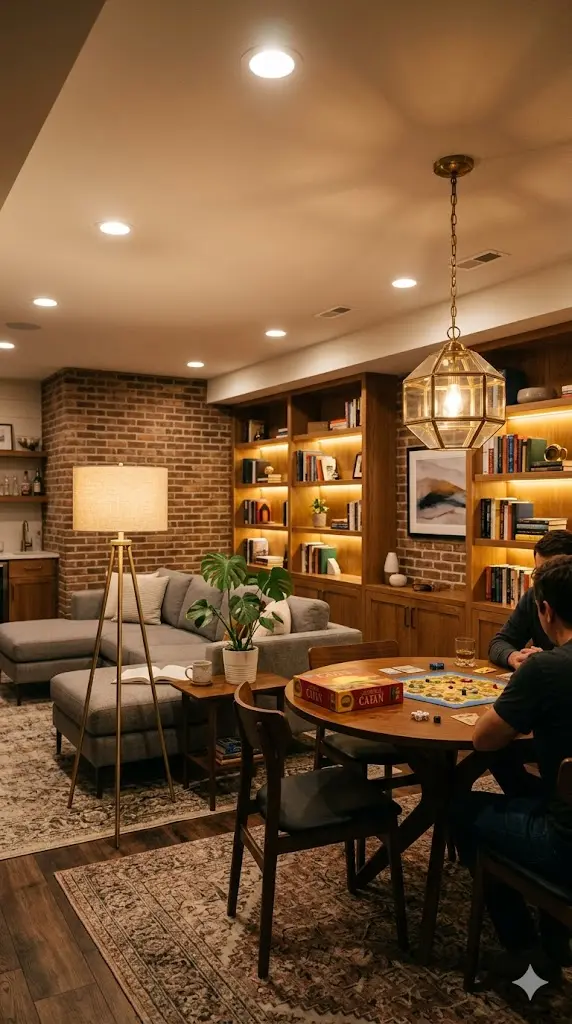
Nothing makes a basement feel more like a basement than bad lighting. That single overhead bulb hanging from the ceiling creates harsh shadows and makes even a beautifully renovated space feel gloomy. Good lighting is the single most transformative thing you can do for a basement, and it does not have to be expensive.
Recessed LED downlights are the gold standard for basement ceilings. They eliminate shadows, spread light evenly, and have a clean, modern look that works with virtually any design style. If you are working with a low ceiling, they are even better than pendant lights because they do not hang down and make the ceiling feel even lower.
Layer your lighting for the best results. Use recessed lights as your ambient base layer. Add task lighting wherever you have a specific activity, like a desk lamp in the office area or undercabinet lighting above the bar. Then add accent lighting, like LED strips behind a television or under floating shelves, to create visual warmth and depth. This three-layer approach turns any basement into a space that feels genuinely inviting.
Basement Storage Ideas That Actually Make Life Easier
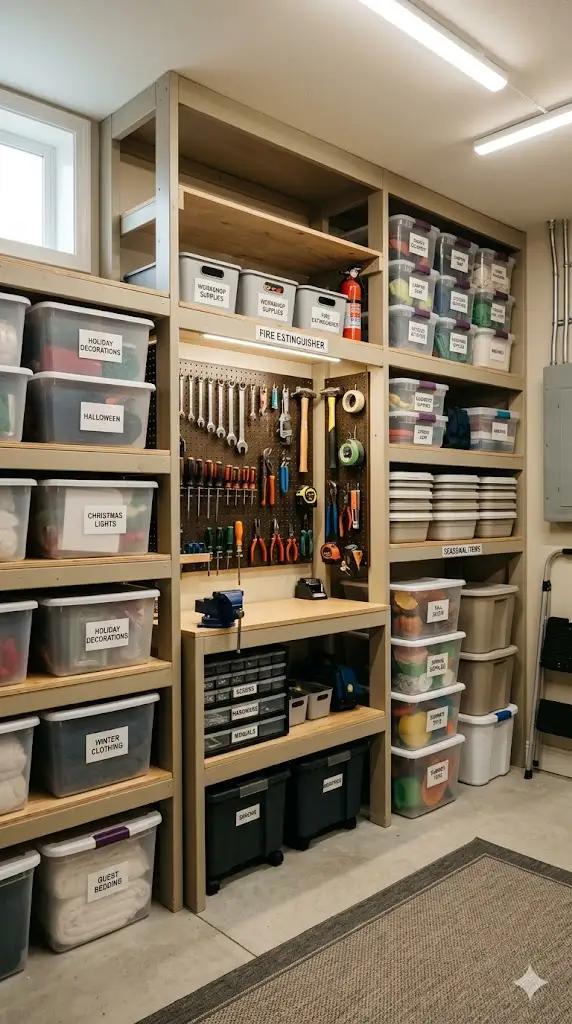
Even if you do not want to fully finish your basement, you can still transform it into a highly functional storage space that makes your entire home run more smoothly. The key is treating storage like a design challenge, not just an afterthought. Organized, intentional storage is one of those basement ideas that instantly improves daily life without requiring much investment.
Freestanding metal shelving units are the workhorses of any basement storage system. They are inexpensive, adjustable, and hold enormous amounts of weight. Use them for holiday decorations, sports equipment, tools, and other seasonal items. Label everything clearly, and organize items by category and frequency of use — things you reach for often go at eye level, and rarely-used items go high or low.
For a more polished look, built-in shelving along one wall creates a clean, intentional appearance that makes even an unfinished basement look organized. Add doors to conceal the messier storage areas and leave some open shelving for items you want easy access to. This approach costs more than freestanding shelves but creates a result that looks and functions like a proper room.
Small Basement Ideas That Maximize Every Square Foot
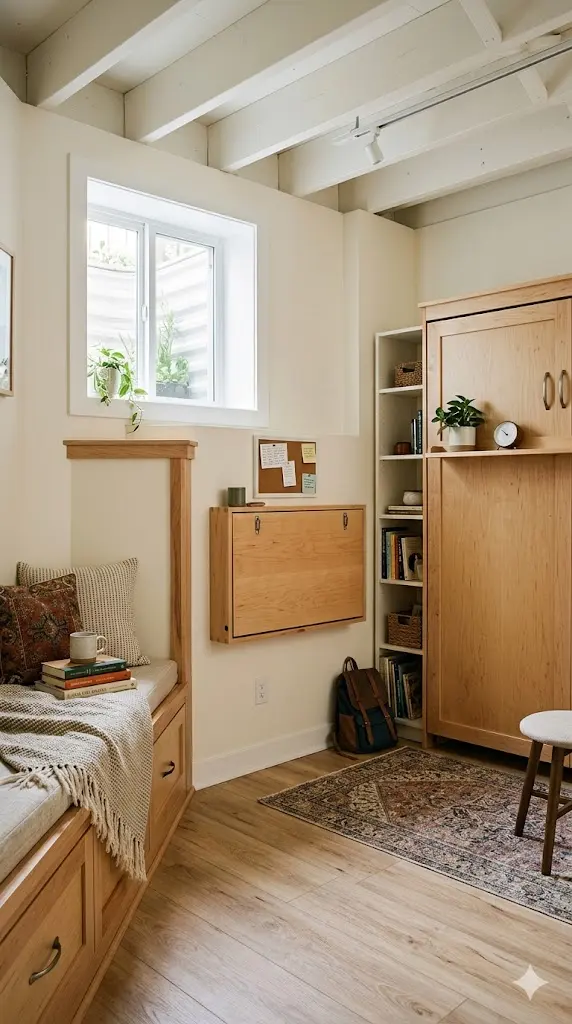
Not every basement is a sprawling open canvas. Many homes have smaller, sometimes oddly shaped lower levels with support columns, low beams, or limited square footage. But a small basement is not a limitation — it is a design challenge. And some of the most creative basement ideas I have ever seen came from people working within tight constraints.
In a small basement, multi-functional furniture is your best friend. A Murphy bed with a fold-down desk built into it serves as both a guest room and an office. An ottoman with hidden storage doubles as a coffee table and a place to stash board games. A built-in window seat over a stairwell provides seating and storage in a spot that would otherwise be wasted.
Light colors are crucial in a small basement. White or light gray walls reflect light and make the space feel larger. A light-colored ceiling does the same. Mirrors strategically placed on walls create the illusion of more depth. And keeping the floor mostly uncluttered, even if that means creative under-stair storage, prevents the space from feeling cramped and crowded.
Basement Bathroom Ideas That Add Incredible Value
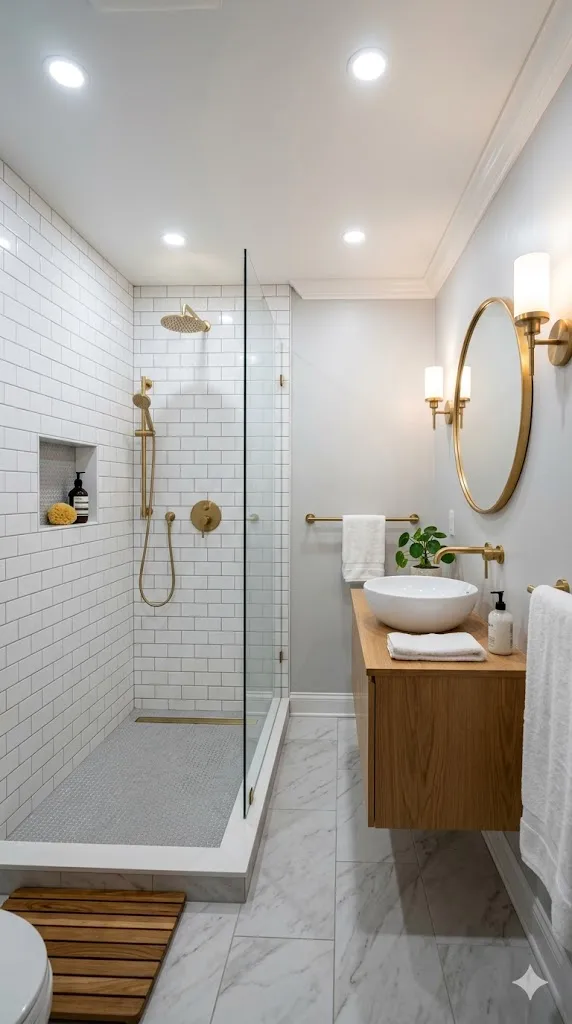
Adding a bathroom to your basement is one of the highest-value investments you can make in the entire space. It makes the lower level fully self-contained and dramatically increases its usefulness for guests, teens, and anyone spending extended time down there. Real estate agents consistently report that basement bathrooms increase home sale prices more than almost any other basement improvement.
A basic basement half bath with a toilet and sink is the most straightforward option. It avoids the complexity of a shower drain, which requires breaking through the concrete to access the plumbing below. A full bathroom with a shower requires more significant work but adds even more value and versatility to the space.
If you are adding a basement bathroom on a budget, look into upflushing toilet systems. These clever devices use a macerator pump to break down waste and pump it up and out through existing plumbing, without requiring any jackhammering of the concrete floor. They are not the cheapest option, but they are far less invasive and disruptive than traditional below-grade plumbing.
Basement Ceiling Ideas That Hide the Ugly and Reveal the Beautiful
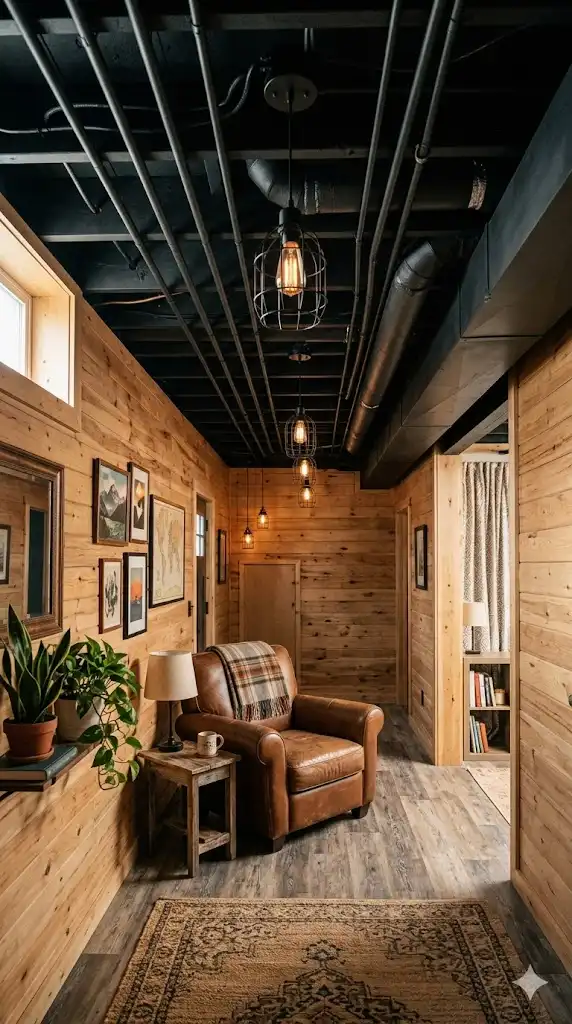
The ceiling is one of the most overlooked elements in any basement renovation, and yet it has an enormous impact on the final feel of the space. Many basements have a tangle of pipes, ductwork, and electrical wiring running through the ceiling joists, and how you choose to handle that determines much of the room’s character.
The most popular options are drywall, a drop ceiling, or the increasingly trendy exposed painted ceiling. Drywall creates the most polished, finished look but requires all those pipes and ducts to be routed, concealed, or relocated — a significant expense. A drop ceiling is affordable and provides easy access to plumbing and electrical above, but it lowers the ceiling height and can feel dated if not chosen carefully.
Painting the ceiling black — pipes, ducts, joists and all — is a surprisingly stunning approach that has become a favorite in modern industrial and loft-style interiors. When everything above is painted the same dark color, the eye stops registering it as chaos and instead sees it as texture. It actually makes pipes and ductwork look intentional and cool. Pair it with industrial-style pendant lights and you have a truly striking space.
Basement Wall Ideas That Add Texture, Color, and Character
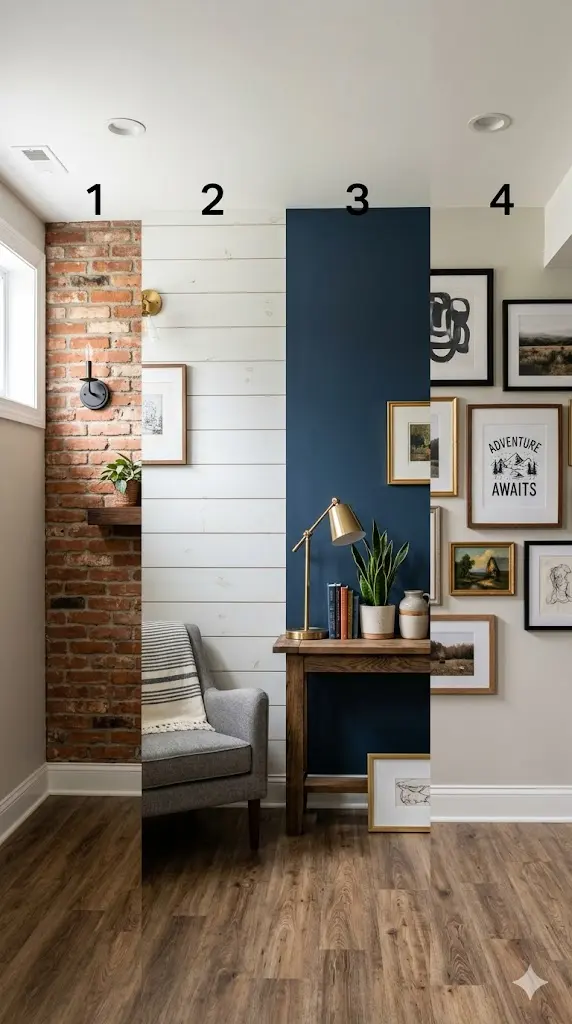
Bare concrete or cinder block walls are one of the most common complaints homeowners have about their basements. They feel cold, institutional, and just plain unappealing. But transforming basement walls does not require a full drywall installation. There are many creative, budget-friendly approaches that add warmth and personality to any lower-level space.
Shiplap wood paneling has become extremely popular in recent years, and it works beautifully in basements. It adds warmth and texture without taking up much space, installs relatively easily, and can be painted any color you like. For a more rustic look, reclaimed wood planks create a character-rich accent wall that becomes the focal point of the entire room.
Exposed brick, where it exists, should almost always be celebrated rather than covered. Clean it up, apply a brick sealer to prevent dust, and let it breathe. If you do not have natural brick but love the look, brick veneer panels are an affordable and convincing alternative. They attach directly to the wall with construction adhesive and can transform a plain concrete wall in a single afternoon.
Multifunctional Basement Ideas for Homes That Need to Do It All
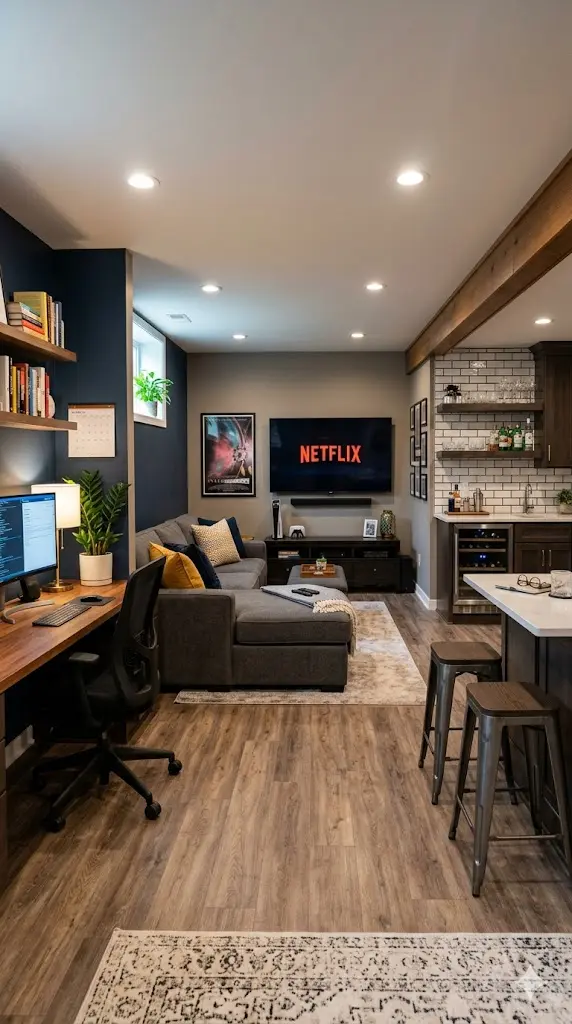
Not every family can dedicate an entire basement to a single purpose. Most of us need the space to do several things at once — maybe an office that doubles as a guest room, or a play area that shares space with a home gym. The good news is that thoughtful zoning makes it completely possible to pack multiple functions into a single basement without it feeling chaotic or cramped.
The key to successful multifunctional basement design is defining zones clearly without necessarily building walls between them. Area rugs are one of the most effective tools for this — a large rug under the seating area and a different rug or rubber mat in the gym area create visual separation even in an open floor plan. Different ceiling treatments or light fixture styles can also signal a transition from one zone to another.
Furniture placement does a lot of the heavy lifting in a multifunctional space. A bookshelf used as a room divider creates separation between an office and a living area without blocking light or making either space feel closed off. A fold-down desk on one wall keeps office equipment contained when not in use, freeing up the rest of the space for family activities.
Budget-Friendly Basement Ideas That Look Like They Cost Thousands
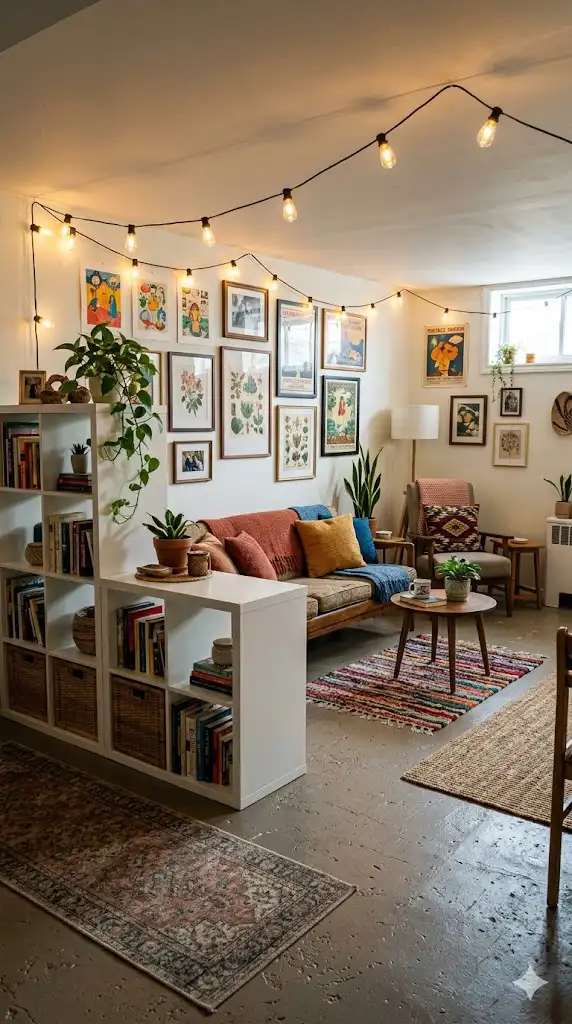
You do not need to spend $30,000 to transform your basement. Some of the most stunning basement renovations I have come across were done on shockingly modest budgets. It all comes down to knowing where to spend, where to save, and how to make inexpensive materials look like something much more expensive.
Paint is the single most powerful tool in any budget renovation. A full can of quality paint costs around $40 and can completely transform the feel of a room. Paint the walls a crisp white or a warm greige, add a painted accent wall in a bold color, and paint the ceiling and trim in contrasting shades. The entire room will feel new, fresh, and intentionally designed — all for under $200 in paint.
Shop secondhand relentlessly for furniture, lighting, and accessories. Facebook Marketplace, estate sales, and thrift stores consistently offer quality pieces at 10 to 20 percent of their retail price. A quality leather sofa for $150, an industrial floor lamp for $30, and a vintage bar cart for $45 can anchor a basement design that looks like it was curated by a professional. The savings allow you to put money toward the elements that matter most, like good flooring and solid lighting.
Finishing Touches That Take Basement Ideas from Good to Spectacular
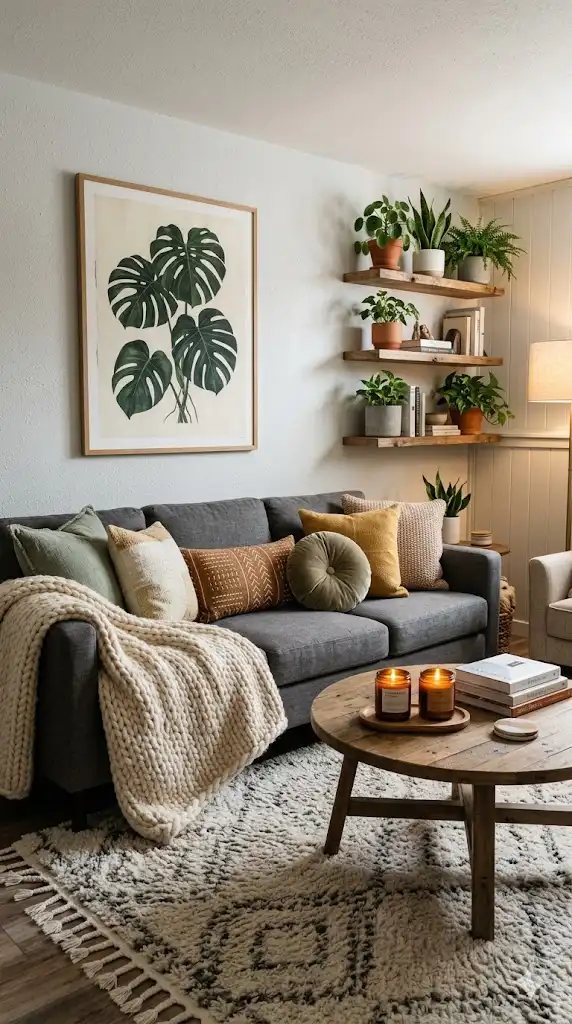
The difference between a basement that looks renovated and one that looks truly designed comes down to the finishing touches. These are the details that make a space feel intentional, personal, and genuinely lived in. And most of them cost very little compared to the structural work that came before them.
Plants are one of the best finishing touches for any basement. They bring life, color, and a touch of nature into a space that can easily feel cut off from the outside world. Low-light tolerant varieties like pothos, snake plants, ZZ plants, and Chinese evergreens thrive in basement conditions with minimal natural light. A few well-placed plants in attractive pots instantly make a room feel warmer and more welcoming.
Textiles are equally important. A plush area rug, throw pillows in coordinating colors, and a chunky knit blanket draped over the arm of a sofa all add softness and warmth that hard surfaces and bare walls simply cannot provide. These elements also help with acoustics, absorbing sound in a space that would otherwise echo. Spend time getting these details right, and your basement will feel less like a basement and more like your favorite room in the house.
Basement Renovation Mistakes to Avoid at All Costs
After talking to dozens of homeowners who have been through basement renovations, I noticed some patterns in the mistakes that come up again and again. Knowing these pitfalls in advance can save you thousands of dollars and months of frustration.
The biggest mistake is skipping the waterproofing step in a rush to get to the fun design elements. Water damage can destroy a finished basement completely, and fixing it after the fact is exponentially more expensive than addressing it before you build anything. Do not rush this step. Take your time, test for moisture, and solve any issues properly before moving forward.
Another common mistake is over-improving for the neighborhood. If every other house on your street sells for $350,000, putting $80,000 into a basement renovation will not get you that money back when you sell. Talk to a local real estate agent before setting your renovation budget. They can tell you what buyers in your area actually value and what the market will support.
Final Thoughts on Making the Most of Your Basement
Your basement is one of the most underutilized assets in your entire home. Whether it is 400 square feet or 1,500, it holds the potential to become something genuinely meaningful a space that your family actually uses, loves, and gathers in.
You do not need to tackle everything at once. Start with one area, one project, one idea that excites you. Maybe it is painting the walls and installing new flooring. Maybe it is setting up a simple home gym with a few key pieces of equipment. Maybe it is finally creating that quiet office you have been dreaming about. Start small, build momentum, and let the space evolve with your needs.
The basement ideas in this guide cover everything from budget-friendly weekend projects to full-scale renovations. Whatever your budget, your lifestyle, and your goals, there is something here that can work for you. The most important step is simply deciding to see your basement not as a problem to be ignored, but as an opportunity waiting to be seized.
Frequently Asked Questions
Q1: What is the most popular basement idea?
A: The most popular basement idea right now is the multifunctional living space — a combination of a home theater or media room with a small bar and comfortable seating. This setup works for both family entertainment and adult gatherings, making it incredibly versatile for most households.
Q2: How much does it cost to finish a basement?
A: The cost to finish a basement varies widely depending on size, location, and the level of finish. On average, homeowners in the United States spend between $25 and $50 per square foot for a basic finished basement. A 1,000 square foot basement might cost anywhere from $25,000 to $60,000 or more for a full, professional-grade renovation.
Q3: Does a finished basement add value to a home?
A: Yes, a finished basement consistently adds value to a home. Most real estate experts suggest that a finished basement returns approximately 70 to 75 cents for every dollar invested when the home is sold. In competitive real estate markets, a well-finished basement can be the deciding factor between two similar properties.
Q4: What are the best basement flooring options?
A: Luxury vinyl plank is widely considered the best basement flooring option because it handles moisture well, looks great, and is durable. Polished concrete, ceramic tile, and engineered hardwood are also strong choices. Avoid solid hardwood and natural stone in below-grade spaces, as both can be damaged by moisture and temperature fluctuations.
Q5: How do I make my basement feel less like a basement?
A: To make a basement feel less like a basement, focus on lighting, color, and ceiling treatment. Use bright, layered lighting to eliminate shadows. Paint walls in light, warm colors to reflect light. Consider painting the ceiling black to make the pipes and ductwork disappear visually. Add rugs, plants, and textiles to create warmth and comfort.
Q6: Can I add a bedroom to my basement?
A: Yes, you can add a bedroom to your basement, but there are important code requirements. Most jurisdictions require a basement bedroom to have at least one egress window — a window large enough for a person to exit through in an emergency. Check your local building codes before planning a basement bedroom.
Q7: What is the best way to soundproof a basement?
A: The best way to soundproof a basement involves multiple layers: acoustic insulation in the ceiling cavity, resilient channels on the ceiling drywall to decouple it from the joists, mass-loaded vinyl on walls, and acoustic panels in the room. For a music room or theater, all of these elements working together provide the best sound isolation.
Q8: How do I deal with moisture in my basement before renovating?
A: Before renovating, test for moisture by taping a plastic sheet to the wall for 48 hours. If moisture forms, identify whether it is seeping through the wall or caused by humidity. Wall seepage requires waterproofing paint or membrane systems. Air humidity is addressed with a dehumidifier and improved ventilation. Never skip this step before any renovation.
Q9: What are the best basement ideas for low ceilings?
A: For low ceilings, choose recessed lighting instead of pendant lights. Paint the ceiling the same color as the walls to make it recede visually. Avoid bulky furniture and opt for pieces with low profiles. Use stripes or vertical elements on walls to draw the eye upward. Every inch of clearance matters, so choose a floor covering that does not raise the height significantly.
Q10: How do I add natural light to a basement?
A: To add natural light to a basement, consider enlarging existing windows, adding window wells on foundation walls, or installing a sun tunnel or light tube that channels sunlight down from the roof. For areas far from any window, full-spectrum LED lighting that mimics natural daylight is an excellent alternative that significantly improves the feel of the space.
Q11: What permits do I need to finish a basement?
A: In most regions, finishing a basement requires permits for framing, electrical work, plumbing, and HVAC modifications. Check with your local building department before starting any work. Unpermitted work can cause problems when you sell the home, as buyers and their lenders may require documentation that work was done to code.
Q12: How long does it take to finish a basement?
A: A typical basement renovation takes anywhere from four to eight weeks for a contractor to complete, assuming no major issues arise. A DIY project on the same space might take three to six months of weekend work. Projects involving significant plumbing, waterproofing, or structural changes take longer regardless of who does the work.
Q13: What are the best basement ideas for increasing home value?
A: The basement ideas that most consistently increase home value are adding a full or half bathroom, creating a finished legal bedroom with an egress window, building a functional home office, and installing quality flooring and lighting throughout. A wet bar is also highly valued by buyers. Focus on quality and functionality over flashy extras for the best return on investment.
Q14: Can I use my basement as a rental unit?
A: In many areas, you can convert a basement into a legal rental unit, which is often called a basement apartment or an accessory dwelling unit. Requirements typically include separate entrance, egress windows in all bedrooms, minimum ceiling height, proper ventilation, separate electrical service, and compliance with local zoning laws. Check with your municipality before beginning this type of project.
Q15: What colors work best for a basement?
A: Light, warm neutral colors work best for most basements because they reflect light and make the space feel larger and more inviting. Warm whites, soft greiges, and light beiges are universally flattering. For accent walls or media rooms, deeper colors like navy, forest green, or charcoal create a sophisticated, cozy atmosphere. Avoid cool grays in basements without good natural light, as they can feel cold and uninviting.