

Some bathrooms feel busy before you have even finished brushing your teeth. The shelves are crowded, and the room never quite feels restful. Japandi design takes the opposite approach. It slows everything down.
The style brings together Japanese simplicity and Scandinavian comfort. It is built around thoughtful choices rather than endless decoration. Every object has a reason to be there.
The finished space should feel warm and peaceful. It should also feel easy to live with.
You do not need to renovate the entire room to embrace the style. Even a few thoughtful updates can completely change how your bathroom feels. These Japandi bathroom ideas will help you create a space that feels calmer every single day.
Start With a Soft, Natural Color Palette for Your Japandi Bathroom
The color palette sets the tone before anything else has a chance to stand out.
Instead of bright white walls or dramatic feature colors, Japandi bathrooms usually lean towards shades inspired by nature. Warm ivory, soft greige, sandy beige, mushroom, and muted clay all work beautifully.
These colors do not demand attention. They simply allow the room to breathe.
If your bathroom gets plenty of sunlight, warmer neutrals become even more inviting throughout the day. Smaller bathrooms also benefit because these shades add softness without making the room feel enclosed.
Once your walls become a quiet backdrop, the natural materials throughout the room begin to shine.
If you’re drawn to softer color palettes, you might also enjoy our guide to Sage Green and Pink Bathroom Ideas. It explores another calming color combination that works beautifully in bathrooms.
Choose Wood That Feels Authentic
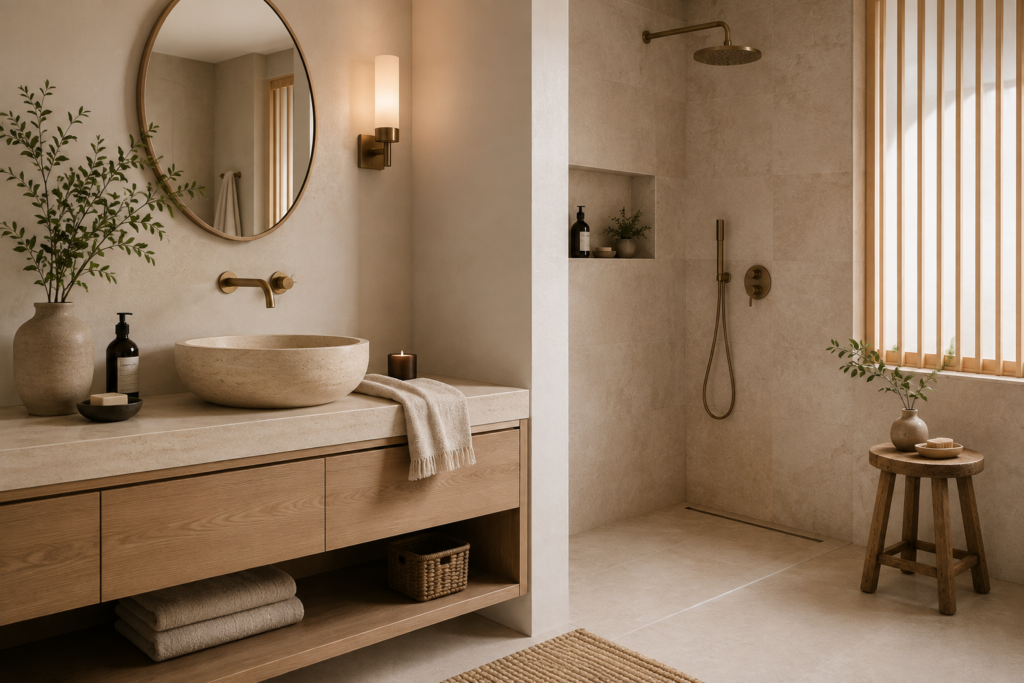
Wood instantly adds warmth, but the finish matters just as much as the species.
Light oak is one of the most popular choices because it keeps the room feeling airy while showing off its natural grain. Ash creates a similar effect, while walnut adds a little more depth without making the space feel heavy.
Floating vanities work especially well in Japandi bathrooms. Because more of the floor remains visible, the room often feels larger than it actually is.
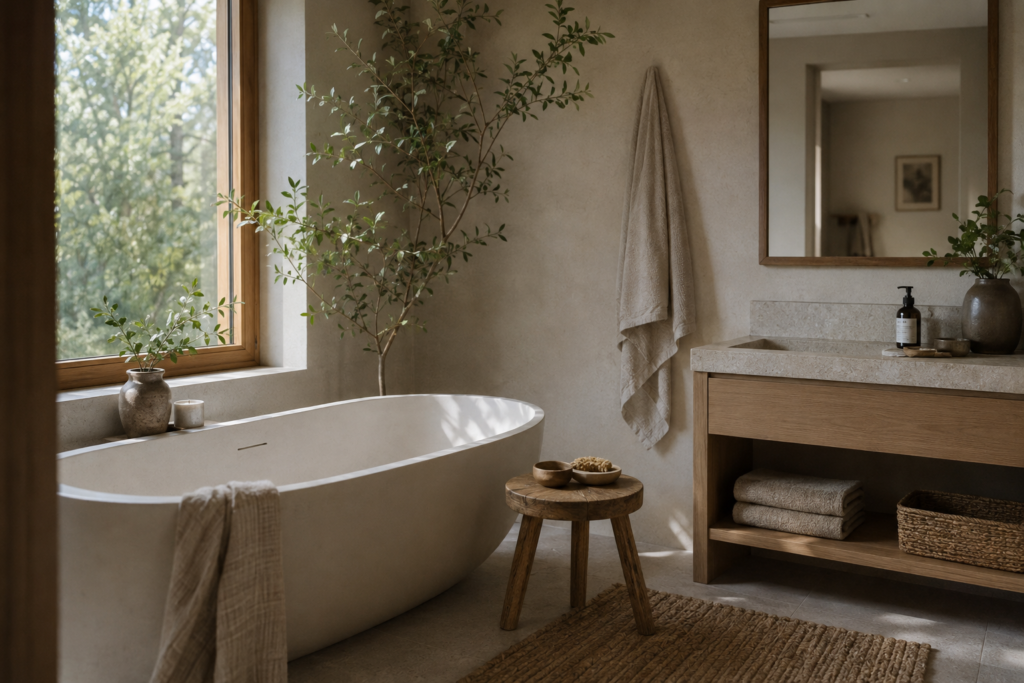
Replacing an entire vanity is not always realistic. A wooden stool beside the bathtub can introduce the same warmth. Open shelving is another simple way to add natural texture without overwhelming the room.
The goal is not to fill the bathroom with timber. A few carefully chosen pieces often have a much bigger impact.
Let Stone Become the Feature
Japandi interiors do not rely on bold patterns to make an impression.
Instead, natural stone quietly becomes the focal point.
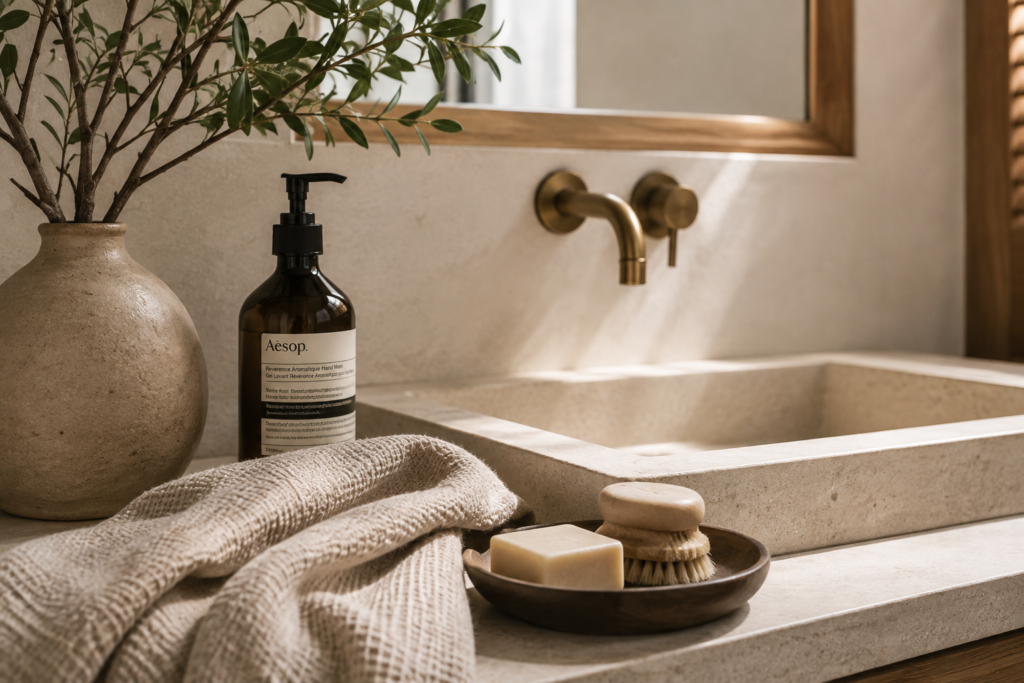
Travertine has become one of the defining materials of this style because of its warm tones and subtle movement. Limestone feels equally timeless. Lightly veined marble can also work beautifully when the pattern remains understated.
You do not need to cover every surface with stone. In many cases, one feature is enough.
A stone vanity top immediately elevates the room. A vessel sink carved from natural stone can become a statement without feeling flashy. Even a recessed shower niche finished in the same material creates a beautiful sense of continuity.
Keep Countertops Clear
One of the easiest ways to transform a bathroom costs absolutely nothing.
Clear the clutter.
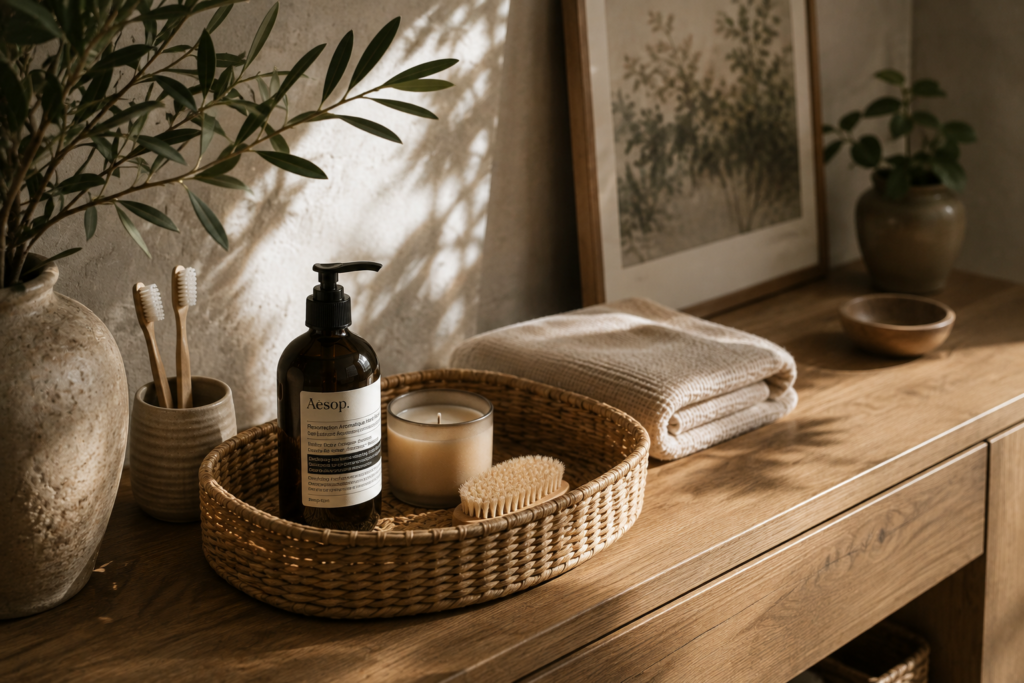
A room can feel completely different once every bottle is no longer competing for space. Store daily essentials inside drawers or baskets wherever possible and leave only the items you genuinely use each day.
A ceramic soap dispenser beside a folded hand towel feels far more considered than a collection of half-used products.
I also like adding one small plant to the countertop. Something simple, like a small succulent, introduces a little greenery without making the space feel crowded. Bathrooms without much natural light can still benefit from the look. Decorative faux succulents work surprisingly well and require no maintenance at all.
The extra breathing room also makes cleaning easier, which means your bathroom stays looking fresh with very little effort.
Use Texture Instead of More Decoration
A common misconception is that minimalist spaces have to feel cold.
Japandi interiors prove exactly the opposite.
Rather than filling shelves with decorative accessories, they create interest through texture.
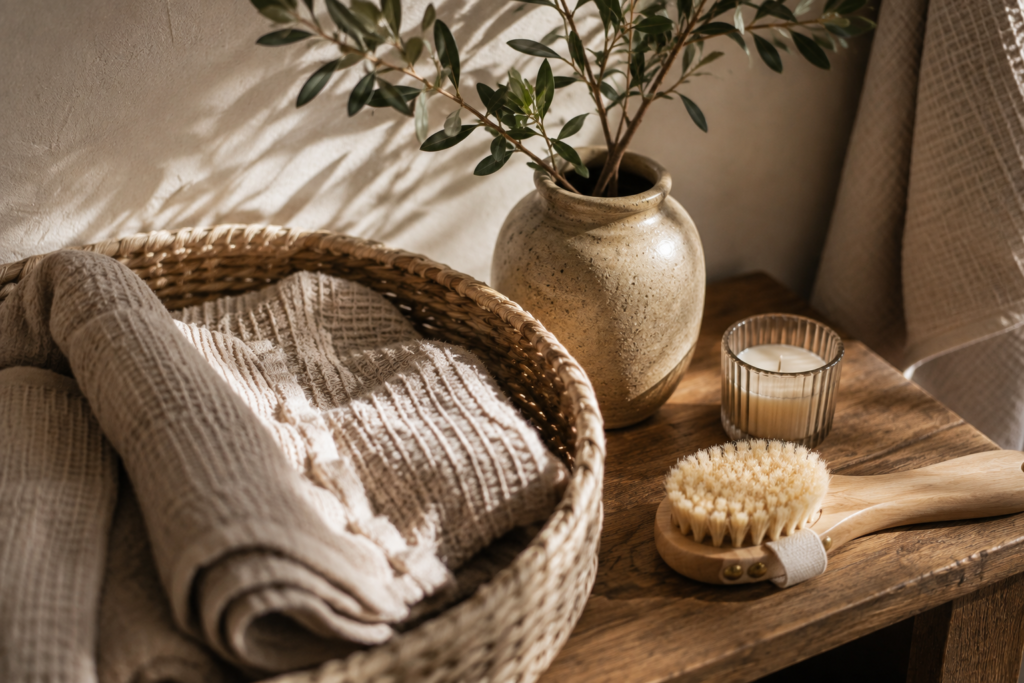
A linen hand towel instantly softens a stone countertop. Handmade ceramics add subtle variation because no two pieces are exactly alike. Woven baskets bring warmth while also providing useful storage.
Natural wood, brushed brass, ribbed glass, and textured plaster all contribute to the atmosphere without making the room feel busy.
When every surface offers something slightly different, the bathroom feels layered instead of empty.
Make the Lighting Feel Softer
Lighting has a huge influence on how a bathroom feels, yet it is often overlooked.
Bright ceiling lights are practical in the morning, but they rarely create a relaxing atmosphere.
Wall sconces placed beside the mirror provide softer, more flattering light. If you are renovating, dimmer switches are worth considering because they completely change the mood during the evening.
Warm white bulbs generally feel much more welcoming than cool white lighting. The bathroom should encourage you to slow down rather than remind you of a doctor’s office.
Natural daylight deserves attention too. If privacy allows, avoid heavy window coverings that block the light. Frosted glass or sheer linen curtains often provide enough privacy while still letting sunlight fill the room.
Choose Tiles That Will Still Look Beautiful Years From Now
Tiles cover a large portion of most bathrooms, so they naturally become one of the biggest design decisions.
Japandi interiors favor materials that age gracefully rather than following short-lived trends.
Large porcelain tiles create a clean appearance with fewer grout lines. Natural stone feels organic and develops even more character over time. Handmade-style ceramic tiles also fit beautifully because their slight imperfections make the room feel more relaxed.
If you want a little extra detail, vertically stacked subway tiles can create subtle interest without becoming the main feature.
Keeping the grout close in color to the tile also helps the room feel quieter because your eye moves naturally across each surface instead of stopping at every line.
Wallpaper can be another great way to introduce warmth and texture, especially in a powder room or guest bathroom. If you’re looking for inspiration, take a look at our favorite Creative Wallpaper Ideas that can completely transform a space.
Bring Nature Indoors
Bathrooms are one of the easiest places to enjoy greenery.
Humidity-loving plants often thrive in these conditions, and even a single plant can soften the clean architectural lines that define Japandi interiors.
You do not need to turn the room into an indoor jungle. One carefully placed plant beside the bathtub or on an open shelf is often enough.
If your bathroom has very little natural light, artificial plants have come a long way in recent years. I particularly like using small faux succulents because they still bring that calming touch of greenery without needing the perfect growing conditions. They blend in naturally and are almost impossible to distinguish from the real thing at first glance.
Choose simple ceramic or stone planters that complement the rest of your materials rather than competing with them.
If your bathroom has limited natural light, faux greenery can still create the same calming effect. I like compact leafy plants such as this Alocasia and Peperomia set because the softer leaves add life to a shelf or vanity without making the room feel crowded.
Create the Look in a Small Bathroom
Japandi design is not reserved for large luxury homes.
Many of its principles actually work even better in smaller spaces.
Wall-mounted vanities expose more flooring, making the room feel larger. Large mirrors reflect natural light and help brighten darker corners.
Try to keep your palette consistent throughout the room. Too many contrasting finishes can make a compact bathroom feel broken up.
Resist the temptation to fill every empty corner. A little breathing room allows the materials themselves to become the focus.
A small bathroom should never feel unfinished, but it also should not feel overcrowded.
Add Storage That Blends Into the Room
Storage should solve problems without becoming the center of attention.
Handleless cabinetry creates a cleaner appearance and allows the wood grain to become the feature. Deep drawers are often more practical than traditional cupboards because everything stays visible instead of disappearing into the back.
Woven baskets are another favorite because they provide hidden storage while introducing another natural texture.
Rolled towels can also become part of the décor when displayed neatly on an open shelf. Instead of feeling cluttered, they add softness to the room.
The best storage solutions are the ones you barely notice.
You Do Not Need a Huge Budget
One of the nicest things about Japandi design is that it is not about buying more.
It is about buying better.
You can build the look gradually over time.
Replace plastic accessories with ceramic versions. Swap an old bath mat for a textured cotton one. Add a wooden stool beside the bath or update your mirror with a simple timber frame.
Even changing cabinet handles or replacing bright chrome fixtures can make the room feel noticeably more refined.
Taking your time often leads to a better result because you can choose pieces you genuinely love instead of rushing to finish the room.
Avoid the Mistakes That Make Japandi Feel Cold
There is a fine line between minimalist and empty.
Bathrooms that rely entirely on bright white surfaces often lose the warmth that makes Japandi so inviting. The same thing happens when every personal touch disappears.
The room should feel calm, but it should still feel lived in.
Balance smooth finishes with rougher textures. Pair stone with wood. Let linen soften harder materials.
Perfection is not the goal.
A handmade ceramic bowl can add just enough personality to the room. Even a simple candle or a framed print on a shelf helps the space feel more lived in.
Use Black Accents Carefully
A little contrast can stop a neutral bathroom from feeling flat.
Matte black taps have become a popular choice, but they do not need to appear everywhere. A black shower frame or mirror can achieve the same effect without dominating the room.
The key is restraint.
A few darker details create balance while allowing the warmer materials to remain the focus.
Create a Bathroom You’ll Actually Enjoy Spending Time In
One of the reasons Japandi design has remained so popular is because it changes how a room feels, not just how it looks.
It encourages you to slow down.
Your morning routine becomes a little calmer. An evening bath feels more relaxing. Even simple tasks seem quieter when the room around you feels intentional.
You do not need to renovate everything this weekend.
Start with the change that will make the biggest difference to you. That might be replacing harsh lighting, introducing natural wood, or simply clearing the clutter from your countertop.
Small improvements have a way of building on one another. Before long, your bathroom becomes more than just a functional space. It becomes somewhere you genuinely enjoy spending time.
If you’re refreshing more than just your bathroom, you might also enjoy these living room layout ideas for creating a home that feels both beautiful and functional.