
I still remember the first time I walked into a friend’s apartment and felt completely in awe. It was not the furniture or the paint color that caught my eye. It was the hanging indoor plants cascading from the ceiling near her kitchen window. There was something about the way those trailing vines tumbled down in long graceful sweeps that made the whole room feel alive. I went home that evening and immediately started researching every type of hanging indoor plant I could find.
That was the beginning of a full-on love affair with hanging plants for indoors. Since then I have tried dozens of varieties, experimented with different hangers, light conditions, watering schedules, and styling approaches. And I can tell you that adding hanging indoor plants to your home is one of the easiest and most rewarding ways to refresh any space. Whether you have a small apartment or a sprawling house, there is always room for a plant that hangs.
This guide covers over 60 ideas for hanging indoor plants, from the most popular trailing varieties to unusual options you might not have considered. I will also walk you through everything you need to know about care, placement, hangers, and styling so that your hanging plants thrive for years.
Also Read : The Ultimate Guide to Low Lights Plant Indoor That Instantly Transform Your Home in 2026
Why Hanging Indoor Plants Are a Game Changer for Any Space
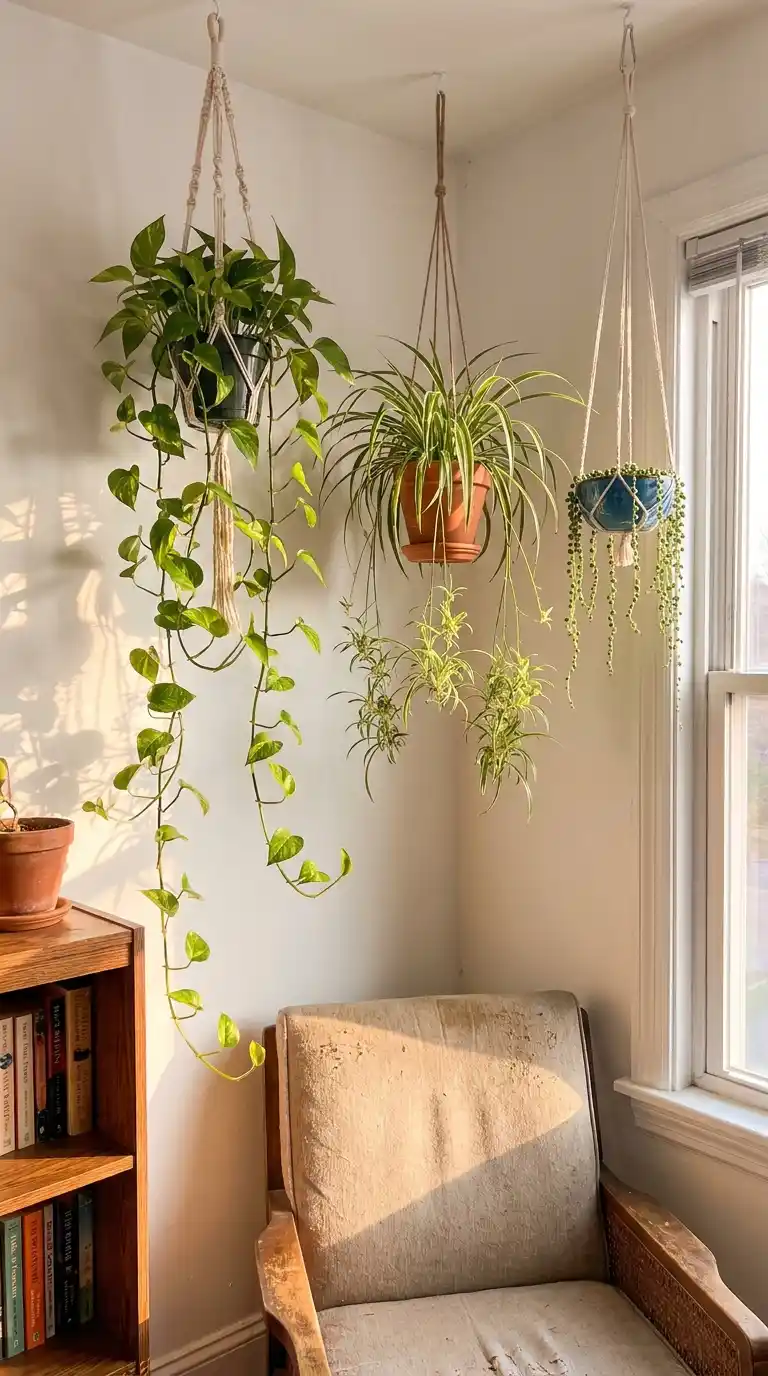
Let me be honest about something. I used to think hanging plants were just a trend, something people did for Instagram photos and then forgot about. But after living with them for several years I completely changed my mind. Hanging indoor plants solve a problem that floor plants simply cannot: they use vertical space. And vertical space is the most underused real estate in any home.
Think about it. Most of us have windowsills, countertops, and floors that are already crowded. But the air above our heads is almost always empty. Hanging plants for indoors fill that empty space in the most beautiful way possible. They draw the eye upward, make ceilings feel higher, and create a layered lush look that no amount of regular potted plants can achieve on their own.
Beyond aesthetics, hanging indoor plants also improve your air quality, reduce stress, and add a sense of calm to busy living spaces. Multiple studies have shown that being around plants can lower cortisol levels and improve mood. When you surround yourself with greenery at eye level and above, you feel that benefit even more strongly throughout your day.
The 60 Best Hanging Indoor Plants You Should Try This Year
Over the years I have grown and tested a wide range of hanging plants for inside the home. Some were incredibly easy and basically took care of themselves. Others needed a little more attention. All of them were worth it. Here is my full list organized so you can find exactly what suits your home and lifestyle.
1. Pothos (Epipremnum aureum)
Pothos is probably the single most popular hanging indoor plant in the world, and for very good reason. It is nearly indestructible. I have left mine without water for three weeks and it survived without complaint. The heart-shaped leaves come in solid green, golden-yellow, and variegated white-and-green varieties like Marble Queen or Neon pothos. The vines can grow several feet long and trail beautifully from a hanging basket.
Pothos thrives in low to medium indirect light, which makes it perfect for darker corners or rooms without big windows. It is also a top-rated air purifier, helping to remove toxins like formaldehyde and benzene from indoor air. If you are new to hanging indoor plants, start with pothos. You will not regret it.
2. Spider Plant (Chlorophytum comosum)
The spider plant is another classic among hanging plants for indoors, and it has a really endearing personality. As it matures it produces long arching stems with miniature plantlets dangling at the ends, which is how it gets its name. These baby plants called spiderettes look gorgeous swaying gently from a hanging pot.
Spider plants are incredibly adaptable and do well in a wide range of light conditions. They prefer bright indirect light but can tolerate low light better than most plants. They are also non-toxic to pets, which is a huge win if you have cats or dogs at home. I keep one in my bathroom where it gets steamy humidity and it absolutely loves it there.
3. String of Pearls (Senecio rowleyanus)
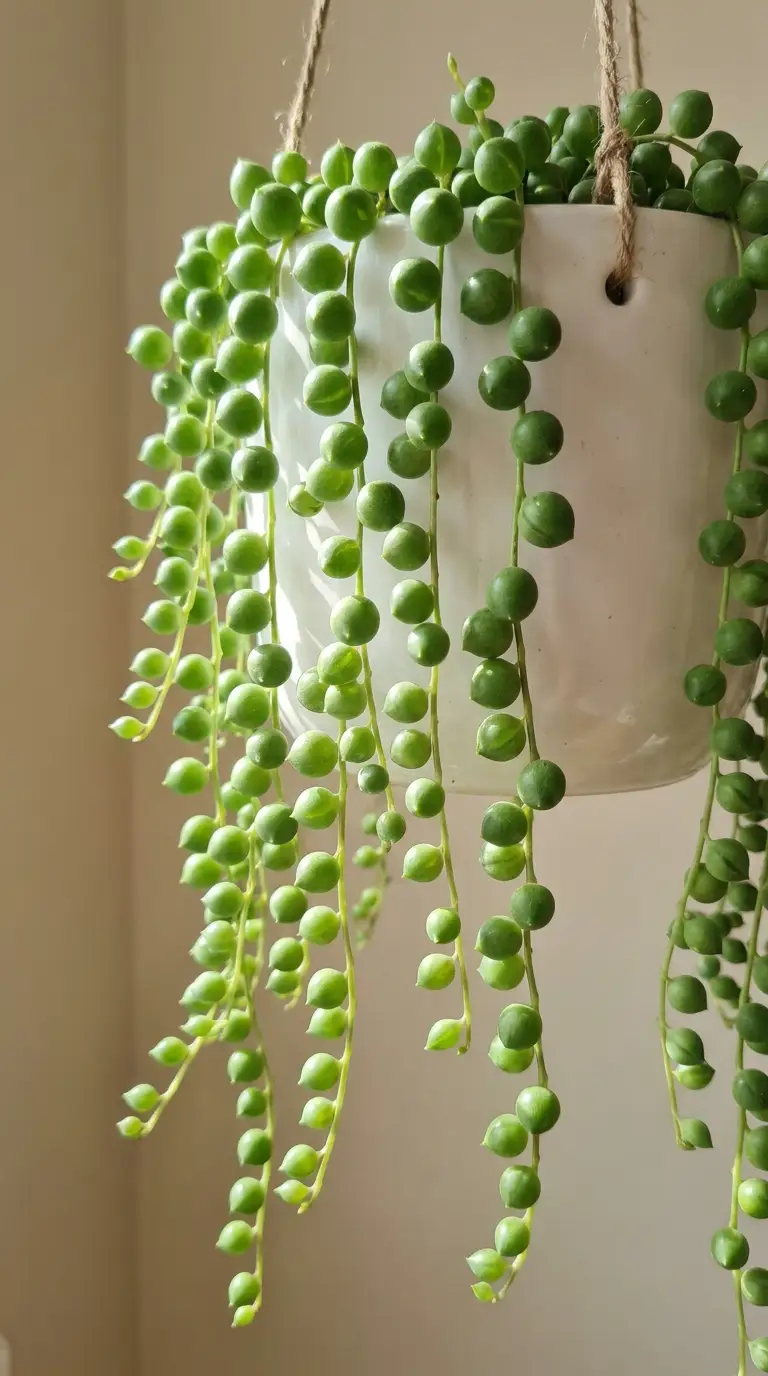
If you want a hanging indoor plant that looks like living jewelry, the string of pearls is it. The tiny round bead-like leaves line long trailing stems and create the most unusual sculptural effect when suspended from a pot. It looks almost like a green waterfall of tiny spheres.
String of pearls is a succulent so it needs bright light and very infrequent watering. It is not the most beginner-friendly hanging plant but once you understand its needs it is straightforward. Place it near a sunny window and water only when the soil is completely dry. Overwatering is the most common mistake people make with this plant.
4. Boston Fern (Nephrolepis exaltata)
Boston ferns are one of the most dramatic-looking hanging indoor plants you can own. The long feathery fronds arch outward and downward in a full lush display that instantly makes any space feel like a jungle retreat. They look especially stunning in macrame hangers or wicker baskets.
The one thing to know about Boston ferns is that they love humidity. I mist mine every other day and keep a small tray of water nearby during dry winter months. In return it rewards me with the most gorgeous full growth. Boston ferns are also excellent air purifiers and one of the most effective plants at removing indoor air pollutants.
5. Heartleaf Philodendron (Philodendron hederaceum)
The heartleaf philodendron is one of those plants that seems to grow while you are watching it. The glossy deep green heart-shaped leaves trail in long elegant cascades from hanging pots. It is very similar to pothos in growth habit and care needs but the philodendron has a slightly more refined satiny leaf finish.
This hanging indoor plant thrives in medium to bright indirect light and prefers to dry out slightly between waterings. It is a fast grower so you will have full lush trails within just a few months of bringing it home. I find it perfect for high shelves or ceiling hooks in the living room where I want an impressive drape of greenery.
6. String of Hearts (Ceropegia woodii)
The string of hearts is a delicate romantic-looking hanging plant for indoors that never fails to stop people in their tracks. The thin wiry stems carry tiny heart-shaped leaves in silvery-green and purple tones. When suspended from a hanging pot the trails can reach impressive lengths creating a curtain of tiny hearts.
Like most trailing succulents the string of hearts wants bright light and infrequent watering. It is more drought-tolerant than you might expect for such a dainty-looking plant. I keep mine near my east-facing window where it gets gentle morning sun and it has been thriving for two years with minimal fuss.
7. English Ivy (Hedera helix)
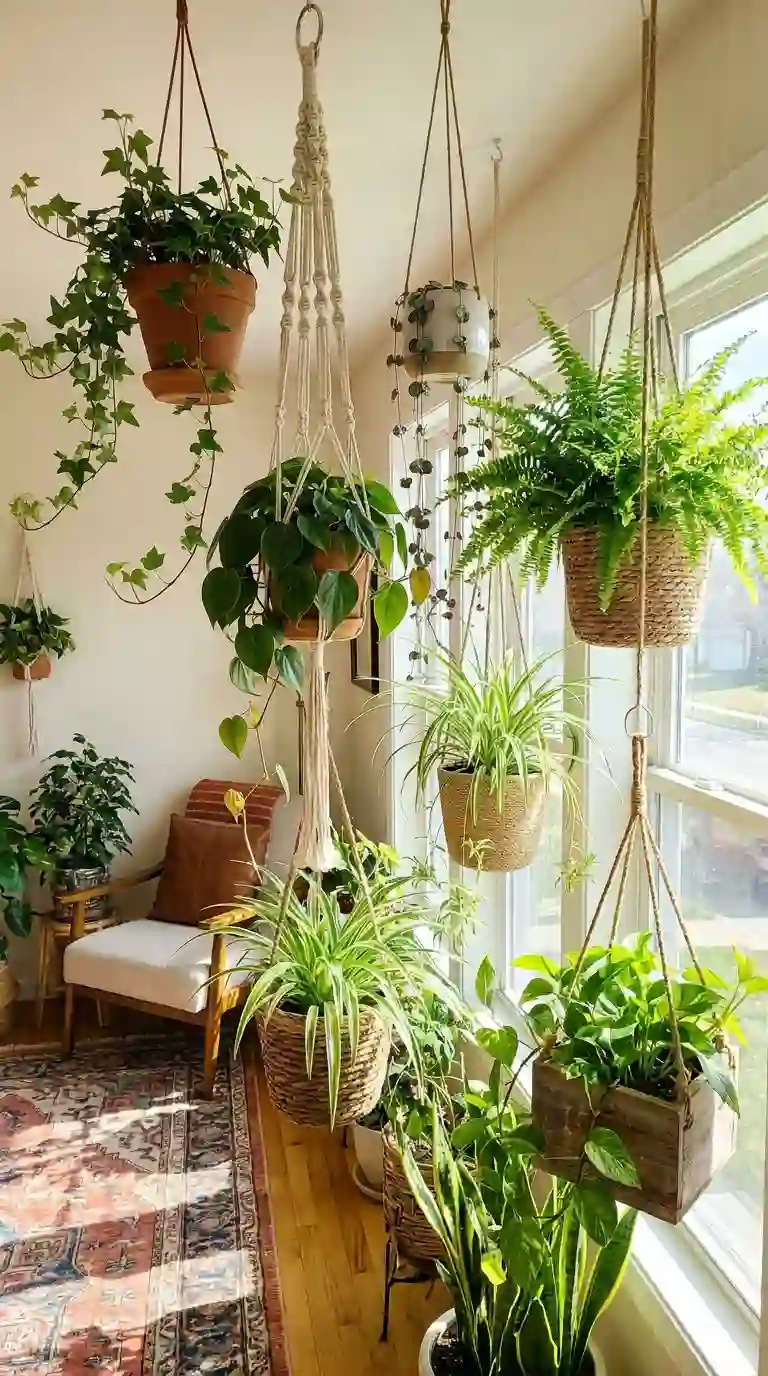
English ivy brings a classic almost storybook quality to a room. The lobed dark green leaves on trailing vines look equally at home in a cottage or a modern apartment. As a hanging indoor plant ivy creates a lush overflowing effect that looks like it has been there forever.
Ivy prefers cooler temperatures and bright indirect light. It is one of the few hanging plants that can tolerate some cold drafts near windows, which makes it versatile for different rooms. Keep the soil evenly moist and mist the leaves occasionally to prevent spider mites, which can be an issue in dry indoor air.
8. Burro’s Tail (Sedum morganianum)
Burro’s tail is a chunky textural succulent that makes a bold statement as a hanging plant. The thick overlapping blue-green leaves are packed tightly along trailing stems that can reach two feet or more in length. It looks incredible in a terracotta or ceramic hanging pot near a sunny window.
Handle this one gently because the leaves detach very easily when brushed. But on the bright side each fallen leaf can be propagated into a new plant. Burro’s tail needs full sun or very bright indirect light and very sparse watering. It is a slow grower but deeply satisfying once it fills out.
9. Tradescantia (Spiderwort)
Tradescantia is one of my favorite underrated hanging indoor plants. The purple and silver striped leaves create a striking visual effect especially when the plant is full and trailing freely. It is a fast grower that fills out a hanging pot quickly and creates impressive color even in lower light conditions.
One thing I love about tradescantia is that it is incredibly easy to propagate. Just snip a few stem cuttings, pop them in water, and within weeks you have new plants to share with friends or expand your own collection. I have started so many pots from one original plant that my entire apartment feels like a tradescantia garden now.
10. Peperomia (Various Species)
Peperomia is a huge genus with hundreds of species and several of them make wonderful hanging plants for indoors. Trailing peperomia varieties like Peperomia rotundifolia and Peperomia prostrata have tiny coin-shaped or turtle-patterned leaves that look absolutely charming when suspended from a small pot. They stay compact and are very easy to care for.
Peperomias are great for people who tend to forget about their plants. They store water in their thick leaves and can handle some neglect. They prefer bright indirect light and should be watered only when the top inch of soil is dry. Perfect hanging plants for busy people who still want to enjoy beautiful greenery at home.
11. Wax Plant (Hoya carnosa)
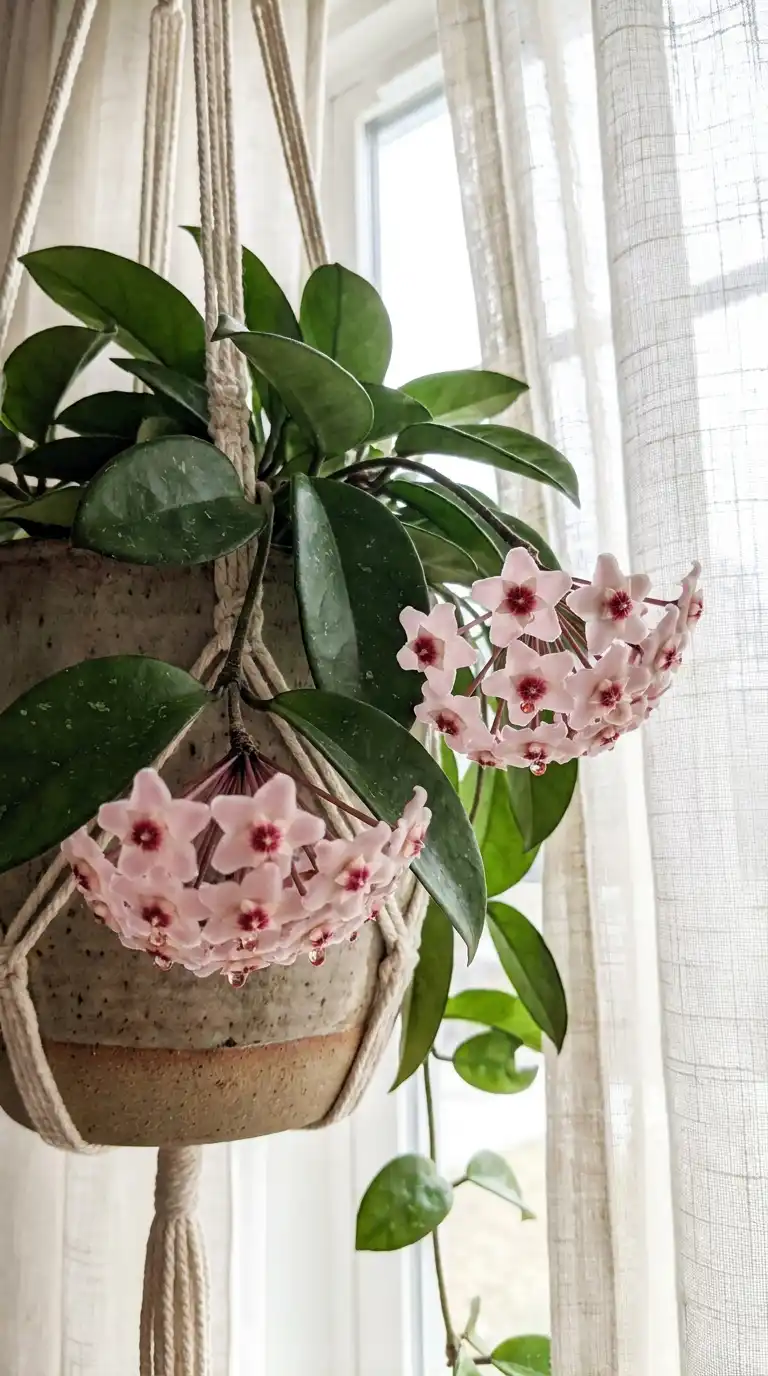
The wax plant is one of those hanging indoor plants that rewards patience with spectacular results. The thick waxy leaves are beautiful on their own but when the plant matures and starts to bloom the clusters of star-shaped flowers with a porcelain-like shine are truly breathtaking. Some varieties are also wonderfully fragrant.
Hoyas are fairly slow growers but very long-lived. I have a hoya that is over five years old and it has become a statement piece in my study. They prefer bright indirect light and infrequent watering. One important tip is to never remove the dried flower spurs after blooming because new flowers will grow from the same spot.
12. Air Plants (Tillandsia)
Air plants are some of the most fascinating hanging plants you can own because they do not need soil at all. They absorb moisture and nutrients directly through their leaves which means you can display them in glass globes, driftwood mounts, wire frames, or woven holders. They are completely soil-free and incredibly versatile.
To care for air plants simply mist them two to three times a week or soak them in water for about 30 minutes once a week, then shake off excess water and let them dry upside down. They need bright indirect light and good air circulation. Hanging glass globes filled with air plants make some of the most stylish and conversation-worthy hanging indoor plants in any home.
13. Creeping Jenny (Lysimachia nummularia)
Creeping Jenny is a cheerful bright green plant with round coin-shaped leaves that trails prolifically from hanging pots. The golden variety in particular has a luminous lime-green color that looks stunning against white walls or dark wood shelving. It grows quickly and fills a hanging basket with satisfying speed.
14. Goldfish Plant (Columnea)
The goldfish plant is one of the more exotic-looking hanging indoor plants, featuring small waxy leaves on trailing stems and bright orange-red flowers that genuinely look like tiny leaping goldfish. It is a showstopper when in bloom and a lovely green trailing plant the rest of the year. It loves humidity so bathrooms and kitchens are ideal spots.
15. Lipstick Plant (Aeschynanthus radicans)
The lipstick plant is named for its bright red tubular flowers that emerge from dark burgundy buds, looking uncannily like a tube of lipstick being extended. As a hanging plant for indoors it creates an incredibly dramatic look with its trailing stems, glossy leaves, and vivid blooms. It thrives in bright indirect light and high humidity.
16. Donkey’s Tail (Sedum burrito)
Similar to Burro’s tail but with rounder more compact leaves, Donkey’s tail is another beautiful succulent for hanging. The blue-green plump leaves wrap tightly around each stem creating a rope-like appearance that looks incredibly lush when multiple stems trail down from a hanging pot. Bright sunlight and minimal watering keep it happy.
17. Maidenhair Fern (Adiantum)
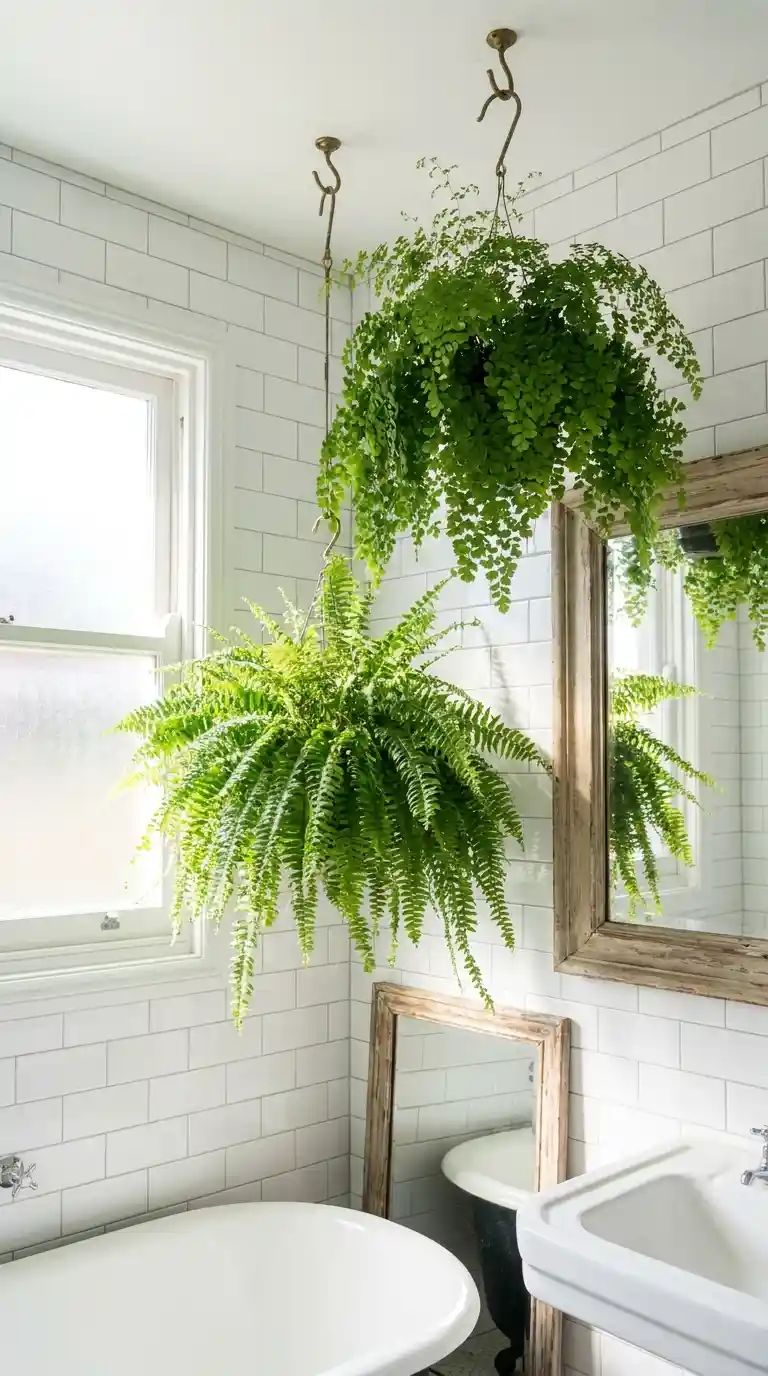
The maidenhair fern is one of the most delicate and beautiful hanging plants for indoors, with its fan-shaped leaflets on thin black stems creating an airy lace-like appearance. It is more demanding than most ferns because it needs consistent moisture and high humidity, but the visual reward is absolutely worth the extra attention.
18. String of Nickels (Dischidia nummularia)
The string of nickels has round coin-shaped slightly cupped leaves on trailing stems that give it a unique look among hanging plants. The leaves have an almost succulent quality and the plant is very low-maintenance, preferring bright indirect light and moderate watering. It looks wonderful in terracotta pots with natural twine hangers.
19. Trailing Begonia (Begonia varieties)
Trailing begonias especially the angel wing and rhizomatous varieties make gorgeous hanging indoor plants. Their asymmetrical spotted leaves and clusters of delicate flowers bring color and texture to any hanging display. They prefer bright indirect light and consistent moisture, rewarding good care with impressive blooms in shades of pink, red, orange, and white.
20. Staghorn Fern (Platycerium)
The staghorn fern is not your average hanging plant. It is dramatic, sculptural, and looks like a living piece of wall art. Typically mounted on a wooden board and hung on the wall, the staghorn fern grows large antler-shaped fronds that command attention. It is a real conversation piece and one of the most eye-catching hanging indoor plants you can own.
21. Silver Vine (Scindapsus pictus)
Silver vine also called satin pothos has some of the most beautiful foliage among hanging plants for indoors. The dark green leaves are dusted with silver patches that shimmer in the light creating a truly elegant effect. It trails similarly to regular pothos and is equally easy to grow, making it an excellent choice for pothos lovers who want something with more visual drama.
22. Chenille Plant (Acalypha hispida)
The chenille plant produces long fuzzy bright red catkin-like flower clusters that are simply irresistible. The drooping red tassels can reach a foot or more in length and look absolutely wild from a hanging pot. It needs bright light and regular moisture but rewards you with blooms for much of the year.
23. String of Bananas (Senecio radicans)
A quirky cousin of string of pearls, the string of bananas has small banana-shaped leaves on trailing stems that look genuinely fun and unusual as a hanging plant. It is more tolerant of lower light than string of pearls and grows faster, making it a great choice for beginners who want a succulent-style hanging plant with personality.
24. Watermelon Peperomia (Peperomia argyreia)
While not a classic trailer, watermelon peperomia can look beautiful in a hanging pot where its distinctive striped leaves resembling tiny watermelon rinds spill slightly over the edge. It stays compact, needs minimal care, and brings incredible pattern and color to a hanging display without overwhelming a small space.
25. Arrowhead Plant (Syngonium podophyllum)
The arrowhead plant starts out as a compact rosette but as it matures it develops long trailing stems that drape beautifully from a hanging pot. The arrow-shaped leaves come in shades from deep green to pink, burgundy, and white-variegated depending on the cultivar. It is fast-growing, easy to care for, and one of the most underrated hanging indoor plants available today.
More Outstanding Hanging Plants for Indoors
Beyond the detailed descriptions above there is a whole world of additional hanging plants that deserve a spot in your home. Each of these has unique qualities that make it worth growing as part of your hanging indoor plants collection.
26. Dichondra Silver Falls has silver coin leaves on cascading stems and is striking in bright spots.
27. Black-eyed Susan Vine produces cheerful yellow and orange blooms from a hanging pot.
28. Asparagus Fern has feathery cloud-like fronds that look wonderful in hanging baskets.
29. Rex Begonia Vine offers deeply textured colorful foliage.
30. Chain of Hearts brings delicate pink and green variegated leaves on trailing stems.
31. Inch Plant is a close relative of tradescantia and equally vigorous and colorful as a hanging indoor plant.
32. Swedish Ivy has soft scalloped leaves on long trailing stems and is incredibly easy to grow.
33. Wandering Dude is a vigorous trailing plant in rich purple tones that fills a hanging basket quickly.
34. Nerve Plant spills beautifully in small hanging pots showing off its bright pink veined leaves.
35. Pelargonium brings colorful trailing blooms to sunny hanging spots.
36. Lobelia is a compact bloomer in deep purple-blue.
37. Bacopa is covered in tiny star-shaped flowers all season.
38. Million Bells looks like a cascade of tiny petunias and is a favorite hanging indoor plant for bright windows.
39. Scaevola trails with fan-shaped lavender flowers.
40. Fuchsia is a classic for shaded hanging baskets with dramatic bicolor blooms.
41. Wave Petunia is the most vigorous colorful flowering trailer for sunny spots.
42. Verbena produces clusters of small pink, purple, and red flowers on trailing stems.
43. Nasturtium is edible and produces bright orange and yellow blooms that tumble from hanging pots.
44. Columnea microphylla has tiny round leaves and dramatic orange flowers.
45. Sutera produces masses of white or pink flowers on cascading stems.
46. String of Watermelons has oval striped leaves that trail beautifully and look amazing suspended from a high shelf.
47. Ruby Necklace is a colorful trailing succulent with purple bean-shaped leaves.
48. String of Dolphins has leaves shaped like tiny leaping dolphins, one of the most unusual hanging indoor plants available.
49. Fish Hook Senecio is a fast-growing purple and green trailer for bright spots.
50. Mikania ternata has attractive bronze and purple fuzzy foliage on trailing stems.
51. Ceropegia sandersonii produces fascinating unusual green flowers from trailing stems.
52. Aeschynanthus lobbianus has dark leaves and vivid red flowers and is one of the showiest hanging indoor plants for bright rooms.
53. Othonna capensis produces slender purple leaves and cheerful yellow daisy flowers.
54. Rhipsalis is a forest cactus with long pendant stems that look ethereal in a hanging pot and needs no bright sun to thrive.
55. Dischidia pectenoides is a unique epiphyte with unusual shaped leaves that drape charmingly.
56. String of Turtles is a miniature trailing peperomia with intricate turtle-shell patterned leaves that looks incredible in small hanging pots
. 57. Lamium has silvery variegated leaves and tiny pink or white flowers and trails gently from hanging baskets.
58. Coral Bells has stunning colorful foliage in shades from bronze to burgundy and lime green.
59. Oxalis triangularis has deep purple clover-shaped leaves that fold up at night and look magical trailing from a hanging pot.
60. Hoya kerrii has chunky heart-shaped leaves and is a deeply charming hanging indoor plant that makes a wonderful gift and a beautiful long-term display piece for any room.
How to Choose the Right Spot for Your Hanging Indoor Plants
Placement is everything when it comes to hanging indoor plants. The most common mistake I see is people falling in love with a plant, bringing it home, hanging it wherever looks pretty, and then wondering why it is struggling a month later. Before you hang anything you need to honestly assess the light in your space throughout the day.
South-facing windows receive the most light throughout the day and are ideal for succulents, hoyas, and other light-loving hanging plants. East-facing windows get gentle morning sun, which is perfect for most trailing foliage plants like pothos, philodendrons, and tradescantia. West-facing windows get strong afternoon sun and work well for most moderately light-loving hanging plants. North-facing windows receive the least light and are best suited to shade-tolerant hanging plants like ferns, ivy, and spider plants.
Height is another consideration. Plants at ceiling height will be far from windows and will receive less light than you might expect. If you are hanging plants near a window, position them at a height where the light actually reaches. I learned this lesson the hard way when I hung a hoya from a high ceiling hook far from the window and spent months confused about why it was not growing.
The Best Hangers and Pots for Your Hanging Indoor Plants
Choosing the right hanger is as important as choosing the right plant. The hanger you use can completely change the look and feel of your hanging indoor plants display. Over the years I have experimented with just about every type of hanger available and each has its strengths and ideal use cases.
Macrame Hangers
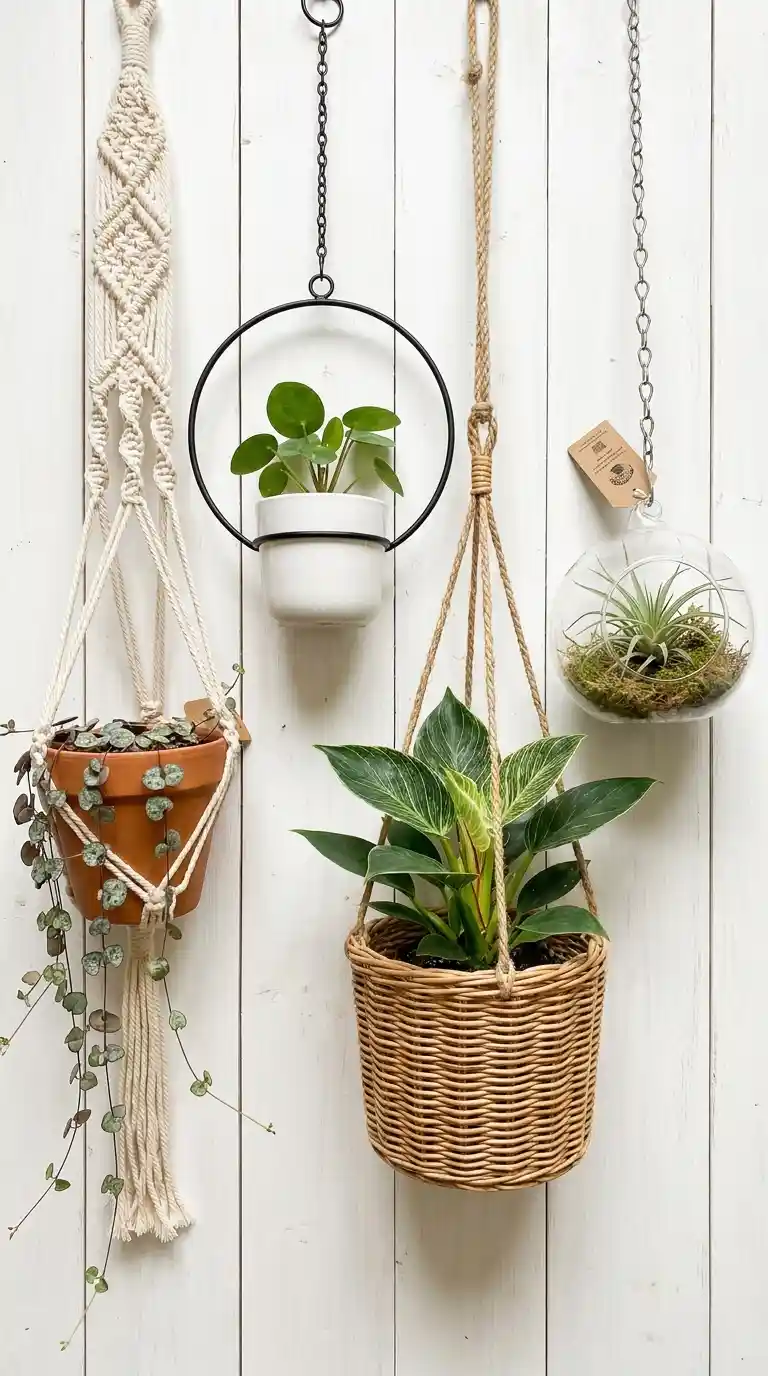
Macrame hangers are probably the most popular choice for hanging plants right now, and I completely understand why. They bring a warm bohemian handcrafted quality to a space that no other hanger can match. The knotted cotton or jute rope creates a beautiful cradle for round or tapered pots. Macrame hangers are available in single or tiered styles, letting you hang multiple plants from one hook.
The main thing to consider with macrame is pot size. Make sure the pot you are using will fit securely in the hanger without slipping through or being too tight to remove for watering. I typically match the macrame hanger size to the pot before buying. Most macrame hangers on the market fit standard 4-inch to 6-inch pots comfortably.
Metal and Wire Hangers
Metal and wire hangers offer a more modern or industrial look. They are sleek, minimal, and let the plant take center stage rather than the hanger itself. Matte black metal hangers have been incredibly popular for contemporary interiors. They pair particularly well with simple white ceramic or terracotta pots and look sharp in minimalist home settings.
Wicker and Rattan Baskets
Wicker and rattan hanging baskets are the classic choice especially for ferns and full-bodied trailing plants. They have a natural organic look that complements most home styles. Many come with built-in coco coir liners which help retain moisture while still allowing good drainage. They are also excellent for outdoor-to-indoor transitions in warmer months.
Hanging Glass Globes
Glass globe terrariums work beautifully for air plants and small succulents. The transparent glass showcases the plant from all angles and creates a jewel-like effect. They come in geometric and spherical shapes and look stunning grouped in threes at different heights from a single ceiling hook or stand. They are a particularly good choice for creating a modern minimalist hanging plant display.
Essential Care Tips for All Hanging Indoor Plants
One of the most frequently asked questions I get is about watering hanging plants. And honestly, watering is where most people go wrong. The fundamental thing to understand is that hanging pots dry out faster than floor pots. Heat rises so the air near your ceiling is warmer and drier than the air at floor level. This means hanging plants generally need more frequent watering than you might expect.
The best approach is to check the soil before every watering. Stick your finger about an inch into the soil. If it feels dry, water thoroughly. If it still feels damp, wait another day or two. This simple habit will save most plants from the two most common problems: overwatering and underwatering. I do a weekly check on all my hanging plants every Sunday morning and adjust my watering schedule based on what the soil tells me.
Drainage is another critical factor. Never use a pot without drainage holes for a hanging indoor plant. Without drainage, water accumulates at the bottom and causes root rot which kills plants quickly and silently. If you love a decorative pot without drainage holes, use it as a cachepot by placing a smaller draining pot inside it. Remove the inner pot for watering, let it drain fully, then put it back.
Feeding Your Hanging Indoor Plants
Hanging plants benefit from regular fertilizing during the growing season which is typically spring through early autumn. I use a balanced liquid fertilizer diluted to half the recommended strength every two weeks during this period. In winter most hanging indoor plants slow their growth and do not need fertilizer. Overfeeding during dormancy can cause salt buildup in the soil and damage roots.
For flowering hanging plants like lipstick plant, goldfish plant, and hoya you can switch to a fertilizer with slightly higher phosphorus content during the bloom period. This encourages more flower production. Always water your plants before fertilizing to avoid burning dry roots with concentrated nutrients.
Pruning and Maintenance
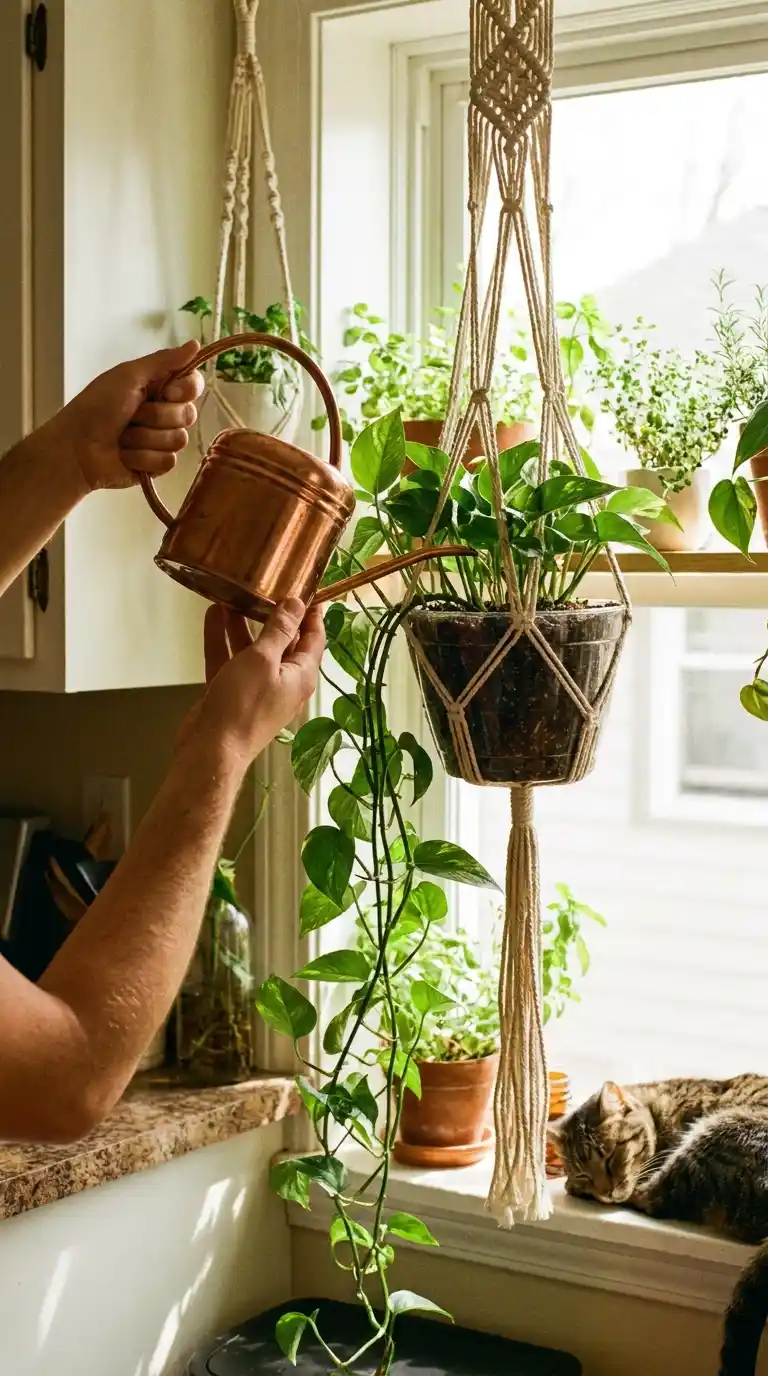
Pruning is important for keeping hanging indoor plants looking full and beautiful. Many trailing plants will develop long bare stems over time as older leaves drop off at the base. Regular trimming of these bare stems and pinching back new growth encourages bushier more compact growth that fills out the hanging pot attractively. I prune most of my hanging plants in spring just as new growth begins.
The stems you remove during pruning can usually be propagated into new plants. Most trailing hanging plants root easily in water or moist potting mix. Just take a stem cutting with at least two or three leaf nodes, remove the lowest leaves, and place the cut end in water or soil. Within a few weeks you will have new plants ready to pot up or share.
Styling Ideas: How to Display Hanging Indoor Plants Like a Designer
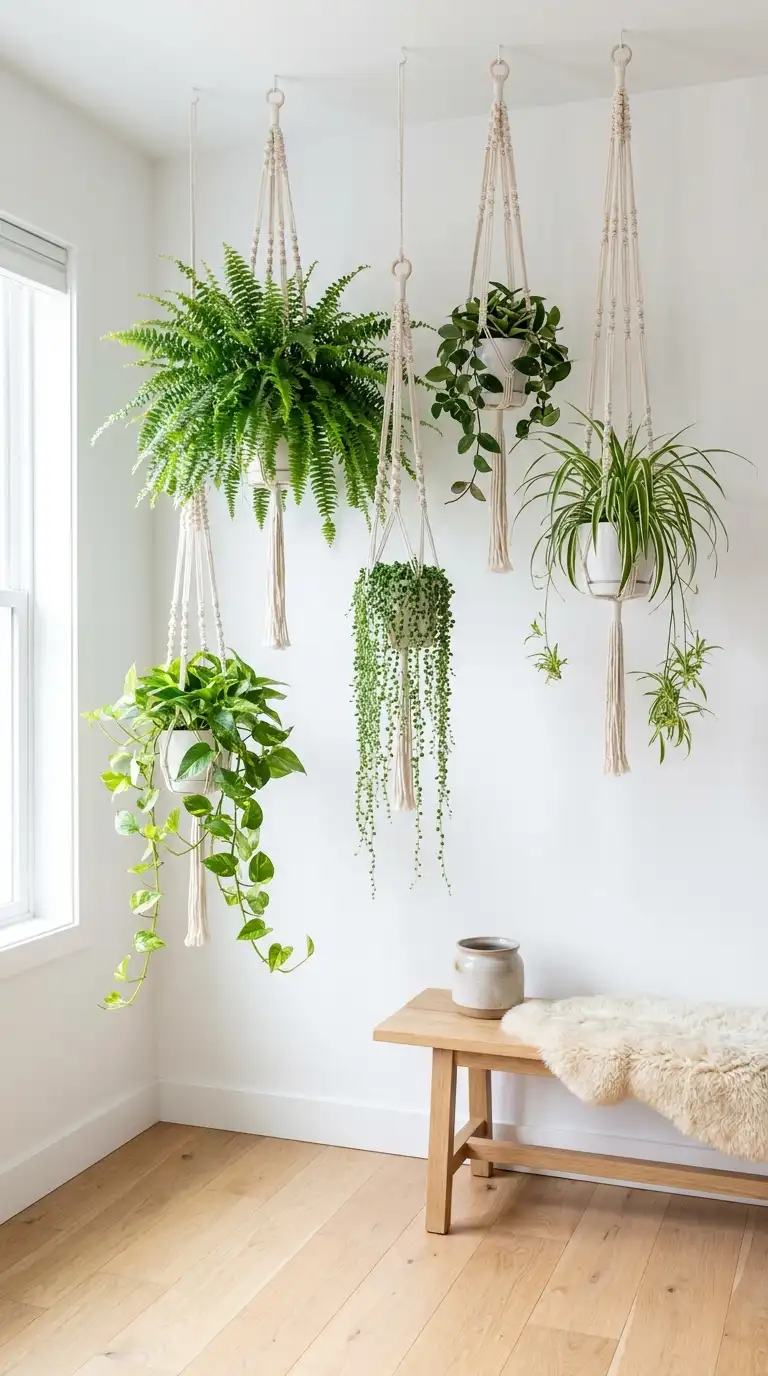
The difference between a hanging plant that looks like an afterthought and one that looks like a deliberate design choice is all in the styling. I have spent a lot of time studying how interior designers and plant stylists create beautiful hanging plant displays and I have distilled it into a few key principles that work every time.
Create Layers at Different Heights
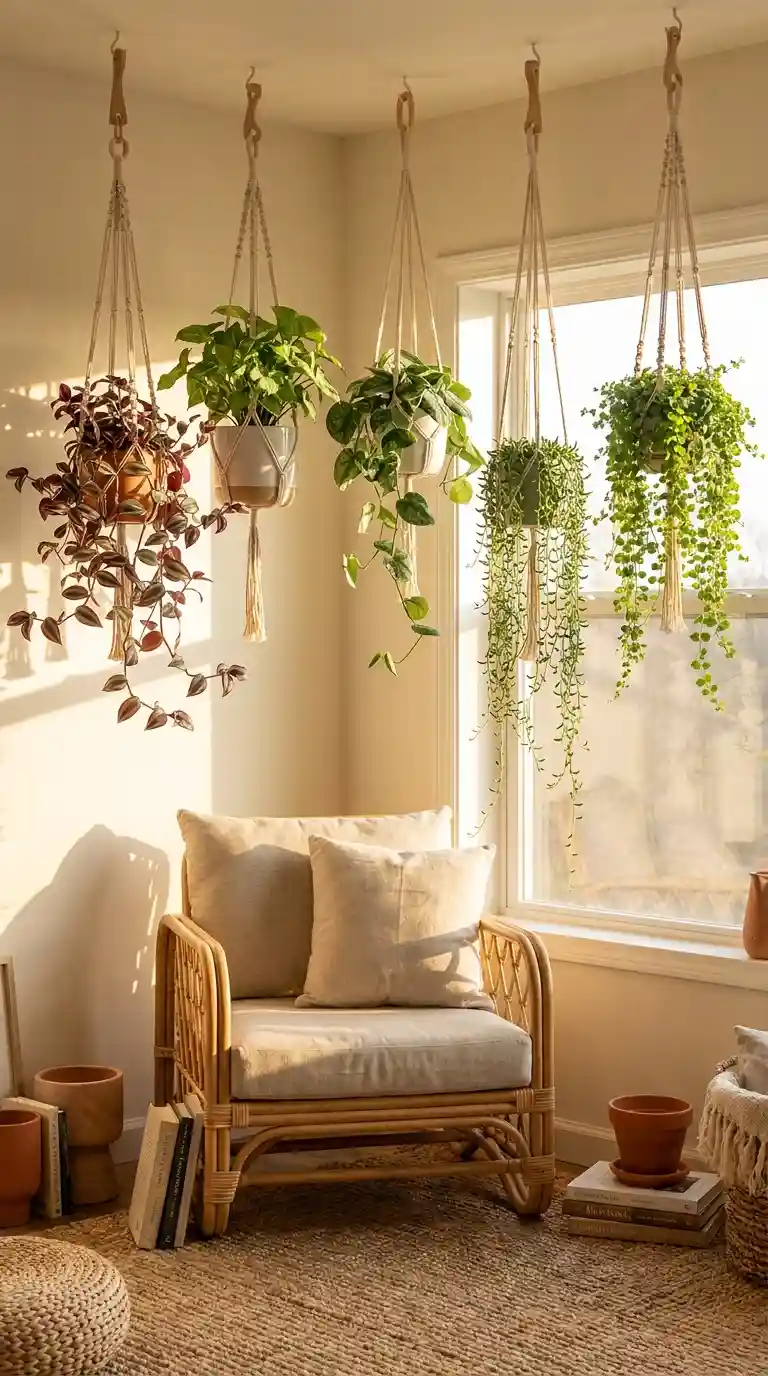
The single most effective styling trick for hanging plants is to vary the heights. Instead of hanging all your plants at the same level, stagger them at three or four different heights. This creates depth, visual interest, and a much more organic natural feel than a flat row of plants at identical heights. Think about how plants grow in a forest and try to recreate that layered canopy effect.
In my own home I use ceiling hooks at 6 feet, 5 feet, and 4 feet in the same corner to create a layered green display. The highest hook holds my longest-trailing pothos, the middle hook holds a full Boston fern, and the lowest hook holds a small hoya in a ceramic pot. Together they create a lush corner that took about 20 minutes to set up but looks like it required weeks of planning.
Mix Textures and Leaf Shapes
Another key to a beautiful hanging plant display is mixing different leaf textures and shapes. Avoid grouping plants that all look the same. Pair the soft feathery fronds of a fern with the smooth glossy leaves of a pothos and the delicate beads of a string of pearls. The contrast between fine, medium, and bold textures creates a much more visually rich and interesting display of hanging indoor plants.
Use a Consistent Hanger Style
While you should vary plant types and heights, keeping a consistent hanger style throughout a display creates cohesion. A collection of hanging plants all in macrame hangers of the same color looks curated and intentional. A collection where every plant is in a different type of hanger can look chaotic. Pick one or two hanger styles that complement your decor and stick to them throughout your space.
Best Rooms for Hanging Indoor Plants in Your Home
Not every room is equally suited to every type of hanging plant. Understanding which hanging plants work best in which rooms will save you a lot of frustration and help your plants thrive. I have plants in nearly every room of my home and each room has its own microclimate that determines what grows best there.
Hanging Plants for the Kitchen
Kitchens are wonderful places for hanging indoor plants because they tend to have good light, reasonable humidity from cooking and washing, and a vertical space above counters and the sink that is begging to be used. Herbs like trailing rosemary and creeping thyme can be both beautiful and functional when hung near a kitchen window. Pothos and heartleaf philodendron are also perfect kitchen hanging plants, thriving in the warm moderately humid kitchen environment.
Hanging Plants for the Bathroom
The bathroom is the most underrated room in the house for hanging indoor plants. The steam from showers creates a naturally humid environment that ferns, pothos, spider plants, and tradescantia absolutely love. Hanging plants in the bathroom also create a spa-like atmosphere that elevates the entire space. Even bathrooms with small or frosted windows can support low-light tolerant hanging plants.
Hanging Plants for the Living Room
The living room is the classic space for hanging indoor plants because it is where you spend the most time and where your guests form their first impression of your home. Here you have the most freedom to make a statement with large full plants and dramatic displays. A ceiling hook near a bright window can support a large Boston fern or a cascading pothos that becomes a true focal point of the room.
Hanging Plants for the Bedroom
Bedrooms are perfect for calming low-maintenance hanging indoor plants that create a restful atmosphere. Avoid anything with strong fragrances or that is potentially toxic if you have pets that sleep in the room. Good bedroom choices include spider plant, pothos, heartleaf philodendron, and silver vine. These are all proven air purifiers that can improve the air quality you breathe while sleeping.
Common Problems with Hanging Indoor Plants and How to Fix Them
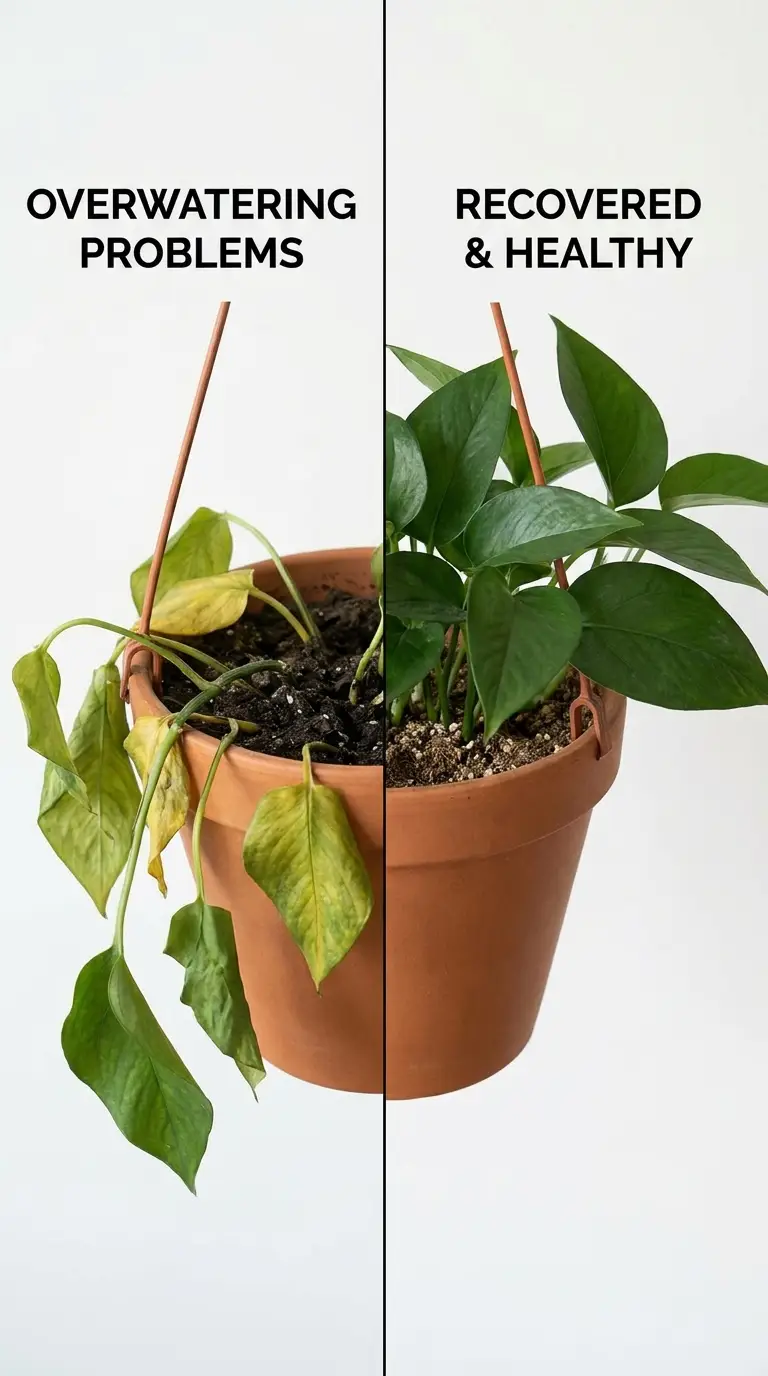
Even with the best care hanging indoor plants can sometimes run into problems. Over the years I have dealt with nearly every issue possible and learned how to identify and solve them quickly. Here are the most common problems and what to do about each one.
Yellowing Leaves
Yellow leaves on hanging plants are usually a sign of overwatering. When roots sit in waterlogged soil they cannot absorb oxygen and begin to rot. The plant responds by dropping or yellowing its older leaves. To fix this let the soil dry out completely before watering again and check that your pot has adequate drainage. In severe cases you may need to repot the plant into fresh dry soil.
Yellowing can also be caused by nutrient deficiency particularly nitrogen. If you have not fertilized in several months and the plant is actively growing try adding a balanced liquid fertilizer to your routine. Yellowing from the bottom of the plant upward is almost always normal aging of old leaves and is not a cause for concern.
Leggy and Sparse Growth
If your hanging plant is producing long bare stems with only a few small leaves it is almost certainly not getting enough light. Hanging plants reaching toward the nearest light source will stretch and grow leggy trying to find more. Move the plant to a brighter location or add supplemental grow lights positioned above and close to the plant. Also prune back the bare stems to encourage new fuller growth from the base.
Pests on Hanging Indoor Plants
The most common pests on hanging indoor plants are spider mites, fungus gnats, and mealybugs. Spider mites thrive in dry conditions and create fine webbing on leaves. Mealybugs look like small white cottony clusters in leaf joints. Fungus gnats are tiny flies that breed in moist soil. For all of these the first step is isolating the affected plant to prevent spread.
For spider mites increase humidity and spray the plant with neem oil solution or insecticidal soap. For mealybugs dab each cluster with a cotton swab dipped in rubbing alcohol. For fungus gnats let the soil dry out between waterings, which eliminates the moist conditions their larvae need to survive.
Pet-Safe and Child-Safe Hanging Indoor Plants
If you share your home with pets or young children plant safety is a real consideration. Many popular hanging indoor plants are toxic if ingested so it is important to know which ones are safe and which to keep out of reach. The good news is that there are plenty of beautiful pet-safe options for hanging plants that do not require you to compromise on style.
Pet-safe hanging indoor plants include spider plant, Boston fern, Swedish ivy, peperomia, air plants, orchids, and certain hoyas. These are all confirmed non-toxic to cats and dogs by the ASPCA. On the other hand pothos, philodendrons, English ivy, and tradescantia are toxic to pets and should be hung high enough that cats and dogs cannot reach them. Given that cats in particular can be incredibly acrobatic, hanging these plants very high and ensuring they cannot swing close to shelves or furniture is the safest approach.
How to Hang Your Indoor Plants Safely and Securely
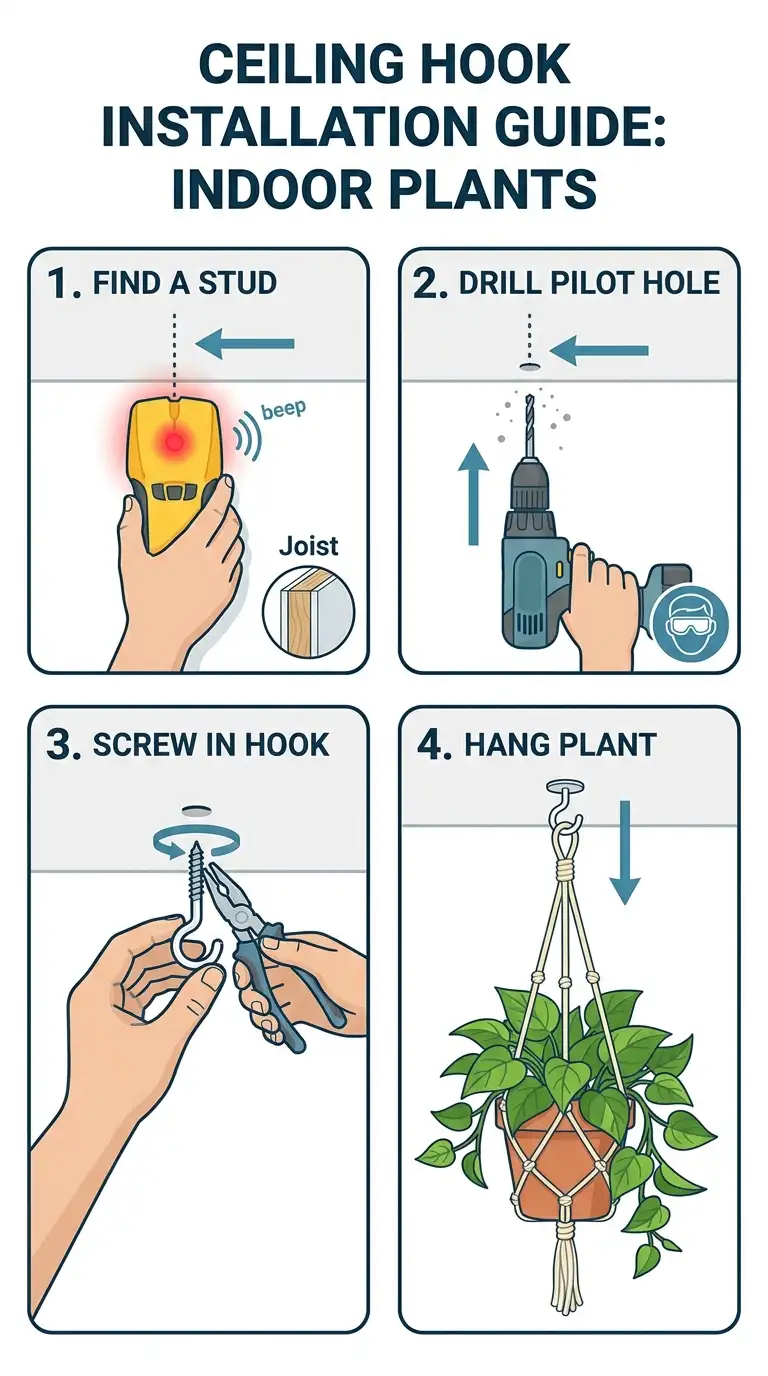
One of the most practical concerns people have about hanging indoor plants is whether they can safely hang them from their ceiling without causing damage or risk of falling. I have hung plants in rented apartments and owned homes alike and there are definitely right and wrong ways to approach this.
The safest method is to use a ceiling hook that is screwed directly into a ceiling joist. Joists are the structural wooden beams behind your ceiling drywall and they can support significant weight. Use a stud finder to locate the nearest joist then drill a pilot hole and screw in a heavy-duty ceiling hook rated for at least 25 pounds, even if your plant and pot only weigh 5 or 10 pounds. This gives you a significant safety margin.
If you cannot or do not want to put holes in your ceiling there are excellent alternatives. Tension plant stands with arms that extend horizontally can hold hanging plants without any wall or ceiling attachment. You can also use a wooden plant ladder, a freestanding plant pole, or a curtain rod across a window frame to hang lightweight plants without ceiling hooks.
Final Thoughts on Growing and Styling Hanging Indoor Plants
After years of growing, styling, and obsessing over hanging indoor plants I can tell you without any hesitation that they are one of the most rewarding ways to decorate your home. They bring life, color, texture, and a natural calm to spaces that no piece of furniture or wall art can replicate. And once you start, it is almost impossible to stop at just one.
Start with one easy hanging plant like a pothos or spider plant. Get the light right, water it correctly, and watch it grow. Once you see how quickly a single hanging indoor plant can transform a corner or a window you will be inspired to add more. Work your way through the ideas in this list and enjoy the process of discovering which hanging plants you love most and where they thrive best in your unique home.
The world of hanging plants for indoors is vast, rewarding, and endlessly creative. Whether you want a minimalist display of one perfect hoya in a ceramic pot or a jungle-style corner bursting with a dozen different trailing plants there is a hanging plant approach that is exactly right for you. Take your time, experiment freely, and enjoy every moment of growing your hanging indoor plant collection.
Frequently Asked Questions
1. What are the easiest hanging indoor plants for beginners?
The easiest hanging indoor plants for beginners are pothos, spider plant, heartleaf philodendron, and tradescantia. All four are highly tolerant of imperfect conditions, grow quickly, and bounce back easily from occasional neglect. Pothos is often considered the single most beginner-friendly hanging plant because it tolerates low light, infrequent watering, and almost any indoor environment without complaint.
2. How often should I water my hanging indoor
Watering frequency depends on the specific plant, pot size, and the conditions in your home. As a general rule hanging plants dry out faster than floor plants because warm air rises and accelerates evaporation. Check the soil every few days and water when the top inch feels dry for most foliage plants. Succulents and air plants need even less frequent watering, sometimes only every one to two weeks.
3. Can hanging indoor plants survive in low light?
Yes, several hanging indoor plants do well in low light conditions. The best low-light options include pothos, spider plant, heartleaf philodendron, English ivy, and Rhipsalis. Keep in mind that even low-light plants need some natural light to survive indoors. Truly dark rooms with no windows at all will not support most hanging plants long-term without supplemental grow lights.
4. What hanging indoor plants are safe for cats?
Pet-safe hanging indoor plants that are non-toxic to cats include spider plant, Boston fern, air plants, peperomia, Swedish ivy, and many hoya varieties. Avoid pothos, philodendrons, English ivy, and tradescantia around cats, as these plants contain compounds that are toxic when ingested and can cause vomiting and irritation.
5. How do I keep my hanging plants from drying out too quickly?
To keep hanging indoor plants from drying out too fast, choose pots with moisture-retaining materials like glazed ceramic instead of porous terracotta. Add perlite and coco coir to your potting mix to improve moisture retention without reducing drainage. Mist the leaves occasionally on hot days and consider hanging your plants slightly lower where the air is cooler and less drying.
6. What is the best soil for hanging indoor plants?
Most hanging indoor plants prefer a well-draining potting mix that retains some moisture but does not stay soggy. A good all-purpose mix for most trailing foliage plants combines regular potting soil with perlite in roughly a 2:1 ratio. For succulents and string plants use a dedicated cactus and succulent mix or add extra coarse sand to improve drainage. Ferns prefer a more moisture-retentive mix with added peat or coco coir.
7. Can I hang plants in a bathroom with no window?
A bathroom with absolutely no window is very challenging for living plants because there is no natural light. However you can use a small LED grow light mounted near your hanging plant to provide the light it needs. Air plants, pothos, and spider plants are the best candidates for low-light bathroom setups because they have the lowest light requirements. Without any light source no plant will survive long-term.
8. How do I hang plants from the ceiling without drilling?
There are several ways to hang plants from the ceiling without drilling. You can use adhesive ceiling hooks for very lightweight plants under one or two pounds. Tension rods across windows or doorframes can support lightweight hanging plants with clip hooks. Freestanding plant stands and ladder shelves allow you to display plants at height without any wall or ceiling attachment. Plant hangers that hook over curtain rods are another popular no-drill option.
9. Why are the leaves on my hanging plant turning yellow?
Yellow leaves on hanging indoor plants are most commonly caused by overwatering and poor drainage. When roots cannot get oxygen because the soil is too wet the plant begins to drop leaves and turn yellow. Other possible causes include insufficient light, nutrient deficiency, temperature stress, or the natural aging and dropping of old leaves at the base of the plant. Check your watering habits and drainage first as these are the most frequent culprits.
10. What is the best hanging plant for a sunny window?
For a sunny window that receives several hours of direct or very bright indirect light per day the best hanging indoor plants include string of pearls, string of bananas, burro’s tail, hoya, wax plant, and tradescantia. These plants love bright conditions and will grow vigorously and display their best colors in a well-lit spot. Avoid shade-lovers like ferns and ivy in very sunny windows as they can bleach and burn.
11. How long do hanging indoor plants live?
With good care many hanging indoor plants are essentially indefinitely long-lived. Pothos, philodendrons, spider plants, and hoyas can live for decades in a home environment. I have a pothos that is over eight years old and still growing vigorously. Succulents can also live for many years with proper care. Flowering plants like lipstick plant and goldfish plant tend to have shorter indoor lifespans of three to five years but can be renewed through cuttings.
12. Do hanging plants purify air in a room?
Yes, many hanging indoor plants are documented air purifiers that help remove common household toxins like formaldehyde, benzene, xylene, and carbon monoxide from indoor air. The most effective air-purifying hanging plants include pothos, spider plant, English ivy, Boston fern, and heartleaf philodendron. Having multiple hanging plants throughout your space can collectively contribute to cleaner, fresher indoor air.