
I have redesigned a lot of kitchens over the years, and I can tell you honestly that nothing nothing has made me fall in love with a space the way a well-designed terracotta kitchen does. There is something about that warm, earthy, reddish-brown palette that makes a kitchen feel genuinely alive. It does not feel like a showroom. It does not feel like a magazine spread. It feels like a place where real food gets cooked, where people gather without being invited, and where the light always seems to fall just right.
Terracotta as a color and as a material has been part of human homes for thousands of years. Ancient Romans used terracotta tiles on their floors. Mediterranean farmhouses have had terracotta walls for centuries. Indigenous communities across the Americas have been making terracotta cookware and storage vessels since long before Europeans arrived. There is a reason this particular shade of warm, baked-earth orange-red has endured across so many cultures and centuries it makes people feel good.
In recent years, the terracotta kitchen has had a massive resurgence in popularity, and I think it is one of the most exciting and enduring design trends of our time. Unlike grey minimalism or clinical white kitchens, a terracotta kitchen has warmth, personality, and a connection to something real. In this guide, I am going to walk you through everything the colors, the materials, the cabinet styles, the lighting, the accessories, the budget options, the DIY ideas, and much more. By the time you finish reading, you will have a complete picture of how to create a terracotta kitchen that feels completely personal and completely beautiful.
Also Read: 27 Stunning Black and White Kitchen Ideas That Never Go Out of Style
Why a Terracotta Kitchen Is the Best Design Choice You Can Make Right Now
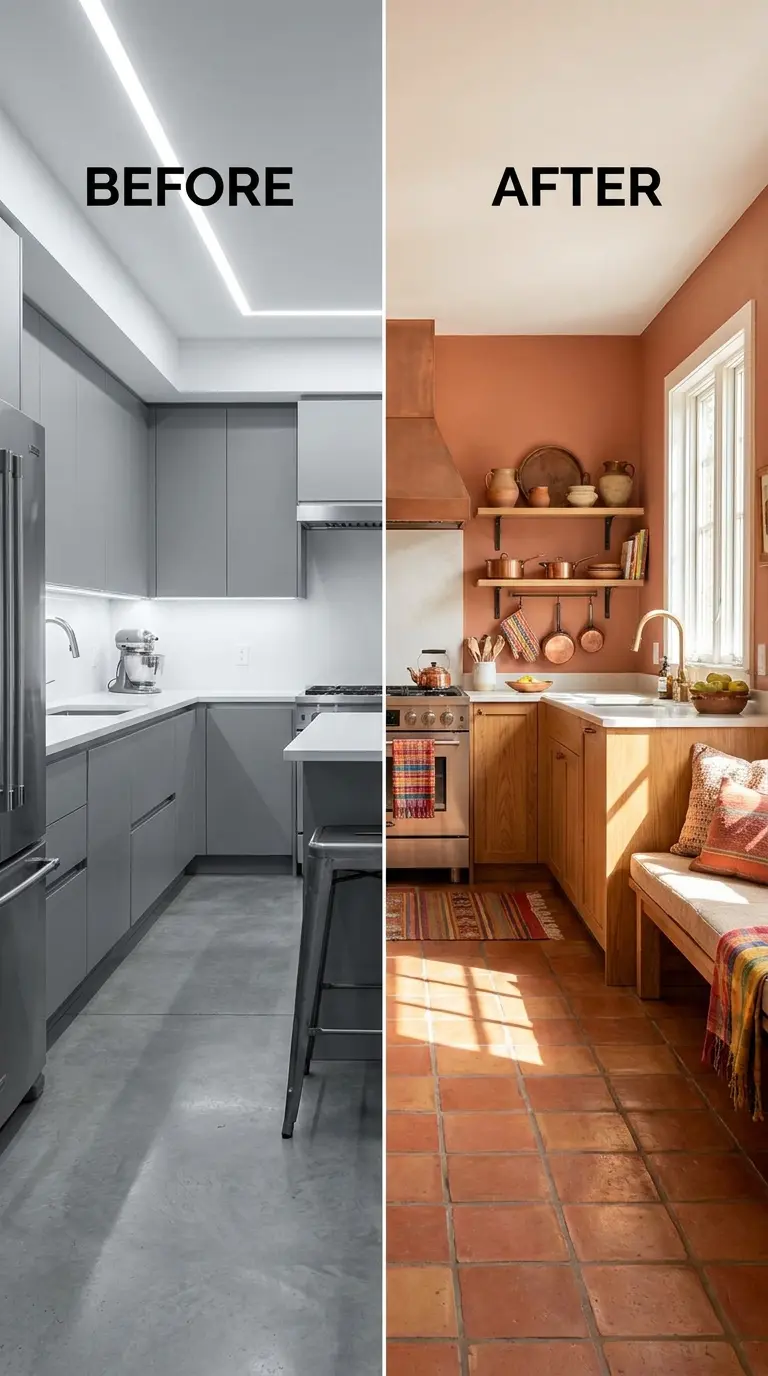
Every design trend goes through a cycle. It appears, it peaks, it becomes overused, and then it fades. Terracotta is different. I have been watching the terracotta kitchen trend closely for several years now, and instead of peaking and declining like most trends, it has continued to deepen and evolve. The reason is simple: terracotta is not really a trend. It is a return to something fundamental.
After more than a decade of grey and white kitchens dominating interior design, people are hungry for warmth. They want their home to feel like a sanctuary, not an office. They want to wake up in the morning and feel genuinely happy to be in their kitchen. And a well-designed terracotta kitchen delivers that in a way that no cool-toned, minimalist kitchen ever could. The warmth of terracotta works with natural light, with wooden surfaces, with green plants, with linen and cotton fabrics — it plays well with almost everything.
Another reason the terracotta kitchen is such a smart choice right now is its versatility. Whether you live in a modern apartment, a farmhouse, a Spanish colonial, or a Victorian row house, terracotta can be adapted to suit your architecture and your personal style. It can be bold and dramatic or subtle and understated. It can be rustic and earthy or polished and contemporary. That flexibility is rare in any design palette, and it is one of the things that makes the terracotta kitchen such a compelling choice for such a wide range of homeowners.
Understanding the Terracotta Color Palette for Your Kitchen
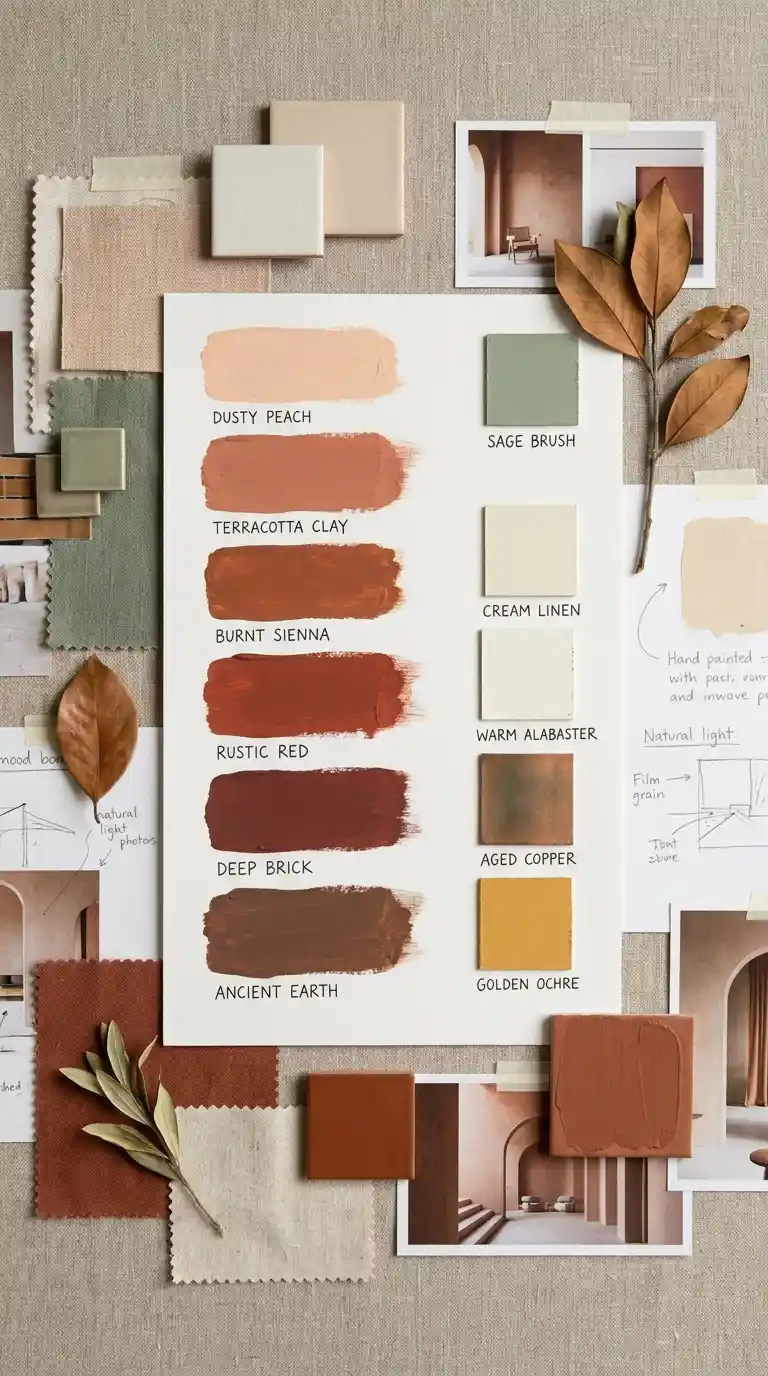
One of the things that confuses people about designing a terracotta kitchen is the word ‘terracotta’ itself. People assume there is one single color, but in reality, the terracotta palette is wonderfully broad. At the lighter end, you have soft dusty peaches and warm blushes that feel almost neutral. Moving through the middle, you find the classic earthy orange-reds that most people picture when they think of terracotta. At the deeper end, you reach rich burnt siennas, deep brick reds, and almost chocolatey warm browns.
All of these shades can work in a terracotta kitchen, and the key to getting it right is to decide which end of the spectrum suits your space and your personality. If your kitchen gets a lot of natural light, you can go deeper and bolder with your terracotta tones — the light will stop them from feeling oppressive. If your kitchen is smaller or darker, lighter, dustier terracotta shades will give you the warmth you want without making the room feel enclosed.
The terracotta palette also has natural companions colors that live harmoniously alongside it and enhance its warmth. Sage green is the single most popular pairing, and for good reason — the coolness of green provides perfect contrast to the heat of terracotta. Cream and warm white work beautifully as balancing neutrals. Copper and brass metallics amplify the warmth. Natural wood tones in honey, walnut, and oak blend seamlessly. Deep navy or forest green as accent colors add sophistication. Understanding these pairings is the key to a terracotta kitchen that feels designed rather than decorated.
Best Paint Colors for a Terracotta Kitchen
Paint is the most accessible and transformative tool in creating a terracotta kitchen, and choosing the right shade requires a bit of research. I have spent a lot of time with paint decks from the major brands, and there are a handful of shades I keep coming back to. Benjamin Moore’s ‘Moroccan Spice’ is a rich, saturated terracotta that reads beautifully in kitchens with good natural light. Farrow and Ball’s ‘Red Earth’ is deeper and more nuanced, with earthy brown undertones that feel sophisticated and grounded.
For a softer approach to the terracotta kitchen, consider Sherwin-Williams ‘Cavern Clay,’ which has become enormously popular for good reason — it is warm and rich without being overwhelming, and it works in almost any light condition. Dulux ‘Desert Wind’ and Little Greene ‘Pompeian Ash’ are two other softer options that create a beautiful, sun-warmed atmosphere without the intensity of a full deep terracotta.
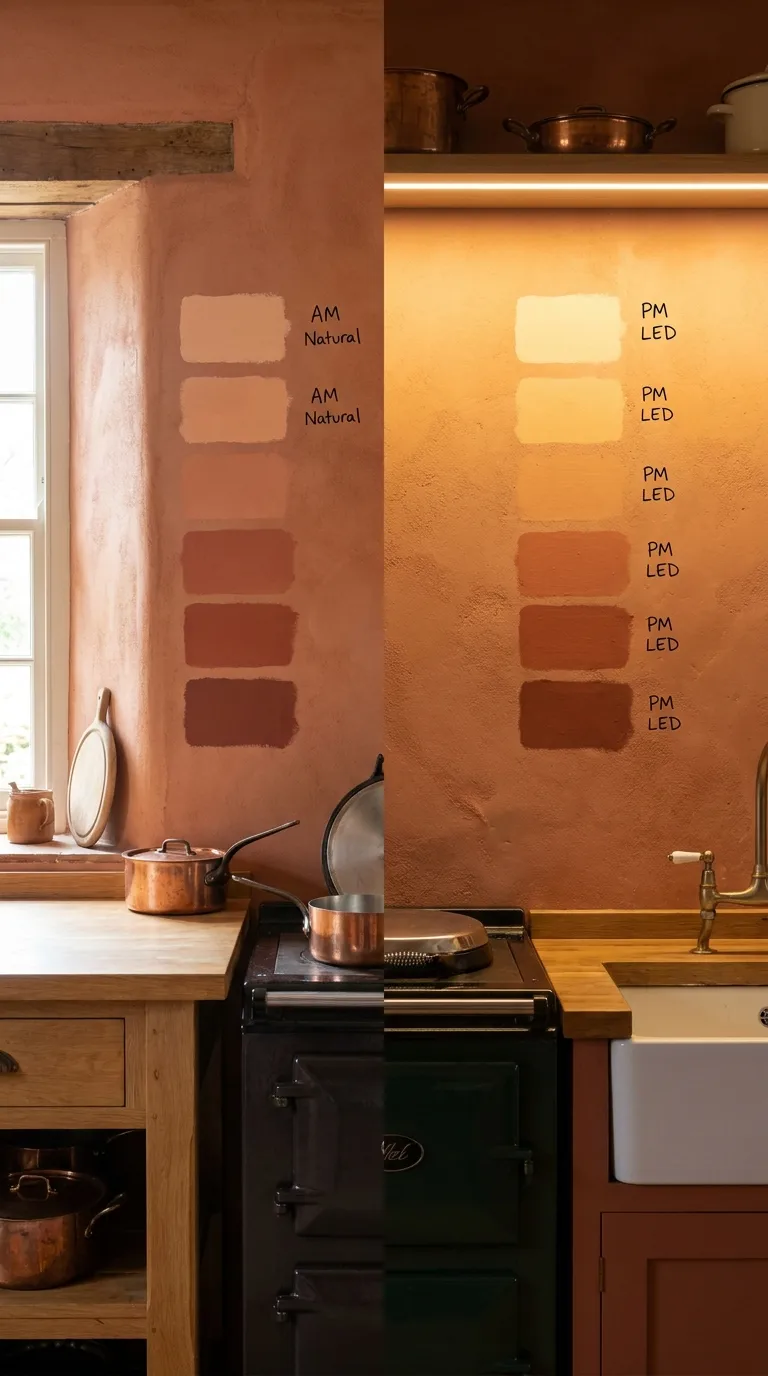
Whatever color you choose, do yourself a favor and paint large sample patches directly on your kitchen walls before committing. Paint color changes dramatically depending on the light in your specific space, and what looks perfect on a small chip can read very differently on a large wall. Live with your samples for at least three days, in different light conditions, before making your final decision. Your terracotta kitchen deserves that level of care.
Terracotta Kitchen Tiles: The Most Transformative Element
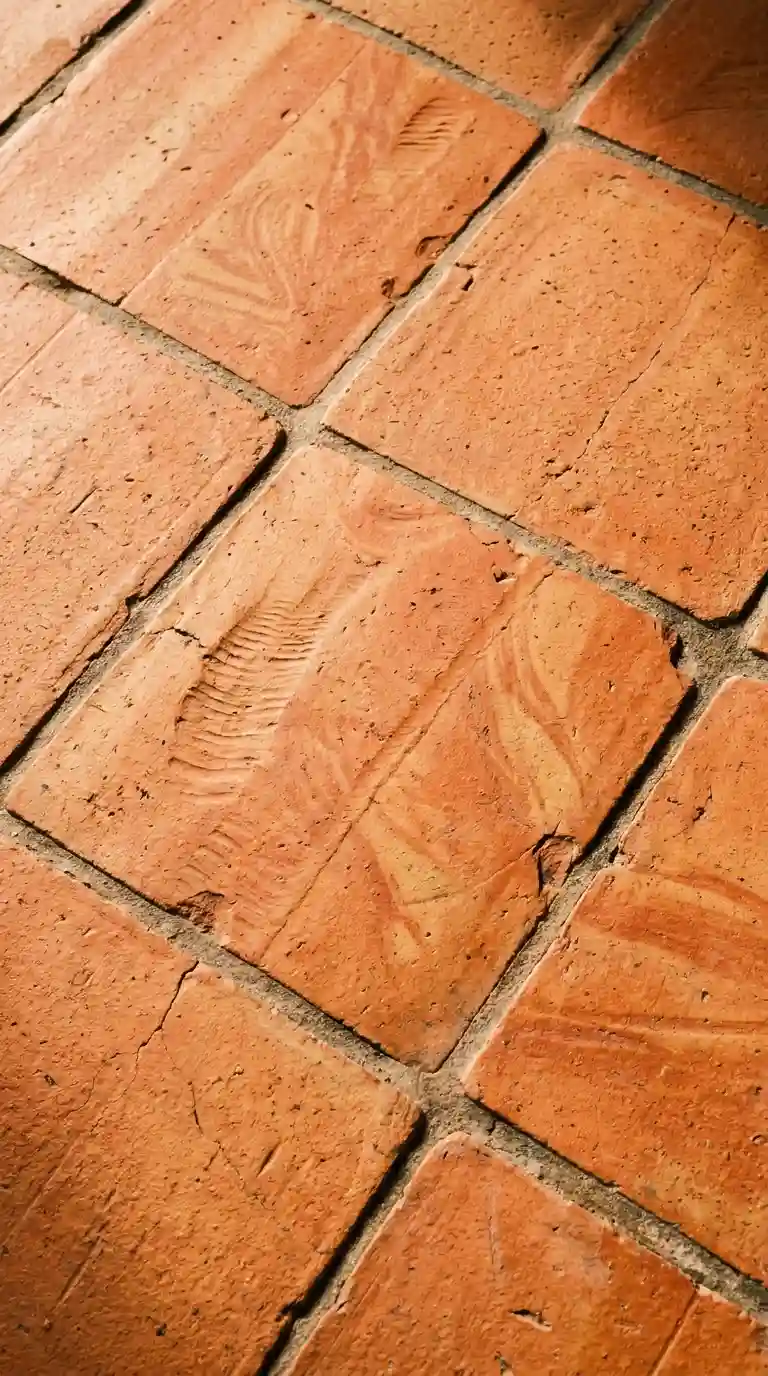
If there is one element that can single-handedly define the character of a terracotta kitchen, it is tile. Terracotta tiles — whether on the floor, the backsplash, or even the walls — bring an authenticity and depth that paint alone simply cannot achieve. The beauty of terracotta tile is that it is a natural material, and like all natural materials, every piece is slightly different. The variations in color, texture, and tone that come from the kiln firing process give terracotta tile a richness and complexity that manufactured materials can never replicate.
Terracotta floor tiles have been used in kitchens for centuries, and it is easy to understand why. They are durable, naturally cool underfoot (an advantage in a cooking environment), and they develop a gorgeous patina over time that actually makes them more beautiful with age. In a modern terracotta kitchen, handmade terracotta floor tiles paired with natural wooden cabinetry and a Talavera or geometric tile backsplash create a layered, richly textured environment that feels both ancient and utterly contemporary.
Beyond traditional square floor tiles, there is now a huge range of terracotta tile formats available for the terracotta kitchen. Hexagonal terracotta mosaic tiles create beautiful honeycomb patterns on floors or walls. Elongated terracotta subway tiles make a gorgeous backsplash with a more modern sensibility. Hand-painted terracotta Saltillo tiles from Mexico bring incredible color and craft to a kitchen floor. Terracotta zellige tiles from Morocco, with their jewel-like faceted surfaces, create a backsplash that catches and scatters light in the most magical way.
How to Seal and Maintain Terracotta Kitchen Tiles
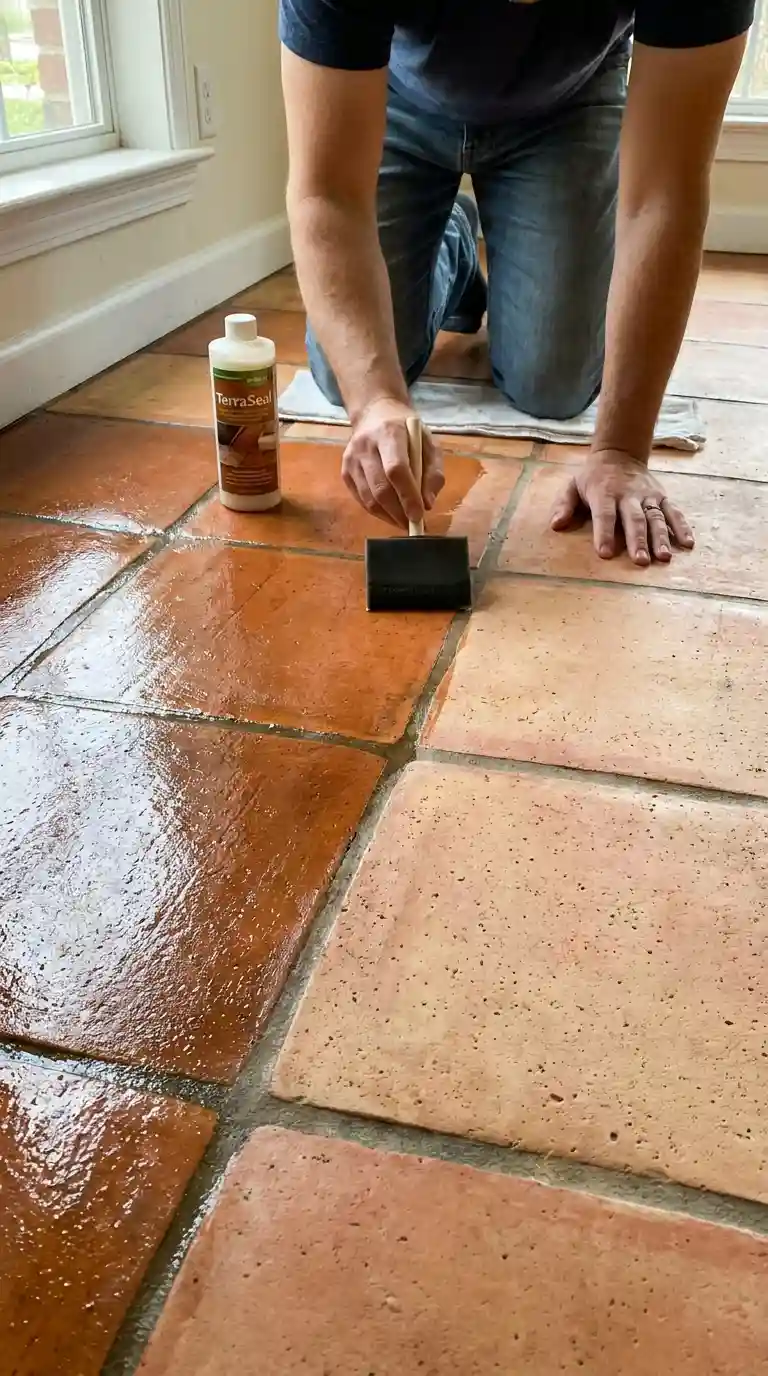
One of the things that puts some people off terracotta kitchen tiles is the maintenance question. It is true that unsealed terracotta is porous and will absorb stains if not properly treated. But with the right sealing approach, terracotta tiles are perfectly practical in a kitchen environment and require no more maintenance than any other natural stone floor.
Before installation, new terracotta tiles should be pre-sealed to prevent grout staining during installation. After installation and grouting, apply a penetrating impregnator sealer to protect the tile from within. Then, once the sealer has fully cured, apply a topical wax or enhancer sealer to give the surface its final sheen and provide an additional layer of protection. This two-stage sealing process sounds complicated, but it is straightforward to do yourself and makes the tiles genuinely resilient to kitchen spills.
After sealing, maintenance of terracotta kitchen tiles is simple. Sweep or vacuum regularly to remove grit that could scratch the surface. Clean with a pH-neutral cleaner and a damp mop — avoid acidic cleaners like vinegar, which can strip the sealer over time. Re-seal once a year or every two years depending on the level of traffic your kitchen floor receives. Done right, sealed terracotta tiles are a kitchen floor material that will last decades and look more beautiful with every passing year.
Also Read : Blue Kitchen Ideas That Transform Every Corner of Your Home Into Something Truly Breathtaking
Terracotta Backsplash Ideas for Your Kitchen
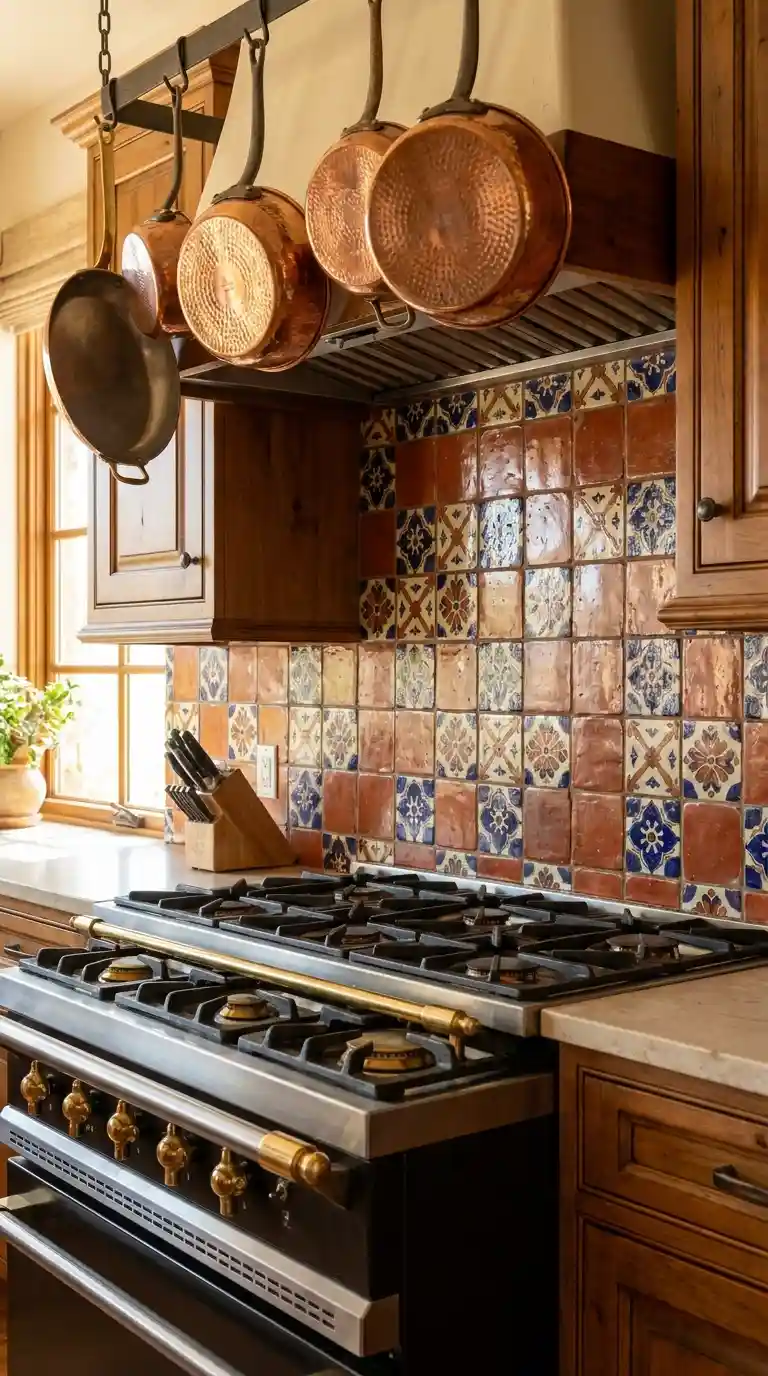
The backsplash is one of the most visually impactful surfaces in any kitchen, and in a terracotta kitchen, it is a genuine opportunity for artistic expression. A terracotta backsplash behind the cooking area can become the focal point of the entire room — the thing your eye goes to first when you walk in, the thing guests comment on, the thing that makes the whole space feel finished and intentional.
For a classic terracotta kitchen, consider using handmade terracotta subway tiles in a simple stacked or herringbone pattern for a clean, modern backsplash with warmth and texture. For something more elaborate and decorative, hand-painted Mexican Talavera tiles or Moroccan zellige in terracotta and complementary tones create a backsplash with the feel of a work of art. Terracotta-colored encaustic cement tiles in geometric patterns are another beautiful option that bridges the gap between traditional craft and contemporary design.
You do not have to commit to a full terracotta tile backsplash if you are not sure — consider a terracotta tile inset panel as an accent rather than the entire surface. A square or rectangular panel of beautiful hand-painted tiles centered above the stove, surrounded by simpler white or cream field tiles, can be just as impactful as a full backsplash and requires far fewer expensive statement tiles. This approach also allows you to mix different tile types and create a curated, collected look that feels genuinely personal.
Terracotta Kitchen Cabinets: Colors, Finishes, and Styles
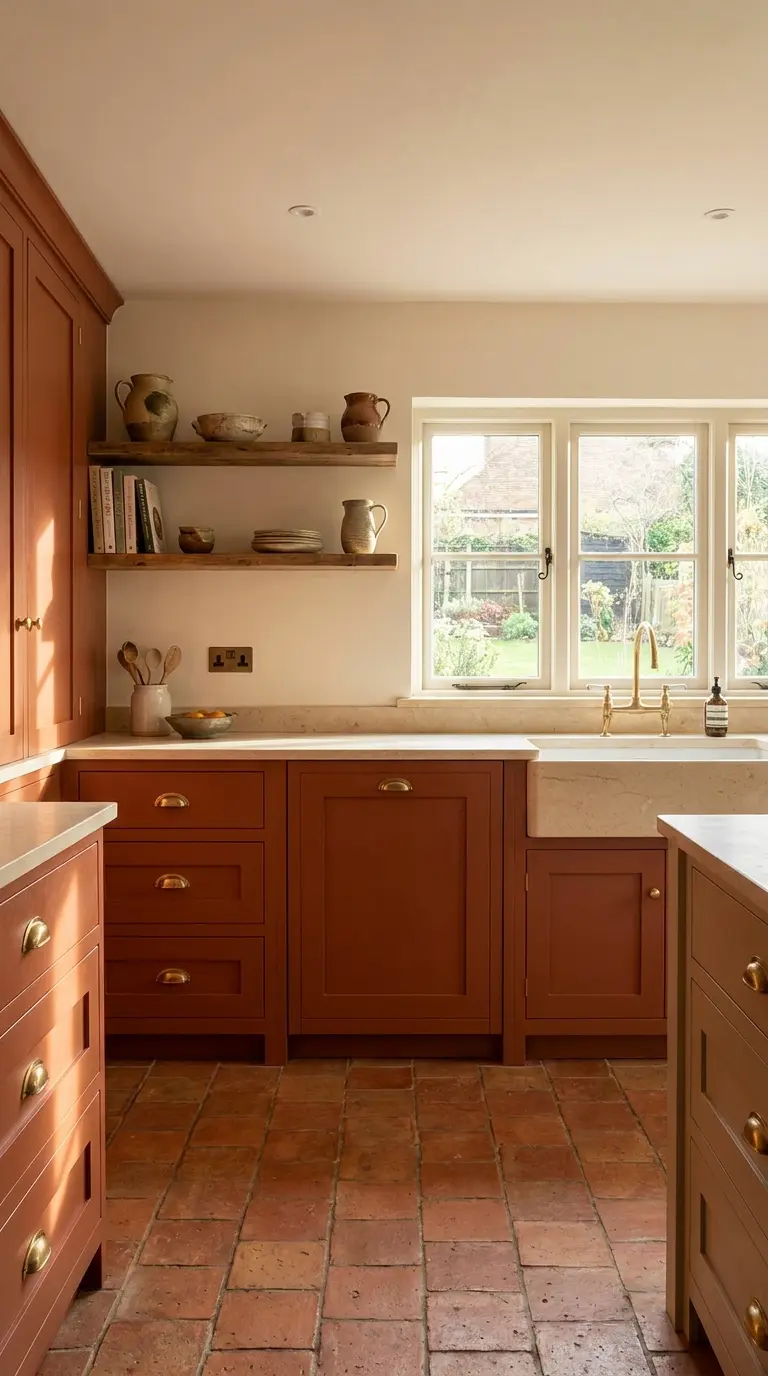
Cabinets are the dominant visual element in most kitchens, which means that your cabinet choices will define your terracotta kitchen more than almost anything else. There are two main approaches to incorporating terracotta into your kitchen cabinetry: painting existing or new cabinets in terracotta tones, or using terracotta as an accent color while keeping some cabinets in neutral shades.
Painting all of your lower cabinets in a deep, rich terracotta while keeping upper cabinets in warm cream or natural white is one of my personal favorite two-tone approaches for the terracotta kitchen. This creates a beautiful visual rhythm, keeps the space from feeling heavy, and draws the eye down toward the earthier, warmer lower zone while maintaining brightness above counter level. The contrast between warm terracotta lowers and creamy upper cabinets is immediately appealing and avoids the potential pitfall of a terracotta kitchen feeling too dark or enclosed.
For those who want a more dramatic commitment to the terracotta kitchen aesthetic, painting all cabinets in terracotta is absolutely doable — but it requires careful calibration of the other elements in the space. Countertops in pale stone, warm wood, or white marble provide essential contrast. Light from windows and well-placed artificial lighting is critical to prevent the space from feeling cave-like. Open shelving in place of some upper cabinets helps the space breathe. Get these elements right and an all-terracotta cabinet kitchen is genuinely spectacular.
Cabinet Hardware for a Terracotta Kitchen
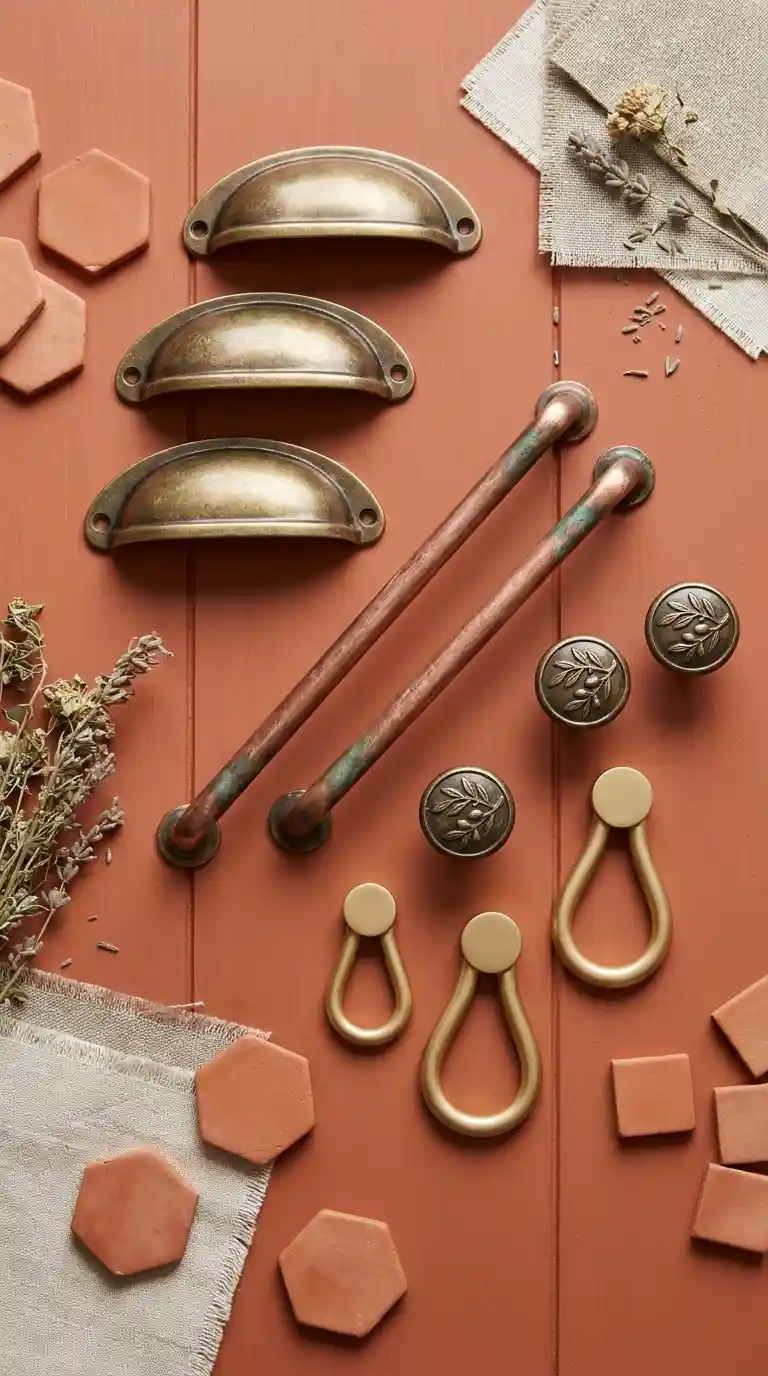
Hardware choice is one of those details that might seem minor but makes an enormous difference to the finished look of a terracotta kitchen. The right hardware ties everything together; the wrong hardware can undermine an otherwise beautiful design. The general rule with terracotta kitchens is to lean warm cool grey or chrome hardware feels jarring and disconnected in a terracotta environment, while warm metallic tones like brass, copper, bronze, and aged gold feel completely natural and harmonious.
Unlacquered brass is probably my top recommendation for terracotta kitchen hardware. It develops a beautiful natural patina over time, moving from bright gold toward a warmer, more antique tone, and this aging process actually improves its harmony with the terracotta palette. Copper hardware is another wonderful choice it has a warmth and richness that feels genuinely connected to the earthy, natural quality of terracotta. Oil-rubbed bronze is a slightly cooler option that works well if your terracotta is on the deeper, browner end of the spectrum.
In terms of style, cup pulls and ring pulls have a handcrafted, artisanal quality that suits a terracotta kitchen beautifully. Simple bar pulls in warm brass work for a more contemporary terracotta kitchen with clean-lined cabinetry. Ceramic knobs especially hand-painted ones in terracotta-complementary colors are a charming choice that adds another layer of craft and handmade character to the space. Whatever you choose, install consistently and do not mix too many different hardware styles, as this can make even a beautiful terracotta kitchen feel messy and unresolved.
Countertops That Work Beautifully in a Terracotta Kitchen
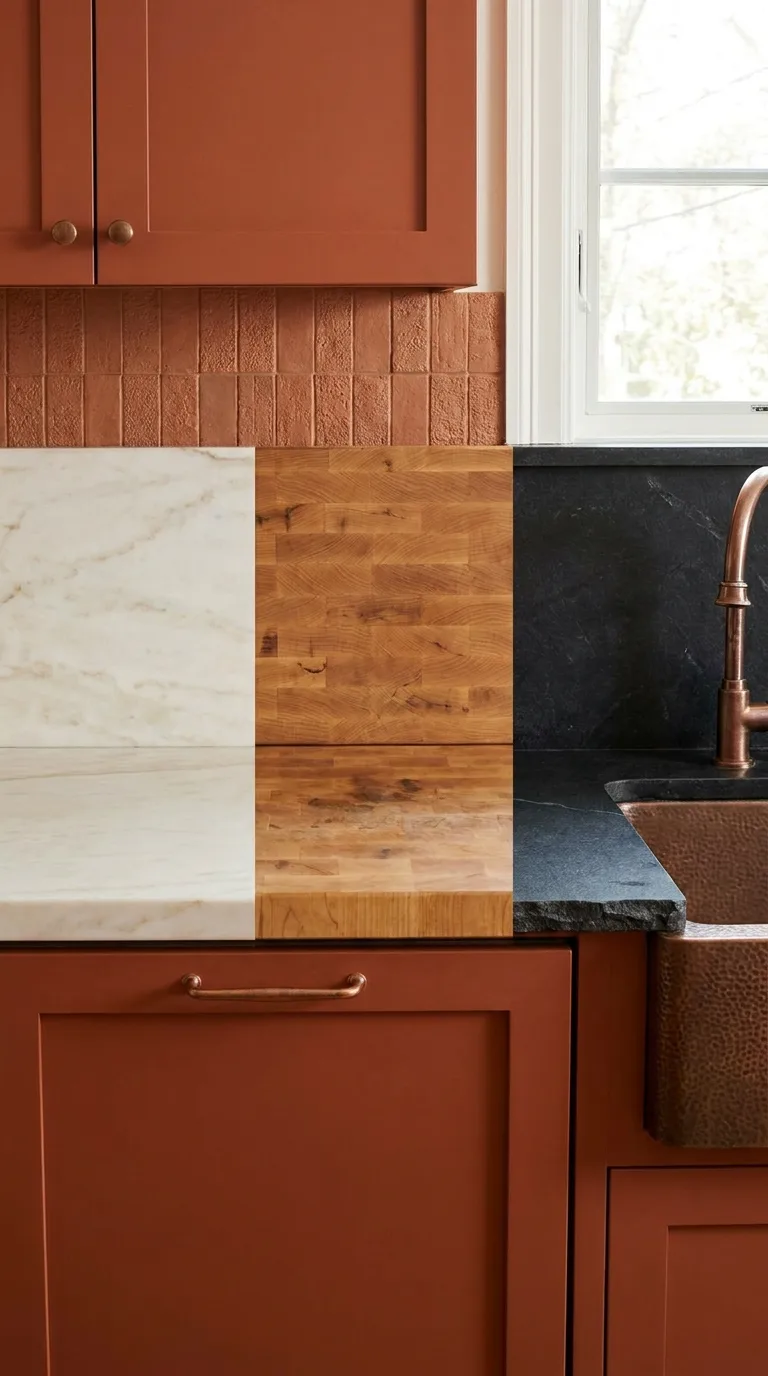
Choosing the right countertop for a terracotta kitchen requires thinking carefully about contrast and balance. Terracotta is already a warm, saturated color, so countertops that compete directly with it in warmth and saturation can create a visually exhausting result. The most successful terracotta kitchen countertop pairings tend to involve materials that provide either contrast in tone or a complementary but distinct texture.
Warm white or cream marble is arguably the most beautiful countertop choice for a terracotta kitchen. The coolness of marble’s white base provides visual relief from the warmth of terracotta, while the warm veining in many marble varieties echoes and harmonizes with the terracotta tones. Marble countertops also have an inherent luxury quality that elevates a terracotta kitchen from rustic to genuinely sophisticated. If natural marble is beyond your budget, there are now excellent engineered quartz options that convincingly replicate the marble look at a fraction of the cost.
Butcher block wood countertops in honey or walnut tones are another excellent terracotta kitchen pairing. Wood adds warmth, texture, and a sense of honest, natural material that complements the artisanal spirit of a terracotta kitchen beautifully. Butcher block is also significantly more budget-friendly than stone, making it an excellent choice for a terracotta kitchen renovation that needs to be cost-conscious. Maintain wooden countertops with regular food-safe oil applications to prevent drying and cracking, and they will develop a gorgeous patina over time that only improves with age
Also Read : French Kitchen Ideas: The Ultimate Guide to Creating a Timeless, Elegant Kitchen in 2026
Sink Styles for a Terracotta Kitchen
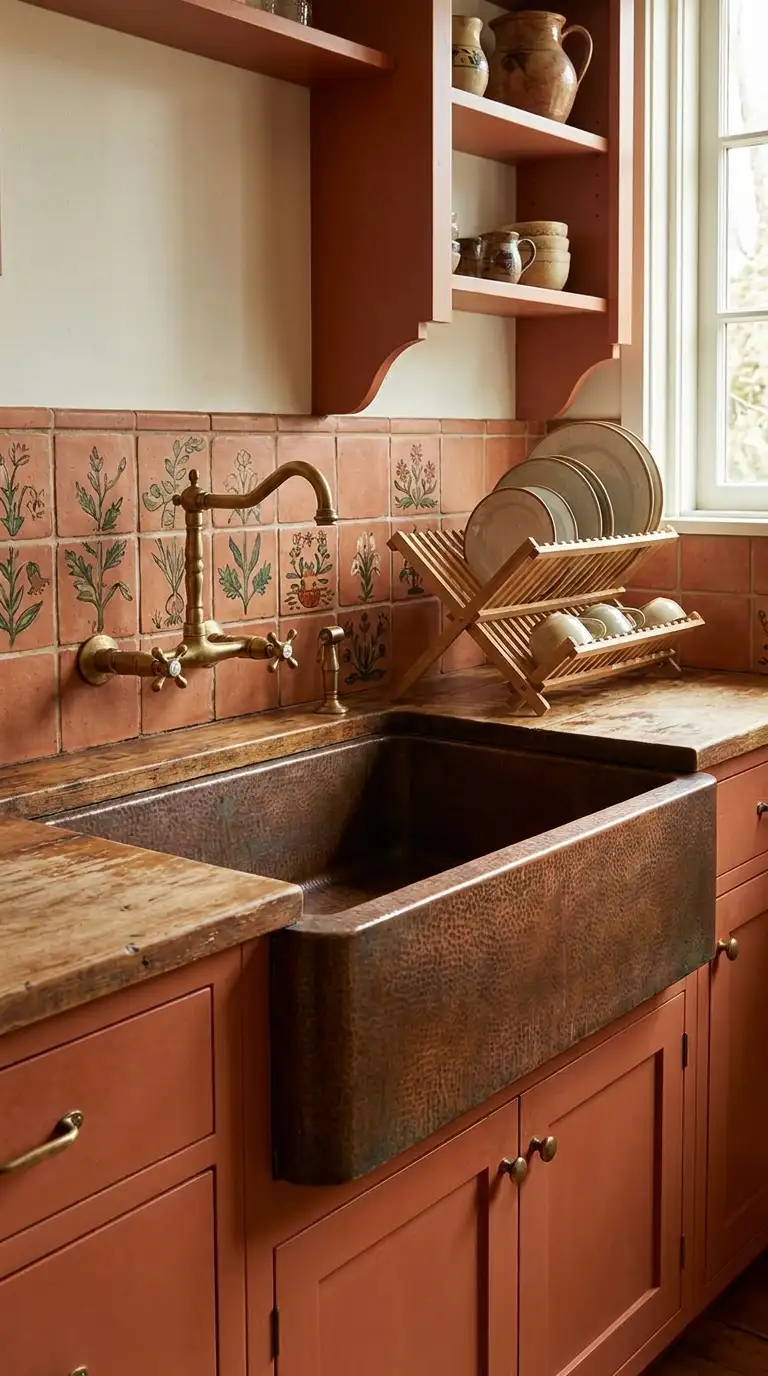
The sink is a functional anchor point of any kitchen, and in a terracotta kitchen, it is also a significant design opportunity. The style and material of your sink sends a clear message about the overall character of your terracotta kitchen — whether you are going for rustic farmhouse, polished Mediterranean, or something in between.
A ceramic farmhouse apron-front sink in a warm cream or antique white is one of the most popular choices for a terracotta kitchen, and it is popular for good reason. The generous proportions of a farmhouse sink feel at home in the earthy, unpretentious world of terracotta, and the creamy white of the ceramic provides beautiful contrast against warm terracotta cabinetry. Pair it with an unlacquered brass bridge faucet and you have a combination that is both incredibly practical and genuinely beautiful.
For a more dramatic and luxurious terracotta kitchen statement, a hammered copper sink is extraordinary. Copper develops a natural patina over time that grows more beautiful with age, and its warm red-orange tones are in perfect harmonic resonance with terracotta. A hammered copper farmhouse sink paired with terracotta tile and brass hardware creates a terracotta kitchen that is truly unforgettable. It is a significant investment, but one that will define the character of your kitchen for decades.
Lighting Your Terracotta Kitchen to Maximum Effect
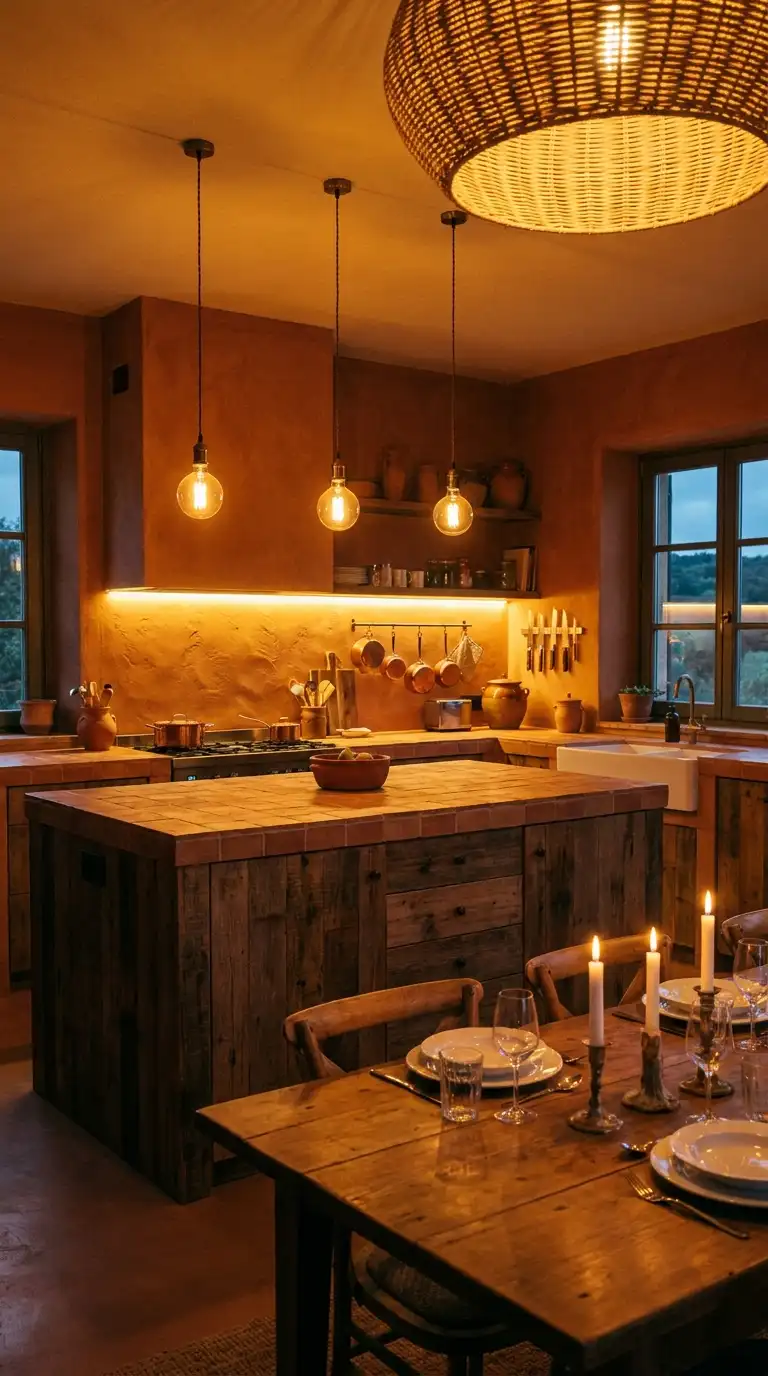
Lighting is perhaps the single most underappreciated element in any kitchen design, and in a terracotta kitchen, it is absolutely critical. The color and intensity of the light in your kitchen will dramatically affect how your terracotta palette reads at different times of day. Get the lighting right and your terracotta kitchen will glow with warmth in the evenings and feel sun-drenched and energizing in the mornings. Get it wrong and even the most carefully chosen terracotta tones can look muddy or overwhelming.
The first principle of terracotta kitchen lighting is to use warm-toned bulbs throughout. LED bulbs in the 2700K to 3000K color temperature range produce a warm, amber-tinged light that enhances and amplifies terracotta tones beautifully. Avoid anything cooler 4000K or above — as these produce a blue-white light that fights against the warmth of terracotta and makes the whole space feel disjointed and cold.
For the terracotta kitchen, I strongly recommend a layered lighting approach. Begin with general ambient lighting from a statement ceiling fixture a rattan, wicker, or woven pendant works wonderfully in a terracotta kitchen, adding texture and warmth. Add task lighting under upper cabinets to illuminate work surfaces this is both practical and creates beautiful pools of warm light that make the terracotta backsplash glow. Finally, add accent lighting in the form of small decorative fixtures or candles to create warmth and depth in the evenings. This three-layer approach transforms a terracotta kitchen from a simply pretty room to a genuinely magical one.
Pendant Lights That Complement a Terracotta Kitchen
Pendant lights over a kitchen island or dining area are one of the most visible and impactful lighting choices in any kitchen, and in a terracotta kitchen they offer a wonderful opportunity to reinforce and deepen the aesthetic. The materials and shapes you choose for your pendants will say a lot about the overall direction of your terracotta kitchen design.
Rattan and woven natural fiber pendants are enormously popular in terracotta kitchens right now, and it is easy to see why — their natural, handcrafted quality and warm honey-brown tones are completely in keeping with the earthy, artisanal spirit of terracotta. They soften the light beautifully, casting interesting patterns of light and shadow. Ceramic pendants in terracotta, cream, or sage green glazes are another excellent choice artisan-made ceramic pendants in particular add an extraordinary level of craft and individuality to a terracotta kitchen.
Copper dome pendants are a classic choice for a more polished or Mediterranean-influenced terracotta kitchen. The patinated copper tone relates directly to the terracotta palette and the dome shape creates a focused pool of warm light that is both practical and beautiful. For those who want something more industrial or contemporary, simple bulb-cage pendants in oxidized brass or oil-rubbed bronze provide warm metallic tones without being fussy or ornate. Whatever pendant style you choose, install them low enough to feel intimate and focused — a common mistake in kitchen lighting is hanging pendants too high, which makes them feel disconnected from the human scale of the space.
Terracotta Kitchen Accessories and Decorative Elements
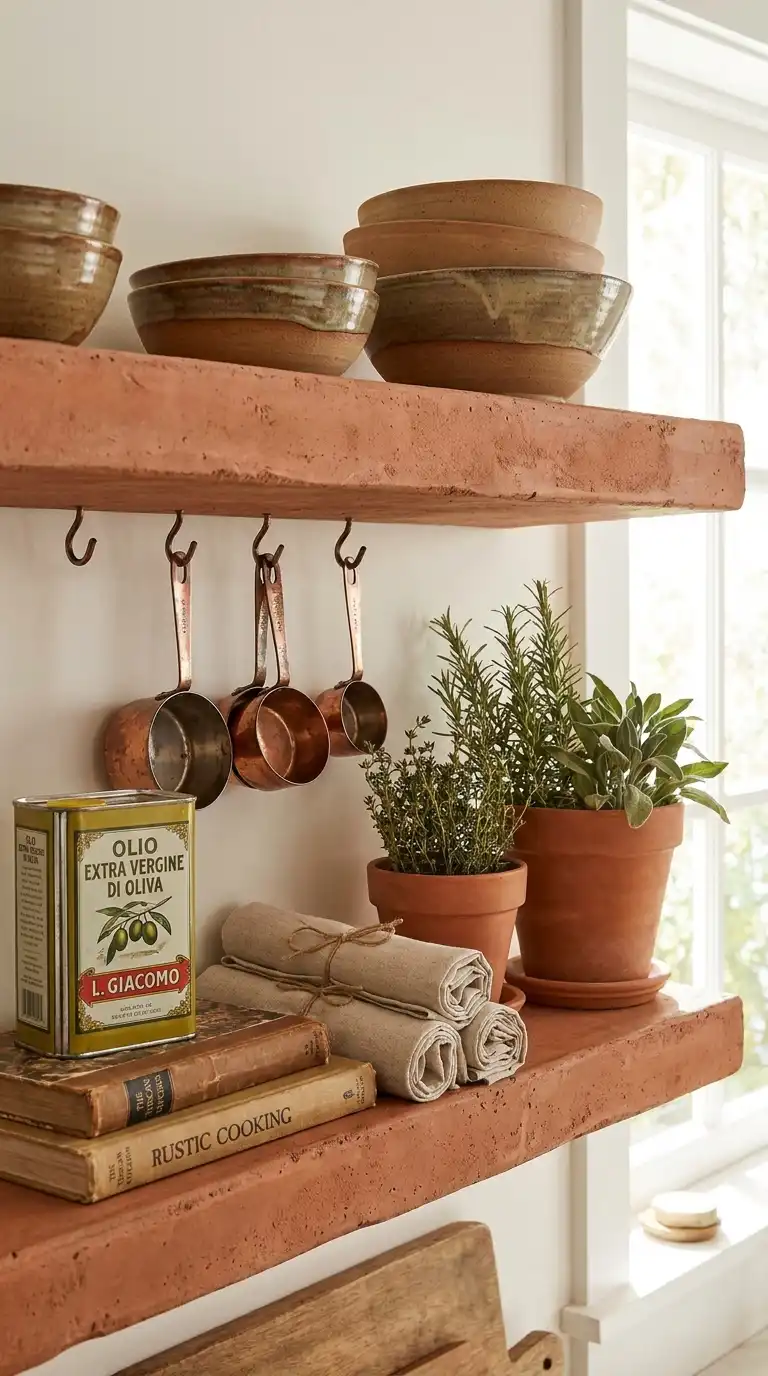
Accessories are the layer of a terracotta kitchen that makes it feel truly personal rather than just designed. The right collection of objects on your shelves and countertops tells the story of who you are, what you love, and how you live. In a terracotta kitchen, the accessories you choose should reinforce the themes of warmth, naturalness, craft, and honest beauty that the terracotta palette embodies.
Pottery is the most natural accessory for a terracotta kitchen, and a collection of hand-thrown or handmade ceramic pieces on open shelving is one of the most beautiful things you can do for this kind of space. Look for pieces in complementary earthy tones — creamy whites, warm beiges, sage greens, and of course terracotta itself. A mix of different shapes and sizes — a large serving bowl, a set of dinner plates, some mugs, a pitcher, a few small pinch pots — creates the layered, collected look that makes open shelving feel genuine rather than staged.
Copper and brass cookware displayed on hooks or on open shelving does double duty in a terracotta kitchen — it is functional and it is beautiful. A few copper pans hanging from a pot rack above the stove or island add warmth, depth, and a sense of professional, well-equipped seriousness to the kitchen. Dried herbs, braided garlic, dried chili strings, and bunches of dried flowers contribute color, texture, and a wonderful sense of the kitchen as a living, productive space rather than just a decorative showroom.
Plants in a Terracotta Kitchen
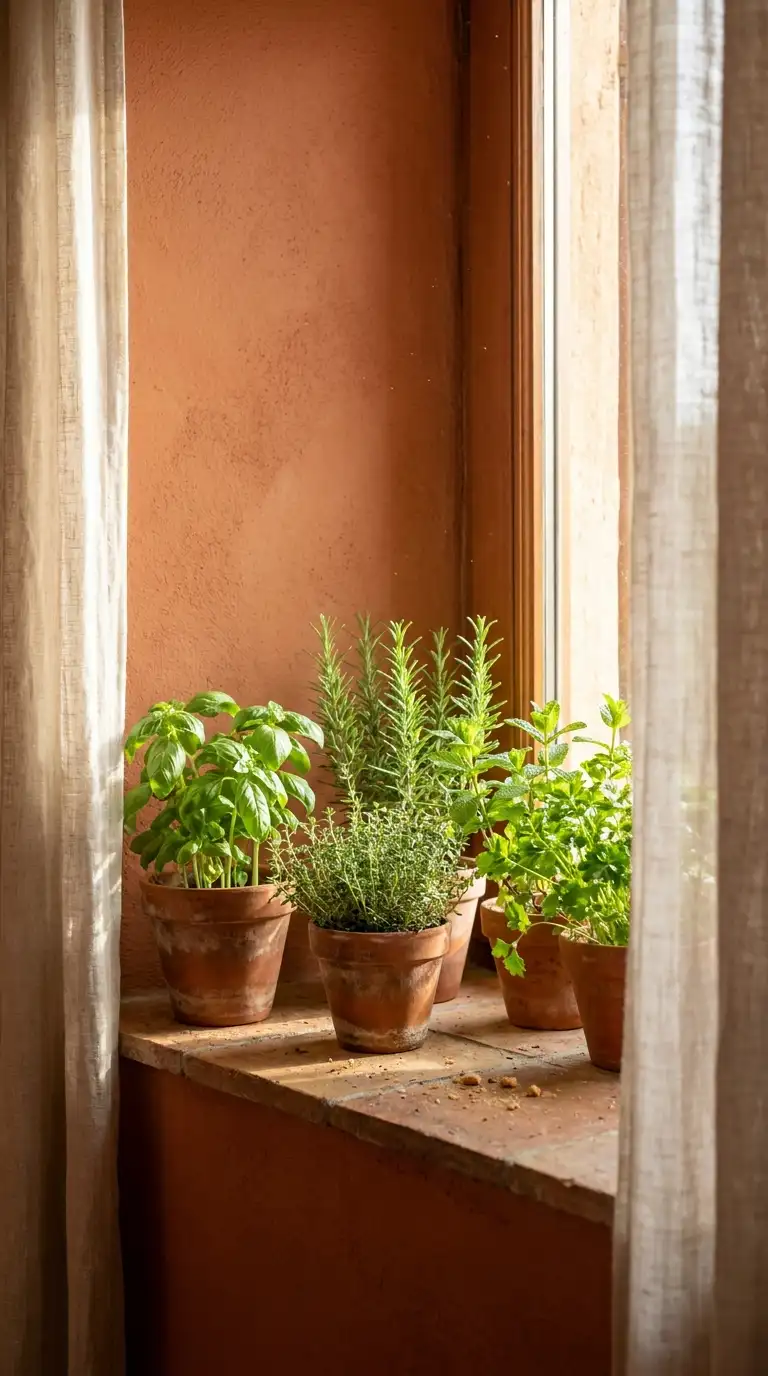
Plants are one of the most important and often overlooked elements in creating a terracotta kitchen that feels genuinely alive and beautiful. The contrast between living green foliage and warm terracotta tones is one of the most naturally pleasing color combinations in the world — you see it everywhere in nature, from reddish canyon walls against desert scrub to russet autumn leaves against evergreen trees. Bringing that contrast into your terracotta kitchen through plants adds a freshness and vitality that no decoration can replicate.
The windowsill above the kitchen sink is the classic location for a collection of potted herbs in a terracotta kitchen. Small terracotta pots planted with basil, rosemary, thyme, parsley, mint, and oregano look absolutely beautiful in a terracotta kitchen — the earthy clay pots echo the kitchen’s color palette, the green herbs provide perfect contrast, and the functional aspect of having fresh herbs within arm’s reach while cooking is deeply satisfying. There is something wonderfully complete about a terracotta kitchen where you can snip fresh herbs from the windowsill into a dish on the stove.
Beyond herbs, larger plants bring a wonderful lushness to a terracotta kitchen. A trailing pothos or philodendron on top of upper cabinets, a beautiful fiddle-leaf fig in a large terracotta floor pot in the corner, a climbing monstera on a wall-mounted trellis — any of these will make your terracotta kitchen feel more vibrant, more organic, and more human. Do not be afraid to let plants take up space in your terracotta kitchen. The more greenery you have, the more alive the whole space becomes.
Budget-Friendly Ideas for Creating a Terracotta Kitchen
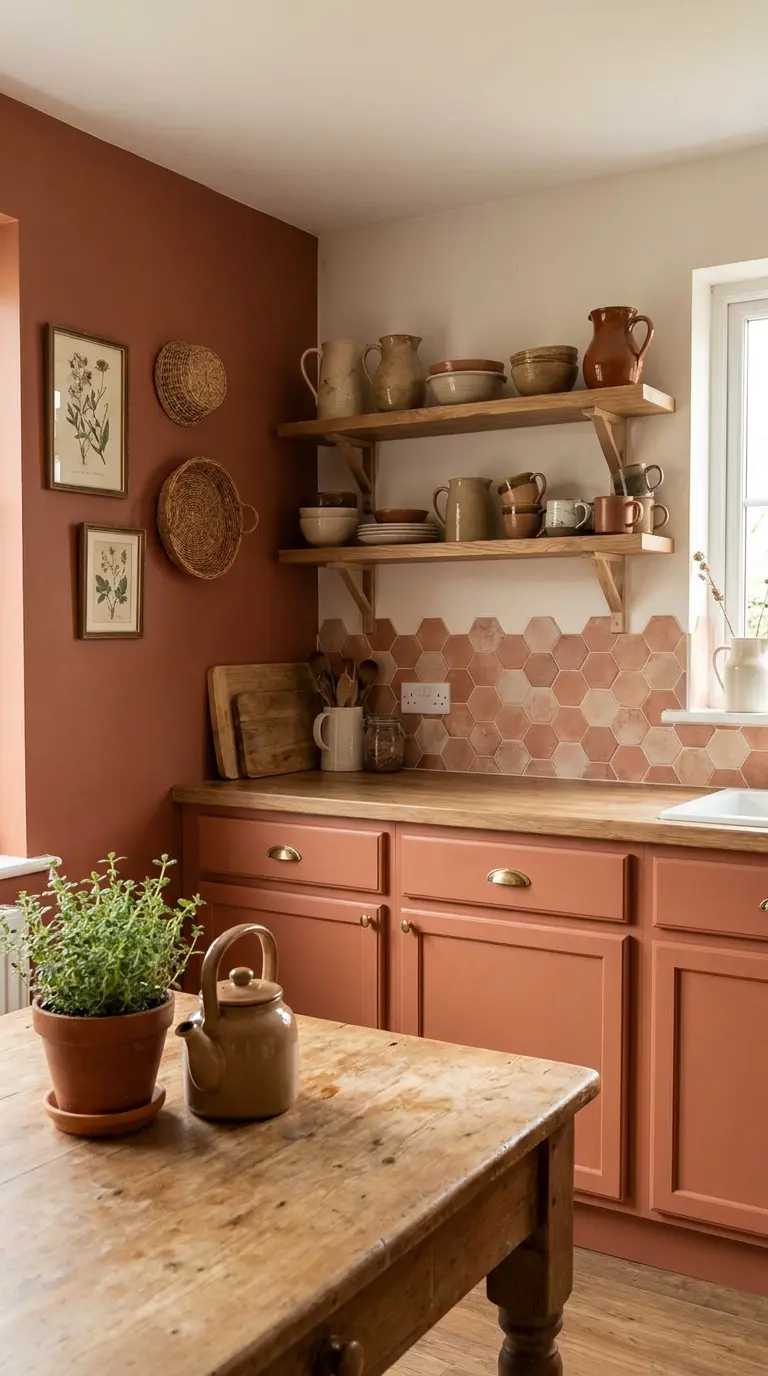
One of the questions I get asked most often about terracotta kitchen design is how to achieve the look without a full renovation budget. The good news is that a terracotta kitchen is genuinely one of the more accessible design transformations you can make to a kitchen, because so much of the impact comes from color, texture, and small decorative choices rather than expensive structural changes.
Paint is your biggest ally in creating a terracotta kitchen on a budget. A single can of terracotta-toned paint applied to one feature wall particularly the wall behind open shelving or the wall that your stove sits against can transform the entire feeling of a kitchen for less than the cost of a restaurant dinner. If you have existing cabinets in decent condition, painting them in a terracotta tone using a good cabinet primer and paint is another dramatic and relatively inexpensive transformation that can make a kitchen look completely new.
Peel-and-stick tile options have improved dramatically in recent years, and there are now some very convincing faux terracotta and Talavera-inspired peel-and-stick backsplash tile products available. These are not a permanent solution and they will not have the depth and beauty of genuine handmade terracotta tiles, but for a rental kitchen or a space where you cannot commit to real tile installation, they offer a way to get the general aesthetic of a terracotta kitchen without significant investment. Combine peel-and-stick tiles with a fresh coat of terracotta wall paint and some thoughtfully sourced secondhand pottery, and the result can be genuinely impressive.
Also Read: Best European Kitchen Ideas That Feel Luxurious Yet Effortlessly Modern
Secondhand and Vintage Sources for Terracotta Kitchen Accessories
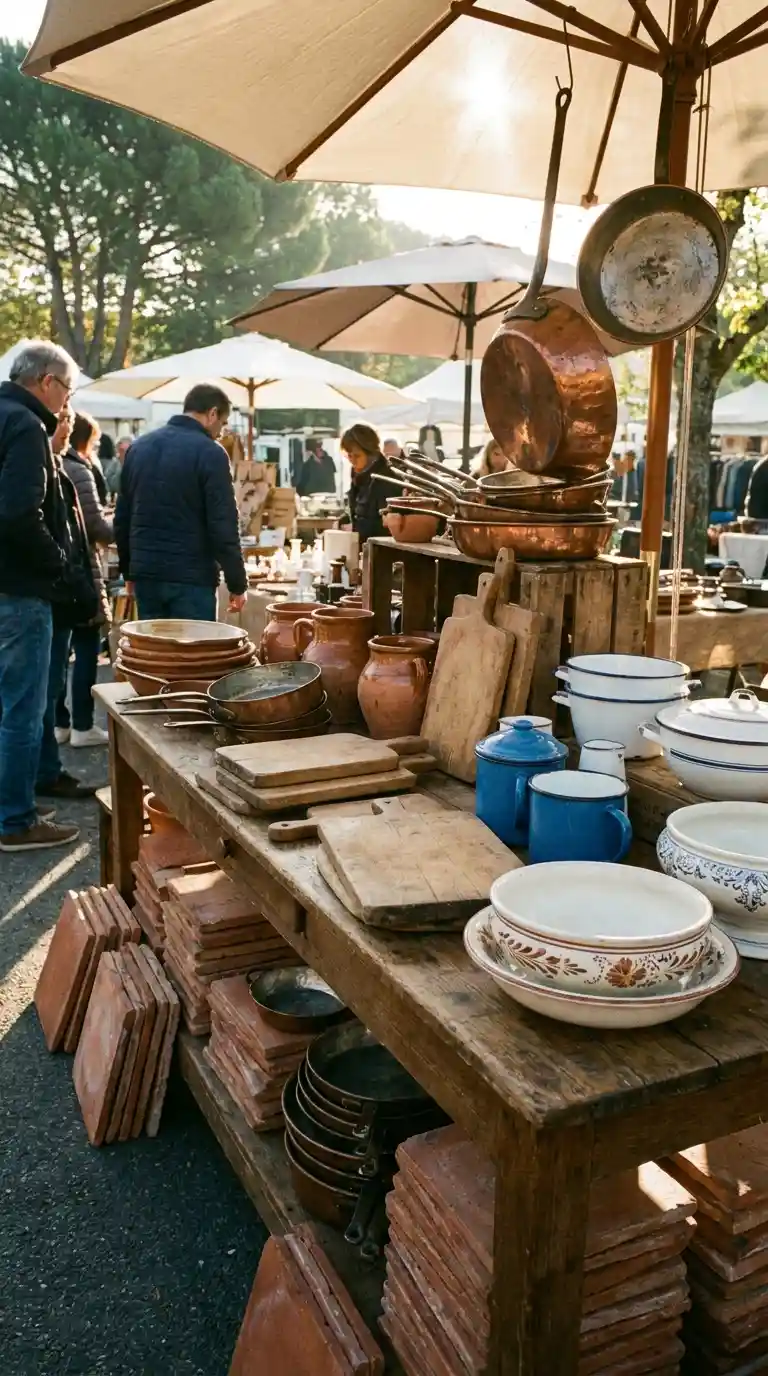
Some of the best pieces for a terracotta kitchen are things you find rather than buy new. Vintage and secondhand sources are absolutely invaluable for building up the kind of richly layered, personally meaningful terracotta kitchen that feels as though it has been lived in and loved over many years. New things, however beautiful, rarely have this quality on their own.
Charity shops, thrift stores, and estate sales are wonderful sources for the hand-thrown pottery, wooden boards, copper and brass cookware, and interesting ceramics that bring a terracotta kitchen to life. You might not always find exactly what you are looking for, but the pieces you do find will be genuinely unique and often remarkably beautiful. I have found some of my favorite terracotta kitchen accessories — a set of handmade clay soup bowls, a vintage copper stockpot, a collection of Spanish terracotta dishes — for almost nothing at estate sales and charity shops.
Salvage yards and architectural reclaim dealers are another extraordinary resource, particularly if you are looking for genuine reclaimed terracotta floor tiles for a terracotta kitchen renovation. Authentic old terracotta tiles — the kind with genuine history, variation, and patina — are incomparably more beautiful than new tiles, and buying them reclaimed is often cheaper than buying new while being infinitely more characterful. Look for reclaimed Saltillo tiles from Mexico, old Spanish terracotta, and reclaimed French tomette tiles — all of these have a depth and beauty that new tiles simply cannot match.
Terracotta Kitchen in Different Home Styles
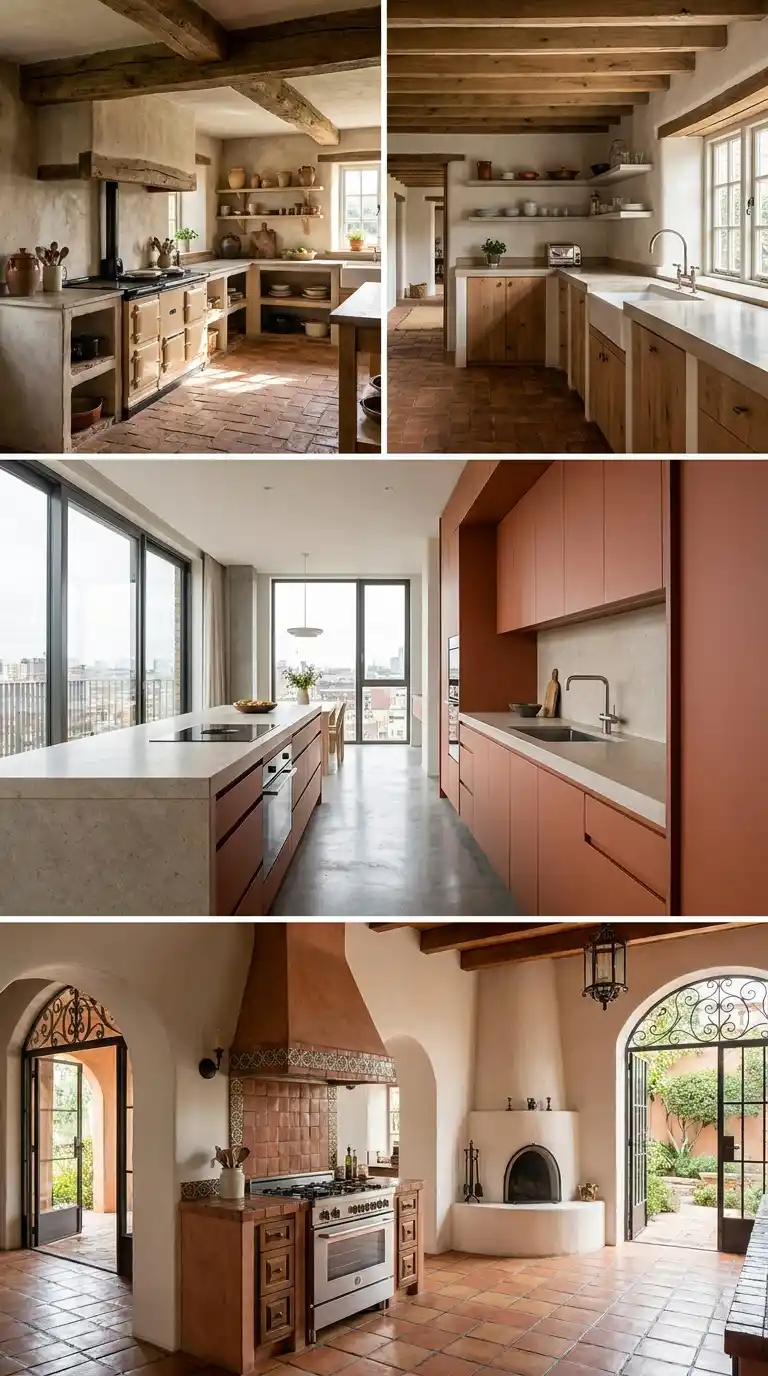
One of the great strengths of the terracotta kitchen is how adaptable it is to different architectural styles and homes. It is not a look that requires a specific type of house or a specific type of kitchen layout. With the right calibration of tone, material, and style, a terracotta kitchen can feel perfectly at home in an enormous range of settings, from rustic farmhouses to urban apartments.
In a farmhouse-style home, a terracotta kitchen almost designs itself — the earthy, natural palette is perfectly at home in the rustic, unpretentious world of farmhouse design. Rough plaster walls in terracotta, exposed wooden ceiling beams, flagstone or terracotta tile floors, an Aga or range-style cooker, open wooden shelving, and a large farmhouse ceramic sink create a terracotta kitchen that feels deeply rooted and genuinely welcoming. This is a terracotta kitchen that makes you want to bake bread and invite everyone over for Sunday lunch.
In a modern or contemporary home, the terracotta kitchen takes on a more edited, sophisticated character. Clean-lined terracotta-painted cabinets, minimalist brass hardware, a sleek stone countertop, and a single carefully chosen piece of terracotta tile art or pottery as an accent can create a terracotta kitchen that is as contemporary as it is warm. The key in a modern setting is restraint — use terracotta as the warm, humanizing element in an otherwise cool, minimal space, and it becomes the thing that saves the room from feeling clinical or cold.
Mediterranean and Spanish Colonial Terracotta Kitchens
If there is one home style that is most naturally home to the terracotta kitchen, it is the Mediterranean or Spanish colonial. These architectural traditions were born in the same cultural landscape that gave us terracotta tile in the first place — the sun-baked, clay-rich lands around the Mediterranean Sea and the Spanish colonial territories of the Americas. In a home with Spanish colonial or Mediterranean architecture, a terracotta kitchen is not a design choice so much as a homecoming.
Authentic Saltillo tile floors from Mexico, whitewashed plaster walls with painted tile accents, heavy carved wooden cabinetry, wrought iron fixtures, a hand-painted Talavera tile backsplash, and a large ceramic or copper sink are the defining elements of a Spanish colonial terracotta kitchen. Every element reinforces every other, creating a space that has a deep, historical coherence that feels completely inevitable. This is a terracotta kitchen that was always meant to exist.
Even if your home does not have authentic Spanish colonial or Mediterranean architecture, you can borrow the most impactful elements of this style to create a terracotta kitchen with Mediterranean spirit. Start with terracotta floor tiles — this is the single most transformative structural change you can make. Add a Talavera tile backsplash behind the stove. Install simple wooden open shelving. Choose a wrought iron or copper light fixture. Paint the walls in a warm, slightly chalky terracotta tone. These five changes, even in an ordinary suburban kitchen, can produce something genuinely beautiful and culturally resonant.
Open Shelving in a Terracotta Kitchen
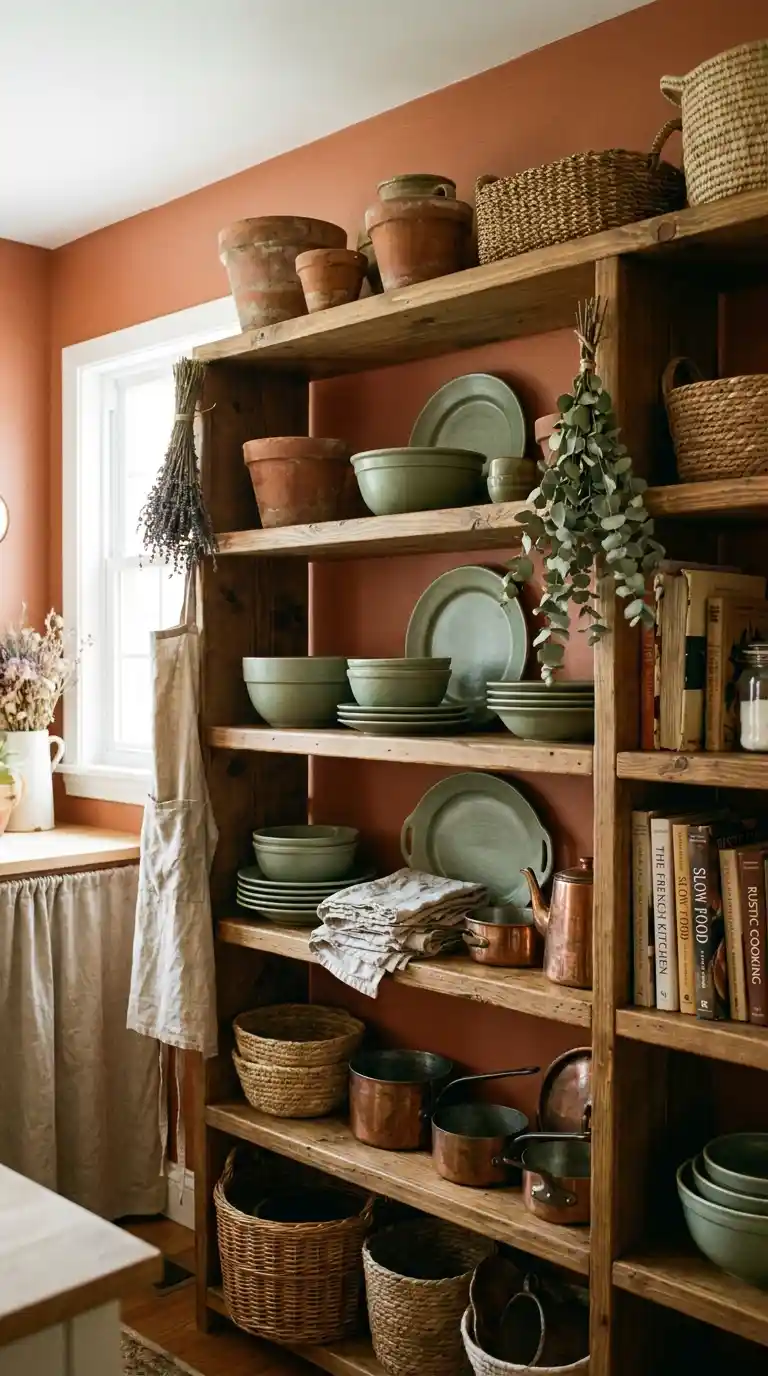
Open shelving and the terracotta kitchen are natural partners. The warm, earthy palette of terracotta creates the perfect backdrop for a collection of beautiful objects — pottery, cookware, plants, books, linens — and open shelves are the most natural way to display this kind of collection. Closed upper cabinets hide everything away and give the kitchen a neat but somewhat characterless appearance. Open shelves invite the kitchen to breathe and reveal itself.
The key to successful open shelving in a terracotta kitchen is curation. You cannot simply put everything on open shelves and hope for the best — the result will be visual chaos that undermines the warm, intentional beauty you are trying to create. Spend time editing your shelving, keeping only items that are genuinely beautiful or genuinely useful (ideally both), and arranging them with thought given to color, height, and variety of shape. The best open shelving in a terracotta kitchen looks collected and personal, not arranged and perfect, so do not be afraid of a little asymmetry and organic variation.
Materials matter for open shelving in a terracotta kitchen. Solid wood shelves in warm honey or walnut tones are the most harmonious choice — they echo and amplify the earthy warmth of the terracotta palette without competing with it. Reclaimed wood shelves with visible grain and natural imperfections are particularly beautiful. Metal bracket shelving in aged brass or matte black can also work well in a more contemporary terracotta kitchen. Avoid cold grey metal or chrome finishes, which feel tonally disconnected from the warmth of the terracotta environment.
Seasonal Decoration Ideas for Your Terracotta Kitchen
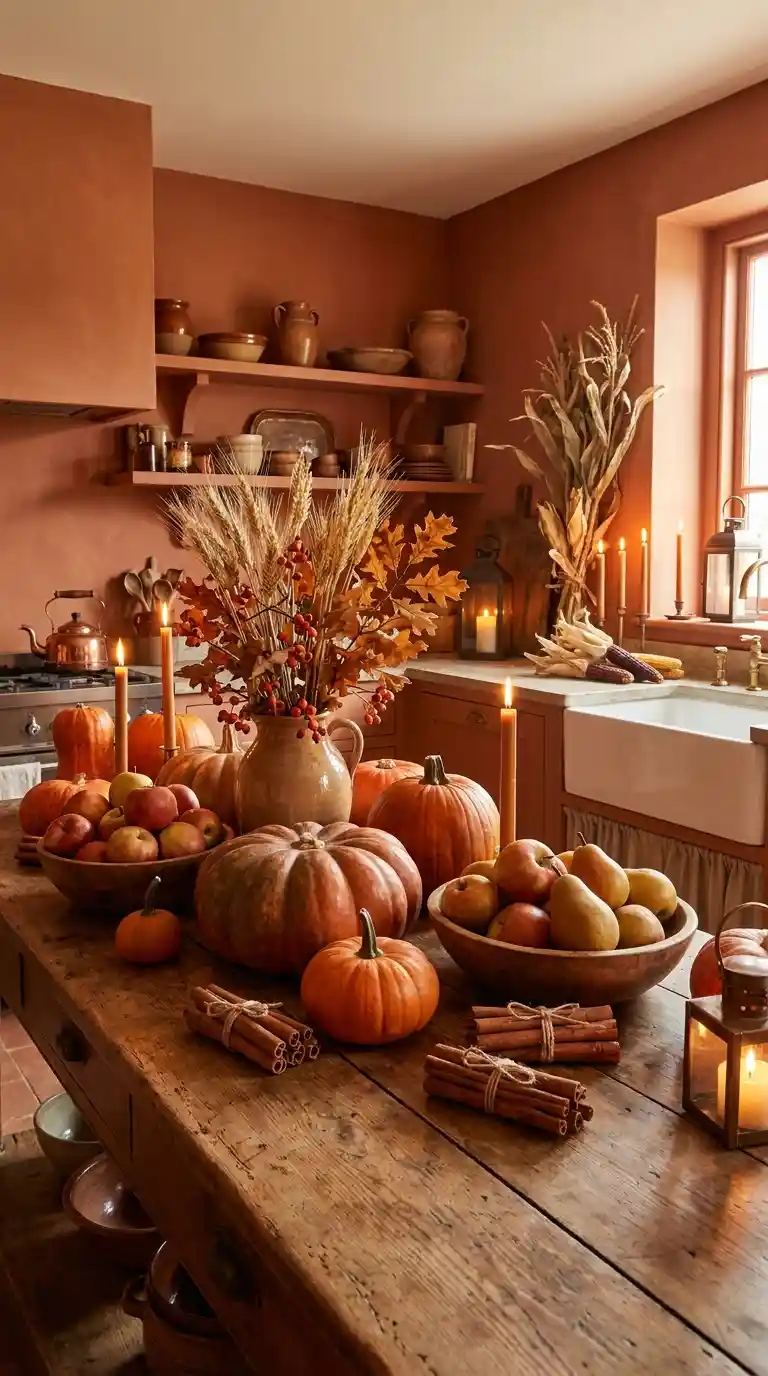
One of the great pleasures of having a terracotta kitchen is how extraordinarily well it lends itself to seasonal decoration. The terracotta palette is deeply connected to natural cycles and seasonal rhythms — it speaks of harvest and warmth and the turning of the year. Decorating your terracotta kitchen through the seasons is one of the most enjoyable things you can do as a homeowner, and it costs very little.
Autumn is when a terracotta kitchen reaches its absolute peak. The colors of the season — pumpkins, gourds, dried corn, russet apples, golden wheat, amber leaves are in perfect chromatic harmony with the terracotta palette. A simple harvest arrangement on your kitchen counter, a vase of dried autumn grasses and leaves, a bowl of seasonal fruit, and a few lit candles in terracotta holders will make your terracotta kitchen feel like the most perfect room in the world during October and November.
Spring and summer call for a lighter touch in the terracotta kitchen freshen the shelves with new green plants, bring in bunches of fresh herbs and seasonal flowers, swap out heavier linen and wool textiles for lighter cotton and muslin, and let more natural light into the space. Winter in a terracotta kitchen means leaning into the coziness layer up with warm throws and textiles, fill the shelves with dried spices and winter fruits, and maximize the candlelight for the most beautiful, warming atmosphere you can imagine.
Also Read : 40 Powerful Outdoor Kitchen Ideas DIY to Create a Stunning Backyard
Common Mistakes to Avoid When Designing a Terracotta Kitchen
As much as I love helping people create their perfect terracotta kitchen, I also see a lot of mistakes made along the way, and I want to save you from the most common ones. The most frequent error people make when embarking on a terracotta kitchen design is choosing a terracotta paint color that is too orange rather than earthy red. True terracotta has a muted, slightly dusty quality — it is the color of baked clay, not of a traffic cone. If your chosen terracotta paint looks bright and orange under both natural and artificial light, it is probably too saturated, and the result will feel garish rather than warm. Always look for terracotta shades with some brown or grey undertone to keep them feeling grounded and earthy.
Another very common mistake is pairing warm terracotta with cool metallics and hardware. Chrome taps, brushed nickel handles, and stainless steel appliances all have cool undertones that clash visually with the warmth of terracotta. This is one of the most jarring dissonances you can introduce into a terracotta kitchen, and the fix is simple: swap cool metallics for warm ones. Brass, copper, bronze, and aged gold are all in the same tonal family as terracotta, and they create a visual harmony that makes the whole terracotta kitchen feel settled and intentional.
Over-accessorizing is another pitfall in the terracotta kitchen. Because terracotta is such a warm, inviting palette, there is a temptation to add more and more more pottery, more plants, more textiles, more objects until the space starts to feel cluttered and overwhelming. The warmth of a terracotta kitchen comes not from volume of stuff but from quality of materials, good light, and thoughtful arrangement. Edit ruthlessly. Every item on your open shelves should earn its place by being beautiful, functional, or both. A well-edited terracotta kitchen with space to breathe is infinitely more beautiful than one that is stuffed with things, however lovely those things might be individually.
Conclusion
I want to end where I started with the feeling. Because that is ultimately what a terracotta kitchen is about. Not a trend, not a collection of expensive materials, not a set of rules about what to pair with what. It is about creating a kitchen that makes you feel good. A kitchen that glows in the mornings and wraps around you in the evenings. A kitchen where the food smells better and the conversations last longer.
The terracotta kitchen has endured across human civilization for thousands of years because the material it celebrates clay, earth, the work of human hands is something fundamental to our experience as people. When you surround yourself with these materials, something relaxes. Something feels right. That is not interior design theory. That is just how people are.
Whether you have the budget for a full terracotta kitchen renovation or you are starting with a single painted wall and a few terracotta pots on the windowsill, I hope this guide has given you the knowledge and inspiration you need. Your terracotta kitchen is waiting. All you need to do is begin.
All recommendations in this article are based on personal design experience and research. Always consult a qualified professional for structural kitchen renovations and tile installation.
Frequently Asked Questions
Q1. What exactly is terracotta color and how does it differ from orange?
Terracotta is a warm, earthy reddish-brown tone that takes its name from the Italian word for ‘baked earth’ — which is exactly what it looks like. Unlike bright orange, terracotta has brown, grey, or red undertones that give it a muted, grounded quality. It is the color of fired clay, sun-baked Mediterranean walls, and autumn leaves. When choosing terracotta for your kitchen, look for paint colors that have some brownish or slightly dusty quality rather than being bright or saturated — this earthiness is what makes terracotta kitchens feel warm and sophisticated rather than garish.
Q2. Does a terracotta kitchen make a space feel smaller?
It can, if applied without thought to the size and light of your space. In a large, well-lit kitchen, deep terracotta tones on walls and cabinets are completely comfortable and beautiful. In a smaller or darker kitchen, you need to use terracotta more carefully — opt for lighter, dustier terracotta shades rather than deep, saturated ones, use terracotta on a single feature wall or on lower cabinets only, and keep upper cabinets and ceiling in warm cream or white to reflect light upward. Strategic use of warm lighting and plenty of natural light from windows is also essential in making a terracotta kitchen feel open and inviting rather than enclosed.
Q3. What colors go best with terracotta in a kitchen?
Terracotta has several natural companions that work beautifully in a kitchen setting. Sage green is the most popular and arguably the most perfect pairing — the coolness of green provides ideal contrast with the warmth of terracotta. Warm cream and antique white work as balancing neutrals. Natural wood tones in honey, oak, and walnut blend seamlessly with terracotta. Brass, copper, and aged gold metallics are in the same warm tonal family and feel harmonious rather than contrasting. Navy blue and forest green work as deeper accent colors for a more sophisticated terracotta kitchen. Avoid cool greys, stark whites, and silver or chrome metallics, which tend to clash with terracotta’s warmth.
Q4. Are terracotta tiles practical in a kitchen?
Yes, absolutely — when properly sealed and maintained. Unsealed terracotta is porous and will absorb stains and grease in a kitchen environment, but a properly sealed terracotta tile floor is as practical as any other natural stone tile. The key is thorough pre-sealing before installation and a two-stage sealing process after installation using both a penetrating impregnator sealer and a topical wax or enhancer. After sealing, maintain with regular sweeping and pH-neutral cleaning, and re-seal annually or biannually. Done correctly, terracotta kitchen tiles are durable, beautiful, and will improve in character with age.
Q5. How do I clean terracotta kitchen tiles?
For day-to-day cleaning of sealed terracotta kitchen tiles, sweep or vacuum regularly to remove grit and dust that could scratch the surface, then mop with a damp mop and a pH-neutral cleaner specifically designed for natural stone or terracotta. The critical thing to avoid is acidic cleaners — vinegar, lemon juice, and many multipurpose cleaning sprays are acidic and will gradually strip the sealer from your terracotta kitchen tiles over time. For stubborn stains on sealed terracotta, use a poultice designed for natural stone tiles. For very deep cleaning, a professional tile cleaning and re-sealing service every few years will keep your terracotta kitchen tiles looking their very best.
Q6. Can I paint kitchen cabinets terracotta myself?
Yes, painting kitchen cabinets is a genuinely achievable DIY project for a terracotta kitchen, provided you are willing to do the preparation properly. The preparation is everything with cabinet painting — you must thoroughly clean, degrease, and sand the cabinet surfaces before applying a good quality primer designed specifically for cabinetry. Choose a cabinet paint in your chosen terracotta tone (chalk paint with wax finishing is a popular DIY approach, while oil-based or specialist cabinet paints offer greater durability for a professional finish). Remove all cabinet doors and drawer fronts before painting, work in thin coats rather than thick ones, and allow full drying time between coats. Done carefully, DIY-painted terracotta kitchen cabinets can look genuinely beautiful.
Q7. What countertop material works best with terracotta kitchen cabinets?
The most beautiful countertop pairings for terracotta kitchen cabinets are warm white or cream marble (provides tonal contrast while sharing the warmth of veining), butcher block wood in honey or walnut tones (earthy, natural, and harmonious with terracotta), concrete in a warm grey or cream tone (a more contemporary option that grounds the terracotta beautifully), and light-toned soapstone (has a subtle warmth that works well). Avoid very cool white or stark grey countertops, as these tend to clash with the warmth of terracotta cabinets rather than complementing it.
Q8. Is a terracotta kitchen still on trend or is it going out of style?
The terracotta kitchen has shown remarkable staying power, and all evidence suggests it is transitioning from trend to enduring classic rather than fading away. Unlike many kitchen color trends that peak quickly and become associated with a specific moment in time, terracotta has deep roots in architectural and design traditions that stretch back centuries. It resonates with people because it is warm, natural, and humanizing in a way that very few other color choices are. I believe the terracotta kitchen will still look beautiful and feel right in ten or twenty years in a way that grey or all-white kitchens already do not.
Q9. What hardware finish is best for terracotta kitchen cabinets?
Warm metallic finishes are unquestionably the best choice for terracotta kitchen cabinets. Unlacquered brass is my personal top recommendation — it develops a beautiful natural patina over time and its warmth is in perfect harmony with terracotta. Copper is another wonderful choice with similar tonal resonance. Oil-rubbed bronze works particularly well with deeper, browner terracotta tones. Aged gold and antique brass are versatile options that suit a wide range of terracotta shades. Avoid cool finishes like chrome, brushed nickel, or polished stainless steel, as these create a tonal disconnect with the warmth of the terracotta palette.
Q10. How can I add terracotta to my kitchen without a full renovation?
There are many ways to introduce the terracotta kitchen aesthetic without committing to a full renovation. Paint a single feature wall in a terracotta tone — this is the most impactful quick change you can make. Swap out existing cabinet hardware for warm brass or copper alternatives. Add a collection of terracotta and complementary-toned pottery to open shelves. Bring in plants in terracotta pots on the windowsill and countertops. Layer warm linen or cotton textiles in terracotta tones — dish towels, an apron, a seat cushion. Add a woven rattan or natural fiber pendant light. Buy one beautiful piece of terracotta artwork or a hand-painted tile to hang on the wall. Even one or two of these changes can meaningfully shift a kitchen toward the warmth and character of a terracotta kitchen.
Q11. What style of kitchen looks best with terracotta?
Terracotta is extraordinarily versatile and can work in many different kitchen styles. It is most naturally at home in farmhouse, Mediterranean, Spanish colonial, and Southwestern-influenced kitchens, where its earthy tones are in perfect harmony with the rustic, natural materials of those traditions. It works beautifully in a bohemian or eclectic kitchen that embraces handcraft and cultural mix. In a contemporary or modern kitchen, terracotta can serve as the warm, humanizing element that saves the space from feeling sterile. Even in a traditional or classic kitchen, the right terracotta shade on lower cabinets paired with classic white uppers and marble countertops can feel completely at home.
Q12. What plants work best in a terracotta kitchen?
Plants that work best in a terracotta kitchen are those that thrive in warm, bright kitchen environments and complement the earthy palette. Potted herbs — basil, rosemary, thyme, parsley, mint, and oregano — are the most practical and beautiful choice, providing both visual impact and culinary usefulness. Trailing plants like pothos, philodendron, and string of pearls look wonderful on top of cabinets or on shelves. Larger statement plants like monstera, fiddle-leaf fig, or a large succulent in a big terracotta pot in the corner add drama and lushness. Olive trees in decorative pots have a strong Mediterranean resonance that suits the terracotta kitchen beautifully. Even dried herbs and dried flower bunches contribute greenish-brown tones and wonderful texture.