

There’s something undeniably special about sleeping above the world. The moment you step into a well-designed penthouse bedroom, everything shifts the light is different, the air feels different, and the entire sense of space changes in a way that’s hard to put into words unless you’ve experienced it yourself.
I’ve spent years obsessing over interior design, and nothing quite captures my imagination like a well-thought-out penthouse bedroom. Whether you’re redesigning your own high-rise retreat or simply dreaming about what you’d do with that kind of space, the ideas here are grounded in real design principles that actually work. This isn’t about throwing money at the room and hoping for the best. It’s about understanding how light, space, texture, and layout combine to create something truly extraordinary.
So let’s get into it from the foundational choices to the finishing details that most people overlook.
Related Post: Elegant Black and Grey Bedroom Ideas For Modern Home
Why Penthouse Bedroom Ideas Are in a Class of Their Own
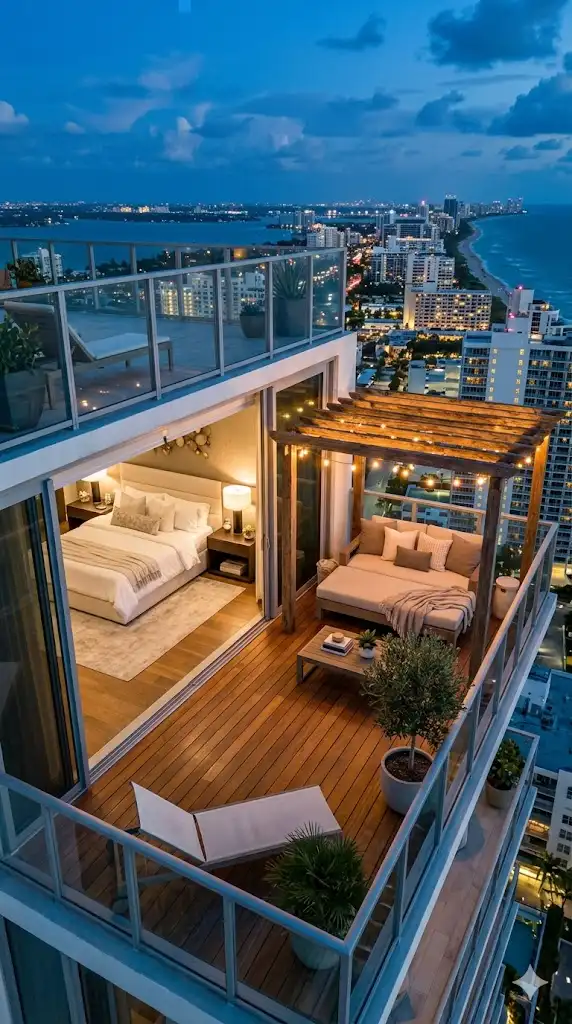
Most bedroom design advice treats the room as just a room. Four walls, a ceiling, a floor. Pick a color. Add some furniture. Done. But a penthouse bedroom doesn’t work like that, and if you treat it like an ordinary room, you’ll end up with an ordinary result inside an extraordinary space.
What makes these spaces genuinely different is the architecture itself. You’re typically working with higher ceilings sometimes dramatically high along with panoramic windows, unique angular rooflines, wraparound terraces, and a connection to natural light and city views that most bedrooms will never have. These aren’t just bonuses to work around. They’re the design opportunity. Every decision you make should either honor or amplify those features.
The best penthouse bedroom ideas I’ve come across share one thing in common: they start with the architecture. Before picking a paint color or ordering a bed frame, the most experienced designers ask, “What does this space want to be?” And usually the answer is already embedded in the bones of the room you just have to learn to listen to it.
That philosophy shapes everything in this guide. We’re not imposing a style on the space. We’re discovering what the space is already telling us and building on it.
Starting with the Foundation: Layout and Spatial Planning
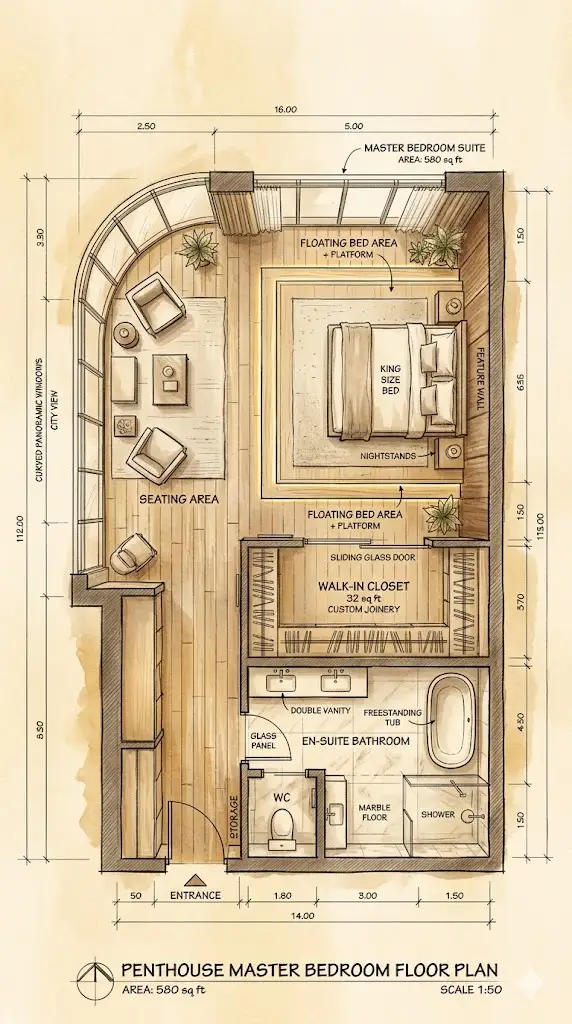
Before you pick a single piece of furniture or commit to a color palette, layout is everything. And in a penthouse bedroom, the layout conversation is more interesting than in most spaces because you often have unusual footprints to work with.
Many penthouse bedrooms are irregular in shape. You might have a curved wall where the building turns a corner. There might be a section with a lowered ceiling near a structural beam, or an elevated sleeping platform built into a mezzanine. There could be a terrace door that essentially breaks the room in two directions. All of these quirks are gifts if you treat them that way.
Start by identifying the anchor point which is almost always the bed. In a penthouse bedroom, the most powerful placement is typically facing the primary view window. This lets you wake up to the skyline, the sea, or whatever landscape defines your location. There’s a psychological dimension to this that goes beyond aesthetics. Waking up to an expansive view literally signals openness to the brain, and that matters for how you start your day.
From there, build outward. A seating area near the windows creates a secondary living zone within the bedroom a reading nook, a morning coffee spot, or just a place to sit and watch the city shift between blue hour and full daylight. If your penthouse has a terrace connection, make that transition as seamless as possible. Retractable glass doors or bi-fold panels allow the bedroom to breathe outward, effectively doubling your usable space during warmer months.
Don’t overcrowd the room. Penthouse bedrooms earn their feeling of luxury largely from restraint. Too much furniture even expensive furniture creates visual clutter that shrinks the perceived space. Choose fewer, better pieces and let the room breathe.
Also Read : Master Bedroom Decor Ideas for a Cozy Luxe Retreat
Choosing the Right Bed for a Penthouse Bedroom
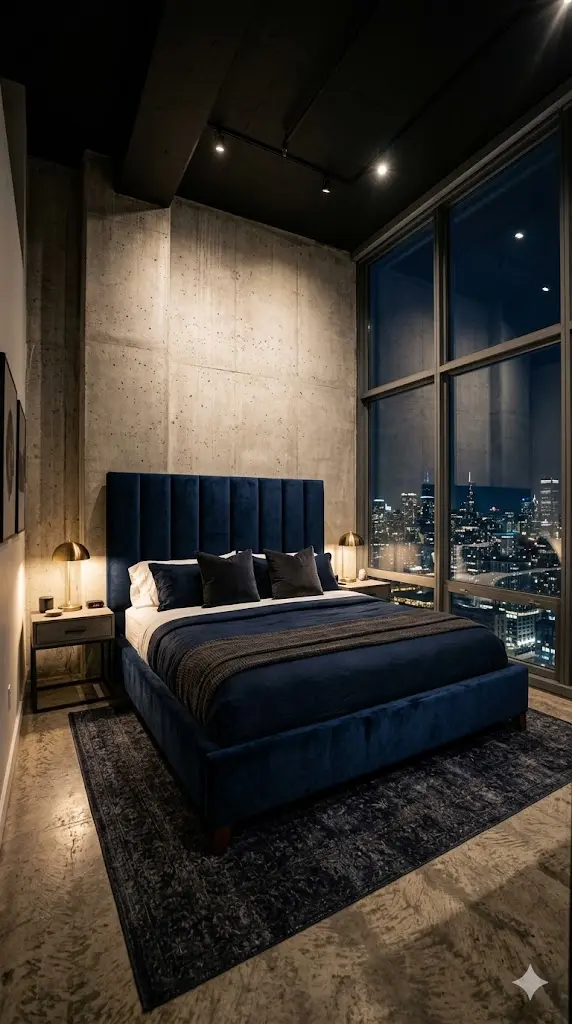
The bed is the centerpiece of any bedroom, but in a penthouse context, the scale and design of the bed carry additional weight. The wrong bed can make a dramatic space feel deflated. The right one becomes a piece of sculpture.
For penthouse bedrooms with very high ceilings anything above 10 or 11 feet you’ll want a bed with some visual height to it. This doesn’t necessarily mean a tall headboard, though that’s one option. It could also mean a canopy structure, or even a custom-built floating platform that raises the sleeping surface and adds architectural interest at eye level.
Custom upholstered headboards are one of the most reliable choices for high-end penthouse bedrooms. They can be designed to virtually any dimension a headboard that spans eight feet wide and five feet tall reads as a genuine statement piece, almost like a textile artwork hung behind the bed. Materials like boucle, linen, velvet, and leather all work beautifully depending on the overall palette you’re building toward.
If your style leans more minimal, a low-profile platform bed in dark walnut or smoked oak can be incredibly effective. The contrast between a low, horizontal sleeping surface and the vertical drama of tall windows or a double-height ceiling creates a tension that feels very intentional and very contemporary.
Don’t neglect the bedding. In a space this considered, the bed linens and layers deserve the same attention as the furniture. High thread-count cotton, linen throws, and well-placed accent pillows in tonal shades will elevate the entire room in a way that no light fixture or paint color can replicate on its own.
Also Read : Best Boho Bedroom Ideas Relaxed Chic Vibe That Feels Effortless
Lighting Design: The Secret Weapon of Luxury Penthouse Bedrooms
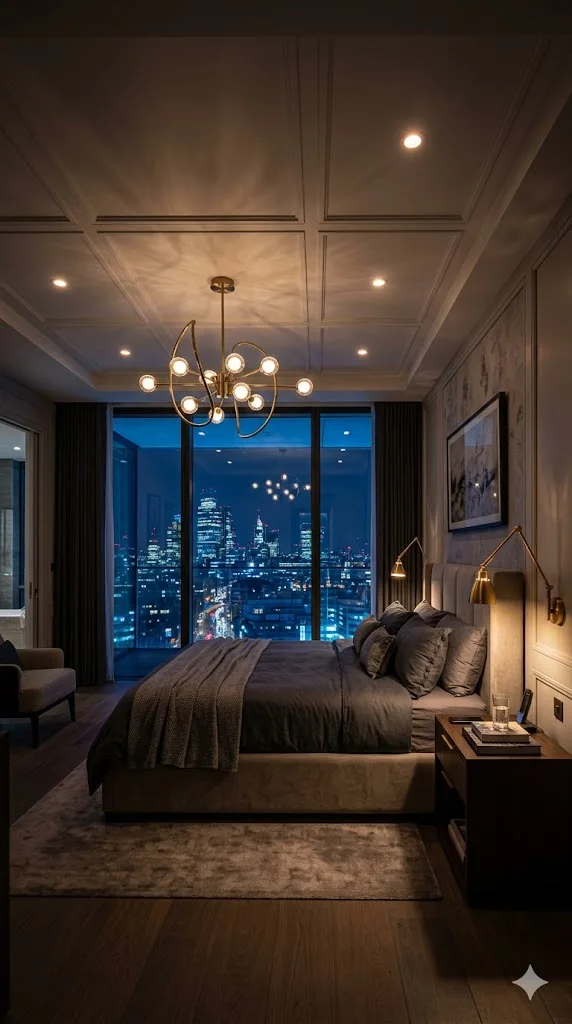
Lighting design is where most bedroom renovations stop short, and it’s one of the most impactful investments you can make in a penthouse bedroom. The goal isn’t just illumination it’s atmosphere, and atmosphere changes throughout the day.
Think in layers. A well-designed lighting scheme typically involves at least three or four distinct layers that can be used independently or together. The first layer is ambient lighting — the background glow that fills the room without any harsh contrasts. In a penthouse bedroom, this often comes from recessed downlights set into the ceiling, ideally on a dimmer so you can modulate the intensity from bright-morning to barely-there-evening.
The second layer is task lighting, which handles the practical moments: reading in bed, getting dressed, checking your reflection in the mirror. Swing-arm sconces mounted on either side of the bed are a timeless solution. They free up bedside table surfaces, reduce cord clutter, and provide targeted light exactly where you need it.
The third layer is decorative or accent lighting the pieces that exist as much to be looked at as to illuminate. A sculptural pendant lamp hanging from a high ceiling can be genuinely breathtaking. Oversized chandeliers in aged brass, bronze, or sculptural glass are popular in penthouse contexts precisely because the ceiling height justifies the scale. A chandelier that might feel overwhelming in a standard room becomes proportionate and dramatic with 12 feet of ceiling above it.
Finally, consider architectural lighting strip lighting recessed into coves, illuminated shelving, or backlit wall panels. This category of lighting defines edges and planes in the room, adding depth and dimension after dark that transforms the space entirely. Combined with the natural light that pours in through those expansive windows during the day, a well-designed lighting scheme means your penthouse bedroom looks extraordinary at every hour.
Floor-to-Ceiling Windows and How to Work With Them
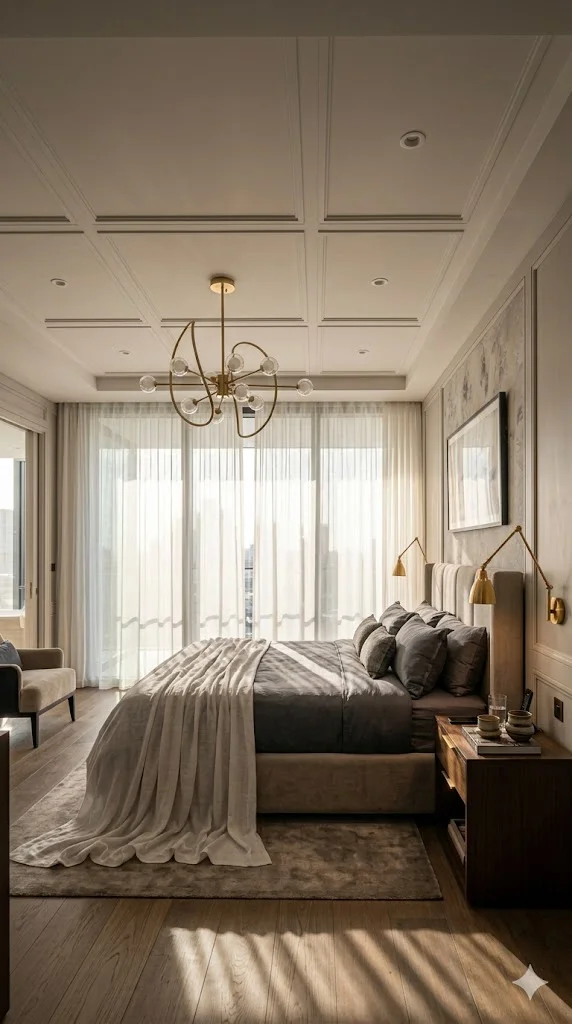
If there’s one feature that distinguishes penthouse bedroom ideas from every other type of interior design, it’s the windows. Panoramic glass walls, corner windows, skylights, and double-height glazing are standard features in penthouse living and they’re simultaneously the greatest asset and the trickiest challenge you’ll navigate as a designer.
The challenge is privacy and light control. That magnificent view that makes you want to live there also means you’re potentially visible from adjacent buildings or exposed to harsh direct sunlight at certain times of day. The solution needs to be elegant enough to match the space while being genuinely functional.
Motorized sheer curtains have become the gold standard in luxury penthouse bedrooms for good reason. When drawn, they soften light and add a gossamer texture to the room without blocking the view entirely. When open, they stack neatly at the sides, barely noticeable. Add a layer of blackout panels behind them for sleeping, and you have a system that handles every condition from bright midday to full privacy at night.
The curtain hardware matters enormously here. Slim, ceiling-mounted tracks in matte black, brushed nickel, or raw brass read as architectural elements rather than just functional rods. Floor-to-ceiling curtains that hang from a ceiling-recessed track and pool slightly on the floor add softness and height to the room simultaneously.
What about window treatments beyond curtains? Roman blinds and wooden shutters can work in some contexts, but they tend to feel heavier and more residential in a way that fights against the airy, elevated quality most penthouse bedrooms are aiming for. When in doubt, keep it light, keep it sheer, and keep it simple.
Color Palettes That Actually Work in Penthouse Bedroom Ideas
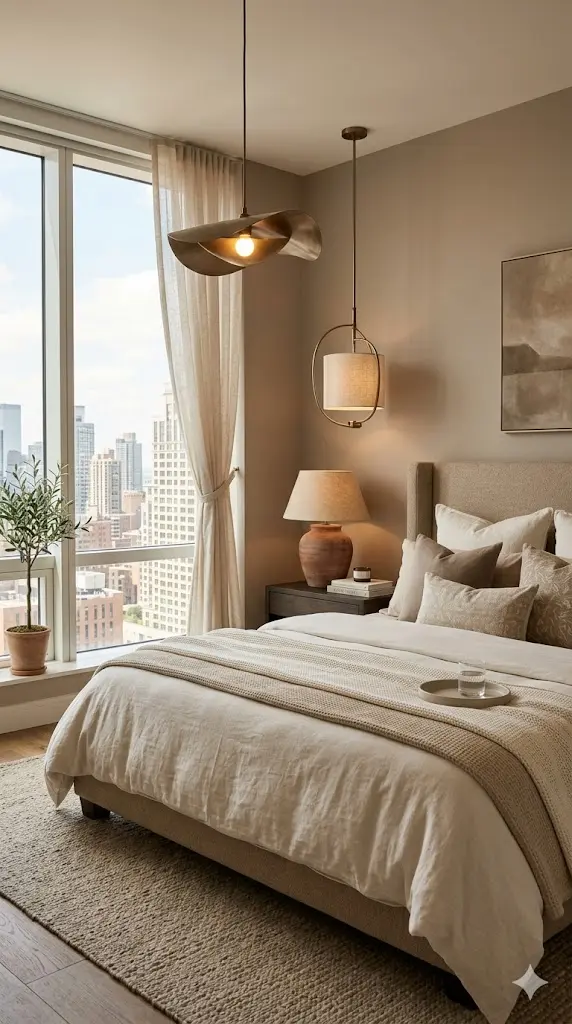
Color in a penthouse bedroom is a conversation between the walls, the furnishings, the light, and the view. That last element is something most standard bedroom color guides completely ignore. But when you have a cityscape or a sky as your backdrop, the colors you choose inside the room need to relate to what’s visible beyond the glass.
For city views, warm neutrals tend to work beautifully. Think warm whites, creamy beiges, soft greiges (grey-beige hybrids), and dusty warm taupes. These tones complement the warm artificial glow of a city at night and the golden light of sunrise without competing with either. They also make the room feel cohesive and calm qualities that most people want from a bedroom regardless of the view.
For ocean or coastal penthouse views, you have a little more freedom. The blues and greens visible through the window give you permission to bring those tones inside in subtle ways — a dusty blue linen headboard, a sage green accent wall, or ocean-toned throw cushions. The key is subtlety. You don’t want to color-match the view so literally that the interior feels like a souvenir shop. Use the hues that appear in the landscape as inspiration, not instruction.
Dark and moody palettes deep charcoals, forest greens, navy blues, and even near-black walls can be extraordinarily effective in penthouse bedrooms, especially in urban settings. The contrast between the lit city outside and the rich dark interior creates an atmospheric, almost cinematic quality. If you go this route, light everything well and use reflective surfaces (mirrors, lacquered furniture, brass fixtures) to prevent the room from feeling heavy.
One rule I always come back to: in a penthouse bedroom, the color palette should have a clear logic. It should feel chosen, considered, and connected not random. A three-color scheme (primary, secondary, accent) with variation in tone and texture within each color family is usually more than enough.
Materials and Textures: Building a Tactile Experience
Slug
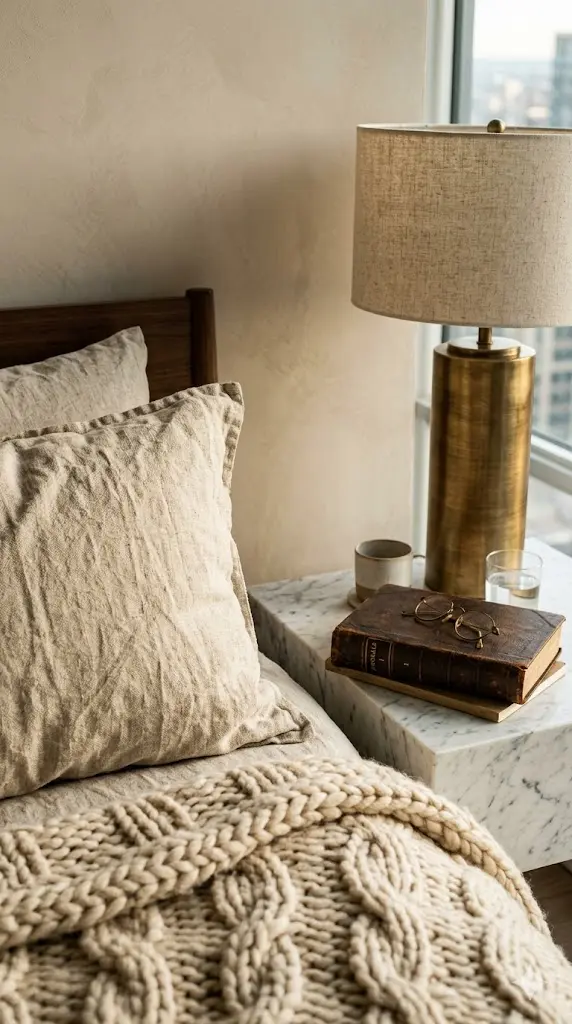
The most expensive-looking bedrooms aren’t necessarily filled with the most expensive materials. What they’re filled with is a thoughtful combination of textures that engage the senses even before you consciously register why the room feels so good.
In a penthouse bedroom, the general principle is to contrast soft with hard, matte with shiny, and rough with smooth. Concrete or stone walls paired with plush wool rugs. A marble bedside table alongside a soft linen duvet. A raw wood ceiling beam above a polished lacquer dresser. These contrasts create visual interest and tactile richness that a monochrome, one-texture room can never achieve.
Natural materials tend to dominate in high-end penthouse bedrooms, and there’s a reason for it. Stone, wood, linen, leather, and wool all have inherent warmth and character that synthetic materials generally can’t replicate. They also tend to age gracefully, which matters in a space designed to stand the test of time. A marble-topped console table will still look beautiful in twenty years. A laminate knockoff won’t.
Some of the most effective textural combinations I’ve seen in real penthouse bedrooms include: polished concrete floors softened by a large hand-knotted wool rug; a limewash plaster wall paired with a velvet upholstered headboard; exposed brick (often found in converted industrial penthouses) combined with crisp white linen bedding; and the perennial classic of warm timber elements against cool stone or glass.
Don’t forget the ceiling. In a penthouse bedroom, the ceiling is often the most architecturally interesting surface in the room. A coffered ceiling in painted timber, exposed concrete with integrated lighting, or even a stretch fabric ceiling system can transform an already dramatic space into something unforgettable.
Walk-In Closet Integration: Turning Storage into a Design Feature
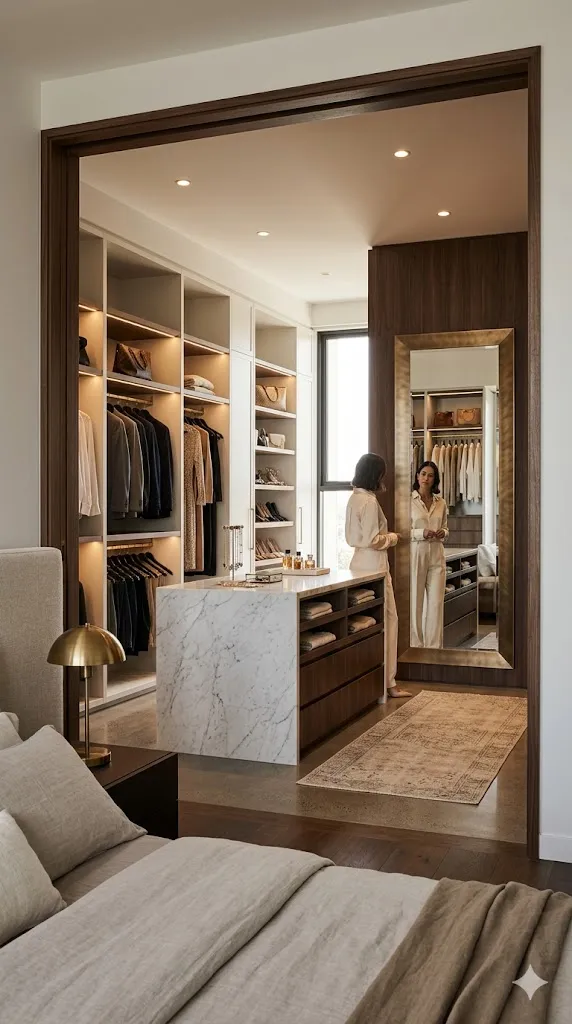
In most homes, the closet is something you try to hide. In a penthouse bedroom, it can be something you show off. Walk-in wardrobe spaces are common in penthouse layouts, and when designed well, they become an extension of the bedroom itself a dressing room in the truest sense.
The key to a penthouse-worthy walk-in is custom joinery. Off-the-shelf wardrobe systems just don’t have the finish quality or the design flexibility to match the standard of the surrounding space. Custom-built shelving, hanging rails, and drawer systems allow you to organize everything exactly as you need it while creating a cohesive aesthetic that feels like part of the architecture rather than furniture that’s been inserted.
Island units — freestanding or built-in counters positioned in the center of the dressing room are a practical and visually striking addition. They provide a surface for laying out clothing, storing folded items in deep drawers, and displaying accessories. A marble or stone top elevates the whole setup considerably.
Lighting inside the wardrobe is often overlooked and makes an enormous difference. Recessed downlights, internal LED strips along hanging rails, and a statement pendant or chandelier above the island all contribute to making the space feel finished and intentional. When your walk-in wardrobe is as beautifully designed as the bedroom it connects to, the whole suite reads as a unified, high-end living environment.
En-Suite Bathroom Connections: The Seamless Luxury Flow
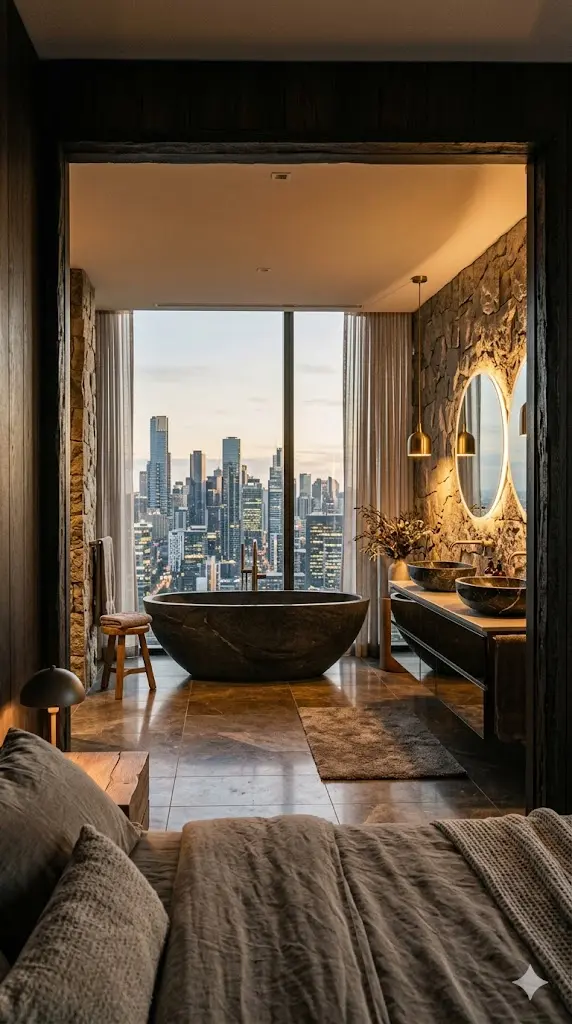
One of the defining features of truly exceptional penthouse bedroom ideas is the relationship between the bedroom and the en-suite bathroom. When these two spaces are designed as a unified experience rather than separate rooms, the result is a hotel-suite quality that turns your everyday morning routine into something genuinely pleasurable.
The architectural threshold between the bedroom and bathroom can be handled in several ways. In some penthouses, there’s a large open aperture — no door at all — that allows visual continuity between the spaces. This works beautifully when the bathroom is as finished and photogenic as the bedroom, with a freestanding tub or double vanity positioned to be seen from the bed. It’s a bold choice that signals total confidence in the design of both spaces.
More commonly, the connection is made through large glass panels or a glazed pivot door that maintains visual flow while providing privacy when needed. Frosted or ribbed glass is a popular solution — it allows light to pass between the spaces and suggests the continuity without full exposure.
The material palette should be consistent between bedroom and bathroom, with minor variations to acknowledge the different functions. If the bedroom uses warm timber and linen, the bathroom might carry the timber into a floating vanity while introducing stone for the floor and wall cladding. If the bedroom leans into concrete and glass, the bathroom can extend those materials into polished concrete floors and frameless shower enclosures.
A freestanding bathtub positioned in front of a window with a panoramic view is one of the iconic images of penthouse living for a reason. It sounds indulgent almost to the point of cliché — until you’ve actually experienced soaking in a tub while looking out over a city or coastline, and then it just feels like the only logical placement.
Smart Home Technology: The Invisible Layer of Penthouse Luxury
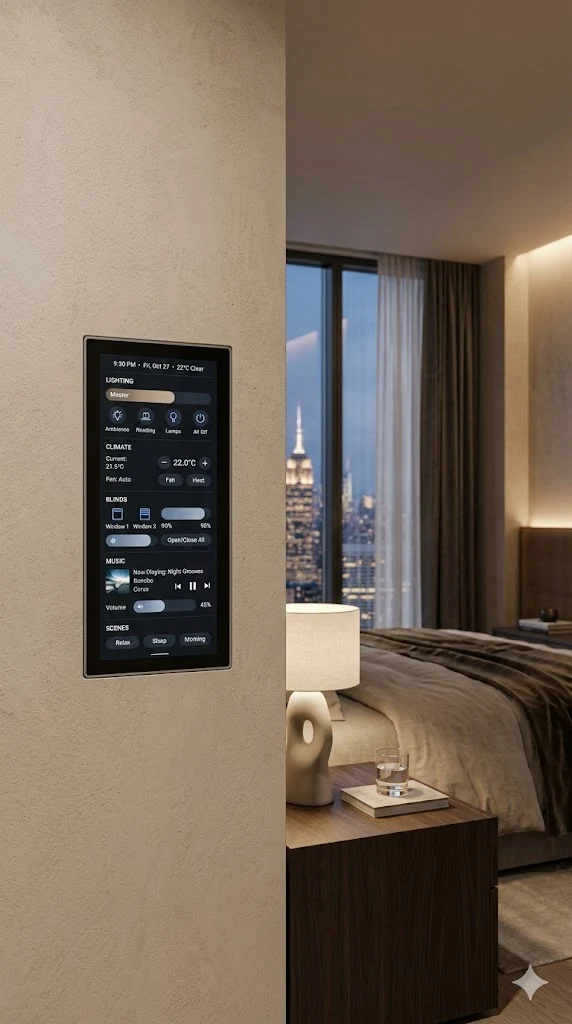
In a contemporary penthouse bedroom, technology is most powerful when it’s invisible. The goal isn’t to fill the room with screens and gadgets. It’s to make the environment respond to you effortlessly, so that the experience of being in the room feels genuinely elevated without any visible effort.
Motorized blinds and curtains, controlled by a smartphone, a bedside panel, or voice commands, are now standard in high-end penthouse bedrooms. Being able to wake up and open the blinds without leaving bed — or set them to open automatically at a specific time each morning — sounds like a small thing, but it changes the entire morning experience.
Integrated audio is another major factor. Ceiling-mounted speakers, carefully positioned and acoustically calibrated for the room, deliver music without any visible equipment. Paired with a streaming system that allows different zones of the penthouse to play different content simultaneously, this kind of setup transforms the space from a beautiful box into a genuinely experiential environment.
Climate control in penthouse spaces deserves particular attention. High ceilings and large glass surfaces mean that heating and cooling can be unpredictable. Radiant floor heating handles cold mornings without any visible units or ductwork. Combined with a smart thermostat that learns your schedule and preferences, the bedroom temperature is always exactly where you want it before you even think to adjust it.
Automated lighting scenes — pre-programmed combinations of brightness, color temperature, and which fixtures are active — let you shift the room from bright and energizing in the morning to warm and dim in the evening with a single tap. These scenes can be triggered by time of day, by sunrise and sunset, or by manual control. When designed well, you forget they’re there until you stay in a room without them.
Penthouse Bedroom Ideas for Different Styles and Aesthetics

Not every penthouse bedroom should look the same, and not every aesthetic works for every person. Here’s a breakdown of the major design directions that work particularly well in these elevated spaces.
Contemporary Minimalist
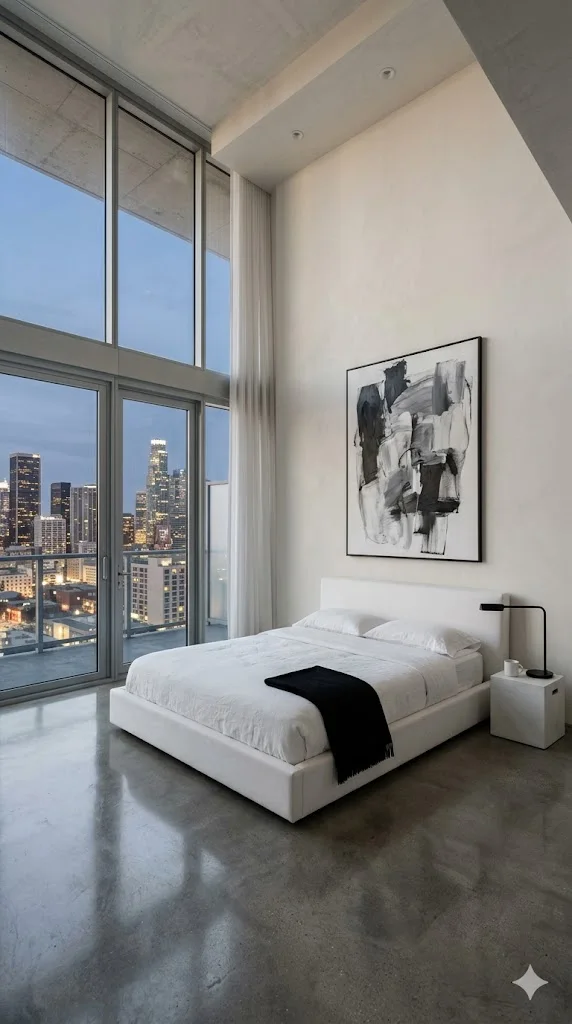
The contemporary minimalist approach leans into the architecture completely. The color palette is tightly controlled usually whites, greys, and blacks with occasional warm accents. Furniture is sparse and deliberate, with nothing in the room that doesn’t have a clear reason for being there. This style pairs extremely well with the kind of raw architectural drama exposed concrete, frameless glass that many penthouse spaces offer.
The challenge with minimalism in a bedroom is warmth. Too minimal and the space can feel cold and inhospitable exactly the opposite of what a bedroom should be. The solution is texture. A large, hand-knotted wool rug. Linen bedding. A cashmere throw. Rough-hewn timber elements. These keep the palette and the layout clean while ensuring the room still feels like somewhere you want to spend time.
Warm Organic and Biophilic
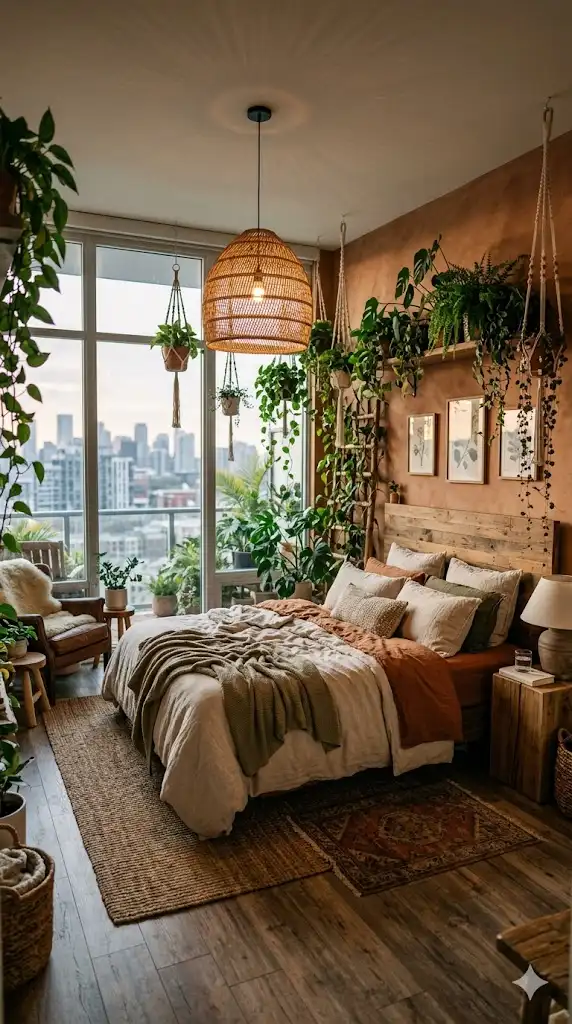
The warm organic aesthetic is about bringing the natural world into a space that’s literally elevated above it. This style uses natural materials rattan, jute, reclaimed timber, terracotta, stone alongside living plants, organic textiles, and earthy color palettes to create a bedroom that feels grounded and calming despite being in a high-rise setting.
Biophilic design the incorporation of natural elements specifically for their positive effect on wellbeing is particularly powerful in penthouse bedrooms. The paradox of being high above the earth while surrounded by plants, stone, and wood creates a genuinely interesting tension that most people respond to very positively. Add a large indoor tree (a fiddle-leaf fig, olive tree, or monstera in a beautiful planter) and the room takes on an almost forest quality.
Modern Glamour and Art Deco Revival
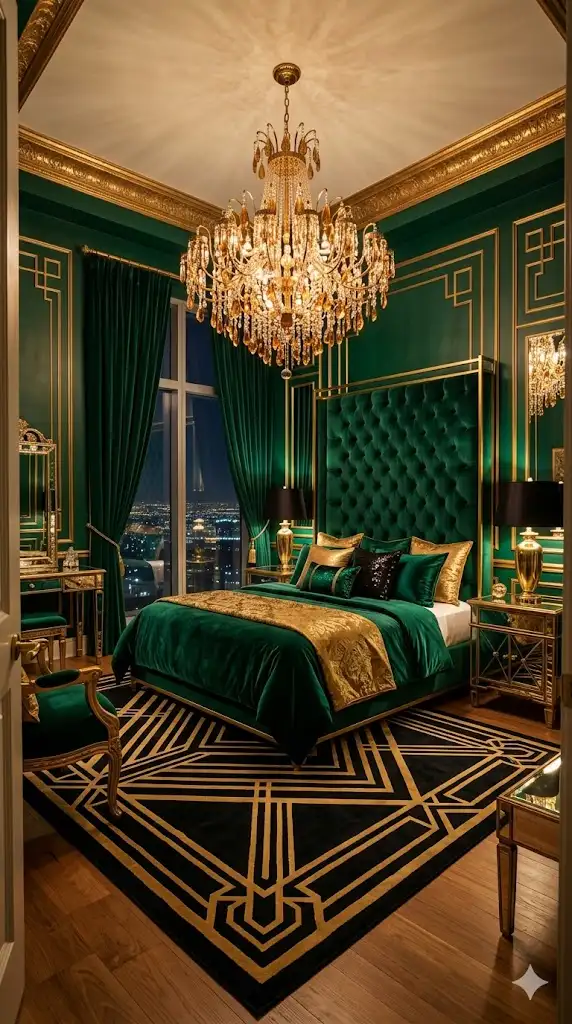
For those who want their penthouse bedroom to feel genuinely opulent, the modern glamour aesthetic delivers. Think rich colors emerald green, sapphire blue, deep plum, or jewel-toned burgundy paired with metallic accents in gold, brass, or rose gold. Mirrored furniture, lacquered surfaces, and velvet upholstery are the materials of this world.
Art Deco influences geometric patterns, bold architectural details, stepped or fluted surfaces work particularly well in penthouse spaces because they complement the grandeur of the scale. A statement chandelier in amber glass or faceted crystal, a headboard upholstered in tufted emerald velvet, and a geometric rug in black and gold can transform an ordinary bedroom into something that feels like a private suite from a different era one that understood luxury without apology.
Outdoor Connection: Terraces, Balconies, and the Extended Bedroom
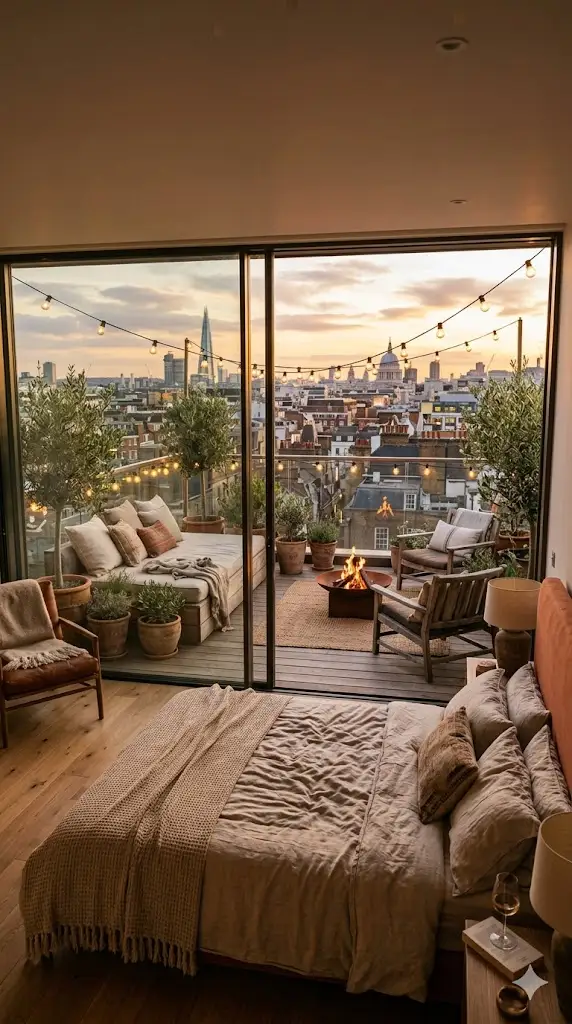
One of the true privileges of penthouse living is the outdoor space. Terraces, wraparound balconies, and private rooftop gardens are extensions of the bedroom itself, and treating them as disconnected outdoor areas misses the enormous potential they represent.
The most effective penthouse bedroom ideas integrate the terrace as a second living zone, accessible directly from the bedroom through retractable or bi-fold glass walls. When those walls are open, the bedroom literally expands into the outdoor space — the sightlines continue, the floor levels ideally match, and the material palette flows from inside to outside without interruption.
On the terrace itself, think in terms of outdoor living furniture that matches the quality of the bedroom within. Weatherproof sofas and daybeds in marine-grade fabrics, a dining table and chairs for al fresco breakfasts, and an outdoor fire feature for cooler evenings all contribute to making the terrace a year-round space rather than a seasonal afterthought.
Landscaping on a penthouse terrace is its own design discipline. Raised planters with structural trees and evergreen shrubs provide privacy from adjacent buildings while creating a sense of being in a private garden above the city. Ground-level planting in custom zinc or weathered steel containers adds texture and life. Outdoor lighting — warm string lights draped between planters, uplighting on trees, recessed lights in decking boards — transforms the terrace at night into something genuinely magical.
Art and Accessories in the Penthouse Bedroom
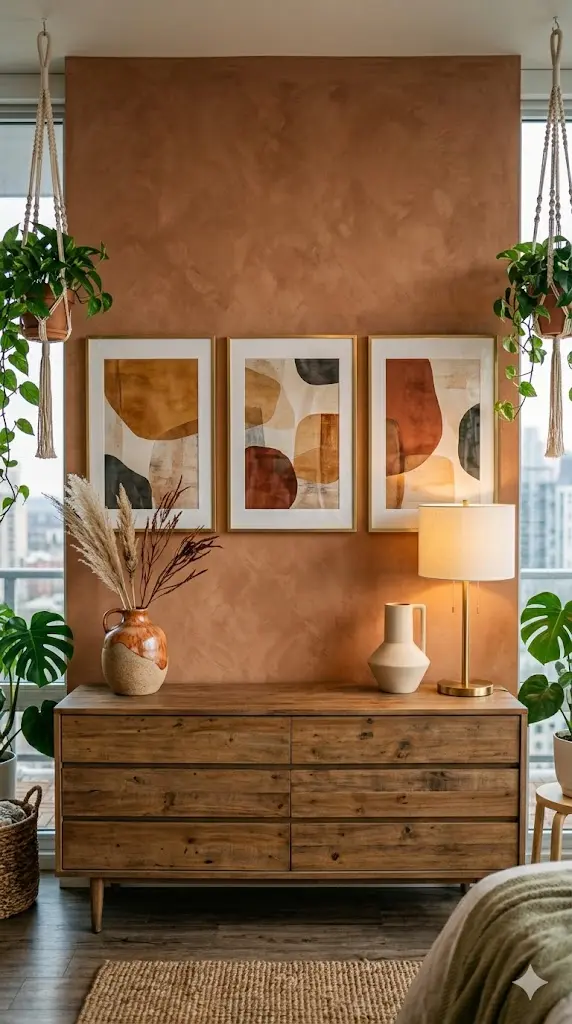
Art is one of the most personal aspects of bedroom design, and in a penthouse context, it deserves the same level of thought as the architecture and furniture. The scale of the walls particularly those dramatic high walls that a double-height or standard penthouse ceiling offers calls for artwork that can hold its own.
Large-format original works — abstract paintings, photography, textile art work best in these spaces. A single large artwork hung centrally above a dresser or along a feature wall has far more impact than a cluster of smaller pieces in a room this size. That said, a well-curated gallery wall can work if the pieces are large enough and the arrangement is considered rather than ad hoc.
Sculpture adds a three-dimensional element that flat artwork can’t provide. A beautiful ceramic vessel on a bedside table, a bronze or stone figure on a plinth in the corner, or even a larger sculptural element on the floor can anchor areas of the room and add unexpected depth.
Accessories throughout the penthouse bedroom should be chosen rather than accumulated. A beautiful perfume tray on the dresser. A stack of design books on the bedside. A handmade ceramic incense holder on the windowsill. These small details — when chosen with care — cumulatively create a sense of personality and curation that makes a room feel lived in and loved, not just decorated.
Budget Considerations: Where to Invest and Where to Save
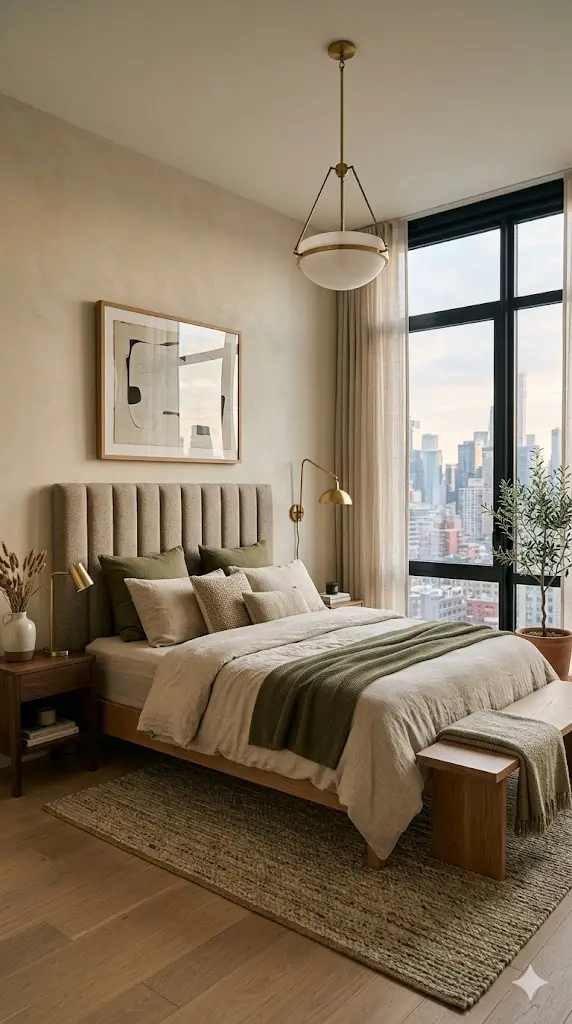
Even in penthouse bedrooms, there are smart ways to allocate a budget. Not every decision needs to be the most expensive option, but some investments pay off exponentially and others simply don’t.
The areas worth investing heavily in are the bed (particularly the mattress and headboard, since you interact with them daily), the lighting design (which affects every other element in the room), and the flooring or rug (which sets the textural foundation of the entire space). These three elements account for a disproportionate share of how a room looks and feels, and compromising on them in order to spend more elsewhere is rarely a winning strategy.
The areas where strategic savings are possible include decorative accessories (which can be found beautifully at many price points), soft furnishings like cushions and throws (where quality matters but premium price tags don’t always correlate with quality), and artwork (where an original work by an emerging artist can have more character and impact than an expensive print from a commercial gallery).
Custom joinery — wardrobes, built-in storage, headboards — generally offers better value than premium designer furniture brands, because you’re paying for exactly what you need in exactly the right dimensions rather than a brand name attached to a standardized product.
Sustainable Choices in High-End Penthouse Bedroom Design
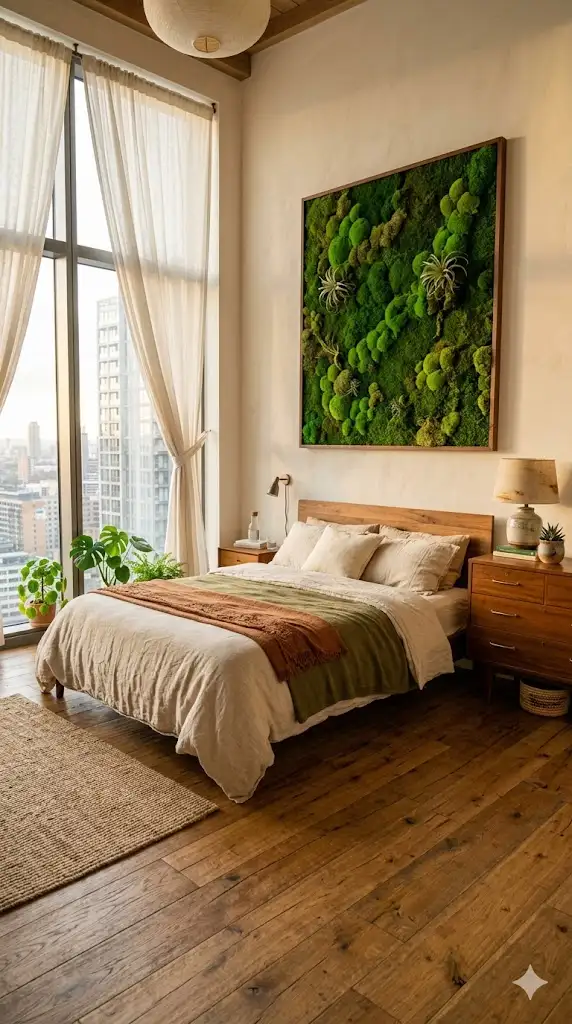
Sustainability and luxury are no longer in tension. The most thoughtful penthouse bedroom designs of the past several years have incorporated environmental considerations without any compromise to aesthetics in many cases, the sustainable choices actually produce more interesting and beautiful results.
Reclaimed timber flooring, for instance, brings a warmth and character that new timber flooring simply can’t match. Every piece has its own history visible in the grain and tone variations, which creates a floor that tells a story. Similarly, vintage and antique furniture finds have a patina and craftsmanship that mass-produced contemporary pieces rarely achieve.
Natural textiles organic cotton, undyed linen, wool, hemp are not only better for the environment but are genuinely more comfortable and more visually interesting than synthetic alternatives. The slight irregularities in weave and texture that come with natural fibers add that handmade quality that makes a room feel elevated rather than machine-produced.
Living plant walls a section of wall planted with moss, ferns, or other indoor plants — are both visually striking and beneficial for air quality. In a penthouse bedroom that’s sealed for climate control much of the time, the biophilic and air-purifying effects of living plants carry genuine practical value alongside their obvious beauty.
Common Mistakes to Avoid in Penthouse Bedroom Design
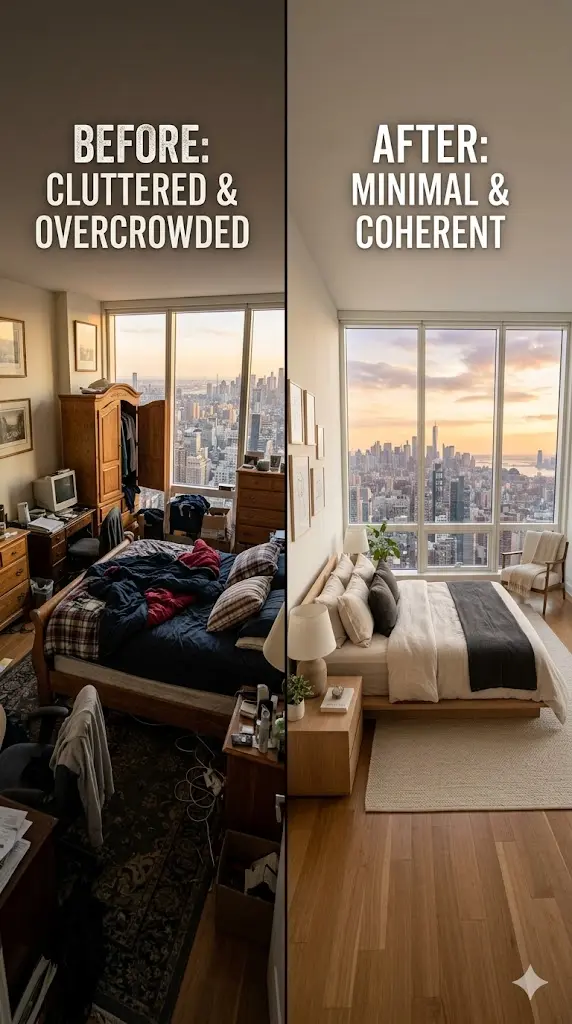
Even with the best intentions, certain mistakes come up repeatedly in penthouse bedroom design and being aware of them ahead of time can save you significant time, money, and disappointment.
The first and most common mistake is blocking the view. It sounds obvious, but people routinely place tall furniture wardrobes, bookshelves, armoires in front of or beside windows, interrupting the sightlines that make penthouse living special in the first place. If you’re going to invest in a penthouse, let the view breathe. Keep furniture away from windows wherever possible.
The second mistake is over-furnishing. Penthouse bedrooms are large, and there’s a temptation to fill that space. Resist it. Emptiness in a beautifully designed room isn’t a problem to solve it’s a luxury. Some of the most impressive penthouse bedrooms I’ve seen are startlingly spare, and that restraint is exactly what makes them feel so elevated.
The third mistake is ignoring acoustics. High ceilings, concrete surfaces, and large glass areas can make a room very reverberant meaning sound bounces around in ways that are uncomfortable to live with. Soft furnishings (rugs, curtains, upholstered furniture), acoustic panels disguised as artwork, and sound-absorbing ceiling treatments all address this without any visible evidence of doing so.
Finally, don’t rush. The best penthouse bedrooms I’ve ever seen were designed slowly and deliberately. The owners took time to live in the space before making permanent decisions, experimented with furniture positions, lived through different seasons to understand how the light changed, and made each addition thoughtful rather than impulsive.
Final Thoughts
Designing a penthouse bedroom well is one of the most rewarding creative challenges in interior design. The ingredients are extraordinary the height, the light, the views, the space and the job is simply to honor them.
The ideas in this guide aren’t trends that will date in three years. They’re grounded in principles of proportion, materiality, light, and human experience that have been true in beautiful rooms for centuries and will continue to be. Whether you’re approaching this with a significant budget or working creatively within tighter constraints, the underlying logic is the same: start with the architecture, respect the scale, choose with intention, and let the space tell you what it wants to become.
The best penthouse bedrooms feel inevitable like they couldn’t possibly have been any other way. That feeling of inevitability is the result of many thoughtful decisions made consistently in the same direction. It’s entirely achievable, and when you get there, you’ll understand exactly why people say there’s nothing quite like waking up above the world.
People Also Ask
1. What is the best bed size for a penthouse bedroom?
For most penthouse bedrooms, a king-size bed (76″ x 80″) is the standard choice, and in very large rooms, a California king or a custom super-king may be appropriate. The key is proportionality the bed should feel commanding in the space without making the room feel cramped around it. In a very large room, consider a custom oversized frame that can anchor the space more effectively.
2. How do I choose curtains for floor-to-ceiling windows in a penthouse?
Motorized linen or sheer curtains hung from ceiling-recessed tracks are the most practical and aesthetically clean solution. Always hang curtains at the highest possible point ideally from the ceiling to maximize the apparent height of the room. For blackout functionality, layer a blackout roller blind or a secondary curtain panel behind the sheer.
3. What colors work best in a penthouse bedroom with city views?
Warm neutrals (creamy whites, greiges, warm taupes) work exceptionally well against urban backdrops because they complement both the warm artificial glow of city lights at night and the cooler natural daylight during the day. Rich dark colors (charcoal, navy, forest green) can also be stunning and create a dramatic contrast with a lit cityscape.
4. How do I add privacy to a penthouse bedroom without blocking the view?
Sheer motorized blinds provide diffused privacy while maintaining the sense of openness. Frosted or textured window film applied to the lower portion of windows (where direct sightlines from adjacent buildings exist) can address specific privacy concerns without affecting the sky view above. Landscaping on terraces tall plants and trees creates natural privacy screens.
5. Are open-plan penthouse bedrooms with no door to the bathroom a good idea?
Open connections between the bedroom and bathroom work beautifully when both spaces are designed at the same level of finish and the layout is right. They create a seamless, hotel-suite flow. However, they require excellent ventilation in the bathroom and are most successful when the occupants share the suite and have no concern about bathroom sounds and smells carrying into the sleeping space.
6. What type of flooring is best for a penthouse master bedroom?
Wide-plank engineered timber flooring is one of the most popular choices it’s dimensionally stable in climates with significant temperature changes (important in high-rise buildings), visually warm, and available in a huge range of finishes. Large-format stone tiles work beautifully in warmer climates or in rooms with underfloor heating. Polished concrete is a strong choice in industrial or contemporary contexts.
7. How do I make a penthouse bedroom feel cozy rather than cold?
Warmth in a large space comes from layering textures and materials. A large area rug, upholstered furniture, heavy curtains, and plentiful soft furnishings (cushions, throws, blankets) are all essential. Warm-toned lighting (2700–3000K color temperature) also makes an enormous difference to how warm and inviting a room feels.
8. Is it worth investing in smart home technology for a penthouse bedroom?
Absolutely, and particularly for motorized blinds, integrated audio, and climate control. These technologies pay experiential dividends every single day, and in a penthouse context where the architecture, views, and light are all part of what you’re paying for, the ability to control and optimize those elements seamlessly adds genuine value to the experience of living there.
9. How much should I spend on a penthouse bedroom renovation?
This varies enormously depending on the size of the space and the scope of work. As a rough benchmark, a high-quality penthouse bedroom renovation — including custom furniture, bespoke joinery, lighting design, window treatments, and soft furnishings — typically ranges from $50,000 to $250,000+. The most significant variables are the extent of structural or architectural work and whether custom furniture is required.
10. What lighting design is most effective in a high-ceiling penthouse bedroom?
A layered approach using recessed ambient downlights on dimmers, bedside sconces for task lighting, a statement pendant or chandelier for drama, and architectural accent lighting (cove lighting, lit shelving) for depth. The entire system should be integrated on a smart control panel so scenes can be set and adjusted effortlessly.
11. How do I incorporate a home office in a penthouse bedroom without it looking out of place?
A built-in desk integrated into the joinery perhaps as part of the wardrobe unit or within a dedicated alcove keeps the workspace contained and coherent. When not in use, the desk area can have sliding panels or doors that conceal it entirely, allowing the bedroom to return to its purely restful function.
12. What plants work well in a penthouse bedroom?
Low-maintenance plants that tolerate the fluctuating temperatures and relatively low humidity of a high-rise bedroom include fiddle-leaf figs, snake plants, olive trees (near bright windows), monsteras, and peace lilies. All are visually striking and genuinely improve air quality. Choose large-format plants over clusters of small ones for maximum impact.
13. How do I design a penthouse bedroom on a terrace that’s part of a rental property?
Focus on non-permanent improvements freestanding furniture, removable rugs, curtain systems that hang from temporary ceiling tracks, and decorative accessories. These can all be taken with you while still dramatically improving the space. Many landlords will also agree to improvements like paint changes and custom lighting if you offer to restore the property to its original condition on departure.
14. What art should I hang in a penthouse bedroom?
Large-format original works abstract paintings, photography, or textile art suit the scale of most penthouse walls. Choose pieces that resonate personally and connect to the color palette of the room. Avoid cluttered gallery walls unless the room is very large. One or two exceptional pieces have far more impact than many smaller ones.
15. How do I connect the interior design of the bedroom with the terrace design?
Use a consistent material palette if the bedroom has timber flooring, extend a timber-look decking or cladding onto the terrace. Maintain visual continuity through furniture style and color (choose outdoor furniture in tones that complement the indoor palette), and use plants on the terrace that have a relationship to any indoor greenery. Retractable or bi-fold glass walls that open fully are the most powerful tool for creating this connection.