
This post contains affiliate links. If you buy through one, I may earn a small commission at no extra cost to you.
If you’re reading this, there’s a good chance a mirror is leaning against a wall in your home right now, waiting for someone to make a decision. Maybe it’s been there a week. Maybe a few months. No judgment here. Hanging a mirror sounds like a ten-minute job. Then you’re staring at a pencil mark on the wall, wondering whether you’re about to hammer a nail into the wrong spot.
The thing that trips most people up is working out how high to hang a mirror. They almost always go up too high. It usually goes like this: you hold the mirror against the wall, someone says “a little higher,” and the nail goes in right about where your arms started to shake.
The good news is that this has a measurable answer, and it’s much simpler than it looks. Below you’ll find how high to hang a mirror in each room, how big it should be, how to choose one you’ll still like next year, and what to check before you drill. Grab a coffee, and by the end that mirror will be on the wall instead of the floor.
How high to hang a mirror: the short answer
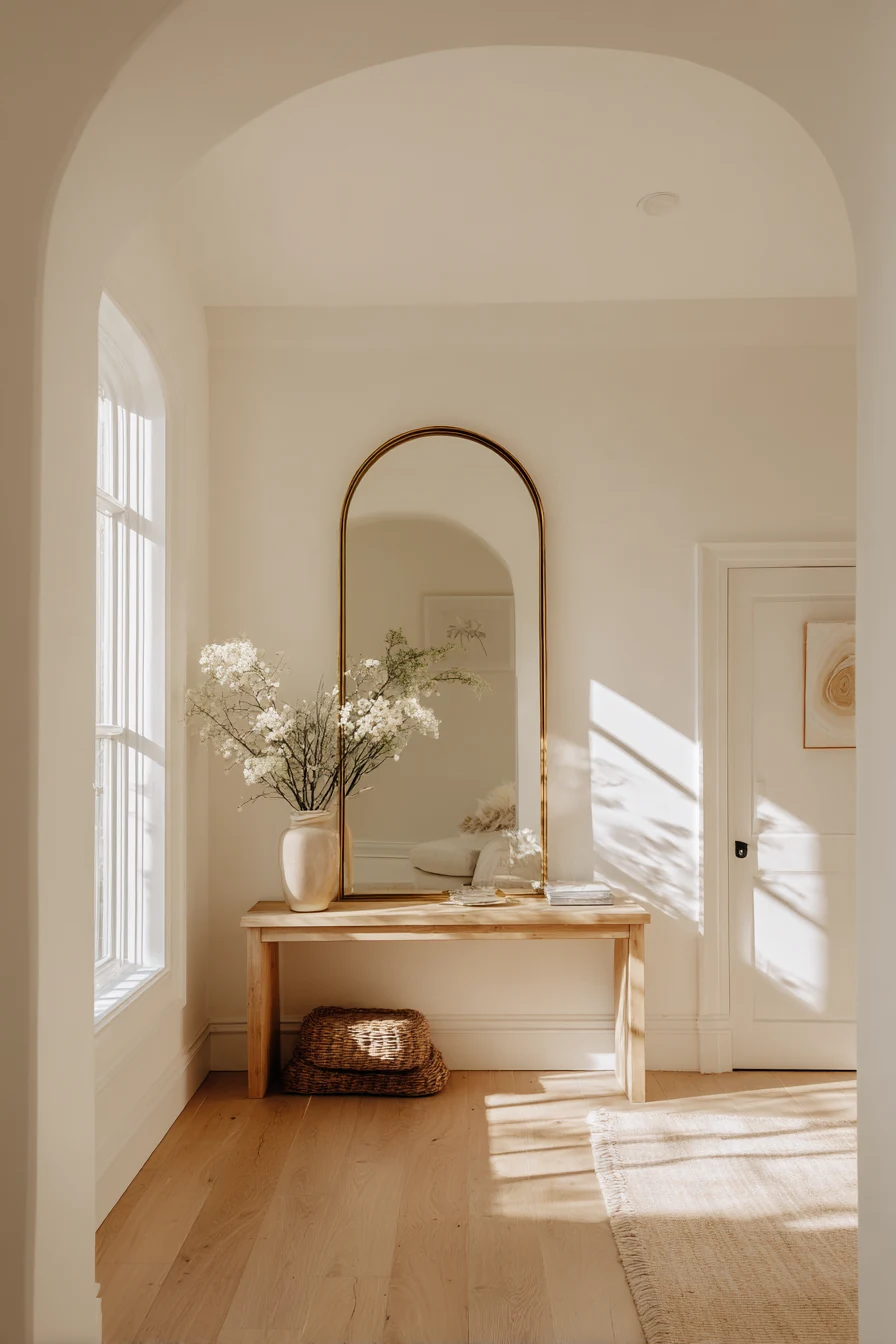
Center the mirror at about 57 to 60 inches from the floor. Galleries hang art at roughly that height because it puts the middle of the piece near average eye level, and a mirror follows the same logic. You want to see your face or the room without craning, and you want the frame to sit with the furniture around it instead of floating above it.
Two things change that number: whatever sits below the mirror, and who uses it. A mirror over a console follows the console. A mirror someone checks their outfit in follows their height.

| Where | Hang it | Size that works |
|---|---|---|
| Over a sofa, console or dresser | Bottom edge 4 to 8 inches above the furniture | Two-thirds to three-quarters of its width |
| Over a fireplace mantel | Bottom edge 4 to 6 inches above the mantel | About as wide as the fireplace opening, or a little narrower |
| Bathroom vanity | Bottom edge 5 to 10 inches above the faucet or counter | Same width as the vanity, or a few inches less |
| Bare wall or entryway | Center at 57 to 60 inches | Tall and narrow reads well in tight spaces |
| Full-length | Bottom edge 6 to 12 inches off the floor | At least 60 inches tall |
What you need before you start
A mirror is one of the few things in your home where a small mistake can end badly, so it’s worth spending a few dollars on the right gear. None of this is fancy.
- A stud finder to locate the wood behind the drywall. Studs usually sit 16 inches apart, center to center.
- A laser level. It’s easier than a long bubble level when you’re working alone.
- Heavy-duty drywall anchors for any spot with no stud behind it. Check the weight rating on the pack and pick a size rated for well more than your mirror weighs.
- A set of heavy-duty picture hangers for lighter frames. Again, match the rating to your mirror’s weight.
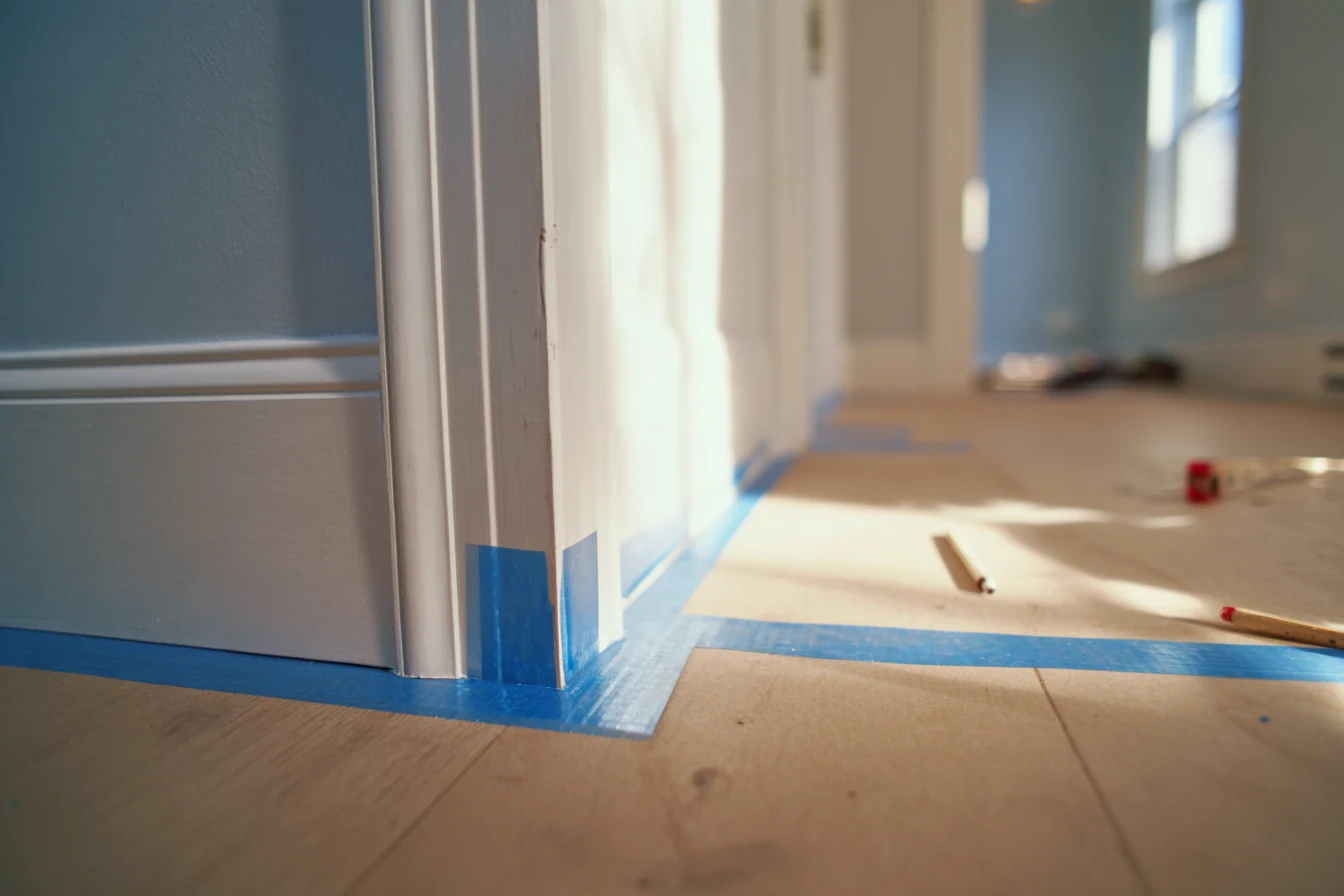
- Kraft paper and painter’s tape for the template trick and to protect your floor while you work.
Over a sofa, console or dresser
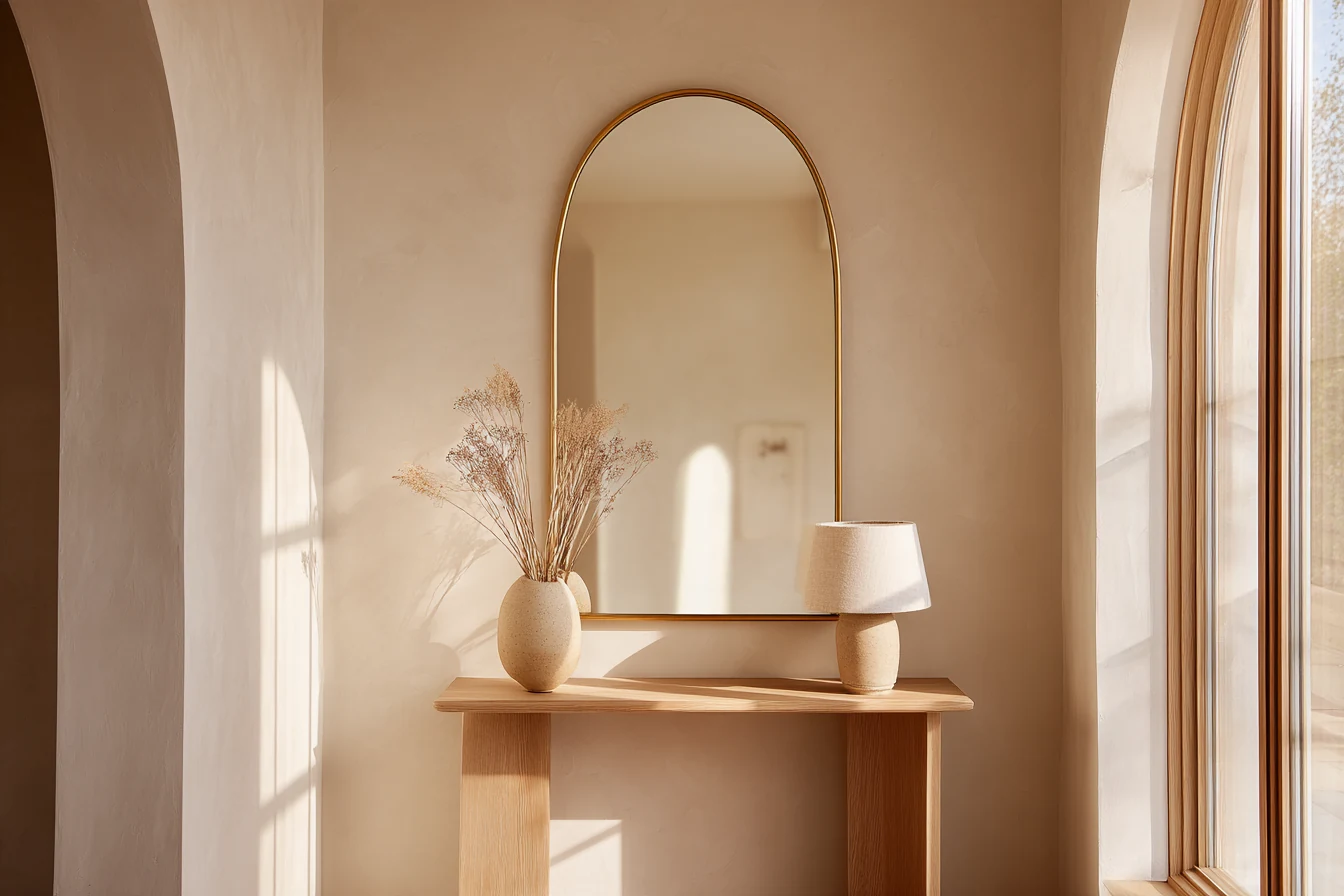
How high to hang a mirror over a sofa or console depends mostly on the furniture, so let it set the height. Leave 4 to 8 inches between the top of the furniture and the bottom of the mirror so the two read as one group. Closer than that and the frame looks crowded. Farther, and the mirror seems to belong to a different room.
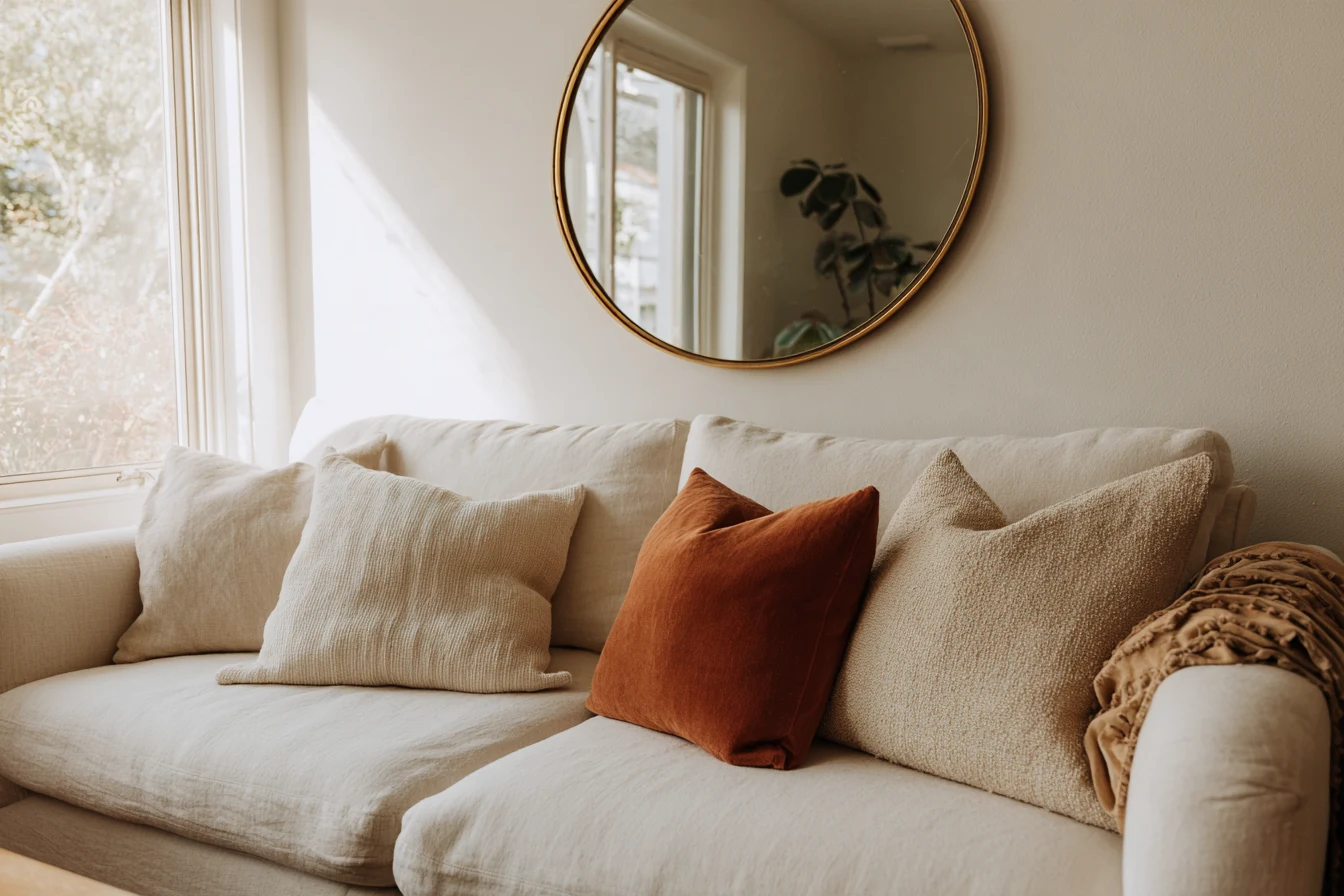
For a sofa, measure from the top of the back cushions, not the seat. If the two don’t line up, center the mirror on the sofa or console, not on the wall. Your eye goes to the furniture first and will notice a mirror that sits off to one side.
Width matters as much as height. A 60-inch console looks right with a mirror somewhere between 40 and 45 inches wide. Go much smaller, and it looks like a stamp on a big wall. If ceilings are tall, choose taller rather than wider, since a vertical mirror pulls the eye up.
Over a fireplace
With a fireplace, hang a mirror based on the mantel: keep the bottom edge 4 to 6 inches above it. If the mantel is already high, the mirror will sit above eye level, and that works here because it acts more as a focal point than something you look into. Leave a few inches of breathing room below the ceiling or crown molding so it doesn’t feel jammed in.
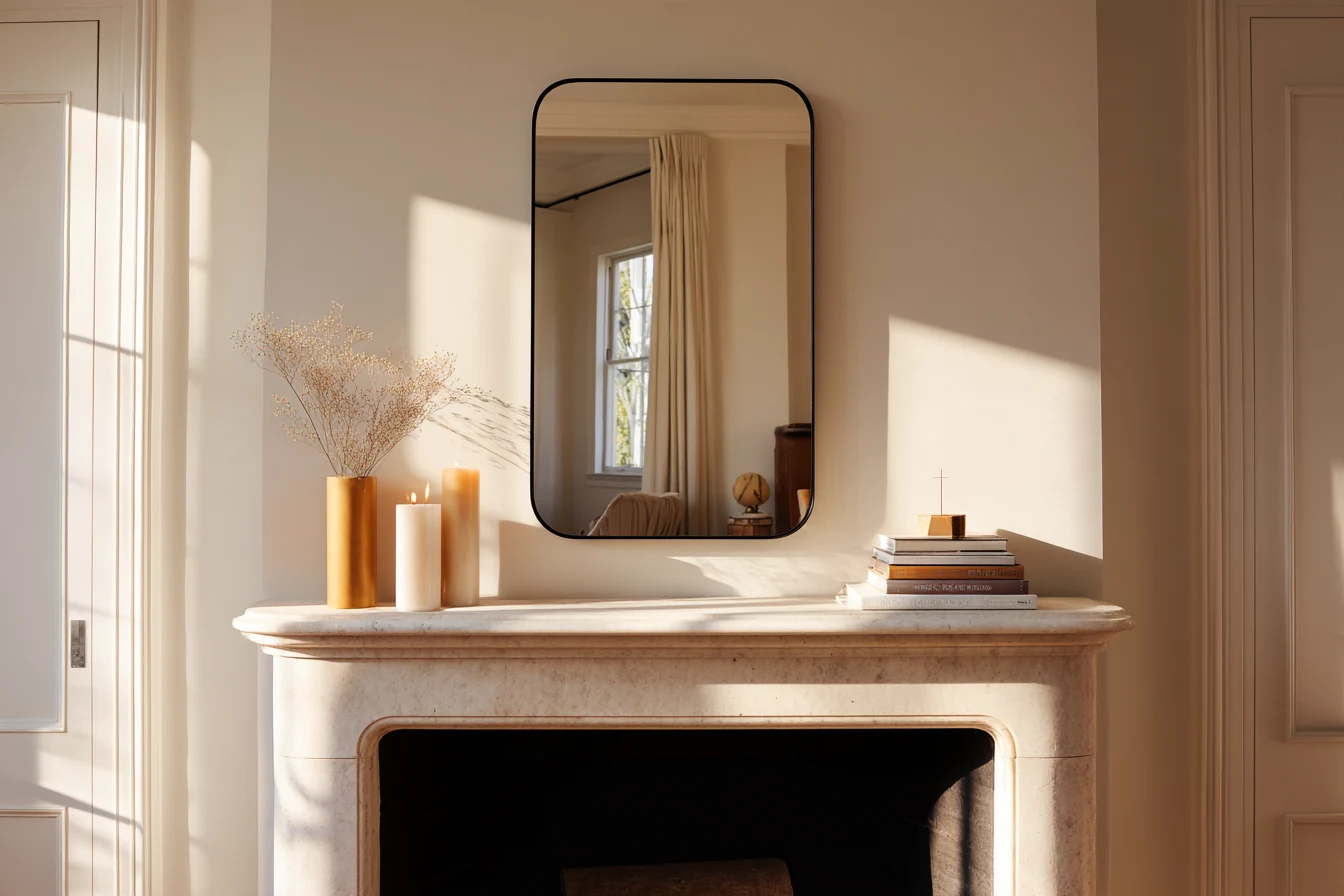
A mirror over a working fireplace sits in a warm spot. Check the maker’s guidance if you burn real fires regularly, since heat and smoke are hard on both glass backing and frames.
Bathroom
In a bathroom, set the mirror height by the sink: hang it so the bottom edge is 5 to 10 inches above the faucet or counter. Then stand at the sink and check that the tallest and shortest people in the house can both see their faces. If one of them can’t, choose a taller mirror instead of nudging the height. A mirror wider than the vanity looks off, so match the vanity or stay a few inches under. If you’re planning a calmer bathroom overall, these Japandi bathroom ideas show how a simple mirror fits into a spa-like space.
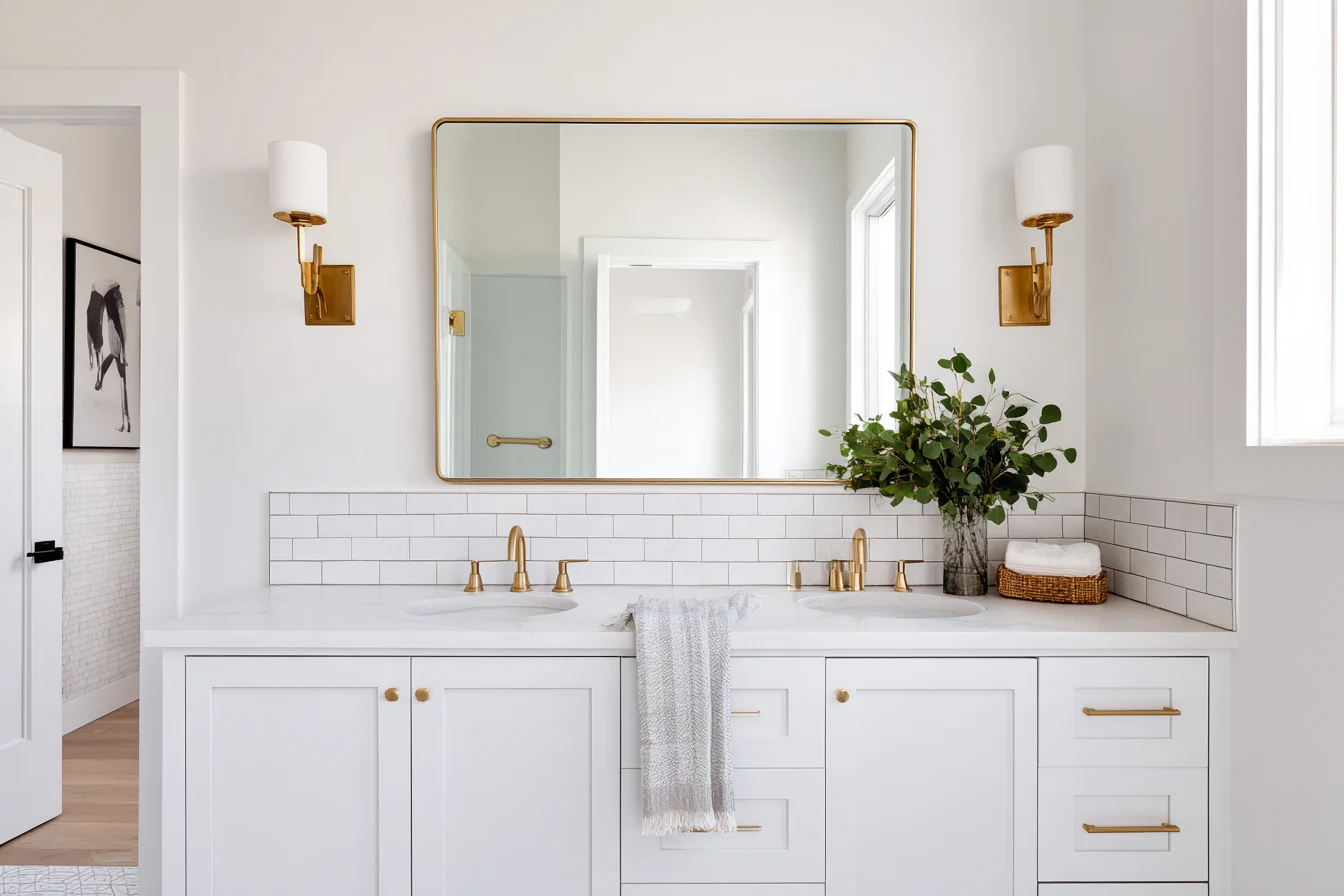
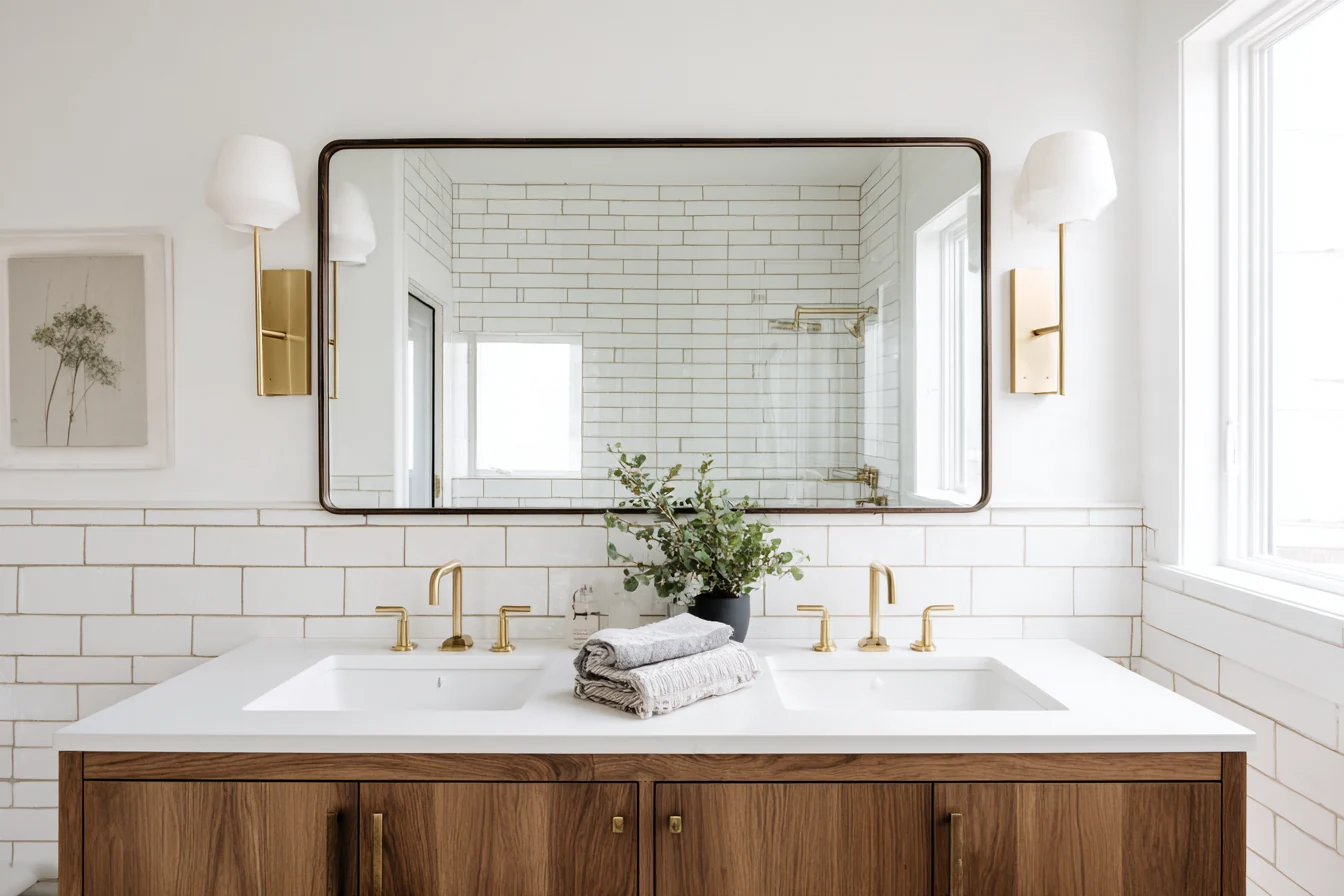
Bathrooms are humid, so look for a mirror with a sealed edge or a frame made for wet rooms. Cheap wood frames swell over time.
Bedroom
A mirror above a dresser follows the console rules. For a full-length mirror, the wall beside the closet or the back of the door works well, with the bottom edge 6 to 12 inches off the floor. Check the angle from your pillow before you commit, because plenty of people don’t love waking up to their own reflection.
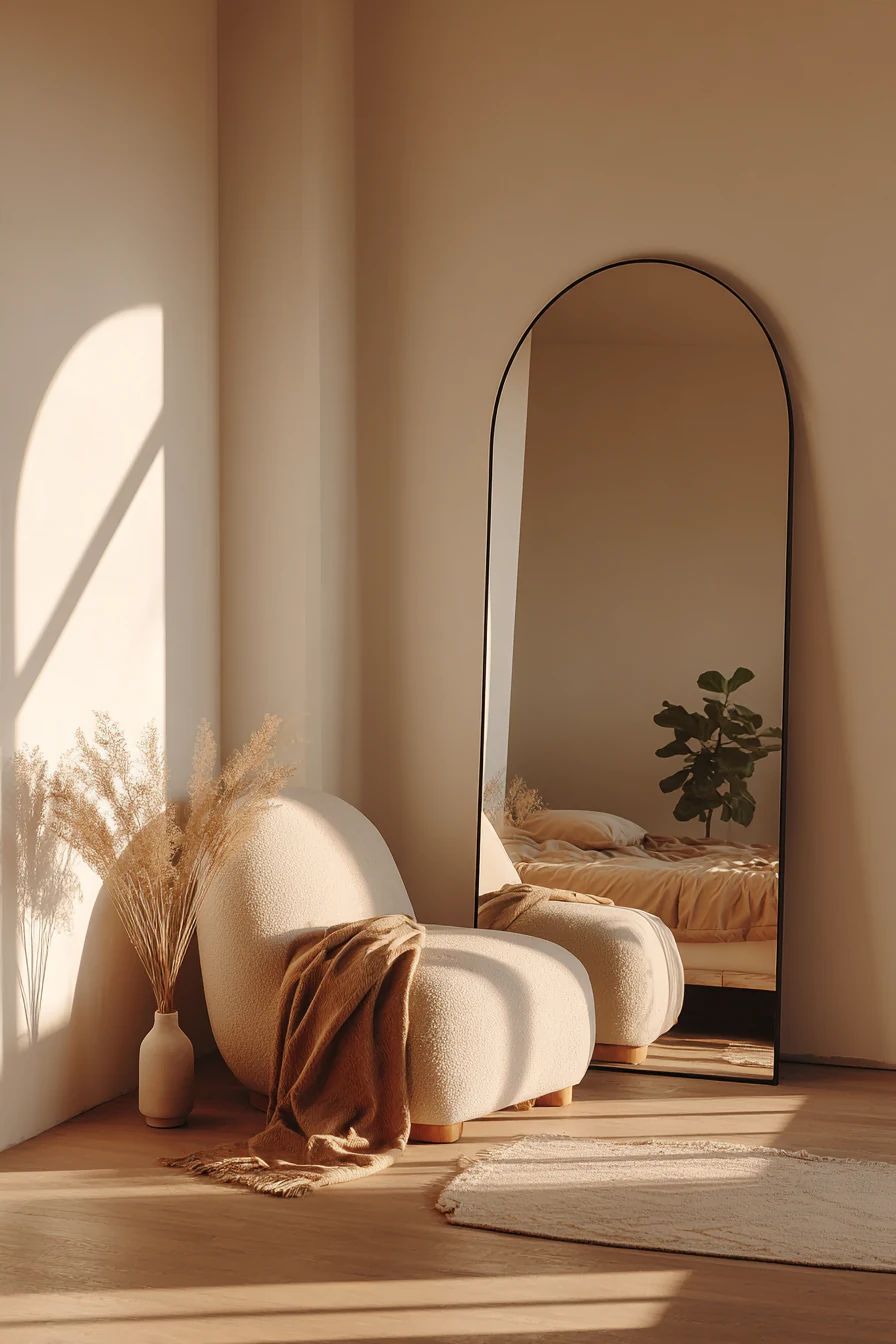
I’d skip a heavy glass mirror directly above the bed. Even a well-anchored one can feel uneasy to sleep under, and a lighter piece of art is a better fit there.
Entryway
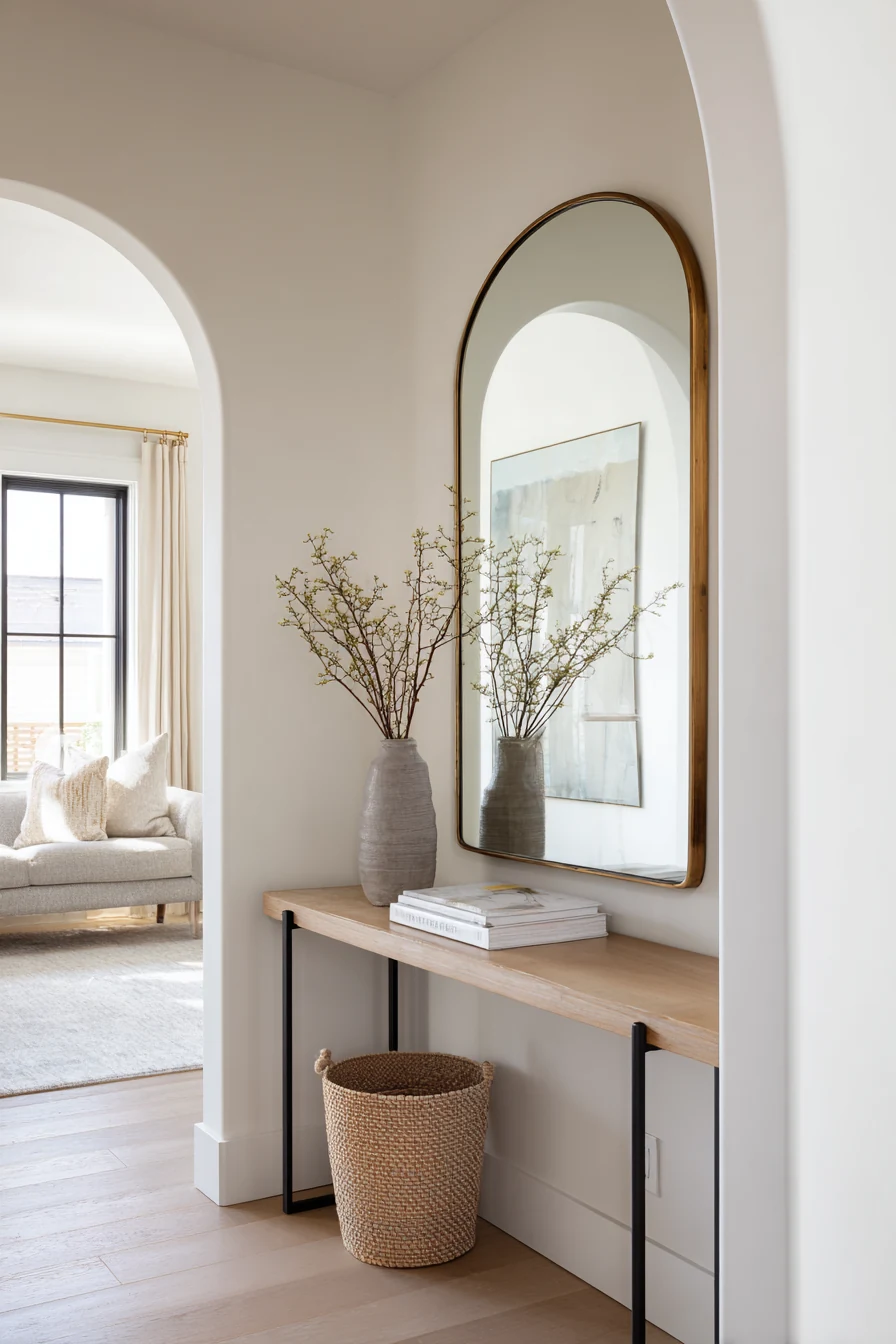
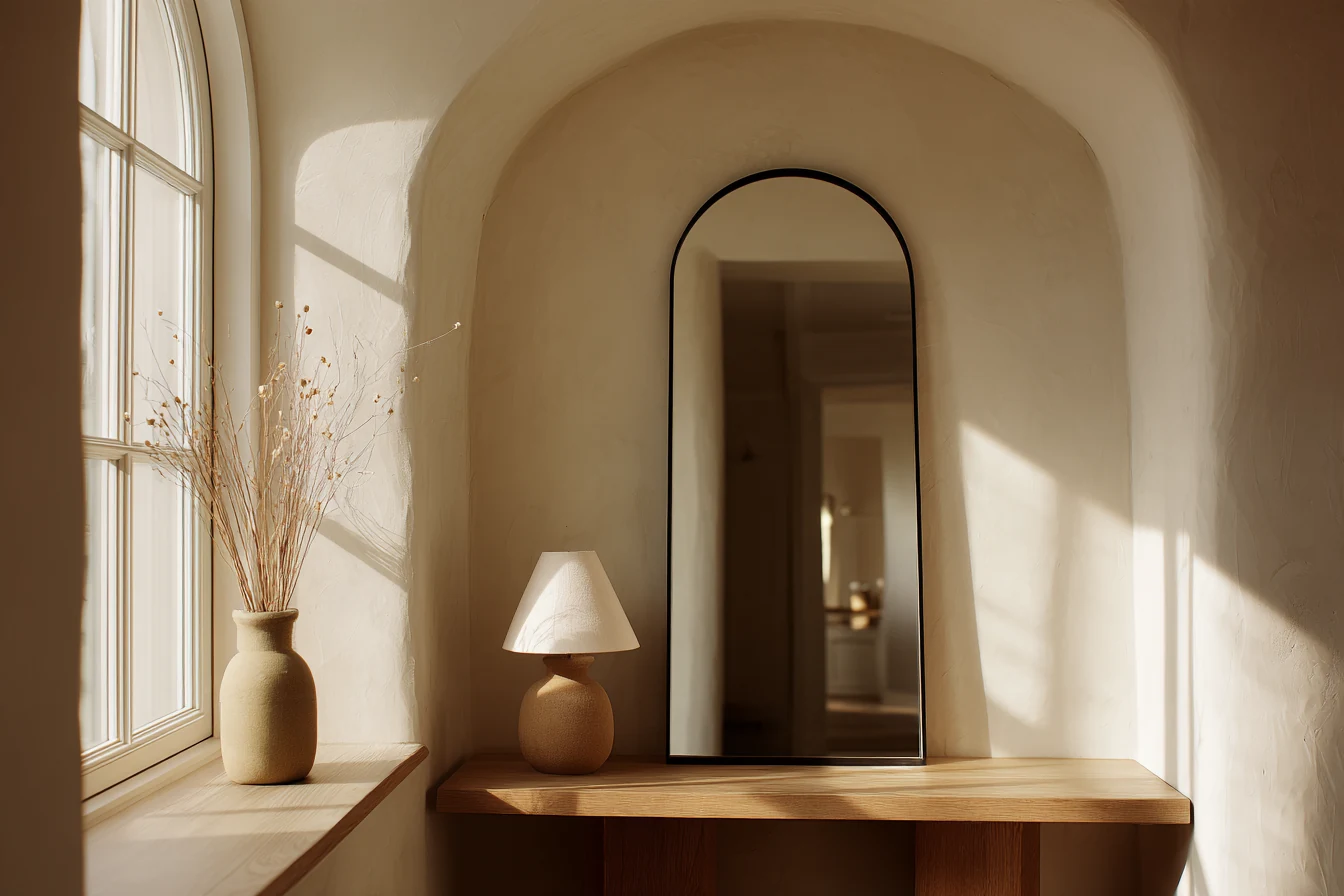
Entryways get the most out of a mirror. It makes a narrow hall feel wider and gives you a last look before you leave. Hang it over a console, or at 57 to 60 inches on its own. Stand at the front door and see what it reflects. You want a light fixture or a patch of wall color in there, not the shoe pile.
Check what it reflects
A mirror doubles whatever it faces, so this matters more than most people expect. Before you mark anything, hold the mirror in place and walk around the room.
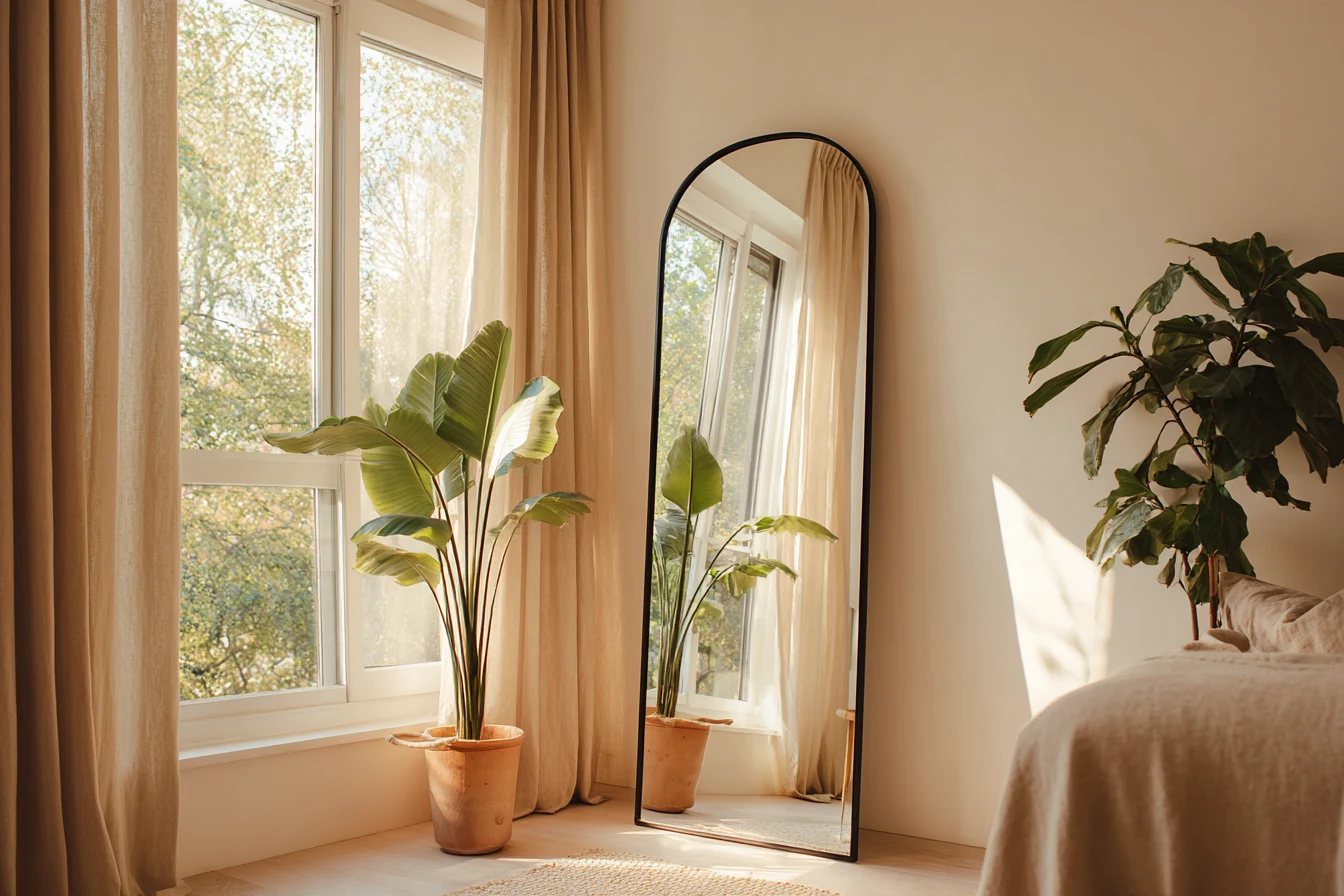
A window, a lamp, a plant or a piece of art all look good doubled. A TV, a messy corner or a bare bulb do not. Directly across from a window, a mirror shows the view and brightens the room. On the wall beside a window, it catches daylight and sends it deeper into the room, which helps a dark corner more than a bigger lamp would.
Mistakes that make a mirror look off
Most mirror problems come down to the same handful of slips. Here are the ones I’d steer you away from.
- Hanging it too high. The giveaway is looking up to find your own face. If you have to tilt your chin, drop it.
- Buying too small. A mirror under about half the width of the furniture below it tends to look lost. When you can’t decide between two sizes, take the bigger one.
- Centering on the wall instead of the furniture. If the console sits a little off-center, the mirror should follow the console.
- Skipping the reflection check. It takes a minute and saves you from staring at a laundry basket every evening.
- Trusting one weak anchor. A single plastic anchor in drywall is how mirrors end up on the floor. Find a stud, or use two proper anchors.
Picking the right mirror
Height is only half of it. A mirror that suits the room will look right even if you hang it an inch off.
Shape. Rectangles and arches suit hallways and walls with straight lines, like a console or a tall door frame. Round mirrors soften a room full of square furniture, and they work well above a sofa or a narrow table. Arched full-length styles are popular right now, and a floor-standing one is an easy way to try the look without drilling. It’s worth looking at this arched floor mirror and this one side by side, since frame finish and proportions vary a lot between listings. A round metal-frame mirror is a good first buy for a bare wall.
Frame. A thin metal frame keeps the focus on the reflection and suits a modern space. A wide wood or gilded frame is a decor piece in its own right, so give it room and keep the surrounding wall quiet. If you’re thinking of hanging it on a dark wall, look at these black accent wall ideas first. Match the metal to something else nearby, like a lamp base or cabinet pulls, and the mirror will look planned.
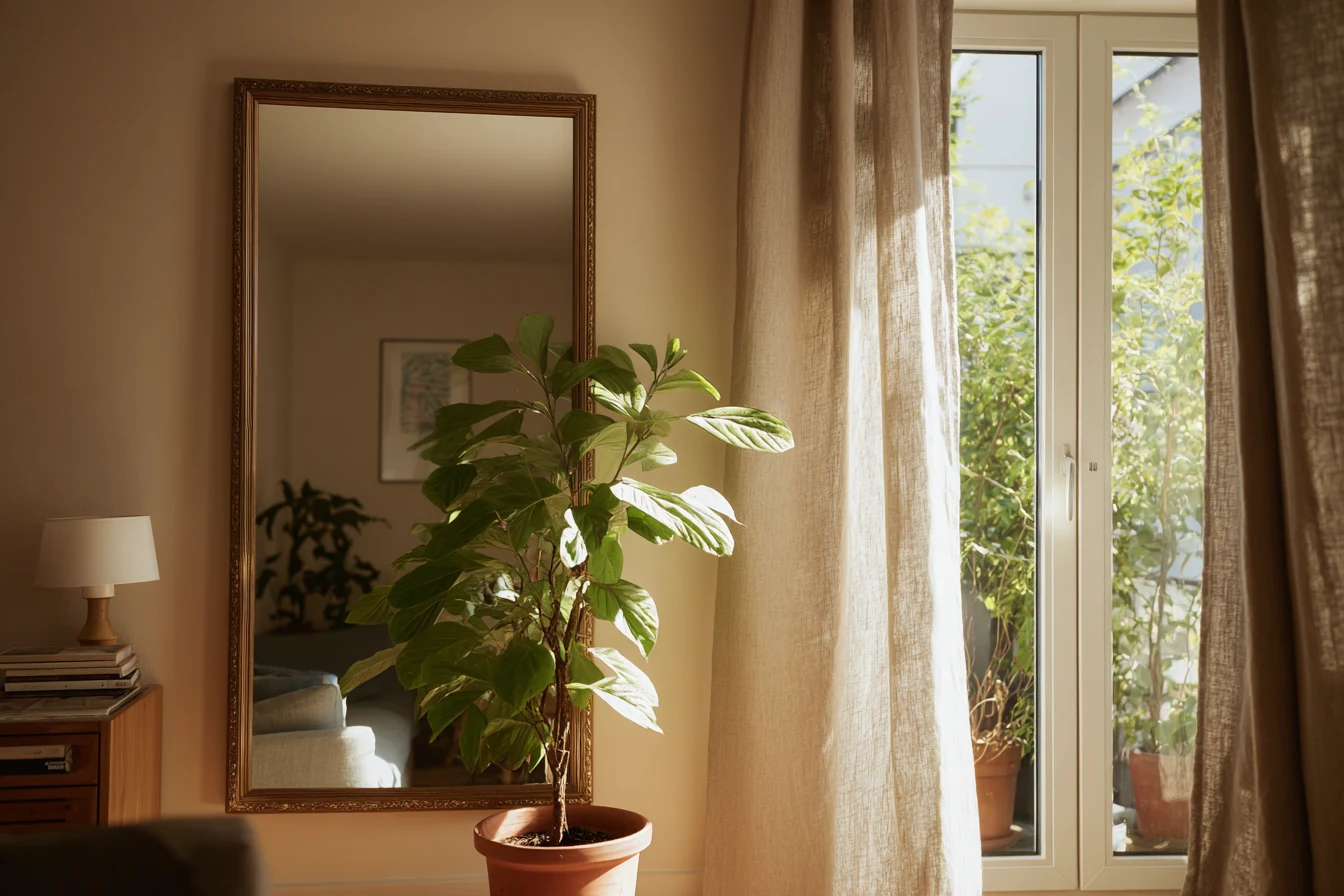
Glass and weight. Thicker glass looks better and distorts less, and it weighs more. Cheaper mirrors can warp slightly when you move your head. If you can, stand in front of one in the store.
Size. When in doubt, buy bigger. A mirror that’s too small is the most common way this goes wrong, and an oversized one almost always looks deliberate.
Making a small or dark room feel bigger
A mirror won’t add square footage, but it changes how the room reads. A few placements that work:
- Hang a tall mirror on the wall facing your longest view so the room appears to continue.
- Hang one beside a window to bounce daylight into the room, as covered above.
- In a narrow hall, place a mirror at the far end or on the long wall, centered on the doorway you use most.
- In a dark corner, pair a mirror with a lamp. The lamp doubles in the glass, lighting up the corner. If you need lamp ideas, these living room lamp ideas are a good place to start.
Keep one big mirror per wall in a small room. Several small ones can start to feel busy.
Hanging it, step by step
1. Weigh it. Step on a bathroom scale holding the mirror, then without it, and subtract. Glass is heavy, and a mirror that looks light can easily weigh 30 or 40 pounds.
2. Make a template. Trace the mirror onto kraft paper, cut it out, mark where the hangers sit and tape it to the wall with painter’s tape. Move it around until it looks right. This takes about ten minutes and saves you from patching a wall.
3. Find your support. Use the stud finder. A screw into a stud, with a hanger rated well above the mirror’s weight, is the strongest option. With no stud, use two heavy-duty anchors instead of one, both rated for more than the mirror weighs. For anything big with a solid frame, a French cleat spreads the weight along the wall.
4. Mark and drill through the template. Check each mark with the level before drilling. Tape kraft paper over the floor beneath the spot first, which catches drill dust and keeps the mirror from scuffing the floor while you work.
5. Mind the wire. If the mirror hangs on wire, pull the wire taut toward the top and measure from that peak to the top of the frame. The mirror will sit lower than the nail, and forgetting that is why so many end up crooked or too low.
6. Lift with a second person. Hang the mirror, then step back to check its placement. Check the level again to make sure it’s straight. Frameless mirrors need mirror clips instead of a wire, so follow the instructions that came with yours.
Already hung it and it looks off?
It happens, and it’s usually an easy fix. Give it a day before settling on the placement so you can see how the mirror looks as the light changes. If it still bothers you, here’s what to do.
If it’s too high or too low by an inch or two, move it. Fill the old holes with lightweight spackle and let it dry completely. Sand the patched areas smooth before painting them. Once that’s done, you won’t see where it was.
If it keeps tilting, hang it on two hooks set the same distance from the center line instead of one. A single hook lets the frame pivot, and two hooks stop it.
If it looks small on the wall, don’t fight it. Either swap in a larger mirror or group it with a second mirror or a piece of art so the pair reads as one bigger arrangement.
Hanging more than one mirror
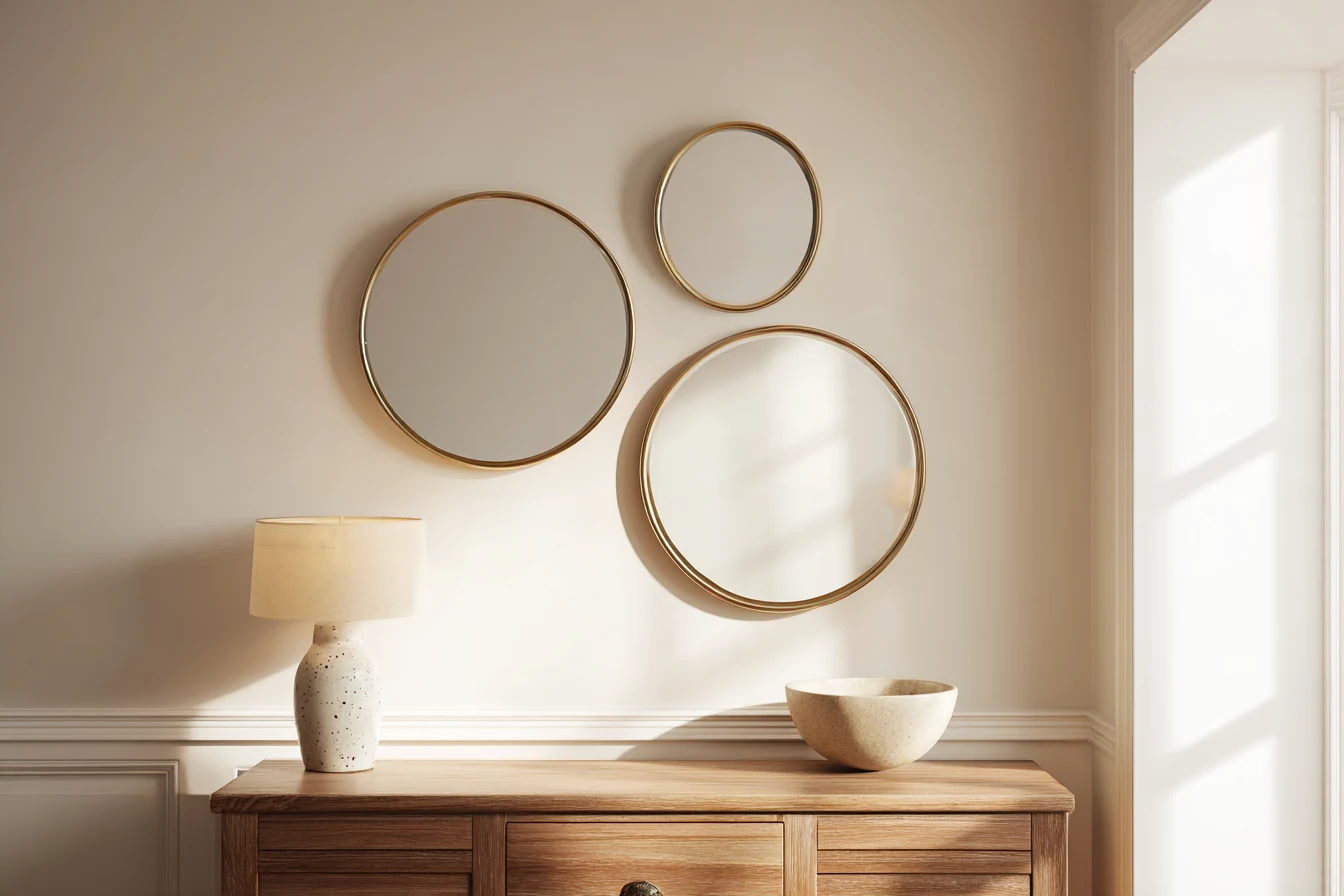
A group of mirrors works like a gallery wall. Treat the whole cluster as one piece: center it at 57 to 60 inches, and keep 2 to 3 inches between frames so they read as a set. Lay everything on the floor first and photograph the arrangement. You can also cut a paper template for each one and tape the whole layout to the wall before you drill anything.
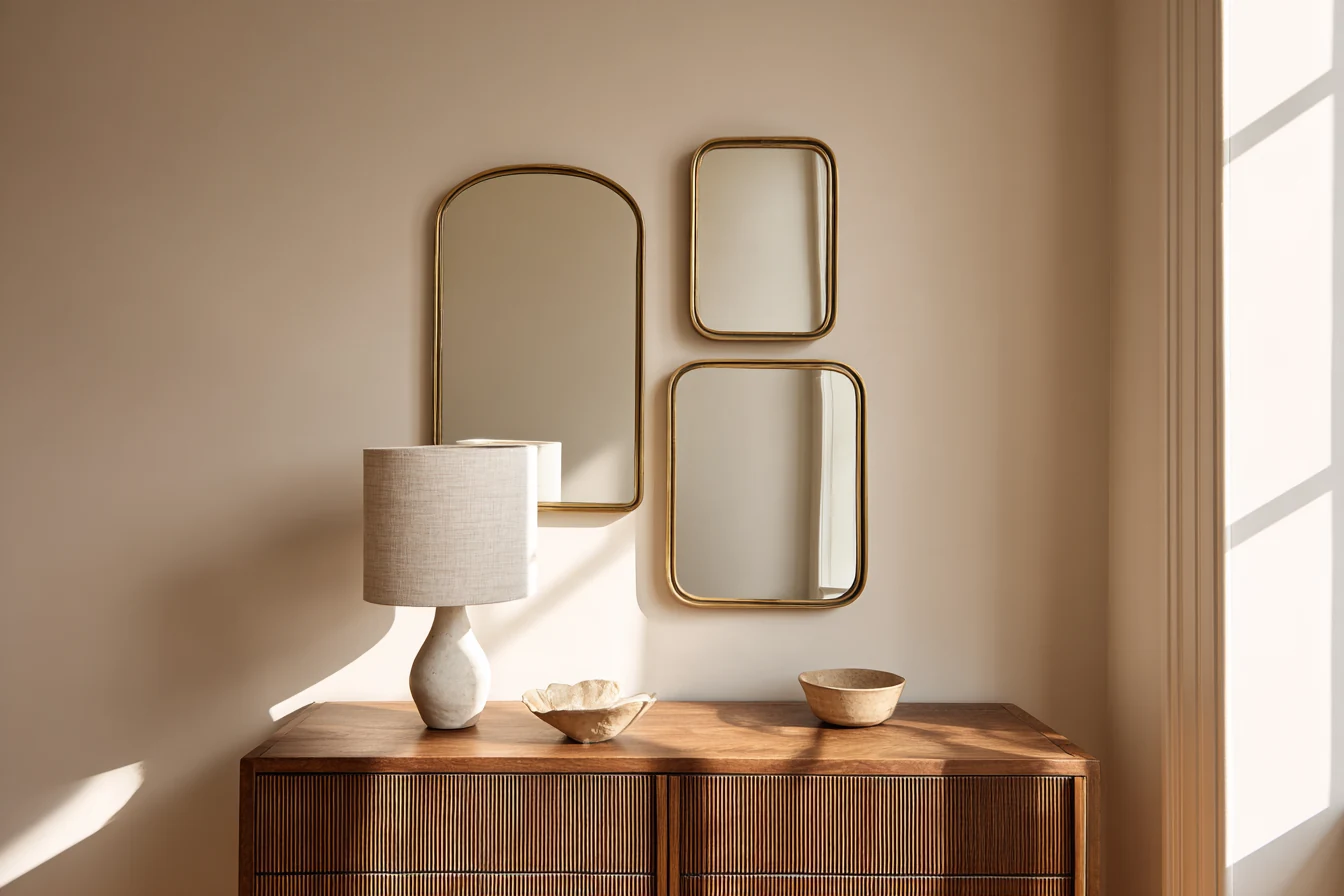
Mixing shapes is easy if the frames share a finish. A round mirror between two rectangles, all in brushed brass, looks collected instead of random.
If you rent
Adhesive strips are made for light frames, and I wouldn’t trust them with real glass. A small patched hole is easier than a broken mirror, and most landlords expect a few nail holes at move-out.
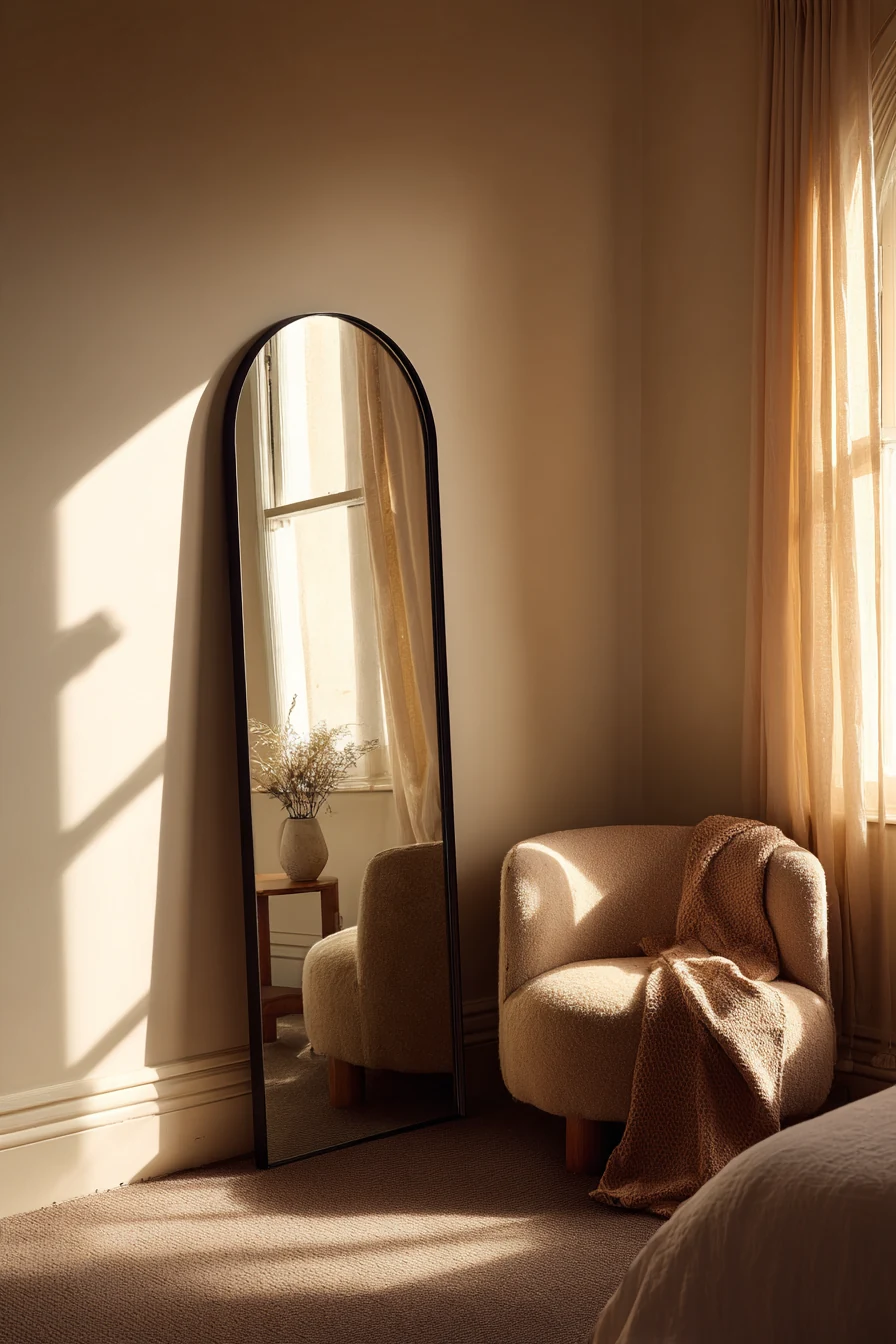
If you’d rather not drill at all, lean a floor mirror. Secure the top to the wall with an anti-tip furniture strap, since tall mirrors tip more easily than you’d expect. That matters most if you have kids or pets around. The U.S. Consumer Product Safety Commission’s Anchor It! campaign explains how to anchor tall furniture, and the same idea applies to a tall mirror.
Keeping it clear
A mirror looks expensive until it has fingerprints on it. Spray your glass cleaner on a microfiber cloth instead of directly on the mirror. Cleaner that runs down the glass can seep behind the edge and eat the silvering, leaving those dark spots along the border of older mirrors.
Quick answers
How high to hang a mirror?
Center it at 57 to 60 inches from the floor, then adjust for any furniture underneath.
How far above a console should a mirror go?
Hang it 4 to 8 inches above the console.
What size mirror goes over a sofa?
Aim for two-thirds to three-quarters of the sofa’s width.
Should the mirror be centered on the wall or the furniture?
On the furniture. If there is nothing beneath it, center it on the wall.
Can I hang a mirror without drilling?
Only a light one, and only with strips rated for its weight. Anything heavy needs anchors or a stud. A leaning floor mirror with an anti-tip strap is the no-drill option.
Do I need a stud to hang a mirror?
Not always. A stud offers the strongest hold, but heavy-duty anchors rated for more than the mirror’s weight will support most wall mirrors.
How high should a mirror be over a bathroom vanity?
Set the bottom edge 5 to 10 inches above the faucet or counter.
What if I hung my mirror too high?
Move it. Patch the old holes with spackle before sanding them smooth, and touch up the paint. Rehang the mirror with its center 57 to 60 inches above the floor, or position it just above your furniture.